Whoniversaries 3 August: Denis Carey, Carmen Silvera, the end of Old Who

i) births and deaths

3rd August 1909: birth of Denis Carey, who played Professor Chronotis in Shada (unbroadcast but would have been 1980), the Keeper in The Keeper of Traken (1981), and the Old Man (the front identity for the Borad) in Timelash (1985).

3rd August 2002: death of Carmen Silvera, who played several parts in The Celestial Toymaker (1966) and also Ruth in Invasion of the Dinosaurs (1974), better known in later years as René Artois's long-suffering wife Edith in 'Allo! 'Allo!.

ii) production anniversary

3rd August 1989: I don't usually do anniversaries of the often tediously well-documented process of making Who, but this one is special: the final day of filming of Ghost Light, the last scene ever made of Old Who being the one where Gwendoline and her mother are turned to stone. And that, as it turned out, was the end, save the final voiceover for the last episode of Survival.

iii) date specified in-universe

3 August 1975: Setting of chapter 3 of Oli Smith's 2010 Eleventh Doctor novel Nuclear Time. (Most of the rest is set on 28 August 1981.)

Posted in Uncategorised

The Overstory, by Richard Powers

Second paragraph of third chapter:

“Where’s Daddy?” his mother asks.

I loved this book, a brilliant (maybe a little long) story of environmental activism in the USA, with eight central characters whose paths into and out of each other's lives and the protection of America's forests weave together to make a really gripping tale. There's also a computer game designer working on the future of humanity. The real heroes of the book, as Barbara Kingsolver said, are centuries old and very very tall… Not really sfnal, but very relevant for anyone who cares about the future of the planet. Won the Pulitzer Prize. You can get it here.

This was my top book acquired in 2019 and my top non-genre fiction book. Next on the first pile was Jo Walton's Tooth and Claw (which I already read and reviewed), next on the other is Tono-Bungay by H.G. Wells.

Posted in Uncategorised

Gaze of the Medusa, by Gordon Rennie, Emma Beeby and Brian Williamson

Second frame of third chapter:

A comic with the Fourth Doctor and Sarah Jane Smith encountering mosters rooted in Greek mythology in Victorian England (and elsewhere). Well put together and a careful homage to the Hinchcliffe/Holmes years. You can get it here. Was actually at the top of my pile of unread comics in English. Next on that list is Chronin, by Alison Wilgus.

Posted in Uncategorised

My tweets

Posted in Uncategorised

Whoniversary 2 August: Edwin Richfield, Greg Austin, Terence Bayler, Real Time #1, Algebra of Ice

i) births and deaths

2 August 1990: death of Edwin Richfield, who played Captain John Hart in The Sea Devils (Third Doctor, 1972) – not the Captain John Hart of later Torchwood! – and also Mestor in The Twin Dilemma (Sixth Doctor, 1984). I think it's reasonably clear which part required more make-up…

2 August 1992: birth of Greg Austin, who played Charlie in Class (2016). Again, to avoid confusion, he is not the same person as my former colleague Greg Austin.

2 August 2016: death of Terence Bayler, who played Yendom, a doomed human slave, in The Ark (First Doctor, 1966) and mesmerised soldier Major Barrington in The War Games (Second Doctor, 1969).

ii) webcast anniversary

2nd August 2002: release of the first episode of Real Time on the BBC website. The Sixth Doctor and Evelyn Smythe land on a deserted planet to investigate rumours of Cybermen. One of the scientists who they encounter there closely resembles Chang Lee from The Movie because they are both played by Yee Jee Tso.

iii) date specified in-universe

From Lloyd Rose's 2004 Seventh Doctor novel The Algebra of Ice, year unspecified:

 ‘Now, what was that other information you wanted? Oh yes.’ He picked up another file. ‘ “U” working on entropy. That must have been Pat Unwin. Not a strong character, our Pat.’
   ‘Where did he study?’
   ‘Warwick. Should have warned us. Still, a triple first at Oxford. He was a damn fine mathematician and we’d have kept him on if he hadn’t gone alcoholic on us.’
   ‘I understand you’re generally tolerant of. . . that sort of thing.’
   ‘Within reason. Very high-strung a lot of these chaps. Have to make allowances. But as soon as they become unusual, we ship them off to a doctor or a rest home with an AA program. Unwin wasn’t having any of that. Took to reeling through the halls muttering. All right. Not the first one. We could deal with that. But when he started sneaking into people’s offices and erasing their files it was a bit much. When we called him on it, he began ranting about how useless the work here was and how his ideas were going to change the world. We got in the lads in the white coats pronto, I can tell you.’
   The Doctor nodded sympathetically. ‘So he did go to a “rest home”.’
   ‘Should have thrown him in an institution. Drying-out place we have near Dover; he just walked away. We’ve been searching for him ever since. The things he has in his head. Classified, you know. Don’t want them showing up in the hands of people who aren’t our friends. Though for all I know, he might write them on the wall of a toilet, or publish them on that cyber place, space, what’s it called?’
   ‘The Internet.’
   ‘That’s it.’
   ‘But so far he doesn’t seem to have said anything. Exactly how long ago was this?’
   ‘Hasn’t been seen since 2 August.’

Posted in Uncategorised

Houston, Houston, Do You Read? and The Bicentennial Man

It seems kind of timely to go back to 1977 and review the two works of written fiction that won both the Hugo and Nebula Awards that year, “Houston, Houston, Do You Read?”, by James Tiptree, Jr. and “The Bicentennial Man”, by Isaac Asimov. Somehow I'm in the mood for looking at moments when there was a clash of visions of what science fiction should be about.

Interestingly, Best Dramatic Presentation also had the same winner for both Hugo and Nebula that year, which was No Award, beating Logan's Run and The Man Who Fell to Earth in both cases. (Harlan! Harlan Ellison Reads Harlan Ellison, an LP, was also on the Nebula final ballot, while Hugo voters also rejected Carrie and Futureworld.) I guess in the year of Star Wars, the previous year's works paled into insignificance.

The Hugo for Best Novel that year went to Where Late the Sweet Birds Sang, by Kate Wilhelm, and the Nebula to Man Plus, by Fredrik Pohl, which is interesting as I would rate the former as the more literary, and certainly the more feminist. Both novels were on both final ballots, as was Shadrach in the Furnace by Robert Silverberg. Hugo voters also had the choice of Children of Dune, by Frank Herbert, and Mindbridge, by Joe Haldeman; the Nebula list also included Inferno, by Larry Niven & Jerry Pournelle, Islands, by Marta Randall (Pyramid) and Triton, by Samuel R. Delany. I haven't read the last three; of the others, I'm unfashionably fond of Mindbridge.

In the Short Story category, the Hugo went to "Tricentennial", by Joe Haldeman, and the Nebula to “A Crowd of Shadows”, by Charles L. Grant; both were on both ballots, but there were no other shared nomniations. I'm pretty sure I have read the former but not the latter, though I have no clear memory of doing so.

OK. I can't put this off any longer. “The Bicentennial Man” is an awful piece of writing. Here's the second paragraph of the third section:

Andrew did not understand any of this at the time. But in later years, with greater learning, he could review that early scene and understand it in its proper light.

It is about an Asimovian Three Laws robot who wants to become human, and gradually acquired the legal rights of a human and the body of a human so that he can die as a human. I hate cute robot stories anyway, I hate the Three Laws as a concept and I hate Asimov's writing style. Collodi did "wanting to be a real boy" better in Pinocchio, and indeed Anderson did "wanting to be a real girl" better in "The Little Mermaid". (See TV Tropes on Pinocchio Syndrome as to why this plot is so unoriginal.) I wrote about its flaws at greater length here.

On top of that, it's particularly nauseating to read the story in the context of Black Lives Matter, and it surely must have been equally clunky with regard to the 1976 Zeitgeist in the immediate wake of the Civil Rights movement. Asimov is clearly invoking Black American experience in the character of Andrew, who starts out as a house servant with an artistic gift that his owners exploit (and kindly allow him to profit from), and then gets his own way through a succession of legal challenges and political initiatives. But the parallel is so offensive that I had better stop making it. I will note, however, that Andrew pulls the ladder up after him.

The story won the Hugo and Nebula not so much on literary merit as on Asimov's reputation and stature within the community (despite his well-known record as a serial harasser of women), and also because of Ursula Le Guin's protest against Cold War politics. For the Hugo, it beat “The Diary of the Rose”, by Ursula K. Le Guin, “Gotta Sing, Gotta Dance”, by John Varley and “The Phantom of Kansas”, also by John Varley. For the Nebula, the losing stories were “Custer's Last Jump”, by Steven Utley & Howard Waldrop, “His Hour Upon the Stage”, by Grant Carrington and “In the Bowl”, John Varley. “The Diary of the Rose” was also originally on the Nebula shortlist, but Le Guin withdrew it in protest at SFWA's expulsion of Stanisław Lem.

The SFWA called me to plead with me not to withdraw it, since it had, in fact, won. I couldn’t do that. So—with the perfect irony that awaits anybody who strikes a noble pose on high moral ground—my award went to the runner-up: Isaac Asimov, the old chieftain of the Cold Warriors.

I have to admit I was startled as I sat down to write this piece and discovered that “The Bicentennial Man” won Best Novelette and “Houston, Houston, Do You Read?” won Best Novella. Asimov's prose drags, and Tiptree's engages, and I really thought it was the other way around. But history is clear. “Houston, Houston, Do You Read?” is not formally broken up into sections (though there are clear blocks of narrative int he text). The third paragraph is:

Bud Geirr's loud chuckle breaks in on him. Bud is joking with some of them, out of sight around a bulkhead. Dave is visible, though. Major Norman Davis on the far side of the cabin, his bearded profile bent toward a small dark woman Lorimer can't quite focus on. But Dave's head seems oddly tiny and sharp, in fact the whole cabin looks unreal. A cackle bursts out from the ceiling—the bantam hen in her basket.

This is a very different kettle of fish. Once again, we have a very old trope (TV Tropes as ever has a good section on Lady Land) but Tiptree takes it in new directions: three male astronauts from our near future are warped far forward in time to a solar system where men have died out and only women (and non-binary enbies) are left, reproducing by cloning and living an eco-friendly lifestyle (with space travel). The men are interviewed by the women, having been lightly drugged to lose their inhibitions; and it's strongly implied that as the story ends, they are about to be killed off as a danger to humanity. It's chilling but also very subtle, and I wonder how many of those who voted for it in 1977 actually understood the full point. It's also very clearly a story about the future, whereas Asimov, despite the centrality of the robot character, is clearly rewriting the past.

There was possibly also a non-literary factor operating to help “Houston, Houston, Do You Read?” win. In the months between its publication, in May 1976, and voting on the awards (the Nebulas were presented on 30 April 1977 and the Hugos on 4 September) Tiptree's identity as Alice Sheldon had become public, a few people having worked it out by November 1976 and Locus breaking the story as the first item of the front page of its January 1977 issue. Both fans and pros were apparently ready to forgive and even reward the deception.

“Houston, Houston, Do You Read?” won the Hugo jointly with Spider Robinson's “By Any Other Name”. The other two stories on the Hugo ballot were also up for the Nebula; they were “Piper at the Gates of Dawn”, by Richard Cowper, and “The Samurai and the Willows”, by Michael Bishop. The other story on the Nebula ballot was “The Eyeflash Miracles”, by Gene Wolfe. I can't remember having read any of them.

Both of these stories are available in many many collections. Indeed, it may be worth noting that both were originally published in anthologies rather than magazines – Tiptree in Aurora: Beyond Equality, edited by Vonda N. McIntyre and Susan Janice Anderson, and Asimov in Stellar #2, edited by Judy-Lynn Del Rey. (Hmm, just noticed that all the editors were women.) “Houston, Houston, Do You Read?” was the first short fiction by a woman to win both Hugo and Nebula (Ursula Le Guin had already done it for two novels).

Next in this series of posts: three joint winners published in 1977, and awarded in 1978 – Gateway, by Frederik Pohl; “Stardance”, by Spider Robinson and Jeanne Robinson; and “Jeffty Is Five”, by Harlan Ellison.

Posted in Uncategorised

My tweets

Posted in Uncategorised

Whoniversaries 1 August: John Flint, Gertan Kauber, The Sensorites #6, Unnatural History

births and deaths

1 August 1929: birth of John Flint, who played William des Preaux, a knight loyal to King Richard, in the story we now call The Crusade (First Doctor, 1965) and also Urquhart, the Concorde pilot in Time-Flight (Fifth Doctor, 1982).

1 August 2008: death of Gertan Kauber, who played the dimly seen galley-master in the story we now call The Romans (First Doctor, 1965) and Ola in The Macra Terror (Second Doctor, 1967).

ii) broadcast anniversary

1st August 1964: broadcast of "A Desperate Venture", the sixth and final episode of the series we now call The Sensorites. Barbara reappears (after several weeks' holiday) and sorts out the Sensorites; meanwhile the Doctor and Ian have tracked down the deranged astronauts in the tunnels. So everyone's a winner! Except the Second Elder and the Engineer, of course. This is the episode where Susan says, of her home planet,

at night the sky is a burnt orange, and the leaves on the trees a bright silver.

Ends on a dramatically sour note as the Doctor takes offence at Ian and promises to put him and Barbara off at the next landing.

iii) date specified in-universe

From the 1999 Eighth Doctor novel Unnatural History, by Jonathan Blum and Kate Orman:

Dad sighed his I-know-Tm-right-sweetheart sigh. ‘We thought it was a practical joke at first. But they kept coming.’

‘What?’ Sam stared at the stack of cards in his lap. ‘How many?’

He handed her another card, and another, postmarked from all around the world. San Francisco. Auckland. A letter dated London 1894, with ‘Do not deliver until 1 August 1997’ written on it.

Posted in Uncategorised

2020 Hugos in detail

1584 votes cast at nominations phase, 2221 on the final ballot. Lower than any year since 2013, higher than any year up to 2013. As expected for a smaller worldcon in difficult times. Full stats here.

The closest result was for Best Fanzine, where the winner had a margin of 4 votes on the final count. Best Graphic Story or Comic was decided by 11 votes.
The following also received enough nominating votes to reach the final ballot:
  • Raven Tower, by Ann Leckie (Best Novel – declined nomination)
  • Watchmen (Best Dramatic Presentation, Long Form – two episodes, with more nominating votes, had also qualified for the Best Dramatic Presentation, Short Form category)
  • Good Omens: “Hard Times” (Best Dramatic Presentation, Short Form – the entire series, with more nominating votes, had also qualified for the Best Dramatic Presentation, Long Form category)
  • Navah Wolfe (Best Professional Editor, Short Form – not eligible)
  • Tamsyn Muir (Astounding Award for Best New Writer – not eligible)
The winners of Best Graphic Story or Comic and of Best Professional Editor, Short Form were the last to qualify for the final ballot in their categories.

Best Novel

A Memory Called Empire surged from second place, starting 57 votes behind Middlegame but eventually beating it by 88, 880 to 792, on transfers (getting more from eliminated candidates in every single round). Middlegame came a convincing second over Gideon the Ninth, which came an even more convincing third over The City in the Middle of the Night. But fourth place was taken by The Light Brigade in a close contest with The Ten Thousand Doors of January, and The City in the Middle of the Night took fifth place by only 1 vote over The Ten Thousand Doors of January, which came sixth.

At nominations stage, Ann Leckie declined nomination for The Raven Tower which had come third. A Memory called Empire and Gideon the Ninth topped the poll on votes and points respectively. The City in the Middle of the Night qualified thanks to The Raven Tower's removal. Tiamat’s Wrath, by James S.A. Corey, would have needed 27 more votes or in excess of 12.65 more points to qualify for the final ballot. It was actually ahead of The City in the Middle of the Night on points, but way behind on votes – seven other nominees had an equal or larger number of nominations (but did less well on points).

Best Novella

This is How You Lose the Time War was ahead at all stages but needed to go to the sixth count to win over In An Absent Dream, by 994 to 634. In An Absent Dream started 62 votes ahead for second place, but scraped in by only two votes over To Be Taught if Fortunate. To Be Taught if Fortunate beat "Anxiety is the Dizziness of Freedom" handily for third place, and although "Anxiety Is the Dizziness of Freedom" started with the most votes for fourth place, it was beaten by The Haunting of Tram Car 015 on transfers from The Deep. However, "Anxiety Is the Dizziness of Freedom" secured a solid enough fifth place against The Deep, which got a convincing sixth.

At nominations stage, This is How You Lose the Time War was far ahead of the field, and "Anxiety Is the Dizziness of Freedom" the last to qualify. Silver in the Wood, by Emily Tesh, needed another 11 votes worth 8.25 points to qualify for the final ballot.

Best Novelette

Emergency Skin was ahead at all stages and beat "Omphalos" by 776 to 550 on the sixth count. "Omphalos" beat "Away with the Wolves" similarly convincingly for second place, and "Away with the Wolves" came from behind to beat "For He Can Creep" for third. "For He Can Creep" beat "The Blur in the Corner of your Eye" by only 17 votes for fourth place, but "The Blur in the Corner of your Eye" beat "The Archronology of Love" convincingly for fifth place and "The Archronology of Love" took sixth even more convincingly.

Emergency Skin was only fourth at nomination stage, with "Omphalos" first, "For He Can Creep" second and "Away with the Wolves" third. "The Archronology of Love" was the last to qualify; "Nice Things" by Ellen Klages needed only 2 more votes to get on the ballot.

Best Short Story

"As the Last I May Know" was ahead at all stages but needed the sixth round to beat "Do Not Look Back My Lion" by 720 to 513. The other places went convincingly to "Do Not Look Back My Lion", "And Now His Lordship Is Laughing", "A Catalog of Storms", "Blood Is Another Word for Hunger" and "Ten Excerpts from an Annotated Bibliography on the Cannibal Women of Ratnabar Island" which came sixth despite having the third highest number of first preferences. I guess some people didn't like its format; myself I thought it was inventive and interesting.

At nominations stage, "Do Not Look Back My Lion" topped the poll and the eventual winner, "As the Last I May Know", was in fourth place. "And Now His Lordship is Laughing" was the last to qualify; "Give the Family My Love", by A. T. Greenblatt, would have qualified with another two votes or 0.83 points, and "Articulated Restraint", by Mary Robinette Kowal, was also close behind.

Best Series

More drama here as The Expanse, starting 72 votes behind InCryptid, pulled ahead on transfers to win by 22 votes, 683 to 661. InCryptid not surprisingly crushed the opposition to come second, Planetfall beat The Wormwood Trilogy convincingly for third place, and the Winternight Trilogy scraped into fourth place by four votes, again over The Wormwood Trilogy, which however convincingly beat Luna for fifth place, and Luna then came a solid sixth.

InCryptid was well in the lead at nominations, with The Wormwood Trilogy (just) second on votes but fourth on points, and The Expanse second on points but third on votes. The Winternight Trilogy had the fewest votes among the finalists, but Luna was the last to qualify, and the Alliance-Union series by C.J. Cherryh needed another 2 votes or in excess of 0.25 more points to get on the ballot.

Best Related Work

Jeannette Ng's Campbell Award acceptance speech was well ahead at all stages, eventually beating Worlds of Ursula K. Le Guin by 606 to 540. Worlds of Ursula K. Le Guin came second; The Lady from the Black Lagoon came third narrowly, 14 votes ahead of Becoming SupermanBecoming Superman came a strong fourth, The Pleasant Profession of Robert A. Heinlein beat Joanna Russ by 20 points for fifth place, and Joanna Russ came sixth.

Jeannette Ng's speech had the fewest nomination votes of any of the finalists, but was not the last to qualify – the last place on the ballot was taken by Worlds of Ursula K. Le Guin, whose eligibility had been specifically extended by the 2019 Business Meeting. The last nominee eliminated was Monster, She Wrote, by Lisa Kröger & Melanie R. Anderson, which would have needed another 13 votes worth at least 6.33 points, or 6.42 points from fewer than 13 votes, to qualify for the ballot

Best Graphic Story or Comic

Laguardia started 22 votes in the lead and ended winning by 11, 410 to 399 for Monstress v4. Monstress v4 took second place, Mooncakes third, Paper Girls fourth, The Wicked + The Divine won fifth by 7 votes from Die: Fantasy Heartbreaker, which came sixth.

At nominations stage, Monstress v4 topped the poll and The Wicked + The Divine came a strong second, with the winner, Laguardia, the last to qualify (though Mooncakes had fewer votes). Invisible Kingdom, Vol. 1, by G. Willow Wilson would have needed 9 more votes worth 3.34 points, or fewer votes worth 5.59 more points, to qualify.

Best Dramatic Presentation, Long Form

Good Omens was far ahead from the beginning, and won with 946 votes to 413 for Captain Marvel and 392 for Russian Doll. The other places were all pretty clear, Captain Marvel second, Russian Doll third, Avengers: Endgame fourth, Us fifth and Star Wars: the Rise of Skywalker sixth.

At nominations stage, Watchmen gained enough votes to qualify in this category, but two individual episodes also qualified for the Short Form category, with more votes collectively. The Administrators therefore removed Watchmen from this category. Captain Marvel topped the poll, with Good Omens second. The removal of Watchmen allowed Star Wars: The Rise of Skywalker to take the last place on the ballot; Spider-man: Far from Home would have taken that place with 1 more vote.

Best Dramatic Presentation, Short Form

The Good Place: The Answer was well ahead from the start, winning by 720 votes to 520 for Watchmen: A God Walks Into Abar, which then tied for second place with The Mandalorian: Redemption. Cibola Burn, which started the run for second place in a tie for the lead, took fourth place easily, with Watchmen: This Extraordinary Being in fifth and Doctor Who: Resolution in sixth.

At nominations stage, Good Omens: Hard Times gained enough votes to qualify in this category – in fact, it topped the poll – but the entire series of Good Omens also qualified for the Long Form category, with more votes. The Administrators therefore removed Good Omens: Hard Times from this category. Doctor Who: Resolution therefore took the last place on the ballot. The last nominee eliminated was another episode of The Good Place, Pandemonium, which needed another 6 votes to qualify.

Best Professional Editor, Short Form

Ellen Datlow was in the lead from the beginning, winning by 453 to 265 for Lynne M Thomas and Michael Damien Thomas. The Thomases started in the lead for second place, but transfers pulled Jonathan Strahan to finish 18 votes ahead. The Thomases also started in the lead for third place, but transfers pulled Sheila Williams to finish 12 votes ahead. The Thomases also started in the lead for fourth place, but transfers pulled Neil Clarke to finish level with them in another tie. C.C. Finlay took sixth place.

Neil Clarke topped the poll at nominations. Navah Wolfe got enough votes to qualify for the ballot in this category, but is not eligible (she made up for it elsewhere). The last place on the ballot was taken by Ellen Datlow, who went on to win the award. Lee Harris would have qualified for the ballot with three more votes.

Best Professional Editor, Long Form

Navah Wolfe was in the lead from the beginning, winning with 389 votes to 239 for Sheila Gilbert. Gilbert started in the lead for second place, but transfers pulled Diana M. Pho ahead by 2 in the end. Gilbert won third place clearly, and Devi Pillai likewise solidly won fourth place. Miriam Weinberg beat Brit Hvide by just 7 votes for fifth place, and Hvide won sixth place comfortably.

Navah Wolfe also topped the poll at the nominations stage. Miriam Weinberg was the last finalist to qualify; Gillian Redfearn, with a lot fewer votes, would still have qualified if she had had in excess of 2.37 more points. Others were also close – difficult to be sure, but Nivia Evans would have had a good chance with 3 more votes, and Priyanka Hrishnan with 2.

Best Professional Artist

John Picacio was ahead at all stages, winning by 445 votes to 392 for Yujo Shimizu. Galen Dara, who was fourth in the first round, took second place very narrowly, 9 votes ahead of Shimizu who led at a couple of stages. Shimizu won third place, Rovina Cai fourth, Tommy Arnold fifth and Amyssa Winans sixth.

Tommy Arnold topped the poll at nominations stage, John Picacio coming second. It was very tight at the lower end of the qualification stage; Will Staehle would certainly have qualified with 3 more votes, and Jaime Jones was also not far off.

Best Semiprozine

Uncanny Magazine started 21 votes ahead of FIYAH, and finished 34 votes ahead, winning by 434 to 400. FIYAH took second place 18 votes ahead of Strange Horizons, which came a very comfortable third. Escape Pod took fouth place, Beneath Ceaseless Skies fifth and Fireside Magazine sixth,

Uncanny Magazine also topped the poll at nominations stage. Fireside Magazine was the last to qualify; Interzone, the last to be eliminated, needed 7.15 more points to qualify, and also PodCastle would probably have qualified with 4 more votes worth 2.02 points.

Best Fanzine

In the closest result of the night, The Book Smugglers started 8 votes ahead of nerds of a feather, briefly lost the lead and then regained it to win by 243 to 239, a margin of 4. The other results were much clearer, nerds of a feather coming second, Journey Planet third, Galactic Journey fourth, Quick Sip Reviews fifth and The Rec Center sixth.

nerds of a feather topped the poll at nominations stage. Galactic Journey was the last to qualify; the Hugo Book Club Blog needed another 5 votes.

Best Fancast

Our Opinions Are Correct was ahead from the start and won by 371 votes to 211 for the Coode Street Podcast. The Coode Street Podcast led at all stages but the last in the count for second place, losing to Galactic Suburbia by 14 points. Coode Street won third place handily, The Skiffy and Fanty Show (which got the fewest first preferences in the first round) took fourth place also comfortably, and Be The Serpent beat Claire Rousseau for fifth place by 20 votes; Claire Rousseau came sixth.

Be the Serpent topped the poll at nominations stage, with The Coode Street Podcast second and Our Opinions Are Correct third. The Skiffy and Fanty Show was the last to qualify; Verity! and Kalanadi would each have qualified with another 6 votes.

Best Fan Writer

Bogi Takács was ahead from the start, and won by 284 votes to 263 for Cora Buhlert, who won second place by a good margin. Alasdair Stuart beat James David Nicoll by 11 points for third place, Nicoll came fourth, Paul Weimer fifth and Adam Whitehead sixth.

Alasdair Stuart and Paul Weimer jointly got the most nominating votes, James David Nicoll getting the most points and Bogi Takács not far behind. Cora Buhlert was the last to qualify for the ballot; Charles Payseur would have qualified with 5 more votes.

Best Fan Artist

Elise Matthesen was ahead from the start and won by 371 votes to 339 for Iain Clark, who then lost to Sara Felix for second place by only 14 votes, but comfortably won third place. Meg Frank beat Grace P. Fong by 19 votes for fourth place; Fong took fifth place and Ariela Housman sixth.

Sara Felix got the most votes and Elise Matthesen the most points at nominations stage. The last finalist to qualify was Meg Frank, with the late Steve Stiles the last eliminated nominee; he would have needed at least another 10 votes of 6.59 points to qualify. Anna Steinbauer, however, would have qualified with just 1 more vote.

Lodestar Award

Catfishing on Catnet was ahead from the start, beating Minor Mage by 435 to 403. The other places were clear, Minor Mage winning second, Dragon Pearl third, Riverland fourth, Deeplight fifth and The Wicked King sixth.

Catfishing on Catnet was also well ahead at nominations stage, with Dragon Pearl and then Minor Mage in second and third place and the other three very close to each other. Philip Pullman's The Book of Dust: The Secret Commonwealth nneded 3 more votes to qualify. The Ten thousand Doors of January was the second last to be eliminated, but of course also qualified in Best Novel.

Astounding Award

R.F. Kuang was far in the lead and won the first Astounding Award by 421 votes to 213 for Nibedita Sen and 194 for Tasha Suri. Sen won second place and Suri third. Emily Tesh beat Sam Hawke by 19 votes for fourth place, and Kawke then beat Jenn Lyons by five points for fifth place; Lyons came sixth.

R.F. Kuang was also far ahead at nominations stage. Tamsyn Muir got enough votes to qualify but is not eligible, with several pre-2018 professional publication. The last place on the ballot was then taken by Sam Hawke. The last nominee eliminated was Arkady Martine, who would have mathematically qualified with 2.20 more points, but was also ineligible due to pre-2018 professional publications. Alexandra Rowland would have qualified with 7 more votes worth 3.93 more points (her first novel came out in 2012, but was self-published and so does not count for Astounding eligibility). At least one of the other "long-listed" nominees was also ineligible.

Posted in Uncategorised

July books

Non-fiction: 5 (YTD 37)
EU Lobbying Handbook, by Andreas Geiger
The Complete Secret Army: An Unofficial and Unauthorised Guide to the Classic TV Drama Series by Andy Priestner
George Eliot, by Tim Dolin
Yugoslavia's Implosion: The Fatal Attraction of Serbian Nationalism, by Sonja Biserko
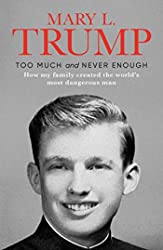
Too Much and Never Enough: How My Family Created the World’s Most Dangerous Man, by Mary Trump

Fiction (non-sf): 3 (YTD 18)
The Overstory, by Richard Powers
Guban, by Abdi Latif Ega
Listen to the Moon by Michael Morpurgo

sf (non-Who): 5 (YTD 76)
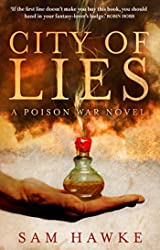
City of Lies, by Sam Hawke
Tooth & Claw, by Jo Walton
TOR: Assassin Hunter, by Billy Bob Buttons (did not finish)
“Houston, Houston, do you read?” by James Tiptree Jr
The Ruin of Kings, by Jenn Lyons
“The Bicentennial Man” by Isaac Asimov

Comics: 6 (YTD 27)
The Wicked + The Divine vol 6: Imperial Phase Part 2, by Kieron Gillen etc
The Wicked + The Divine vol 7: Mothering Invention, by Kieron Gillen etc
Gaze of the Medusa, by Gordon Rennie, Emma Beeby and Brian Williamson
The Wicked + The Divine vol 8: Old is the New New, by Kieron Gillen etc
The Wicked + The Divine vol 9: "Okay", by Kieron Gillen etc
The 1945 Retro Hugo finalists for Best Graphic Story or Comic

Doctor Who 2 (YTD 8)
Doctor Who Annual 2020
Doctor Who and the Cybermen, by Gerry Davis

5,700 pages (YTD 44,200)
7/21 (YTD 54/165) by women (Biserko, Trump, Hawke, Walton, Tiptree, Lyons, Beeby)
1/21 (YTD 18/165) by PoC (Ega)
4/21 reread (YTD 21/165) – "Houston, Houson, Do You Read?", "The Bicentennial Man", The Wicked + The Divine vol 9: "Okay", Doctor Who and the Cybermen

Current
Our Mutual Friend, by Charles Dickens
The Secret in Vault 13, by David Solomons
Wolf Hall, by Hilary Mantel
Jerusalem, by Alan Moore

Coming soon (perhaps)
The Conqueror's Child, by Suzy McKee Charnas
The Mirror and the Light, by Hilary Mantel
Shadow Scale, by Rachel Hartman
East West Street, by Philippe Sands
Chronin Volume 1: The Knife at Your Back, by Alison Wilgus
Beren and Luthien, by J.R.R. Tolkien
Darwin's Island: The Galapagos in the Garden of England, by Steve Jones
Barcelona, Catalonia: A View from the Inside, by Matthew Tree
"Stardance" by Spider Robinson and Jeanne Robinson
Palestine 100: Stories from a century after the Nakba, by Mazen Maarouf
Complexity: The Emerging Science at the Edge of Order and Chaos, by M. Mitchell Waldrop
Helen Waddell, by Felicitas Corrigan
Survivants, Tome 3, by Leo
Zen and the Art of Motorcycle Maintenance: An Inquiry into Values, by Robert M. Pirsig
SS-GB, by Len Deighton
Tono-Bungay, by H. G. Wells
The Inside of the Cup, by Winston S. Churchill
This Must be the Place, by Maggie O'Farrell

Posted in Uncategorised

My tweets

Posted in Uncategorised

Whoniversaries 31 July

This is the end of the first month of my new Whoniversary post series. I am going to stick with it – I’m enjoying filling out my own work from ten years ago, and the feedback has not been huge but has been very positive. I normally try and write the week after next’s entries at the weekend – I am behind at the moment, and this was written last Sunday.

i) births and deaths

31 July 1999: death of Ric Felgate, who appeared in three stories all directed by his brother-in-law Michael Ferguson. He was Roy Stone, an American journalist in The War Machines (First Doctor, 1966), Brent, killed by the Ice Warriors in The Seeds of Death (1969) and astronaut Charles Van Lyden, the first person seen on screen in The Ambassadors of Death (Third Doctor, 1970).

31 July 2000: death of Roy Purcell, Chief Prison Officer Powers in The Mind of Evil (Third Doctor, 1971) and President of the Council of the Time Lords in The Three Doctors (Third Doctor, 1972-73)

31 July 2004: death of Robert James, who played gullible scientist Lesterson in The Power of the Daleks (Second Doctor, 1966) and the High Priest in The Masque of Mandragora (Fourth Doctor, 1976)

ii) broadcast anniversaries

31 July 1963: Announcement that the new TV series, Doctor Who, would star William Hartnell with Carole Ann Ford, William Russell and Jacqueline Hill.

iii) date almost specified in canon

31 July 1977: the latter part of episode 3 and all of episode 4 of Image of the Fendahl (1977) are set on a day specified as ‘Lammas Eve’ (the day before 1 August, ie 31 July) by Mrs Tyler. There is no reason to suppose that the year is other than 1977.

31 July 1988: birth of the Eighth Doctor’s audio compainion Lucie Miller, played by Sheridan Smith. Do give her plays a listen – the chemistry with McGann is great.

Thursday reading

Current
Our Mutual Friend, by Charles Dickens
The Secret in Vault 13, by David Solomons
Wolf Hall, by Hilary Mantel
Jerusalem, by Alan Moore

Last books finished
Too Much and Never Enough: How My Family Created the World’s Most Dangerous Man, by Mary Trump

Next books
The Mirror and the Light, by Hilary Mantel
East West Street, by Philippe Sands

Posted in Uncategorised

My tweets

Posted in Uncategorised

Whoniversaries 30 July

Getting a bit desperate here…

i) births and deaths

30 July 2015: death of Clifford Earl who played the police station sergeant in the original Christmas Day episode, The Feast of Steven, part of the story we now call The Daleks' Master Plan (First Doctor, 1965), and also Major Branwell in The Invasion (Second Doctor, 1968).

ii) dates specified (or almost) in-universe

30 July 1864: The Fifth Doctor rescues Nyssa from the fighting around Petersburg, VA in the U.S. Civil War in the 2007 audio Renaissance of the Daleks.

30 July 1977: Most of episode 1, all of episode 2 and the first part of episode 3 of Image of the Fendahl (1977) appear to be set on this date, for reasons which will be explained tomorrow.

Posted in Uncategorised

Retro Hugos in detail

Headlines:

  • Full statistics here.
  • 521 votes cast.
  • Tie in Best Dramatic Presentation, Short Form! The first ever tie in the Retro Hugos.
  • Close results also in Best Novelette (6 votes) and Best Fanzine (9 votes)
  • Crushing first round victories for John W. Campbell and Margaret Brundage
  • "City" wins Best Novelette despite fewer first preference votes than "No Woman Born"
  • Disqualifications:
    • "Old Man in New World", by Olaf Stapledon (Novella),
    • The Book of Thoth, by Aleister Crowley (Related Work)
    • Foundation by Isaac Asimov and Venus Equilateral by George O. Smith (Best Series)
    • The Best Dramatic Presentation Long Form category
  • Won the award despite being last to qualify at nominations stage:
    • "I, Rocket" (Short Story)
    • "The Science-Fiction Field" by Leigh Brackett (Related Work)
    • The Canterville Ghost (Best Dramatic Presentation, Short Form – tie)
    • Fritz Leiber (Best Fan Writer).

Detail:

Best Novel

"Shadow Over Mars" was 13 votes ahead on the first count and finished 43 votes ahead of Sirius, winning by 165 to 122. "The Winged Man" came third, The Golden Fleece came from behind Land of Terror to take fourth place by only 4 votes, Land of Terror fifth and The Wind on the Moon sixth.

Sirius was well ahead at nominations stage, with the winner, "Shadow over Mars", a strong second. The Wind on the Moon and "The Winged Man" were the last to qualify with 11 votes and 4.33 points each; Land of Terror had only 10 votes but 4.75 points. The nearest miss was Renaissance, by Raymond F. Jones, which needed another 4 votes or in excess of 2 more points to qualify.

Best Novella

"Killdozer!" was far ahead on the first count and won on the fifth, with 172 votes to 93 for "The Jewel of Bas" and 68 for "The Changeling". "The Jewel of Bas" came a strong second, "The Changeling" third, "Trog" fourth (by 19 votes), "A God Named Kroo" fifth and "Intruders from the Stars" sixth. No Award actually had the fourth highest number of first preferences, but "A God Named Kroo" and "Intruders from the Stars" gained enough transfers to beat it.

"Old Man in New World", by Olaf Stapledon, got enough votes to qualify for the final ballot, but it is only 8,200 words in length, which is far too short for this category (and it received no votes in the more appropriate categories), so it was disqualified, and "A God Named Kroo" took the place on the ballot. "Killdozer!" was far ahead of the crowd, "The Jewel of Bas" far ahead in second place and "The Changeling" very clear of the others. "Wanderers of the Wolf Moon", by Nelson S. Bond, would have qualified with 2 mote votes or in excess of 0.67 more points.

Best Novelette

"City" started 11 votes behind "No Woman Born", but picked up transfers especially from "The Big and the Little" and "Arena" to squeak a win by 6 votes, 176 to 162. "No Woman Born" won second place substantially; "Arena" (which I must admit I had assumed would win before the votes came in) took third by 20 points. "When the Bough Breaks" took a strong fourth. "The Children's Hour" and "The Big and the Little" tied for fifth; not the only tie in the Retros, as we shall see.

"No Woman Born" topped the nominations poll, "Arena" a close second, and the eventual winner, "City" clear third. The last to qualify was "The Children's Hour"; "The Veil of Astellar", by Leigh Brackett, needed 5 more votes or 1.2 more points to qualify.

Best Short Story

"I, Rocket" was well ahead from the start and eventually beat "Desertion" by 177 to 138. "Desertion" took a strong second place, "Huddling Place" (which was 5th on first preferences) took third by 20 votes ahead of "The Wedge", "The Wedge" took fourth place by 5 votes ahead of "And the Gods Laughed", and "And the Gods Laughed" took fifth place by 5 votes ahead of "Far Centaurus", which came sixth. There was a strong bloc of Simak voters.

The two Simak stories topped the poll at nominations stage, "Desertion" first and "Huddling Place" second. "I, Rocket", the eventual winner, was the last to qualify, and one more vote for "The Lake", also by Ray Bradbury, would have kept it off the ballot; one more vote for "Catch that Rabbit" by Isaac Asimov would have displaced "The Wedge" from the ballot, and "Kindness" by Lester Del Rey would likely also have made it with one more vote..

Best Series

Cthulhu was far ahead at the first stage and won by 173 to 84 for Pellucidar and 74 for Doc Savage. Pellucidar took second place by 13 votes ahead of Doc SavageDoc Savage won third very clearly; The Shadow took fourth even more clearly; Captain Future came fifth and Jules de Grandin sixth. No Award got 24 first preferences here, its highest score.

The Foundation series by Isaac Asimov (which topped the poll) and the Venus Equilateral stories by George O. Smith both got enough votes to qualify but neither is eligible – both were some way short of the qualifying length (250,000 words) by the end of 1944. That enabled Jules de Grandin and The Shadow to take their places on the final ballot. The City series, by Clifford D Simak, was the last to be eliminated, but would surely also have been well short of the qualifying length. Both Buck Rogers and Flash Gordon would have qualified with 1 more vote.

Best Related Work

"The Science-Fiction Field" started only one vote ahead of Fancyclopedia, but picked up enough transfers to win by 124 to 104. Fancyclopedia beat "The Works of H.P. Lovecraft" by 9 votes for second place, and "The Works of H.P. Lovecraft" beat Rockets: The Future of Travel Beyond the Stratosphere for third place, also by 9 votes. Rockets beat '42 to '44 handsomely for fourth place, and Mr. Tompkins Explores the Atom beat '42 to '44 by 1 vote for fifth place; '42 to '44 came sixth.

Fancyclopedia topped the poll at nominations stage, with The Future of Travel Beyond the Stratosphere a strong second. "The Science-Fiction Field" only qualified because the administrators disqualified The Book of Thoth, by Aleister Crowley, as it is not sufficiently related to the field of science fiction, fantasy, or fandom to be eligible in this category. H.P. Lovecraft's Marginalia would have taken the last place if it had received 1 more vote.

Best Graphic Story or Comic

Superman: "The Mysterious Mr. Mxyztplk" won with 141 votes to 87 for Donald Duck: "The Mad Chemist" and 51 for The Spirit: "For the Love of Clara Defoe". Donald Duck: "The Mad Chemist" came second, The Spirit: "For the Love of Clara Defoe" came third, and Buck Rogers: "Hollow Planetoid" crushed the two Flash Gordon stories for fourth place. Flash Gordon: "Battle for Tropica" came fifth and Flash Gordon: "Triumph in Tropica" sixth.

Donald Duck topped the (very low) poll at nominations stage, with Superman not far behind. Flash Gordon: "Battle for Tropica" was the last to qualify, with Plastic Man: "The Gay Nineties Nightmare" one vote off the final ballot.

Best Dramatic Presentation, Short Form

The administrators determined that there were not enough votes for a ballot in the Best Dramatic Presentation, Long Form category and transferred those nominations that were transferable to Best Dramatic Presentation, Short Form. However, voters determined that there should be two Best Dramatic Presentation awards anyway, as The Canterville Ghost and Curse of the Cat People tied for first place, on 129 votes each. Curse of the Cat People had started 9 votes behind, but made up the difference on transfers. Donovan's Brain beat It Happened Tomorrow by 14 votes for third place, It Happened Tomorrow beat House of Frankenstein by 13 votes for fourth place, House of Frankenstein came fifth and The Invisible Man Returns came sixth.

At nominations stage (once transfers had been made) Curse of the Cat People topped the poll and the other winner, The Canterville Ghost, was the last to qualify. Beware of Tomorrow would have qualified with only 1 more vote, and several others were very close as well.

Best Editor, Short Form

John W. Campbell secured one of two first-round victories in this category, with 151 votes to 52 for Dorothy McIlwraith, 39 for Mary Gnaedinger, 18 for No Award, 12 for Raymond A. Palmer, 2 for Oscar J. Friend and 1 for W. Scott Peacock. The other placings were all pretty convincing if not quite so overwhelming, Dorothy McIlwraith coming second, Mary Gnaedinger third, Raymond A. Palmer fourth, Oscar J. Friend fifth and W. Scott Peacock sixth. No Award got the third highest number of first preferences in the counts for first and second place, and the second highest in all the other rounds. This was also No Award's best performance in the runoff, in both numerical and relative terms.

John W. Campbell was also far ahead at nominations stage. W. Scott Peacock was the last to qualify (though Mary Gnaedinger had fewer votes). The next in line, Babette Rosmond, was a long way behind (by Retro Hugo standards anyway).

Best Professional Artist

Margaret Brundage achieved a crushing victory on the first count, with 151 votes to 22 for Earle K. Bergey, 21 for No Award, 18 for Boris Dolgov, 11 for William Timmins, 10 for Paul Orban and 5 for Matt Fox. Earle K. Bergey beat Boris Dolgov by 13 votes for second place, Boris Dolgov beat Paul Orban by 2 votes for third place, Paul Orban won fourth, William Timmins fifth and Matt Fox sixth.

Nominations stage was a bit different, with William Timmins top and Margaret Brundage close behind. Matt Fox was the last to qualify; Laurence Stevens would have made the ballot with 1 more vote, and Chesley Bonestell, Virgil Finlay and Harry Lemon Pankhurst were all close behind.

Best Fanzine

Voice of the Imagi-Nation was ahead at all stages, winning by 88 votes to 79 for Le Zombie. Le Zombie crushed the opposition to take second place; Futurian War Digest was six votes ahead of The Acolyte for third place; The Acolyte was 18 votes alead of Shangri L'Affaires for fourth place, Shangri L'Affaires took fifth place and Diablerie sixth. No Award got the highest proportion of first preferences in any category here.

At nominations stage, The Acolyte had the most votes but Futurian War Digest the most points, with Voice of the Imagi-Nation very close on both. Diablerie was the last to qualify, with Sam Moskowitz's Fantasy Times one vote off the ballot (and a couple of others in the zone).

Best Fan Writer

Fritz Leiber crushed the opposition, with 140 votes to 59 for Bob Tucker, 51 for Morojo/Myrtle R. Douglas and 17 for Harry Warner. Bob Tucker came a clear second, and Morojo/Myrtle R. Douglas a clear third. Jack Speer beat Harry Warned for fourth place by 9 votes, Harry Warner beat J. Michael Rosenblum for fifth place by 15 votes, and J. Michael Rosenblum came sixth.

It was a very different story at nominations phase, where Jack Speer and Bob Tucker topped the (very low) poll, and Fritz Leiber was the last to qualify. Last eliminated were Russell Chauvenet and, rather oddly, David Langford – who would have needed to be rather precocious to qualify in this category for work published a number of years before he was born!

Posted in Uncategorised

June 2007 books

This is the latest post in a series I started last November, anticipating the twentieth anniversary of my bookblogging which will fall in 2023. Every six-ish days I've been revisiting a month from my recent past, noting work and family developments as well as the books I read in that month. I've found it a pleasantly cathartic process, especially in recent circumstances. If you want to look back at previous entries, they are all tagged under bookblog nostalgia.

June 2007 was the month in which B's behaviour took a serious downward step, and she had to be kept at home from mid-month (just before her 10th birthday) until other arrangements were made later in the year. I had to fly back early from a trip to Greece to help with the situation. On the positive side, F participated in a school production rather loosely based on the stories of Pippi Longstocking. (He's the one in the light green poncho.)

Apart from my curtailed trip to Greece, I also visited Kosovo, reflecting that on the day Tony Blair came to office, 2 May 1997, I returned home from a business trip by way of Slovenia; and on the day he left office, 27 June 2007, I also returned home from a business trip by way of Slovenia. My intern J left (as mentioned before, she is now a British diplomat) and was repalced by Italian V.

Culturally, this was the month both of Blink , the best Doctor Who story ever, and of the revelation at the end of Utopia, one of the best Who twists ever.

And I read 15 books.

Non-fiction 4 (YTD 35)
The Elements of Style, by William Strunk Jr. and E.B. White
Science, Culture and Modern State Formation, by Patrick Carroll
Wild Swans: Three Daughters of China, by Jung Chang
Reflections on the Cyprus Problem: A Compilation of Recent Academic Contributions, published by the Cyprus Policy Center

Non-genre 2 (YTD 18)
In the Company of Cheerful Ladies, by Alexander McCall Smith
The Awakening, by Kate Chopin

SF 4 (YTD 39)
No Present Like Time, by Steph Swainston
The Mabinogion
McSweeney's Mammoth Treasury of Thrilling Tales, edited by Michael Chabon
Seeker, by Jack McDevitt

Doctor Who 4 (YTD 17)
Doctor Who – The Aztecs, by John Lucarotti
Doctor Who – Galaxy Four, by William Emms
Decalog 3: Consequences, edited by Justin Richards and Andy Lane
Doctor Who: The Scripts: The Masters of Luxor, by Anthony Coburn, edited by John McElroy

Comics 1 (YTD 12)
Alias vol 3: The Underneath, by Brian Michael Bendis

4,300 pages (YTD 38,000)
3/15 by women (YTD 30/121)
1/15 by PoC (YTD 4/121)

The best of these was Jung Chang's history of her own family, Wild Swans. You can get it here. I was disappointed with both John Lucarotti's novelization of the story we now call The Aztecs, which you can get here, and with Kate Chopin's 1899 feminist novel The Awakening, which you can get here.


Posted in Uncategorised

Whoniversaries 29 July: David Warner, Escape to L.A., Image of the Fendahl, Vincent van Gogh

i) births and deaths

29 July 1941: birth of David Warner, who played Professor Grisenko in Cold War (Eleventh Doctor, 2013) and voiced Lord Azlok in Dreamland (Tenth Doctor animated, 2009) as well as an alternative Doctor (and other parts) for Big Finish.

ii) broadcast anniversaries

29 July 2011: broadcast of Escape to L.A., fourth episode of Torchwood: Miracle Day. Team Torchwood arrive at the Pacific coast, and the plot thickens.

iii) date almost specified in canon

29 July 1977: first scenes of Image of the Fendahl (1977) as the hiker meets his doom and the scientists play with their pet skull. (Will give reasons for this dating on Friday.)

iii a) date of real event, almost but not quite specified in canon

29 July 1890: death of Vincent van Gogh

Posted in Uncategorised

Comet NEOWISE

The weekend before last, I was lucky enough to see Comet NEOWISE from my sister's in darkest Burgundy – F and I waited for it to become visible on Saturday night, and once we had located it in Ursa Major, everyone came out and saw it on the Sunday. It was clearly visible with the naked eye; young S's small binoculars really enhanced it, though not enough to see the split in its tail. If you haven't seen it yet, but you have clear skies and you're in the northern hemisphere, you still have a chance of catching it this evening or tomorrow, though you will need binoculars or a telescope to get the full effect. My astronomy apps helped me locate it; the best was Night Sky.

I remember seeing Comet Hale-Bopp in 1997 – I was with a group of political activists on my way back from a day-trip to Sarajevo, and our bus pulled over on a mountainside road to let us all have a good look. And back in the winter of 1985, when I was working at Armagh Observatory, I showed people Halley's Comet through one of the larger telescopes there. But that's only thee comets that I can definitely remember seeing in my lifetime, and I am 53.

(I also remember, in the very early days of the internet, waiting for images of Jupiter after it was hit by Comet Shoemaker-Levy to come down the line. Wow, those were pioneering times.)

One can see why they were a cause of dismay in ancient times. Unlike meteors, which are there for a moment and then gone, a comet hangs menacingly in the sky, a disruptor of the natural order, changing its place rapidly from night to night. And because the tail always points away from the sun, it's always upwards form our point of view, looking like the comet is threatening to fall but not quite doing so.

Comets have been less inspiring than other solar system bodies for writers, but the SF Encyclopedia still has a decent entry. I remember reading Brin and Benford's In the Heart of the Comet many years ago. Will look out for more.

Posted in Uncategorised

Whoniversaries 28 July: Colin Douglas, David Weston

Births and Deaths

28 July 1912: birth of Colin Douglas, who played security chief Donald Bruce in The Enemy of the World (Second Doctor, 1967) and lighthouse keeper Reuben in Horror of Fang Rock (Fourth Doctor, 1977).

28 July 1938: birth of David Weston, who played the valiant Nicholas Muss in the story we now call The Massacre (First Doctor, 1966) and Tharil leader Biroc in Warrior's Gate (1981). No pictures of The Massacre survive.

Not much else, I'm afraid. More tomorrow.

Posted in Uncategorised

Too Much and Never Enough: How My Family Created the World’s Most Dangerous Man, by Mary Trump

Second paragraph of third chapter:

But it was one thing for Donald to stay out of his father’s crosshairs and another to get into his good graces. Toward that end, Donald all but eradicated any qualities he might have shared with his older brother. Except for the occasional fishing trip with Freddy and his friends, Donald would become a creature of country clubs and offices, golf being the only thing on which he and his father differed. He would also double down on the behaviors he had thus far gotten away with: bullying, pointing the finger, refusing to take responsibility, and disregarding authority. He says that he “pushed back” against his father and Fred “respected” that. The truth is, he was able to push back against his father because Fred let him. When he was very young, Fred’s attention was not trained on him; his focus was elsewhere—on his business and his oldest son, that’s it. Eventually, when Donald went away to military school at thirteen, Fred began to admire Donald’s disregard of authority. Although a strict parent in general, Fred accepted Donald’s arrogance and bullying—after he actually started to notice them—because he identified with the impulses.

This is the other must-read Trump book of the summer, after John Bolton's expose, but I confess I didn't find it quite as grimly fascinating. The Trump family is obviously pretty dysfunctional; Trump's niece, herself a psychologist, goes through the history of her grandfather and his two older sons, her father Fred and her uncle Donald. Poor Fred was not up to the mark of his father's expectations, was kicked out of the family business and died at 42 of alcoholism. Donald became the public face of the family empire, with everyone from top to bottom scrambling to cover his deficiencies, and to cover themselves in the conflicts among advisers that he deliberately generated. The best quote for me is at the end of Chapter Nine, where she describes her unsuccessful attempt to ghost-write a book for her uncle:

 Finally Donald told me his editor wanted to meet with me. A lunch was set up, and I arrived at the restaurant thinking he and I were going to be discussing next steps. It was an expensive “in” place in Midtown, and we were seated at a small, cramped table near the kitchen.
   With very little preliminary conversation, the editor told me that Random House wanted Donald to hire someone with more experience.
   “I’ve been working on this for a while,” I said, “and I think I’ve made some progress. The problem is, I can’t get Donald to sit down with me for an interview.”
   “You can’t expect to play a Mozart concerto the first time you sit down at a piano,” the editor said, as if I’d just learned the alphabet the day before.
   “Donald told me he likes what I’ve done so far,” I said.
   The editor looked at me as if I’d just proved his point for him. “Donald hasn’t read any of it,” he said.
   I stopped at the office the next day to clear out my desk and hand over anything that might be useful to my eventual replacement. I wasn’t upset. I didn’t even mind that Donald had had somebody else fire me. The project had hit a wall. Besides, after all of the time I had spent in his office, I still had no idea what he actually did.

Fundamentally it is a readable enough book about some pretty unpleasant people, one of whom unfortunately ended up as the most powerful man in the world. It's a pretty quick read at least. You can get it here.

676020130384ab7596a67367667437641506f41_v5[1].jpg
Posted in Uncategorised

My tweets

Posted in Uncategorised

Whoniversaries 27 July: Harry Towb again, Alan Bennion again, Music of the Spheres, Olympic Games 2

i) births and deaths

27 July 1925: birth of Harry Towb, Osgood in The Seeds of Death (Second Doctor, 1969) McDermott in Terror of the Autons (Third Doctor, 1971), whose death I commemorated a few days ago.

27 July 1944: birth of Matthew Robinson, who directed Resurrection of the Daleks (Fifth Doctor, 1984) and Attack of the Cybermen (Sixth Doctor, 1985).

27 July 2018: death of Alan Bennion, who appeared as Ice Lord Slaar in The Seeds of Death (Second Doctor, 1969), Ice Lord Izlyr in The Curse of Peladon (Third Doctor, 1972) and Ice Lord Azaxyr in The Monster of Peladon (Third Doctor, 1974).

ii) broadcast / performance anniversary

27 July 2008: broadcast (and performance) of Music of the Spheres in conjunction with the first Doctor Who Proms concert.

iii) date of real events, implicitly specified in canon

27 July 1794: Robespierre is arrested and shot, and the Tardis crew escape revolutionary France.

27 July 2012: launch of the Olympic Games, as seen in Fear Her (Tenth Doctor, 2006). Dale Hicks goes missing, but (like everyone else) is found again.


Posted in Uncategorised

The Moonbase / Doctor Who and the Cybermen

Little U has developed a habit of watching my Doctor Who DVDs – I have no idea what she makes of them, but I am glad to share an interest with her. The other day she picked up my copy of The Moonbase, and I realised that I had not actually watched it myself, as it was still in the plastic wrapping. Oddly enough I had been looking at the story anyway in a slightly random quest for references to Glasgow in Doctor Who:

When I first watched The Moonbase in 2006, I wrote:

The Moonbase was a four-part series broadcast just before I was born in 1967. It is set entirely on the Moon, at a base from which the world's weather is controlled; the Doctor and his three companions (Ben and Polly from 1966 and eighteenth-century Jamie) arrive in time to avert the conquest of Earth by the Cybermen their second appearance after The Tenth Planet. It's not easy to watch, because episodes 1 and 3 are lost; in the end I played the soundtrack off my Lost In Time DVD while flicking through the BBC photonovel, and then watched episodes 2 and 4 directly.

I have to differ with the fannish consensus that this is better than the Cybermen's previous outing. I found the Cybermen more difficult to understand, the plot implausible even making allowances for scientific hand-waving – the base commander ought to have been shot for his attitude to security – and the direction seems to consit of lots of actors standing around waiting to say their next line.

On the other hand, the look of the sets is pretty good; two years before Armstrong and Aldrin, they do a decent lunar landscape and setting. The incidental music is great. And Troughton is brilliant, though Ben is annoying, Jamie comatose for much of the story, and Polly is repeatedly patronised – noticeably the only female character, told to go and make the coffee, told she can't take part in the final attack as it is "men's work". I don't find myself especially mourning the two missing episodes.

When I rewatched it in 2010 (probably using the Loose Cannon recons of Episode 1 and Episode 3wrote:

Well, it's The Moonbase and the Cybermen are back. Only four stories on from The Tenth Planet, but we have essentially the same plot, with no women at all bar Polly (who saves the day by thinking of nail varnish remover) and only one non-white character who gets killed off in his first scene. We also lose the Cybermen's own motivation, which was incoherent but at least sincere in The Tenth Planetnot pretend to be someone else; identity settling down at last?)

The one thing I will say in favour is that the Radiophonic workshop music is very good – when I heard the lunar surface theme, I checked to see if the BBC had ripped off the Ligeti Kyrie from 2001: A Space Odyssey (and they hadn't; the film came out a year after this story was shown). The dénouement of the Cybermen being levitated off the Moon is also better than I had remembered, and the whole realisation of the lunar surface is rather effective. But it's rather a poor relation of The Tenth Planet.

I should also cite my brother's take:

I have to accommodate myself now to the fact that the new-ish DVD with animated versions of the missing episodes 1 and 3 is going to be the canonical version of the story for the foreseeable future. Which is fine – it's a good effort, and we have half of the original story surviving to give us a sense of what the rest should have looked like. It's a lot better than nothing, and I think that the animators have done a very good job here of evoking the original sets, but I still find the Loose Cannon versions more evocative of the original viewing experience. In particular we lose out on the dynamics of group scenes; there is more expression in this still from towards the end of Episode 3 than in the animation's attempt to reconstruct half of the crowd.

I must admit that there are one or two brilliant moments, in particular the Cybermen's march on the base in the third episode:

I must also admit that the previous two times I had watched the story, it was not very long since I had also seen The Tenth Planet. Outside that context, it comes over rather better. And it's interesting to hear Anneke Wills insisiting that her role was actually intended to be somewhat feminist – I can see what she means, though I don't think the writers really got there.

As is my wont, I went back and reread the novelisation of the story, Doctor Who and the Cybermen, by Gerry Davis. When I first reviewed it in 2008, I wrote:

A relatively early novelisation here, but not an especially good one. Davis' characterisation is poor (Jamie is thick; Polly is a girlie; the head of the Moonbase is from Yorkshire) and the science of the story still makes no sense. Davis' style must have improved over the years – this and Doctor Who and the Tenth Planet are markedly inferior to Doctor Who – The Highlanders.

The second paragraph of the third chapter is:

The first half of the large room was dominated by a flat, illuminated projection of the world. As in a conventional atlas, the continents were picked out in green and the oceans in blue. Over the top of this projection a grid of ruled red lines and figures had been traced. A number of flat, transparent indicators or cursors were in constant motion across it. They were directed by operators who sat by a console underneath the screen.

It was in fact only the second Second Doctor novelisation to be published, after Terrance Dicks' Doctor Who and the Abominable Snowmen (which is better) but crucially before Doctor Who and the Tenth Planet (which is not). Having only just watched the story, I twitched at a couple of differences. One of them is in the conversation about Lister from the first clip above:

‘Just a minute.’ Polly was beside him, her face looking a little anxious. ‘Are you really a medical doctor?’
The Doctor stopped, thought for a moment, and then brought out his inevitable diary. ‘Yes. I think I did take a medical degree once.’ He opened an early page in the diary and looked. ‘There it is; Edinburgh, 1870! What’s this…’ He looked closely at the entry. ‘… Lister… Mmm…’ He closed the diary, thrust it back into his pocket and turned to the patient.

Lister left Glasgow for Edinburgh in 1869, and remained there for the rest of his career. Between the 1967 broadcast and the 1975 novelisation, someone must have pointed out to Gerry Davis that it would have been impossible for the Doctor to study under Lister in Glasgow in 1888.

Another difference is in the account of the origin of the Cybermen, a desperate attempt to restore continuity with The Tenth Planet (though it's puzzling that Davis thought readers of 1975 would care more about this than viewers in 1967):

Benoit sat down on the edge of the console, his cool self again. ‘But the history books say you were all killed when your planet, MONDAS, exploded in 1986.’
The first Cyberman had moved to a position where he could watch the activity in the Gravitron room. He now turned round to answer Benoit. ‘We were the first space travellers from MONDAS. We left before it was destroyed. We have come from the other Cyberman planet, TELOS.’
The Doctor broke in, ‘Then you know how MONDAS was destroyed?’
The first Cyberman looked at him. ‘Yes, and we know what part you played in that. We have returned to take the power you used to destroy MONDAS.’

This represents one line of the TV script where Benoit says "But you were all killed!"

One of the great Doctor Who lines comes in Episode 2, so fortunately the video survives. Here it is:

In Davis' novelisation, this becomes:

The Doctor had, as Polly put it afterwards, a ‘far horizons’ look in his blue-green eyes. ‘There are some corners of the universe,’ the Doctor went on, ‘which have bred the most terrible things. Things which are against everything we have ever believed in. They…’ he shivered in spite of himself, ‘… must be fought. To the death.’

Do those extra three words at the end add, or take away?

Anyway, this is not my favourite Second Doctor story, but I will go back to it and watch with the commentary next time. And the book is easily digestible.

You can get the DVD here and the book here.

Posted in Uncategorised

My tweets

Posted in Uncategorised

Whoniversaries 26 July: Bob Baker, Eve Myles, John Normington, Mary Tamm, Daleks Invasion Earth 2150

This was another day that I skipped first time round, probably because I was feeling ill and short in Uganda. But there is plenty to say.

i) births and deaths

26 July 1934: birth of Neil McCarthy, who played prisoner Barnham in The Mind of Evil (Third Doctor, 1971) and methane refinery controller Thawn in The Power of Kroll (Fourth Doctor, 1978).

26 July 1939: birth of Bob Baker, who wrote eight classic Old Who stories with Dave Martin and one (Nightmare of Eden) without him, as well as two episodes of the Australian K9 series. (He's still alive. Happy 81st birthday, Bob!)

26 July 1978: It seems I made a mistake a couple of weeks ago, and today is the real birthday of Eve Myles, who plays Gwen Cooper in Torchwood (and also appeared in The Unquiet Dead with the Ninth Doctor in 2005). I'm sorry, that means I will have to post this picture again..

26 July 2007: death of John Normington, who most notably played Morgus in The Caves of Androzani (Fifth Doctor, 1984) but also Trevor Sigma, the Galactic Censor in The Happiness Patrol (Seventh Doctor, 1988) and Tom Flanagan, evacuated from London to Cardiff as a child and interviewed by Gwen Cooper in Ghost Machine (Torchwood, 2008)

26 July 2012: death of Mary Tamm, who played the first Romana to the Fourth Doctor in 1978-79.

ii) broadcast / performance anniversary

26 July 1966: release of Daleks' Invasion Earth 2150 A.D., the second Peter Cushing film, based on the First Doctor story we now call The Dalek Invasion of Earth. Co-starring Bernard Cribbins who went on to do the TV programme four decades later.


iii) date of real event, implicitly specified in canon

26 July 1794: setting of the later part of "The Tyrant of France", all of "A Bargain of Necessity" and the first part of "Prisoners of Conciergerie", the fourth, fifth and sixth episodes of the story we now call The Reign of Terror (First Doctor, 1964). I'm sorry, I just love Hartnell in that costume.

Posted in Uncategorised

May 2007 books

In May 2007, I had an extended work trip to Cyprus via Istanbul, then Kosovo and then (North) Macedonia. I had the incredible experience of tracking down the very same Macedonian hill from which my grandfather had led an Allied retreat in December 1915., having also taken in Skopje, Stobi and Štip. I then had anothe extended work trip to Berne, Switzerland, and the Portuguese mid-Atlantic island of Madeira for a conference. Meanwhile devolution was restored in Northern Ireland, with Ian Paisley and Martin McGuinness in coalition, and the Republic had an election in which Fianna Fail (for the last time) crushed all other parties.

Young F was gratifying us with Doctor Who fan art again:

With all the travel (mostly in daytime), I read 26 books in May 2007.

Non-fiction 7 (YTD 31)
The Life of W.T. Stead, by Frederic Whyte
Reclaiming Democracy: Civil Society and Electoral Change in Central and Eastern Europe, edited by Joerg Forbrig and Pavol Demeš
Military Operations Macedonia: From the Outbreak of War to Spring 1917, by Captain Cyril Falls
The Age of Kali, by William Dalrymple
Islam in Azerbaijan, by Arif Yunusov
Troubled Images: Posters and Images of the Northern Ireland Conflict from the Linen Hall Library, Belfast, ed. Yvonne Murphy, Allan Leonard, Gordon Gillespie and Kris Brown
The True Knowledge of Ken MacLeod, ed. Andrew M Butler and Farah Mendlesohn

Non-genre 8 (YTD 16)
Barchester Towers, by Anthony Trollope
Kaddish for a Child Unborn, by Imre Kertész
Main Street, by Sinclair Lewis
The Druid King, by Norman Spinrad
In the Shadow of Young Girls in Flower, by Marcel Proust
Dead Air, by Iain Banks
Gilead, by Marilynn Robinson
Palace Walk, by Naguib Mahfouz

SF 9 (YTD 35)
Ralph 124C 41+: A Romance of the year 2660, by Hugo Gernsback
Backdrop of Stars, edited by Harry Harrison
Singing the Dogstar Blues, by Alison Goodman
The Epic of Gilgamesh
Sailing to Sarantium, by Guy Gavriel Kay
George's Marvelous Medicine, by Roald Dahl
Fragile Things, by Neil Gaiman
Urban Shaman, by C.E. Murphy
Northern Storm, by Juliet E. McKenna

Comics 2 (YTD 11)
Fun Home: a family tragicomedy, by Alison Bechdel
Diary of a Teenage Girl, by Phoebe Gloeckner

9,000 pages (YTD 33,700)
8/26 by women (YTD 27/106)
1/26 by PoC (YTD 3/106)

The best book of the month for me – indeed, the best book of the year – was Alison Bechdel's family chronicle, Fun Home, which you can get here. I also hugely enjoyed Sailing to Sarantium, whoch you can get here. However I thoroughly bounced off Nobel laureate Kertész' Kaddish for a Child Unbornyou can get it here anyway.


Posted in Uncategorised

My tweets

Posted in Uncategorised