
- Sat, 12:40: May 2010 books https://t.co/oRS0p94UZ1
- Sat, 12:56: Picasso’s anti-war “Guernica” tapestry removed from U.N. headquarters after decades on display https://t.co/i17KfO0TGS Sad news, but I guess it was only ever on long-term loan.
- Sat, 18:54: Megaliths of Western Belgium – blog post with maps and extra pictures https://t.co/BdNZ9e8DZ8
- Sat, 19:24: Some silly people have been complaining that Mel never met the Daleks. Maybe not on TV, but…. https://t.co/2Dfl0Ksu5a https://t.co/9Ahp5d66Bj https://t.co/HKCwRdIhSN https://t.co/fSWQNUHZji https://t.co/VKUGMgymlW
- Sat, 19:38: RT @theherogram: @nwbrux Audio Mel is one of my favourite companions across all media. Bonnie Langford is a treasure.
- Sat, 19:55: RT @Nickpheas: @theherogram @nwbrux I don’t think there any characters as thoroughly redeemed as @bigfinish interpretation of Mel.
- Sat, 20:48: Utterly fascinating stuff. Sarsfield’s wife Honora Burke was the sister and daughter of direct ancestors of mine. https://t.co/wY5TFxA5sO
- Sun, 09:30: Whoniversaries 28, 29 and 30 February https://t.co/exjG9wbT3X
- Sun, 10:45: RT @PR0GRAMMERHUM0R: I want this guy working on the unit tests https://t.co/0eyRO55Ylp https://t.co/bWBKJHPP3v
Whoniversaries 28, 29 and 30 February
i) births and deaths for 28 February
28 February 1912: birth of Mervyn Pinfield, who was Associate Producer for Doctor Who from An Unearthly Child (1963) to The Romans (1965) and also directed The Sensorites (1964), Planet of Giants (1964) and The Space Museum (1965).
28 February 1969: birth of Murray Gold, composer of New Who music from 2005 to 2017.
ii) broadcast and production anniversaries for 28 February
28 February 1970: broadcast of fifth episode of Doctor Who and the Silurians. The Silurians release a deadly virus to wipe out humanity.

28 February 1976: broadcast of fifth episode of The Seeds of Doom. The Krynoid gets larger and larger, and the surrounding vegetation is under its control.

28 February 1981: broadcast of first episode of Logopolis .
.
28 February 2005: filming of Christopher Eccleston’s part of the Ninth/Tenth Doctor regeneration scene.
————-
i) births and deaths for 29 February
29 February 2012: death of Dennis Chinnery, who played Albert C. Richardson (the first mate of the Mary Celeste) in The Chase (First Doctor, 1965), Gharman in Genesis of the Daleks (Fourth Doctor, 1975) and Sylvest, father of the twins in The Twin Dilemma (Sixth Doctor, 1984).


ii) broadcast and production anniversaries for 29 February
29 February 1964: broadcast of “The Singing Sands”, second episode of the story we now call Marco Polo. As the travellers press on through the desert, Tegana destroys their water supply.

———
date specified in-universe as 30 February
30 February [sic] 1983: birthdate of Bamri Aygon, one of the missing people in the 2008 Torchwood episode Adrift.

————
Eight months down, four to go. I hope you’ve been enjoying this. It’s a pleasant distraction in tough times for me.
Megaliths of Western Belgium – blog post with maps and extra pictures
As you will know if you follow me on social media, I did a grand tour of the menhirs and dolmens of western Belgium on Monday, accompanied by J, my partner in crime. Here they are in the order that we visited them, with maps and a couple more pictures as well.
 |
1) The first place we stopped was the museum in Velzeke, which reportedly had had a broken menhir in the grounds in 1993. The museum was closed and there was no trace of the menhir. My cousin Michael, who lives nearby, recommends the museum for a future visit. |
| 2) Next was the fake dolmen of Jolybos / Bois Joly, a nineteenth-century folly which adorns the Hogerlucht cemetery North of Ronse near Tournai. This was the one and only occasion where the GPS let me down; you can actually park quite close to it, but we were ill-informed and wandered through a bit of nature reserve before finding the cemetery. The correct co-ordinates are 50.765089, 3.608481 so if you use those you'll probably be OK. |  |
   |
|
 |
3) Our first real antiquity was nearby, the dolmen known as Peetje en Meetje, where apparently the capstone was placed on top only relatively recently but two of the supporting stones are genuinedly ancient and, unlike many, still in their original location.
50.75993, 3.49318 |
   |
|
| 4) Not a megalith, but none the less fascinating: the Roman-era Tumulus du Trou de Billemont, near Tournai. The access road is particularly poor and it may not look like much (and someone had shot up the explanatory sign), but it has reconstructed Merovingian tombs just outside, and you can actually get inside and look at the (reconstructed) burial chamber.
50.57092, 3.46171 |
 |
     |
|
 |
5) Very near the Tumulus du Trou de Billemont is the peak of the trip: Belgium's largest menhir, the Pierre Brunehault, 4m x 3m x 60cm, framed by four poplar trees, on a gentle rise near a Roman road. Hugely satisfying.
50.52606, 3.41583 |
      |
|
By this point it was already lunchtime, so we grabbed what we could from a supermaket and admired the lovely old train station of Hollain.

| 6) Over to Mons now, for Le Polissoir de Saint-Symphorien in the square of the Mons suburb of the same name, after having been moved about a bit. I am sceptical that it was *just* for polishing flints. (Also, we were amused by the Filles de la Sagesse next door.)
50.43795, 4.00709 |
 |
     |
|
 |
7) Not very far away are the Menhir(s) d'Estinnes, casually on a rural street corner, apparently once buried in a field and then dug up again (a story we hear about a lot of these). The bigger one does look like the usual menhir, the smaller one looks more like it's just a rock, but of course you don't get many of those in Belgian soil.
50.4157, 4.1029 |
   |
|
| 8) La Piere qui Pousse, in Haulchin also not far from Mons and close to Binche. Like its neighbour at Saint-Symphorien, it has been placed in the main square, surrounded by what is currently a rather unkempt garden.
50.38381, 4.08188 |
 |
   |
|
 |
9) Moving down south of Binche, there's an interesting cluster about half way between Beaumont and Chimay. First, on a rural road leading to the French border, just off a crossroads, the Pierre qui tourne de Sautin – actually two stones, one of which has broken and been cemented back together again; we are assured that one is the Pierre-qui-Tourne and the other a polissoir. Nearby is a menhir-style memorial to two French resistance fighters killed by Germans in 1944.
50.15216, 4.21582 |
   |
|
| 10) Rouge de Rance. Modern rather than ancient, but really striking. In the middle of a roundabout in Rance (between Beaumont and Chimay). A tribute to the centuries-old red marble mined in the area. Probably the biggest of the stones we saw (though doesn't count as a megalith due to not being old enough).
50.1435, 4.2686 |
 |
   |
|
 |
11) The Pierre qui Tourne de Baileux. Farthest south and east of any of these, near Chimay. In splendid isolation on a poor-quality track. The farmer did look at us a bit quizzically, but he surely must be used to megalith fans.
50.03883, 4.40671 |
   |
|
| 12) Finally, up to Charleroi, or at least that part of the world, for the Dolmen du Mont de Viscourt, aka La Pierre du Diable. Gave us a true Spın̈al Tap vibe. Reconstructed in a carpark in Clermont village square. My Irish soul slightley rebels at these ancient monuments being moved from their original sites, but if they are put somewhere they will be seen, maybe it's not so awful.
50.25945, 4.31606 |
 |
   |
|
 |
13) Nearby is the least impressive of the ancient menhirs we saw that day, the Menhir de Cour-sur-Heure, which frankly is not trying very hard, just sitting in someone's garden. Intriguing markings but they are probably natural. Leans at a jaunty angle. A bit small. Again we got quizzical looks from the farmer.
50.300543, 4.379977 |
   |
|
| 14) But we ended on a relatively high note, the Pierre de Zeupire. Tucked behind a restaurant, 14 km SE of Charleroi, but pretty big, and presumably still in its original location. A bit overgrown, but atmospheric.
50.32916, 4.34833 |
 |
   |
|
All of these are pretty accessible, and the less crazy committed could break them up into several day-trips from Brussels; all of them are near cities and towns with more things to offer than menhors. And thanks to J for being a great travel buddy.
May 2010 books
This is the latest post in a series I started in late 2019, anticipating the twentieth anniversary of my bookblogging which will fall in 2023. Every six-ish days I've been revisiting a month from my recent past, noting work and family developments as well as the books I read in that month. I've found it a pleasantly cathartic process, especially in recent circumstances. If you want to look back at previous entries, they are all tagged under bookblog nostalgia.
The big event of May 2010 was the British general election, which brought an end to 13 years of Labour government and installed the Conservatives, initially in coalition with the Lib Dems (remember them?) and later more or less on their own. It was a game-changer for me in that I spent election night punditting in the BBC studios in Belfast with Mark Devenport, an experience I wrote up here:
I got mentioned here and here in the BBC's online coverage too.

I actually had a whole week in Ireland, because the BBC asked me to turn up for rehearsals on the Sunday before the election, which was on Thursday. I spent the days in between exploring places associated with my ancestor Sir Nicholas White in the south-east. That's a project that is basically on hold because of the Hugos.
I read 22 books in May 2010:
Non-fiction 4 (YTD 25)
The Pensionnat Revisited, by Eric Ruijssenaars
Teach Yourself Irish, by Diarmuid Ó Sé and Joseph Shiels
Half-Life of a Zealot, by Swanee Hunt
Ever Since Darwin, by Stephen Jay Gould
Non-genre 3 (YTD 23)
A Thousand Splendid Suns, by Khaled Hosseini
Out, by Natsuo Kirino
Rookwood, by William Harrison Ainsworth
sf 8 (YTD 40)
Cordelia's Honor / Shards of Honor + Barrayar, by Lois McMaster Bujold
Boneshaker, by Cherie Priest
Quidditch Through The Ages, by J.K. Rowling
The Windup Girl, by Paolo Bacigalupi
The Women of Nell Gwynne's, by Kage Baker
WWW: Wake, by Robert J. Sawyer
Lord of the Flies, by William Golding
Doctor Who 4 (YTD 28, 31 counting comics and non-fiction)
The Murder Game, by Steve Lyons
The Final Sanction, by Steve Lyons
Apollo 23, by Justin Richards
Transit, by Ben Aaronovitch
Comics 3
Captain Britain and MI13: Vampire State, by Paul Cornell
Blood Upon The Rose: Easter 1916, by Gerry Hunt
Het Aïda Protocol, by Yannick Laude, Marco Venanzi & Michel Pierret
Page count ~5,800 (YTD ~37,100)
7/22 (YTD 29/125) by women (Hunt, Kirino, Baker, Rowling, Priest, 2xBujold)
2/22 (YTD 11/125) by PoC (Kirino, Hosseini)
It's always a pleasure to return to Bujold's opening Vorkosigan stories, which you can get here, and Lord of the Flies, which you can get hereOut, which you can get here. The worst book of the month was Victorian potboiler Rookwood, which you can get (for free) here.


My tweets
- Fri, 16:26: 7461 Belgians got their first vaccination yesterday, including U and her sister B. https://t.co/gZPYBKuvt2
- Fri, 18:14: Friday reading https://t.co/shqkWFsyZi
- Sat, 09:30: Whoniversaries 27 February https://t.co/yp5RPHgsIy
- Sat, 10:06: RT @pmdfoster: Yes. It’s not just the ERG that has no interest in confronting the output of fact-free politics. It’s a whole-Westminster sh…
- Sat, 10:21: RT @AntonyShepherd: @pmdfoster @nwbrux The posh boys look down their noses at “trade” as being beneath them.
- Sat, 10:45: For what it’s worth, that is my assessment too. Certainly failed to make much impact in the Brussels commentariat. A man whose time has passed, in part because of his own actions, and is blaming everyone but himself. https://t.co/gQel99qYWh
Whoniversaries 27 February
i) births and deaths
27 February 1946: birth of Tom Chadbon, who played Duggan in City of Death (1979) and Merdeen in The Mysterious Planet (1986), and also various Big Finish roles including Harry Sullivan's younger brother Will in the second Sarah Jane Smith series.


27 February 1976: birth of Nikki Amuka-Bird, who played Keryehla Janees, aka Beth Halloran, one of the Sleepers in the 2008 Torchwood episode Sleeper, and Helen Clay / the Glass Woman in Twice Upon a Time (Twelfth Doctor with First Doctor, 2017).


ii) broadcast anniversaries
27 February 1965: broadcast of "Escape to Danger", third episode of the story we now call The Web Planet. Ian escapes and joins with Vrestin of the Menoptera; the Aniums forces the Doctor to help it.

27 February 1971: broadcast of fifth part of The Mind of Evil. The Master and the Doctor together try to subdue the Keller Machine, and UNIT raids the prison to retake the missile.

27 February 2009: broadcast of A Day in the Death (Torchwood), the one with undead Owen and Richard Briers as the dying guy with the alien device.

Friday reading
Current
Titus Alone, by Mervyn Peake
Chasm City, by Alastair Reynolds
Goodbye To All That, by Robert Graves
Science Fiction: The Great Years, eds. Carol and Frederik Pohl
The Ministry for the Future, by Kim Stanley Robinson
Last books finished
Club Ded, by Nikhil Singh – did not finish
Three Daves, by Nicki Elson
Ties That Bind: Love in Science Fiction and Fantasy, ed. Francesca T. Barbini
Ivory’s Story, by Eugen M. Bacon
Next books
Mostly Void, Partially Stars, by Joseph Fink
Sandkings, by George R.R. Martin
My tweets
- Thu, 12:56: HBO Developing Adaptation Of Roger Zelazny’s Sci-Fi Novel ‘Roadmarks’ https://t.co/m4f9eHX9Lv Brilliant!
- Thu, 15:28: RT @davidallengreen: Why it was correct for an appeal court to allow a memorial entirely in Irish Today’s post at the @law_and_policy blog…
- Thu, 16:05: Jodie Foster and Anthony Hopkins on ‘Silence of the Lambs’ Legacy https://t.co/5370DBk5sQ Noting for when I get to that point in my Oscars rewatch.
- Thu, 16:32: RT @APCOBXLInsider: Our final episode of #BackOnTheAgenda is about access to medicines. @Lily_Reisser speaks to Alexander Natz (@EUCOPE) ab…
- Thu, 16:38: This is absolutely glorious, from the lawyer in yesterday’s Irish gravestone inscription hearing. https://t.co/uUKG8V1UDy Spike Milligan’s gravestone epitaph is in Irish – because church authorities did not want people to read it in English!!! https://t.co/TtCR0uWldz
- Thu, 16:42: RT @jburnmurdoch: NEW: it’s a while since I’ve done a big international Covid thread, but this one feels important. The first six weeks of…
- Thu, 17:11: From Contestation to Cooperation? Kosovo Non-recognizers’ Positions and the New Political Landscape https://t.co/bE0t9HNpjL Specifically looking at Romania and Cyprus.
- Thu, 17:41: RT @IrishTimes: Enda McDonagh obituary: A theologian scholar with a towering intellect https://t.co/UFDhpRVN8P
- Thu, 18:26: The Autumn Land and other stories, by Clifford D. Simak https://t.co/a9q8gwNOTg
- Fri, 00:29: RT @DoctorWhoPN: A couple of people on Gallifrey Base have said that the betting sites have today closed bets on who will be the fourteenth…
- Fri, 00:53: RT @fozmeadows: my mother sent me this and I won’t lie, they had me in the first half https://t.co/VPNUujOaKb
- Fri, 09:30: Whoniversaries 26 February https://t.co/WqtEz8ltdd
- Fri, 10:45: RT @Mij_Europe: .@EmmanuelMacron Govt has lost control of its message on Islam & Islamism & his reputation is taking a massive battering ab…
Whoniversaries 26 February
i) births and deaths
26 February 1932: birth of Michael Goldie, who played Jack Craddock in The Dalek Invasion of Earth (First Doctor, 1964) and Elton Laleham in The Wheel in Space (Second Doctor, 1968)


26 February 1938: birth of Tony Selby, who played Sabalom Glitz in The Mysterious Planet (Sixth Doctor, 1986), The Ultimate Foe (also Sixth Doctor, 1986) and Dragonfire (Seventh Doctor, 1987).

26 February 2018: death of Peter Miles, who played Dr Lawrence, the obstructive director of the Wenley Moor nuclear research facility, in Doctor Who and the Silurians (Third Doctor, 1970); Professor Whittaker, the inventor of time travel, in Invasion of the Dinosaurs (Third Doctor, 1974); and most memorably Davros’s sidekick Nyder in Genesis of the Daleks (Fourth Doctor, 1975).


ii) broadcast anniversaries
26 February 1966: broadcast of “Bell of Doom”, fourth episode of the story we now call The Massacre; first appearance of Jackie Lane as Dodo Chaplet. The Doctor and Steven flee Paris as the massacre goes ahead, leaving Anne behind; but is Dodo, who stumbles into the Tardis in 1966, her descendant?

26 February 1972: broadcast of first episode of The Sea Devils, the one with the guest appearance by the Clangers. The Doctor and Jo visit the imprisoned Master, and investigate attacks on nearby sea forts.

26 February 1977: broadcast of first episode of The Talons of Weng Chiang. The Doctor and Leela land in Victorian London where they get mixed up in the investigation of a series of brutal murders.

The Autumn Land and other stories, by Clifford D. Simak
Second paragraph of third story (“Contraption”):
“I never saw such a trifling young’un in all my life,” she’d shrill at him and then she’d go on to say that she’d think he’d have some gratitude for the way she and Uncle Eb had taken him in and saved him from the orphanage, but no, he never felt no gratitude at all, but caused all the trouble that he could and was lazy to boot and she declared to goodness she didn’t know what would become of him.
I got this back in 2014 because the first story, “Rule 18”, was up for the Retro Hugos that year. I didn't like it, but kept the rest for later consumption, and I liked all the others more. The two best stories are the third, “Contraption”, and the title story which comes last; both are classic Simak tales of rural America being confronted with the alien and adapting. The others are all interesting enough, drawn from different phases of Simak's career. Passionate introduction by Francis Lyall, who I regret to say I had not heard of but clearly knows his Simak. You can get it here.
This was the shortest unread book of those I acquired in 2014. Next on that pile is Worlds Apart, by Richard Cowper.

My tweets
- Wed, 12:56: RT @mrjamesob: More sparkling analysis from @rafaelbehr, including the observation that, for a succession of Tory leaders, reaping the (obv…
- Wed, 16:05: Just caught up with this excellent piece! https://t.co/wdYmnvSaC4
- Wed, 16:48: Western Belgian megaliths! I did a tour of menhirs and dolmens south and west of Brussels on Monday. Here starts my definitive and official ranking of them, from least to most impressive. I’m breaking this up into several installments over the next few days. 1/14
- Wed, 17:11: How the Disinformation Supply Chain Created a Deceptive Narrative about the Texas Blackout https://t.co/9iwEkPbPjS Interesting fake news analysis.
- Wed, 18:16: Koko Takes a Holiday, by Kieran Shea https://t.co/MmTuUkvDhM
- Wed, 18:49: RT @davidallengreen: This is a quite wonderful piece of from-court tweeting by @mckinneytweets on a fascinating case From beginning to jud…
- Wed, 20:16: RT @worldcon2021: Members of CoNZealand, as well as members of #DisConIII who registered before 11:59 p.m. PST Dec 31, 2020, can access the…
- Wed, 20:48: RT @pmdfoster: The Home Office confirms that the ‘au pair’ industry as we know it will end post-#Brexit. See letter below. Tl;dr: “Sorry, b…
- Thu, 09:00: RT @BBCSteveR: 50 years ago today Mr Benn was first shown on @BBCOne. David McKee’s stories & illustrations, Ray Brooks’ narration & Duncan…
- Thu, 09:30: Whoniversaries 25 February https://t.co/ZatlkN7dvh
- Thu, 09:59: Just a quick note that the planet Mercury is visible before sunrise for the next week or so. We have clear skies forecast for Sunday morning here so I’ll try and see it then. A little tricky to spot this far north, easier if you are further south. https://t.co/cIA0bd3wxt
- Thu, 10:45: RT @ChairmanYaffle: Businesses fear escalating state-originated cyberattacks https://t.co/3NuKqHmiyo
Whoniversaries 25 February
i) births and deaths
25 February 1997: death of Arthur Hewlett, who played rebel scientist Kalmar in State of Decay (Fourth Doctor, 1980) and doomed passenger Kimber in Terror of the Vervoids (Sixth Doctor, 1986).


broadcast anniversaries
25 February 1967: broadcast of third episode of The Moonbase. The Cybermen take over the base, but Polly works out a way of killing them with nail varnish remover.

25 February 1978: broadcast of fourth episode of The Invasion of Time. Leela and the Shobogans combine with the Doctor to destroy the Vardans; but the Sontarans have landed.

Koko Takes a Holiday, by Kieran Shea
Second paragraph of third chapter:
Across the gleaming, sterile expanse of her dojo-esque office chamber her assistant, Vincent Lee, braces on his feet. Lee is twenty-three, groomed and polished to CPB junior executive standards, and quite unaccustomed to delivering such bad news so early in the day.
One of the 2015 Clarke Award submissions which failed to grab us at the time, but I felt worth coming back to. It's a brisk action story of mercenary-turned-brothel-keeper Koko, who dscovers the hard way that her former friend and colleague is trying to have her killed, and teams up with an ex-cop who is facing up to his own end-of-life decisions to sort things out. Pacy and engaging, if not really my kind of thing in general. You can get it here.
This was my top unread book acquired in 2014. Next on that pile is Kaleidoscope, edited by Alisa Krasnostein and Julia Rios.

My tweets
- Tue, 12:08: RT @peterjbirks: @nwbrux Yes, started in France (presumably from England in December?), now looking to be in Netherlands. Have to expect an…
- Tue, 12:56: UK universities plead to keep EU cash post-Brexit https://t.co/LmupfcVKBY But Whitehall and Westminster show no sign of listening.
- Tue, 16:05: Moondust Could Cloud Our Lunar Ambitions | WIRED https://t.co/IGnc85JH1M Great piece (from 2019)
- Tue, 18:36: Sugar and other stories, by A.S. Byatt https://t.co/iDzq6KkyFq
- Wed, 08:51: Nobody in Brussels seems to be paying any attention to the extraordinary political situation unfolding in #Moldova. I have seen no English-language reporting apart from @DionisCenusa’s tweets. Come on @OliverVarhelyi @JosepBorrellF – say something! https://t.co/Inn1wh6ak4
- Wed, 09:01: RT @DionisCenusa: @nwbrux @OliverVarhelyi @JosepBorrellF The EU ambassador in Chisinau is often quick to criticize deficiencies related to…
- Wed, 09:30: Whoniversaries 24 February https://t.co/4dxqNt77iT
- Wed, 10:45: The cheerful statistic that at current rates it will be another six and a half years before everyone in Belgium has been vaccinated. https://t.co/Ofg1I9bkOn
- Wed, 11:53: RT @Mij_Europe: I’ve been of view for some time that TCA represents high point in what’s likely to be a difficult & deteriorating UK/EU rel…
Whoniversaries 24 February
i) births and deaths
24 February 2019: death of Graeme Curry, who wrote The Happiness Patrol (Seventh Doctor, 1988)
ii) broadcast anniversaries
24 February 1968: broadcast of fourth episode of The Web of Fear. Lethbridge-Stewart (*sigh*) leads a sortie to the surface but returns battered to the base as the only survivor; and the Yeti break in, with the possessed Travers.

24 February 1973: broadcast of first episode of Frontier in Space. The Doctor and Jo land on a space freighter and are accused of being Draconian spies; the freighter is attacked by Ogrons but the crew think they are Draconians.

24 February 1979: broadcast of sixth part of The Armageddon Factor, ending Season 15; last regular appearance of Mary Tamm as Romana. Princess Astra herself is the last segment of the Key to Time; the Doctor assembles it, and the Black Guardian attempts to trick him into giving it to him. But the Doctor disperses the segments across the universe again.

24 February 1984: broadcast of second part of Planet of Fire. On Sarn, the Doctor is captured by Timanov and Peri by the Master (but she escapes).

24 February 1993: broadcast of sixth part of The Ghosts of N-Space on BBC radio; final appearance of Jon Pertwee as the Third Doctor. The Doctor and Sarah enter N-Space where Sarah redeems Louisa and the Doctor defeats Vilmio, and the Brigadier's uncle's castle is saved.
Sugar and other stories, by A.S. Byatt
Second paragraph of third story (“The July Ghost”):
He picked a long, bright hair off the back of her dress, so deftly that the act seemed simply considerate. He had been skilful at balancing glass, plate and cutlery, too. He had a look of dignified misery, like a dejected hawk. She was interested.
Stories from early in Byatt's career; I have previously read Possession, which I loved, and Babel Tower, which I did not. Two of these are ghost stories, most of them demonstrate a talent still coming together. I particularly liked the first one, “Racine and the Tablecloth”, about feminist liberation through boarding-school essays, and the last two, “Precipice-Encurled”, an exploration of Robert Browning à la Possession, and the clearly autobiographical “Sugar”. All very digestible. You can get it here.
This was my top unread book by a woman and my top unread non-genre fiction (excluding the two ghost stories). Next on those piles are Serpent Sea, by Martha Wells, and The Complete Maupassant.

My tweets
- Mon, 19:00: RT @OliveBridget: Katherine O’Shea #TodayCB #charlesstewartparnell
- Mon, 19:32: Gormenghast, by Mervyn Peake https://t.co/TY3mielQg4
- Tue, 09:30: Whoniversaries 23 February https://t.co/qVQIiqPmSj
- Tue, 10:11: RT @pmdfoster: ⬛ UK pet food industry hurt by Brexit checks and red tape – a story that illustrates clearly why SMEs are faci…
- Tue, 10:45: Caitlin Green: Macamathehou in Lincolnshire and the evidence for people named Muhammad in medieval England https://t.co/QCqqQ2AQsW Very interesting.
- Tue, 11:56: RT @peterjbirks: @nwbrux Stubborn constant rate of increase in France now appearing in my Netherlands numbers as well. Not apparent in Germ…
Whoniversaries 23 February
i) births and deaths
23 February 1918: birth of Bill Strutton, writer of The Web Planet (First Doctor, 1965) and the novelisation Doctor Who and the Zarbi.
23 February 1928: birth of Bernard Kay, who played Carl Tyler in the story we now call The Dalek Invasion of Earth (First Doctor, 1964), Saladin in the story we now call The Crusade (First Doctor, 1965), Inspector Crossland and The Director in The Faceless Ones (Second Doctor, 1967) and Caldwell in Colony in Space (Third Doctor, 1971).


23 February 1935: birth of Gerry Davis, script editor of Doctor Who from The Celestial Toymaker (First Doctor, 1966) to part 3 of The Evil of the Daleks (Second Doctor, 1967), co-writer of The Tenth Planet (First Doctor, 1966), The Highlanders (Second Doctor, 1967), and Tomb of the Cybermen (Second Doctor, 1967-68), and sole credited writer of Revenge of the Cybermen (Fourth Doctor, 1975).
23 February 2009: death of Laurence Payne, who played Johnny Ringo in The Gunfighters (First Doctor, 1966), Morix in The Leisure Hive (Fourth Doctor, 1980), and Dastari in The Two Doctors (Sixth and Second Doctors, 1985).


ii) broadcast anniversaries
23 February 1974: broadcast of first episode of Death to the Daleks. The Tardis lands on Exxilon, suffering a power drain, with Sarah in a swimsuit; the Doctor finds a stranded earth ship, Sarah is captured by the natives and the Daleks arrive.

23 February 1982: broadcast of fourth episode of The Visitation. The Doctor and friends pursue the Terileptils to London and destroy their base, leading to a much bigger conflagration.

23 February 1983: broadcast of fourth episode of Terminus; last regular appearance of Sarah Sutton as Nyssa. The Doctor shuts down the engine and Nyssa stays behind to help the Lazars; but the Black Guardian is still angry with Turlough.

23 February 1984: broadcast of first episode of Planet of Fire; first appearance of Nicola Bryant as Peri. Kamelion (remember him?) reappears for the first time in eleven months and brings the Tardis to Lanzarote, where a young woman in a bikini is rescued by Turlough.

23 February 1985: broadcast of “A Fix with Sontarans”, a Doctor Who segment of Jim’ll Fix It with Colin Baker as the Sixth Doctor, Janet Fielding as Tegan and young Gareth Jenkins saving the earth from, well, Sontarans. This mini-episode has been purged from history after the dreadful revelations about Jimmy Saville. The scripted bit ends with Tegan calling: “Doctor! Look at the screen! It’s monstrous!” to which the Sixth Doctor replies in horror, “It’s revolting!” And Jimmy Saville’s face appears. Utterly chilling, given what we now know. Gareth Jenkins is now director of advocacy with a major health charity.

also 23 February 1985: broadcast of second episode of The Two Doctors. The Sixth Doctor, Jamie and Peri pursue the Sontarans and the Second Doctor to Spain, where the anthropophagous and hungry Shockeye captures Peri.

23 February 2020: broadcast of Ascension of the Cybermen.In the far future, the Doctor and her friends face a brutal battle across the farthest reaches of space to protect the last of the human race against the deadly Cybermen. And what’s with Brendan, the abandoned baby who grows up to join the Gardaí?


Gormenghast, by Mervyn Peake
Second paragraph of third chapter:
But no. There were no scales or wings at all

When I last reread this in 2011, I wrote:
The second book of the famous trilogy, in which the evil Steerpike's plans to dominate Gormenghast Castle are resolved in vicious single combat with Titus Groan, the 77th earl. When I first read this, at least a quarter of a century ago, the two scenes that really stuck in my mind were the grotesque deaths of Deadyawn the headmaster, killed in a bizarre incident where his wheelchair intersects with a deadly schoolboy game, and of the twin aunts of Titus and Fuchsia, locked away by Steerpike to die in isolation. I was surprised on rereading by quite how early in the book both events come. For the rest of it, Peake's obsession with disability as a marker for moral iniquity is rather dubious (the 'Thing', an unspeaking girl who represents freedom, is the acme of physical and spiritual perfection, while Barquentine, Deadyawn and indeed Steerpike are mutilated and evil). But it is a gloriously baroque description of life in a very peculiar place, and it gets pretty intense in the final chapters, when the castle is flooded and the Countess and Titus stalk Steerpike through the rising waters.
As with the previous volume, and for the same reasons, a Bechdel technical pass; Fuchsia talks to her nanny again, and the demented twins burble at each other, without men necessarily being mentioned. They are all dead by the end of the book.
Note on the first book, revisited: It's slightly odd that the first volume of the trilogy is actually the one in which Titus figures least, though it bears his name.
This time around, as previously mentioned, we’ve been taking it at a chapter a day (with a break for Christmas, so almost three months; and I finished it a few weeks back). This rather brought home the odd pacing, with nothing much happening in the middle for many (mostly short) chapters. And the improbable physics of the catastrophic flood are more difficult to ignore when you don’t take it all in one go. But the final showdown between Steerpike and Titus is every bit as good as the two earlier bits, and there’s also the dramatic revelation of Steerpike’s responsibility for the death of the twins. However, it would make very little sense to a reader who has not already read the first book. You can get it here.

My tweets
- Sun, 12:56: RT @HawardTom: The phrase, ‘EU shellfish ban,’ keeps being used by news outlets and it’s important to understand how this language is misle…
- Sun, 15:16: RT @alexstubb: I do not think it is the job of big tech platforms to define the limits of free speech, but I must say that public discourse…
- Sun, 15:41: 6.25 km in 1h15. Not too bad. https://t.co/yJffvr9IWc https://t.co/li41seDvl7
- Sun, 16:30: April 2010 books https://t.co/rIJLVBtIDX
- Sun, 16:51: RT @SluggerOToole: NI Protocol vs Act of Union : another Unionist strategic misstep�looms https://t.co/SWUfDWG62j
- Sun, 18:35: RT @leana_ahmed: Our families fought so hard for the simple right to speak our native tongue. We named the country after our language after…
- Sun, 20:35: RT @Mckendrick36: OK, so apparently this some people can’t see why building four tunnels under the Irish Sea and a roundabout under the Isl…
- Sun, 20:39: RT @jonworth: From today onwards, for the rest of my time on Twitter, I’m *never* going to tweet about bridges or tunnels crossing the Iris…
- Sun, 20:48: RT @KatHeubeck: Sorry but this is the best bird story I’ve ever read. The update is *chefs kiss* https://t.co/v4fKc5bfGg
- Mon, 09:30: Whoniversaries 22 February https://t.co/OSk4qxTxmf
Whoniversaries 22 February
i) births and deaths
22 February 1975: death of Peter R. Newman, writer of the story we now call The Sensorites (First Doctor, 1964).
22 February 2011: death of Nicholas Courtney, who played Bret Vyon in The Daleks' Master Plan (First Doctor, 1965) and Colonel, later Brigadier, Alastair Lethbridge-Stewart from The Web Of Fear (Second Doctor, 1968) to Enemy of the Bane (SJA, 2008), the longest-running character on TV apart from the Doctor himself


ii) broadcast anniversaries
22 February 1964: broadcast of "The Roof of the World", first episode of the story we now call Marco Polo. Trapped in the snow, the time travellers are rescued by Marco Polo, who however impounds the Tardis.

22 February 1969: broadcast of fifth episode of The Seeds of Death. The Doctor and friends get back to Earth and discover that the Ice Warrior' pods are disabled by water.

22 February 1975: broadcast of first episode of The Sontaran Experiment The Doctor, Sarah and Harry discover that a bunch of South African astronauts are battling a mysterious alien foe who turns out to be a Sontaran.

22 February 1982: broadcast of third episode of The Visitation. The Terileptils plan to destroy humanity, and do destroy the sonic screwdriver.

22 February 1983: broadcast of third episode of Terminus. The Doctor realises tha the ship's fuel dump actually caused the Big Bang.

22 February 2002: webcast of second part of "Planet of Blood", the third episode of Death Comes to Time. Horrible slaughter discovered by the Doctor and Antimony in London; meanwhile Ace is undergoing mysterious training and there's a time lord played by Stephen Fry. (I found it all a bit confusing.)

22 February 2010: broadcast of The Fall of the House of Gryffen, seventh episode of the Australian K9 series. Darius, Starkey, and Jorjie spend a spooky evening at Gryffen's mansion.

April 2010 books
This is the latest post in a series I started in late 2019, anticipating the twentieth anniversary of my bookblogging which will fall in 2023. Every six-ish days I’ve been revisiting a month from my recent past, noting work and family developments as well as the books I read in that month. I’ve found it a pleasantly cathartic process, especially in recent circumstances. If you want to look back at previous entries, they are all tagged under bookblog nostalgia.
The highlight of April 2010 for me personally was a school reunion in Belfast, 25 years on from our A-levels. I wrote a long piece about it at the time:
Not all of my group of close friends made it, but two did.

I was possibly a bit tipsy when talking to the classmate who is probably most famous in Northern Ireland, now a TV weather forecaster.

I had some other excitement on the trip too, but the party was a personal highlight for me.
Later in the month I went to Southern Sudan (now South Sudan) for a third time, with my colleague L (who now runs the Whitlam Institute in Sydney). We were stuck in Addis Ababa for two unexpected days on the way out, and to make matters worse this was the week of the Eyjafjallajökull eruption, so it was not at all clear how we would get home. (A colleague got home to the USA from the UK by going overland to Madrid and flying from there.) Eventually we made it to Juba just as the ash clouds were beginning to clear over Europe. The best part of the trip was meeting the famous Dan Eiffe
The end of the month saw me in Belfast again, but that story is for next time.
I read 30 books in the 30 days of April; I have reclassified some of them since my first record.
Non-Fiction 3 (YTD 21)
Untold Stories, by Alan Bennett
Triumph of a Time Lord, by Matt Hills
The Twilight of Atheism, by Alister McGrath
Fiction (non-sf) 5 (YTD 20)
The Great Dinosaur Robbery, by David Forrest
One of Our Dinosaurs Is Missing, by John Harvey
Unauthorised Departure, by Maureen O'Brien
Njal's Saga
The Hanging Garden, by Ian Rankin
Poetry, plays, religious literature 4
The Emperor's Babe, by Bernardine Evaristo
Double Falshood, or, The Distrest Lovers, by William Shakespeare et al
The Crucible, by Arthur Miller
The Koran
SF (non-Who) 9 (YTD 32)
The Vor Game, by Lois McMaster Bujold
One Hundred Years of Solitude, by Gabriel García Márquez
Seasons of Plenty, by Colin Greenland
Impossible Things, by Connie Willis
The Lives of Christopher Chant, by Diana Wynne Jones
The Hundred Thousand Kingdoms, by N.K. Jemisin
Reaper Man, by Terry Pratchett
Stress Pattern, by Neal Barrett jr
Judge Dredd, by Neal Barrett jr
Doctor Who etc fiction 7 (YTD 24, 27 counting comics and non-fiction)
Nightshade, by Mark Gatiss
Kursaal, by Peter Anghelides
Sick Building, by Paul Magrs
Doctor Who Annual 1970
The Forgotten Army, by Brian Minchin
The Runaway Train, by Oli Smith
Short Trips: The Centenarian, edited by Ian Farrington
Comics 2 (YTD 2)
Fables vol 12: The Dark Ages, by Bill Willingham
Whatever Happened to the Caped Crusader? by Neil Gaiman
Page count ~8,900 (YTD ~31,300) including a notional 100 for The Runaway Train.
6/30 (YTD 22/103) by women (Evaristo, O'Brien, Bujold, Willis, Jones, Jemisin)
2/30 (YTD 9/103) by PoC (Evaristo, Jemisin)
I'm going a bit overboard on recommendations and disrecommendations this time.
- Given the importance of Iceland in the month's news, Njal's Saga made an impression on me; you can get it here.
- I also enjoyed:
- Triumph of a Time Lord (analysis of Doctor Who) which you can get here,
- The Emperor’s Babe, a story of Roman London written in verse, which you can get here,
- The Lives of Christopher Chant, one of DWJ's Chrestomanci books, which you can get here, and
- Whatever Happened to the Caped Crusader, Neil Gaiman's contribution to Batman, which you can get here.
- I do not recommend:
- The Twilight of Atheism, smug Christian apologetics, which you can get here, or
- Sick Building, a particularly poor effort at writing Doctor Who for younger readers, which you can get here.


My tweets
- Sat, 12:56: RT @Mikepeeljourno: A striking image. Session on “A New transatlantic agenda” at the Munich security conference – with the leaders of the U…
- Sat, 15:23: Who Framed Roger Rabbit, and the books https://t.co/o8vJ3YJWq5
- Sat, 15:56: Pattern Recognition by William Gibson Enjoyed the central character’s unrooted, cosmopolitan, thoroughly *wired* existence, as she tracks down the reality behind a mysterious set of internet postings. #nwbooks https://t.co/ayKIDqNZRW https://t.co/k1XaOxyO7Y https://t.co/NmVguEGbBF
- Sat, 16:19: Theft of A Nation: Romania since Communism, by Tom Gallagher [2005] For what it’s worth I think he’s right to be very worried about the consequences for the EU of Romanian membership, but wrong to be too apocalyptic. #nwbooks https://t.co/qOhjaDOQvd https://t.co/HPSxrK4jvA https://t.co/eAjj1oRAEc
- Sat, 16:42: 100%, by Paul Pope It’s a very well done story of six people, forming and unforming as couples, in New York in the year 2038. #nwbooks https://t.co/q5K6EfsVaw https://t.co/aC8ixjl53J https://t.co/QgF28WgCmQ
- Sat, 16:53: RT @Petrit: Oh. One of the best ever. I have the original comics. Heavy Liquid too. I love his late Battling Boy too and horror stories wit…
- Sat, 17:05: Mansfield Park, by Jane Austen It is a peculiar case: some very interesting characters and family dynamics, with a wealth of layered detail, but I found the basic social message of the book rather uncongenial. #nwbooks https://t.co/5kdUhieKU2 https://t.co/4OwO2dvihG https://t.co/vlbcZhUJHo
- Sat, 17:28: Narrative of the Life of Frederick Douglass, an American Slave This is a tremendously important book. The narrative is brief but gripping, and basically speaks for itself; everyone should read it. #nwbooks https://t.co/LpnIx5hsNM https://t.co/RHlph3ur25 https://t.co/HSATXVVQOI
- Sat, 17:30: RT @unamccormack: @nwbrux I think it’s her best book.
- Sat, 17:51: The Islanders, by Christopher Priest Though presented as a gazetteer of islands in the Dream Archipelago, where time swirls and nomenclature is unstable, there is actually a story here. I found it very satisfying. #nwbooks https://t.co/rkwjh2j1IW https://t.co/W2ALwNkjYN https://t.co/YZWZsTwzyP
- Sat, 18:14: The Red and the Black, by Stendhal I have to say that while it was well written, I didn’t really like any of the characters much, nor really understand why they felt compelled to play roles rather than be themselves. #nwbooks https://t.co/pKmbh6QR9K https://t.co/hyoGjtSB5d https://t.co/oQm2PZG29u
- Sat, 18:15: You still can’t have nine things first. That’s not what “first” means. https://t.co/RNbnjSDPkS https://t.co/d5CWpwRWj1
- Sat, 18:37: Empty Space: A Haunting, by M. John Harrison I found it a little more to my taste than Light, but that is not saying much; I found the characters unengaging, and I had difficulty following the plot(s). #nwbooks https://t.co/AW9IV4wGDL https://t.co/WeZmuvAd9B https://t.co/DIjPyXwX9s
- Sat, 18:56: RT @conbrunstrom: @nwbrux I just looked him up. He’s campaigning to kill a great many people – isn’t he?
- Sat, 19:00: Selangor, by Gerry Barton A well-meaning novel. Chap gets sucked into the local Rajah’s dubious money-raising schemes; his wife gets stuck into an archaeological dig led by a visiting Englishman, with inevitable results. #nwbooks https://t.co/mF21ZaCY3z https://t.co/2UADfcVNsh https://t.co/iMPl3g8MAp
- Sat, 22:12: 330 days of plague: spring on its way https://t.co/OIp1JGzidc
- Sun, 09:30: Whoniversaries 21 February https://t.co/04Th8y4pnA
- Sun, 10:02: RT @tortoise: Bridling backbenchers, virus variants, and a Chancellor who thinks he has The Force. There are a few reasons why Boris Johns…
Whoniversaries 21 February
i) births and deaths
21 February 1981: death of Ron Grainer, who composed the Doctor Who theme tune. According to the lore, he was so gobsmacked by Delia Derbyshire's electronic arrangement of the music that he asked her, "Did I really write this?" "Most of it," she replied. Of course he got the on-screen credit and she didn't. This is maybe how he would have expected it to sound:
21 February 2012: death of Michael Hart, who directed The Space Pirates (Second Doctor, 1969).
21 February 2013: death of Raymond Cusick, who designed the Daleks.
ii) broadcast anniversaries
21 February 1970: broadcast of fourth episode of Doctor Who and the Silurians. The Doctor tries to reason with the Silurians but is captured and attacked.

21 February 1976: broadcast of fourth episode of The Seeds of Doom. Keeler starts to turn into the Krynoid; Sarah saves the Doctor from the crusher; Sir Colin and Amelia investigate.

21 February 1981: broadcast of fourth episode of The Keeper of Traken. The Master captures the Doctor and attempts to use the Source to take over his body, but Adric and Nyssa shut down the Source to prevent him. But! The Master takes over Tremas' body and escapes.

340 days of plague: spring on its way
I'm going to try and keep up a 10-day report here, even though there seems little enough to report. The numbers in Belgium are still not falling, and there has been no firm news about vaccines, though a strong hint that our girls should get theirs very soon.
This year's Worldcon had another kerfuffle, ending with the rescinding of the invitation of one of the Guests of Honour; apparently the first time this has ever happened. We live in unprecedented times.
As I had hoped, I got my haircut today at the usual hairdresser, who reopened last week.
After a recommendation from Maureen KS, I got a copy of Mridula Baljekar's Best Ever Indian Cookbook and successfully tried the chicken dopiaza recipe this evening. I’ll do more of those.
Yesterday I did what I had been thinking of for ages and went into Brussels to meet several diplomatic contacts for a series of walking conversations. In fact two of them cancelled at the last moment, but that still left me three meetings (one EU member state, one Western Balkan, one Middle Eastern). You can cover a lot of ground in the Parc Léopod in good weather, especially if you take in a coffee in Place Jourdan as well. My tracking app still seems to turn off sometimes, making it look as if I have teleported from place to place.

I’m taking Monday off for more megalithic tourism. There’s not a lot of it in Belgium, so I reckon I can cover it all this spring.
But this is getting to us all, I think. We’re now more than four months into the current lockdown, and little sign of it lifting any time soon. It gets to you.
Who Framed Roger Rabbit, and the books
Who Framed Roger Rabbit (there is no punctuation in the official title) won the 1988 Hugo for Best Dramatic Presentation. Second place went to Beetlejuice and third to BigWillow and fifth to Alien NationWho Framed Roger Rabbit a respectable 8th place on both rankingsBig and Beetlejuice (and Willow on one system but not the other) are ranked ahead of it.

There's a couple of Oscar/Hugo crossovers, and even one with Doctor Who. Christopher Lloyd is Judge Doom here, having previously been Doc in Back to the Future three years ago and Taber in One Flew Over the Cuckoo's Nest.


Joanna Cassidy, Dolores here, was Zhora, the android with the snake, in Blade Runner.


This was Stubby Kaye's last featured role, as Marvin Acme, victim of the first murder. The previous year he was agent Weissmuller in the Doctor Who story Delta and the Bannermen.


Alan Tilvern, here R.K. Maroon, was rather less visibly one of the controllers in Superman.

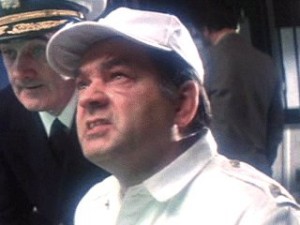
Richard Le Parmentier, Lieutenant Santino here, was the higher ranked Admiral Motti in the first Star Wars film.


Betsy Brantley did the moves for Jessica Rabbit, and was the little boy's mother in The Princess Bride last year; Mike Edmonds is Stretch here and had, er, small parts in both The Empire Strikes Back and Return of the JediReturn of the Jedi.
It should also be added that the film features a lot of classic voice actors returning to their original roles, notably Mel Blanc as Bugs Bunny and many others, and Mae Questel as Betty Boop, a role she had last performed almost fifty years earlier.
As usual, our old friends race and gender are not well served here. I saw one black actor, in a non-speaking role, Lindsay Holiday (who now lives in France and makes a living as a musician).

And it's impossible to look at the Toons – a visible minority with a vibrant musical culture, whose labour is essential to the industry, but who are subject to continual harassment, sexual exploitation and extrajudicial killing (Roger and Jessica are literally strung up by the villain) – without detecting a rather cack-handed resonance.
As for gender, well, Jessica Rabbit isn't bad, just drawn that way. (What way? Unpack that…) The animators deliberately made her breasts move in the opposite direction to real breasts – ie they bounce up when in real life they would bounce down.

What makes the film High Art is the quality of the animation. It is difficult for us now to comprehend that the Toons were hand drawn onto every single frame, in those days before CGI. We were racking our brains watching it to think of notable earlier examples – Bedknob and Broomstick and Fantasia both have live action mixed with animation, but neither for as long as this. Apparently animators still use the phrase "swinging the lamp" to describe scenes that took that crazy bit of extra effort for effects that most viewers won't even notice.

I squirmed with sympathy for Roger and Jessica, tied together and threatened with death by Dip, and I’m sure you did too.

Also a shout out to the actors, especially Bob Hoskins, reacting to empty space or place-holders of some kind, and doing it really well. (I once was Macbeth in a class production of the feast scene, and we played it both with and without a visible Banquo’s Ghost. It was much easier to get into it staring into the eyes of a spectral Banquo than reacting to an empty space.)

So, all in all, I’m putting it just above the halfway point in my ranking, ahead of Bambi but behind Soylent Green.
The film is based on a novel, Who Censored Roger Rabbit?, by Gary K. Wolf. The second paragraph of its third chapter is:
I picked up my pace, turned a corner, and ducked into a doorway.
There are broad plot similarities, but big differences: the book is set in the present day (ie 1981); the Toons are from comic strips rather than animated films; their speech is preserved in physical speech bubbles; the plot turns on a deus ex machina and the ability of Toons to create short-lived doppelgangers of themselves, and is generally less tidy than the film. One of those cases where the cinematic adaptation is a lot better than the original material.
I also got hold of the novelisation of the film, Who Framed Roger Rabbit, by Martin Noble, based on the screenplay by Jeffrey Price & Peter Seaman. Noble wrote several other 1980s novelisations, for the Kenny Everett film Bloodbath at the House of Death, the TV shows Automan, Private Schulz, Cover Up, and the Danny de Vito fims Ruthless People and Tin Men. He is still open for business. The second paragraph of the third chapter is:
‘Hmmph!’ she remarked and waddled past me.

Again, in the days before VCRs, the novelisation was the only way to re-experience the film, and this is a competent job, neither adding much to or subtracting much from the script.
The next Hugo-winning film was Indiana Jones and the Last Crusade, but I’ve already watched that. (I might do Back to the Future 2, which lost that year.) So, in due course, on to Edward Scissorhands.
My tweets
- Fri, 12:56: How performers lost out in ‘eye for an eye’ Brexit talks https://t.co/zOZniIe0Bn In brief, there was inflexibility on both sides. (Though more from London.)
- Fri, 14:59: Blowing My Cover: My Life As A CIA Spy, and other misadventures, by Lindsay Moran Lindsay Moran made a bad career choice, took a few years to realise it, and eventually did realise it. #nwbooks https://t.co/doTbb4YcyE https://t.co/7gc5AbHz33 https://t.co/hJ1xRfGsGm
- Fri, 15:25: Europe and the Recognition of New States in Yugoslavia, by Richard Caplan Good book. Caplan explains what the European policy was in theory and practice, ending with a consideration of the effectiveness of conditionality. #nwbooks https://t.co/jmHeE9Nm9j https://t.co/kvzUDlfGtk https://t.co/BnOK9V5SUo
- Fri, 15:51: Murder at the Worldcon, by J.D. Crayne This is basically a country-house murder mystery except that the setting is not a country house but a mid-1960s WorldCon. A fun and fairly brief read. #nwbooks https://t.co/spM6OnAJFI https://t.co/GPGD3Eledx https://t.co/oTYtJRInvh
- Fri, 16:17: Preacher: Ancient History, by Garth Ennis Altogether more enjoyable than any of the previous volumes, I thought, and in fact I would recommend readers wanting to get to know the series to start with this volume. #nwbooks https://t.co/RB0vsjv3nb https://t.co/8D0GSHap85 https://t.co/2kacmIlqRr
- Fri, 16:43: The Invisibles: Say You want A Revolution, by Grant Morrison Dane McGowan, high-school drop-out, is recruited by the Invisibles, a motley group of eccentrics with super-powers working behind the scenes of world politics. #nwbooks https://t.co/hqL9lns1Ut https://t.co/Sife7zU9AT https://t.co/YyINoTuVJs
- Fri, 17:09: The Push by Dave Hutchinson Excellent hard sf novella; the narrator has spent decades fleeing his own past, and it catches up with him – the dumb aliens on the planet he helped colonise turn out not so dumb after all. #nwbooks https://t.co/o9wNiYdpbT https://t.co/6UcqOcdwsS https://t.co/mKBBiOLJVy
- Fri, 17:35: Snuff, by Terry Pratchett I really enjoyed the combination of toilet humour with cold clinical rage against racial injustice; I got a little lost with some of the topography of the river. #nwbooks https://t.co/h5209LXUOW https://t.co/lDzDmxi1ky https://t.co/M3H65OGbqJ
- Fri, 18:00: RT @worldcon2021: DisCon III absolutely condemns the violent and hostile content found within Baen Books’ forums. The behavior shown goes a…
- Fri, 18:00: RT @worldcon2021: We want to thank our members for their feedback on the matter and their patience while we worked to take action. Read o…
- Fri, 18:01: London Falling, by Paul Cornell Slow start but otherwise brilliantly done, combining police procedural (including the details of the coppers’ private lives intertwining with the details of the case) with eldritch magic. #nwbooks https://t.co/HLTOy75Yml https://t.co/X9W9j39Mz2 https://t.co/o5dHxx0fyQ
- Fri, 18:11: Friday reading https://t.co/tAhg3ZLMNf
- Fri, 18:23: T.K. Whitaker: Portrait of a Patriot, by Anne Chambers https://t.co/nSL31zLDK7
- Fri, 18:36: Friday reading https://t.co/U2SzwVYHwD
- Sat, 08:25: RT @Yagathai: Welp, Worldcon did the thing and cut Toni as Guest of Honor. This is a Huge Freaking Deal in Worldcon culture, and will cause…
- Sat, 09:30: Whoniversaries 20 February https://t.co/FkZW62Aep5
- Sat, 10:45: RT @jdmccafferty: 12 May 1563: Christopher Nugent, 5th Baron Delvin matriculates at Clare College Cambridge #otd where he probably composed…
Whoniversaries 20 February
i) births and deaths
20 February 1913: birth of Rex Tucker, who is credited formally as director of The Gunfighters (1966) but also played an important role in the genesis of the show in 1963.
20 February 1954: birth of Anthony Stewart Head, who played Mr Finch/Brother Lazar in School Reunion (Tenth Doctor, 2006), Grayvorn in the 2002 Big Finish Excelis audio plays, and voiced characters in Death Comes to Time (Seventh Doctor webcast, 2001-02) and The Infinite Quest (Tenth Doctor animated, 2007) as well as doing voiceovers for many Doctor Who Confidentials. (Also Giles in Buffy, not that you needed reminding.)

20 February 1990: birth of Anjili Mohindra, who played Rani in the Sarah Jane Adventures (2008-11) and the Queen of the Skithra in Nikola Tesla's Night of Terror (Thirteenth Doctor, 2020).

ii) broadcast anniversaries
20 February 1965: broadcast of "The Zarbi", second episode of the story we now call The Web Planet. Barbara is captured first by the Menoptera and then by the Zarbi; the Zarbi get the Doctor and Ian too.

20 February 1971: broadcast of fourth episode of The Mind of Evil. The Master and his criminal helpers steal the Thunderbolt missile; meanwhile the alien inside the Keller machine is getting hungry…

20 February 2008: broadcast of Dead Man Walking (Torchwood), the one where Owen comes back to life.

T.K. Whitaker: Portrait of a Patriot, by Anne Chambers
Second paragraph of third chapter:
The sense of belonging and responsibility experienced by the Department of Finance’s new recruit on his arrival in the north block of Government Buildings on Merrion Street as a junior administrative officer on 1 June 1938 was to remain constant throughout his life. ‘It warmed my heart as a new arrival to find that everyone was friendly and accessible, that an officers’ mess atmosphere prevailed … Reaching the administrative grade in Finance, you felt you were on the golden route, at the heart of things.’ By reason of its controlling influence over other departments of state, the Department of Finance was regarded as the premier department, the Mecca for most aspiring career public servants. Divided into three divisions, Finance, Establishment and Supply, by 1938 it was still relatively small, with just some twenty-five officers occupying grades of assistant principal officer or above, all under the leadership of its legendary secretary, J. J. McElligott

I cannot say that I knew Ken Whitaker well, but he and my grandfather were close colleagues and he was an occasional presence at extended family parties in Dublin from my childhood. The last time I spoke to him, I cannot remember when, but he was already very old, he told me that in the late 1930s he had shared an office with my grandfather, who at the time was dating my future grandmother, also a civil servant. “He spoke to her on the phone in German so that I wouldn’t understand – but he didn’t realise that I spoke German too!”
They must have joined the civil service at about the same time; Whitaker, seven years younger, joined straight from high school at 18 with the highest entrance exam score in the country, while my grandfather had studied at UCD, emerging with a master's degree in physics. Whitaker's career progressed much faster – he had reached the very top of the Department before he turned 40, while my grandfather ended his career as the Department's Assistant Secretary (deputy head). If there was any resentment, I never picked up on it; my grandfather died in 1977, only a couple of years after he retired, and as I said Whitaker remained an occasional but vaguely familiar presence in my own life.
The other day, the Irish Times ran a picture of the two of them together, along with the then Minister of Finance, George Colley, launching Ireland's newly decimalised currency in February 1971, fifty years ago; my grandfather, in the middle, who had run the committee overseeing the process, looks rather ill at ease, peering anxiously at the new coins, while Whitaker, on the left, then Governor of the Central Bank, looks calm and in charge.

Anne Chambers, the author of this book, knew Whitaker well; I’ve read a couple of her other biographies, of Eleanor, Countess of Desmond and the pirate queen Granuaile, who both lived in the sixteenth century. This is much better than the other two, based on primary documentation and conversations with the subject and others who knew him. (My grandfather is not mentioned, though my father is namechecked im an appendix.)
A study of any senior official in the new Irish government as it underwent the generational shift in the decades after independence would be interesting enough. But of course Whitaker was much more important to Irish history than as a mere senior administrator. Three years into his tenure at the top of the Department of Finance, the government published what in the UK would be called a White Paper, with Whitaker's name on it, with the title "Economic Development", making a powerful case for the Irish state to raise its game in terms of public spending and fiscal planning, and encouraging foreign investment. The adoption of the plan gave Ireland a much needed boost, not just of wealth but of confidence, after almost four decades of what we would now call austerity. For once, Ireland was doing economics, rather than having economics done to it.
Chambers is very good on the detail of how Whitaker's career progressed, and how he managed to acquire the necessary political capital to successfully get major policy initiatives through a very conservative system. It's no big mystery; he just happened to possess a powerful combination of colossal intelligence combined with immense personal charm and modesty. (These are not of course assets that everyone has, even senior civil servants.) The book is disappointing though on Whitaker's intellectual journey. As a recruit direct from high school, he had had no third-level education when he became a civil servant and invested much time in distant learning through the University of London. It would have been really interesting to know what Whitaker actually learned, and to trace the roots of his economic theory, especially since it turned out to be so successful in practice.
The personal glimpses are very interesting. Whitaker was born in Rostrevor, where my father's family also lived in the 1940s, though the Whitakers had moved to Drogheda in the 1920s. His Northern links remained very strong, and he personally brokered the first Lemass / O'Neill meeting in 1965. He continued to send sensible advice on Northern Ireland to successive Irish governments until the end of the century. I cannot think of another person operating at that level of politics in the Republic who genuinely took the same level of interest in Northern Ireland over a period of decades. I cannot think of any equivalent level of long-term engagement with and commitment to Northern Ireland from any senior English, Scottish or Welsh political figure at all.
His stellar career of public service was blighted by private grief; he outlived two of his six children, a daughter-in-law, a grandchild and both of his wives. I remember talking to him (well, he was talking with a group that included me) in 1993 while his first wife was in a coma and he was spending most of his waking hours at her bedside. "You have to remember to be very respectful about her in what you say; apparently hearing is the last thing to go." I was impressed by how he was able to talk about what must have been the biggest blow of his life. (In fact, she recovered and lived a few more years; he married a much younger woman ten years later, but unfortunately was then widowed a second time.)
I can't say that this book would have huge interest outside Ireland, but it's very interesting for anyone wanting to understand the trajectory of the Irish state in the third quarter of the twentieth century. You can get it here.
This was the non-fiction book that had lingered longest unread on my shelves. Next on that list is Romeinse sporen: het relaas van de Romeinen in de Benelux met 309 vindplaatsen om te bezoeken, by Herman Clerinx, a guide to Roman remains in Belgium.

Friday reading
Current
Titus Alone, by Mervyn Peake
Three Daves, by Nicki Elson
Chasm City, by Alastair Reynolds
Last books finished
A Buzz in the Meadow, by Dave Goulson
A.I. Revolution vol 1, by Yuu Asami
Bold As Love, by Gwyneth Jones
Who Censored Roger Rabbit? by Gary Wolf
Pūrākau: Māori Myths Retold by Māori Writers, edited by Witi Ihimaera and Whiti Hereaka
A Wizard’s Guide to Defensive Baking, by T. Kingfisher
Who Framed Roger Rabbit, by Martin Noble, based on the screenplay by Jeffrey Price & Peter Seaman
Next books
Goodbye To All That, by Robert Graves
Science Fiction: The Great Years, eds. Carol and Frederik Pohl