
- Sat, 12:07: RT @SJAMcBride: The emerging DUP-Sinn Féin deal collapsed as DUP members’ phones were “red hot” with calls from unprepared supporters, some…
- Sat, 12:56: BBC Books confirm Target novels’ return https://t.co/FkvZOustCm Hooray!
- Sat, 15:23: Outrageous Tales from the Old Testament https://t.co/2zAJakddKq
- Sat, 16:01: RT @alexwilcock: @nwbrux I remember the bears you quote from 2nd Year Scripture. I read ahead, found it, then read it aloud with impious gl…
- Sat, 16:05: I Worked For Oxfam For Eight Years. Its Aid Is Vital But The Sector Must Change https://t.co/hutihab5nh My former colleague @MayaMailer.
- Sat, 18:10: Ben Bradley apologises unreservedly for Corbyn spy claims https://t.co/LjfF2ghIQO Good.
- Sat, 18:31: RT @apcoworldwide: Over the weekend, APCO CEO @BradStaples attended the #MunichSecurityConference. In this video, he shares three takeaways…
- Sat, 20:48: New Maps Reveal Global Fishing’s ‘Vast Scope Of Exploitation Of The Ocean’ https://t.co/0GjGJ3Drjc Where the fish on your table come from.
- Sun, 10:36: RT @bbradleymp: On the 19th of February I made a defamatory statement about @jeremycorbyn. I have apologised to Mr Corbyn and here is the c…
- Sun, 10:45: Usutu-virus leidt tot historisch dieptepunt van aantal merels in Vlaanderen https://t.co/7DTNrTKcN8 The blackbirds are dying.
Outrageous Tales from the Old Testament
Second frame with dialogue of third chapter (for context, Moses has didactically asked the Israelites what it is that he does not want to see when he gets back from answering God’s phone call; this particular story is by Alan Moore and Hunt Emerson, adapted from Leviticus 20):

Thirty years ago, in 1987, Knockabout Comics produced this adaptation of fourteen Old Testament stories by leading comics artists; I got it as part of the Neil Gaiman Humble Bundle a few years back, he being the author of six of the fourteen stories (including Jael and Sisera as illustrated by Julie “Jewelz” Hollings, the only woman artist in the mix, who also illustrates an adaptation of Ecclesiasticus 42:9-11 by Knockabout publisher Carol Bennett).
There are some truly grim and nasty stories in the Old Testament, and while it would be very easy to just point and laugh, the art and stories here are from creators at the top of their game, taking the Bible at its word and confronting us with what is actually in scripture. It was still a bit subversive in 1987 – Knockabout were being regularly harassed by UK authorities for importing subversive comics from the USA, and Outrageous Tales from the Old Testament narrowly avoided legal action in Sweden. We are being challenged to think about why some forms of expression should be allowed if they are labelled as Scripture, and not otherwise. It’s a debate that has of course moved on to non-Christian religions too since 1987.
My favourite of these is the last one, adapted by Brian Bolland (who for some reason does not get a cover credit) from 2 Kings 2:23-25. It portrays graphic violence, so I’ll just link from the text:

With a big grin.
You can get it here.

My tweets
- Fri, 12:00: ‘Mad Max’ Brexit and other dystopian visions for leaving the EU https://t.co/Vabar63ayG via @financialtimes
- Fri, 12:40: RT @BelgiumMFA: Watch Minister of Foreign Affairs @DReynders as he addresses the closing plenary #CEPSlab18 on ´ The Way Forward’ #The…
- Fri, 12:43: RT @LilyanaPavlova: Looking forward to my participation at #CEPSLab2018 #EuropeBackOnTrack. At 12.30 today discussing the perspectives for…
- Fri, 12:51: RT @tobyvogel: The Brits were an excuse for EU member states not to introduce more majority voting in Council – after Brexit this should be…
- Fri, 12:56: Ten Lies Distort The Gun Control Debate https://t.co/eLwmXZXA7v Well worth reading for us non-USians to grasp some… https://t.co/XL47b4uhxU
- Fri, 12:56: RT @JordanIva: A discussion on the Copenhagen criteria, prior to and after accession w/@Dimitrov_Nikola at the #CEPSLAB18 https://t.co/cS8f…
- Fri, 13:03: RT @CEPS_thinktank: Minister @LilyanaPavlova speaks at #CEPSlab18 : Europe is back! #EU2018BG @EU2018BG https://t.co/jSbrAFGlUG
- Fri, 13:11: RT @LinaVosyliute: @LilyanaPavlova #CEPSlab18 @BgPresidency 4 key priorities: #youth #security & break through on #DublinRegulation, #Balka…
- Fri, 13:12: RT @BehorizonOrg: Minister for the Presidency of the #EU of #Bulgaria @LilyanaPavlova “I am more optimistic about future of #Europe” #CEPSl…
- Fri, 13:13: RT @SDDecleve: Europe is back! #Brexit has reminded us of the importance of #Europe @LilyanaPavlova #CEPSlab18 https://t.co/5Nj0s2WYiQ
- Fri, 13:19: RT @AkhvledianiTina: Youth Unemployment, security&migration, connectivity of western Balkan countries and Digital economy are the main prio…
- Fri, 13:22: RT @CEPS_fp: #CEPSlab18 @Dimitrov_Nikola @CalaveraRuiz @jovanam @tenaprelec https://t.co/QphnRoAvcP
- Fri, 13:36: RT @BehorizonOrg: Minister for the Presidency of the #EU of #Bulgaria @LilyanaPavlova answering questions “Single market is our main value…
- Fri, 14:38: RT @NathalieTocci: My message to the next Italian government on how we should reorient our foreign policy (which is unlikely to be heard gi…
- Fri, 14:43: Ivan Krastev quotes Dan Quayle: “The future will be better tomorrow.” #CEPSlab18
- Fri, 14:56: RT @cianfmccarthy: “In Germany, the number of people who have emigrated from an area is a better predictor of votes for AfD than the number…
- Fri, 15:00: RT @katarzynasz: Ivan Krastev on #CEPSlab18 the important experience of 68 in the Western was about sovereignty of individual and Eastern E…
- Fri, 15:03: Ivan Krastev speaks of “majoritarian moment” in European democracies, where rights of majorities are placed above r… https://t.co/pcCjqBAfyw
- Fri, 15:07: RT @JordanIva: “In Central and Eastern Europe, we have full-package conservatists.” Ivan Krstev at #CEPSLAB18
- Fri, 15:12: RT @askitas: Ivan Krastev at #CEPSlab18: be at the table or be on the menu.
- Fri, 15:12: RT @ThPellerin: ‘Thinking like a #European means #thinking like the most vulnerable #nation on each topic. On Russia, think like an Estonia…
- Fri, 15:13: RT @HeatherGrabbe: Ivan Krastev’s splendid lecture: “In Western Europe, you can have an openly gay far-right leader. But in Central Europe…
- Fri, 15:13: RT @HeatherGrabbe: Ivan Krastev on why Central Europeans won’t follow Brexit: “We know that if you’re not at the table, you’re on the menu”…
- Fri, 15:19: RT @ThPellerin: @MeSaare @nwbrux My bad. I think Krastev said “Baltic”. So i shld have named all three of them 🙂
- Fri, 15:23: RT @aoifewhite101: “Orange medley” for dessert – is this code for an EU summit discussion on the collapse of Northern Irish power-sharing?…
- Fri, 15:26: RT @askitas: Ivan Krastev at #CEPSLab18: a political scientist‘s reaction to an economist‘s prediction is to ask: „before or after the elec…
- Fri, 15:50: Ivan Krastev: China is becoming a European power… China is the biggest investor in Serbia. #CEPSlab18
- Fri, 16:05: Tackling Women’s Underrepresentation in U.S. Politics: Comparative Perspectives From Europe https://t.co/AHJmNjsGfB… https://t.co/sEsxxHemSD
- Fri, 18:22: RT @krassenstein: BREAKING: First National Bank of Omaha just dumped the NRA and will no longer issue NRA Visa cards! Show your appreciati…
- Fri, 18:22: 1943 Retro Hugo for Best Related Work: C.S. Lewis on Paradise Lost, Hamilton’s Mythology https://t.co/X00MTcEaSW
- Fri, 18:37: RT @TimmermansEU: .@michaelgove One step ahead of you. EU legislation on single-use plastics coming before the summer. Maybe you can align…
- Fri, 20:14: RT @damonwake: Irish PM @campaignforleo weighs in as well, saying the 3 baskets approach is “not a signficant move away from having your ca…
- Fri, 20:48: Luther vs. Erasmus: When Populism First Eclipsed the�Liberal�Elite https://t.co/hasvieYHYz A historical perspective.
- Fri, 22:11: Interesting. Suggests that LAB should expect to lose, having gained in 2014 and 2010; and CON and LD, who lost in t… https://t.co/g4QLw6Qiic
- Sat, 10:31: RT @JenniferMerode: Three baskets is known as advanced cake theory in Brussels. (My entry for most ridiculous sentence that has real meanin…
- Sat, 10:45: The Worst Board Game Box Art Ever – Look If You Dare! https://t.co/rPLpPFNJNM I actually own one of these.
1943 Retro Hugo for Best Related Work: C.S. Lewis on Paradise Lost, Hamilton’s Mythology
This year is the sixth time that Retro Hugos have been awarded, following 1996 (for 1946), 2001 (for 1951), 2004 (for 1954), 2014 (for 1939) and 2016 (for 1941). However, only once has the category of Best Related Work attracted enough interest to justify a Retro Hugo, in 2004, when Conquest of the Moon by Wernher von Braun, Fred L. Whipple and Willy Ley saw off two other contenders. So there have been three finalists in five rounds of awards.
This year we are considering work of 1942, and skimming through Goodreads I spotted two books that fall outside the genre as it would have been seen by the hypothetical voters of the non-existent 1943 Worldcon, but arguably could be considered as included by the current rubric, which is:
Any work related to the field of science fiction, fantasy, or fandom appearing for the first time during 1942 or which has been substantially modified during 1942, and which is either non-fiction or, if fictional, is noteworthy primarily for aspects other than the fictional text, and which is not eligible in any other category.
The two books in question are Mythology: Timeless Tales of Gods and Heroes, by Edith Hamilton, and A Preface to Paradise Lost, by C.S. Lewis. So I have had a good look at them both (read the Lewis completely and the first 100 pages of the Hamilton) and reflected on whether they are good candidates for the second ever Retro Hugo for Best Related Work.
A Preface to Paradise Lost, second paragraph of third chapter:
The Primary Epic will be illustrated from the Homeric poems and from the English Beowulf, and our effort here, as throughout the present discussion, will be to discover what sort of thing the Primary Epics were, how they were meant to be used, what expectations they hoped to satisfy. But at the very outset a distinction must be made. Both Beowulf and the Homeric poems, besides being poetry themselves, describe poetical performances, at feasts and the like, proceeding in the world which they show us. From these descriptions we can gather what the epic was in a heroic age; but it does not follow that Beowulf and the Homeric poems are themselves the same kind of thing. They may or may not be what they describe. We must therefore distinguish the literary conditions attributed to the heroic age within the surviving poems, which, since they are described, can be studied, from the literary conditions in which the surviving poems were themselves produced, which can only be conjectured. I proceed, then, to some account of the literary conditions which Homer describes.
C.S. Lewis had a good year in 1942; he was a regular broadcaster on the BBC, he was working on Perelandra, and he also published The Screwtape Letters (which are certainly on my Best Novel Best Novella ballot). A Preface to Paradise Lost is 150 pages of detailed analysis of the epic poem, the first half looking at the epic style in itself, and the second half looking at Milton’s ideas of Christianity. I’m more familiar with the other epics, and found the first half tremendously rewarding reading, though Lewis’s feud with T.S. Eliot is a little wearying. A very interesting examination of what epic poets are trying to do.
However, I think Lewis himself clearly does not regard the book as related to the field of science fiction, fantasy, or fandom. He comments that Dante (who he otherwise doesn’t discuss much) can be seen as in the same tradition as Jules Verne and H.G. Wells, but clearly separates them from Homer, Virgil, the author of Beowulf and Milton as doing very different things. I doubt that the hypothetical voters of the non-existent 1943 Worldcon would have put this on their final ballot, and more important, I doubt that Lewis would have accepted nomination if offered the choice. (Unlike The Screwtape Letters, which clearly has some sfnal roots.)
Oddly enough, the second paragraph of the third chapter of Mythology: Timeless Tales of Gods and Heroes starts with a quote from Book VII of Paradise Lost:
First there was Chaos,
the vast immeasurable abyss,
Outrageous as a sea, dark, wasteful, wild.These words are Milton’s, but they express with precision what the Greeks thought lay back of the very first beginning of things. Long before the gods appeared, in the dim past,uncounted ages ago, there was only the formless confusion of Chaos brooded over by unbroken darkness. At last, but how no one ever tried to explain, two children were born to this shapeless nothingness. Night was the child of Chaos and so was Erebus, which is the unfathomable depth where death dwells. In the whole universe there was nothing else; all was black, empty, silent, endless.
This re-telling of Greek (and some Roman and Norse) legends was apparently the classic school textbook of classical mythology for decades of American schoolchildren. I read only the first hundred pages (of 329), but I think it is enough to get a feel for it. In the introduction, she makes very large claims for the unique quality and modernity of Greek myth, where a similar collection today would stress the links with other neighbouring cultures and might also look at how this particular set of stories became elevated above others. The retelling of the actual stories is breezy enough, and jumps lightly over the amorous activities of Zeus. It’s pretty comprehensive, but I think my heart is still with Roger Lancelyn Green’s versions which have a little more bite to them, not having been written as a school text book.
I also don’t think that Mythology qualifies as a Best Related Work. It is not non-fiction, nor is it “noteworthy primarily for aspects other than the fictional text”. The most noteworthy part of the book, its very core, is Hamilton’s retelling of the fictional myths. It might perhaps be a potential finalist for Best Novel, but there are a lot of better candidates (see my previous post on 1942 sff novels by women and writers of colour). So I suspect that there will be no award for Best Related Work in this year’s Retro Hugos; and that’s not such a terrible thing.


My tweets
- Thu, 12:01: Noord-Iers jongetje schrijft brief aan Rode Duivels en krijgt antwoord https://t.co/ASeN2IIH5q This is a lovely story.
- Thu, 12:56: The Karabakh Conflict as “Project Minimum” https://t.co/vmhToluN5Z Gloomy but accurate from @Tom_deWaal.
- Thu, 13:11: At CEPS Ideas Lab! #CEPSlab18 (at @TheEGGBrussels in Anderlecht, Brussels) https://t.co/ckTeD4FlUH
- Thu, 13:17: RT @Mina_Andreeva: .@JunckerEU #CEPSlab18 “We are a Union of #solidarity. In 2016 alone, we offered asylum to three times as many refugees…
- Thu, 13:19: RT @CEPBelgrade: There is a need to bring #WesternBalkans closer to the #EU, said @JunckerEU at the #CEPSlab18
- Thu, 13:55: It was a rather abrupt answer. But of course it is for the UK, not Juncker, to make proposals at this stage.… https://t.co/GUl5waPAaL
- Thu, 14:13: Most memorable #CEPSlab18 line. https://t.co/6IlHx8mgaX
- Thu, 14:14: RT @dannyctkemp: Juncker on top form. Says commission used to be accused of not being political enough. ‘Now we are too political. Je m’en…
- Thu, 14:55: Ian Paisley’s widow savages DUP leader, calling for “confession” https://t.co/6HSEwKtymB Harsh.
- Thu, 15:15: Public Cervix Announcement https://t.co/W70ehxLxuq Vivid personal account from @georgiaetennant.
- Thu, 16:05: You need to read the letter from Corb’s lawyers to Ben BRADLEY Tory MP https://t.co/VJBEn0rvEn I am no Corbyn fan,… https://t.co/tICKDvEwlc
- Thu, 17:15: Sailor in a Russian Frame https://t.co/vwdR8teYw1 The strange case of Anthony Courtney MP.
- Thu, 18:46: A Tangle Of Fates, by Leslie Ann Moore https://t.co/EKsOHk1A5E
- Thu, 20:48: My Voice-Over Life https://t.co/0uYNCJ5oVo @Sophie_Aldred on the art of audio.
- Fri, 06:34: RT @belledejour_uk: Irish journalist @OlafTyaransen sexually assaulted @GlasgaeLauraLee – and he’s getting away with it [Content note: grap…
- Fri, 08:11: RT @CEPS_thinktank: Not registered? You can follow the livestream of #CEPSlab18 closing plenary starting 12:30pm by @dreynders @LilyanaPav…
- Fri, 10:45: Brexiteers launch broadside at Northern Ireland peace deal https://t.co/Jks4GUqFme Lunacy.
A Tangle Of Fates, by Leslie Ann Moore
Second paragraph of third chapter:
Two hours had passed since Ledesme had nearly met his death in the jaws of the kymera. Night had fallen, ushering its own distinctive chorus of nocturnal performers onto the stage of ruins surrounding the expedition’s camp.
This was a slightly unusual acquisition at Loncon 3 – the author was staying in the same hotel as us, the Prince Regent on Prince Regent Lane, and we got to know each other over breakfast. The book itself is a decent enough tale of elite family politics and slightly steampunk technology in a world which resemble, but is not quite the same as, a heavily Hispanic Southern California. All very richly imagined.
This was the top book on my to-read list by a non-white author; next is Jade City by Fonda Lee.

My tweets
- Wed, 12:56: Who Benefits from the Collapse of Power Sharing? https://t.co/k1UajH66qr @gerrylynch works it out.
- Wed, 16:05: GDP per Capita in Europe in 1890 (in 2017 $) https://t.co/aspdN9Kcl5 Another Brilliant Map.
- Wed, 18:13: Doctor Who and the Krikkitmen, by Douglas Adams and James Goss https://t.co/7IDgxW4ZkN
- Wed, 20:48: The Strange and Twisted Life of “Frankenstein” https://t.co/a5KDwBLvhZ Brilliant long piece.
- Wed, 23:51: RT @WhovianFeminism: A #MeToo moment unfolded at @gallifreyone as cast and crew members revealed harrowing stories from their careers. Ther…
- Thu, 01:54: RT @bbclaurak: Govt source accepts UK has softened its position on EU citizens being able to come and settle in UK after Brexit during tran…
- Thu, 08:08: Thread. https://t.co/oRwqZvDldl
- Thu, 09:01: Whovian Feminism — A #MeToo Moment Unfolds At Gallifrey One https://t.co/dUs9pYfDav Extraordinary, and involves my own relatives.
- Thu, 10:45: RT @supermathskid: “Managing Expectations”: a play in four acts https://t.co/o1VAewgV6d
Doctor Who and the Krikkitmen, by Douglas Adams and James Goss
Second paragraph of third chapter:
Sometimes the Doctor vanished loudly, with a comforting little yell as he fell into something.
This is surely the last of the unpublished Douglas Adams scripts to surface. Back in 1976, Adams had actually submitted a story outline to Robert Holmes involving warlike aliens with a peculiar connection to cricket – this in itself was surely inspired by "Volcano", the seventh episode of one of my very favourite stories, the epic Daleks' Master Plan, broadcast on New Year's Day 1966, in which the TARDIS, pursued by Daleks, materialises at Lord's during a cricket match. Actually, never mind me, here's Dennis Spooner's script:
6. LORDS CRICKET GROUND
(In the radio commentary box, two commentators, Trevor and Scott, are watching England play a test match against Australia.)
TREVOR: Well, the English batsmen are really fighting against the clock now, Scott.
SCOTT: My word, yes. Seventy eight runs in forty five minutes to win.
TREVOR: It really has been an exciting game, hasn't it, Scott?
SCOTT: Very exciting.
TREVOR: Well, let's have a look at the scoreboard, shall we?(The TARDIS materialises on the outfield.)
TREVOR: Now, you'll see… Goodness me, take a look at that, Scott.
SCOTT: Take a look at what, Trev?
TREVOR: There's a Police Telephone Box on the pitch.
SCOTT: My word, yes.
TREVOR: Well this really is extraordinary. You don't remember anything like this happening before, do you, Scott?
SCOTT: No. (pauses to think) No.
TREVOR: (looks behind him to where a researcher is hastily poring over cricketing manuals) Well, anyway, Ross is looking through the record books and if there has been anything like it before, I'm sure he'll find it for us.
SCOTT: You know, Trev, this puts a new light on the game.
TREVOR: What light's that, Scott?
SCOTT: Well, I know your ground staff are excellent, but even assuming they get rid of it in say, ten minutes, England will still have to get their seventy eight runs in… thirty five minutes.
TREVOR: Yes; yes well I think we can safely say this has been a very bad break for England.
SCOTT: A very bad break. Especially as the weather's been holding off so well.
TREVOR: Yes it has, hasn't it. Been holding off remarkably well. Well, let's have another look at the scoreboard shall we, although not very much has been happening these last few…
SCOTT: It's making a funny noise.
TREVOR: What's that, Scott?
SCOTT: A funny noise coming from the Police Box.(The TARDIS dematerialises.)
SCOTT: It's gone again, Trev.
TREVOR: Yes, so it has. Well that wasn't too bad was it, Scott?
SCOTT: Two and a half minutes, I make it, Trev.
TREVOR: Yes, well there's the position. England wanting seventy eight runs in forty two and a half minutes to win.7. INSIDE THE TARDIS
THE DOCTOR: Yes, it's definitely some sporting occasion.
SARA: Oh, I hardly think so, Doctor.
STEVEN: Was it on Earth, do you think?
THE DOCTOR: Oh, possibly, my dear fellow, possibly.
The cricket commentators Trevor and Scott were played respectively by Roger Brierley and Bruce WightmanHammersmith Park, with a miniature model Tardis used for the shot. The whole episode is, alas, completely lost from the archives apart from a few photographs. However Loose Cannon have done a reconstruction with archive pictures and their own externally sourced footage; you can watch it here with the cricket section starting at 08:12. (It has been unsportingly pointed out that although England were indeed playing Australia the day the episode was broadcast, the match was in Melbourne rather than St John's Wood. It was a draw.)
Douglas Adams fans will at this point be shifting uncomfortably and muttering that this whole plot was basically recycled into the third Hitch-Hikers Guide to the Galaxy book, Life, The Universe and Everything, published in 1982 (also available as an audio play recorded in 2003, featuring a posthumous appearance by Douglas Adams). And that's basically right. The two stories share the vicious Krikkitmen, whose planet is trapped in a timewarp, and who are seeking to restore a cosmically important artifact which is shaped like a wicket and has five parts scattered through the cosmos. (That last bit will also be familiar to Who fans from the Key to Time.) So, given that James Goss is trying to channel the spirit of Douglas Adams in rewriting a Doctor Who story that Adams himself had already rewritten, is there really any point?
Actually, yes. It works rather well. Goss has updated Adams' original Fourth Doctor/Sarah concept to include instead the second Romana and K-9, which effectively sets the story around the same era as City of Death, also of course recently novelised. And he takes Adams' core concepts and runs with them in a different direction, while remaining aligned with the story's original core. In particular, he has paid a bit more internal homage to the continuity of the Time Lords and Gallifrey than Adams was interested in doing, which does make it knit more easily into the Whoniverse. The one scene that doesn't work particularly well is the early passage of the Krikkitmen's massacre at Lords; massacres are not terribly funny, and Goss doesn't really try to make this one funny either, but it therefore falls rather flat. However, it's possible to blame Adams at least as much for that misfire. After that, we go to interesting places, on an enjoyable and yet slightly terrifying journey.
This isn't the best Goss or Adams story, and to be honest I would probably have enjoyed it more if I cared even slightly about cricket (which I don't). But it's well worth a look even for non-completists.

My tweets
- Tue, 12:56: ‘Painful’: Citizens count Brexit’s personal cost https://t.co/r1074Vmm71 For the record.
- Tue, 16:05: Cooking with Ursula K. Le Guin https://t.co/RrGkKOSAin Recipes of the planet Winter, including hot beer.
- Tue, 18:16: BSFA Best Artwork 2017 https://t.co/tqia5BAbtS #3
- Tue, 20:48: RT @ranarama: Anyone who thinks gamers invented “I can’t stop until I reach a save point” has never lived with a knitter.
- Tue, 21:08: RT @bbcdoctorwho: New Doctor, New Series, New Logo #DoctorWho https://t.co/qpXoEcvFHv
- Tue, 21:10: Not ashamed that I got this question wrong on @hqtrivia! https://t.co/dfeOQOoM0K
- Tue, 22:41: Nebula nominees: Goodreads/LibraryThing stats https://t.co/PyWcVtsgEy
- Wed, 08:11: RT @SamCoatesTimes: So what does the letter from 62 Tory MPs mean? What do their demands amount to and how different is it from what the ca…
- Wed, 10:45: No evidence Corbyn was a communist spy, say intelligence experts https://t.co/lKrX28ScTG The story doesn’t Czech out. (Sorry!)
Nebula nominees: Goodreads/LibraryThing stats
Full list is here.
Not sure why there are seven Best Novel nominees?
Well, for what it is worth, there is a clear front-runner!
| Goodreads | LibraryThing | |||
| owners | av rating | owners | av rating | |
| The Stone Sky, by N.K. Jemisin | 39231 | 4.4 | 455 | 4.33 |
| Six Wakes, by Mur Lafferty | 18424 | 3.86 | 248 | 3.95 |
| Spoonbenders, by Daryl Gregory | 22374 | 3.99 | 175 | 3.97 |
| The Strange Case of the Alchemist’s Daughter, by Theodora Goss | 17965 | 3.79 | 173 | 3.97 |
| Autonomous, by Annalee Newitz | 15519 | 3.64 | 158 | 3.81 |
| Amberlough, by Lara Elena Donnelly | 6899 | 3.96 | 91 | 4.23 |
| Jade City, by Fonda Lee | 7386 | 4.0 | 73 | 3.92 |
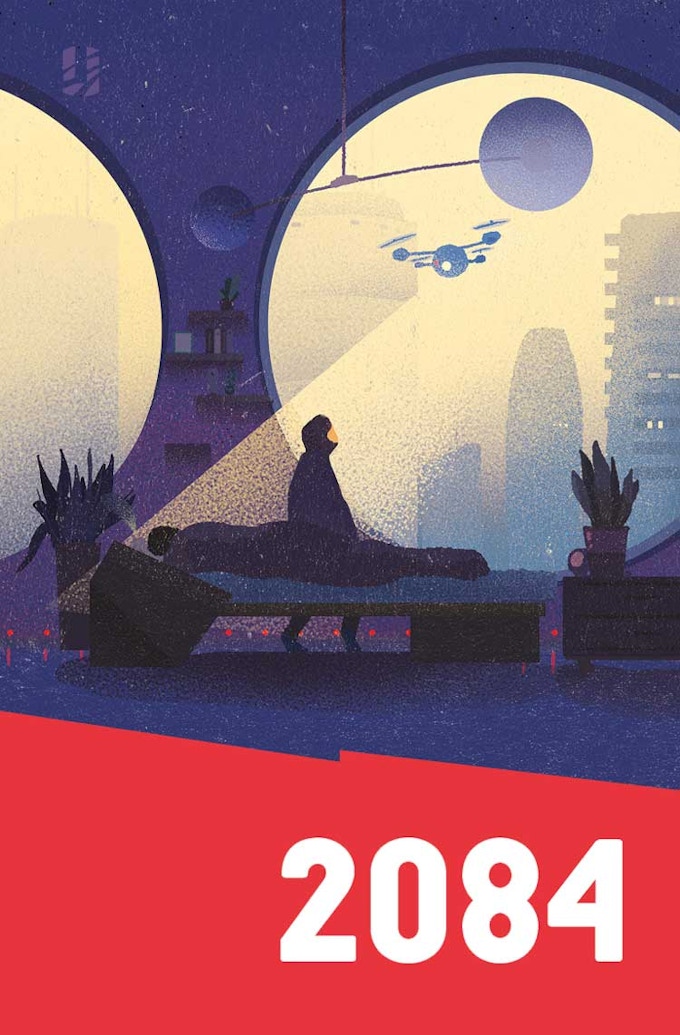
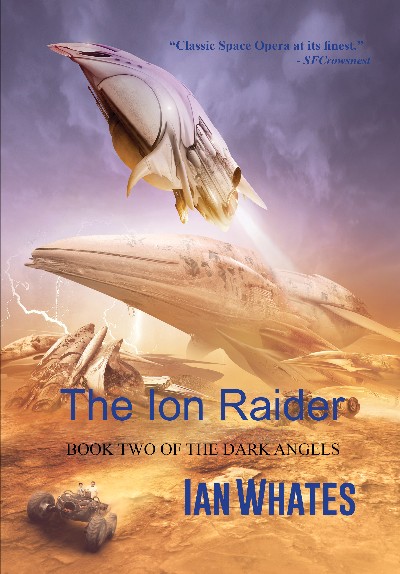
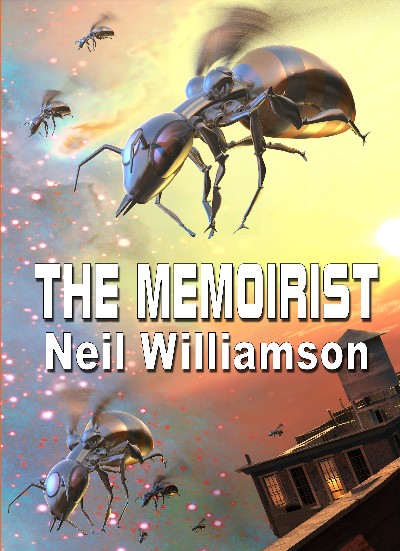
BSFA Best Artwork 2017
I may not know much about art, but I know what I like; and I found it fairly easy to rank the six shortlisted artworks for this year’s BSFA Awards. My top three and bottom two were all very close, though.

My first preference goes to Geneva Benton – Sundown Towns (cover for Fiyah Magazine #3). Incidentally it is the only one of the six which features a person looking directly at the viewer. There’s a lot going on here with strong, memorable use of colours.


Second preference to Galen Dara – Illustration for ‘These Constellations Will Be Yours’ by Elaine Cuyegkeng (Strange Horizons). Tension between various parts of the picture, inviting us to find out the connection between the two figures, one curled up, one possibly imprisoned and gazing down.

Third pref to Victo Ngai – Illustration for ‘Waiting on a Bright Moon’ by JY Yang (Tor.com)
Fourth, Marcin Wolski – Cover for 2084 edited by George Sandison (Unsung Stories).

Fifth, Jim Burns – Cover for The Ion Raider by Ian Whates (NewCon Press)

And finally, Chris Moore – Cover for The Memoirist by Neil Williamson (NewCon Press)
I’ve recorded my vote for seven of the last eight years, and four times out of seven my top preference won (2009, 2011, 2014, and 20162010, 2013 and 2015 the voters chose differently to me, sometimes very differently.
Best Novel | Best Short Fiction | Best Non-Fiction | Best Artwork
My tweets
- Mon, 12:56: RT @JohnOBrennan2: Catholic elders wonders why the church is pushing people away. A few answers provided here. https://t.co/PZCZhPo0WP
- Mon, 15:34: RT @MSmithsonPB: Love this https://t.co/A0lylpFIRJ
- Mon, 16:05: RT @cstross: “No longer will you have to worry about your name being sold to a mailing list the specializes in junk mail.” https://t.co/rGc…
- Mon, 18:19: Monday reading https://t.co/HU2Y4yNm6k
- Mon, 20:41: RT @GerryHassan: .@David_Goodhart ‘The Road to Somewhere’ talks of #indyref & “Scandinavian heritage Scots in the Faroes”. Bit of howler as…
- Mon, 20:48: The archaeological legacy of the Crossrail excavations https://t.co/yxHhBkhYbT Fascinating!
- Mon, 21:34: Midsummer Night’s Dream
- Tue, 08:33: RT @OwenSmith_MP: .@KateHoeyMP @OwenPaterson & @DanielJHannan are reckless & utterly wrong to question the value and sustainability of the…
- Tue, 10:45: The 2014 European Parliament elections, under the 2019 rules https://t.co/hQPyRm214G How the proposed new voting sy… https://t.co/gEtEqc2ccI
Monday reading
Some long travels during the week, followed by some short books over the weekend.
Current
Toast, by Charles Stross
Seventeen Equations that Changed the World, by Ian Stewart
Grand Canyon, by Vita Sackville-West
Last books finished
Who Is The Doctor, by Graeme Burk and Robert Smith?
Rebecca, by Daphne du Maurier
He, She and It, by Marge Piercy
Hoger dan de bergen en dieper dan de zee: kroniek van een migrant, by Laïla Koubaa and Laura Janssens
Four Doctors, by Paul Cornell and Neil Edwards
The Sudden Appearance of Hope, by Claire North
Outrageous Tales from the Old Testament, by Arthur Ranson, Donald Rooum, Dave Gibbons, Alan Moore, Hunt Emerson, Neil Gaiman, Mike Matthews, Julie Hollings, Peter Rigg and Dave McKean
A Preface to Paradise Lost, by C.S. Lewis
Mythology: Timeless Tales of Gods and Heroes, by Edith Hamilton (first 100 pages)
The Uninvited, by Dorothy Macardle
Parallel Lives, by Simon Guerrier, Rebecca Levene, Stewart Sheargold and Dave Stone
Next books
Planesrunner by Ian McDonald
"Time Considered as a Helix of Semi-Precious Stones", by Samuel R. Delany
Gulliver's Travels, by Jonathan Swift
My tweets
- Sun, 12:56: RT @mrjamesob: My youngest has had my old phone for a couple of years. Just for games, which I download for her before disconnecting the in…
- Sun, 15:45: The Power of the Daleks – animated https://t.co/qx8saaPDUk
- Sun, 16:05: RT @KevinMKruse: As Florida insists there’s nothing it can do to stop a 19-year-old from buying an AR-15 and shooting up a school, please r…
- Sun, 16:06: RT @KeohaneDan: I want as close an EU-UK defence relationship as possible post-Brexit, for lots of reasons. But, rightly or wrongly, there…
- Sun, 18:40: RT @apcoworldwide: #MSC2018 is a perfect example of this nexus of expertise and policy influence between politics, academics, and corporate…
- Sun, 18:43: @cstross Did you realise that “Dechlorinating the Moderator” takes place at the end of next month?
- Sun, 20:48: Our View: Cyprus now paying for Crans-Montana failure https://t.co/30mmK6uJ65 Yep.
- Mon, 10:45: RT @EleanorRylance: Here’s my wish list for this year: 1) #stopbrexit 2) #ProportionalRepresentation @MakeVotesMatter 3) Far Right to sink…
- Mon, 10:54: RT @damonwake: Back at the crease in Brussels after an excellent trip to Sofia last week. Thanks to @nwbrux and @AntoinetteNikol for their…
The Power of the Daleks – animated
A lot of the Doctor Who stories starring Patrick Troughton as the Second Doctor were destroyed by the BBC in the 1970s, surviving only in audio taped by fans, photographs taken on set and a few clips that were preserved by happenstance. One of the most grievous losses is the very first Troughton story, The Power of the Daleks, originally shown in six episodes in late 1966 and never seen in the UK again. (Rumours still circulate of exported copies surviving in some unlikely ex-colonial archive.)
However, to mark the 50th anniversary of the original showing, the BBC released an animated version using the original sound-track but hand-drawn images. I got it for the Christmas before last, but have only now got around to watching it. Here is the trailer:
Before I get into the new material, here's what I wrote when I first listened to the audio of this story in 2006, with linking narration by Anneke Wills who played the Doctor's companion Polly on screen:
I loved The Power of the Daleks, sadly available on audio only (or BBC photonovel here). I was busily spotting foreshadowings in the first couple of episodes – Lesterson, the scientist who has recovered a crashed Dalek spaceship, is a combination of Henry Van Statten (from the Ninth Doctor story, Dalek) and Davros (from Genesis of the Daleks, not the later inferior versions), and some lines seemed to me to have been lifted direct from here to the later stories.
The suspicion of Ben and Polly as to the credentials of the new man in the Tardis are entirely understandable, particularly given his habit of referring to "the Doctor" in the third person. But confusion of identity is rather a theme in the story anyway: the Doctor is immediately taken by the colonists of Vulcan to be the Examiner from Earth; the Daleks are pretending to be helping the humans (few more chilling lines than the mendacious "I am your servant!" chant which ends episode 2); the humans themselves are so factionalised that nobody seems entirely sure who is on which side.
Robert James as Lesterson was particularly good, undergoing transition from blinkered scientist, to seeing the error of his ways, to breaking down completely. I was also impressed by Pamela Ann Davey as Janley, an actual serious role for a female character. Polly does not appear in epsiode 4 (presumably Anneke Wills was taking the week off? Obviously anticipated since she is kidnapped half way through the previous episode); Ben, irritatingly, keeps wanting to go back to the Tardis and get out of the place. But Patrick Troughton's Doctor, perhaps a little uncertain at first (and hiding behind that annoying habit of playing the recorder) comes into his own pretty quickly, and by the end of the story you know who's Who.
In 2010, I went a step further and watched the bootleg animation of the Anneke Wills voiceover synchronised with the official telesnaps, photographs taken during production (which is also included as a bonus feature with the new animation). I wrote:
I have the unfashionable view that The Power of the Daleks is the better of the two Troughton stories featuring the malignant pepperpots. It's a story about identity and motivations, with the new Doctor trying to establish the same confidence with his companions that the Daleks are attempting with the human colony on Vulcan, each of them masquerading (as the Examiner, and as servants, respectively). There are several very impressive performances here: Robert James as deluded Lesterson, moving from naïve credulity to horror at the magnitude of his mistake; Bernard Archard as the ambitious Bragen, nine years before he returned as Marcus Scarman, once again a human who dooms himself by trying to cut a deal with destructive alien forces; Pamela Ann Davy as Janley, an unusually strong female part for the era; and most of all, Peter Hawkins given far more than usual to do as the Daleks pretend to be servile.
This is also of course Troughton's debut, and although Ben and Polly may not be sure who he is, we the audience are left in no doubt; partly from the way he dominates as an actor, but also by the fact that we are reassured in non-verbal ways by the way in which it is directed. Yet this is a new Doctor, brave but also terrified, fighting the Daleks not from outrage but from fear, while tootling on his recorder and wearing a funny hat. The programme is going in a new direction.
So I knew the story reasonably well (having also read the novelisation) and was ready to appraise the new animated version as a third iteration, attempting to replace the lost video footage.
I have to say I was a bit disappointed. The style of animation is not all that naturalistic – real drama, including the surviving clips, has people moving around a lot; the animation can't really do that. While the Doctor and Polly (and some of the guest cast) are reasonably well drawn, the Doctor's other companion Ben does not look at all like the character as portrayed on screen by Michael Craze. Oddly enough the Daleks, inhuman as they are, seemed to me to survive the process best.
At the same time I picked up a couple more things from the plot that I don't think I had noticed before. It is the Daleks who recognise the new man as their enemy the Doctor, which is the crucial point that convinces Ben and Polly that it is still their friend. Lesterson's naïevety and treachery is all the more striking with jerky animation. The carnage wreaked by the Daleks in the colony in the final episode is pretty comprehensive.
And having just read Troughton's son's biography of his father, I can see how the mutable and deceptive personality of the Doctor might have appealed to the actor playing him. (It's notable that the Troughton Doctor particularly likes disguises, and actually comes face-to-face with his double in a later story.) And the fact that we now must watch the story using completely different images to the original would no doubt have tickled his sense of irony.
The DVD has a few extras, including the photosnaps reconstruction that I watched in 2010, of which the nicest by far is a 22-minute feature on the making of the original story, with interviews with director Chris Barry, designer Derek Dodd, and actors Anneke Wills (Polly) and Bernard Archard (Bragen) along with commentary from Kim Newman and Nicholas Briggs. I sometimes say that particular Who products are for completists; this would be a good litmus test for whether you are a completist or not. In a year when we are about to see a woman take the leading role for the first time, this was how it looked when a new man took over for the first time.
My tweets
- Sat, 12:15: BSFA short list: Goodreads/LibraryThing stats https://t.co/93iOdiI8M0
- Sat, 12:56: RT @Davos: We’ve got no idea how much our world is changing. This is how far we’ve come https://t.co/Ogzd82XbNi https://t.co/HyUrrQi4yw
- Sat, 13:57: RT @lorddeben: Numbers take population into account and are directly comparable. The absolutely unarguable fact is that, compared with any…
- Sat, 15:10: Boekenfestijn! (@ Brabanthal in Heverlee, Vlaams-Brabant) https://t.co/4Q6nFvQWTx
- Sat, 15:27: Rebecca (1940 film and 1936 novel) https://t.co/X86Djsm6T8
- Sat, 16:05: The Florida Douglas High School Shooting Was an Anti-Semitic Hate Crime And Nobody’s Talking About It https://t.co/rt4JIRYnf7 Yep.
- Sat, 17:55: RT @apcoworldwide: For years, the #MunichSecurityConference has been a place for #policymakers, influencers and #corporateleaders to come t…
- Sat, 20:48: Pro-Gun Russian Bots Flood Twitter After Parkland Shooting https://t.co/lSL89JkYBX Fascinating and worrying.
- Sun, 10:45: How School Shootings Spread https://t.co/mfKKH5gFab Malcolm Gladwell’s grim analysis.
Rebecca (1940 film and 1936 novel)
Rebecca won the Academy Award for Outstanding Production of 1940, the last time the award had that name; I caught the end of The Great Dictator on TV once, but otherwise have not seen any of the other nominees. Rebecca got another ten nominations, but won only one, for Best Black and White Cinematography. Doing my homework for nominating and voting in the 1941 Retro Hugos, I watched Pinocchio, The Thief of Bagdad, The Invisible Man Returns and bits of Fantasia. (Worth noting that Pinocchio and Fantasia won the two Retro Hugos.)

Both IMDB systems have Rebecca third on their list of great films of 1940; one ranking has Pinocchio first and The Great Dictator second, and the other has the same two at the top but in the opposite order. It has a 100% score on Rotten Tomatoes, though. Get the DVD here. Good quality excerpt. Here’s a contemporary trailer:
I normally like to run through previous appearances by the cast, but as far as I can tell none of them was in any of the previous Oscar-winning films. We will see some of them again, but it is striking that in many cases, the actors’ indivisual IMDB entries cite Rebecca as the most significant film of their careers. Not being a film buff, I haven’t seen much Hitchcock – just The Lady Vanishes, North by Northwest and Psycho. This is the only Hitchcock in the sequence of Oscar winners. In his cameo appearance, his face is invisible, as he walks past the London phone kiosk where Favell is finishing his call.

Edited to add: Two people have already mildly chided me for not saluting George Sanders, visible here, as the odious Favell. I will own that mistake; he is great too, though not as great as the leads.
I’m not going to enumerate the film’s faults (OK, i’ll mention one fault: the fake driving scenes), because I thought it was the best Oscar-winner I have seen so far. If you don’t know the story, it’s based on a popular novel of the day whose unnamed narrator marries a mysterious Englishman who owns a huge house in Cornwall, where his recently deceased first wife seems to still maintain her influence to deadly effect. The tension is superbly ratcheted up during the first half of the story, up until the disastrous fancy-dress ball, with the main characters very well delineated and music so manipulative that you barely notice it at the time. It’s not as enjoyable as the two Frank Capra comedies, but it’s very compelling and it lingers in the mind long after you’ve finished watching it. The return to black and white of course makes it even spookier.
Joan Fontaine, whose sister Olivia de Havilland was in Gone With The Wind last year, just glows as the nameless second Mrs de Winter.

We are told in the book that Maxim de Winter is 45, and Laurence Olivier at 33 is a bit too young and the make-up doesn’t quite conceal his age, but he is utterly convincing as a character – from smoulderingly standoffish and arrogant to dependence on his new wife.

The denouement of the film has a significant difference from the book.Rebecca died accidentally during an argument with Max, rather than him shooting her.The original revelation would I guess have been too much for Hollywood, another example of something from the source text being toned down for the screenplay. But the corrosive effect of Rebecca’s legacy on the relationship between the two central characters is the same, vivid and painful to watch.


Judith Anderson is spectacular as the creepy housekeeper Mrs Danvers. There’s a very strong suggestion that she was one of Rebecca’s lovers; it’s absolutely explicit both in the film and the book that she was infatuated, and the film Danvers is much closer to Rebecca in age than her original in the book.In the film, she dies in the fire that destroys Manderley, which is dramatically appropriate.Many years later she played the High Priestess T’Lar in Star Trek III: The Search for Spock.


And while we are on SF links, it is pretty clear that the long driveway to Manderley, which the newly-wed de Winters approach in the rain, inspired the similar scene in the Rocky Horror Picture Show.


Really great film. Next up is How Green Was My Valley, of which I know nothing at all.
I had previously read the novel back in 2004. Here is the second paragraph of the third chapter, in which the unnamed narrator is still working as a paid companion for an impossible rich American in Monte Carlo:
Funny to think that the course of my existence hung like a thread upon that quality of hers. Her curiosity was a disease, almost a mania. At first I had been shocked, wretchedly embarrassed when I watched people laugh behind her back, leave a room hurriedly upon her entrance, or even vanish behind a Service door on the corridor upstairs. For many years now she had come to the Hôtel Côte d’Azur, and, apart from bridge, her one pastime, which was notorious by now in Monte Carlo, was to claim visitors of distinction as her friends had she but seen them once at the other end of the post-office. Somehow she would manage to introduce herself, and before her victim had scented danger she had proffered an invitation to her suite. Her method of attack was so downright and sudden that there was seldom opportunity to escape. At the Côte d’Azur she staked a claim upon a certain sofa in the lounge, midway between the reception hall and the passage to the restaurant, and she would have her coffee there after luncheon and dinner, and all who came and went must pass her by. Sometimes she would employ me as a bait to draw her prey, and, hating my errand, I would be sent across the lounge with a verbal message, the loan of a book or paper, the address of some shop or other, the sudden discovery of a mutual friend. It seemed as though notables must be fed to her, much as invalids are spooned their jelly; and though titles were preferred by her, any face once seen in a social paper served as well. Names scattered in a gossip column, authors, artists, actors and their kind, even the mediocre ones, as long as she had learnt of them in print.
When I first read it, I wrote this:
I almost gave up halfway through, as the first half of the book was so relentlessly depressing, and I spotted what was going to happen at the fancy dress ball miles in advance. But then the twist almost in the next chapter took me completely by surprise, and so did the final twist at the end.
A heavily spoiler-ridden preface in my Virago edition by Sally Beauman (author of the “sequel”, Rebecca’s Tale) claims that du Maurier manages to avoid slipping into too much melodrama, a large claim that I can’t completely agree with. She also makes the inevitable comparison with Jane Eyre. Self-effacing orphan heroine tring to cope – check. Dominant husband with dark secret about his first wife – check. Embarrassing party – check. House burns down – check. Actually the nameless narrator of Rebecca is a much less interesting character than Jane Eyre, who at least stood up for herself now and then.
Re-reading it, I felt that the film version of the heroine is more gutsy than her paper original, and it’s largely due to Fontaine’s performance – she isn’t given much comfort from the script, which as noted above varies only slightly from the book. But it is enjoyably, tautly written, and still difficult to put down even when you know what is going to happen. You can get it here.
1920s: Wings (1927-28) | The Broadway Melody (1928-29)
1930s: All Quiet on the Western Front (1929-30) | Cimarron (1930-31) | Grand Hotel (1931-32) | Cavalcade (1932-33) | It Happened One Night (1934) | Mutiny on the Bounty (1935, and books) | The Great Ziegfeld (1936) | The Life of Emile Zola (1937) | You Can’t Take It with You (1938) | Gone with the Wind (1939, and book)
1940s: Rebecca (1940) | How Green Was My Valley (1941) | Mrs. Miniver (1942) | Casablanca (1943) | Going My Way (1944) | The Lost Weekend (1945) | The Best Years of Our Lives (1946) | Gentleman’s Agreement (1947) | Hamlet (1948) | All the King’s Men (1949)
1950s: All About Eve (1950) | An American in Paris (1951) | The Greatest Show on Earth (1952) | From Here to Eternity (1953) | On The Waterfront (1954, and book) | Marty (1955) | Around the World in Eighty Days (1956) | The Bridge on the River Kwai (1957) | Gigi (1958) | Ben-Hur (1959)
1960s: The Apartment (1960) | West Side Story (1961) | Lawrence of Arabia (1962) | Tom Jones (1963) | My Fair Lady (1964) | The Sound of Music (1965) | A Man for All Seasons (1966) | In the Heat of the Night (1967) | Oliver! (1968) | Midnight Cowboy (1969)
1970s: Patton (1970) | The French Connection (1971) | The Godfather (1972) | The Sting (1973) | The Godfather, Part II (1974) | One Flew Over the Cuckoo’s Nest (1975) | Rocky (1976) | Annie Hall (1977) | The Deer Hunter (1978) | Kramer vs. Kramer (1979)
1980s: Ordinary People (1980) | Chariots of Fire (1981) | Gandhi (1982) | Terms of Endearment (1983) | Amadeus (1984) | Out of Africa (1985) | Platoon (1986) | The Last Emperor (1987) | Rain Man (1988) | Driving Miss Daisy (1989)
1990s: Dances With Wolves (1990) | The Silence of the Lambs (1991) | Unforgiven (1992) | Schindler’s List (1993) | Forrest Gump (1994) | Braveheart (1995) | The English Patient (1996) | Titanic (1997) | Shakespeare in Love (1998) | American Beauty (1999)
21st century: Gladiator (2000) | A Beautiful Mind (2001) | Chicago (2002) | The Lord of the Rings: The Return of the King (2003) | Million Dollar Baby (2004, and book) | Crash (2005) | The Departed (2006) | No Country for Old Men (2007) | Slumdog Millionaire (2008)
BSFA short list: Goodreads/LibraryThing stats
The BSFA Award final ballot is now out!
The 48 novels on the long-list have been winnowed down to four, two of which were in the top ten in the previous table and two of which were in the lower half. (To be precise, they ranked 3rd, 9th, 27th and 35th out of 48; last year’s shortlist similarly ranked 9th, 23rd, 26th, 28th and 29th out of 34.) Which maybe demonstrates the limited predictive value of this analysis… I have actually read one of them, Exit West.
| Goodreads | LibraryThing | |||
| owners | av rating | owners | av rating | |
| Mohsin Hamid – Exit West | 134265 | 3.83 | 923 | 3.93 |
| Ann Leckie – Provenance | 20054 | 3.88 | 270 | 3.93 |
| Nina Allan – The Rift | 1615 | 3.36 | 31 | 3.25 |
| Anne Charnock – Dreams Before the Start of Time | 762 | 3.54 | 17 | 3.17 |
The top two on ownership are also notably ahead on ratings.
It may be even less meaningful to try the same for the short fiction, but just out of interest, here we go:
| Goodreads | LibraryThing | |||
| owners | av rating | owners | av rating | |
| Tade Thompson – The Murders of Molly Southbourne | 3085 | 3.85 | 35 | 4.21 |
| Anne Charnock – The Enclave | 62 | 4.18 | 22 | 3.17 |
| Greg Egan – Uncanny Valley | 284 | 3.51 | 4 | – |
| Geoff Nelder – “Angular Size” [stats for anthology SFerics 2017] | 3 | 3.5 | 1 | – |
| Elaine Cuyegkeng – “All These Constellations Will Be Yours” | n/a | n/a | n/a | n/a |
The last of these is available for free online at the link. Interesting how Egan has scored so much better than Charnock on Goodreads, though her readers seem to be more appreciative.
My tweets
- Fri, 12:56: What freedom of movement means to business https://t.co/q2z4sedB0u By American Express. #client
- Fri, 16:05: BSFA 2017 Awards https://t.co/ODS0THd4fk Final ballot now out!
- Fri, 17:32: RT @joshuabeatty: Super happy that the @TheHugoAwards from @worldcon75 are now up on YouTube for all to enjoy. Am very proud to have helped…
- Fri, 18:59: The Thirteenth Tale, by Diane Setterfield https://t.co/1lxbv4A1lw
- Fri, 20:48: Fascinating Photos of Dublin in 1973 https://t.co/j19UMyHk4p This was in my lifetime.
- Fri, 21:15: RT @TeamEveMyles: People of Cardiff my car got broken into last night and they stole all my Children’s DVD’s! If you see someone trying to…
- Fri, 21:21: RT @jimmykimmel: Yes @RealDonaldTrump, it is time to do something about school shootings… https://t.co/9k0KDim7KG https://t.co/DB2MxjhPRO
- Sat, 10:26: I think I will pop over to the Brabanthal later! https://t.co/W8D5NVQsGe
- Sat, 10:45: 23 Workplace Horror Stories That’ll Make You Say “WTAF?????” https://t.co/vcWWVC320X Some of the best from Ask A Manager.
The Thirteenth Tale, by Diane Setterfield
Second paragraph of third chapter:
But I resolved to put the words and the letter out of my head.
I don't know how this ended up on my Amazon wishlist; but you can get it for a penny plus postage. Clearly it did very well when first published in 2006 and then had a successful TV movie in 2013 (in which the dodgy brother Charlie is played by Michael Jibson, who I recently saw on stage in Hamilton). But this had all completely passed me by. I guess, as often happens, someone recommended it to me on Facebook, or maybe in the pub, and I lost whatever record I had of that conversation after adding it to my Amazon list in November 2014.
Anyway. It's a weird early 21st-century attempt at writing a Gothic novel where the narrator and the famous old writer whose biography she is writing share a similar deeply hidden family secret. It takes 400 pages to work through the various permutations of mysterious deaths, disappearances and long-lost children; I thought it was competently enough executed, even if one of the Big Reveals stretched my willing suspension of disbelief, and I very much appreciated the love of books and literature that the two main characters shared, but I did wonder if we really need to prove that you can write a Gothic novel this century (with of course large chunks set in the last century as we go through the backstory). There are some pretty nice descriptive parts as well. So, a book that I enjoyed reading even if it wasn't the gosh-wow experience that others appear to have had.
My tweets
- Thu, 12:47: RT @EU2018BG: Minister @EZaharievaMFA welcomes @FedericaMog, fellow foreign ministers to National Palace of Culture for the #Gymnich mee…
- Thu, 12:56: Serbia must accept Kosovo independence to join EU: German foreign minister https://t.co/rCUCHpQcyO This is importan… https://t.co/pQ5XqZtRgP
- Thu, 16:05: How to govern Europe better: Reflections on reform of the European Parliament, Commission and Council… https://t.co/zQ5oc6T5sO
- Thu, 16:25: RT @apcoworldwide: The Risk of Being Left Behind: APCO CEO @BradStaples previews and shares his thoughts on the #MunichSecurityConference h…
- Thu, 18:18: A quirk in Slovakia https://t.co/6HrDsqEejB
- Thu, 19:54: RT @EU2018BG: .@BorisJohnson made an appearance to remember at the Foreign Affairs Ministers’ #Gymnich meeting in #Sofia today. No wonder h…
- Thu, 20:48: What’s a negligible effect in an election? https://t.co/SX48TibwpX Good question, from @ChrisHanretty.
- Thu, 21:09: A close one! https://t.co/upJHEirYG7
- Fri, 09:28: RT @ottocrat: Jesus wept. And yes @RCorbettMEP it is, according to other reports too. “We won’t ask you to sign a pesky human rights clause…
- Fri, 10:45: Brexit – Department of Foreign Affairs and Trade https://t.co/m0i2zuHhY1 The Irish government’s guide to what’s going on.
A quirk in Slovakia
Researching a small project on what would happen if the 2014 European Parliament election had been carried out using the proposed new seat allocation for the 2019 election, I came across an interesting quirk of the electoral system in Slovakia.
In 2014, Slovakia elected 13 MEPs. The turn out was dismally low – 13% of registered voters – with the interesting result that the MOST-HÍD party got an MEP elected with only 32,708 votes, lower than any other political party in the EU.
Eight political parties got more than the 5% of the vote needed to qualify them for seats in the European Parliament; their support was as follows.
| Political party | Votes | % |
| SMER – sociálna demokracia | 135,089 | 24.09% |
| Kresťanskodemokratické hnutie (KDH) | 74,108 | 13.21% |
| Slovenská demokratická a kresťanská únia – Demokratická strana (SDKÚ–DS) | 43,467 | 7.75% |
| OBYČAJNÍ ĽUDIA a nezávislé osobnosti (OĽaNO) | 41,829 | 7.46% |
| NOVA, Konzervatívni demokrati Slovenska (KDS), Občianska konzervatívna strana (ODS) | 38,316 | 6.83% |
| Sloboda a Solidarita (SaS) | 37,376 | 6.66% |
| Strana maďarskej komunity – Magyar Közösség Pártja (SMK-MKP) | 36,629 | 6.53% |
| MOST – HÍD | 32,708 | 5.83% |
| Minor parties and independent candidates | 121,081 | 21.60% |
The seats were allocated as follows. (I should add a word of appreciation here for the excellent website of the Slovak state statistics agency, which has full details.)
The quota (the Republic Electoral Number, in Slovak legalese) is calculated by adding the total votes for all parties that cross the 5% threshold, and dividing by one more than the number of seats to be allocated. That's 439,522 votes, divided by 14 (one more than Slovakia's 13 seats in the European Parliament), giving a Republic Electoral Number of 31,394.
Each party's vote is divided by the quota, and they get the whole number of seats produced by that calculation. Any seats left unallocated after that first round are given to the party or parties with the highest remainder after the division has been carried out. In 2014, 12 seats were allocated in the first round of counting, and the thirteenth went to the SDKÚ–DS coalition, because its remainder was 753 votes more than KDH’s (ow – a small margin!). That gives the following outcome.
| Party | Votes | div by REN | 1st round seats |
remainder | extra seats |
final total |
| SMER | 135,089 | 4.30 | 4 | 9513 | 4 | |
| KDH | 74,108 | 2.36 | 2 | 11320 | 2 | |
| SDKÚ–DS | 43,467 | 1.38 | 1 | 12073 | 1 | 2 |
| OĽaNO | 41,829 | 1.33 | 1 | 10435 | 1 | |
| NOVA/KDS/OKS | 38,316 | 1.22 | 1 | 6922 | 1 | |
| SaS | 37,376 | 1.19 | 1 | 5982 | 1 | |
| SMK–MKP | 36,629 | 1.17 | 1 | 5235 | 1 | |
| MOST – HÍD | 32,708 | 1.04 | 1 | 1314 | 1 | |
| Total | 439.522 | 12 | 1 | 13 |
The proposal currently on the table for the 2019 European Parliament election would give Slovakia an extra seat. If 14 seats rather than 13 had been allocated to Slovakia in 2014, the result would have been somewhat different. The Republic Electoral Number would have been 439,522 divided by 15 rather than by 14, with a result of 29,301. That doesn't change who would have got the seats in the first round of counting, but it would have left two rather than one to be allocated by largest remainder. And in fact, those two seats would have gone to different parties – SMER and KDH, rather than the SDKÚ–DS coalition which actually won the remaining seat in 2014, but whose remainder would have been 1340 votes shy of KDH’s in this scenario.
| Party | Votes | div by REN | 1st round seats |
remainder | extra seats |
final total |
| SMER | 135089 | 4.61 | 4 | 17885 | 1 | 5 |
| KDH | 74108 | 2.53 | 2 | 15506 | 1 | 3 |
| SDKÚ–DS | 43467 | 1.48 | 1 | 14166 | 1 | |
| OĽaNO | 41829 | 1.43 | 1 | 12528 | 1 | |
| NOVA/KDS/OKS | 38316 | 1.31 | 1 | 9015 | 1 | |
| SaS | 37376 | 1.28 | 1 | 8075 | 1 | |
| SMK–MKP | 36629 | 1.25 | 1 | 7328 | 1 | |
| MOST – HÍD | 32708 | 1.12 | 1 | 3407 | 1 | |
| Total | 439522 | 12 | 2 | 14 |
In this case, the two candidates who would have been elected were Katarína Neveďalová of SMER (who would have taken the place originally won by Maroš Šefčovič, who became Slovakia's European Commissioner after the election) and Ján Hudacký of the KDH; Ivan Štefanec of the SDKÚ–DS would not have been elected, as he had just 1,483 individual votes less than his running mate Eduard Kukan.
That would have meant an extra seat for the Party of European Socialists in the European Parliament, as that is the group with which SMER is affiliated. Both KDH and SDKÚ–DS are affitialited with the European People's Party, so the change of seats allocation between them would not have affected the EPP's tally of MEPs.
It seems paradoxical that a party's individual number of seats can decrease when the total number of available seats increases. This is a risk of the largest remainder system used in Slovakia, and most countries instead allocate seats by the D'Hondt or Saint-Lagüe counting systems, where the quota is recalculated at every step in such a way that no party can lose out if the number of seats is increased. And this is where we start getting into Arrow's Theorem
My tweets
- Wed, 12:56: RT @Hugo_Book_Club: If you’re nominating in the #RetroHugo Best Series category, @nwbrux has a good list of potential nominees: https://t.…
- Wed, 13:07: RT @stephenkb: Is it really Johnson’s contention than France, Germany, Italy, Portugal, Poland, etc do not have “self-government”?
- Wed, 14:35: RT @kevinhorourke: Who is this fellow who thinks that the UK could sign FTAs with Malta and Cyprus, and why is the FT giving him coverage?…
- Wed, 15:12: RT @MichaelPDeacon: We live in remarkable times https://t.co/0OEtppBLqS
- Wed, 16:05: Grandfathering EU free trade deals for the UK: a look at an actual text https://t.co/ZlCiQ66OuT Wow. Not impossible… https://t.co/cXH5s0ZsuK
- Wed, 20:26: SFF novels of 1942 by women and writers of colour https://t.co/vsQ9u6IBWm
- Wed, 20:48: Important thread from former top EU lawyer. https://t.co/KIZGm1Tqci
- Thu, 06:03: RT @lowflyingrocks: 2018 CU2, 7m-15m in diameter, just passed the Earth at 9km/s, missing by 859,000km. https://t.co/ibXFIYPOp9
- Thu, 10:45: The Art of Sticking with the Nuclear Deal: Why Europe should defy Trump on Ira https://t.co/057omVVJEd Sensible from @CEPS_Thinktank.
SFF novels of 1942 by women and writers of colour
For my own notes, in Retro Hugo nominations season; and maybe yours too: fifteen sff novels by women, and two by writers of color, first published (or first published in English, or first published in the USA) in 1942. First ten listed in descending Goodreads popularity, with links to Goodreads pages; next five are not on Goodreads so listed in random order. NB I have not checked length eligibility.
- The Uninvited, by Dorothy Macardle (Goodreads)
- Gobbolino The Witch's Cat, by Ursula Moray Williams (Goodreads)
- Twig, by Elizabeth Orton Jones (Goodreads)
- Henrietta's House / The Blue Hills, by Elizabeth Goudge (Goodreads)
- Eyes of Horus, by Joan Grant (Goodreads)
- Follow The Drum, by Andre Norton (Goodreads)
- Grand Canyon, by Vita Sackville-West (Goodreads)
- Iron and Gold / The Fair Woman, by Hilda Vaughan (Goodreads)
- Dreadful Hollow, by Irina Karlova (Helen Mary Clamp) (Goodreads)
- Then We Shall Hear Singing: A Fantasy in C Major, by Storm Jameson (Goodreads)
- Moloch, by Marjorie Livingston (Encyclopedia of Fantasy)
- City of a Hundred Gates, by Isobel Stone (Heritage Auctions)
- The Fetch / The Spectral Bride, by "Joseph Shearing" [Marjorie Bowen] (online)
- The Pink Egg, by Polly Boyden (Lorne Bair)
- Village of Glass, by Frances Frost (Kirkus Reviews)


Also two sff novels first published / first published in English in 1942 by non-white authors:
- Monkey: The Journey to the West (abridged from 西遊記) by Wu Cheng'en, translated by Arthur Waley (Goodreads)
- My Lives and How I Lost Them, by Countee Cullen (Goodreads)


My tweets
- Tue, 12:56: The rise and fall of Mikheil Saakashvili https://t.co/to3CEwK2K8 Best-before date was some time ago.
- Tue, 16:05: RT @IanDunt: Important moment. Even prominent Leavers now admit ‘Project Fear’ was accurate. https://t.co/2nFmaeWRDG
- Tue, 16:34: Best Series Retro Hugo 1943 https://t.co/KhyBMU1BV8 #retrohugos1943 Updated!
- Tue, 18:33: Daystar and Shadow, by James B. Johnson https://t.co/rx5fX9deKu
- Tue, 20:48: Science of kissing: why a kiss is not just a kiss https://t.co/v6oMQ488T9 Appropriate for V-Day!
- Wed, 10:45: Who’s Important? A tale from Wikipedia https://t.co/ME0Zxk3XSs On gender and Erdős numbers.
Daystar and Shadow, by James B. Johnson
Second paragraph of third chapter:
Presently the fireworms emerged from underneath the land. They ringed me on all sides, approaching slowly. I knew I should be scared, but oddly I wasn't. I was a mere three years old or thereabouts. My curiosity was insatiable.
A fairly standard post-apocalyptic landscape, with fireworms inhabiting the desertified what is currently the southwestern USA; our hero, Daystar, and his girlfriend, Shadow, have more serious problems with the Christian cultists who want them dead, mainly because they are autistic. This interesting premise is executed in the usual way, not particularly bad but not particularly memorable either. Not too difficult to get hold of, if you want.
I got it because it featured in this survey of sf books featuring autism, but it was the sf book that had lingered longest unread on my shelves. Next in that list is The Universe Between by Alan Nourse.
My tweets
- Mon, 15:50: RT @lorddeben: Lord Digby-Jones starts with an insult, continues with an untruth, and finishes with a non-sequitur. He then expects to be t…
- Mon, 15:51: RT @campaignforleo: Meeting with @Number10gov Theresa May and her officials in Belfast, constructive talks on restoring power sharing and B…
- Mon, 16:05: RT @stephenkb: It makes sense for the Tories to try to turn 2022 into a culture war: it’s just that they’re doing it badly: https://t.co/sz…
- Mon, 16:10: RT @chrisgreybrexit: In other news: man insists it will be easy to build a perpetual motion machine, despite repeated warnings that it won’…
- Mon, 18:02: Monday reading https://t.co/Mg2u5vthcw
- Mon, 18:29: RT @MayaMailer: I’m an ex #Oxfam staffer who is sickened to learn about what happened in #Haiti
- Mon, 20:48: RT @nathanjstewart: Impostor Syndrome: https://t.co/xhxwdhJcz4 https://t.co/3VVvCKJ3pW
- Tue, 10:30: I just published “Choosing choice: why I would vote to #RepealThe8th” https://t.co/5BuzAPXFKP
- Tue, 10:45: RT @aljwhite: This is one of the most terrifying things I’ve seen in all my life https://t.co/Yp9xlhdKC9
- Tue, 11:55: Wow, I got a response from a bot account which was set up ten days ago and has a majestic total of 35 followers. No… https://t.co/G26kVYbvdu
Monday reading
Current
Who Is The Doctor, by Graeme Burk and Robert Smith?
He, She and It, by Marge Piercy
Rebecca, by Daphne du Maurier
Last books finished
Europe Reset, by Richard Youngs
The Universe Between, by Alan E Nourse
Next books
Toast, by Charles Stross
Planesrunner by Ian McDonald
Parallel Lives, by Rebecca Levene, Stewart Sheargold and Dave Stone
My tweets
- Sun, 12:56: RT @jasonomahony: Brexiteers: Ireland should leave the EU with us: Ire: but we like being in the EU. B: But they bully you. Ire: not really…
- Sun, 15:36: The Island Of Doctor Moreau, by H. G. Wells https://t.co/iY7p8iIumV
- Sun, 20:22: Best Series Retro Hugo 1943 https://t.co/MTezzQ7pXY
- Mon, 10:00: RT @UNHumanRights: We’re saddened by the death of UN Special Rapporteur @Asma_Jahangir. She was a legendary #humanrights defender: pioneeri…
- Mon, 10:45: RT @jessicaelgot: SCOOP – George Soros gives anti-Brexit @BestforBritain another £100k in response to ‘smear campaign’ https://t.co/r1VpOag…
- Mon, 10:58: @SyncME I can’t log in! My activation code never arrives! https://t.co/Lfu9yeVXgL
- Mon, 11:22: RT @eaEconomy: Find out more about new ways of convergence between established players and newcomers in the payments area @EURACTIV forum o…
Best Series Retro Hugo 1943
This year's Worldcon, Worldcon 76, has decided to award Retro Hugos for 1943 (celebrating work of 1942) as well as the regular Hugos for 2018. For the first time, this means that we voters will be nominating Retro Hugos in the Best Series category, since it was added to the permanent list by last year's Business meeting.
The Best Series category is defined as follows:
3.3.5: Best Series. A multi-installment science fiction or fantasy story, unified by elements such as plot, characters, setting, and presentation, appearing in at least three (3) installments consisting in total of at least 240,000 words by the close of the previous calendar year, at least one (1) installment of which was published in the previous calendar year, and which has not previously won under 3.3.5.
3.3.5.1: Previous losing finalists in the Best Series category shall be eligible only upon the publication of at least two (2) additional installments consisting in total of at least 240,000 words after they qualified for their last appearance on the final ballot and by the close of the previous calendar year.
Obviously, since this category has not been awarded before, the strictures on previous winners and finalists are not relevant. But even so, the pickings are very slim. There are a number of series which started in 1942 but had not published 3 installments by the end of the year (eg Asimov's Foundation). There are other series with many installments which however do not amount to 240,000 words (eg the Via and Adam Link sequences by Otto Binder, and I think also the Professor Jameson stories by Neil R. Jones). What I am left with is the following rather brief list:
- Oz, by L. Frank Baum, Ruth Plumly Thompson and John R. Neil, qualifying installment is Lucky Bucky in Oz by John R. Neil. This series was long past its glory days by 1942.
- Pellucidar, by Edgar Rice Burroughs, qualifying installments "Return to Pellucidar", "Men of the Bronze Age" and "Tiger Girl", all published in Amazing Stories and collected much later in Savage Pellucidar. Again, a series that had been going for decades.
- Amtor / Venus, by Edgar Rice Burroughs, qualifying installment "War on Venus", published in Fantastic Adventures, which later became the last part of the fourth book of the series, Escape on Venus.
- The Ki-Gor series, by John Peter Drummond, qualifying installments "Blood Priestess of Vig N'Ga" / "Slaves for the Renegade Sultan" / "The Cannibal Horde" / "The Devil's Death Trap", which were the twelfth too fifteenth stories in the series. The first three collected Ki-Gor volumes, the thrid of which includes three of the above stories (but not "The Devil's Death Trap") total almost 1100 pages, so it surely qualifies on length.
- Captain Future, by Edmond Hamilton, qualifying installments Quest Beyond the Stars / 10 Outlaws of the Moon / The Comet Kings / Planets in Peril. These are the ninth to twelfth installments of the series, each of them about 80 magazine pages; so they may fall short of the required word count
- The James Armitage trilogy, by Franklyn Kelsey, qualifying volume The Prowlers of the Deep. Total pagecount well over 800, which probably means it qualifies on length.
- Edited to add: oops, forgot The Lensman series, by E.E. ‘Doc’ Smith, qualifying installments parts 3 and 4 of Second Stage Lensmen as first published in Astounding. Again, pagecount for Galactic Patrol, Gray Lensman and Second Stage Lensman is over 800 so it’s probably OK.
- Edited again to add: someone else points out the eligibility of Doc Savage, whose 107th-118th installments were published in 1942; it certainly satisfies the length criteria.
- Edited once more to add: An anonymous commenter below suggests the following additions, which all have sfnal elements, though I feel some only barely scrape into being sf:
- The Shadow by
WilliamWalter B. Gibson: Qualifying installments: The Room of DoomThe Book of DeathVengeance Bay. I believe this was around the 16th novel length Shadow story - The Avenger by Paul Ernst: Qualifying installments: The Green KillerThe Happy KillersThe Black DeathThe Wilder Curse. I believe this is the 24th novel length Avenger story
- The Spider by Grant Stockbrige: Qualifying installment: Death and the Spider. This had around 30 novel length installments by this point as well as various pieces of short fiction so should be eligible.
- Jules de Grandin by Seabury Quinn: Qualifying installment: Stoneman’s Memorial. This had around 50 installments (mostly novelette length) by this point so I think this is fine.
- Jorkens by Lord Dunsany: Qualifying installments: The Khamseen The Welcome On the Other Side of the Sun. There were around 67 pieces of short fiction by this point, probably reaching around 1000 pages by the size of the collections.
- The Shadow by
- Edited yet again to add: Cora, below, alerts me to G-8 and His Battle Aces, a WWI aviation pulp with plenty of SFF and horror elements such as zombies, sentient gorillas, ray guns, masked masterminds, etc… The 100th issue was published in 1942, featuring a Japanese scientist who had found a way of making planes invisible.
The Heirs and Assigns series by [James] Branch Cabell includes the 1942 novel The First Gentleman of America: A Comedy of Conquest and appears to meet the length criteria, but apparently the stories are not really fantasy but straightforward historical novels. The ISFB listing of the Green Ghost stories by G.T. Fleming-Roberts seems incomplete, but I suspect that even if it were complete, there would be insufficient word-count for 1942.
My anonymous commenter below proposes another two that I think do not qualify – Torminster by Elizabeth Goudge: 1942 Installment: The Blue Hills/Henrietta’s House, which I don’t think has sufficient word count (and the series as a whole appears to be insufficiently sfnal), and the Cthulhu Mythos, where the only potential 1942 instalment is “The Black Bargain” by Robert Bloch, a story that refers to the book De Vermis Mysteriis but not to any of the Elder Gods, which I think makes it only marginally part of the Cthulhu series.
That's not a lot – if my count is right, only six seven eight eligible series for six available ballot places, with two of them (Ki-Gor and James Armitage) distinctly obscure, and the best-known of them (Oz) well past its best-before date.
I don't envy the decision of this year's Hugo administrators on whether or not to go ahead with the ballot in this category.