
- FIFA: the long foot of American justice
My friend Matt Oresman writes.
Links I found interesting for 12-06-2015
- 16 Pictures We Can Probably Stop Tweeting In 2014
Hey, I made Buzzfeed! (18 months ago.)
- Support For Irene Gallo Continues to Grow
Good.
- Why the EU-Amazon fight was inevitable
A quick guide.
Thursday reading
Current
Watership Down, by Richard Adams (a chapter a week)
Martial Power and Elizabethan Political Culture: Military Men in England and Ireland, 1558-1594, by Rory Rapple
Self-Portrait, by Anneke Wills
True History/Ἀληθῆ διηγήματα, by Lucian of Samosata
Last books finished
The Complete Robot, by Isaac Asimov
The Charterhouse of Parma, by Stendhal
Palace of the Red Sun, by Christopher Bulis
Sometime Never…, by Justin Richards
Oak, by William Bryant Logan
Deadfall, by Gary Russell
An Infamous Army, by Georgette Heyer
Last week’s audios
Damaged Goods, adapted by Jonathan Morris from the novel by Russell T. Davis
Death Match, by Matt Fitton
Suburban Hell, by Alan Barnes
Next books
The seven-per-cent solution; being a reprint from the reminiscences of John H. Watson, M.D, by Nicholas Meyer
The Romance of the Three Kingdoms, by Luo Guanzhong
Books acquired in last week
Yesterday’s Kin, by Nancy Kress
Links I found interesting for 11-06-2015
- Bright Spots Shine in Newest Dawn Ceres Images
Fascinating!
- Man who spent €40k restoring car declared owner by judge
A happy ending.
- I Stand By Irene Gallo – Chuck Wendig
So do I. This is getting *very* nasty.
- Hugo Blogging “Best” Fan Writer
An unedifying selection.
Links I found interesting for 10-06-2015
- The poverty of political science in Russia
More cause for concern.
Links I found interesting for 09-06-2015
- Islands in the Stream
Whatever happened to the Bee Gees?
- Strange Horizons Reviews: 2015 Hugo Awards Short Fiction Shortlist, reviewed by Martin Lewis
Reviewed by @nine_below (Martin Lewis).
- Better advice for ‘Bothered’
When your adviser keeps looking down your shirt.
- Google on Artificial-Intelligence Panic: Get a Grip
But what about the ethics board?
- G7 moves on climate
How Merkel did it.
- France’s Tweeting Ambassador to the US
Nice profile.
Links I found interesting for 08-06-2015
- Updated GoT/Who common cast guide
Deeply important and useful list.
- Which (ex)MP is backing which candidate in the Lib Dem leadership race?
(ex) MEPs?
- Puppies in Their Own Words
Comprehensive.
- Jackalope Wives, by Ursula Vernon
Winner of the Nebula Award for Best Short Story
- A Guide to the Fruits of Hawai’i, by Alaya Dawn Johnson
Winner of the Nebula Award for Best Novelette
- Leverage these linguistic modalities!
Ow ow ow!
Links I found interesting for 07-06-2015
- The story of Minnesota: increase tac and minimum wage, improve the economy
Done by a Republican governor.
- Why Facebook Is the Junk Food of Socializing
So talk to a human instead!
- Other perceptions of China: Views from Africa, Latin America, and Europe
Brookings analysis of polls.
My vote for Best Dramatic Presentation (Short Form), Best Fan Writer, John W. Campbell Award
I usually enjoy tracking down the various entries in this category (I rarely have time to watch the movies nominated for the Long Form equivalent). But unfortunately three of the finalists in this category were helped to get onto the ballot by a campaign led by a misogynist racist whose declared intention was to destroy the Hugos. I am not going to vote for them, and am not going to any great lengths to watch The Flash: Pilot or Grimm: Once We Were Gods.
4(?): I did see Game of Thrones: The Mountain and the Viper when it was broadcast, and while I'm generally a fan of the series I thought that there were at least three better episodes last year – #2 The Lion and the Rose (Joffrey's wedding), #4 The Laws of Gods and Men (Tyrion's trial) and #10 The Children (series conclusion). So I'm voting No Award ahead of all of the slate-supported finalists, including this one, with a clear conscience. But I may vary from my rule of simply not giving them a vote of any kind, and give The Mountain and the Viper my fourth preference. It's a reasonable bet that it does not owe its place on the ballot solely to the efforts of the slate-mongers.
3: No Award
2: Orphan Black: By Means Which Have Never Yet Been Tried. It's pretty difficult to judge a show with an insanely complex plot by the episode which ends its second season, especially since the only previous episode I've seen was the one on last year's Hugo ballot. My first instinct was to put this too below No Award, but there are several redeeming features which made it work for me. Even after only having seen two episodes, the revelation about the clones at the end is a stunning reveal. The scene where four different clone sisters, all played by Tatiana Maslany, dance together is absolutely brilliant, not only from the technical trickery point of view but because she clearly differentiates each of the characters she is portraying. And the medical icky stuff is horrible but well conveyed. Some day I may try and watch this from the beginning.
1: Doctor Who: Listen. In a Doctor Who season with one very low point (Kill The Moon) this was very much a high point, Moffat with some of his best lines – Clara in particular getting some good ones ("People don't need to be scared by a big gray-haired stick insect but here you are" balanced by "If you're very wise and very strong fear doesn't have to make you cruel or cowardly – fear can make you kind") in a story that actually makes sense and taps into some deep human fears. Gets my vote without any hesitation or special pleading, and I suspect it will win.
Also, just to record a couple of items here which are not worth separate posts: I'm voting No Award for Best Fan Writer, and giving Laura J. Mixon my second preference. I take very seriously Matt Foster's argument that a ballot with only one non-slate finalist does not offer enough choice to make the award meaningful. I also happen to think that Best Fan Writer should go to a body of work, not a single work, and the article for which Mixon has been nominated belongs in the Best Related Work category (one other piece by her has also been included in the Voter Packet, but you wouldn't know it from the on-line discussion that I've seen). This is not in any way to minimise the importance of Mixon's article, still less to defend or minimise the actions of the person she wrote about (who has clearly learned nothing and forgotten nothing). But if we're concerned about the integrity of the Hugos, that concern needs to be consistently applied. Sure, the Best Related Work ballot has been comprehensively wrecked by the slates this year, perhaps worse than any other category, but to me that doesn't justify nominating or voting for something in the wrong place, no matter how deserving it may be. However, I will happily give Mixon my second preference, to maximise the chance that my vote will count against the slate candidates.
I'll add that I've been entertained by Jeffro Johnson's pieces in the Voter Packet, and by his contributions to the debate on File770.com, and I can imagine giving him a preference if he is a finalist in a future year; but not this time. Some of the others in this category have perhaps not chosen terribly wisely in their contributions to the Voters Packet, at least if their intention was to win hearts and minds. That may not have been their intention, of course.
Finally, I am also voting for No Award in the John W. Campbell Award for Best New Writer. This was an easy choice. Apart from Matt Foster's point above, I couldn't really get into The Deaths of Tao by Wesley Chu, who is the only non-slate finalist in that category (I finished but didn't much like the previous book in the series). I will however give Wesley Chu my second preference, to maximise the chance that my vote will count against the slate.
As noted previously, I am voting for No Award in the three short fiction categories, Best Related Work and Best Professional Artist. Three of those were swept by the slates, and the other two have only one non-slate finalist. We do at least have a decent range of choices for Best Novel, Best Graphic Story and Best Fan Artist. And we can hope for a better ballot next year.
2015 Hugos: Initial observations | Voting No Award above the slates | How the slate was(n't) crowdsourced | Where the new voters are
Links I found interesting for 05-06-2015
- Why Technology Hasn’t Delivered More Democracy
Several different answers.
- We stand on the brink of global cyber war
But is it a nuclear power, or two guys in a basement?
- Belgium expels a pensioner who worked here almost 50 years (French)
Disgraceful.
Thursday Reading
Current
Watership Down, by Richard Adams (a chapter a week)
The Complete Robot, by Isaac Asimov
The Charterhouse of Parma, by Stendhal
Palace of the Red Sun, by Christopher Bulis
Last books finished
None! Only about two-thirds of the way though Asimov and Stendhal, and less than half-way through the Who novel.
Next books
The Balkans: Nationalism, War & the Great Powers, 1804-1999, by Misha Glenny
Martial Power and Elizabethan Political Culture: Military Men in England and Ireland, 1558-1594, by Rory Rapple
Sometime Never…, by Justin Richards
Books acquired in last week
An Infamous Army, by Georgette Heyer
A Close-Run Thing, by Allan Mallinson
Links I found interesting for 04-06-2015
- Theresa May wants to ban pleasure
@telegraph demonstrating its strengths – dissecting Tory policy!
- NATO’s 1964 UFO investigation
The Soviets were a bigger threat.
- INFOGRAPHIC: A world of languages – and how many speak them
Brilliant from @aLucasLopez at @SCMP_News.
Links I found interesting for 03-06-2015
- Iran’s ‘Generation Normal’
Sorry about FT.com paywall, but this is very interesting.
- Charles Kennedy – a lovely man, a talented politician, a great friend with a shared enemy
Alastair Campbell’s moving tribute:”our shared friendship was built on a shared enemy: alcohol”.
- Love and Liberty: Charles Kennedy
Alex remembers.
- The Agency
Russian trolls spreading fear, uncertainty and doubt.
- Experiment confirms quantum theory weirdness
The waveform collapses retrospectively!
- Hell Is Working at the Huffington Post
Far from unique!!!
Links I found interesting for 02-06-2015
- How To Share Your Unpopular Opinion (Without Being An Asshole)
Words of wisdom!
- Drawing the Undrawable: An Explanation from Neil and Amanda.
Gaiman, Palmer, Art Spiegelman and the New Statesman
- Ex-Lib Dem leader Kennedy dead at 55
How awful.
Links I found interesting for 01-06-2015
- Muslim Woman Says Plane Crew Denied Her Unopened Soda Can Because It Could Be Used ‘As A Weapon’
@United again!!!!
- 7,530,000 mainlanders petition Taiwan actress to change her name
…from 張鈞甯 to 張鈞寧. Or 張鈞宁.
- 89 people banned from Russia.
Includes Nick Clegg and Malcolm Rifkind.
May Books
Doctor Who and the Communist, by Michael Herbert
Wisdom from My Internet, by Michael Z. Williamson (not finished)


Fiction (non-sf): 9 (YTD 13)
Jar City, by Arnaldur Indriðason
The Shadow of the Wind, by Carlos Ruiz Zafón
Across the River and into the Trees, by Ernest Hemingway
Islands In The Stream, by Ernest Hemingway
The Evolution Man, by Roy Lewis (a tricky classification, but I think it is a comic historical novel rather than fantasy)
Mating, by Norman Rush
The Egyptian, by Mika Waltari
Sharpe's Waterloo, by Bernard Cornwell
Anna Karenina, by Leo Tolstoy


SF (non-Who): 8 (YTD 71)
Stopping for a Spell, by Diana Wynne Jones
The Three-Body Problem, by Cixin Liu
The Affirmation, by Christopher Priest
The Goblin Emperor, by Katherine Addison
The Battle of the Moy: Or How Ireland Gained Her Independence in 1892-1894, by Anonymous
The Deaths of Tao, by Wesley Chu (Not finished)
The Dark Between the Stars, by Kevin J. Anderson (not finished)
The Painted Man/The Warded Man, by Peter V. Brett


Doctor Who, etc: 4 (YTD 19)
Synthespians™, by Craig Hinton
Emotional Chemistry by Simon A. Forward
Down by Lawrence Miles
City of Death, by Douglas Adams and James Goss


Comics : 2 (YTD 10)
Amoras vol 1: Suske, by "Willy Vandersteen" [Marc Legendre and Charel Cambré]
Amoras vol 2: Jérusalem, by "Willy Vandersteen" [Marc Legendre and Charel Cambré]


~7,150 pages (YTD 32,650)
2/25 by women (YTD 34/132) – Jones, Addison
2/25 by PoC (YTD 10/132) – Liu, Chu
Reread: 0/25, YTD 11/132
Reading now:
Watership Down, by Richard Adams
The Complete Robot, by Isaac Asimov
The Charterhouse of Parma, by Stendhal
Coming soon (perhaps):
The Balkans: Nationalism, War & the Great Powers, 1804-1999, by Misha Glenny
Martial Power and Elizabethan Political Culture: Military Men in England and Ireland, 1558-1594, by Rory Rapple
Een geweer in het water, by Hermann
The seven-per-cent solution; being a reprint from the reminiscences of John H. Watson, M.D, by Nicholas Meyer
The Romance of the Three Kingdoms, by Luo Guanzhong
Sculptor's Daughter, by Tove Jansson
The Luminaries, by Eleanor Catton
The Wind's Twelve Quarters, by Ursula Le Guin
Ulysses, by James Joyce
Meditations on Middle Earth: New Writing on the Worlds of J. R. R. Tolkien
The True Deceiver, by Tove Jansson
The Sorrows of an American, by Siri Hustvedt
Kushiel's Mercy, by Jacqueline Carey
City at the End of Time, by Greg Bear
A Scanner Darkly, by Philip K. Dick
Prisoner, by Dave Rogers
The King's Speech, by Mark Logue and Peter Conradi
Divorcing Jack, by Colin Bateman
Sleepyhead, by Mark Billingham
Transition, by Iain Banks
11/22/63, by Stephen King
The Redbreast, by Jo Nesbø
Elric of Melniboné and Other Stories, by Michael Moorcock
Palace of the Red Sun, by Christopher Bulis
Sometime Never…, by Justin Richards
Deadfall, by Gary Russell
The Painted Man / The Warded Man, by Peter V. Brett
Somehow I acquired two free copies of this book with different titles. It’s not bad first-book-of-a-fantasy-series; the world where humans are besieged nightly by deadly demons, and must ward them off with hastily-drawn magical sigils, is well realised, and the brutality of the human society conveyed effectively. Didn;t grab me sufficiently to make me want to look for the next in the series; my bar for big fantasy series is quite high.
Revisiting past Hugos: No Award’s previous victories
Below are the Hugo categories in which “No Award” has won (plus one John W. Campbell Award for Best New Writer). How would you have voted?
Links I found interesting for 31-05-2015
- Transnistria: West Berlin of the post-Soviet world
Slightly misleading headline; good piece.
- Burnout in Brussels: When the fire goes out
Andy’s story.
- Noel Whelan: We had been blind to prejudice facing gay community
“The most useful politics I have ever done.”
- Marylanders Don’t Like Martin O’Malley, So Why Would The Rest Of America?
A dark horse likely to stay that way.
The Voters of Sasquan, updated
A couple of weeks back I crunched some numbers to look at the question of whether this year's Worldcon voters might be measurably either more liberal or more conservative than last year's, comparing the membership figures for Sasquan with those from Loncon 3. This is an update with some new details which I found interesting; there was more to the figures than I had realised.
Last October, The Hill published its ranking (apologies for autoplay voiceover; just turn it off) of the 50 states from blue (which for Americans is left-wing) to red (which for Americans is right-wing). Applying their ranking to the updated Sasquan figures for the 50 states, where 7,335 of Sasquan's 9,000 members live, gives us this table (alas, I had to drop the District of Columbia from my table as the Hill didn't list it, though presumably it would have been off the scale at the top):
| State | Sasquan | Loncon | Population | %Sasquan | %Loncon | %USpop | Hill ranking |
| Washington | 1463 | 239 | 7,061,530 | 19.9% | 6.0% | 2.2% | 1 |
| Minnesota | 147 | 117 | 5,457,173 | 2.0% | 2.9% | 1.7% | 2 |
| Oregon | 347 | 73 | 3,970,239 | 4.7% | 1.8% | 1.2% | 3 |
| California | 1160 | 693 | 38,802,500 | 15.8% | 17.3% | 12.2% | 4 |
| Rhode Island | 13 | 9 | 1,055,173 | 0.2% | 0.2% | 0.3% | 5 |
| New York | 271 | 235 | 19,746,227 | 3.7% | 5.9% | 6.2% | 6 |
| Massachusetts | 330 | 282 | 6,745,408 | 4.5% | 7.0% | 2.1% | 7 |
| Maryland | 226 | 152 | 5,976,407 | 3.1% | 3.8% | 1.9% | 8 |
| Michigan | 129 | 78 | 9,909,877 | 1.8% | 1.9% | 3.1% | 9 |
| Wisconsin | 95 | 73 | 5,757,564 | 1.3% | 1.8% | 1.8% | 10 |
| Maine | 22 | 18 | 1,330,089 | 0.3% | 0.4% | 0.4% | 11 |
| Illinois | 260 | 246 | 12,880,580 | 3.5% | 6.1% | 4.0% | 12 |
| Hawaii | 13 | 10 | 1,419,561 | 0.2% | 0.2% | 0.4% | 13 |
| Connecticut | 55 | 37 | 3,596,677 | 0.7% | 0.9% | 1.1% | 14 |
| Vermont | 14 | 7 | 626,562 | 0.2% | 0.2% | 0.2% | 15 |
| New Jersey | 108 | 92 | 8,938,175 | 1.5% | 2.3% | 2.8% | 16 |
| Delaware | 15 | 10 | 935,614 | 0.2% | 0.2% | 0.3% | 17 |
| Iowa | 95 | 47 | 3,107,126 | 1.3% | 1.2% | 1.0% | 18 |
| Pennsylvania | 156 | 108 | 12,787,209 | 2.1% | 2.7% | 4.0% | 19 |
| New Mexico | 44 | 33 | 2,085,572 | 0.6% | 0.8% | 0.7% | 20 |
| New Hampshire | 42 | 43 | 1,326,813 | 0.6% | 1.1% | 0.4% | 21 |
| Nevada | 38 | 30 | 2,839,099 | 0.5% | 0.7% | 0.9% | 22 |
| Ohio | 131 | 102 | 11,594,163 | 1.8% | 2.5% | 3.6% | 23 |
| West Virginia | 10 | 8 | 1,850,326 | 0.1% | 0.2% | 0.6% | 24 |
| Colorado | 171 | 105 | 5,355,866 | 2.3% | 2.6% | 1.7% | 25 |
| Florida | 154 | 107 | 19,893,297 | 2.1% | 2.7% | 6.3% | 26 |
| Virginia | 224 | 142 | 8,326,289 | 3.1% | 3.5% | 2.6% | 27 |
| Missouri | 92 | 51 | 6,063,589 | 1.3% | 1.3% | 1.9% | 28 |
| Arkansas | 22 | 20 | 2,966,369 | 0.3% | 0.5% | 0.9% | 29 |
| Kentucky | 38 | 24 | 4,413,457 | 0.5% | 0.6% | 1.4% | 30 |
| Louisiana | 41 | 27 | 4,649,676 | 0.6% | 0.7% | 1.5% | 31 |
| Tennessee | 54 | 45 | 6,549,352 | 0.7% | 1.1% | 2.1% | 32 |
| Indiana | 62 | 41 | 6,596,855 | 0.8% | 1.0% | 2.1% | 33 |
| Montana | 38 | 4 | 1,023,579 | 0.5% | 0.1% | 0.3% | 34 |
| North Carolina | 122 | 69 | 9,943,964 | 1.7% | 1.7% | 3.1% | 35 |
| Georgia | 91 | 58 | 10,097,343 | 1.2% | 1.4% | 3.2% | 36 |
| Arizona | 136 | 65 | 6,731,484 | 1.9% | 1.6% | 2.1% | 37 |
| South Dakota | 8 | 8 | 853,175 | 0.1% | 0.2% | 0.3% | 38 |
| North Dakota | 5 | 5 | 739,482 | 0.1% | 0.1% | 0.2% | 39 |
| Texas | 447 | 234 | 26,956,958 | 6.1% | 5.8% | 8.5% | 40 |
| South Carolina | 32 | 23 | 4,832,482 | 0.4% | 0.6% | 1.5% | 41 |
| Wyoming | 11 | 1 | 584,153 | 0.1% | 0.0% | 0.2% | 42 |
| Utah | 106 | 67 | 2,942,902 | 1.4% | 1.7% | 0.9% | 43 |
| Oklahoma | 42 | 23 | 3,878,051 | 0.6% | 0.6% | 1.2% | 44 |
| Nebraska | 26 | 24 | 1,881,503 | 0.4% | 0.6% | 0.6% | 45 |
| Mississippi | 6 | 7 | 2,994,079 | 0.1% | 0.2% | 0.9% | 46 |
| Kansas | 54 | 37 | 2,904,021 | 0.7% | 0.9% | 0.9% | 47 |
| Idaho | 101 | 11 | 1,634,464 | 1.4% | 0.3% | 0.5% | 48 |
| Alaska | 23 | 12 | 736,732 | 0.3% | 0.3% | 0.2% | 49 |
| Alabama | 46 | 50 | 4,849,377 | 0.6% | 1.2% | 1.5% | 50 |
The median US inhabitant, on The Hill's ranking, lives in Ohio, the 23rd most liberal state; 49.14% of Americans live in more liberal states, 47.22% live in more conservative states.
Half of all Loncon 3 members from the 50 US states lived in the most liberal 12 of those states: Washington, Minnesota, Oregon, California, Rhode Island, New York, Massachusetts, Maryland, Michigan, Wisconsin, Maine and Illinois.
Given the fact that Sasquan is taking place in the Pacific Northwest, it will not be a big surprise that its membership is more skewed. More than half of Sasquan's members from the 50 US states live in Washington, Minnesota, Oregon, California, Rhode Island, New York and Massachusetts, which together represent 26% of the population of the 50. The other 43 states account for only 49% of Sasquan's members. 70.53% of Sasquan members from the 50 states live in states that are at least as liberal as Ohio, which as noted above is where the median inhabitant of the 50 states lives.
Of course, I have no information about whether Sasquan members are in general more or less liberal or conservative than the rest of the people living in their states. But it is pretty clear that Sasquan members are considerably more likely to come from liberal states than from conservative ones.
Amoras: vol 1, Suske + vol 2, Jérusalem, by Charel Cambré & Marc Legendre
This comics series is described as a spinoff from the classic Flemish strip Suske en Wiske – but it's a bit odd to describe it as a spinoff when the main characters are the same, only a bit older than we are used to seeing them, in a comic aimed at the more mature reader than Suske en Wiske's target audience. Since it's set later in the characters' timeline than the mainsequence, one can't call it a prequel either. A "laterquel", perhaps?
Anyway, in the midst of a global ecological crisis (set in the present day), Suske and Wiske are accidentally propelled forward in time by Professor Barabas's machine to the island of Amoras in the year 2047 (they first met there in a strip published in 1947), where post-apocalyptic tribes are battling it out for control of, er, something, and the evil villain Krimson (also a staple of the main sequence) appears to be pulling the strings in both time settings. Suske becomes separated from from Wiske (who is gravely injured and apparently dead, though we know better) and falls in with Jérusalem, a violent and attractive young woman. Back in our timeline, Jerom attempts to rescue the kids and deal with the useless Lambik and hopeless Sidonia.
Despite having only a passing familiarity with Suske en Wiske, I caught a lot of the nods to the series' established characters though Wikipedia assures me that there are many more. Charel Cambré's art is really very good – moving the characters who are so familiar in ligne claire style forward to a more realistic (and more mature) portrayal. There is a particularly good sequence of a tsunami in the second volume, with Suske and Jérusalem clinging to a giant clock face as the waves rise and fall. It's not great literature, but I'll follow the series to the end.
Transit of Earth [sf stories from Playboy]
This is a collection of thirteen sf stories by eleven authors (Clarke and Bradbury are in there twice) published in Playboy between 1958 and 1971. Given the dates and authors, there's not much beyond the usual two-fisted action story here, though they are almost all decent efforts in that genre. The two standout pieces are the title story by Arthur C. Clarke, which I remember once hearing him read on a borrowed audiotape, and the final story which is also the only really New Wave one in the collection, J.G. Ballard's "Souvenir", better known as "The Drowned Giant". I think I only paid a pound or so for this so I can't really complain.
The science fiction of 1967
Over at Mike Glyer's File 770, there has been extensive discussion of this year's Hugo nominations every day for the last seven weeks, varying from erudite to lyrical to argumentative. A couple of days ago several contributors took a neat digression to look at the Hugo awards for the year of their birth. So I'm doing that here, with the caveat that I was born in 1967 so the relevant Hugos are those awarded in 1968; and I am adding in the Nebulas for 1967 as well.
Jo Walton also did this back in 2011. She likes the works from 1967 very much less than I do, and has also read a lot more of them. She concludes that the shortlists do give a good picture of where sf was that year, though regrets the omission of a number of worthy contenders from the shortlists. Of those that she mentions, I can see that the conclusion of John Christopher's Tripods trilogy, and Alan Garner's The Owl Service, would have fallen through the cracks as YA and British; I must also shout out for Flann O'Brien's The Third Policeman, published a year after the author's death in 1966 and one of my favourite books of all time.
Best Novel
On both lists:
Lord of Light, by Roger Zelazny (won the Hugo)
The Einstein Intersection, by Samuel R. Delany (won the Nebula)
Chthon, by Piers Anthony
Thorns, by Robert Silverberg
Hugo only:
The Butterfly Kid, by Chester Anderson
Nebula only:
The Eskimo Invasion, by Hayden Howard
Lord of Light is one of my favourite books by one of my favourite authors, and while I admit it has dated in a lot of ways, I still go back to it as comfort reading every now and then. I guess most people would agree that it was one of Zelazny's best, indeed possibly his absolute best.
I found The Einstein Intersection more accessible than a lot of Delany's later writing. I'm not a huge Delany fan, but I can see that there's something there to be impressed by. Stylistically it makes the more recent nominees look very staid.
I read Thorns as a teenager and remember being somewhat mindblown, but no more detail than that. I have a copy on the to-read shelves. I haven't read ChthonBest Novella
On both lists:
"Riders of the Purple Wage" by Philip José Farmer (joint Hugo winner) [Dangerous Visions]
"Weyr Search" by Anne McCaffrey (joint Hugo winner)
"Hawksbill Station" by Robert Silverberg
Hugo only:
"Damnation Alley" by Roger Zelazny
"The Star Pit" by Samuel R. Delany
Nebula only:
"Behold the Man" by Michael Moorcock (Nebula winner)
"If All Men Were Brothers Would You Let One Marry Your Sister?" by Theodore Sturgeon [Dangerous Visions]
This of course was the year of Dangerous Visions, the anthology edited by Harlan Ellison which got nine nominations and took four out of seven short fiction awards; it supplied "Riders of the Purple Wage" and "If All Men Were Brothers…" in this category. Of the three winners, the Farmer is probably the least remembered (I complained in 2005 that I found it incomprehensible), with Moorcock's drastic revision of the Crucifixion and the first of many many stories of Pern displaying more staying power. As McCaffrey pointed out in her acceptance speech, she was the first woman ever to win an sf award.
I confess that, Zelazny geek though I am, I had forgotten that Damnation Alley started life as a shorter piece.
Best Novelette
On both lists:
“Gonna Roll the Bones” by Fritz Leiber (won both Hugo and Nebula) [Dangerous Visions]
“Pretty Maggie Moneyeyes” by Harlan Ellison
Hugo only:
“Wizard’s World” by Andre Norton
“Faith of Our Fathers” by Philip K. Dick [Dangerous Visions]Nebula only:
"Flatlander" by Larry Niven
"This Mortal Mountain" by Roger Zelazny
"The Keys to December" by Roger Zelazny
Back in the days of my long-abandoned attempt to write up all joint winners of the Hugo and Nebula, I had a detailed look at the winning story in this category, complaining that it wasn't quite as new and cutting-edge as editor Harlan Ellison claimed. It's still a better story than Ellison's own contribution to this category, but the standout piece in Dangerous Visions for me was Dick's "Faith of Our Fathers", bringing together Vietnam, drugs and God. I love the two Zelazny stories as well; I can't remember reading either the Norton or the Niven.
Best Short Story
On both lists:
“Aye, and Gomorrah” by Samuel R. Delany (won the Nebula) [Dangerous Visions]
Hugo only:
“I Have No Mouth, and I Must Scream” by Harlan Ellison (Hugo winner)
“The Jigsaw Man” by Larry Niven [Dangerous Visions]
Nebula only:
"Earthwoman" by Reginald Bretnor
"Driftglass" by Samuel R. Delany
"Answering Service" by Fritz Leiber
"The Doctor" by Theodore Thomas
"Baby, You Were Great" by Kate Wilhelm
A bit of an imbalance here, with only three finalists for the Hugo and six for the Nebula. Both winners are memorable and shocking short pieces. Of the rest, I think I have read the Niven and Delany's "Driftglass", but am not at all sure about the rest.
Other Hugo categories
Best Dramatic Presentation
Star Trek: “The City on the Edge of Forever” (winner)
Star Trek: “The Trouble with Tribbles”
Star Trek: “Mirror, Mirror”
Star Trek: “The Doomsday Machine”
Star Trek: “Amok Time”
Anyone who complains about Doctor Who dominating the Hugos in recent years should be asked to reflect on this list. Having said that, it's interesting that all of these classic Trek episodes were by writers who were or became established sf writers (Ellison, Gerrold, Bixby, Spinrad, Sturgeon), and are now better known for other things.
Best Professional Magazine
If ed. by Frederik Pohl (winner)
Analog Science Fiction and Fact ed. by John W. Campbell, Jr.
The Magazine of Fantasy & Science Fiction ed. by Edward L. Ferman
Galaxy ed. by H. L. Gold
New Worlds ed. by Michael Moorcock
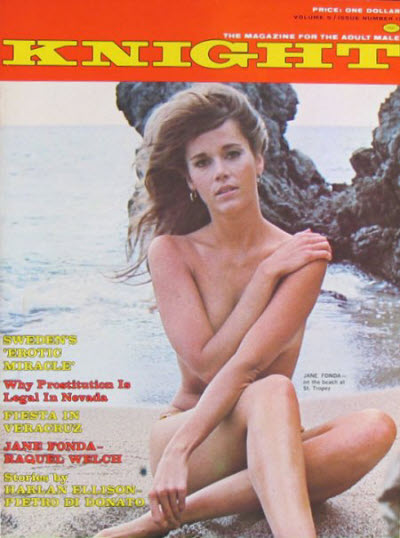
If had four stories on the Nebula lists and two on the Hugos. Galaxy also had two Hugo finalists but only one for the Nebula. Analog had "Weyr Search", on both lists; F&SF had one Nebula shortlisted story ("Earthwoman") and nothing on the Hugos; New Worlds had published two on the Nebula list in 1966, but they were eligible for the 1968 Hugos due to publication in Wollheim and Carr's Best Science Fiction of the Year 1967. One story was published in a men's magazine and the rest came from anthologies, Dangerous Visions suppying six stories with nine nominations, and the Nebulas also included two from the Orbit 2 anthology edited by Damon Knight.
Best Professional Artist
Jack Gaughan (winner)
Frank Kelly Freas
Chesley Bonestell
Frank Frazetta
Gray Morrow
John Schoenherr
Best Fanzine
Amra ed. by George H. Scithers (winner)
Australian Science Fiction Review ed. by John Bangsund
Lighthouse ed. by Terry Carr
Yandro ed. by Robert Coulson and Juanita Coulson
Odd ed. by Raymond D. Fisher
Psychotic ed. by Richard E. Geis
Nice to see the Australians getting a look-in.
Best Fan Writer
Ted White (winner)
Ruth Berman
Harry Warner, Jr.
This was the second year that this category was awarded. Both Alexei Panshin and Harlan Ellison were nominated but declined.
Best Fan Artist
George Barr (winner)
Bjo Trimble
Johnny Chambers
Steve Stiles
Arthur “ATom” Thomson
This was the second year that this category was awarded, and was also Steve Stiles' second time as a finalist in this category. He is on the ballot again in 2015, for the 14th time. He has never won (and I'm afraid I'm not voting for him this year either).
Reflections
Those who complain about left-wingers who have abandoned traditional science fiction taking over the Hugos would have had much firmer grounds for complaint in 1968 than they do now. Evil diversity struck that year as for the first time a woman won a Hugo and a black writer won two Nebulas! Worst of all, six of the nine fiction awards went to writers who had signed the advertisement in Galaxy opposing US participation in the Vietnam war (the other three going to Moorcock, Zelazny and Mccaffrey); only two of those who took the pro-war side even got nominated (Larry Niven and Thedore L. Thomas).
But the other thing that must strike anyone who has browsed the short fiction of that year, and compared it to the Hugo finalists of 2015, is how very much better and varied it is. I will never be a fan of "Riders of the Purple Wage", but at least it is aiming high, and for a lot of readers it clearly achieved it at the time (and continues to do so for some). It is a hugely different story from "Weyr Search", with which it shared the Hugo, and the Nebula-winning "Behold the Man" is hugely different from both. This year the slate-mongers have given us three short fction ballots of conformity, conservatism (in a literary sense) and lack of ambition. I don't know about you, but I am rejecting them all.
2015 Hugos: Initial observations | Voting No Award above the slates | How the slate was(n’t) crowdsourced | Where the new voters are | Considering 1967
Best Novel | Short fiction | Best Related Work | Best Graphic Story | Pro and Fan Artist
The Egyptian, by Mika Waltari
Published in 1945, this was apparently a huge classic in the middle of last century, described as the best known book written in Finnish (Tove Jansson wrote in Swedish), the only Finnish book ever adapted to become a Hollywood movie, and the best-selling translated novel in America until The Name of the Rose.
It's about an ancient Egyptian doctor, Sinuhe, who spends most of the first half of the story travelling through Egypt's neighbours, as far as Crete, Smyrna and Babylon, and then in the second half returns home to participate in the intrigues at the courts of Akhenaton and his successors Tutankhamun and Horemheb (an old friend of the narrator). It was hailed for its "realistic" portrayal of ancient life, which to me tends to signal that it buttressed existing popular conceptions; I definitely felt that the scenes of ideologically driven internal conflict and brutal military suppression of popular uprisings might be drawn from more local experience of mid-century Europe than from any study of ancient Egypt.
It is a solid book of its kind, which would have appealed to the prejudices of mid-century readers while at the same time making them think that the author was informing and enlightening them. Of course, it has a comic slave character, almost all the women are seductresses, and none of the many "Negroes" are named. But there is a decent sense of scale in both space and time, and the reflections of the politics of the day are sufficiently oblique to remain interesting.
It is interesting that the story of Akhenaton became such a popular topic for literature. Agatha Christie wrote a play about him in 1937, and he's also the Pharaoh of Thomas Mann's Joseph and His Brothers which was published in 1943. Of course, his close family connection with Tutankhamun added an extra element of interest. But I wonder how many other ancient rulers had more or less well-documented heretical religious ideas, and have been completely forgotten? I reckon Akhenaton easily beats Julian the Apostate, who is the only other one I can think of. (Unless you count those who won, like Constantine and Henry VIII.)
Links I found interesting for 29-05-2015
- Labour moves to support Tories’ lower benefit cap despite ‘children on breadline’ warnings
The creatures outside looked from pig to man, and from man to pig, and from pig to man again; but already it was impossible to say which was which.
- Is the world more dangerous for kids than it was 30 years ago?
Not in America. (Same elsewhere?)
- What Russian students learn about Russia’s enemies
Conspiracy theories as doctrine.
Thursday Reading
Current
Watership Down, by Richard Adams (a chapter a week)
The Complete Robot, by Isaac Asimov
The Charterhouse of Parma, by Stendhal
Last books finished
Amoras v2: Jerusalem, by "Willy Vandersteen" [Marc Legendre]
The Egyptian, by Mika Waltari
City of Death, by Douglas Adams and James Goss
The Painted Man/The Warded Man, by Peter V. Brett
Sharpe's Waterloo, by Bernard Cornwell
Anna Karenina, by Leo Tolstoy
Next books
The Balkans: Nationalism, War & the Great Powers, 1804-1999, by Misha Glenny
Martial Power and Elizabethan Political Culture: Military Men in England and Ireland, 1558-1594, by Rory Rapple
Palace of the Red Sun, by Christopher Bulis
Books acquired in last week
City of Death, by Douglas Adams and James Goss
Anna Karenina, by Leo Tolstoy
Back in October, a group of us started reading Anna Karenina at the rate of a chapter a day; and this morning we finished it. There’s a lot to be said for this approach to group reading. Different readers pick up on different aspects of the story, which makes for interesting discussion, and taking the book at a respectful pace allows both for considered digestion and for catching up if you should happen to miss a chapter or two on their designated days.
I’d read Anna Karenina once before, maybe 25 years ago, and felt then what I felt on this reading: very absorbed by Anna herself, whose story always pulled me in even though I knew what happens at the end; and generally repelled by the other main character, Levin, who is Tolstoy’s representation of himself without the talent (as his wife put it). I must say that of the two of them it is Levin who I want to shake; he is immensely privileged, finds a woman who loves him, and yet is perpetually dissatisfied with his lot. Anna, on the other hand, makes some quite brave decisions (even if she arguably gets a lot of them wrong) and her tragedy is not that her adultery is karmically punished (as I have heard some people assert) but that the society in which she lives denies her the legal and emotional fulfilment she deserves. Vronsky and Karenin are both bad choices for her, and the consequences are terrible; but did she really have many other attractive options? As Joshua Rothman observes in a long article in the New Yorker, she is one of the best characters in fiction, totally understandable and sympathetic.
I did find that I disliked Levin a bit less this time round. I still find him one of the least likeable characters in literature, but perhaps he does undergo a moral lesson in the course of the book, learning to be satisfied with being like other people; he ends in the bosom of his happy family, just like all the others mentioned in the book’s first sentence. Yet it’s a bit unsatisfactory for me. Essentially Levin learns to respond to the challenges he sets himself by just not setting them any more, rather than by calibrating either his goals or his methods to fit the world as it is rather than the world as it should be. I can’t see it as a completely happy ending.
One Levin section that I had completely forgotten, but which held me captivated, is the run of half a dozen chapters at the end of Part 6 where he and Vronsky are separately dragged into the Kashin provincial elections, in which Levin’s brother is organising the campaign for a progressive candidate (progressive is of course a relative term here). Levin doesn’t have a clue what is going on, and Tolstoy does a brilliant job of showing us the detail of the political process through the eyes of someone who doesn’t actually understand it. It’s a bit of a sidestep from the main plot – how shocking to find that happening in a Tolstoy novel! – but this psephologist appreciated it.
Well, that was worth doing. I wonder what we will try next?
Links I found interesting for 27-05-2015
- The Telescope that Disproved Liberalism, Part II
True story.
- A New ‘Wrinkle in Time’
Cut passage more nuanced in critiquing Communism and U.S. Security.
- FIFA officials arrested on US corruption charges
Dramatic!
- Tumblr blog shames those who arrange ‘manels’
Plenty of choice…
City of Death, by Douglas Adams and James Goss
We’ve waited a long time for this!
Back in the days before video recorders, let alone DVDs, Doctor Who stories lived on after first broadcast only in the novelisations published by Target Books (and later by Virgin). In the fullness of time, almost every story ever shown appeared in print – many of them in novelisations by the indefatigable Terrance Dicks, whose lucid if workmanlike style informed the tastes of a generation of fans.
One of the few stories not to get that treatment was the 1979 Fourth Doctor story City of Death, which has a strong claim to being one of the best Who stories ever, written over a wet weekend by the then script editor Douglas Adams, certainly the most prominent SF writer to have held that position, from a story concept by David Fisher, one of the best Who writers of the late 1970s. It is now brought to the page by James Goss, who I personally rate as the best writer of Who prose and audios active at present. (He has, alas, no screenplay experience, so I don’t expect him to be writing any TV episodes soon.)
Goss is not the first Who writer to try and channel Douglas Adams (unsuccessful: Eric SawardGareth Roberts). But he takes it in a new direction, starting off by lulling the reader into a false sense of security with an Adams-esque first chapter, and then settling into adapting from both the script and the final broadcast version for the printed page. As he explains in an afterword, he picks and chooses between the alternatives. Shakespeare here sprained his hand playing croquet (Adams) rather than writing sonnets (Tom Baker’s improvisation). The John Cleese and Eleanor Bron characters have been pursuing a desultory love affair around Paris for days. Most importantly, the Count doesn’t actually realise his own identity until the end of the first episode, and this actually makes a lot of sense. (But he keeps the broadcast version of the story’s funniest line, while explaining how it originated from the script.)
The target audience for this book will be people who already know the story, and I think that they will be satisfied. It’s a different situation from Shada, the unfinished 1980 story by Adams whose novelisation by Gareth Roberts was published in 2012, in that there’s no what-might-have-been mystery about City of Death – we’ve seen it and we know what happens. Goss preserves the spirit of Adams’ script, and probably does a better job of putting it on the page than Adams would have done (he had a habit of revising his own past work without necessarily improving it).
Anyway, for those of us who treasure memories of a former monk from Liverpool courting an Ulster aristocrat by the Seine, this is simply indispensable. And for those who are fans of Douglas Adams, this is, in a way, his last book, reflecting back to the height of his powers. I won’t claim that it’s great literature; but I loved it.
Links I found interesting for 26-05-2015
- Shetland and Orkney and Alistair Carmichael
I agree with Jane.