How Old is the Meuse Valley?

In one of my insomniac browsings of Wikipedia, I came across the interesting factoid that the valley of the River Meuse in Belgium is perhaps the second oldest river valley in the world, after an occasionally flowing river in the Australian desert.

I began to wonder if this could possibly be true. The argument is that between Charleville-Mezieres and Namur, the river cuts through Paleozoic rocks which were raised up to the surface between 320 and 340 million years ago, in what is called the Variscan or Hercynian orogeny, the process which created the Pyrenees, the mountains of southwestern Ireland, Cornwall, Devon, much of Wales, Brittany, the Ardennes, the Massif Central, the Vosges, Corsica, Sardinia, the Eifel, the Hunsrück, the Taunus, the Black Forest and the Harz Mountains. The Appalachians were being formed at the same time.

But the source cited by Wikipedia, Environmental History of the Rhine-Meuse Delta by P.N. Nienhuis, doesn’t say this at all. It says only that the river “transects the Paleozoic rock of the Ardennes Massif”. The Paleozoic era is basically anything before 250 million years ago. But the fact that the river cuts through rock of a certain age shows only that it is younger than those rocks, not that it is the same age.

Now, there is a thing that needs to be explained. The river has eroded its way through the Ardennes, producing an impressive gorge, and also terraces higher up the valley showing where the water level once was. In particular, it winds through the Rocroi Inlier, a chunk of ancient rock which the Franco-Belgian border winds through, all that is left of one of the offshore islands of the ancient lost continent of Avalonia.

Map from here.

The Rocroi Inlier is not soft rock; it’s hardened and mostly igneous, though crushed and faulted. So on the face of it, it seems odd that the Meuse flows across it, rather than turning west and feeding the Oise to join the Seine. The traditional theory, mentioned without adequate citation in Wikipedia, was proposed by Charles-Louis-Joseph-Xavier de la Vallée Poussin in 1875: that the river flowed north before the Ardennes ever rose and continued to erode its traditional path even as the hills rose around it. There are plenty of cases like this worldwide, the best known being the New River of North Carolina, Virginia, and West Virginia, which flows through the Appalachians and is thought to pre-date them.

Not everyone agrees that the Meuse is so old. One other explanation that I’ve seen and tend to reject is the idea that this is a case of stream capture: that the northern lower Meuse gradually eroded back across the granite to capture the southern higher waters. Stream capture is very clearly the case further up the Meuse in France, where the Moselle captured its upper streams. You can still see the old Meuse valley in the landscape west of Toul. But that’s in a flatter and more forgiving landscape than the Ardennes. I don’t see the Meuse gradually eroding southwards back through the granite, eventually breaking though to France.

There’s another problem too. It looks like the area of the Meuse valley may have been underwater during the Hettangian age, roughly 200 million years ago. That would rather kill the notion that the river could be as much as 320 million years old.

In fact, the current consensus appears to be that it is much younger. In their 2000 paper “Sediment budget and tectonic evolution of the Meuse catchment in the Ardennes and the Roer Valley Rift System”, Van Balen and four co-authors state as if it were generally accepted that “The Meuse river system developed in its current position despite the uplift of the Ardennes since the Eocene [which ended 34 million years ago]. In the Ardennes, the present-day system was to a large extent established in the Pliocene [5 to 2.5 million years ago]; only minor changes occurred in the pattern of the drainage system during the Quaternary [since 2.5 million years ago]. During the Plio–Pleistocene [the last 5 million years], the rivers incised and a terrace sequence developed[.]”

I am not a geologist, and my French is not all that good, but Francis Meilliez in his 2018 paper Le Massif Ardenno-Rhénan, un massif ancien en cure de rajeunissement also has the Meuse happily flowing north, finding its way through the faults in the crushed granite of the Rocroi Inlier, until the Ardennes and Rocroi Inlier very slowly rose in the last few tens of millions of years, the river eroding its way down to its current level. This would explain why the Meuse river terraces, showing where it was previously, are not especially ancient.

I’d love to read some more about this, but I’m satisfied for now. The Meuse is not really so very ancient as all that – certainly not as ancient as the Rhine – but these are still processes that take periods of time which are impossible for us to comprehend. It makes you feel rather small, really.

The header picture I’m currently using was taken last July on the Lesse, a tributary of the Meuse right in the middle of the Ardennes.

The oldest church in Belgium and the arrondissement of Avesnes-sur-Helpe – menhirs; donkeys; forest; Wilfred Owen; Henri Matisse; August Gerbin; the forum at Bavay

Anne and I had a little 24-hour excursion at the end of the long weekend just gone, mainly exploring the arrondissement of Avesnes-sur-Helpe in the département du Nord of the Hauts-de-France region, a small corner of the Republic that ended up French rather than Belgian due to the 1678 Treaty of Nijmegen which allowed Louis XIV to take it from the County of Hainaut. It has been rather neglected by its overlords in the 345 years since.

But before we got there, we stopped off at the Collegiate Church of St Ursmer in the small town of Lobbes near Charleroi. It is supposedly the oldest church in Belgium, and this year is celebrating the 1200th anniversary of its consecration in 823. Little is known of St Ursmer, a local boy who became bishop and is buried in the crypt (well, most of him; bits and bobs are in reliquaries). But the crisp, clean geometrical arches of the ninth-century church fabric are currently crowded with an exhibition of the iconography of the saint and how this affected the church.

The external view shows the ancient core and 19th-century spire.

St Ursmer’s major miracle was exorcising a demon from a nun, whose name has been forgotten, though artists agree that the demonic presence was expelled from her mouth.

The exhibition will stay in the church until, er, next Monday, and will then transfer to the former sacristy of the Abbey of Good Hope in Lobbes from 18 June, if you want to catch it there.

The church is only 10km from the border with France, and so we slipped across to the small French village of Sars-Poteries where various menhirs from the neighbourhood have been collected. My Celtic soul is still a bit revolted at the thought of moving the sacred monoliths from the places where their builders put them, but I suppose it is better than losing them altogether. One of them stands proud and upright in the centre of the village; the others recline in retirement nearby.

We stayed at Les Mout’ânes, a pension in the small town of Saint-Hilaire-sur-Helpe, where a luxurious double room with breakfast costs a mere € 89. Strongly recommended. They also have donkeys.

They don’t, unfortunately, do dinner for groups of less than four, so in the evening we headed down to La Petite Ferme de Lucien in Fourmies, a steakhouse in the style of an American diner except with French culinary standards. Very yummy.

On Monday morning we decided to explore the Parc naturel régional de l’Avesnois, which occupies most of the land surface of the arrondissement. This proved a little difficult; there are no real centres of tourist information, no established walks, and not a lot of information on the ground. We stopped at the arboretum in the Forest of Mormal near Locquignol where there are a couple of amusing wooden statues.

As we drove on to our next destination, we passed a sign labelled “Wilfred Owen”, and went back to investigate. Like all UKanian schoolkids, we were taught several of his gut-wrenching war poems in our English Literature classes. The house where he wrote his last letter to his mother on 31 October 1918 has been transformed into a large sculptural memorial, but sadly was not open on 1 May.

We parked there anyway and walked for twenty minutes through the woods to his grave in the nearby village of Ors; a few dozen British soldiers are buried in the municipal cemetery, including Wilfred Owen, who was killed exactly a week before the war ended. The woods were alive with birdsong and the cemetery was quiet. It was a thought-provoking walk.

I should add that I had consulted many French tourism websites about things to see in the arrondissement, and not one of them mentioned Wilfred Owen’s grave. We found it completely by accident.

Our destination at that point was the Matisse museum in the former bishop’s palace at Le Cateau-Cambrésis, the town where he was born. As is often the case with such museums, most of his best known art is elsewhere – there are two other museums in France alone which have more of his work. But there is enough here to show his evolution as a painter, from the 1899 First Still Life with Orange:

…to the 1906/07 portrait of his daughter Marguerite:

…to his later experiments with cut-outs, as with the 1946 Océanie – La Mer.

Upstairs, the museum has a lot more art by modern artists – lots of Alberto Giacometti, some Miró, a Picasso, a few by Fernand Léger (who impressed me at the Kröller-Müller Museum last year); and a large collection of art by Auguste Herbin, another local boy who neither Anne nor I had previously heard of, but who completely wowed us. This is a case where almost none of his art is elsewhere and the Matisse Museum in Le Cateau-Cambrésis has almost all of it. He started fairly representational, eg these early Chrysanthemums:

But then he went completely geometric in various media. Here’s a flat piece with the title Napoleon:

Here’s a more three-dimensional piece whose title I failed to record:

Here are two stools with Herbin covers:

And most spectacular of all, here’s a stained glass window, with the title Joy, that he designed for a local elementary school (this is an exact copy; the original is still in the school, where we later saw it from the outside).

This stunning museum charged us € 4 each as the cost of entry. I can certainly think of many occasions when I have spent five times as much to have five times less fun. It was practically empty and it was well worth the trip. (The same, sadly, could not be said for the lunch at the Restaurant du Musée Matisse across the street, where the service was slow and the food a bit disappointing.)

Finally we stopped off at Bavay for a look at the huge ancient Roman forum there; but unfortunately it was closed due to the bank holiday. We’ll have to go back.

The Cubes of Herne

For Christmas, I got F a book called De Gekste Plek van België, a list of 111 weird and wonderful places in this country, which is after all the home of surrealism; and this weekend I offered him his choice of place to visit for a day trip. He picked one of the Cubes of Herne – only one is mentioned in the book, but it turns out that there are five altogether. Belgian public art has its moments, and this is one of them.

Herne is about an hour’s drive from us, as far on one side of Brussels as we are on the other. A few years ago, local campaigners persuaded various funders (mostly taxpayers) to support the construction of the wooden cubes. They are all open in one way or another, all embrace the landscape and the surroundings, and four of the five celebrate the painter Pieter Brueghel the Elder, who among other things painted Flemish landscapes, though I am not aware of any that have been specifically tied to Herne.

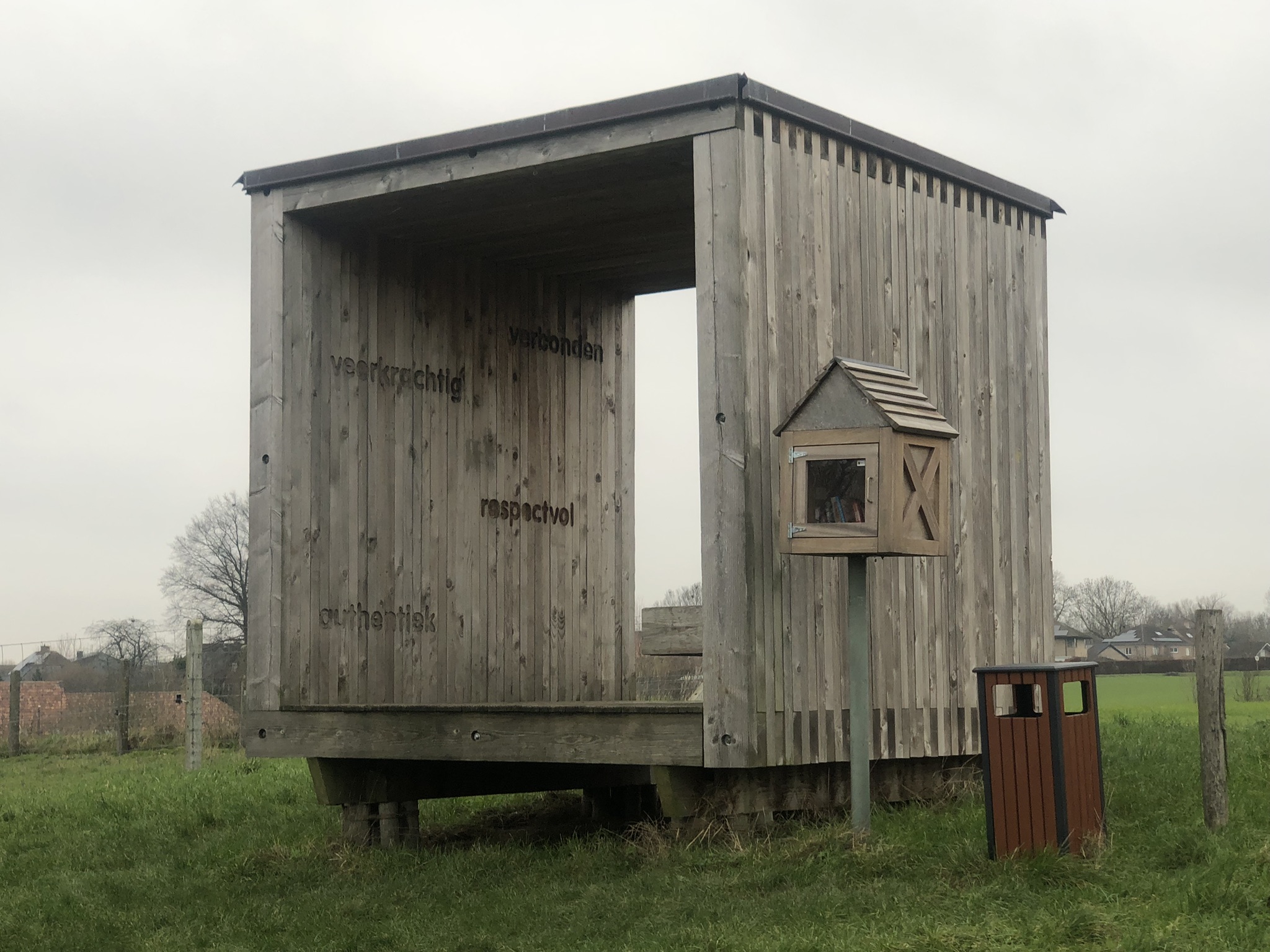
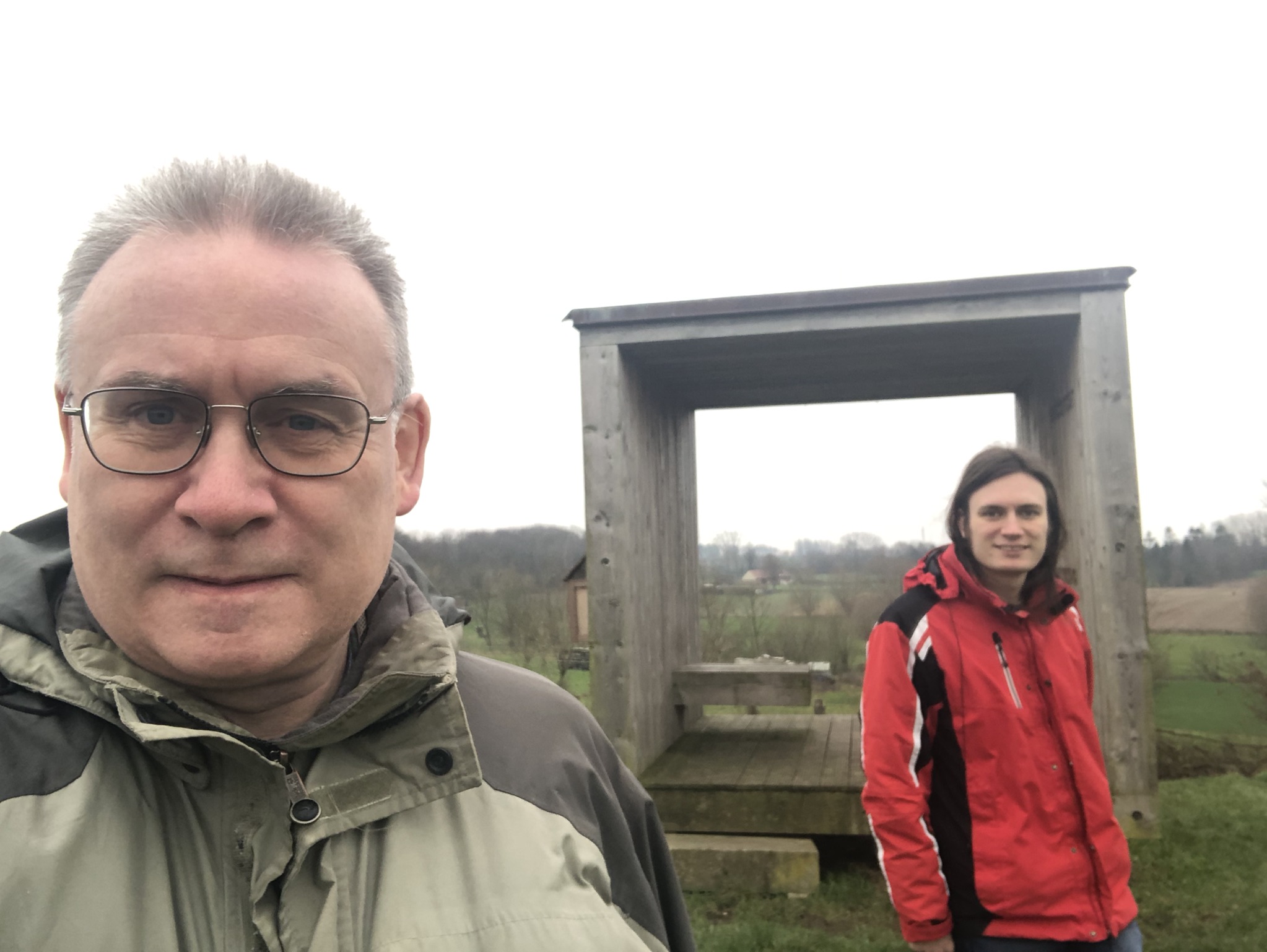
The first cube (at 50.73154, 4.03759) commemorates Brueghel himself. Like all of them, it’s 3m x 3m x 3m. There’s a Little Free Library outside.

It’s a straightforward open box, with the words “connected”, “resilient”, “respectful” and “authentic” inscribed on one wall.
Someone on Facebook asked when our album is gonna drop.
Thought to be a self-portrait of Brueghel.

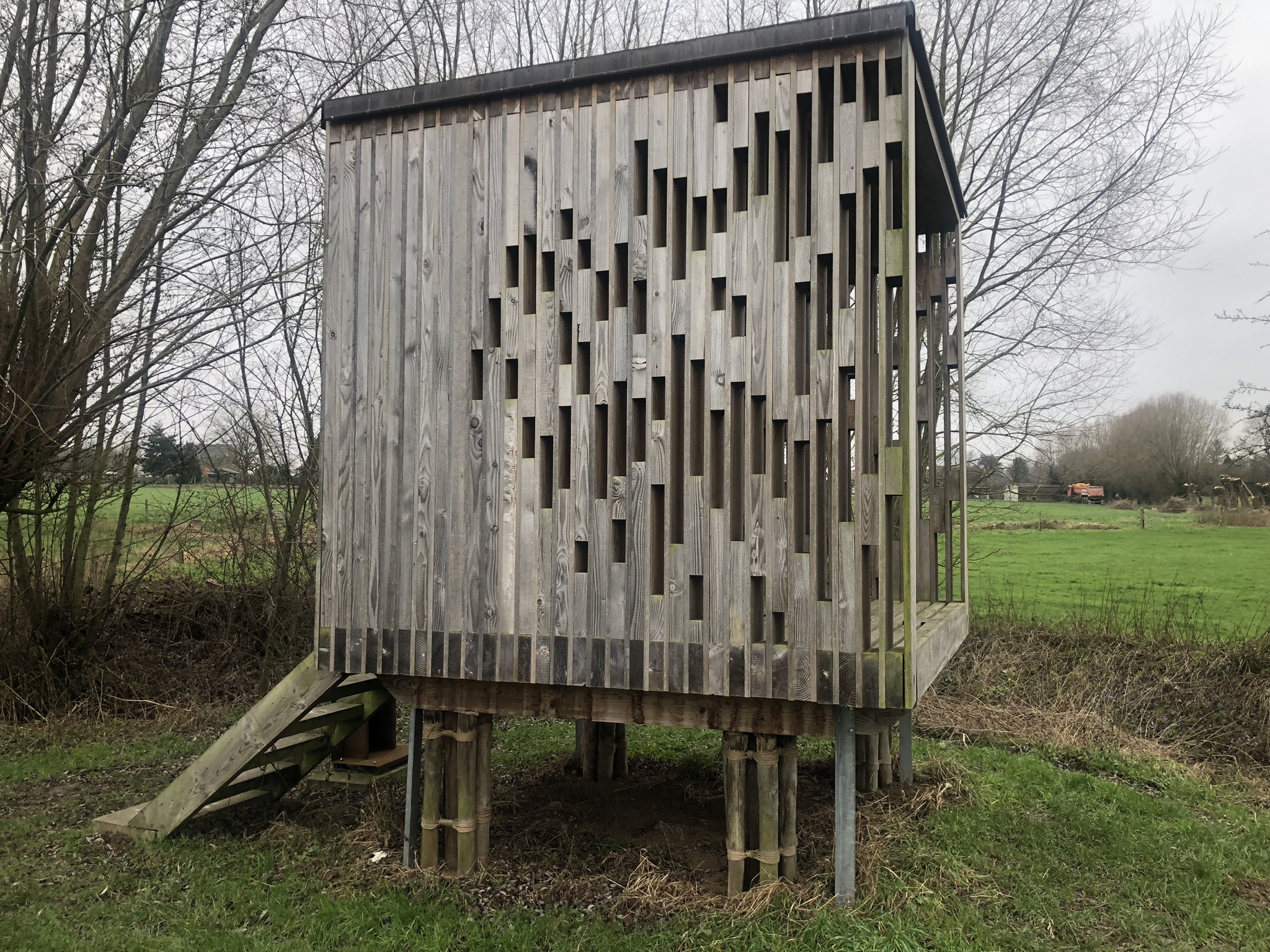
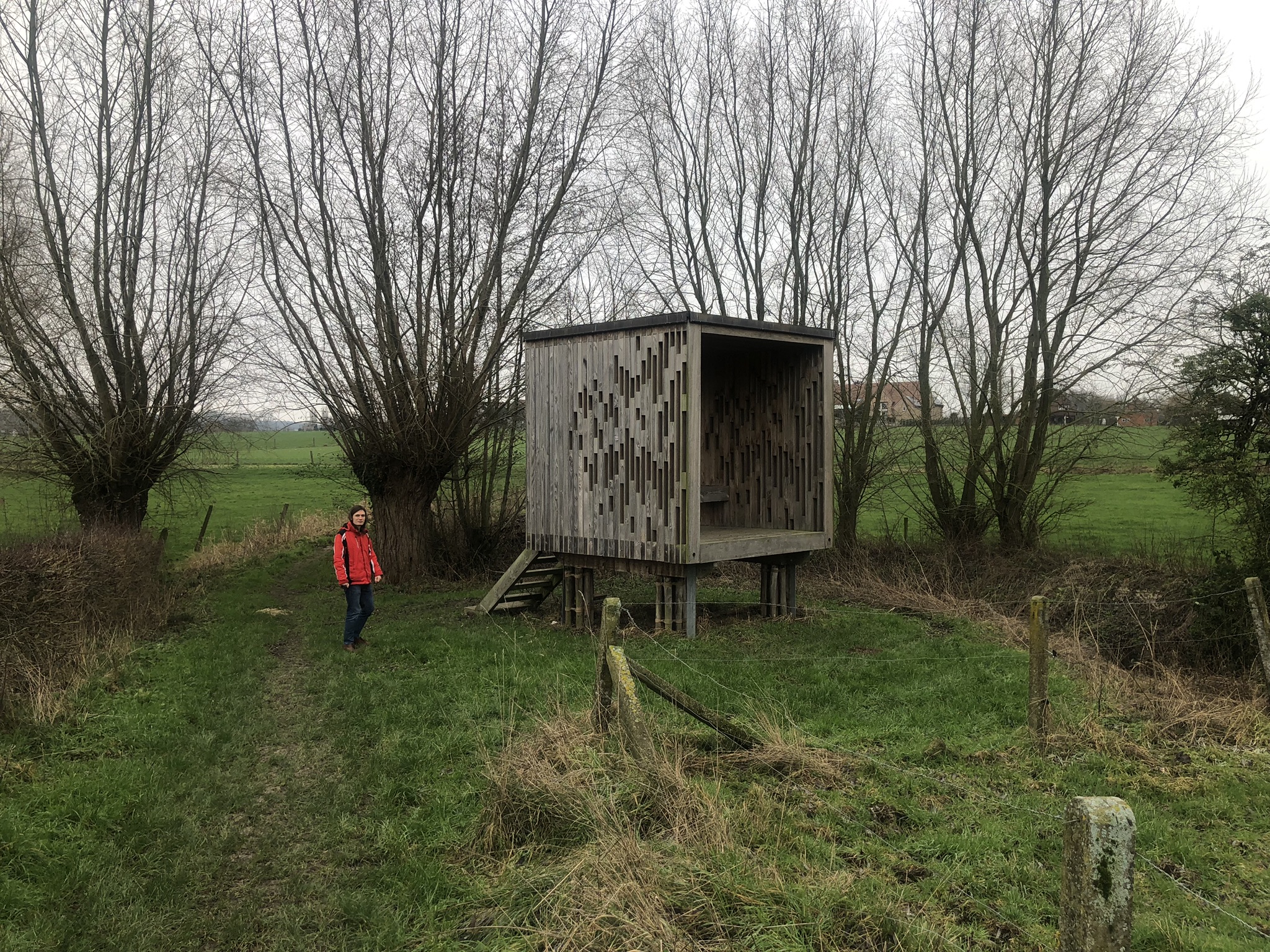
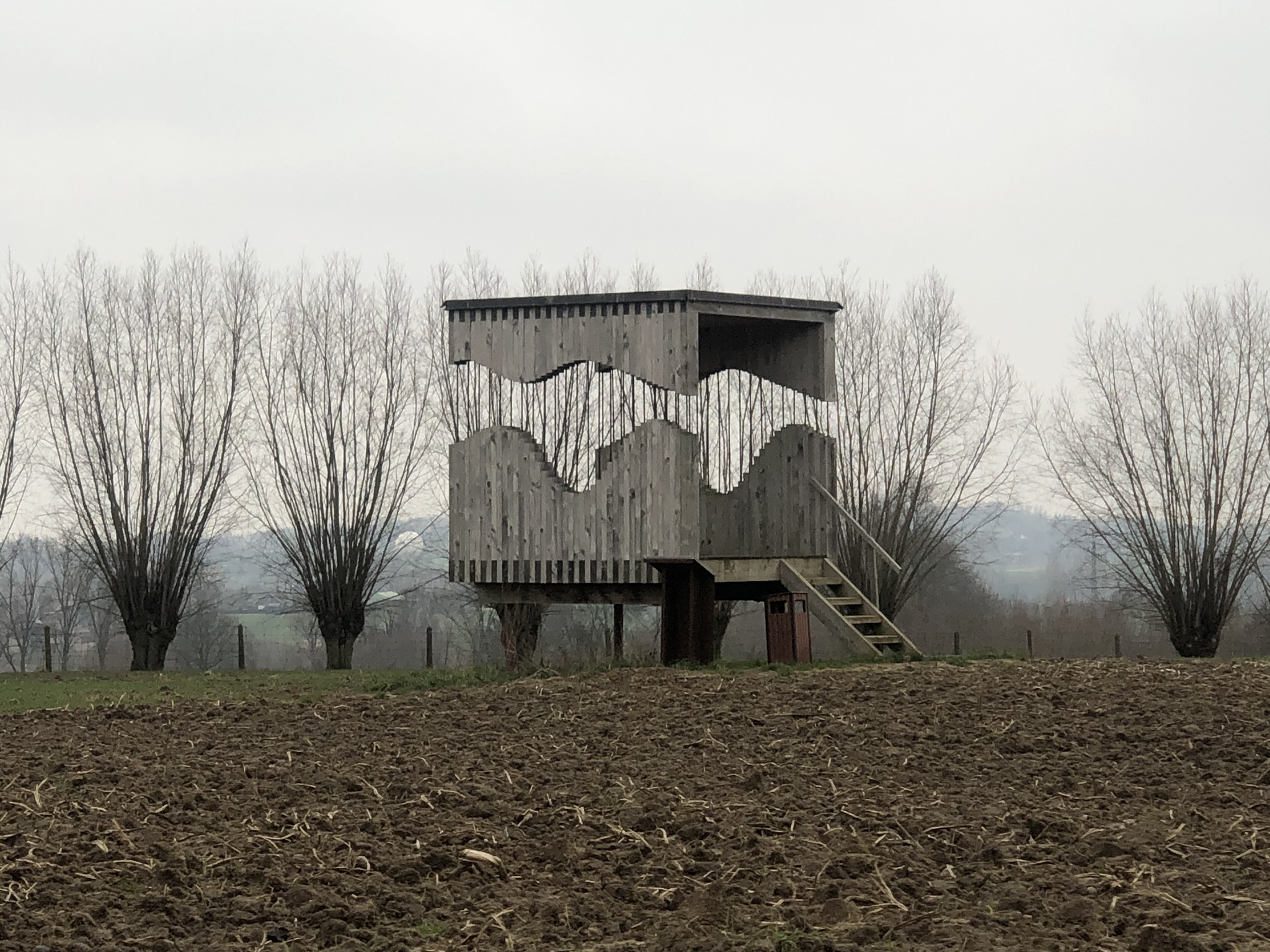
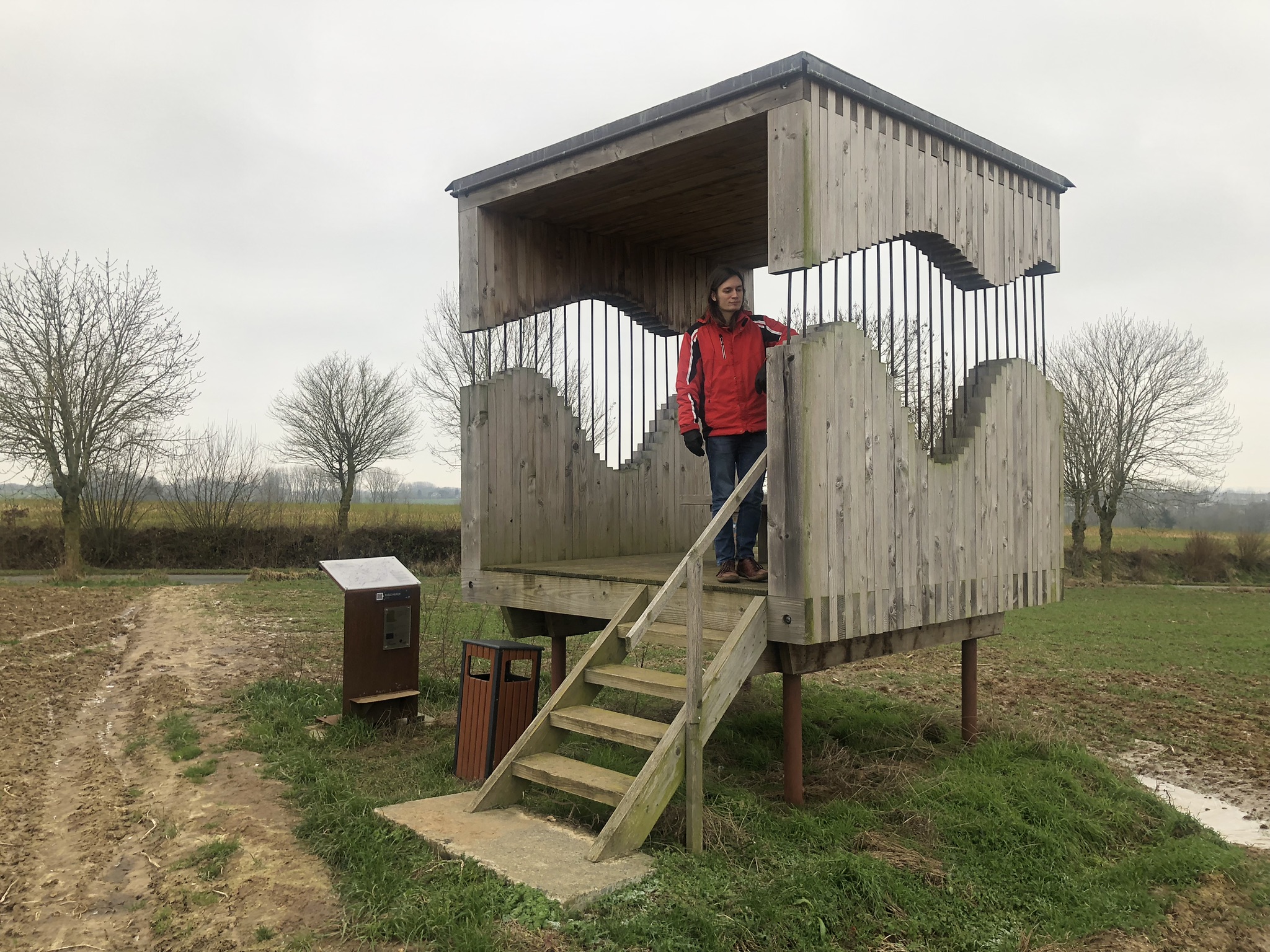
The second cube (50.71373, 4.06526) commemorates Brueghels’ famous painting, “The Fall of Icarus”. (Some sources, including the information boards by the cubes themselves, have the identities of the second and third cubes the other way round; but checking local information I think this is Icarus and the next is Mayke.)

It sits in a river valley, with a pattern of open slats on the sides, maybe making you think of a catastrophic fall which leaves the surroundings untouched? Or possibly echoing the shapes of the original picture?

Icarus’ feet.

According to Brueghel
when Icarus fell
it was spring

a farmer was ploughing
his field
the whole pageantry

of the year was
awake tingling
near

the edge of the sea
concerned
with itself

sweating in the sun
that melted
the wings’ wax

unsignificantly
off the coast
there was

a splash quite unnoticed
this was
Icarus drowning

Landscape with the Fall of Icarus, William Carlos Williams

The third cube, “Mayken”, is named after Brueghel’s wife, Maria or Mayken Coeck. We have no records of what she looked like. She is said to have been a painter too, but no identified works have survived. The cube sits on a hill (at 50.74158, 4.10979) with good views of the surrounding countryside; it’s a long way from the centre of Herne.

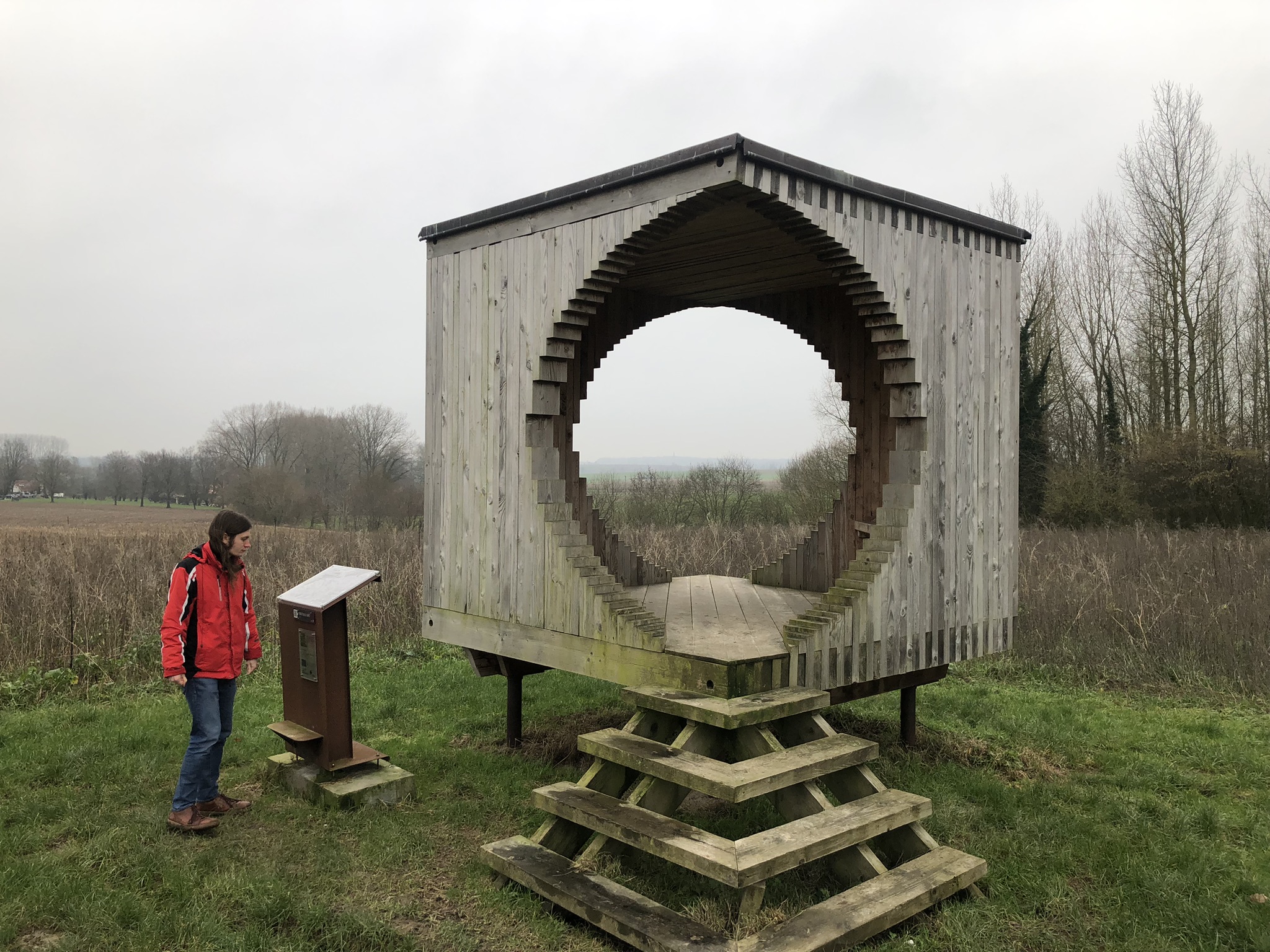
We came seriously unstuck visiting the fourth cube (at 50.71207, 3.99217). It is named “Dulle Griet” after the woman in Flemish folklore who raided Hell, and is the subject of a very Boschian painting by Brueghel.

Perhaps the shape of the cube reflects the opening of Hell, a place of transition? But then why is it aligned with a distant church steeple?

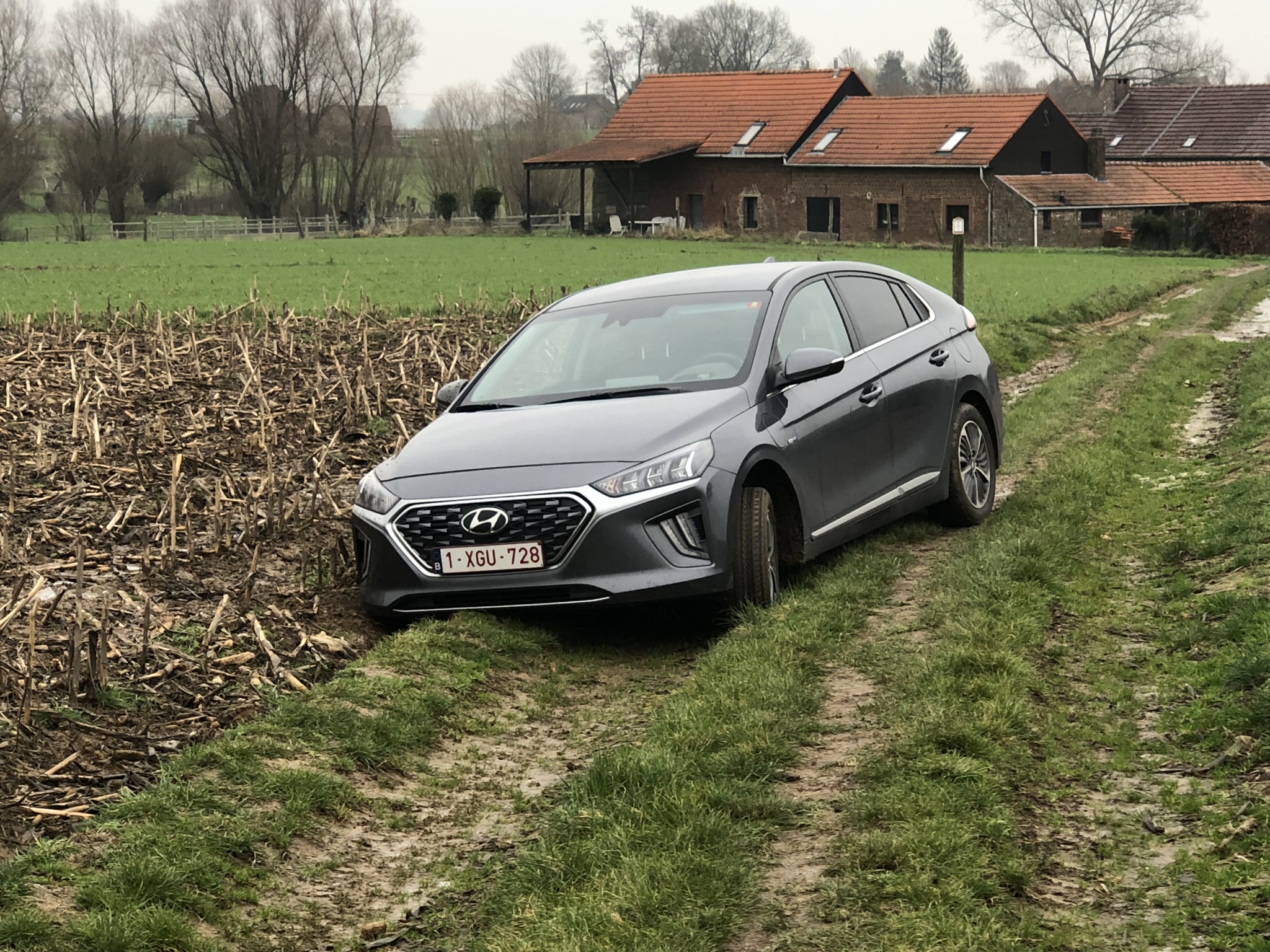
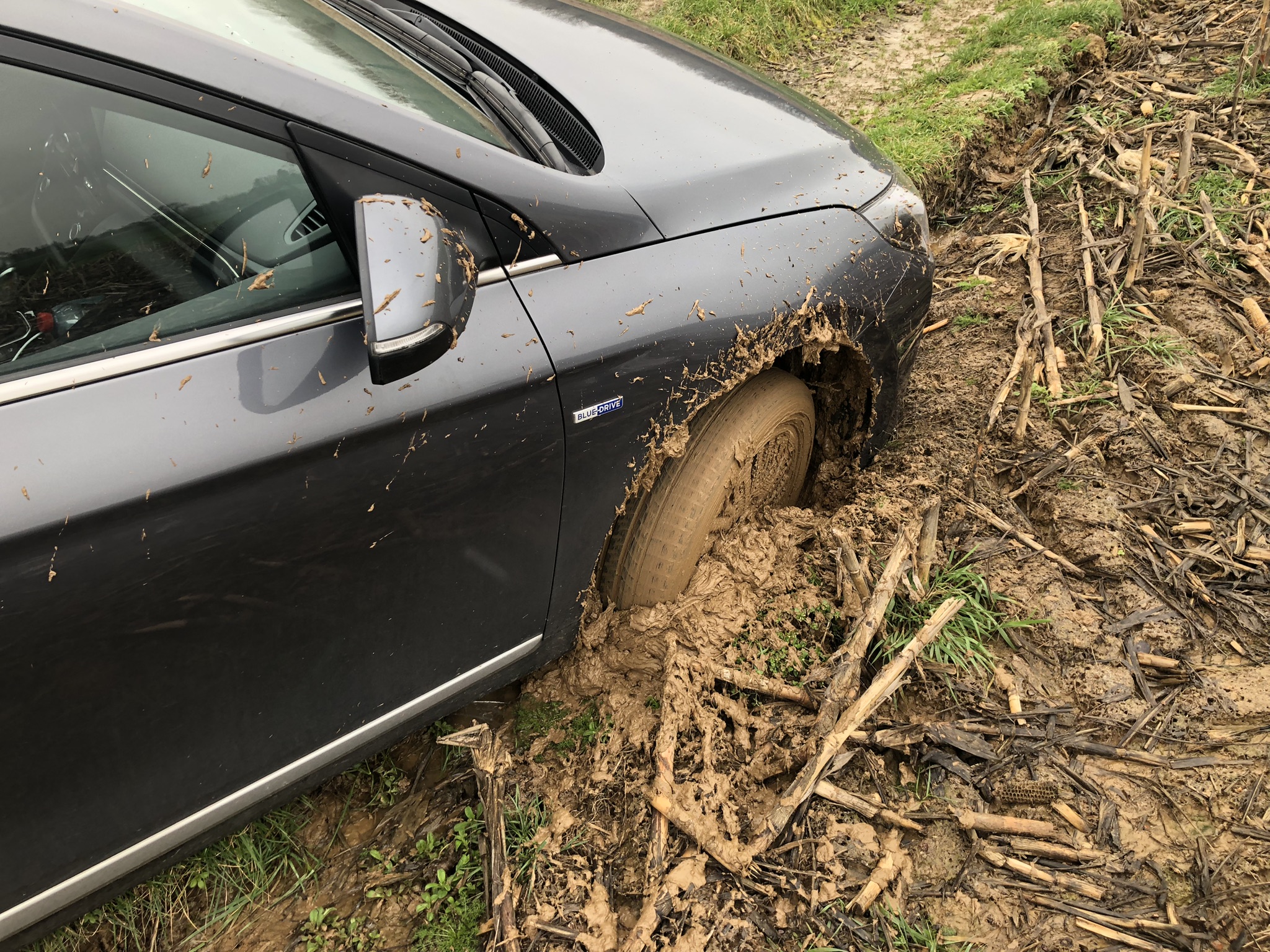
It turns out that our gallant steed is not well suited for off-road action, and it managed to dig an impressive hole in the mud, attracting much scorn from passers by (including a club of elderly hunters with rifles). But a man came with a long cable and a thick accent and got us out of it.

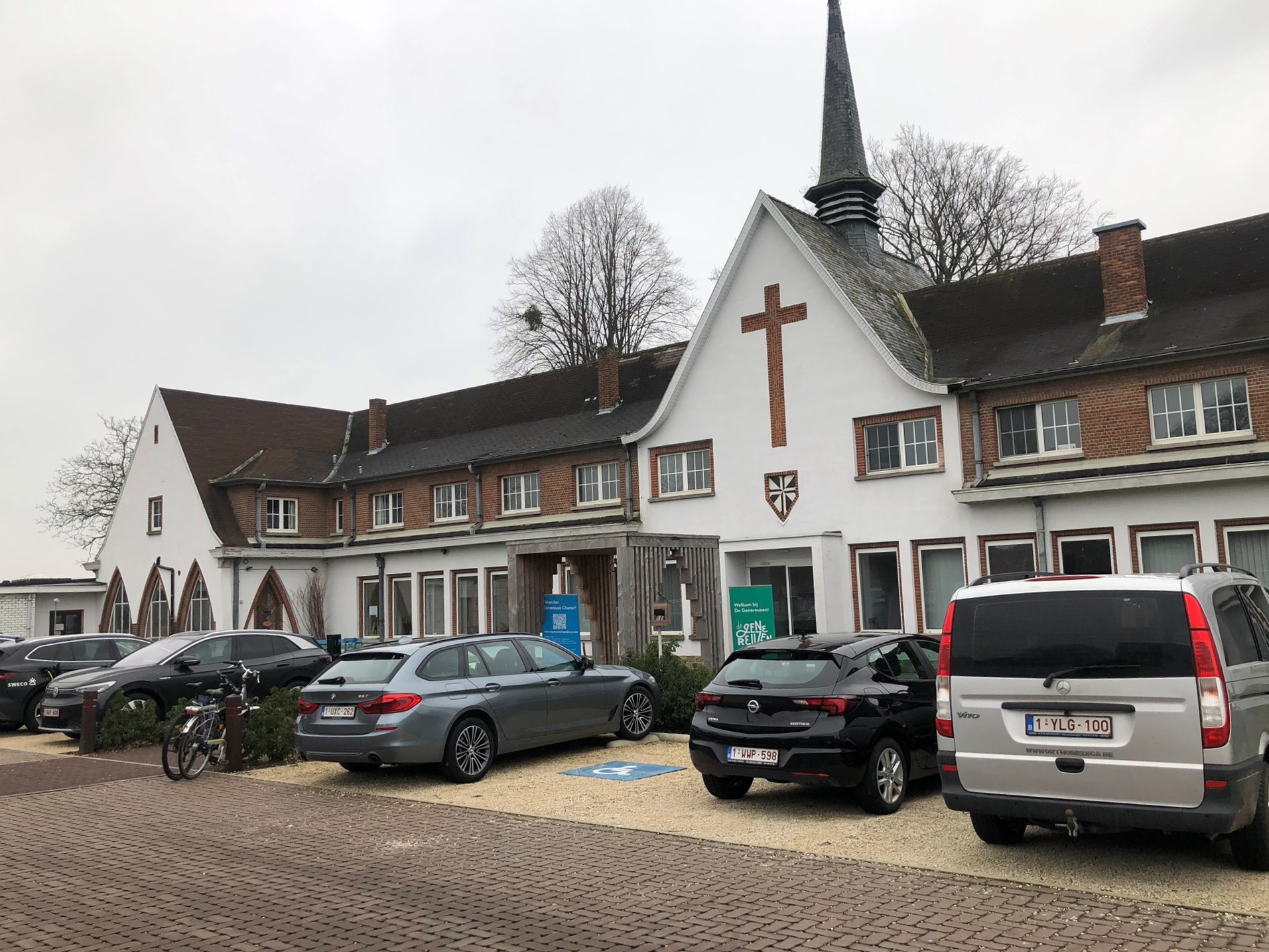
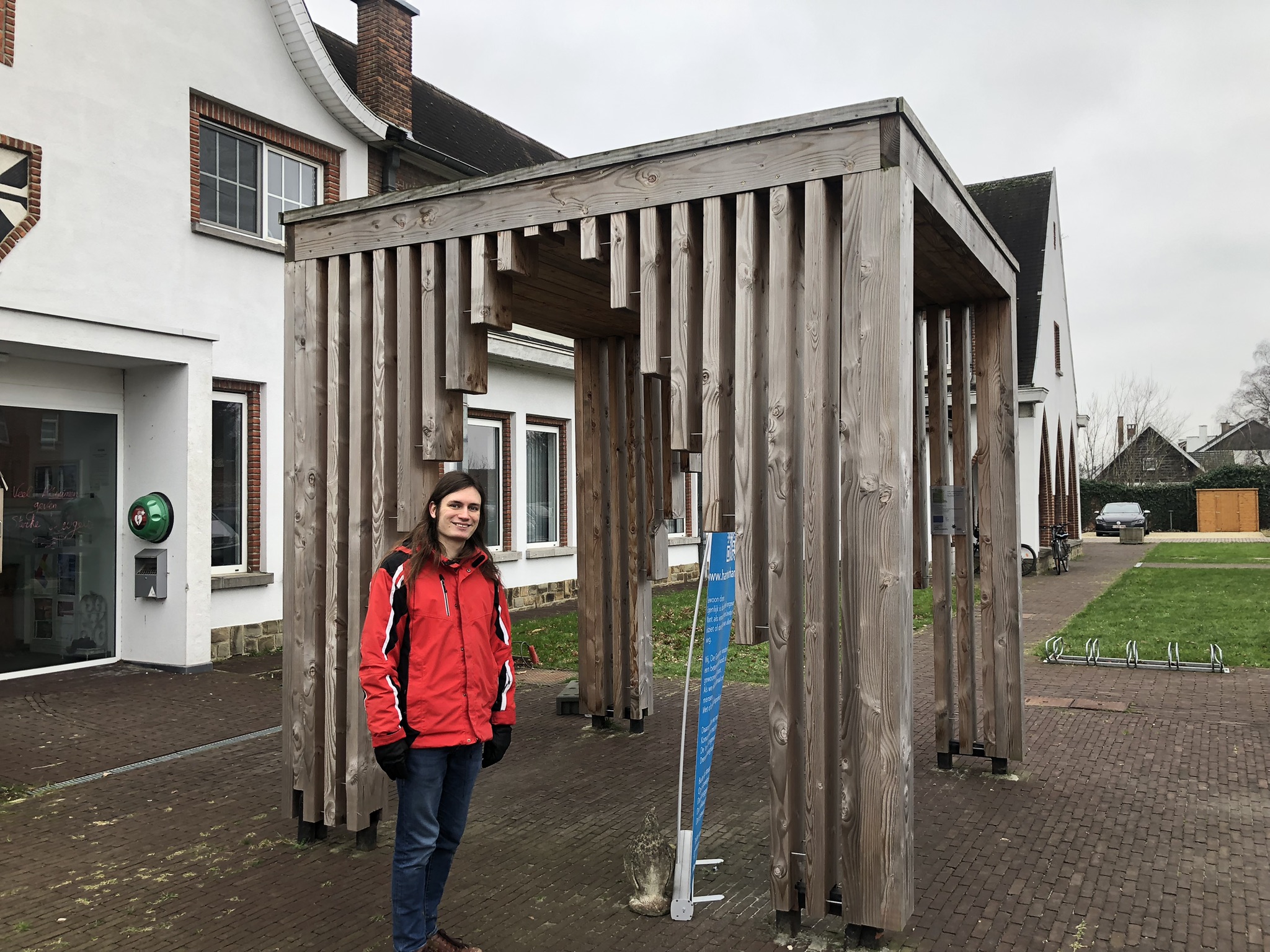
Finally, the fifth cube, so far unnamed, sits outside a Dominican convent just north of the linguistic frontier (at 50.7009, 4.03758), welcoming visitors.

You could visit all the cubes as a long day’s walk (as this couple did), but my recommendation would be to do it by bike, starting and finishing at Herne and Enghien. We discovered the hard way that you cannot drive all the way up to some of them.

On Black Sisters’ Street, by Chika Unigwe

Second paragraph of third chapter:

Chisom’s mother agreed. ‘Yes, indeed. If only we had stayed in touch.’

A 2009 novel set in Belgium, about four women who have been trafficked from Nigeria for sex work in Antwerp (on Zwartzusterstraat, though in the novel the street name gets an extra ‘e’). Their back stories in Nigeria (and in one case Southern Sudan, as it then was) are well depicted, but the Antwerp sections are inconsistent, sometimes tightly described, but particularly towards the denouement at the end (which is signalled from the beginning) rather under-written in places. It’s important to give the victims of human trafficking their voices, and the novel asks and answers important questions, but I was a bit frustrated by the inconsistencies of structure and style. You can get it here.

This is the last blog post about a book that I finished in 2022, other than the Clarke nominees. (The last book I finished in December was Matt Ruff’s Sewer, Gas & Electric, but I have already written it up.)

Zink, by David Van Reybrouck

Second paragraph of third section:

Voor Marie Rixen, het dienstmeisje in Düsseldorf, is alles pas begonnen met die fijne, zwarte knoopjes, of beter: is alles misgelopen bij die knoopjes, onherroepelijk misgelopen. Na enkele maanden zegt ze het hem, prevelend, ze liggen naast elkaar. Ineens is het gedaan met zijn lieve handen op haar huid, met zijn volle vochtige lippen in haar hals. Zijn mond is zijn mond niet meer, maar een zwarte vlek die brult als een van zijn staalovens. Uit zijn ogen. Uit zijn huis. Dat ze maar had moeten oppassen. Dat het een schande is. Is ze niet beschaamd? In zijn eigen huis? Hij als familieman! Trouwens, is het wel van hem? Hoe durft ze dat te beweren? Hij kent haar soort volk! En nog huilen ook?For Marie Rixen, the maid in Düsseldorf, everything just started with those fine, black buttons, or rather: everything went wrong with those buttons, went irrevocably wrong. After a few months she tells him, muttering, they are lying next to each other. Suddenly there’s an end to his sweet hands on her skin, his full moist lips on her neck. His mouth is no longer his mouth, but a black smudge roaring flame like one of his steel furnaces. Out of his sight. Out of his house. She should have been careful. It’s a scandal. Isn’t she ashamed? In his own house? He, a family man! By the way, is it his? How dare she say that? He knows her kind of people! And now the waterworks?

David Van Reybrouck is one of Belgium’s best known public intellectuals, and this was his essay commissioned for the annual Dutch language Book Week Essay in 2016. It’s the story of the peculiar enclave of Neutral Moresnet, a small territory run jointly by Prussia and the Netherlands, later Belgium and Germany, from 1815 until the first world war, noted for its zinc mine, casino, gin distilleries and freedom from neighbouring jurisdictions. It was annexed by Germany in the first world war, and by Belgium afterwards, and survives only in its boundary markers today.

Van Reybrouck tells the story of one of its inhabitants, born Joseph Rixen in 1903 but brought up as Emil Pauly, and explains the shifting concept of Neutral Moresnet’s identity through his story. There are also diversions to Esperanto, which claimed Moresnet as its world capital at one point, and to the last living person who was born there, Catharina Meessen. Overall it’s a fascinating glimpse at a forgotten corner of Western European history. You can get it here in Dutch and here in German (no English translation as far as I know).

This was the shortest unread book that I had acquired in 2016. Next on that pile, if I can find it, is God is No Thing: Coherent Christianity, by Rupert Shortt.

The Menhir (?) of Hoegaarden

Hoegaarden is a white beer for most of us, and a small town near Tienen for some of us; it is the home of my daughter’s secret boyfriend. I also discovered, via the Megalithic Portal site, that it has a potential menhir, standing by the river of a side street. There is very little detail available about this stone (some mutter darkly that it’s a deliberate imitation of the Pierre de Brunehaut, the largest menhir in Belgium). The Megalithic Portal site says that it was “found at the end of the 1990’s, a bit further down the road, near the river where it was lying flat. Hardly documented so far, and little known. Its overall shape and type of stone are common characteristics of several menhirs found in the region.” There used to be a much bigger megalith in the neighbourhood, but it is long gone.

So I went to see it with B. It was a cold day and she was not prepared to give me a smile, but she gives the stone a sense of scale.

As Spın̈al Tap almost put it,

No one knows who they were or what they were doing
But their legacy remains
Hewn into the living rock…
Of Hoegaarden

We stopped off to visit B’s secret boyfriend as well. He got a bit of a smile.

Relay marathon at Laeken

We spent most of yesterday up at Laeken, in the northwest of Brussels, where a team of colleagues from my office were running a relay marathon – very kindly, raising funds for the institution where our daughters live. A marathon is 42 km in metric, more or less; the six runners do 5 km, 10 km, 5 km, 10 km, 5km and then the last 7km in turn, handing on the team sash at each step.

We went to cheer them on, along with Liz who is visiting Brussels from Thailand. It was a big event, hubbed at the King Baudouin (formerly Heysel) stadium, with several hundred teams (we saw teams numbered in the 900s, but we don’t know if every hundred was full). Most of the teams seemed to be corporate like ours, but there were also a few athletics clubs who were going much faster.

The usual approaches to the stadium had been blocked off so it took us a while to find our way in. By the time we had located the fearless APCOnauts, the first runner, Greg, had already done his stint and the third, Dania, was waiting to take over from the second, Edo.

Lea, our fifth runner; Anne; Liz, visiting from Thailand; Greg, our first runner; Augustin, our sixth runner; Bart, our fourth runner
Dania (in black) waiting for Edo to finish his 10k
Edo hands over the sash to Dania

It was a surprisingly sunny and warm day for late October, and a good atmosphere among runners and supporters. We walked Liz over to the Atomium and said goodbye to her there, returning to the stadium to take a few more pictures and videos (which annoyingly did not come out due to low phone battery).

And a lone piper was serenading the runners. All perfectly normal in the land of surrealism.

Thanks again to the team – very much appreciated!

The Hear Here exhibition in Leuven

There’s an exhibition on in Leuven at present featuring fifteen works involving sound in one way or another, in different historic locations around the city. F and I did it in two hours this afternoon; it is only on until 6 June, so you will need to hurry.

The standout exhibit – for me and for other visitors whose photos I have seen online – is a piece called “Clinamen” by Céleste Boursier-Mougenot, a couple of dozen porcelain bowls gently colliding in a pool located in the Onze-Lieve-Vrouw-ter-Koorts chapel. Really rather soothing.


The best of the others is called “Antenna”, by Floris Vanhoof: a grand piano stood on its edge, being “played” by the signals picked up by a large hexagonal antenna on top of it, in the Bac Art Lab at Vital Decosterstraat 102.

I have to say that some of the rest left me rather unmoved, but those two pieces alone are well worth looking at. You can pick up a guide at the tourist office in Leuven, as long as you get there before the exhibition’s last day, tomorrow week.

The stucco ceilings of Jan Christian Hansche, part 10: biography, the ones you can’t see in Gent, and the Kasteel van Horst

My quest to find all of the surviving stucco ceilings by Jan Christian Hansche has come to an end, I think. Today I visited the last of his surviving work that is on display; but before I get to that, a couple of related points. (Previous entries in this series:  Park Abbey in Leuven; the Chateau de Modave near Namur; the ones that have been destroyed in Germany; the Church of St Nicholas at Perk near Brussels; the Church of St Remigius at Franc-Waret also near Namur; the Church of St Charles Borromeo in Antwerp; two ceilings in Gent; the Sablon in Brussels and Beaulieu Castle in Machelen; Schoonhoven Castle in Aarschot.)

First off, I came across this Facebook post by Jan Caluwaerts on the documentary records of Hansche’s life – and I actually went and had a good long conversation with Jan Caluwaerts about it yesterday, for which many thanks. It turns out that Hansche was from the town of Olfen in Germany, not so far from Kleve and Wesel where we know he worked. His three children were baptised in Brussels in 1651, 1653 and 1654. In 1661 he applied for (and got) citizenship in Brussels, along with his assistant Hendrick Daelemans.

In his citizenship application, he claims that he has lived in Brussels for ten years, and has worked inside and outside of the city, in churches, monasteries, and the homes of prelates, princes and lords, and that his fame has spread to Italy, Austria and Germany. Given that only the Antwerp, Horst and Machelen ceilings survive from before 1661, and the only surviving Brussels work is from 1684, there must have been a lot of Hansche’s work in Brussels which was destroyed by the French bombardment in 1695.

Brussels, then as now, was the regional capital and the ideal place to pick up commissions. But it was necessary for Hansche to join the Guild of Plasterers and Stuccadors, who did their best to regulate him to do things their way – in particular, they tried to force him to accept a Brussels-born apprentice (and eventually succeeded), and made him pay fines for non-compliance with the regulations; when he paid the fines out of the massive fees he had got for his ceilings, they tried to raise the fines. Eventually in 1666 he just left Brussels; whether he established a permanent base elsewhere is not recorded, but the big later projects in Leuven, Modave and Gent must have required him to be on-site most of the time.
Speaking of Gent: five panels by Hansche survive from the house of the Canfyn family, which was demolished in 1902. I have spoken to two people who have seen them, but they are in storage in a workshop near Gent, waiting for the right moment to put them on display. The panels represent Time and the Four Seasons, and fortunately photographs of all five are in the online Gent city archive.

Here is Time (not sure about the iconography here – could it actually be the Assumption?):

A slightly blurry Spring, but helpfully the date is clear:

A more blurry Summer, though you can see that the figure at bottom right leans out of the panel:

A clearer Autumn, with fauns and humans making wine, several of them instruding into our space:

And a much clearer Winter. Look at the firewood protruding to the right.

I don’t see an actual signature by Hansche here, but maybe it’s in a part of the artwork that was not photographed (or has been lost).

Today I completed my tour of the surviving Hansche ceilings with a visit to the Castle of Horst, between Leuven and Aarschot. It’s usually closed, but they are having a Heritage Day today, and I was greeted at the gates by a piper.

The castle itself is rather gorgeous, and is the base for the Red Knight in the well-known Flemish series of comics.

Sadly the castle is in very poor shape, though repairs are scheduled to start Real Soon Now. There are three rooms with Hansche ceilings – not quite as elaborate as some (he seems to have really got into his groove after 1655, when these are dated) but interesting enough. Here’s the ceiling of the antechamber, two panorama shots taken from opposite sides of the room so that the middle panel is there twice from different angles.

The badly damaged cartouche on the right has the date 1655.

The ceilings were commissioned by the owner of the castle, Maria-Anna van den Tympel after her husband, Albert Mulert, had died in 1644. She herself died in 1658, so had only three years to enjoy Hansche’s stuccos, which have lasted more than three and a half centuries since.

Upstairs are two rooms with much more impressive stuff from Hansche. The biggest room shows stories from Ovid’s Metamorphoses.

The first panel shows the story of Battus being turned into a stone for being indiscreet. Apollo, on the left, has got too distracted playing his pipes to look after his cattle; Mercury, on the right, steals the cattle and realises that Battus, in the middle, is likely to snitch on him, and transforms him to stone; you can see his legs becoming rock. (What secret was the baroness worrying about?)

The next two show the much better known story of Jason and Medea. Jason and the Argonauts had come from afar to Colchis (now Georgia, of course) in search of the Golden Fleece, guarded by a dragon. Medea, the daughter of the king, falls in love with Jason and in the first panel he meets her at the temple of Hecate, where she provides him with herbs to drug the dragon. In the second panel he pours the drugs onto the dragon, to make it fall asleep so that he can grab the Golden Fleece off the tree behind it. It’s a story that fascinates me for other reasons.

The next two panels show the story of Cephalus and Procris, a king and queen who had a rather on-again, off-again relationship. In the first frame, they are getting back together again after one of their arguments, and Procris presents Cephalus with a hunting dog and a spear that never misses. Alas, she became suspicious of him and followed him while he was hunting; he threw the inerrant spear at the suspicious rustle where she was hiding in the bushes, and killed her. (I would add that poor dying Procris has the most realistic female torso of any of Hansche’s figures that I have seen anywhere.)

Finally, we have Narcissus, falling in love with his own reflection and about to be transformed into a daffodil, to the dismay of his dog (or dogs).

The final room has just four allegorical panels, three of which do not seem linked to any particular myth. It also has badly decayed biblical scenes pained on the walls.

The fabric of the building is generally in poor shape.

Anyway, here is a woodcutter, having a go at the tree and realising that NON VNO STERNITUR ICTV (it is not felled with one blow), a standard saying about the virtues of perseverance.

Here’s King David, playing the harp to the motto MVSICA SERVA DEI (music is the handmaid of God). Note the Tetragrammaton יהוה‎ in wobbly Hebrew script crammed into the upper right corner.

By the fireplace is a more enigmatic piece, Mars and Minerva holding cornucopias, and the slogan IN NOCTE CONSILIVM (council by night).

And finally, at the other end of the room, it’s Mars again but this time with Venus and the slogan ARTE ET MARTE (by skill and valour). It also has Hansche’s own signoff – the date ANNO 1655 and his initials I C H (for Ian Christian Hansche).

These are not as daring as Hansche’s later work – perhaps he was still struggling to find a way for limbs, weapons and monsters to emerge from the ceiling. But they somehow feel more personal. I am struck that in the Ovid room the first panel (Battus) is about betrayal of a confidence about a sin and the other three feature doomed love (Jason and Medea, Cephalus and Procris, and Narcissus with himself). It’s also interesting that the well-educated woman who commissioned the work has the goddesses of wisdom and of love separately consorting with Mars in the last room.

Unfortunately we know little more of her except the dates of her birth (1606), marriage (1636), widowhood (1644), inheritance of the castle from a cousin (1650) and her own death (1658). She had no surviving children, and after her death the castle went to her nephew, who was married to a niece of her husband’s. We can make some guesses, I think.

So, that’s the end for now of my search for Hansche’s work. There are precisely ten places where it can still be seen in situ, chronologically as follows:

1653 sacristy ceiling in Charles Borromeus church, Antwerpen
1655 Horst
castle, Sint-Pieters-Rode; see above
1659 Beaulieu Castle, Machelen
(1660: I have reluctantly struck the library ceiling at the University of Gent from my list; it just doesn’t look like Hansche’s work at all.)
1666-1672 Modave castle
1668-70 St Nicholas church, Perk
1669 St Remigius church, Franc-Waret
1671 chapel ceiling at Schoonhoven castle, Aarschot
1672/1679 Park Abbey, Leuven
(1672 – lost ceilings depicting St Martin and St Augustine in St Martin’s Priory, Leuven, demolished in 19th century)
(also around 1672 – lost ceilings in Wesel, Germany, destroyed in WW2)
(1673 Canfyn House, Gent – see above; house demolished in 1902 but ceilings are in storage)
1673 Brouwershuis, Gent
(1677 – lost ceilings in Kleve, Germany, destroyed in WW2)
1684 Our Lady of the Victories chuch, Grand Sablon, Brussels

There are a lot of gaps in the above. We only know of three that have been destroyed in the last century or so; there must have been a lot more once, especially before 1695 in Brussels.

I am thinking of putting all of this together into a small but lavishly illustrated ebook, and there are one or two other research ends that I still want to pursue. But the main chunk of this project is over, for now.

My daughter and the king

The king died suddenly, aged 62, on 31 July 1993, on holiday in Spain. He is affectionately but not deeply remembered in a country where people are generally positive but unenthusiastic about the monarchy. A modest man, there are not many things named after him, apart from the country’s major football stadium and the canal from Bruges to Zeebrugge.

There is one small corner of land dedicated to his memory. Hoegaarden, 40 km east of Brussels, is most famous for its distinctive white beer. Like many small Belgian towns, it was originally a settlement around a monastery. The monks were kicked out in the late eighteenth century revolutionary period, and the chapterhouse with its gardens sold to a local family. The last of the family died in 1980 (murdered by his gardener, as it happens) and the municipality took over the property, renting out the gardens to the Flemish Show Garden Association from 1991. They weren’t able to maintain it in the long term, and management has now reverted back to the municipality.

A number of small show gardens were set up in the park in the 1990s, and a year after the king died, a special patch was created in his honour, a prize-winning design by Ingrid Garcia Fernandez. In 1998 a terracotta bust of the late monarch was unveiled, produced by local artist Karel Hadermann. The king’s dovecote was moved to be near the bust and garden, but unfortunately the doves were all eaten by stone martens and the dovecote itself was allowed to decay. It has now been demolished and there is a new entrance to the park at the corner of Elst and Maagdenblokstraat, opening straight onto the memorial garden.

My daughters live close to Hoegaarden, and it’s one of the places I sometimes take my older daughter B when I visit. The first couple of times that we went, I got the feeling that she didn’t really like it that much, and then in the summer of 2016 she spotted the king, and fell in love.

I don’t bring her all that often – you don’t want the charm to wear off – but I take her one a year or so. Here she is in 2018, getting up close to the king.

In 2020 I got a short video of her interaction with him.

And we went back again last weekend, where I took the picture at the top of this post.

I think that for someone like B, people are fundamentally puzzling and not always attractive to engage with. She often likes to get up close and stare into people’s faces. The king doesn’t mind her doing that, and he doesn’t mind her poking him with her fingers. Looking at these pictures again, I think she’s also interested by the way his body merges with the plinth. He has a somewhat enigmatic and intriguing expression, which on the other hand is not at all threatening. (Here’s a better shot of his face, with F beside him.)

So, if you’re in the Hoegaarden area, do pop by and visit the king; and say hi from me and B.

Edited to add:

I sent this post to the sculptor. He replied:

Dear Nicholas Whyte,

I was very moved by your email and the information on the webpage.  The statue of King Boudewijn was my first commissioned statue.  King Boudewijn was not a very happy man.  He loved children very much but did not succeeded in having one of his own.  He was very young and rather unprepared when he was put upon the throne after the abdication of his father King Leopold III.  So I gave him that look that is at the same time worrying and friendly.  I have since that statue evolved in the use of techniques and materials.  Your daughter demonstrates exactly what I think that art should do.  It cannot make the world a better place but when it succeeds – even for a short moment – to bring joy (or another emotion) to a person it has fulfilled his goal.  Many thanks for sharing this with me.

Greetings to you and your daughter,

Karel