I don't know much about art, but I know what I like. Here are my favourite pieces from the artists on this year's Hugo and Retro Hugo ballots – for 1945 artists, I'm giving two full pieces each, and for 2020 artists, it'll be a part of one favourite work,
1945 Retro Hugo finalists, Best Professional Artist
Earle K. Bergey – specialises in impressively cleavaged ladies being defended from horror by dynamic chaps.
Margaret Brundage: her only work this year was in the May 1944 Weird Tales, cover and some internal art.
Boris Dolgov: also mostly Weird Tales, quite atmospheric, nothing in colour this year as far as I can see.
Matt Fox: a bit more into the eldritch horrors.
Paul Orban: more thoughtful perhaps.
William Timmins: seems to have done the only planetscapes I have found (maybe I didn't look hard enough).
2020 Best Professional Artist
Tommy Arnold
Rovina Cai
Galen Dara
John Picacio
Yuko Shimizu
Alyssa Winans
2020 Best Fan Artist
Iain Clark
Sara Felix
Grace P. Fong
Meg Frank
Ariela Housman
Elise Matthesen
All lovely stuff; ranking "No Award" 7th in all three categories.
The Northern Ireland Assembly had an election in March 2007, the last one for which I did not do TV commentary, though I went over a few days later in the wake of P-Con and delivered a lecture about voting (powerpoint preserved here):
Apart from that, I had a day-trip to the Hague, and a longer trip to Vienna and Prishtina, all for work.
4,000 pages (YTD 18,400)
5/14 by women (YTD 17/59)
None by PoC (YTD 2/59)
The two best of these were the excellent graphic novel Blankets, which you can get here, and Shapiro's look at Shakespeare in 1599, which you can get here. I do not particularly recommend the novelisation of problematic Doctor Who story The Celestial Toymaker, but you can get it here anyway (at a price).
Sat, 22:07: RT @MiroslavLajcak: The worst massacre on European soil since World War II unfolded 25 yrs ago-the genocide in Srebrenica. We failed to pro…
12 July 1928: birth of Frank Windsor, who played Ranulf Fitzwilliam in The King's Demons (Fifth Doctor, 1983) and Inspector Mackenzie, who ends up in the soup in Ghost Light (Seventh Doctor, 1989). He was better known for playing policeman James Watt in various BBC dramas from 1962 to 1976 – Z-Cars, Softly Softly and Softly Softly Taskforce. NB that https://tardis.wikia.com gives his year of borth as 1927, but other sources give 1928. Happy ninety-somethingth birthday, Frank!
12 July 1933: birth of Brian Cant, who I knew as one of the great BBC children's presenters of the 1970s but before then had appeared in The Daleks' Master Plan (First Doctor, 1965) as Kert Gantry and The Dominators (Second Doctor, 1968) as Tensa. Both characters are doomed. His son Richard Cant turns up in Blink (Tenth Doctor, 2007) as Kathy Nightingale's grandsom Malcolm.
12 July 1980: birth of Tom Price (PC Andy in Torchwood).
12 July 1995: death of Gordon Flemyng, director of Dr. Who and the Daleks (1965) and Daleks' Invasion Earth: 2150 A.D. (1966)
ii) broadcast anniversaries
None. (The first day I'll write up that briefly, but not the last – August is a particularly thin month.)
However, it was on this day in 1963 that William Hartnell first met with Verity Lambert and Waris Hussein to discuss his possible role in her new show.
iii) date almost specified in-universe
12 July 1966: It is roughly about this date that WOTAN starts getting active in The War Machines (1966) – four days before "C-Day", and by extension, Ben Jackson meets Polly at the Inferno night club the same evening. But more of that anon…
iv) date specified implicitly in-universe
The earliest of the date stamps on the base seen in The Doctor's Daughter (Tenth Doctor, 2008), and correctly interpreted by Donna, is for 12 July 6012. They go up to the 24th.
I'm a late convert to the Lodestar Award. I opposed instituting it, because I felt (and feel) that there are already too many Hugo categories (even if this is formally not a Hugo). It also seems to me that the diligent voter is carrying an ever heavier burden of reading obligations, though I guess this applies more to Best Series than here. However, I have to admit that pound for pound, the Lodestar Award finalists have been pretty good books, and have given me more new authors to look out for.
Anyway, in brief here's what I thought about this year's final ballot:
Catfishing on CatNet, by Naomi Kritzer
Second paragraph of third chapter:
Marvin: I don’t know why you can’t ever tell us where you are. I mean even if your dingo father’s on CatNet he’s not going to be in your Clowder.
This is being marketed as a novel-length expansion of Kritzer's Hugo-winning storyt "Cat Pictures Please", which fought off the Puppies in 2016. For me this wasn't a good start, because I am one of the few who was not charmed by the original story. However, the book is a cracking good read, with conscious AI, dysfunctional family, a courageous road trip across the northeastern USA, and a hilarious robot sex education scene. A good start to the list. You can get it here.
Deeplight, by Frances Hardinge
Second paragraph of third chapter:
It wasn’t me! It was somebody else’s idea! I was scared, and it wasn’t my fault! I was tricked into it!
A grim, intense tale of body horror, toxic friendship and an isolated shorefront community in a well-imagined but devastated fantasy world. I did find myself somewhat wincing for the protagonist at times, as his trust was stretched to breaking point. Also, I absolutely loved the cover. You can get it here.
Dragon Pearl, by Yoon Ha Lee
Second paragraph of third chapter:
Mom and the two strongest aunties dragged the unconscious investigator into the parlor. I looked away, feeling a little guilty about all the trouble I’d caused, though the sound of his head thunk-thunk-thunking across the threshold gave me a moment of vindictive pleasure. They laid him on a quilt as if they were going to nurse him back to health. The quilt would have to get washed afterward. I could guess who’d be stuck with that task.
I've enjoyed Yoon Ha Lee's adult books, but felt that this story of Korean animal spirits, queer-inclusive space opera and a plucky protagonist seeking her lost brother didn't quite balance all the various elements. Still, good to have a deep dive into a culture that I don't know all that much about. You can get it here.
Minor Mage, by T. Kingfisher
Second paragraph of third chapter:
The shortcomings of the pillow, however, were nothing compared to using the ground as a mattress. Things poked him and prodded him, the ground was hard and rocky, and the only crop to survive the drought seemed to be the bumper crop of insects.
Fun short book about a boy wizard sent on a heroic quest with his armadillo friend. I found it a bit slight compared to some of the others on the ballot, but it's engagingly written. You can get it here.
Riverland, by Fran Wilde
Second paragraph of third chapter:
Gasping, I struggled onto my back and floated for a moment beneath stars pricked bright into a pitch-black sky. The bed frame was gone. The carpet, too.
Very dark portal fantasy about emotional abuse. Densely written, and I didn't really get into it. You can get it here.
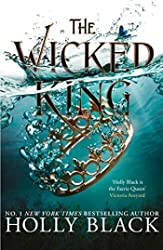
The Wicked King, by Holly Black
Second paragraph of third chapter:
“Watching my back is the perfect opportunity to stick a knife in it,” I remind him.
Sequel to last year's Lodestar finalist The Cruel Prince, with lots of palace politics leavened with sex, and our precocious heroine sorting out the governance of her city-state and its relations with its neighbours and its minorities. Perhaps the most small-p political of the finalists. Enjoyable enough. You can get it here.
Young Frankenstein won the 1975 Hugo for Best Dramatic Presentation and the 1975 Nebula for Best Dramatic Script (the latter awarded in 1976, but with eligibility covering December 1974 when the film was released). The other Hugo finalists were Flesh Gordon, Phantom of the Paradise, The Questor Tapes and ZardozDark Star, A Boy and His Dog (which won the 1976 Hugo) and Rollerball. The only two of those that I have seen are Zardoz and Dark Star, for both of which I have an unfashionable affection. Young Frankenstein is perhaps more approachable than either. IMDB users certainly think so, they rate it 3rd and 4th on the two rating systems (with The Godfather II at the top).
There are a couple of returnees from earlier Oscar-winning films. The most prominent is Gene Hackman, who gets one scene as the blind man here, but (with a lot less hair) was Detective Doyle in The French Connection four years ago.
The Frankenstein family lawyer, Gerhard Falkstein, is played by Richard Haydn who was in The Sound of Music nine years ago as Max Detweiler.
And one returnee from a past Hugo-winning film, blink-and-you'll-miss him: John Dennis, one of the orderlies in Dr Frankenstein's lecture, was Wagner the sanitation man in Soylent Green.
I have happy romantic memories of the first time I saw Young Frankenstein, and although I can see its flaws thirtysomething years on, it's still much more good than bad. To get the bad out of the way first, it's another all-white film (apart from one black student in Frankenstein's class). Sure, it's mostly set in Transylvania, but still.
Disability is also awfully funny, something I don't think I had seen in my film-watching programme since the 1930s. the most uncomfortable moment for me is the monster attempting to sing.
Having said that, the scene with Gene Hackman's blind man meeting the monster is utterly hilarious.
And Marty Feldman is truly memorable as Igor (with moving hump on his back).
The humour is rather sexist in places, with Madeleine Kahn's Elisabeth and Cloris Leachman's Frau Blucher the butt of the jokes. All power to Teri Garr who is much much better than her material.
And some of the other gags are brilliant – the scene with little Helga, for instance.
Or the earlier scene with the secret passageway (and gosh, there's some symbolism there):
And Inspector Kemp, who is also not entirely human but literally polices the boundaries of what is permissible:
In general it's very funny, if occasionally wince-inducing. I was glad to have an excuse to revisit it. You can get it here.
I'm not doing a compare and contrast with the original novel Frankenstein, because the real source material here is much more recent – it's the James Whale films of 1931 and 1935, starring Boris Karloff, and to a lesser extent the last Frankenstein film with Karloff from 1939. I don't think I had seen any of these on my romantic evening back in 1986, but enough of the Frankenstein mythos has seeped into general consciousness that I understood exactly what was going on.
Nwxt up are two less cheerful films: One Flew Over the Cuckoo's Nest and A Boy and His Dog, winners of Oscar and Hugo respectively for 1976.
Fri, 16:05: RT @NathanJRobinson: There’s more and livelier free speech and open debate than ever before and all of the people who are supposedly silenc…
Fri, 17:11: I prosecuted Srebrenica war criminals, but I know others are still walking free | Serge Brammertz https://t.co/zMjgcZhyu6 Powerful.
Fri, 19:46: For the first time since the current situation hit, I have been to Brussels all five days of this working week, cul… https://t.co/Tunn4THi2j
Fri, 20:48: I was arrested, jailed and assaulted by a guard. My ‘crime’? Being a journalist in Trump’s America… https://t.co/0b7e7U5jzg
Fri, 22:53: RT @JennyBoylan: I did not know who else had signed that letter. I thought I was endorsing a well meaning, if vague, message against inter…
Sat, 08:45: RT @tconnellyRTE: Brexit talks: why an October breakthrough needs to happen in July. Here’s my latest take on the negotiations…@RTENewsNo…
11 July 1925: birth of David Graham, who did loads of Dalek voices in Old Who as well as the Peter Cushing films, and also appeared on screen twice, as Charlie the Barman in The Gunfighters (First Doctor, 1965) and Professor Kerensky in City of Death (Fourth Doctor, 1979). They both die horribly, but he is still alive as far as I know – happy 95th birthday, David!
11 July 1945: birth of Michael Pickwoad, BBC Wales production designer who created the Eleventh and Twelfth Doctor Tardis sets and also designed Class (died in 2018).
11 July 1957: birth of Trevor Laird, who played Frax in the story most of us call Mindwarp (Sixth Doctor, 1986) and then Martha Jones' father Clive in the second Tenth Doctor season in 2007.
ii) broadcast anniversary
11 July 1964: broadcast of 'Hidden Danger', the third episode of the story we now refer to as The Sensorites, having been postponed for a week because of Wimbledon and cricket. Starts with Susan being uncharacteristically assertive against her grandfather, the Doctor (this is one of her best stories as a character). Team Tardis (apart from Barbara, who will get a couple of weeks off) then travel to the city of the Sensorites, who are internally divided about talking to them; and as they sit down to eat, Ian collapses to the ground, poisoned. (Cue theme music.)
iii) date specified in-universe
11 July 1982: was the day of the World Cup final 38 years ago (also 10 years ago when I first did this post). Little did anyone realise that the Eighth Doctor and Charley Pollard were averting invasion of Earth by the Threllips, as revealed in the Big Finish audio special, Living Legend (a successfully humorous short play which is actually FREE to download, so go ahead, do it).
For the record, I am not a huge fan of the Retro Hugos in general. It's striking that three of the 1945 Best Novel finalists are really from outside the sfnal subculture that existed at the time, indicating how few actual novels were being written by the sf pulp writers. Anyway, it's an interesting selection.
The Golden Fleece aka Hercules, My Shipmate, by Robert Graves
Second paragraph of third chapter:
King Sthenelus, the new Achaean overlord of the Peloponnese, justified his seizure of the throne of Mycenae from the Henetian house of Pelops by denying that his predecessor had a valid title to it: he married Nicippe, a matrilinear descendant of Andromeda, sister of Perseus the Cretan who had founded the city, and ruled in her name.
I have an affection for the story of the Argonauts, because my Elizabethan ancestor Nicholas White is reputed to have translated the Gaius Valerius Flaccus version into English. Graves here subverts the received version of the story by situating it in an ancient world of magic and gods, where the worship of the mother goddess has been written out by later traditions. There are some thrilling bits here, as the Argo plays hide-and-seek with its pursuers around the margins of the Black Sea. Graves has a lovely eye for detail, and the humour is a bit hearty but also humanising. You can get it here.
Land of Terror, by Edgar Rice Burroughs
Second paragraph of third chapter:
Perry and I used often to discuss the helplessness of twentieth-century man when thrown upon his own resources. We touch a button and we have light, and think nothing of it; but how many of us could build a generator to produce that light? We ride on trains as a matter of course; but how many of us could build a steam engine? How many of us could make paper, or ink, or the thousand-and-one little commonplace things we use every day? Could you refine ore, even if you could recognize it when you found it? Could you even make a stone knife with no more tools at your command than those possessed by the men of the Old Stone Age, which consisted of nothing but their hands and other stones?
One of Burroughs’ Pellucidar novels, published in 1944. Our hero goes on an Odyssey-style voyage in the world hidden beneath our own where he has already resided for many years. He escapes from strange cultures where women and non-white men are in charge, because he is smarter. He is gallant towards his own womenfolk, even though they are indistinguishable as characters. In the end, he returns to the safe haven of white male supremacy and order is restored. It's a racist mess. You can get it (very cheaply) here.
“Shadow Over Mars” (The Nemesis from Terra), by Leigh Brackett
Second paragraph of third chapter:
Mayo McCall watched the men running back and forth below. Quite calmly she reached out and closed the switch that controlled her testing beam — the ray that spanned the head of the drift and checked every carload of dull red rock for Fallonite content, the chemically amorphous substance that was already beginning to revolutionize the Terran plastic industry.
Fairly standard but well executed pulp planetary romance / space opera, with desert Mars, swampy Venus and our hero overcoming evil Earth industrialists and perhaps a bit of commentary on colonialism as well. Brackett is one of two women in this category, and the only one to get a solo listing. You can get the original pulp version here and buy a later book version here.
Sirius: A Fantasy of Love and Discord, by Olaf Stapledon
Second paragraph of third chapter (sorry, it's a long one):
Plaxy and Sirius were already forming that companionship which was to have so great an effect on both their minds throughout their lives. They played together, fed together, were washed together, and were generally good or naughty together. When one was sick, the other was bored and abject. When one was hurt, the other howled with sympathy. Whatever one of them did, the other had to attempt. When Plaxy learned to tie a knot, Sirius was very distressed at his inability to do likewise. When Sirius acquired by observation of the family's super-sheep-dog, Gelert, the habit of lifting a leg at gateposts to leave his visiting card, Plaxy found it hard to agree that this custom, though suitable for dogs, was not at all that Plaxy was building. His effort wrecked the wall. This was not Sirius's first achievement in construction, for he had once been seen to lay three sticks together to form a triangle, an achievement which caused him great satisfaction. He had to learn to "handle" bricks and dolls in such a way that neither his saliva nor his pin-point teeth would harm them. He was already enviously impressed by Plaxy's hands and their versatility. The normal puppy shows considerable inquisitiveness, but no impulse to construct; Sirius was more persistently inquisitive and at times passionately constructive. His behaviour was in many ways more simian than canine. The lack of hands was a handicap against which he reacted with a dogged will to triumph over disability.appropriate to little girls. She was deterred only by the difficulty of the operation. Similarly, though she was soon convinced that to go smelling at gate-posts was futile because her nose was not as clever as Sirius's, she did not see why the practice should outrage the family's notions of propriety. Plaxy's inability to share in Sirius's developing experience of social smelling, if I may so name it, was balanced by his clumsiness in construction. Plaxy was the first to discover the joy of building with bricks; but there soon came a day when Sirius, after watching her intently, himself brought a brick and set it clumsily on the top of the rough wall that Plaxy was building. His effort wrecked the wall. This was not Sirius's first achievement in construction, for he had once been seen to lay three sticks together to form a triangle, an achievement which caused him great satisfaction. He had to learn to "handle" bricks and dolls in such a way that neither his saliva nor his pin-point teeth would harm them. He was already enviously impressed by Plaxy's hands and their versatility. The normal puppy shows considerable inquisitiveness, but no impulse to construct; Sirius was more persistently inquisitive and at times passionately constructive. His behaviour was in many ways more simian than canine. The lack of hands was a handicap against which he reacted with a dogged will to triumph over disability.
As a kid I hugely enjoyed Diana Wynne Jones' Dogsbody and A.M. Lightner's Star Dog (the latter long out of print), both of which centre around the relationship between a human and a puppy which has been born with unearthly powers due to extraterrestrial intervention. Here, the eponymous Sirius is the product of human intervention, enhanced to superior intellectual abilities and also much longer lifespan. I've read a lot of Stapledon's cosmic fiction before, and not always been hugely impressed; I found Sirius much easier to relate to both as a book and as a character. Sure, it draws heavily on Frankenstein, but I think Stapledon brings a lot of new material to his source – most particulary the intense relationship between dog and girl. You know of course where it is going to end, but it kept me very engaged until we got there. You can get it here.
(Incidentally Arthur C. Clarke used the same subtitle for his novel Imperial Earth, which I think is underrated.)
The Wind on the Moon, by Eric Linklater
Second paragraph of third chapter:
‘I don’t know what people will think, or what they will say,’ said Mrs Palfrey, ‘when they see us pushing Dinah and Dorinda in this absurd and ridiculous manner. Perhaps we should not have come to the village. It might have been better to ask Dr Fosfar to see the children at home.’
Apparently a really popular children's book, which won the Carnegie Medal for 1944; the two sisters Dinah and Dorinda have a series of magical adventures including being turned into giraffes for the local zoo and dramatically rescuing their father from a foreign prison. Didn't especially grab me, but obviously it has a loyal following. You can get it here.
“The Winged Man”, by A.E. van Vogt and E. Mayne Hull
Second and third paragraphs of third chapter:
Sweating, Kenlon looked up to where Lieutenant commander Jones-Gordon was kneeling beside the flagpole holding with strong fingers to Kenlon’s right wrist while Kenlon worked with his left hand. Trembling from exhaustion, Kenlon finally said:
“What do you think, sir—a blowtorch to burn it off?"
A WW2 submarine is brought millennia into the future to become part of a war between bird-men and fish-men (and they are mostly men, though a vessel crewed entirely by women does turn up three-quarters of the way in). The twentieth-century hero saves the day, but it's really not all that exciting. You can get the original magazine publication here and here, and an expanded novel version here.
So, a couple of very interesting books here – but some other Retro Hugo cycles have had better luck.
Thu, 19:33: RT @tconnellyRTE: Confirmed. Paschal Donohoe has won the contest to be next Eurogroup President
Fri, 00:20: RT @theiaincameron: Pin-sharp visibility tonight from the south side of Glasgow. The spire of Glasgow University sits below the huge bulk o…
Fri, 10:45: RT @uk_domain_names: Remember Mark Francois’s puffed-up letter to Michel Barnier a few days ago? Well, Michel Barnier just wrote back. And…
10 July 1941: birth of Jackie Lane, who played companion Dodo Chaplet in early 1966. There is some fan lore that she was born in 1947, but this is clearly contradicted by Nicholas Briggs' Reeltime interview with her, as well as by the story that she was considered for the original part of Susan and lost out on A Taste of Honey to Rita Tushingham in 1961. There is also some confusion with a slightly older starlet, Jocelyn Lane, who married Prince Alfonso of Hohenlohe-Langenburg.
Of all the living former companions, Jackie Lane has had by far the lowest profile, but here she is in Paris in 2010:
10 July 1970: birth of John Simm, the first Master of New Who.
ii) broadcast anniversaries
10 July 1965: broadcast of the "The Meddling Monk", the second episode of the story we now call The Time Meddler, in which William Hartnell takes the week off, the Doctor being imprisoned by the eponymous monk, and Vikings attack a Saxon woman in a scene that would certainly be toned down if written for today's show. Steven and Vicki finally find the Doctor's cell; but he has gone.
10 July 2009: broadcast of the fifth and final episode of Torchwood: Children of Earth. Jack sacrifices his own grandson to save the world, and then zooms off into the sky, leaving Gwen and Rhys (and their imminent baby) as the only survivors of Torchwood Three.
Now that Hugo voting is finally available online, I’m going to post about a few categories over the next few days. I’m involved with the administration of the awards again this year, so I won’t be revealing my exact rankings; back to my normal procedure next year.
Of all of this year’s categories, I am most excited about Best Related Work. This was the category hit hardest by the Puppies, being No Awarded in both 2015 and 2016 (which incidentally means that if all goes well in DC next year, it will be only the second time since 2013 that the Hugo in this category has been awarded in the USA). This year’s finalists are a pretty remarkable set, and I heartily recommend them as a group. It’s interesting that each of them concentrates on the work of one particular creator – an autobiography, three monographs, a speech and a TV documentary.
Becoming Superman: My Journey from Poverty to Hollywood, by J. Michael Straczynski
Second paragraph of third chapter:
This was an extraordinary development, because until now my mother’s side of the family had always been something of a mystery. As far as Charles was concerned, only his side of the family mattered, and he often belittled Evelyn’s relatives as little more than hillbillies. Charles was so adamant about erasing any connection to Evelyn’s side of the family that he ordered her to destroy all her personal photos. She tore up a few in front of him, then secretly sent the rest to my aunt for safekeeping.
This is an exceptional read. I’m not in fact all that familiar with Straczynski’s work, having seen just a few episodes of Babylon 5; but you don’t have to know anything about him to appreciate his autobiographical story of emerging from a dreadful childhood with an abusive father and largely absent mother (and various awful other relatives) to finally make it good in show biz and personal life after various difficult starts. The first half of the book, as he works his way out of his origins, is gripping stuff. The second half, when he starts getting successful, is less interesting unless you know his work. I do notice a recurring pattern that he gets into a particular project and then has to (or is made to) walk away after confrontations with the studio executives, where he is always right and they are always wrong but more powerful. You can get it here.
Joanna Russ, by Gwyneth Jones
Second paragraph of third chapter:
It’s beyond the scope of this study to examine the Cold War reversal of women’s emancipation in detail, but it’s important to understand that the instigators of Second Wave feminism in America, including Joanna and her cohort in feminist sf, grew up in a stifling world,6 and their rebellion was driven by desperation as much as by sixties radicalism. Reform movements rise from immediate causes, as well as long term injustice. The “cloud of talking gnats”7 that bars the way to utopia in The Female Man was, to a great extent, created by Cold War politics. 6 “[T]hat disgusting decade.” Joanna, as an adult, became well aware of what the fifties had done to her generation. 7Magic Mommas, 69. Female Man, 104
I’m afraid this didn’t grab me quite as much. Russ is a fascinating writer, whose work I don’t know as well as I would like, and this book goes in great detail (perhaps too much detail) in its recounting of the stories in each of her published (and some unpublished) work. But I don’t get a sense of how she fitted into the broader sfnal picture – there is a discussion of the Khatru Symposium, but without really explaining where it came from and what happened after. Russ herself, as a personality, flits in and out of the narrative. I found it a bit frustrating. You can get it here.
The Lady from the Black Lagoon: Hollywood Monsters and the Lost Legacy of Milicent Patrick, by Mallory O’Meara
Second paragraph of third chapter:
The house Milicent lived in sits on a wide street in a quiet, unremarkable residential area. It’s part of a row with other similar two-story homes, all with identical short flights of red brick stairs leading into the arch of the front door. This was about as far away from Hearst Castle as you could get. Marble was replaced by stucco, ornate architecture was replaced by plain buildings, lush gardens were replaced by plain, trimmed hedges. No more sweeping seaside vistas, no miles of rolling coastland, no enveloping fog.
This on the other hand is a completely fascinating book. I am ashamed to say that I had never heard of Milicent Patrick, nor have I even seen The Creature from the Black Lagoon, in which she created the eponymous Creature. Mallory O’Meara recounts both Milicent Patrick’s story and her own quest for information about this important creator who was written out of history, culminating in her efforts to trace and contact Milicent Patrick’s surviving relatives. It’s ultimately a sad story – after being fired for not being invisible enough in 1953, she lived another forty-five years without being able to do the work she was best at, doing odd bits and pieces of work in southern California. An important story. You can get it here.
The Pleasant Profession of Robert A. Heinlein, by Farah Mendlesohn
Second paragraph of third chapter:
The sections of this chapter and the next do not represent an even or ordered mapping. Heinlein’s work followed a spiral path, and elements that I wish to identify turn up, are discarded, and then returned to again in later work. But there are three clear divisions in terms of the rhetorical techniques Heinlein uses: the cinematic, the didactic and the picaresque.
I wrote about this previously, and repeat now what I said then:
I was a huge fan of Heinlein’s writing in my teenage years, but the last awful novels came out just around that time and somewhat tainted the memory of the pleasure I’d had a few years earlier. I have gone back to his work a couple of times in recent years, but bounced off it as often as not.
But here Farah Mendlesohn approaches Heinlein with a redemptive eye. It is an interesting comparison with [Adam] Roberts’ Wells book – it is shorter, because Heinlein didn’t write as much despite living a bit longer; it is more consciously fannish; but it’s a much deeper analysis of what Heinlein thought he was doing with his writing, grouped more thematically than by time line. Heinlein’s politics, for good or ill, had much more influence on later science fiction than Wells’. Possibly Heinlein actually had more to say than Wells, even if Wells said more of it.
I learned a lot from this, including in particular what Heinlein thought he was doing with Farnham’s Freehold and how it went so badly wrong… You can get it here.
“2019 John W. Campbell Award Acceptance Speech”, by Jeannette Ng
You can watch all two minutes of this online:
Here is her script (which she did not entirely stick to). The third paragraph is:
And I am so proud to be part of this. To share with you my weird little story, an amalgam of all my weird interests, so much of which has little to do with my superficial identities and labels.
I was in fact in the room where it happened, waiting offstage to help handle the Hugo trophies for the next set of winners, having some time previously counted the votes that brought Ng her victory. It was a real moment of sfnal history; Alec Nevala-Lee’s book had already dissected Campbell’s views to the point that it would have been difficult to continue with the award in his name for much longer, but this speech was the final push which made it happen sooner rather than later. I’m very glad to be involved again this year with administering the first Astounding Award under that name.
Worlds of Ursula K. Le Guin, produced and directed by Arwen Curry
Here’s a trailer:
A really lovely documentary about Le Guin’s work, with commentary from (among others) Margaret Atwood, Michael Chabon, Neil Gaiman and David Mitchell, looking at her life and career and giving us a three-dimensional picture of this complex writer. It is a mainly positive picture, admittedly, but it’s well worth watching.
So, quite a difficult choice. But I must say I prefer that to the years when there are just one or two standout finalists.
Current The Complete Secret Army: An Unofficial and Unauthorised Guide to the Classic TV Drama Series by Andy Priestner Our Mutual Friend, by Charles Dickens The Overstory, by Richard Powers The Ruin of Kings, by Jenn Lyons The Wicked + The Divine vol 9: "Okay", by Kieron Gillen etc
Last books finished City of Lies, by Sam Hawke Tooth & Claw, by Jo Walton Gaze of the Medusa, by Gordon Rennie, Emma Beeby and Brian Williamson EU Lobbying Handbook, by Andreas Geiger The Wicked + The Divine vol 8: Old is the New New, by Kieron Gillen etc TOR: Assassin Hunter, by Billy Bob Buttons (did not finish)
Next books Guban, by Abdi Latif Ega
“Houston, Houston, do you read?” by James Tiptree Jr
Thu, 04:31: RT @worldcon2021: Hugo voting for 2020 has just opened! Members of the 2020 Worldcon (CoNZealand) can access their ballots by visiting htt…
Thu, 07:21: RT @CoNZealand: Online Hugo Voting is Open! The deadline is Wednesday 22 July 2020 at 23:59 PDT (UTC-7)/Thursday, 23 July 2020 at 18:59 NZS…
Thu, 09:11: RT @StinaLeicht: Trans women are women. Trans men are men. There are many genders and sexual orientations. Black Lives Matter. Science is r…
9 July 1993: Death of Ron Jones, who directed the Fifth Doctor stories Black Orchid (1982), Time-Flight (1982), Arc of Infinity (1983) and Frontios (1984); and the Sixth Doctor stories Vengeance on Varos (1985) and the one most of us call Mindwarp (1986).
9 July 2007: Death of Peter Tuddenham, who was the voice of the computer in Ark in Space, the voice of the Mandragora Helix in The Masque of Mandragora, and the voice of the Brain in Time and the Rani. Blake's 7 fans remember him also as Orac, Zen and Slave.
ii) broadcast anniversaries
9 July 1966: broadcast of the third episode of The War Machines, which starts with Ben dodging away from the machine confronting him last week; he works out that Polly is under the control of WOTAN, and the episode ends with a failed attack on the warehouse, soldiers fleeing as the War Machine advances on the Doctor, who stands firm and defiant.
9 July 1994: broadcast of Whatever Happened to Susan Foreman?, radio play which sits rather outside standard Who continuity in that Susan, played here by Jane Asher, ends up SPOILER as the European Commissioner for Education, a role that didn't actually exist until 1999. The incumbent is Mariya Gabriel, who was the youngest ever European Commissioner at one point, though has now been overtaken by a Lithuanian.
(Commissioner Mariya Gabriel, not Carole Anne Ford or Jane Asher, obviously.)
9 July 2009: broadcast of the fourth episode of Torchwood: Children of Earth. OMG IANTO!!!!!!
iii) date specified in-universe
9 July 1978: date of birth of Elin Morgan, who almost becomes a victim of the Mayflies in the 2008 Torchwood episode Reset. (Played, uncredited, by Nancy Danks-Smith.)
Поэт провел рукою по лицу, как человек, только что очнувшийся, и увидел, что на Патриарших вечер. Вода в пруде почернела, и легкая лодочка уже скользила по ней, и слышался плеск весла и смешки какой-то гражданки в лодочке. В аллеях на скамейках появилась публика, но опять-таки на всех трех сторонах квадрата, кроме той, где были наши собеседники.
The poet passed his hand across his face like a man who has just come to, and saw that it was evening at the Patriarch's Pond. The water in the pond had blackened, and a light skiff was already sliding across it, and the splashing of an oar and the giggles of some citizeness in the skiff could be heard. People had appeared on the benches in the avenues, but again, on each of the three sides of the square apart from the one where our interlocutors were.
I had read this many many years ago, and enjoyed it to the extent of going out of my way to visit Bulgakov's house, now a museum, on the first of my two visits to Kiev. (I didn't learn a lot – everything was in Russian or Ukrainian. Might be different now – my Russian is better and I imagine they have broadened out their appeal a bit.)
The book was first published in Paris in 1967, long after the author's death in 1940. It tells the story of the devil visiting Stalinist Russia, and interacting destructively with the institutions of literary power. The unnamed Master is the author of a novel about Pontius Pilate and Yeshua Ha-Notsri (Jesus the Nazarene); Margarita is his lover. There are some very vivid images and moments, and also some very clever allusions to what could not actually be said in the Stalinist era. However I have to admit I found the plot rather rambling and difficult to grasp, and the satire (as so often) a bit too happy with its own cleverness. So I'm not sure that I would go back to it a third time. Still, you can get it here.
This was the top book on my shelves that I had read but not reviewed online. Next on that list is Zen and the Art of Motorcycle Maintenance, by Robert M. Pirsig.
Tue, 16:05: RT @UKandEU: “Before buying an agreement with a Prime Minister with a used-car salesman’s reputation, Michel Barnier wants a guarantee that…
8 July 1978: birth of the very watchable Eve Myles, who plays Gwen Cooper in Torchwood (and also appeared in The Unquiet Dead with the Ninth Doctor in 2005). Mmmmmm.
9 July 1907: birth of Eric Chitty, who was Charles Preslin in the 1966 First Doctor story we now know as The Massacre (lost, alas) and Co-ordinator Engin in The Deadly Assassin (Fourth Doctor, 1976).
8th July 2006: death of Peter Hawkins, who did the voices of the Daleks, the Cybermen, Bill and Ben the Flowerpot Men, Captain Pugwash, and Zippy in the first season of Rainbow.
ii) broadcast anniversary
8 July 2006: broadcast of Doomsday, the last episode of Season 2 of New Who, with Daleks vs Cybermen, and Rose Tyler swept off to a parallel universe; RTD's last really satisfactory finale, and even then the kids I was watching it with (both of whom, incidentally, are now professional footballers) got a bit bored with Billie Piper's make-up smearing. It worked for me, though I was totally confused by the ending as I was not really aware of Catherine Tate.
8 July 2009: broadcast of the third episode of Torchwood: Children of Earth, as the 456 arrive in their gas-filled chamber and demand 10% of all of humanity's children; meanwhile Jack reveals that he handed over the children they took away in 1965.
8 July 2011: broadcast of The New World, first episode of the fourth series of Torchwood. One day, nobody dies; death has stopped for the whole human race. CIA agent Rex Matheson discovers the existence of Torchwood and goes to Wales.
iii) date specified in-universe
8 July 1974 saw the opening of the London exhibition of Princess Hentopet's Art, in the 2008 Tenth Doctor comic story Agent Provocateur.
One of my reading programmes is to go chronologically through the winners of the BSFA Award for Best Novel, the Arthur C. Clarke Award and the Otherwise Award (formerly the James Tiptree Jr Award). In order to keep up momentum, I’ve decided to do all the winners of a given year simultaneously, for a better comparison. So this takes me to the awards made in the year 1999 for work done in 1998: the Clarke Award went to Tricia Sullivan’s novel Dreaming in Smoke, the BSFA Best Novel to The Extremes by Christopher Priest, and the Tiptree, very unusually, to a short story, “Congenital Agenesis of Gender Ideation by K.N. Sirsi and Sandra Botkin”, by Raphael Carter. (This was the first time, and until last year the only time, that the Tiptree was awarded solely to short fiction.)
There’s very little crossover between the various shortlists. The Tiptree published a “shortlist” of no less than 26 other works, and a long list of another 20, none of which was on the BSFA Best Novel or Clarke lists. (The Tiptree shortlist did include the BSFA Short Fiction winner, “La Cenerentola” by Gwyneth Jones.) The Extremes, which won the BSFA Best Novel award was on the Clarke shorlist, and The Cassini Division by Ken MacLeod was shortlisted for both BSFA and Clarke. This was the year at Connie Willis’s To Say Nothing of the Dog won the Hugo for Best Novel, and the previous year’s winner, Forever Peace by Joe Haldeman, published in 1997, won the Nebula because of the latter’s weird nomination cycle at the time. Octavia Butler’s Parable of the Talents, published in 1998, won the Nebula the following year.
Second paragraph of third chapter of Dreaming in Smoke:
You can see out, and it’s big. You can see its emptiness.
I felt there was a good book in here trying to get out. It’s a feminist take on human colonisation of an alien planet, spoiled by the annoyingly lazy and passive character of the protagonist, and by various dream sequences which aren’t really all that descriptive and don’t take the plot further. I found it rather hard to engage with, frankly, and perhaps it is a novel that demands more effort from the reader than I was in the mood to give. You can get it here.
I am happy to count all of that year’s Clarke judges as friends, and no doubt they made what seemed to them the right choice, but I am really surprised that it was chosen ahead of The Extremes or The Cassini Division, both of which I enjoyed much more. (The other shortlisted books, none of whcih I had heard of let alone read, are Cavalcade by Alison Sinclair; Earth Made of Glass by John Barnes; and Time on My Hands: A Novel with Photographs by Peter Delacorte.)
Second paragraph of third chapter of The Extremes:
The problem of being a witness, as they described it, was having to decide where to be before the action began. You had to witness, be close enough and see enough so you could write a report afterwards, but you also had to survive.
I liked The Extremes a lot more – it seemed to me a bit of a departure from Priest’s usual beat, set firmly in a coastal town in Kent with virtual reality, coming to terms with the ghosts of mass murder and a bit of sex all key ingredients to the plot. If anything I felt it was a bit too straightforward compared to some of Priest’s other work, but it was still highly satisfactory, with a beginning, a middle and an end which all cohered from the two main characters’ viewpoints. You can get it here.
As well as The Cassini Division, I have read two of the other three books on the BSFA shortlist, Inversions by Iain M. Banks and Queen City Jazz by Kathleen Anne Goonan, missing out so far on To Hold Infinity by John Meaney. I think in the end I’d have voted for Ken MacLeod over the others, though it would have been a close thing.
Second paragraph of third section of “Congenital Agenesis of Gender Ideation by K.N. Sirsi and Sandra Botkin”:
Sirsi and Botkin could not immediately go to Rajasthan, so they used samples Sirsi had previously taken in an effort to identify the gene for agenesis of gender ideation, hoping to find it in families closer to home. A preliminary analysis found six candidate genes on the x chromosome that were present in all the affected family members but none of the others. Two of these genes had well-known functions and could be discarded, but Botkin had to find and interview people with each of the other four. Ten years ago this would have been an impossible task; the availability of genetic databases made it feasible, though not precisely easy (people are understandably alarmed when asked to come in for tests based on a cell sample taken five years ago).
Of the 26 shortlisted works for the Tiptree Award, I think I have read three – Brown Girl in the Ring by Nalo Hopkinson; Parable of the Talents by Octavia E. Butler; and “Story of Your Life”, Ted Chiang. I think I have also read three of the long list – Children of God by Mary Doria Russell; “Oceanic” by Greg Egan and Six Moon Dance by Sheri S. Tepper. However, I think the judges got this one right, given what the Tiptree Award is meant to be about. The story is written (rather loosely) in the style of a scientific paper, explaining the authors’ research into a group of people who are simply unable to distinguish gender. If you’re exploring a “my god, what if?!” idea like that, there’s no need for much in the way of plot or characters (though the story does have both), and it’s a very good challenge to the reader’s preconceptions. It’s also very short. It’s not available separately but you can still get the original publication here and (slightly cheaper) the reprint in a Tiptree anthology here.
Next up, the awards made in 2000 for work published in 1999: The Conqueror’s Child by Suzy McKee Charnas, The Sky Road by Ken MacLeod and Distraction by Bruce Sterling.
Tue, 10:45: RT @garethharding: Good news for dad-dancers: In #Belgium you can invite 50 people to your wedding, but they cannot dance. Only the first d…
7 July 1919: birth of Jon Pertwee, the Third Doctor, star of the show from 1970 to 1974; the first Doctor I can remember, the gentleman wizard who spends a lot of his time on Earth.
7 July 1948: birth of Mat Irvine, responsible for many of the special effects on the show in the late 1970s. He wrote a book about it.
7 July 1985: death of Ewen Solon, who played Chal in The Savages (First Doctor, 1966) and Vishinsky in Planet of Evil (Fourth Doctor, 1975).
7 July 1997: death of Royston Tickner, who played Steinberger P. Green in "The Feast of Steven", the seventh episode of what we now call The Daleks' Master Plan (First Doctor, 1965) and Robbins in The Sea Devils (Third Doctor, 1972).
7 July 2019: death of Stacy Davies, who played Perkins in The Invasion (Second Doctor, 1968) and Veros in State of Decay (Fourth Doctor, 1980)
ii) broadcast anniversary
7 July 2009: broadcast of the second episode of Torchwood: Children of Earth, with Jack reassembling his exploded body, getting encased in concrete and then busted out by Ianto, while Gwen and Rhys head for London and the children chant, "We are coming tomorrow." Here's senior civil servant Frobisher trying to get a grip on the situation. (Apparently the actor playing him also appeared in Doctor Who a couple of times.)
iii) date specified in-universe
The short story "Salva Mea", by Joe Lidster, in the anthology Short Trips: Snapshots, featuring the Eighth Doctor with Charley Pollard and C'Rizz, is set on 7 July 2007.
Second frame of third chapter of De dag waarop de bus zonder haar vertrok:
This time nothing else can go wrong…
Second frame of third chapter of De dag waarop ze haar vlucht nam:
*giggle* For the first time in my life I am doing something crazy! I am heading off!
Just like that! I'm taking a plane to go visit people who I don't even know!
These looked promising on the shelf in FNAC, so I bought them for Anne for Christmas, and have now got around to them myself. I was a bit annoyed to realise, soon after starting, that I had actually got Dutch translations of the original French bandes dessinées – Le jour où le bus est reparti sans elle and Le jour où elle a pris son envol. (There are two more volumes, Le jour où elle n'a pas fait Compostelle and Le jour où il a suivi sa valise.) It was fairly easy to spot because the architecture of the city where our protagonist lives is very obviously Parisian. The creators are a bit less obvious; the writer is credited as "Béka", the joint pseudonym of Bertrand Escaich and Caroline Roque, and the artist as "Marko", the pen-name of Marc Armspach. Maëla Cosson seems to be the colorist's real name, but the Dutch-language translator is identified only as "Xmed". I'm not in a position to judge how accurate the translation is, but it's idiomatic and comfortable at least.
The first book is rather charming, as Clementien (presumably Clémentine in the original), heading off to a yoga weekend with a bunch of people she doesn't know, is left behind during a pit stop and approaches enlightenment with Antoine, the wise and kindly owner of the roadside motel/café where she has ended up. Many Zen parables are told. In the second book, she puts her life on hold to go to Berlin and find further enlightenment and Zen parables, and to be honest it doesn't work as well; the joke perhaps has worn a bit thin. I'm not really inclined to seek out the third volume. However, the first is recommended.
You can get the first volume in the original French here, and the second in the original French here. They have not yet been translated into English, but I see Spanish listings too. I suspect that if you want to refresh your French fairly painlessly, this would be a good way of doing that.
Sun, 12:22: RT @pmdfoster: Police smash car window of man on way home from TV interview about police racism – this footage is very disturbing indeed.…
Sun, 12:56: RT @hugobrady: Gaelic influence hides in plain sight everywhere in #Iceland: placenames, beehive huts, folklore, encoded in the sagas and a…
Sun, 13:09: RT @ChildFocusNL: Kiara #POOT is veilig en wel teruggevonden. Hartelijk bedankt voor het retweeten van het verdwijningsbericht.
Sun, 22:36: RT @c2020f3: I am VISIBLE to the naked eye! I am 161,451,709 km away from Earth and my current magnitude is 1.8. You can spot me near the A…
6 July 1935: birth of Derrick Goodwin, director of The Invisible Enemy (Fourth Doctor, 1977).
6 July 1979: death of Malcolm Hulke, co-author of The Faceless Ones (Second Doctor, 1967), The War Games (Second Doctor, 1969) and (uncredited) The Ambassadors of Death (Third Doctor, 1970), sole author of Doctor Who and the Silurians (also Third Doctor, 1970), Colony in Space (Third Doctor, 1971), The Sea Devils (Third Doctor, 1972), Frontier in Space (Third Doctor, 1973), and Invasion of the Dinosaurs (Third Doctor, 1974), and writer of seven novelisations (DW&t Cave-Monsters, DW&t Doomsday Weapon, DW&t Sea Devils, DW&t Green Death, DW&t Dinosaur Invasion, DW&t Space War and DW&t War Games) and co-writer of The Making of Doctor Who. His stories showed a commitment to politics and a mild obsession with reptiles. See also the short pamphlet by Michael Herbert, Doctor Who and the Communist.
ii) broadcast anniversary
6 July 2009: broadcast of the first episode of Torchwood: Children of Earth, with the children stopping in place and chanting, and sinister goings-on at the top of the government; at the end Jack gets blown up in the Hub, and the wains chant "We are coming back". Thrilling stuff.
iii) date specified in-universe
6 July was the planned date of The Android Invasion.
Second paragraph of third section (“The Rhino of Twenty-Three Strand Street”, by Dave Rudden):
Patricia Kiernan didn’t say it because she thought anyone was listening; people didn’t listen to Patricia, as a rule.
Wow. This really is lazy stuff. The latest Doctor Who Annual consists of two extracts from books that I already had, with summaries of each story from Series 11 (or 37), the Thirteenth Doctor’s first series, as filler in between; and that’s basically it. Even less thought has been put into this year’s annual than last year’s, and not surprisingly none of the editorial team wants to be credited by name. I have occasionally commented that this book or that play is really only for completists; I’m not sure I could even go that far with the 2020 Annual. What a disappointment. You can get it here if you really want.
February 2007 was the historic month that I joined Facebook. The travel highlight was a trip to the USA, taking in New York and Washington DC as usual, and finishing in very snowy Rockport, Maine, where I spoke at the annual Camden Conference:
Also more Doctor Who fan art from young F, this time a crossover with Spongebob – what if he partly changed his house into the Tardis?
Transatlantic travel and uninterrupted commuting by train allowed me to read quite a lot of books:
Sun, 10:45: RT @YaxueCao: CUHK graduates turn their backs shouting in unison, drowning it when PRC national anthem begins: “Liberate Hong Kong, Revolut…
5 July 1934: birth of Philip Madoc, who is Brockley in Daleks – Invasion Earth 2150 AD (Movie 1966), Eelek in The Krotons (Second Doctor, 1968-9), the War Lord in The War Games (Second Doctor, 1969), Solon in The Brain of Morbius (Fourth Doctor, 1976), and Fenner in The Power of Kroll (Fourth Doctor, 1978-9).
5 July 1970: birth of Toby Whitehouse, who wrote School Reunion (Tenth Doctor, 2006); Greeks Bearing Gifts (Torchwood, 2006); The Vampires of Venice (Eleventh Doctor, 2010); The God Complex (Eleventh Doctor, 2011); A Town Called Mercy (Eleventh Doctor, 2012); Under the Lake / Before the Flood (Twelfth Doctor, 2015); and The Lie of the Land (Twelfth Doctor, 2017)
ii) broadcast anniversary
5 July 2008: broadcast of Journey's End, the last episode of Season 4 of New Who, with two Tenth Doctors, Donna Noble, Jack Harkness, Rose and Jackie Tyler, Sarah Jane Smith, Martha Jones, Mickey, Gwen, Ianto, Luke, K9 and the Daleks and Davros. After the brilliant cliff-hanger of the previous week, when it looked as if Ten was about to regenerate, I was really disappointed by this, though we had had fair warning that RTD couldn't really manage his own finales the previous year. The bit that worked best for me was the dramatic and tragic end to Donna's story, though I know others are more attracted to Handy and Rose heading off together into the sunset.
iii) date specified in-universe
There is a street in Buenos Aires called "5 de Julio", visible on a map shown to CIA officers in the last 2011 Torchwood episode, The Blood Line. (It's the day that an invading British force was defeated in 1807. The street map shown here bears only a loose resemblance to the real map of Buenos Aires, though there is a real street called 5 de Julio.)
The Godfather II won the Oscar for Best Picture of 1974, and picked up another five – Best Director (Francis Ford Coppola), Best Supporting Actor (Robert De Niro, beating Michael V Gazzo and Lee Strasberg for their roles in the film), Best Adapted Screenplay (Francis Ford Coppola, Mario Puzo) Best Art Direction, and Best Original Dramatic Score. Al Pacino last Best Actor and Talia Shire lost Best Supporting Actress. Is five nominations in the acting categories a record?
The other nominees for Best Picture were Chinatown, The Conversation, Lenny and The Towering Inferno. I have only seen the last of these. IMDB users rate The Godfather II top of bothrankings for the year. The other 1974 films I have seen are mostly sf or thrillers: The Man with the Golden Gun (James Bond), Young Frankenstein (Hugo and Nebula winner), Death Wish, The Towering Inferno (as mentioned), Zardoz and Dark Star. I have an unfashionable affection for the last two of these. Here’s a trailer for The Godfather II. (Warning: the first minute of four is spent telling you how good the film is before showing you any of it.)
I had seen it once before, long ago, and I have to say I liked it more the first time. Of course, I have been distracted over the last few weeks by the very welcome relaxation of the quarantine rules here in Belgium, and partly for that reason I found myself watching it in several chunks rather than all the way through, which may have impacted my concentration. And it’s a long film – the fourth longest to have won Best Picture. (I have already seen the three longest – Gone with the Wind, Lawrence of Arabia and Ben-Hur. Next in length is The Lord of the Rings: The Return of the King.) My judgement is that I’m putting it a bit more than half-way down my list, below In the Heat of the Night but above On The Waterfront.
This being a sequel, there are a number of repeat performances from the first film. Al Pacino is sort-of in the title role as Michael (except that there are two Godfathers here, Michael and Young Vito):
John Cazale returns as his brother Fredo:
Talia Shire as their sister Connie:
Robert Duvall as consigliere Tom Hagen:
Richard Bright as hitman Al Neri:
And most of all Diane Keaton, who reprises her role as Kay having meantime been Luna in last year’s Hugo-winner, Sleeper.
Michael V. Gazzo, playing Pentangeli here, was an extra in On The Waterfront, but I can’t be bothered to find him now.
The Godfather II is both sequel and prequel to The Godfather, with Al Pacino taking the story of Michael Corleone and his family forward as he attempts to move his business out of New York and into Nevada, and at the same time we get in flashback the story of Vito Corleone, played by Robert de Niro, arriving in New York from Siciliy and clawing his way up to the top. (Apparently Marlon Brando and Robert de Niro were the first and arguably the only actors to win separate Oscars for playing the same role.)
My usual note: no speaking parts and very few non-speaking parts for actors of colour. It’s a story about a father and a son, with the women (and other men) in their lives orbiting around them.
I have to say that I was really not gripped by the 1950s-1960s sections. Michael is a fundamentally unpleasant character, and it’s difficult to sympathise with him. Kay, his wife, tries to break away but in the end she loses. There are some good set-pieces – the Cuban revolution is particularly memorable – but a lot of the rest is people running around and shouting or shooting at each other. The Senate hearing scenes are particularly lacking in oomph.
The 1917-1920s segments (which are very loosely based on the relevant parts of the original book) work much better for me. There’s a clear narrative drive and we see Vito changing and being changed by his circumstances. The cinematography is done very well, and convincingly conveys the period. De Niro is really impressive in that almost all of his dialogue is in Sicilian, which he apparently had to learn specially. Where Michael evokes awful fascination in the parts set later, Vito generates some empathy from the viewer despite the violence that he wreaks on others.
The music remains fantastic, and this time it did win the Oscar it deserved last time.
Well, sorry that this did not grab me as much as I expected. Next up is One Flew Over the Cuckoo’s Nest, which will not be cheerful viewing. I’ll do the 1974 Hugo and Nebula winner Young Frankenstein first.
Fri, 12:56: RT @donaldtuskEPP: I’ve always believed in the Republican ideals and greatness of America:as an anti-Communist from “Solidarność”, Polish P…
Fri, 17:11: RT @emilybest: When I was 13 I was riding the train between Sacramento and SF by myself, like I did every weekend from 12 years old on (div…
Fri, 19:50: RT @wartsandbrawls: Top 10 times Sir Geoffrey Elton slapped down David Starkey, all from the same review of ‘The English Court from the War…
Sat, 00:19: RT @joshwoolcott: Not to bang on about it, but the Grimes interview of Starkey in which he claims to have not being paying proper attention…
Sat, 06:42: Earl Cameron has died aged 102. He played an astronaut in The Tenth Planet, William Hartnell’s last Doctor Who stor… https://t.co/OVaI43LkNi