
- Niger ambassador to Belgium, wife found dead
Jeepers. I met him last April, we had a great conversation about Mali.
- It’s all about the lies
Re Armstrong: “When he says he’s sorry now, how do we know he’s not still lying?”
- Eastercon now has a code of conduct.
…or, How to Make Sure Everyone Has A Good Time.
BSFA short list on Goodreads and LibraryThing
| Goodreads | Librarything | |||
| number | average | number | average | |
| 2312, Kim Stanley Robinson | 1445 | 3.41 | 267 | 3.65 |
| Dark Eden, Chris Beckett | 138 | 4.09 | 30 | 4.50 |
| Intrusion, Ken MacLeod | 115 | 3.40 | 64 | 3.97 |
| Jack Glass, Adam Roberts | 79 | 3.89 | 18 | 5 |
| Empty Space: a Haunting by M. John Harrison | 52 | 4.19 | 31 | 3.5 |
NB that only one Librarything user has rated either of the last two, which is why those numbers are italicised.
Full shortlist (including short fiction, art and non-fiction) is here.
Posted via LiveJournal app for iPad.
Links I found interesting for 18-01-2013
- Seven hazards for Cameron
By Michael Emerson.
- 4 Years On
Live-tweeting the end of the conflict in 2009
- How to withdraw from the European Union? Confronting hard reality
Another CEPS piece.
Links I found interesting for 17-01-2013
- Irvine Welsh: Scottish Independence and British Unity
“Better together? Yes, certainly, but better independent and free together.”
- Advantages of social media are poorly understood
My grandfather began school at a time when trust was defined by physical locality, and often marked by the boundary of the parish. In the spring of 1879, aged seven, he was part of the first generation of Irish kids to attend national school in Fanad, Co Donegal. It was his first lengthy engagement with the English language; and it’s likely that the main technology he used during the six years of his formal education was a stone slate.Three generations – and 120 years or so – later and, at half that age, his great grandson’s favourite educative tool is already an iPad.
- 22 Stairways That Lead Nowhere
I think we all feel like that sometimes.
- Manti Te’o’s Dead Girlfriend, The Most Heartbreaking And Inspirational Story Of The College Football Season, Is A Hoax
Good reporting.
Links I found interesting for 15-01-2013
- 50 stories for 50 years: 1982
Andrew Hickey: Why Earthshock succeeds, against the odds.
- Katesbridge: The legend of Northern Ireland’s ‘frosty hollows’
Why is it so cold in Katesbridge (and Castlederg)?
- Czech presidential vote marks shift in EU relations
Links I found interesting for 14-01-2013
- What Cameron *should* say on Europe (WSJ)
Wishful thinking: “…the idea that I am going to hold the euro zone to ransom at a time of acute financial stress by blackmailing our closest trading partners with some cobbled-together list of vague and probably unachievable ultimatums, risking years of damaging uncertainty, simply to appease a faction in my party who will never be reconciled to EU membership anyway, is completely absurd.”
- Links: Britain and Europe
“The Americans have never wanted the UK out of the EU. If they did, they’d say it.”
January Books 2) The Indestructible Man, by Simon Messingham

A slightly unusual Past Doctor Adventure here: the Second Doctor, Jamie and Zoe end up in a future which is based very strongly on the work of the late Gerry Anderson, the Tracy family of Thunderbirds fame translated into the Sharon family with their Lightning rescue craft, and various other adaptations from parts of the Andersonverse that I don’t know as well.But this future is a dystopia where society had collapsed globally, and which is under threat from the Myloki (who combine attributes of both the Mysterons and the attackers of Earth in UFO). It is lovingly drawn, and my lack of familiarity with the source didn’t spoil my appreciation of the detail. Messingham also has the Doctor and companions go through hell – the Doctor so badly injured before the story starts that he almost regenerates, Zoe drawn into a doomed love affair, Jamie traumatised and distrustful – which is not at all true to the series of the time, but does take the characters to interesting places. However, though I liked the setting and what was done with the regulars, I wasn’t really grabbed by the plot such as it was, and too many of the borrowed Anderson characters – especially the women – were simply background coloration.“You’re not the Doctor. It’s a trick. You’re one of those doubles, Mr Mackenzie told me.”
“I don’t know who this Mr Mackenzie is, Jamie,” said the Doctor. “But I assure you that I am definitely me.”
“You’re dead.” He looked the Doctor up and down. “You’re not the Doctor. I want to go back.”
A bare pass for the Bechdel test (and I think some readers would fail it). Zoe is often thrown together with some of the aforementioned cardboard women characters and it is suggested that they have conversations, which may not always be about men. (I am going to try and systematically tally this for all fiction I read this year.)
January Books 1) The Doctor’s Monsters, by Graham Sleight

Getting the year off to a good start with Graham Sleight’s analysis of 29 of the Doctor’s best known monstrous adversaries, and what they actually mean in story terms. Fellow fans will enjoy Sleight’s take on the various creatures, whether we agree or disagree – for instance, he argues that if Kroll had been realised better on screen, The Power of Kroll might have a far better reputation as a story. But mainly he looks at the effect of monsters on the other characters in the story, on the viewer and to an extent on themselves. The people who will really get something out of this book are those with a strong interest in cinematic and television depictions of monsters, combined with a passing familiarity with Who, rather than the other way round.Having said that, the book looks very much at Who in its own terms without tying it particularly to other screen sf or fantasy, and jumps around quite a lot in historical timeline (which I think was a good way of getting the Whovian reader to think about it a bit more; the non-Whovian reader won’t care). The Daleks get four separate chapters – original story, pre-Davros, post-Davros and New Who – and the Cybermen get three – up to Return of the Cybermen, Earthshock to end of Old Who, and New Who.How much do monsters have a choice about being monstrous, and how much can they outgrow their natures?
My copy unfortunately was marred by production errors, including a complete lack of page numbers. The material deserved better from the publisher (I.B. Tauris), but Who fans and media fans more generally will enjoy it anyway.
Zoet Water then and now – replicating old photographs
F and I made two excursions yesterday and today to the clutch of restaurants around the Zoete Waters near where we live, to try and replicate the settings of various old photographs and postcards. The weather was not with us – the sun was mostly in the wrong place yesterday, and it was actually snowing lightly this morning – but I am fairly pleased with the results.

This is the Brasserie St-Jean, at the corner of the crossroads by the lake, a favourite resting spot for an outing from Leuven for many years.
 It is undergoing renovation at the moment, but the date of construction – 1908 – is still clearly visible. (This one taken by F with his 3DS.)

The side view of the Brasserie St-Jean give a good sense of the size.

And a hundred years on, cars are still being parked in the same place.


Across the pond is this peculiar building, dating from the sixteenth century, one of the oldest buildings in the village (though our church tower was built in the eleventh century). In the old days it was a forest warden's house. The first of these cards is in French only, the second in French and Dutch, so I make the sweeping assumption that the first is older (the message on it is in French). The site had been the home of the Lords of Steenberghen who were the local feudal rulers, but by the sixteenth century they had sold off most of their patrimony to the Oranje-Nassaus who still rule our northern neighbours.


It's now a medium posh restaurant, Het Spaans Dak (the Spanish Roof). I was interested that the colours of the trees in these two photographs taken at the same time – the first from F's 3DS, the second from my iPad – are so very different.

I was intrigued by this building, which didn’t quite match any of those visible at the crossroads, but I thought must most likely have been rebuilt into In De Molen, opposite the Brasserie St-jean, because they share the basic arrangement of a taller wing built onto a long shorter one, with shutters on the nearby windows:

But the more I looked at it, the more I was dissatisfied. In De Molen (a sixteenth century watermill, renovated in 1782) has four windows and a door in the shorter nearer wing, whereas this cafe has only three. And the heights of the buildings are very different. Also the road appears to be going uphill away from the camera in the old picture, rather than flat or down as with In De Molen. Then I discovered the truth, which I should have guessed from the whacking great clue written on the wall: this is the old, pre-1908 Brasserie St-Jean, which burned down and was replaced with the current building. The picture is taken from the crossroads, looking along the side of the old building towards the point where the second pair of pictures above were taken.

Apart from buildings burning down, there have been other changes at Zoete Waters. In this early twentieth century picture, you can see that In De Molen’s southern end had a very different upper storey.

More significantly, the long narrow pond leading up to its front door has now been concreted over into a car park. Our new local council promises to ban on-street parking at Zoete Waters; alas, this probably means more pressure for off-street car parks.

I find this last pair of photographs the most startling contrast. This is the building which now houses the Agua Dulce restaurant, but in those days was the Hôtel des Eaux-Douces. As you can see, the road in front of it is a miserable little lane crumbling into the lake.

Flash forward to today, and while the building has barely changed (apart from the terrace added at the side), the water has again been pushed back and the road widened considerably; it is a secondary route between Leuven and Wavre, and a key artery in our own little commune. It is easy to forget just how much road traffic infrastructure has developed in my own lifetime (here is a reminder from my original homeland). Meanwhile, the Zoetwater railway station (close to the bridge which was sabotaged in 1943) has been closed for years.
A pleasant pair of excursions. I will be more careful with the sun next time.
NB – most of the photographs were given away by the local news magazine Achter d’Oechelen a few years back. The others are of cards on sale at delcampe.be.
Links I found interesting for 13-01-2013
- Leadership That’s Working?
Welcome to the Northern Ireland that won’t vote itself out of the Union but won’t give Unionism majority support.
- Aaron Swartz
Remember yesterday, when we were all crowing about the wonderfully geeky White House response to the tongue-in-cheek “build a Death Star” petition? Just remember that the same people were in charge of the Federal prosecutors who destroyed Aaron Swartz.
Links I found interesting for 10-01-2013
- Doctor Who 50th Anniversary Release Announced
“Tom Baker, Peter Davison, Colin Baker, Sylvester McCoy and Paul McGann will all reprise their roles as, respectively, the Fourth, Fifth, Sixth, Seventh and Eighth Doctors… Louise Jameson reprises the role of the savage Leela, Sarah Sutton plays the scientist Nyssa, Nicola Bryant is American botany student Peri, Sophie Aldred is streetwise kid Ace and India Fisher returns as Edwardian adventurer Charley Pollard.” Hooray!
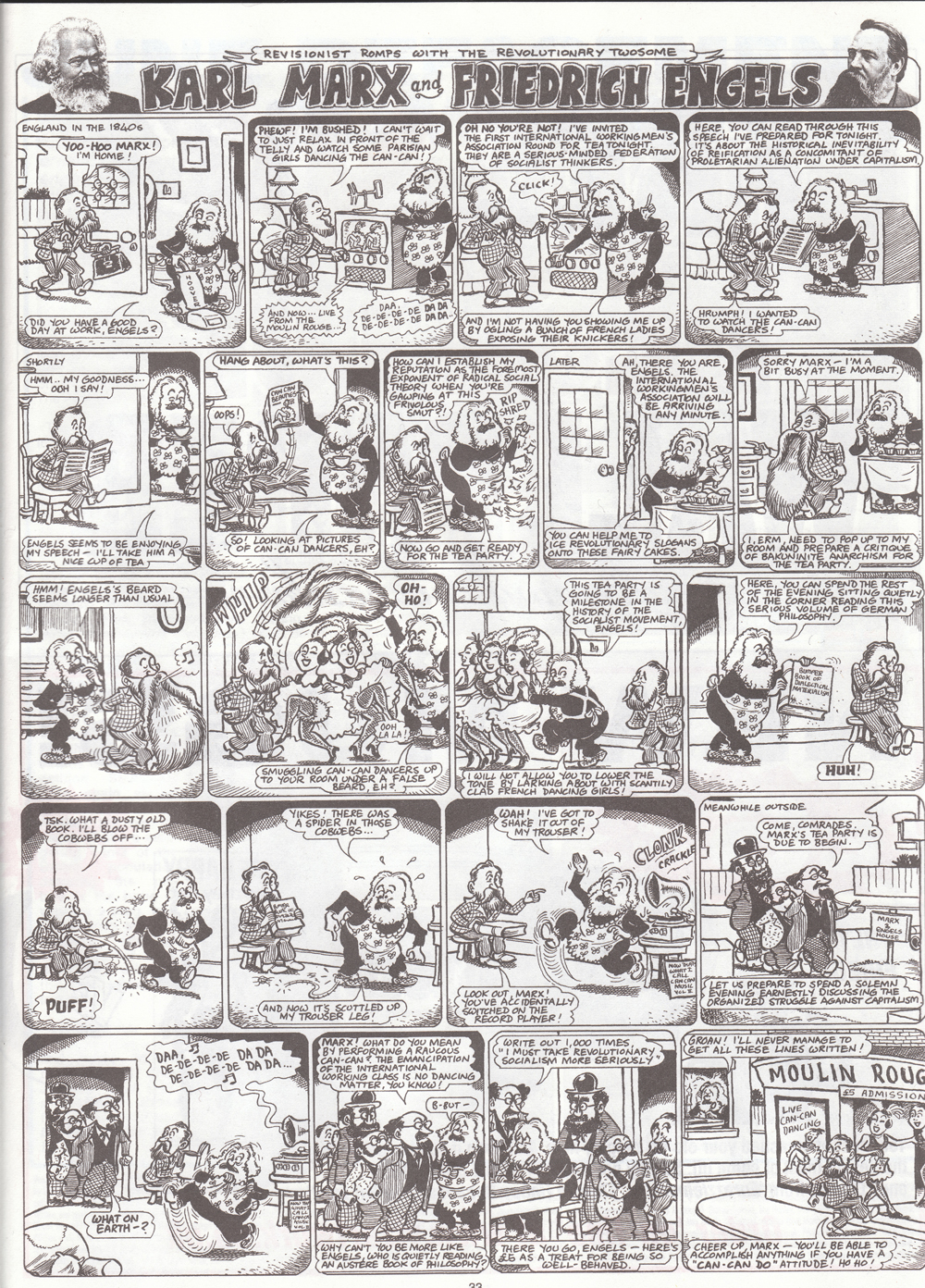
- Revisionist Romps With The Revolutionary Twosome
Karl Marx and Friedrich Engels, via Viz.
- Britain’s relationship with the EU is none of Barack Obama’s business
@telegraph: fiendish Yanks pushing Brits to surrender to Herman Van Rompuy. About as incisive as Viz on Marx and Engels.
Doctor Who Season 2 (2006), First Half
And so we enter the David Tennant era, with the first of the Children in Need specials, the only interactive episodes so far, and the first four Tardisodes as well as the first five proper Tenth Doctor stories.
The point of the episode is, of course, not the plot, but the presentation of David Tennant as the New Doctor, winning over the confidence of the audience (as viewpointed through Rose, Mickey, Jackie and Harriet Jones) and working out for himself what sort of person he now is. Though despite the episode's internal disorganisation, it is setting up a lot of stuff for the future: the return of UNIT, the emergence of Torchwood, and, in what looks like sheer whimsy but in fact turns out to be a brilliant (or fortuitous) bit of forward planning, the Hand. And there are a lot of eyeball kicks (a Bruce Sterling term which I got from Graham Sleight's excellent The Doctor's Monsters). Still, as opening stories for Doctors go, this is more in the league of Castrovalva than of Rose or An Unearthly Child.
And, and, and! Anthony Stewart Head as the leader of a group of winged alien teachers,' stalking the school like vultures, eating stray pupils and doomed members of staff! K9's noble self-sacrifice! Mickey's moment of aelf-realisation! So much is good here – though the one bit that rings badly is the (quickly corrected) initial cattiness between Sarah and Rose, a bit out of character for Sarah in particular. I can watch this one again and again, and could go on about it for much longer. (By the way, Melissa turned up the other day in Outnumbered as Jake's pole-dancer girlfriend.)
Note that the original Sally Sparrow (in the 2006 Doctor Who Annual, rather than Blink), as well as the better-known Amy Pond, also have crucial encounters with the Doctor as young girls and then find him coming back into their lives in adulthood. Of course, that was true for a lot of Old Who fans of both genders after 2005.
The Girl in the Fireplace got by far the most nominations for the 2007 Hugo for Best Dramatic Presentation, Short Form, and its strong lead on first preferences was reinforced by transfers from Army of Ghosts/Doomsday, which came second as a joint nomination, and School Reunion which came fourth, behind the Battlestar Galactica episode Downloaded but ahead of the Stargate SG1 story Episode 200. Also on the longer nomination list, but well below the cutoff, were the Torchwood episode Out of Time and the Who stories The Impossible Planet/The Satan Pit, The Age of Steel/Rose of the Cybermen, Love and Monsters and Doomsday on its own. The Torchwood episode Captain Jack Harkness also got enough nominations to be reported on the long list, but would have been ruled ineligible as it was first broadcast in 2007 not 2006.
This run had a ropey start, with The Christmas Invasion really only held together by Tennant's energy once he wakes up, but the last three of the five full stories here are all very good.
NB that consecutive stories in this block provide the foundation myths for both Torchwood and the Sarah Jane Adventures.
< The Curse of Fatal Death | The Webcasts | Rose – Dalek | The Long Game – The Parting of the Ways | Comic Relief 2006 – The Girl In The Fireplace | Rise of the Cybermen – Doomsday | Everything Changes – They Keep Killing Suzie | Random Shoes – End of Days | Smith and Jones – 42 | Human Nature / The Family of Blood – Utopia / The Sound of Drums / Last of the Time Lords & The Infinite Quest | Revenge of the Slitheen – The Lost Boy & Time Crash | Voyage of the Damned – Adam | Reset – Exit Wounds
Links I found interesting for 09-01-2013
- A Much-Needed Literary Award
Was it generally known that Le Guin declined the Nebula Award that went to “The Bicentennial Man”?
- Australia turns purple
6 of the 20 hottest days ever recorded in Oz have been in *2013*.
- What Did We Learn About Climate And Energy In 2012?
…that it is a big problem which is getting bigger.
Bearded presidents of the United States: two trivial notes
Every four years I get an uptick of interest in my web page on facial hair and US presidential elections. There have been a total of only five American presidents with beards, starting with Abraham Lincoln and continuing through the rest of the nineteenth century. I offer a couple of trivia questions about them.
Quick trivia question #1: Of the five bearded presidents, how many were Democrats and how many were Republicans?
Answer: All five were Republicans. The Democrats have never even had a candidate with a decent beard, and of their presidents only Cleveland even went as far as a moustache.
Quick trivia question #2: Which state were most of the five bearded presidents born in?
Answer: Ohio. Lincoln, born in Kentucky and elected from Illinois, was the only exception. Grant, Hayes, Garfield and Benjamin Harrison were all native Ohioans; Grant, however, was elected from Illinois and Harrison from Indiana.
Slightly surprising to have such a political and geographical concentration of beards, but no doubt it is merely a visible manifestation of less visible trends.
A Euro Coins meme
…also known as "What has it got in its pocketses?"
This being the first weekend of the year, I find my pockets weighed down by change accumulated over the Christmas break. To be precise, I have 39 coins of various denominations, from nine different euro zone countries.

15 of the 39 – 38% – are from the country where I live, Belgium, and feature King Albert II looking firmly to the left. I have at least one Belgian euro coin in all eight denominations.
The next largest group of 10 coins – just over 25% – is from France, one of our neighbouring countries. The €2 and €1 coins feature the tree of liberty, the 20c and 50c coins a stylised sower, and the 5c coins a slightly theatrical Marianne.
Germany is also a neighbouring country and the biggest economy of the euro zone, but I have only five German coins: the 1 German eagle, the 50c Brandenburg gate, and three oak twig coppers.
I was slightly surprised that Spain, Italy and Austria came next; I was in Spain briefly in October, but I haven't been to Austria in over a year and Italy in even longer, so I guess this represents coins in circulation in Brussels. Peace campaigner Bertha von Suttner looks out from two Austrian €2 pieces; the Italian €1 coin celebrates Leonardo and the 50c Marcus Aurelius; and King Juan Carlos adorns the Spanish €2 coin with the cathedral of Santiago de Compostela on the 1c piece.
Finally we have three rulers of three different countries: one dead, the Greek leader Ioannis Capodistrias on the 20 cent (or as it defiantly informs us the 20 λεπτά) piece; and two living monarchs on their respective states' 10c pieces, a rather stylised Queen Beatrix and a slightly more recognisable Grand Duke Henri of Luxembourg. (Again, I am slightly surprised that I do not have more currency from these last two neighbouring states.)
So, fellow euro-zone inhabitants: what have you got in your pockets?
Samuel Pepys is back
Over at www.pepysdiary.com, they have again started issuing the great diarist’s journal entries for each day, 1660 reflecting forward to 2013. I have syndicated to livejournal at
Links I found interesting for 05-01-2013
- Space Station tour: Commander Sunita Williams shows you her orbiting home.
Wow. Just, wow.
- Inside disputed Western Sahara
Al-Jazeera gets into it.
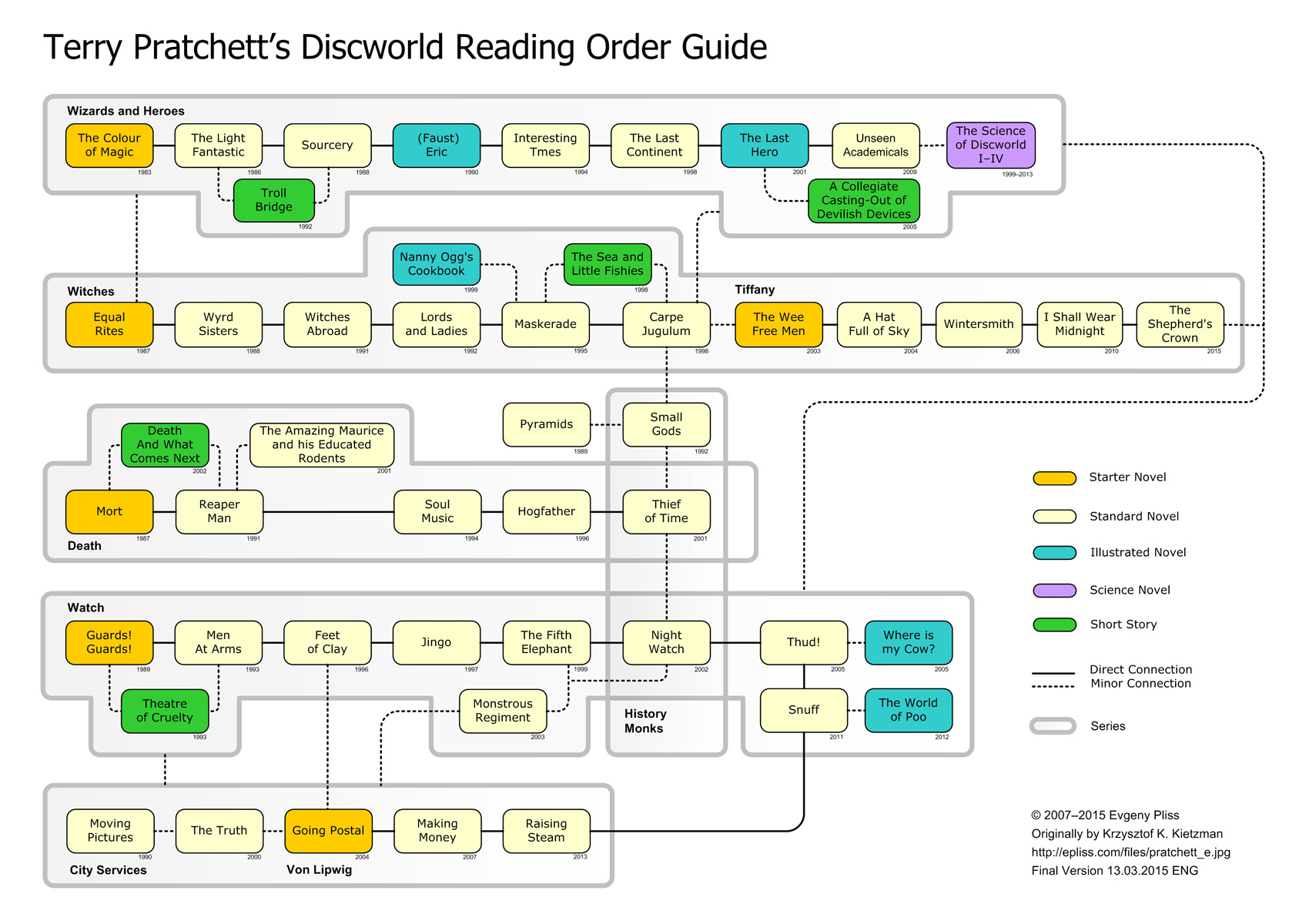
- The Discworld Reading Order Guide
All in one nice graphic.
- Swedish Academy reopens controversy surrounding Steinbeck’s Nobel prize
…as he beat Robert Graves and Lawrence Durrell.
Links I found interesting for 04-01-2013
- Why an exit from EU would be bad for British business
Richard Branson speaks.
- What happened to netbooks? Apple’s iPad and Macbook Air killed the $400 former future of computing.
And a good thing too.
- My bustle’s stuck!: Women vs. Victorian values in “The Snowmen”
“What’s wrong with Victorian values?” asks Dr. Simeon as the Doctor faces him down, and for once the Doctor (and the show) spell it out.
- X-rays reveal hidden secrets of Tudor portraits
Walsingham more iconic than he realised!
- Celebrating The 50th Anniversary Of Doctor Who
Penguin to publish an ebook each month from January to November.
- Top 10 skywatching events not to be missed this year
Two naked-eye comets, one of them very bright!
New Year #522013
Sensibly enough she has proposed “New Year” as this week’s theme. I suspected that I might get something appropriate from the newly started Irish presidency of the European Union, and when I peeked into the Justus Lipsius building, where all the EU summits are held, on my way back from lunch, I realised I had timed it just right: they were literally in the act of raising the Irish presidency banner in the atrium.

So the European semester begins, and so too does this project. It is a little askew, and suffers from being taken through bullet-proof glass, but one has to start somewhere.
Eszter Hargittai has eloquently explained why one might want to undertake such a project in the first place, and I have signed up for her Flickr group too. After all, two photos a week is surely manageable. I think.
Doctor Who Season One (2005), second half
Other things I love about this episode are how the office politics between Cathica and Sukey turns out to be integral to saving the world (all the supporting cast are great); and the wobble of the Doctor’s version of history, so soon after he assured us of the longevity of Harriet Jones’s government. He may be a Time Lord, but Time is getting unruly.
The win was well deserved, anyway. Moffat’s first story for Who since The Curse of Fatal Death takes us to a richly imagined wartime London (the sets and backdrops are auperb) and brings in Captain Jack Harkness, who is shortly to get his own TV series. The gas masked child asking “Are you my mummy?” is one of the most successful horrific images the show has ever produced, and Richard Wilson’s turn as dying doctor is brilliant. Yet it is leavened with a colouring of humour, largely about Jack’s flirting and competing with the Doctor, and delivers a happy ending where everybody lives and the Doctor, having at last become comfortable in his own new body, dances. (The only bit that doesn’t grab me is the Doctor’s tribute to the British. It may fit the national ideology, but it is out of character.)
The pursuit of Margaret Slitheen is a bit slapsticky, but as I said I don’t think it is the real focus of the episode. The other important part of the story is Margaret’s warping of reality and of her personal fate by looking into the heart of the Tardis, which seems a bit of a cop-out at first but turns out to be crucial to the resolution of the season as a whole. It is also the first episode set in Cardiff to make full use of the setting – the previous episode set in Cardiff was actually shot in Swansea, and other previous episodes shot in Cardiff were actually set elsewhere. We will see a lot more of this in Torchwood.
I had also forgotten the amount of misdirection here – in particular the introduction of Jo Joyner’s Lynda-with-a-‘y’, who is presented as a rival potential companion for Rose at a couple of points. It is a shame that the Daleks were in the previous episode’s trailer, or their introduction at the end of Bad Wolf – with a couple of shots very consciously mirroring their original appearance in December 1963 – would have come as a fantastic reveal (as it did the following year).
I had also forgotten how well the end of the season ties together the preceding episodes, going back to Dalek. The links of Satellite Five and the heart of the Tardis are clear, of course. But Rose’s report of her encounter with her father turns out to be crucial in encouraging Jackie to change her mind, and provide the crucial assistance that enables Rose to go back and save the day.
The ending, until that Rose ex machina moment, heads firmly towards Gauda Prime territory. All the defenders are killed, including Lynda-with-a-‘y’ and Captain Jack, and the Doctor is then caught in his own morality and unable to actually implement the plan for which they died. But Rose, like Sara Kingdom all those years ago, ignores the Doctor’s instructions and comes to help him; and as with Sara Kingdom, the results are fatal, though the Doctor is able to substitute himself instead. And as he bade her farewell, I found I had something in my eye.
I have previously written up my feelings about the season as a whole here and here, though I also strongly recommend Graham Sleight’s essay here. The run of stories from Dalek to the end is pretty good by the standards of any era of Who, before or since. And I was able to fit The Parting of the Ways into my commute this morning – it usually takes me an hour and a quarter door to door, with enough of the intervening minutes on the train that I can look at a screen in a stable environment. This will get tricky with the longer specials, but I will cross that bridge when I come to it.
< The Curse of Fatal Death | The Webcasts | Rose – Dalek | The Long Game – The Parting of the Ways | Comic Relief 2006 – The Girl In The Fireplace | Rise of the Cybermen – Doomsday | Everything Changes – They Keep Killing Suzie | Random Shoes – End of Days | Smith and Jones – 42 | Human Nature / The Family of Blood – Utopia / The Sound of Drums / Last of the Time Lords & The Infinite Quest | Revenge of the Slitheen – The Lost Boy & Time Crash | Voyage of the Damned – Adam | Reset – Exit Wounds
Links I found interesting for 02-01-2013
- The Frozen Mirror
Execellent analysis of The Snowmen.
- How the dominance of English kills the European debate
I think this is slightly exaggerated – many in the Brussels bubble ignore the UK debate in the hope that it will just go away – but it’s a fair point.
- The elephant in the room
Rosie’s advice: sleep better, eat less sugar, lift heavy things.
2012 books read poll
The traditional
There is a slight discrepancy between the list below and my own calculation of my end-of-year tally, in that the three Sophocles plays are taken together, as is each of the 2-in-1 Doctor Who books, and the two unpublished manuscripts are not listed. (I’m also still a little uneasy about the categorisation of the Lovejoy novels, which often crucially depend on his supernatural activity to tell real antiques from fakes, but am leaving them with non-genre for now.)
And if you haven’t, please give me recommendations for 2013.
Links I found interesting for 01-01-2013
- The True Meaning of Smekday – Adam Rex
Alien invasion in 2013.
- The President’s Last Love, By Andrey Kurkov
Ukrainian politics, starting in 2013.
- Fay Weldon | Chalcot Crescent
Broken Britain in 2013.
- The Book of Water by Marjorie B Kellogg
An elemental dragon appears off the coast of Africa in 2013.
- 8 Post-Apocalyptic Works of Fiction Set in 2013
Four films, four games, some dodgy maths…
December Books
Non-fiction: 4 (2012 total 53)
The Stations of the Sun: A History of the Ritual Year in Britain, by Ronald Hutton
My Old Man: A Personal History of Music Hall, by John Major
The Bible
The Comic Strip Companion: the Unofficial and Unauthorised Guide to Doctor Who in Comics: 1964-1979, by Paul Scoones
Fiction (not sf): 3 (2012 total 48)
The Ten Word Game, by Jonathan Gash
Bleeding Hearts, by Ian Rankin
War and Peace, by Leo Tolstoy
SF (not Who): 2 (2012 total 62)
Non-Stop, by Brian Aldiss
The Year’s Best Science Fiction, 25th Annual Edition, ed. Gardner Dozois
Who: 6 (2012 total 75)
The Colony of Lies, by Colin Brake
Sanctuary, by David McIntee
The Burning, by Justin Richards
Scream of the Shalka, by Paul Cornell
Devil in the Smoke, by Justin Richards
Doctor Who Annual 2006, ed. Clayton Hickman
Comics: 2 (2012 total 21)
Ōoku: the Inner Chambers, vol 6, by Fumi Yoshinaga
Aldébaran 2: La Blonde, by Leo
~7,200 pages (2012 total 77,800)
1/17 (2012 total 65/259) by women (Yoshinaga)
1/17 (2012 total 12/259) by PoC (also Yoshinaga)
Owned for more than a year: 8 (The Burning, Bleeding Hearts, Non-Stop [reread] The Year’s Best Science Fiction 25, Stations of the Sun, Sanctuary, Scream of the Shalka, The Colony of Lies, War and Peace [reread])
Other rereads: none (2012 total 20/259)</p>
Also started:
Making Ireland English, by Jane Ohlmeyer
Faces in the Pool, by Jonathan Gash
December Books 17) The [Doctor Who] Comic Strip Companion, 1964-79, by Paul Scoones
This really is a book for completists, in that it's difficult to imagine anyone other than the diehard Who fan wanting to get hold of it, but it is equally difficult to imagine that diehard fan being anything other than tremendously happy with it.
I guess I was vaguely aware that there was a whole extra slice of comics continuity for Who beyond the TV series, the books and the audios with which I am familiar. But I hadn't appreciated that the decision to start a weekly strip in TV Comic (and its successors) from November 1964 until May 1979 would mean scores of different stories, some of them from the sound of things rather forgettable, but some of them much more interesting. Fascinating snippets for me:
- The First Doctor meets Father Christmas, King Neptune and the Pied Piper, being less constrained by the sf vs historical format of the TV programme;
- the comics strip, unable at first to secure a license for the Daleks, featured Dalek-like monsters called the Trods, who eventually get wiped out by the Daleks when the licensing agreement is reached;
- John and Gillian, introduced in the first story as the First Doctor's grandchildren, survive almost four years until the Second Doctor enrolls them in university in August 1968, making them the longest-lasting companions of any medium in the 1963-89 era;
- the Second Doctor is exiled to Earth by the Time Lords in late 1969 and has several months of adventures there before his appearance is changed and he becomes the Third Doctor – evidence of a kind for Season 6B;
- Katy Manning was unwilling to allow her appearance to be used so the Third Doctor strips of her time feature UNIT and the Master but not Jo;
- several Third Doctor strips, and one Second Doctor strip, were "Doctored" to become Fourth Doctor strips for the last year of the strip's run in TV Comic
Much of this information was already in books and DVD features which I already on, but it is fantastic to have it all pulled together in a single set of covers. An that is not all; Scoones also covers the comic strips in the Doctor Who annuals and the Dalek annuals and books, and the intense two-year Dalek strip from TV Century 21 in 1965-66. He even makes me want to read some of the early Countdown strips (the Doctor Who strip was moved from TV Comic to Countdown in 1971, though Countdown was then gradually renamed TV Action and eventually merged back into TV Comic in 1973). The only strips I had read of those covered in the book are the ones from the Who annuals, some of the Dalek annuals and books, and one Countdown annual.
One other point, though: the first female names mentioned in a creative capacity, as far as I could tell, were Louise Cassell and Christine McCormack, who recoloured the First Doctor strips for republication by Marvel in 1994-95 (Christine McCormack's sister Rosie is mentioned later as a colourist for the Second Doctor strips). They appear on page 570 of a 603-page book. Even more than the TV programme, the comics (at least in the 1964-79 phase) appear to have been a very male affair.
Anyway, excellent stuff, and a good end to my 2012 bookblogging.
Most commented posts of the last year
Some rare evidence against the continuing decline of Livejournal: last year I counted only 26 posts with 12 or more comments from the previous twelve months, compared with 32 with at least 15 comments the year before and 42 with at least 20 from three years ago. This year I have 37 posts above last year’s threshold of 12 comments, though we are still down compared to previous years’ cutoffs (22 had 15 or more comments, 13 had 20 or more). Perhaps I was just writing more interesting stuff. The top posts from the last twelve-ish months were:
30 December: December Books 23) A Narrative of the Life of David Crockett, of the State of Tennessee. – 16 comments
31 December: My 2011 books poll – 15 comments
15 January: Sunday number theory problem – 14 comments
15 January: Scotland the Brave – 23 comments
18 January: Measures thou see art but trifles – 27 comments
29 January: When e-government goes bad – 30 comments
5 February: My second submission to the Boundary Commission for Northern Ireland – 12 comments
11 February: Eastercon: I will be there; will you? – 36 comments
26 February: Scotland and Ireland in the British Parliament – 15 comments
26 February: Cambridge architecture question – 19 comments
28 February: “Mustard keen” – 29 comments
29 February: paw/pour/poor poll – 20 comments
10 March: [locked post] – 14 comments
2 April: A post for World Autism Awareness Day – 30 comments
5 April: Bad writing – 13 comments
11 April: Eastercon – 18 comments
26 April: 45 – 18 comments
10 May: 2012 Hugos: Best Novel – 12 comments
19 May: My reading speed – 14 comments
23 May: Links I found interesting for 23-05-2012 – 14 comments
25 May: Links I found interesting for 25-05-2012 – 14 comments
31 May: The Book of Job – 17 comments
1 June: Links I found interesting for 01-06-2012 – 14 comments
8 June: Hugos 2012: The John W. Campbell Award (Not A Hugo) – 13 comments
12 July: Language quiz: answer and poll – 23 comments
26 July: Poll: The BSFA, Clarke and Tiptree winners – 13 comments
25 August: Geopolitics: Sweden vs the UK – 17 comments
3 September: 2012 Hugo voting analysis – 14 comments
11 September: Links I found interesting for 11-09-2012 – 12 comments
13 September: [locked post] – 36 comments
24 September: Culinary meme – 14 comments
26 September: Quick pop quiz – 22 comments – [What is a paradiddle?]
13 October: Election choices – 18 comments
29 November: November Books 15) Between the Continent and the Open Sea, by David Rennie – 22 comments
16 December – Getting all three to look at the camera – 12 comments
22 December- Locus Poll of Best Novels – 21 comments
What should I read in 2013?
Dear friendslist (and other readers),
I have been greatly helped in thinning out the books on my unread shelf by your votes in previous years, and I would once again very much appreciate your advice on what books to read next, by filling in this poll. (I believe that even if you don’t have a livejournal account, you can sign in with your Twitter or Facebook credentials.)
I’m doing it a little differently this year, splitting sf into books acquired in 2012 and books acquired previously, and with a completely different question for the non-fiction books. Looking forward to your guidance.
As usual, please put any specific recommendations (or disrecommendations) in comments – I am still banking some from last year and the year before.
December Books 16) The Bible
Apart from War and Peace, my other reading project for 2012 was to read the entire Bible, a few chapters a day (or an entire book if it is short). I therefore finished Revelation, and the whole thing, this morning. I have already written up my thoughts on the Old Testament; I would just repeat from there my strong recommendation against reading it through from start to finish. It wasn’t written or compiled to be read in that way, and it doesn’t do the text any services to read as if it were a historical monograph, a short story collection, or a book of essays and meditations. I chose this approach because I wanted to feel that I had control of what I was reading, and that I was not missing anything, but if you want to get a fair flavour of it, it’s probably better to follow one of the many reading guides available online and elsewhere, which are designed both to showcase the good bits and to keep the reader interested. As for the New Testament: it falls rather naturally into three sections. The Gospels and Acts are among the most readable narratives in the whole Bible; the most striking things are that the three synoptic gospels are so very close to each other, leaving John as the outlier, and that Luke’s better Greek prose style comes through in almost any translation of his gospel and Acts. I am also struck every time that the Feeding of the Five Thousand is the only miracle other than the Resurrection reported in all four gospels. I was much less familiar with the various epistles. They are not as easy to read as the gospels, combining as they do personal salutations, advice on local disputes, declarations about correct practice and belief, and attempts to put words on the ineffable (Hebrews in particular is an attempt at a theological manifesto avant la lettre). I was struck by how hardline Paul is, particularly in the early letters, on the issues that hardliners still stick to today, and also on the question of justification by faith; but there is a significant counterbalance from some of the later letters, especially 1 Peter which seems to be a direct response in some ways. (And the Epistle of Jude seems strangely familiar after 2 Peter ch 2…)
Finally, Revelation is the most Old Testament-y of the New Testament books. (There is nothing like the letters in the Old Testament, and the gospels and Acts are quite different in style from the OT historical books.) Again, Revelation is an attempt to express in words that which cannot be expressed in words; it is clearly not meant to be taken literally, but as one person’s attempt to concretise the underlying truths.
Unlike War and Peace, I don’t particularly recommend that others repeat this experiment, or at least that they should not do it in the same way as I did. But it’s worth getting more familiar with a book which is so central to our own culture.
Matthew October 14-23
Mark October 23-29
Luke October 30 – November 9
John November 10-17
Acts November 18-27
Romans November 28 – December 1
1 Corinthians December 2-5
2 Corinthians December 6-7
Galatians December 8
Ephesians December 9
Philippians December 10
Colossians December 11
1 Thessalonians December 12
2 Thessalonians December 13
1 Timothy December 14
2 Timothy December 15
Titus December 16
Philemon December 17
Hebrews December 18-20
James December 21
1 Peter December 22
2 Peter December 23
1 John December 24
2 John December 25
3 John December 26
Jude December 27
Revelation December 29-31
Links I found interesting for 31-12-2012
- It’s two years away, but the 2015 election is already lost
Analysis from @telegraph, but still…
- Grey Cavalier
George, aged 92, lost his wife a month ago and has started blogging.
- Anglicans to stay up till Midnight to witness The Doctor’s regeneration « Tea and Cake or Death¬es=
“not expected to have a female Bishop as a travelling companion (at least for his first few series).”
- Changing Depictions of Santa Claus in Science Fiction Magazines and Superhero Comic Book Covers
Flying with Captain Marvel, 1941; arrested by Judge Dredd, 2009.
December Books 15) Война и миръ графа Льва Николаевича Толстого
A bunch of us have been reading War and Peace at the rate of a chapter a day for the duration of this year – a slight initial miscalculation led us to believe that there are 366 chapters, but in fact there are only 365, so most of us finished this morning, to general rejoicing. It’s a long, long book, and I think that reading it in solidarity with a group was a useful discipline as well as an enjoyable experience. I didn’t contribute all that much to the group discussions but I was very glad that they we there (my main contribution was supplying timetables at the start of each of the internal books to remind people which chapter to read on each day). We are more or less settled on the Chinese epic 三國演義, the Romance of the Three Kingdoms, for next year (though there is also a Les Misérables faction).
One quite unexpected bonus of reading the book in this format was that the summer months almost exactly coincided with the 1812 invasion of Russia, from June to October. (I added to this by following the live feed of John Quincy Adams’s diary from 1812, when he was the American ambassador in St Petersburg, though in fact he got the news of the war very late and was anyway distracted by the illness and death of one of his children.) Tolstoy presumably did not plan it this way but it was a nice real time additional feature to our reading.
So what did I think of it? It is a grand narrative essentially about two Russian noblemen – Pierre Bezukhov and Andrei Bolkonsky – and their extended and intertwining families and love-lives, including particularly Natasha Rostova, who at the start of the novel is a young teenager, but
It’s not so very different from Anna Karenina, but is more ambitious – the backdrop of the Napoleonic wars, with several chapters about Napoleon himself, makes it a more political novel, and I was happier with the interweaving of the characters’ private lives here. I had first read it in 1990, and was surprised at how well some of the incidents came back to me after two decades. One of my former bosses claimed that after reading War and Peace he never needed to read another novel, and I can see how he might have come to such a conclusion. Just because it is done at such length doesn’t necessarily mean it is done well, but in this case it s pretty good. (There are a couple of minor flaws – the ageing of the Rostov kids through the book is a bit inconsistent, and the second epilogue with Tolstoy’s theory of history can be safely skipped.)
I am not really a Russian speaker – I can just about puzzle my way through a short text with a dictionary – but I am aware that one of the things we miss in translation is that in fact quite a lot of the dialogue between the leading characters is in French, decreasing as the story goes on to the point where the Russian elite start taking Russian lessons, The very first sentence of the novel, translated into English as
Well, Prince, so Genoa and Lucca are now just family estates of the Buonapartes
is originally
Eh bien, mon prince. Gênes et Lucques ne sont plus que des apanages, des поместья, de la famille Buonaparte.
The English text doesn’t even hint at Anna’s clarification of the French word with a Russian equivalent (and unfortunately neither my French nor my Russian is good enough to pick up any significant difference in nuance between “apanage” and “поместье”). One can never get at the precise original meaning in a translation, alas.
A final rather random point: the character Platon Karataev, encountered by Pierre during his French captivity, is described as “the personification of everything Russian”, suffering while remaining true to his Christian faith. But I note that he comes from the Apsheron Regiment – Apsheron is in today’s Azerbaijan (the peninsula on which Baku is located, which at the time of War and Peace it had flip flopped back and forth between Russian and Persian control several times). Also Karataev’s surname would seem to indicate that he has Turkic roots. His Christianity as practiced is pretty eclectic as well. I think Tolstoy is actually sending a rather non-conformist message with Karataev, who certainly had Muslim ancestors and may be not terribly close to the Church.
Anyway, the discipline of reading a book, or set of books, over the course of a calendar year is a very healthy one, and this was a good book to do it with.