The Tiptree/Otherwise Award, Peter Handke’s Nobel, The Sparrow and Mountain Ways

The James Tiptree Jr Award, “encouraging the exploration & expansion of gender”, has announced that it is changing its name to the Otherwise Award, based on feedback received after the similar decision of Dell Magazines to change the John W. Campbell Award to the Astounding Award (also in the context of the 2015 decision a couple of years ago to redesign the World Fantasy Award so that it no longer looked like H.P. Lovecraft). It’s their decision, of course; I think it is regrettable.

I understand the hurt and discomfort felt by disabled people who felt that it was wrong to commemorate a carer who killed the person that they were caring for. But first, it’s not completely clear that that is a fair interpretation of what happened in the case of the Sheldon household; and second, Alice Sheldon never urged anyone else to kill their disabled spouse or themselves, whether under her own name or under the Tiptree pseudonym. In fact she did her best to maintain a sharp distinction between the private life of Alice Sheldon and the public literary identity of James Tiptree Jr. The award was the Tiptree Award, not the Sheldon Award.

In contrast, John W. Campbell Jr used his editorial platform to push his own racist political agenda under his own name. H.P. Lovecraft’s stories, also published under his own name, include massive bigotry against immigrants. (And in his letters he made clear what he thought of the Irish.) For me that’s a crucial difference.

This isn’t a question of censorship; people are free to buy and read and discuss the works of Lovecraft, Campbell and Tiptree. It’s a question of who we commemorate and how. The administrators of the Tiptree Award have ended up in a different place to where I think I would have done; it is, of course, their right to do so, just as it is my right to pass comment.

This controversy ties in also to the discussion about the award of the Nobel Prize last week to Peter Handke, who is an apologist for the regime of Slobodan Milošević and for the genocide committed under Milošević’s watch. I had some pushback on Facebook yesterday for reposting a piece by Edi Rama, Albania’s prime minister, regretting this decision in the strongest terms. In brief, I think that this was a very bad decision.

It is ridiculous to assert that the Nobel Prize for Literature is – or should be – seen as a pure literary assessment. Quite apart from the commonplace truth that the political context of the day informs all such decisions anyway, the Swedish Academy has often made blatantly political awards. Is there really anyone who can seriously assert that the most worthy writer of 1953 who did not already have a Nobel Prize was Winston Churchill? Never mind 1974, when the Academy decided to award the prize to two of its own members who were unknown outside Sweden. (And the Academy’s recent internal travails have been very well chronicled.) So it is entirely legitimate for a political decision to be criticised on political grounds. Anyway, this is a case where Handke’s political views cannot be separated from his art; they inform each other.

Again, this is not about censorship; it’s about whose name goes on a list created by a political process, and who gets a million dollars in prize money.

As it happens, I’ve just finished reading the Tiptree winners for 1997, The Sparrow, by Mary Doria Russell, and “Mountain Ways”, by Ursula K. Le Guin. The second paragraph of the third chapter of The Sparrow is:

Sometime during the night, a delivery van had provided the last little bit of weight and vibration that could be withstood by a nineteenth-century street paved over a medieval bedroom constructed from the walls of a dry Roman cistern, and the whole crazy hollow thing collapsed. The road crew managed to extricate the van but hadn’t gotten around to putting up barriers around the hole. John, hurrying as usual, almost walked right into it. Only the odd echo from his footsteps warned him that something wasn’t right and he slowed down, his foot in the air, stopping just short of a historically interesting broken neck. This was the kind of thing that kept him constantly on edge in Rome but that he made comical in his messages home. His entire experience in this city sounded better than it lived.

I read The Sparrow way back at the start of the century, and like many others I was blown away by it. It is one of only two novels to have won the Tiptree, BSFA and Clarke Awards (the other being Air, by Geoff Ryman). It was a little jarring to re-read it and realise that the parts of the book set earliest in time, when astronomers in Puerto Rico (and elsewhere) detect signals from an alien planet, are actually set in early and mid 2019, in a future where Turkey has collapsed into bloody anarchy but humanity has mastered the technology of asteroid mining. The book is told in double flashback, the core narrative being the preparation of an interstellar mission by the Jesuits, framed as the account of the lone survivor of the mission, a Puerto Rican Jesuit who witnessed the horrible death of the rest of his team and was then subjected to horrible abuse before the next mission rescued him.

Coming back to it now, almost twenty years on, the book’s flaws are more apparent (and weirdly they became more apparent with the publication of the sequel, Children of God, which somehow failed to develop the success of The Sparrow). The physics of interstellar spaceflight is pretty implausible, and the grim abuse to which the protagonist is subjected seems over the top. On the other hand, the book’s earnest exploration of faith and religion, and a clash between two world systems of intelligent beings that are not ready for each other, still seems very timely; and the characters in general are vivid, memorable and believable. I would still rate it as a classic.

The Sparrow won the Tiptree Award for 1997 jointly with “Mountain Ways”, a novelette by Ursula Le Guin. A very long “short List” was also published, consisting of another five novels and another five short stories; also published was an even longer “long list”, including another 28 novels and 17 short stories! Angela Carter was also given a special award by the Tiptree jury. Full details here. That was the year that the Hugo went to Blue Mars by Kim Stanley Robinson, and the Nebula to Slow River by Nicola Griffith. For the “other” John W. Campbell Award, The Sparrow came third, Blue Mars second and Fairyland by Paul J. McAuley won (it had also won the Clarke Award the previous year).

It was not until the following year that The Sparrow was published in the UK, so it won the BSFA Best Novel Award for 1997 (awarded 1998) and the 1998 Arthur C. Clarke Award. The other shortlisted novels in each case were completely different. BSFA voters had the alternatives of Earthquake Weather, by Tim Powers; Jack Faust, by Michael Swanwick; Signs of Life, by M. John Harrison; and A Son of the Rock, by Jack Deighton. The Clarke judges also chose Days, by James Lovegrove; The Family Tree, by Sheri S. Tepper; Glimmering, by Elizabeth Hand; Nymphomation, by Jeff Noon; and Titan, by Stephen Baxter. I have only read one other in each list, Jack Faust and The Family Tree, and The Sparrow is definitely better than either.

The second to fifth paragraphs of the third section of “Mountain Ways”, by Ursula Le Guin:

“What is it? what is it, my dear love?”
“You’ll go away. You’re going to go away!”
“But not now—not soon—”
“You can’t stay here. You have a calling. A resp—” the word broken by a gasp and sob—“responsibility to your school, to your work, and I can’t keep you. I can’t give you the farm. I haven’t anything to give you, anything at all!”

I had not read “Mountain Ways” before – it is in the Birthday of the World collection, but also available online. It’s a fascinating tale of a society where the standard marriage, endorsed by religious custom and practice, includes two men and two women, with sex forbidden between two of the potential opposite-sex pairings, but expected between the other two opposite-sex pairings and also between the same-sex pairings. I have whined a bit about some of Le Guin’s work that she sets up interesting societies but doesn’t often look at those who do not fit in those societies’ rules. In this case, she has two women deeply in love with each other, one of whom fills a vacancy in the other’s four-way marriage by pretending to be a man. For such a complex idea, it’s very economically worked out, yet with great emotional depth. I feel that the Tiptree jury made two very good calls that year (I am not familiar enough with the work of Angela Carter to say whether it was three out of three).

“Mountain Ways” was also on the 1997 Hugo final ballot for Best Novelette; it came third, beaten by Bruce Sterling’s “Bicycle Repairman”, which won, and “The Land of Nod” by Mike Resnick. Fourth place went to “Beauty and the Opéra or The Phantom Beast”, by Suzy McKee Charnas, and fifth to “Age of Aquarius” by William Barton. The Nebula in that category went to “Lifeboat on a Burning Sea”, by Bruce Holland Rogers; unusually there was not a single shared finalist between the two ballots. The other short fiction categories went to “Blood of the Dragon”, by George R. R. Martin (Hugo Novella); “The Soul Selects Her Own Society: Invasion and Repulsion: A Chronological Reinterpretation of Two of Emily Dickinson’s Poems: A Wellsian Perspective”, by Connie Willis (Hugo Short Story); “Da Vinci Rising”, by Jack Dann (Nebula Novella) and “A Birthday”, by Esther M. Friesner.

Next in this sequence of reviews will be The Calcutta Chromosome by Amitav Ghosh, which won the Clarke Award in the year that The Sparrow won the Tiptree.

You can get The Sparrow here, and read “Mountain Ways” here.

Arthur C. Clarke Award winners:
The Handmaid’s Tale | The Sea and Summer | Unquenchable Fire | The Child Garden | Take Back Plenty | Synners | Body of Glass | Vurt | Fools | Fairyland | The Calcutta Chromosome | The Sparrow | Dreaming in Smoke | Distraction | Perdido Street Station | Bold as Love | The Separation | Quicksilver | Iron Council | Air | Nova Swing | Black Man | Song of Time | The City & the City | Zoo City | The Testament of Jessie Lamb | Dark Eden | Ancillary Justice | Station Eleven | Children of Time | The Underground Railroad | Dreams Before the Start of Time | Rosewater | The Old Drift | The Animals in that Country | Deep Wheel Orcadia | Venomous Lumpsucker | In Ascension | Annie Bot

My tweets

  • Tue, 12:36: RT @EndPolioNow: On 23 November, @Rotary staff will join @JohnHewko & Rotary members from around the world as cycle up to 100 miles to rais…
  • Tue, 12:38: RT @MichelBarnier: I have just debriefed EU27 Ministers in Luxembourg. unity remains strong. We want an agreement that works for everybo…
  • Tue, 12:52: RT @Mij_Europe: So I hate to be a #Brexit downer. But signals I am getting this morning from very well placed EU sources is much, much more…
  • Tue, 12:56: RT @adamparsons: This, from ⁦@thetimes⁩, is horrible. Not least because, special needs students are, er, pupils. Actually, the most vulnera…
  • Tue, 16:05: RT @Keffy: I realize that I am on the wrong side of fandom for this, but I will not be changing the designation of “Tiptree Honor Book” on…
  • Tue, 17:11: Bye-Bye, Balkans: A Region in Critical Demographic Decline https://t.co/j3yGHeiuXI Absolutely fascinating – and worrying – from @timjudah1.
  • Tue, 17:52: RT @davidallengreen: …riverrun, past Eve and Adams, from swerve of shore to bend of bay, brings us by a commodius vicus of recirculation…
  • Tue, 18:05: RT @Mij_Europe: So optimism definitely rising that deal can now be done. Govt seems to be moving in EU’s direction. Another quick update -…
  • Tue, 18:06: RT @Mij_Europe: So. Shortage of time is forcing Johnson to move very fast, in French view. They see the situation as the reverse of what Jo…
  • Tue, 18:15: RT @MatthewOToole2: Another Brexit first https://t.co/2WlyuA1G8x

Posted in Uncategorised

Tuesday reading

Current
Sybil, by Benjamin Disraeli
Is There Life Outside The Box? An Actor Despairs, by Peter Davison
Be My Enemy, by Ian McDonald

Last books finished
The Sparrow, by Mary Doria Russell
Seven Pillars of Wisdom, by T.E. Lawrence
The Triple Knife, and other Doctor Who stories, by Jenny T. Colgan
David Copperfield, by Charles Dickens

Next books
The Bastard of Istanbul, by Eilif Shafak
Frédégonde, la sanguinaire, Tome 1, by Virginie Greiner

Posted in Uncategorised

My tweets

Posted in Uncategorised

Mission to the Unknown

The 1965 single-episode Doctor Who story Mission to the Unknown is unique in a number of ways. It is the only single-episode story of Old Who. It is the only episode of TV Doctor Who ever in which none of the then current TARDIS crew (then William Hartnell as the Doctor, Peter Purves as Steven, and Maureen O’Sullivan as Vicki) actually appears, though William Hartnell does get credited as the Doctor. Less unusually, it is one of the episodes that was wiped from the BBC archives; it was never shown abroad, so there is little chance of an copy appearing in some forgotten store in Nigeria or Cyprus, and no footage at all survives (which is true of only two other stories, Marco Polo and The Massacre).

I’d previously listened to the BBC release of the audio with Peter Purves narrating, and also watched the Loose Cannon reconstruction (the original sound track with still photos and a few new bits of animation), so I was familiar with how it sounded. The University of Central Lancashire have now done their best to recreate the original broadcast, shot for shot. It was launched last Wednesday, 54 years to the minute after Mission to the Unknown was first broadcast. Well worth a look, book-ended with words from Edward de Souza, who played Marc Cory, the lead role, in 1965.

There’s also a nice “Making of” feature, including more Edward de Souza and also Peter Purves:

My conclusion is that this is a very interesting experiment that probably succeeds as a didactic exercise but maybe doesn’t quite come off quite as well as the lost original may have done. The point that jumped out at me is that the 2019 actors are much younger – Marco Simioni, in the lead role, graduated last year so must be about 22; Edward de Souza was 33 in 1965 (he is 87 now). Dan Gilligan, playing Lowery, the second astronaut, is a year older than Marc Simioni; Jeremy Young, who played Lowery in 1965, is two years younger than Edward de Souza. (He also played Kal the caveman in the very first Doctor Who story, An Unearthly Child, and was married to Kate O’Mara.) So the relative ages are a bit jarring.

It is also notable that the actors of 1965 had developed an instinct of how to stay in shot in a small camera field on a small set. The 2019 actors start off OK but get a bit relaxed towards the end and drift off screen a bit. And the climax of the episode, Cory’s final desperate fumbling with the crucial tape recording before the Daleks exterminate him looked a bit under-rehearsed. It’s a labour of love, rather than great art.

My preference is still for the Peter Purves audio narration, which inevitably doesn’t show but does tell, with Purves’ sympathetic tones explaining what was going on onscreen.

In addition to the Loose Cannon animation, which also features Edward de Souza at a sprightly 68, I’ve found a three-part animation starting here which I haven’t yet watched in full; it seems rather adventurously colourised.

I also found a 2010 graphic novel version of the entire story of Mission to the Unknown and the Daleks Master Plan, produced for Children in Need by Richard Lundeen. It’s a tremendously loyal piece of work – difficult to get hold of, but worth the effort.

Anyway, it’s great to see Old Who still provoking creativity, and perpetually being retold.

My tweets

Posted in Uncategorised

Dordrecht part 2: a Biblical robot, more Art, history and food

As mentioned yesterday, we spent last weekend in Dordrecht, enjoying the art and environment of this Dutch city.

One thing I didn't mention about the Grote Kerk is that it has been commemorating the 400th anniversary of the Synod of Dordrecht, and the consequential commissioning of the Statenvertaling, the Dutch authorised text of the Bible. In the courtyard of the Hof, a former monastery where the Synod moved after its opening sessions in the Grote Kerk, a robot is writing out every word of the Statenvertaling. When we got there it was on 2 Maccabees. The ambition was to finish the whole Bible by the end of this month, but if it hadn't quite got to the end of the Old Testament by last weekend (having started in November 2018) I don't think it will meet the deadline.

IMG_7363.JPG

The Hof is now part of the Dordrechts Museum where we spent the Sunday morning. I'm not normally a huge fan of art museums; maybe it was the mood I was in (wedding anniversary weekend, so some celebration) but I saw a lot to like here. The pictures of the art are not mine, mostly from the museum's official website. There were several temporary exhibitions on, two on individual artists which didn't do much for me but also a brilliant one about fish in art. Here's an erotic fish market by an unknown artist around 1597 adapting from an earlier picture by Joachim Beuckelaer (1533-1575):

And here's a brilliant 1613 Tobias catching the fish, the archangel Raphael cheering him on, by Pieter Lastman (1583-1633):

Tobias fish.jpg

The main collection has some more vivid biblical scenes. I love the exchange of looks between the two principals in The Call of Matthew by Arnold Houbraken (1660-1719):

DM-006-876.jpg

And in the Adoration of the Magi by Benjamin Cuyp (1612-1652), one of them has brought an elephant.

DM-985-606.jpg

Benjamin Cuyp was the uncle or cousin of Aelbert Cuyp (1620-1691), one of Dordrecht's two best known painters, commemorated with this rather odd 2006 monument by Maria Roosen:

IMG_7344.JPG IMG_7343.JPG

Cuyp went in for rather dreamy landscapes; the one I liked best was this study of the ruins of Rijnsburg Abbey.

rijnsburg.jpg

I also liked his portrait of Pieter de Roovere and son, founding the Dordrecht salmon trade:

Going forward in time a bit, I loved the light illuminating the Reading Woman at the Window by Abraham van Strij (1753-1826), the Grote Kerk visible behind her:

Apart from Aelbert Cuyp, Dordrecht's other famous painter was Ary Scheffer (1795-1858), who moved to France and made it reasonably big. He too gets a statue in one of the squares, by his admirer Joseph Mezzara (1820-1901), a model for it in the museum:
IMG_7367.JPG IMG_7397.JPG

Scheffer was one of the two artists featured in a temporary exhibition and on the whole I wasn't convinced. However his Heavenly and Earthly Love amused me – the two look rather into each other (or perhaps Heavenly wants a nibble of Earthly's snack):

DM-000-777.jpg
As opposed to the 1911 treatment of the same subject by Jan Sluiters (1881-1957) where they both look pretty bored:
compositie-aardse-en-hemelse-liefde-jan-sluijters-52062-copyright-kroller-muller-museum.jpg

While I'm on art, the breakfast room of the place where we stayed (Oranjepark B&B at Toulonsestraat 81) had this somewhat disturbiung version of the print Sing Little Bird Sing by the Dutch artist Fake (1980-):

IMG_3176.JPG

The Hof, where we saw the Bible-writing robot, is now a history museum which features a rather good video re-enacting the 1572 First Assembly of the Free States, a fundamental moment of Dutch history. It sends shivers down the spine and I think for Dutch people it would bring a lump to the throat. Here's the trailer – in Dutch only, but worth watching for the cinematography:

At the end of the film the screen rises to show you that you are literally in the room where it happened:

IMG_7391.JPG

The rest of the museum had a series of artifacts from Dordrecht's history:

IMG_7392.JPG

And a not hugely functional touch-operated personalised information system:

IMG_7393.JPG

At the end you are invited to sign up to the same principles as the Assembly of 1572: an independent country where you are free to think what you think, believe what you believe and be who you are:

IMG_7394.JPG

A couple of notes on food to finish off with. Our Sunday lunch was at Pim's Poffertjes and Pancakes, which is adorned by this little train running around just below the ceiling:

We got there just after it opened at 1pm, and it filled up rapidly. The pancakes and poffertjes were indeed yummy.

IMG_7388.JPG IMG_7389.JPG

And for dinner on Saturday we had a traditional rijsttafel at the Mulia Indonesian restaurant:

IMG_7346.JPG

I should also say that we called in to Kees and Angelique van Toorn on the way home, as they live in the neighbourhood, and finished the weekend with a fannish twist. A good time.

Posted in Uncategorised

My tweets

Posted in Uncategorised

Dordrecht part 1: public Art, the Grote Kerk and the Biesbosch

We went on a wedding anniversary trip last weekend to Dordrecht, a lovely old town in the Netherlands, a bit less than two hours' drive north of here. Here's the Grote Kerk, seen from one end of one of the canals.

IMG_7276.JPG

One of the locals was waiting anxiously for his master to come home.

IMG_7278.JPG

The street architecture is interesting and varied. Here's the former home of the Fishermen's Guild:

IMG_7353.JPG

And a former cinema with Art Nouveau reliefs of the Muses:

IMG_7309.JPG
IMG_7310.JPG IMG_7311.JPG

There is a street named after an annoying duck.

IMG_7356.JPG

Some of the public art is striking – here are a speaking (or singing, or shouting?) head and an ear, facing each other along a canal:

IMG_7313.JPG IMG_7312.JPG

Here's a statue commemorating local boys Johan and Cornelis de Witt. Johan de Witt more or less ran the Netherlands for almost two decades from 1653, and Cornelis commanded the 1667 raid on the Medway recorded so memorably by Samuel Pepys. Eventually politics turned against them, and they were literally torn to pieces by a lynch mob in the Hague in 1672 (see the opening chapters of Alexandre Dumas' The Black Tulip, which I read at an impressionable age). As Dordrecht's most famous sons, they are honoured in their own country.

IMG_7308.JPG

Some of the public art is less beautiful. ("The closer you are to Dordrecht, the lovelier it gets.")

IMG_7355.JPG

Some hasn't yet been unveiled – a statue of William the Silent was to be inaugurated the day after we left.

IMG_7275.JPG

Almost the first public sculpture we saw was this war memorial in Merwestein Park, by Hans Petri, a great Dutch sculptor of whom I had not previously heard, born a hundred years ago this year. (Not my first such artistic encounter of the weekend.)

IMG_7273.JPGIMG_7274.JPG

We got interested in Petri after seeing this and then his sculpture of Job in the Grote Kerk.

IMG_7292.JPG IMG_7293.JPG

Here is Jonah in the Whale, also by Hans Petri, on the wall of a school to the east of the city centre.

IMG_7349.JPG

His wife Greetje Petri-Eyskoot was a scupltor as well (not mentioned in Dutch Wikipedia, surprise, surprise), and her five-stemmed candlestick is also in the Grote Kerk:

IMG_7302.JPG

The church also has a memorable set of icons by Wasili Wasin, this being the Last Supper:

IMG_7294.JPG

The 17th-century choir stalls are remarkable too; here is a dragon coming to an untimely end:

IMG_7303.JPG

And here is a mural of the legend of St Sura, who founded the Grote Kerk despite being inconveniently martyred by three rogues. She was brought back to life, and asked the Pope to free them on promise of good behaviour. (I failed to note the name of the artist.)

IMG_7285.JPG

What really makes the Grote Kerk are the stained glass windows, this from the 1930s:

IMG_7289.JPG

And this more contemporary:

IMG_7296.JPG
IMG_7300.JPG

The view from the top is spectacular despite the flat landscape – here's the first shot at the top of this post, taken from the other direction.

And in the other direction is the iconic bridge between Dordrecht and Zwijndrecht.

IMG_7304.JPG

More art in another post tomorrow. On the Saturday afternoon we went to the Biesbosch nature reserve right beside Dordrecht, a massive wetland filled with wildlife. We would probably have been better to go there in the spring, but it was a pleasant walk.

IMG_7322.JPG
IMG_7325.JPG
IMG_7330.JPG
IMG_7332.JPG
IMG_7329.JPG
IMG_7327.JPG
IMG_7321.JPG

More tomorrow, on art, history and food.

Posted in Uncategorised

My tweets

Posted in Uncategorised

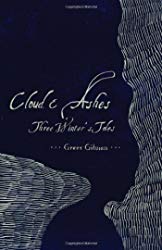
Cloud and Ashes, by Greer Gilman

Second paragraph of third chapter of third section:

In the green dark of another morning, Annot rose. She laid aside her mantle and her gown of black for petticoats of green, May mourning; mirrorless, she combed her leaf-red hair, and as she braided it all down her back, she sang beneath her breath. “ … and a thought come in her head to run in the wood … ” She left my lord’s ring and my lady’s baubles—though she traced the earrings with a finger, half-regretfully: her chains became her well. She left her needle in her work, too nearly done: the one unfinished sleeve. “ … to pull flowers to flower her hat … ” A smock to be bedded in, a shroud. Too fine for the greenwood, to sully and snag. But she wore her old ring that had been her grandam’s, her namesake: that she kept.

Lots of people loved Cloud and Ashes; I didn’t. Its a dense fairy tale set in northern England, with lots of sex (not at all titillating) and magic (which may or may not work). Maybe it will reward readers who put in the effort to understand who the characters are and what is going on. I read for relaxation and escapism, and this was too much like hard work for me. It won the Tiptree Award in 2006, along with the first two volumes of Ōoku: The Inner Chambers, which I enjoyed (onetwo). You can get it here.

My tweets

  • Thu, 20:45: RT @DanielAtkinson7: Varadkar has carefully managed the reporting of Johnson meeting. Allowed narrative to develop that Johnson has moved t…
  • Fri, 10:45: RT @rice_e: This is not the biggest crisis of Boris Johnson’s career. Let us never forget the time he lost an ancient Greek rap-off to Mich…

Posted in Uncategorised

Sheelagh Murnaghan, 1924-1993: Stormont’s Only Liberal MP, by Ruth Illingworth

Second paragraph of third chapter:

In March 1956, a meeting took place in Belfast which resulted in the setting up of a new autonomous Ulster Liberal Association for Northern Ireland — later renamed The Ulster Liberal Party. The first chairman of the party was Albert McElroy. Albert was born in Scotland in 1915 to parents originally from Ulster. When he was 15, his family moved to Northern Ireland. He attended Trinity College Dublin and served in the British Army during the Second World War. He was ordained in 1954 as a minister of the Non-Subscribing Presbyterian Church of Ireland, which is Unitarian in tendency. He was its Moderator from 1967 to 1969. Originally McElroy had been a socialist, and stood for the Northern Ireland Labour Party in the 1945 Northern Irish and 1950 and 1951 UK general elections. Gradually, however his political opinions shifted towards liberalism. While accepting that Northern Ireland would remain British until the majority of its people decided otherwise, he himself believed that Ireland would one day be reunited and was proud of the 'Radical and Liberal tradition' of the Ulster Presbyterians and their role in the United Irishmen of the 1790s and America's independence struggle. He was also proud of the Liberal Party's support for Irish Home Rule. McElroy's ambition was to offer the voters of Northern Ireland an alternative to the tribal politics of Unionism and Nationalism.

I never had the privilege of meeting Sheelagh Murnaghan, though I had the melancholy duty of issuing a press release when she died in 1993, and one of her (many) cousins is an old family friend. From 1961 to 1969 she was the only member of the Northern Ireland Parliament at Stormont elected for the Liberal Party. This short book (97 pages for the main text) looks at her life and achievements.

I was aware of the main details. She captained the Irish Women's Hockey team in the 1950s. She was the first (and for several years the only) woman barrister in Northern Ireland. She won a by-election for the rather odd four-seat Queen's University constituency in 1961, and held hit at the next two general elections (safely in on the first count in 1962, uncontested in 1965) before the constituency was abolished in the last election for the Northern Ireland Parliament in 1969. In her eight years in Stormont, she four times introduced a Human Rights Bill, which would have created structures for human rights accountability in Northern Ireland. The Unionist government were not interested, arguing that there was no problem in the first place, that Nationalists were discriminating just as badly in the second place, and finally that the proposed remedies could not be effective. (There are still some defenders of the old Stormont who will argue the first two of these points, without noticing that they are contradictory.) They thus rejected a massive opportunity to create confidence and draw the sting from minority grievances. Most of the reforms that the Ulster Liberal Party supported were enforced by the mid-70s, but by then it was far too late.

I had not known that in 1983, as chair of an industrial tribunal, Sheelagh Murnaghan handed down the first judgement in the UK or Ireland finding an employer guilty of allowing sexual harassment in the workplace, the important case of Mortiboys v Crescent Garage Ltd. The former Crescent Garage is still there, but rebranded, on Orangefield Crescent (I suspect several owners on from 1983). I wonder what happened to Ms Mortiboys in the end? I hope she found something better to do with her life (it could hardly have been much worse).

I was briefly the chair of the Northern Ireland local branch of the Liberal Democrats, the heir to the Ulster Liberal Party of which Sheelagh Murnaghan was the senior elected official (its leader however was the Non-Subscribing Presbyterian minister Albert McElroy). In my day it was basically a group of enthusiasts who met every year or so to reconfirm the strategic decision not to contest elections against the Alliance Party (I have no idea what the situation is now for Lib Dem members in Northern Ireland). The leading veteran at the time was Berkley Farr, who contributed a lot to this little book. The other person whose work is drawn on (and perhaps should have got a little more credit) is Constance Rynder, a Florida history professor who sadly died in 2017 but did a lot of research on women in Stormont in general but also on Sheelagh Murnaghan in particular.

Sheelagh Murnaghan never married and is not known to have had a relationship other than her devotion to her dogs. I don't think that one can read any more into this. I did attend her funeral, which was taken by Alec Reid, and she clearly left many friends and fond memories behind her. This is a nice little book and you can get it here.

Posted in Uncategorised

My tweets

Posted in Uncategorised

Paper Girls, vols 1-6, by Brian K Vaughan and Cliff Chiang

Second frame with dialogue in from the third chapter of each of the six volumes:

Volume 1 (originally in issue #3)

Volume 2 (originally in issue #8)

Volume 3 (originally in issue #13)

Volume 4 (originally in issue #18)

Volume 5 (originally in issue #23)

Volume 6 (originally in issue #28)

I bought the first volume of this series in Portland in 2016, just on impulse, and it proved a wise investment. Volumes 1, 3 and 4 were all Hugo finalists, and the sixth and final volume came out last month, so I read them all in one sitting.

This is the story of four 12-year-olds delivering newspapers in 1988 in Cleveland, Ohio, all from different ethnic backgrounds, who get swept up into a mysterious time war which takes them to the future and past, both near and far. Unlike with some comics compilations, each of the sic volumes has its own arc, though I don't think you could describe them as completely self-contained; I definitely would have benefited from reading Volume 2 before Volume 3.

It's awfully well done. The four girls are Erin (Asian), Mac (tomboy), KJ (Jewish and gay) and Tiffany (African-American and the most nerdy). Each of them gets to confront different versions of their own future – I think the best bit is in Volume 2, where the girls meet Erin's 40-year-old future self in 2016 Cleveland.

The art is great throughout. There is a particularly strong part in Volume 6 where the four girls are scattered into different timelines and we follow each of them on her own line across the pages, like a musical score.


(Click on each page to embiggen)

One is never in any danger of getting confused between the main characters, and when people turn up at different ages, they remain recognisable.

I haven’t seen Stranger Things (apart from one episode which I watched for the 2017 Hugos) but I understand it’s along the same lines, and that if you like one, you’ll probably like the other. I found this immensely satisfying. You can get the six volumes here, here, here, here, here and here.

This was my top unread comic (well, vols 2 and 5 were). Next on that pile is the Fourth Doctor collection, Dragon’s Claw.

Posted in Uncategorised

My tweets

Posted in Uncategorised

Tuesday reading

Current
The Sparrow, by Mary Doria Russell
David Copperfield, by Charles Dickens
Seven Pillars of Wisdom, by T.E. Lawrence

Last books finished
Sheelagh Murnaghan, 1924-1993: Stormont’s Only Liberal MP, by Ruth Illingworth
Cloud and Ashes, by Greer Gilman

Next books
Be My Enemy, by Ian McDonald
The Bastard of Istanbul, by Eilif Shafak

Posted in Uncategorised

My tweets

  • Tue, 09:41: RT @davidallengreen: If you only follow Brexit from a legal – or legalistic – perspective you will miss many things For example, the mad d…
  • Tue, 09:41: RT @davidallengreen: But if you understand Brexit only in terms of politics you will miss perhaps a great deal more Here, in broadly chron…
  • Tue, 09:41: RT @davidallengreen: At the very beginning of the process – the “re-negotiation” Breathless pundits and their sources presented this as a…
  • Tue, 09:41: RT @davidallengreen: The referendum Until the vote, few if any on the Leave side had realised that the vote had no legally binding effect…
  • Tue, 09:41: RT @davidallengreen: Theresa May’s conference speech, 2016 When May blithely declared her red lines and unrealistic timetable, there was c…
  • Tue, 09:41: RT @davidallengreen: The run-up to notification By the end of 2016, the EU27 negotiating team was in place, with draft guidelines for the…
  • Tue, 09:41: RT @davidallengreen: By start of 2017, EU27 was ready at any point to get EU27 sign-off on binding legal guidelines for its negotiation man…
  • Tue, 09:41: RT @davidallengreen: EU27 presented a suite of formal documents to substantiate each of its negotiating objectives for the deal text UK ha…
  • Tue, 09:41: RT @davidallengreen: Sequencing Control of the agenda meant control of how the legal text developed UK just had bombast and boasted of wi…
  • Tue, 09:41: RT @davidallengreen: Negotiation Brexiters believed (and believe) it is all a test of will and shouting louder – that the EU27 just need t…
  • Tue, 09:41: RT @davidallengreen: Lack of trust The Brexiter playing to the domestic gallery meant that EU27 sought to pin-down UK first with the joint…
  • Tue, 09:41: RT @davidallengreen: Article 50 period The notification was treated like a press release, a test of political virility UK wasted time onc…
  • Tue, 09:41: RT @davidallengreen: End game For EU27, the negotiated legal text was end of a process started in 2016, from objectives to final legal tex…
  • Tue, 09:41: RT @davidallengreen: Prorogation Johnson and Cummings thought they could blag their way to a five week shut-down of parliament Their supp…
  • Tue, 09:41: RT @davidallengreen: Benn Act And now, Brexiter pundits and politicians clap and cheer about possible ways to avoid the Benn Act, even tho…
  • Tue, 09:42: RT @davidallengreen: This thread could have dozens of more examples At each stage of the process, the belief that things were just a matte…
  • Tue, 09:42: RT @davidallengreen: None of this to say is that law explains everything, or indeed many things, about Brexit And there are things legal c…
  • Tue, 09:42: RT @davidallengreen: The sad thing, nothing has been learned Every set-back just makes Brexiters shoutier about political will And then t…
  • Tue, 10:08: RT @davidallengreen: The fatal flaws ranked 1. Article 50 notification, without preparation or thought 2. Conference redlines in October…
  • Tue, 10:22: RT @lowflyingrocks: 2019 TM3, 9m-20m in diameter, just passed the Earth at 10km/s, missing by 479,000km. https://t.co/s4qGVfaD0y

Posted in Uncategorised

A Local Habitation, by Seanan McGuire

Second paragraph of third chapter:

Stacy didn’t answer when I called the house. I left a quick message asking her to come by and feed Spike and the cats until I got back. I glossed over how long my absence was likely to be. The last thing I needed was for her to start calling Sylvester, demanding to know whether he was trying to get me killed. I couldn’t blame her for reacting that way. After all, the last time I went on a job for him, I got turned into a fish and spent fourteen years swimming around a pond in Golden Gate Park. Still. That sort of thing doesn’t happen twice, and I didn’t want her to worry.

This is the second volume of McGuire’s popular October Daye series, collectively twice on the final ballot for the Hugo Awards (coincidentally in the two years in which I was the administrator). I read the eighth volume in 2017 and the first volume this year as I prepared my ballot, and I have to be honest, I ranked the series at the bottom of my ballot on both occasions. (Voters also ranked it 6th in 2017, but 4th in 2019.)

I won’t read any more. I wrote in 2017,

I completely bounced off the core concept of a Gaelic otherworld conveniently located in the American West, with no visible representation from other less foreign supernatural traditions.

That may have been true of the ninth volume, but this one does have a few non-Celtic entities, a Japanese kitsune and a Geek dryad (who however has gone cyber). Still, I found it very jarring. The fact is that San Francisco has been a major European settlement for less than 200 years; how then does it mysteriously have a parallel world of ancient Celtic entities full of European chivalric traditions sitting alongside it? And what has happened to the supernatural beings of the more indigenous traditions? On top of that, the characters need to infodump to us about the rules of their parallel society; and I have to say that when the murderer was revealed, it was someone who I had barely noticed in the plot earlier.

Obviously a lot of people love this, and that’s fine. But it’s a bit annoying to have the Celtic heritage applied as if it were a universal; for us Celtic types (and I think for Europeans generally), part of the charm of the old myths is precisely that they are tied to particular places and cultures, not claiming to be a universal experience.

This was the top unread sf book on my pile. If you want, you can get it here. Next is The Invisible Man, by H.G. Wells.

Posted in Uncategorised

My tweets

Posted in Uncategorised

Art in September

Stuff that we did last month that I didn't get around to writing up.

The first weekend of the month had the usual zomerfeest. The live music mostly happened on Saturday night; on Sunday the barbeque was enlivened by Les Nicolettes, a Leuven troup of majorettes. They somehow look very Belgian.

The usual exhibition of art by villagers included some sculptures that caught my eye.


(Those last ones are actually by Anne.)

The following weekend there was a comics festival in the park in Brussels; F and U both came.

And the next weekend there was more art on display in Oud-Heverlee, with Anne’s creations on display again, thi time guarded by these characters:

but this time with several musical performances, of which two exploited the Chapel of Our Lady of Steenberghen in the woods. On the Saturday, the VocEns choir of De Vonk Academie did some acapella songs:

And the next day, Patrizia Hardt sang and Eli Poppe played the lute:

Eli then got out his big instrument. (Well, now I know what a theorbo looks like – I had always assumed it was one of the woodwind family, related to the oboe.)

We’re on an anniversary break in the Netherlands this weekend; more pics to come.

Posted in Uncategorised

My tweets

Posted in Uncategorised

In Ethiopia with a Mule, by Dervla Murphy

Second paragraph of third chapter:

A few miles south of Aksum we climbed a long, rocky ridge, dotted with round, green bushes, and on the crest I was glad that I had walked ahead and could enjoy this moment alone. Below me —like a vast bowl brimming with beauty — lay a broad, sunny valley, lined with golden grasses, and from its floor rose a low hill, crowned by a tree-surrounded church, and faintly, across the silence, came the solemn chanting of many priests — a sound so sweet in its remoteness that it seemed to belong to the soul of the mountains rather than to the rituals of man.

I've never actually met Dervla Murphy, but I worked with her in 1990-91 when she was one of the judges of the Christopher Ewart-Biggs Prize and I was the prize's administrator (my career of literary awards did not start with the Hugos or the Clarke Award). I knew of course Full Tilt, her memoir of travelling overland to India by bicycle in 1963, her autobiography, Wheels Within Wheels, and her account of mid-1970s Northern Ireland, A Place Apart. Here she visits Ethiopia in 1966-7, walking most of the way from the Red Sea to Addis Ababa with a helpful mule who she christens Jock.

As an Irish citizen, she gets a great deal of help from the British Consul in Asmara (then of course a provincial capital, now the capital of the independent state of Eritrea) and the British Ambassador in Addis Ababa, both of them named Bromley (the ambassador had a dreadful tragedy in his past, but if Murphy knew about it, she did not mention it); and also dramatically from the eldest granddaughter of the emperor, whose husband (also of royal blood) was the governor of Tigray.

Ethiopia is a hugely important country that we should all pay more attention to. Its population is 112 million, the 12th highest in the world, and the annual rate of economic growth is between 7% and 11% (from the last decade). I changed planes there a few times in South Sudan days, and in April 2010 stayed in the city itself for three days due to connection problems with Juba. I found it fascinating to see a rapidly expanding and increasingly outward-looking society, with shopfronts advertising their wares in both Amharic and English (and this in a country that the Brtish never even tried to colonise). In those days, of course, the population was only 90 million, 20% less than now.

Dervla Murphy was there when Ethiopia's population was only 25 million (26 million if you count Eritrea) and the world as a whole was a bigger place. Even so, foreigners are not at all unknown – she hooks up with some English mountaineers and climbs Ethiopia's two highest peaks (both of which are apparently very strollable). But she deliberately goes through countryside and wild territory which are a bit more off the beaten track, sleeping in tukuls if villagers are hospitable, in the wild otherwise. She gets robbed three times – in one case, she helps the police lead a successful expedition to catch the thieves, but the other two culprits get away. More humorously, it turns out that her surname has odd local resonances – መርፍእ ["merifi’i"] in Tigrinya and መርፌ ["merifē"] in Amharic both mean "needle"/"injection".

Apart from thieves, the two sets of people she has most disdain for are the Church and international aid workers. She sees ancient heritage being ruined or sold off by its supposed guardians, and has some unpleasant experiences in monasteries. (Also the nastiest of the thieves is in fact a priest.) At the end of the book she is dismayed by the aid worker scene in Addis Ababa, feeling a complete disconnect with the realities of the countryside that she had walked through. It's a vivid portrait of a country at a time of transition. You can get it here.

Prince Mengesha, whose hospitality she enjoyed in Makalle/Mekelle, is still alive aged 91. His wife, Princess Aida Desta, died in 2013 aged 85. During the Derg regime, from 1974 to 1988, she was imprisoned in a small room in a prison in Addis Ababa. The prison was closed in 2004 and demolished in 2007; the headquarters of the African Union, where I spent some time back in 2010, was built on its site, funded by the Chinese.

Posted in Uncategorised

My tweets

Posted in Uncategorised

Blake’s 7: the first series (1978)

A few weeks ago I realised that if I tried watching a Blake's 7 episode every two days, starting on 10 September, then I will get to the end on this year's Gauda Prime Day, 21 December. So I've been working through the first series, and have just finished it. As it happens I tried a Blake's 7 rewatch back in 2007-8, and got as far as the end of the first series (and tried again in 2009 but never got past the first episode), so here I'm going to update my previous remarks, linking to each episode on Youtube.

17 May 2007:

Back in January 1978, I was in my last year in primary school, coming up to my eleventh birthday; and Blake's 7 started, the story of a group of desperate future freedom fighters battling against the evil Federation. I see that there is now a new version being webcast [link has died, but I guess this was the Big Finish version?], and as soon as I can work out how to download these and convert to MP3s for easy listening, I'll be onto it. (Technical assistance on this gratefully accepted.) (Though they are by Ben Aaronovitch, so not sure how excited I can get.)

Just to say that I have revised my views on Ben Aaronovitch significantly since then.

But meantime I sat down and re-watched the first three TV episodes from 1978. After getting over my shock at how young they all look (all in their 30s, I think, so younger than I am now), I found myself really enjoying it. The first three episodes are a more tightly-linked narrative than the others, as Blake gets together his team and gets control of the alien technology of the Liberator. But they feel very different from each other as well; this is not yer six-part Terry Nation Doctor Who story.


The Way Back: A lot of effort goes into building up a picture of a future Earth which (if I remember correctly) we never actually return to over the next four seasons. (See the director's reflections on this.)

There are some surprising weaknesses in it – there are longueurs that would be intolerable in today's Doctor Who, whose episodes are about the same length. One has to ask oneself why, if the Federation holds life so cheap (the body count in this episode must surely be one of the highest for the entire series), they don't simply kill Blake off as they do so many others. Also the mind-control aspects of the plot, which are potentially very interesting in a Philip K Dick kind of way, are simply left aside by later writers if I remember rightly. But the atmosphere of the repressive government is brilliantly conveyed; these are people that you immediately want to fight against, and you want Blake to fight against them and win.

On one minor plot point: It is difficult to imagine framing someone on paedophilia charges being treated so incidentally in a drama written today. I wonder if Terry Nation got this one from Roger Zelazny's Today We Choose Faces, published in 1973, where the narrator(s) (one of whose names is Black) do(es) the same thing to a minor character (who turns out to be his/their love interest's father).

Notes from rewatch on 3 September 2009:

First, the look of it is even better than I remembered. The camera shots through bars, or stairs angled to look like bars, reinforce the claustrophobia. The close-ups on Blake's eye bring home to us that his perception (and thus ours) has been altered and may not be completely reliable. The silent guards in their masks and black uniforms are very sinister indeed. The shots of Blake's memory being wiped are effective so it's not surprising that they get used twice.

Second, the show does a good job of subverting our expectations for what kind of series this is going to be. The very first word from an on-screen character is spoken by former child star Gillian Bailey, who was one of the Double Deckers (if you don't know, don't ask). Then we go to the rebel meeting chaired by Robert Beatty, veteran of various screen performances (Who fans will know him as the General in The Tenth Planet). It looks rather as if Bailey and Beatty are going to play central characters in this new series; but they are mercilessly mown down. (A bit like Temmosus of the Thals, with some important differences.)

Then it looks like Blake may be sprung by his lawyer, even though the lawyer and his wife are played by less luminous actors, and we may be moving towards a series with Blake's new friends Jenna and Vila in space, and Tel and Maja Varon as his agents on earth, Blake somehow operating in between. But the Varons too are killed, off-screen, though we glimpse their twisted corpses.

The Way Back gives us no idea of what sort of show this is going to turn into. The first episode ends with Blake's permanent deportation from Earth, for crimes he didn't commit, his only allies killed by the government. It is not a happy ending, but it certainly left my ten-year-old self wanting to watch more back in 1978.

As I noted in 2009, literally the first character to be seen speaking, young rebel Ravella (also the first character to be killed off) is played by Gillian Bailey, who only a few years earlier was Billie on Here Come the Double Deckers!.

I would add that the sexual spark between Blake's lawyer and his wife, played by Michael Halsey and Pippa Steel, is very convincing. And the scenes of dystopian scrubland outside the future city were filmed in Bray, Berkshire, now in Theresa May’s Maidenhead constituency.

17 May 2007 (again):


Space Fall: I think the least successful of the three, in that it just involves people talking and occasionally fighting on a spaceship, or on two spaceships (once we find out about the Liberator). Having said that, we have a lot of useful introduction – Jenna, Avon and Gan all make their first appearances here (Vila having already been briefly in the previous episode). And we are slightly on tenterhooks as to who is actually going to be a regular character and who isn't: the unfortunate Nova looks at first like he is going to be one of the Seven, but then gets suffocated by oozing gel.

The Federation officials continue to be utterly horrible, with Leylan, who seems like the nice cop, unable to restrain the nasty Raiker. And the contrast between the functional Federation ship and the alien if dusty Liberator (not yet called that) is effective.

What struck me this time was the weird 1970s image of future tech, which I guess was also true for the first episode but more noticeable here with less plot going on. You have to have big chunky keyboards and flashing lights.


Cygnus Alpha: This is the one where we meet the alien technology of teleportation, that point where Blake's 7 tried to prove that it was not just aping Star Trek – the visuals were different, the psychological approach to the technology was different, though unfortunately it still worked just exactly the same as the elder version. It memorably features Brian Blessed as Vargas, the leader of the peculiar cult on the eponymous prison planet, which ends with exactly what Avon had predicted happening to him: "I would imagine that they would appear momentarily in space, and then that their atoms would be scattered to the solar winds."

Again, it's not clear who is going to be among the 7 until the very last moment – especially since, in fact, we are still not up to our full complement by episode's end, with only five humans aboard the Liberator (we don't yet know for sure that Zen counts as one of them).

Oddly enough the teleportation technology is an excuse for a significant exchange between Blake, Avon and Jenna. The two men have just discovered that they both had worked on a project on a similar technology back on earth; Jenna tells them sharply, "I didn't work on it." It's almost a defining moment: the key relationship in the series is between Blake and Avon, and the women are sidelined now and mostly hereafter as well. I have written before about Terry Nation's women characters, concluding by praising him for the introduction of Soolin in later Blake's 7 series, but Nick Barlow pointed out that in fact she almost certainly came from someone else.

Here I noted with interest the first of several evil priestesses, played by Pamela Salem, who appeared in Doctor Who twice (and also in The West Wing as the British prime minister).

And the dialogue is getting good as we settle into the format:

Blake: [Blake picks up an alien device on the Liberator] Hand gun?
Avon: It's a bit elaborate for a toothpick.
Blake: It depends on how elaborate their teeth were.

1 July 2007:


Time Squad: The title of this episode is very peculiar. I suppose it could refer to the alien guards on the captured space pod, but the only sense in which they are a "time squad" is that they are drifting forward in time in suspended animation. It's even more difficult to make it fit any of the other groups of characters in the story.

However, a lot of this episode is about misdirection of the audience by the writer. At the start, it looks like we are going to settle into a pattern of Blake and team attacking Federation assets à la Resistance fighters of the second world war, and each episode is therefore going to be a raid of the week. But once we have the problems of the pod's inhabitants running wild about the Liberator, and the sense that the ship itself is powerful but not completely reliable, it looks like this is actually a story about beating off an infiltration on-board while still trying to pull off the mission on the ground. And then there is a further twist, as it turns out that the resistance fighters planetside have been reduced to one telepathic babe.

The episode then resolves in a fairly standard way – alien threat defeated, Federation base blown up as planned – but there have been enough twists getting there that you feel you've had your money's worth. And we now know who the Seven are.

Watching the episodes in quick succession, I was struck by the hint that some time has passed for the characters since Cygnus AlphaBlake: You have to be careful of the plant life around here. Some of it's carnivorous. Some species even have an intelligence rating.
Vila: That's a comfort. I should hate to be eaten by something stupid.


The Web: This episode is partly about more back-story for Cally, but I think much more about Blake and to a lesser extent Avon. I saw this first time round in 1978, but had forgotten the detail (possibly lost on me when I was ten) that the evil scientists on the ground are dissidents from Cally's people. It's noticeable that the three people who we see being taken over by the baddies' brain influence are the three women, Cally, Jenna and the female cyborg. I found the crew's willingness to forgive Cally for sabotaging the ship (even if under mind control) rather too swift. Surely after what happened last episode they should have learnt to be wary of alien interlopers?

But we have lots of Blake here, both ethical!Blake and gay!Blake. Ethical!Blake in his growing realisation of what the situation actually is, and in the end in his refusal to countenance the destruction of the Decimas, even though this means danger for his own crew. (That final scene in the lab, with the Decimas contemptuously trashing the bodies of the cyborgs, is pretty horrific and did linger in my memory for the last thirty years!)

But also gay!Blake in his relationship with Avon – that moment when Avon throws himself at Blake to protect him from the bomb which is about to explode is fantastic – Avon tries to explain it away as an instinctuive reflex – yeah, right, their hands are practically intertwining. And there is practically no body chemistry between the men and the women on the Liberator, apart from Vila's attempt to chat up mind-controlled Cally – which would probably have been disastrous anyway, as rather than compliment her on her appearance he asks her to compliment him on his!

NB also lots of classic Terry Nation twists – this is basically a riff on Davros and the Daleks, with the important difference that the Decimas are not in fact evil.

Full marks to for spotting this link.

It seemed to me even more jarring this time that Cally, the newest of the crew, is not treated with more suspicion by the others when under mind control. Again, maybe this jumps out more when you are watching the episodes a day or so apart rather than a week apart.

And jeepers, the final scene with the Decimas remains as chilling to 52-year-old me as it was for 10-year-old me.

7 November 2008:


Seek-Locate-Destroy is the one which introduces Blake's foes Travis and Servalan, in a scene of crackling testosterone. We also get the unexpected bonus of Peter Miles (Nyder in Genesis of the Daleks) as Secretary Rontane, demanding Blake's head, and some lovely lines from Vila: "Tell him I've just worked out a completely new strategy. It's called running away." "There isn't a lock I can't open – if I'm scared enough." Nice character bits as they attack the complex in the first half of the episode.

Unfortunately after that first scene with Servalan, Stephen Greif seems to rather lose interest in playing Travis and Terry Nation rather loses interest in giving him anything interesting to do. The core of the plot is promising – Blake risking all to rescue captured Cally – but in the end it is rather disappointing that he simply teleports through the defences that Travis has laboriously set up precisely to prevent him from doing so, and the dramatic punch evaporates.

Poor Cally – it takes ages for the crew to realise that they have left her behind, and it's not as if it is difficult to count to five.

It is interesting that the Federation already has a rough idea of Liberator's speed and capabilities, suggesting again that there has been a lot more action off-screen that we have not seen.

Incidentally, both Gareth Thomas and Jacqueline Pearce were in the 1974 BBC David Copperfield (as Murdstone and Rosa Dartle respectively). But he was in the first two episodes and she was in episodes 3-6, so they were not on screen together.


Mission to Destiny is an interesting example of B7 veering into a completely different genre, as essentially a locked-room murder mystery on board a spaceship, with a subplot of Perilous Journey for Blake and the others. Avon solves the mystery and gets one of the best quotes ever. (Cally: "My people have a saying, 'A man who trusts can never be betrayed, only mistaken.'" Avon: "Life expectancy must be fairly short among your people.") John Leeson, the Voice of K9, plays one of the spaceship crew whose mutual antagonisms support the plot. We also get a glimpse of life on human planets outside the Federation.

It all works except for the Liberator sub-plot, where the timings (desperate run to the planet Destiny, through the meteor storm, yet somehow back again in time to catch the Destiny crew before the bad guys arrive) just don't work out. Also it might not have been a bad idea to check that there was something in the box before risking life and limb for it.

This is a very good example of Terry Nation's approach to an episodic series by having the occasional episode with very little relation to the main narrative, the same sort of spirit that we would later see with Buffy. As far as I remember we get more of this later on. But the answer to the mystery is rather obvious…


As for Duel, it is essentially an interesting variation on the equivalent Star Trek, Frederic Brown and Longyear – most notably, that Blake and Travis get their companions as well to help them. Again, Avon gets the best line ("Blake is sitting up in a tree; Travis is sitting up in another tree. Unless they're planning to throw nuts at one another, I don't see much of a fight developing before it gets light.") Some good special effects especially as Liberator rams Travis's ship.

As always with this type of story, I am bothered by the fact that we don't get a good handle on the means and motivation of the god-like aliens. Poor Isla Blair, playing Sinofar, was obviously rather cold. The concept of the Mutoids is good and well explored though.

Just to make the point that Sinofar is another evil priestess (as indeed is Patsy Doyle as Giroc).


Project Avalon works perhaps the best of these four episodes. It is strangely reminiscent of a couple of Terry Nation's Doctor Who stories – the whole underground lab reached through a cave complex thing from Genesis of the Daleks (and indeed The Daleks), the android doubles from The Android Invasion (and less seriously The Chase) and the super-vicious virus from Death to the Daleks! (and referenced also in Genesis). Here he has boiled some of his own favourite themes together to make a decent drama.

I still don't like Stephen Greif as Travis, but I did like the changed relationship with Servalan, she now is putting him under pressure to deliver (and I'm not really sure that his assertion that he could have eliminated Blake but for the Federation's insistence on capturing the Liberator is supported by that we have seen on screen). A lot of fans don't like Julia Vidler as Avalon but I think she's OK, both as Avalon herself and the android double. Some decent special effects as well. Vila and his heat suit is hilarious. Even Blake gets a good line ("They probably tried to surrender…). The best of these four. Apart from the stupid robot.

I had completely forgotten ever watching this episode before, but again I rather enjoyed it. It was also fun to recognise the Wookey Hole caves from Revenge of the Cybermen and David Bailie from The Robots of Death (which Pamela Salem was also in). I totally failed to recognise Glynis Barber as the main Mutoid, despite the fact that she becomes the regular character Soolin in future series.

23 November 2008:


Breakdown – The one about Gan's limiter breaking down (hence the title). The first half is a bit silly, with David Jackson doing manic grunting and throwing the rest of them around while yet another dangerous sector of space must be crossed; the second half is really rather good, with the two tensions of 1) is the surgery going to work and 2) is Avon going to defect from the crew. Julian Glover is brilliant as nasty genius surgeon Kayn, and Avon is at his most sinister, with the Avon/Blake relationship at its worst. Also we have the comic relief of Kayn's sexist assistant: "I love girls with a sense of humour" – to which Jenna replies, "Yes, I can see where that would be an advantage." But I must say this isn't the one I would show someone to get them into the series.

Blake's 7 really isn't that good at convincing plots about space threats. Why on earth does Zen shut down and refuse to be helpful? It makes no sense, and then there is no follow-up from the rest of the crew to try and make sure it doesn't happen again. So for all they know, Zen will just shut down again the next time they face a severe threat. Not very satisfactory.

But Julian Glover is tremendous.


Bounty – A drastically overpadded story. This is the one where for no apparent reason they are rescuing an ex-President and the Liberator, again for no apparent reason, gets temporarily captured (offscreen) by bounty-hunters who are old friends of Jenna's. There is one good line – Avon reflecting to fellow captive Blake that "None of us showed conspicuous intelligence on this occasion." Vila gets some nice moments, and it seems that Jenna has a past and a personality as well. But this could have been a decent story at half the length.

On rewatching, I thought the first half was dramatically quite strong, apart from the fact that the guards are very very stupid indeed as well as being poor shots. The location is lovely though – the Waterloo Tower in Quex Park. And for once Cally gets to use her telepathic skills.

NB that the two main villainous robed guys are both played by actors who were born in India. Yep, the first visible non-white characters in the whole of Blake’s 7 are thieves and collaborators, who hit on Jenna.


Deliverance – This is much more like it. Here the two stories are 1) Avon finds himself the subject of a prophecy saving a lost race, also subject to the worship of the charming Meegat; and 2) Ensor junior hijacks the Liberator in an attempt to save his father, as the result of an unusually evil plot by Servalan which even has Travis blinking. Avon, having been a potential turncoat two episodes previously, is now forced to discover some nobility of character by circumstances, and duly does so (Vila to Avon: "Counting yourself, that makes two people who think you're wonderful". Poor Cally continues her descent into uselessness, being mere canon-fodder for Ensor junior's hostage-taking. Jenna, captured by savages, does rather better.

Just to note that Meegat is yet another priestess, though not actually evil, played by Suzan Farmer who I don’t think I have seen in anything else, but she was married to Ian McShane until her death in 2017. I did wonder about the ecosystem on her planet. The Primitives appear to have no women.

Speaking of women, it’s unfortunate that Cally and Jenna end up being peril monkeys here.


Orac – The season ends with one of its strongest stories. With Deliverance, it's the first properly linked pair of stories since the very start of the season; all the crew who went down-planet last week falling ill with radiation sickness this week. It depends on a rather odd distribution of medicines (Ensor doesn't have what he needs, but does have what the Liberator folks need) but once you swallow that, it's tense and well-paced. I was mildly puzzled by the way in which Servalan and Travis didn't quite seem in phase once we switched to the studio scenes, and it turns out that Stephen Greif was injured and couldn't do them; in which case I think they handled it well.

Did anyone else think that Derek Farr as Ensor was very much channelling William Hartnell's Doctor? More on this below.

The final cliff-hanger – Orac's prediction that the Liberator would be destroyed – kept us all guessing for a year; was that the prediction on the screen, or was that what had actually happened?

I had forgotten that Orac does not actually say that the Liberator will be destroyed – the line is “space vehicle will be destroyed” and then what looks like the Liberator blowing up.

I was really struck by Vere Lorrimer's skill in persuading us that a quarry in Rickmansworth is an alien seaside, by use of stock pictures and sound effects of waves rolling in. I think the lizard-thing is the first actual alien non-human monster we have had too; there are plenty of human monsters in the Blake's 7 universe.

My conclusion after all of this is that anyone who wants to appreciate Terry Nation's work in Blake's 7 also needs to see his early Doctor Who serial, The Keys of Marinus. The six 25-minute episodes are essentuially five distinct stories, the last being a two-parter, in which the regulars are sent to different environments for the adventure of the week. Several of them – the murder mystery, the chilly environment, the bottled brains – have fairly direct parallels in B7, but I'm more struck by the underlying concept of subjecting your team to different stresses and seeing what it brings out of them – Nation wasn't actually terribly good at this, but the thought was there. One thing he manages in B7 which he didn't do so often in Who was humour. Well, we'll see if the new Survivors is any cop.

I never got around to the new Survivors, but am glad to be back with Blake’s 7.

Posted in Uncategorised

Blake’s 7: the first series (1978)

Blake’s 7: the first series (1978)

A few weeks ago I realised that if I tried watching a Blake’s 7 episode every two days, starting on 10 September, then I will get to the end on this year’s Gauda Prime Day, 21 December. So I’ve been working through the first series, and have just finished it. As it happens I tried a Blake’s 7 rewatch back in 2007–8, and got as far as the end of the first series (and tried again in 2009 but never got past the first episode), so here I’m going to update my previous remarks, linking to each episode on Youtube.

17 May 2007:

Back in January 1978, I was in my last year in primary school, coming up to my eleventh birthday; and Blake’s 7 started, the story of a group of desperate future freedom fighters battling against the evil Federation. I see that there is now a new version being webcast [link has died, but I guess this was the Big Finish version?], and as soon as I can work out how to download these and convert to MP3s for easy listening, I’ll be onto it. (Technical assistance on this gratefully accepted.) (Though they are by Ben Aaronovitch, so not sure how excited I can get.)

Just to say that I have revised my views on Ben Aaronovitch significantly since then.

But meantime I sat down and re-watched the first three TV episodes from 1978. After getting over my shock at how young they all look (all in their 30s, I think, so younger than I am now), I found myself really enjoying it. The first three episodes are a more tightly-linked narrative than the others, as Blake gets together his team and gets control of the alien technology of the Liberator. But they feel very different from each other as well; this is not yer six-part Terry Nation Doctor Who story.

The Way Back: A lot of effort goes into building up a picture of a future Earth which (if I remember correctly) we never actually return to over the next four seasons. (See the director’s reflections on this.)

There are some surprising weaknesses in it — there are longueurs that would be intolerable in today’s Doctor Who, whose episodes are about the same length. One has to ask oneself why, if the Federation holds life so cheap (the body count in this episode must surely be one of the highest for the entire series), they don’t simply kill Blake off as they do so many others. Also the mind-control aspects of the plot, which are potentially very interesting in a Philip K Dick kind of way, are simply left aside by later writers if I remember rightly. But the atmosphere of the repressive government is brilliantly conveyed; these are people that you immediately want to fight against, and you want Blake to fight against them and win.

On one minor plot point: It is difficult to imagine framing someone on paedophilia charges being treated so incidentally in a drama written today. I wonder if Terry Nation got this one from Roger Zelazny’s Today We Choose Faces, published in 1973, where the narrator(s) (one of whose names is Black) do(es) the same thing to a minor character (who turns out to be his/their love interest’s father).

Notes from rewatch on 3 September 2009:

First, the look of it is even better than I remembered. The camera shots through bars, or stairs angled to look like bars, reinforce the claustrophobia. The close-ups on Blake’s eye bring home to us that his perception (and thus ours) has been altered and may not be completely reliable. The silent guards in their masks and black uniforms are very sinister indeed. The shots of Blake’s memory being wiped are effective so it’s not surprising that they get used twice.

Second, the show does a good job of subverting our expectations for what kind of series this is going to be. The very first word from an on-screen character is spoken by former child star Gillian Bailey, who was one of the Double Deckers (if you don’t know, don’t ask). Then we go to the rebel meeting chaired by Robert Beatty, veteran of various screen performances (Who fans will know him as the General in The Tenth Planet). It looks rather as if Bailey and Beatty are going to play central characters in this new series; but they are mercilessly mown down. (A bit like Temmosus of the Thals, with some important differences.)

Then it looks like Blake may be sprung by his lawyer, even though the lawyer and his wife are played by less luminous actors, and we may be moving towards a series with Blake’s new friends Jenna and Vila in space, and Tel and Maja Varon as his agents on earth, Blake somehow operating in between. But the Varons too are killed, off-screen, though we glimpse their twisted corpses.

The Way Back gives us no idea of what sort of show this is going to turn into. The first episode ends with Blake’s permanent deportation from Earth, for crimes he didn’t commit, his only allies killed by the government. It is not a happy ending, but it certainly left my ten-year-old self wanting to watch more back in 1978.

As I noted in 2009, literally the first character to be seen speaking, young rebel Ravella (also the first character to be killed off) is played by Gillian Bailey, who only a few years earlier was Billie on Here Come the Double Deckers!.

I would add that the sexual spark between Blake’s lawyer and his wife, played by Michael Halsey and Pippa Steel, is very convincing. And the scenes of dystopian scrubland outside the future city were filmed in Bray, Berkshire, now in Theresa May’s Maidenhead constituency.

17 May 2007 (again):

Space Fall: I think the least successful of the three, in that it just involves people talking and occasionally fighting on a spaceship, or on two spaceships (once we find out about the Liberator). Having said that, we have a lot of useful introduction — Jenna, Avon and Gan all make their first appearances here (Vila having already been briefly in the previous episode). And we are slightly on tenterhooks as to who is actually going to be a regular character and who isn’t: the unfortunate Nova looks at first like he is going to be one of the Seven, but then gets suffocated by oozing gel.

The Federation officials continue to be utterly horrible, with Leylan, who seems like the nice cop, unable to restrain the nasty Raiker. And the contrast between the functional Federation ship and the alien if dusty Liberator (not yet called that) is effective.

What struck me this time was the weird 1970s image of future tech, which I guess was also true for the first episode but more noticeable here with less plot going on. You have to have big chunky keyboards and flashing lights.

Cygnus Alpha: This is the one where we meet the alien technology of teleportation, that point where Blake’s 7 tried to prove that it was not just aping Star Trek — the visuals were different, the psychological approach to the technology was different, though unfortunately it still worked just exactly the same as the elder version. It memorably features Brian Blessed as Vargas, the leader of the peculiar cult on the eponymous prison planet, which ends with exactly what Avon had predicted happening to him: “I would imagine that they would appear momentarily in space, and then that their atoms would be scattered to the solar winds.”

Again, it’s not clear who is going to be among the 7 until the very last moment — especially since, in fact, we are still not up to our full complement by episode’s end, with only five humans aboard the Liberator (we don’t yet know for sure that Zen counts as one of them).

Oddly enough the teleportation technology is an excuse for a significant exchange between Blake, Avon and Jenna. The two men have just discovered that they both had worked on a project on a similar technology back on earth; Jenna tells them sharply, “I didn’t work on it.” It’s almost a defining moment: the key relationship in the series is between Blake and Avon, and the women are sidelined now and mostly hereafter as well. I have written before about Terry Nation’s women characters, concluding by praising him for the introduction of Soolin in later Blake’s 7 series, but Nick Barlow pointed out that in fact she almost certainly came from someone else.

Here I noted with interest the first of several evil priestesses, played by Pamela Salem, who appeared in Doctor Who twice (and also in The West Wing as the British prime minister).

And the dialogue is getting good as we settle into the format:

Blake: [Blake picks up an alien device on the Liberator] Hand gun?
Avon: It’s a bit elaborate for a toothpick.
Blake: It depends on how elaborate their teeth were.

1 July 2007:

Time Squad: The title of this episode is very peculiar. I suppose it could refer to the alien guards on the captured space pod, but the only sense in which they are a “time squad” is that they are drifting forward in time in suspended animation. It’s even more difficult to make it fit any of the other groups of characters in the story.

However, a lot of this episode is about misdirection of the audience by the writer. At the start, it looks like we are going to settle into a pattern of Blake and team attacking Federation assets à la Resistance fighters of the second world war, and each episode is therefore going to be a raid of the week. But once we have the problems of the pod’s inhabitants running wild about the Liberator, and the sense that the ship itself is powerful but not completely reliable, it looks like this is actually a story about beating off an infiltration on-board while still trying to pull off the mission on the ground. And then there is a further twist, as it turns out that the resistance fighters planetside have been reduced to one telepathic babe.

The episode then resolves in a fairly standard way — alien threat defeated, Federation base blown up as planned — but there have been enough twists getting there that you feel you’ve had your money’s worth. And we now know who the Seven are.

Watching the episodes in quick succession, I was struck by the hint that some time has passed for the characters since Cygnus Alpha

Vila is getting better and better.

Blake: You have to be careful of the plant life around here. Some of it’s carnivorous. Some species even have an intelligence rating.
Vila: That’s a comfort. I should hate to be eaten by something stupid.

The Web: This episode is partly about more back-story for Cally, but I think much more about Blake and to a lesser extent Avon. I saw this first time round in 1978, but had forgotten the detail (possibly lost on me when I was ten) that the evil scientists on the ground are dissidents from Cally’s people. It’s noticeable that the three people who we see being taken over by the baddies’ brain influence are the three women, Cally, Jenna and the female cyborg. I found the crew’s willingness to forgive Cally for sabotaging the ship (even if under mind control) rather too swift. Surely after what happened last episode they should have learnt to be wary of alien interlopers?

But we have lots of Blake here, both ethical!Blake and gay!Blake. Ethical!Blake in his growing realisation of what the situation actually is, and in the end in his refusal to countenance the destruction of the Decimas, even though this means danger for his own crew. (That final scene in the lab, with the Decimas contemptuously trashing the bodies of the cyborgs, is pretty horrific and did linger in my memory for the last thirty years!)

But also gay!Blake in his relationship with Avon — that moment when Avon throws himself at Blake to protect him from the bomb which is about to explode is fantastic — Avon tries to explain it away as an instinctuive reflex — yeah, right, their hands are practically intertwining. And there is practically no body chemistry between the men and the women on the Liberator, apart from Vila’s attempt to chat up mind-controlled Cally — which would probably have been disastrous anyway, as rather than compliment her on her appearance he asks her to compliment him on his!

NB also lots of classic Terry Nation twists — this is basically a riff on Davros and the Daleks, with the important difference that the Decimas are not in fact evil.

Full marks to the person who spotted this link.

It seemed to me even more jarring this time that Cally, the newest of the crew, is not treated with more suspicion by the others when under mind control. Again, maybe this jumps out more when you are watching the episodes a day or so apart rather than a week apart.

And jeepers, the final scene with the Decimas remains as chilling to 52-year-old me as it was for 10-year-old me.

7 November 2008:

Seek-Locate-Destroy is the one which introduces Blake’s foes Travis and Servalan, in a scene of crackling testosterone. We also get the unexpected bonus of Peter Miles (Nyder in Genesis of the Daleks) as Secretary Rontane, demanding Blake’s head, and some lovely lines from Vila: “Tell him I’ve just worked out a completely new strategy. It’s called running away.” “There isn’t a lock I can’t open — if I’m scared enough.” Nice character bits as they attack the complex in the first half of the episode.

Unfortunately after that first scene with Servalan, Stephen Greif seems to rather lose interest in playing Travis and Terry Nation rather loses interest in giving him anything interesting to do. The core of the plot is promising — Blake risking all to rescue captured Cally — but in the end it is rather disappointing that he simply teleports through the defences that Travis has laboriously set up precisely to prevent him from doing so, and the dramatic punch evaporates.

Poor Cally — it takes ages for the crew to realise that they have left her behind, and it’s not as if it is difficult to count to five.

It is interesting that the Federation already has a rough idea of Liberator’s speed and capabilities, suggesting again that there has been a lot more action off-screen that we have not seen.

Incidentally, both Gareth Thomas and Jacqueline Pearce were in the 1974 BBC David Copperfield (as Murdstone and Rosa Dartle respectively). But he was in the first two episodes and she was in episodes 3–6, so they were not on screen together.

Mission to Destiny is an interesting example of B7 veering into a completely different genre, as essentially a locked-room murder mystery on board a spaceship, with a subplot of Perilous Journey for Blake and the others. Avon solves the mystery and gets one of the best quotes ever. (Cally: “My people have a saying, ‘A man who trusts can never be betrayed, only mistaken.’” Avon: “Life expectancy must be fairly short among your people.”) John Leeson, the Voice of K9, plays one of the spaceship crew whose mutual antagonisms support the plot. We also get a glimpse of life on human planets outside the Federation.

It all works except for the Liberator sub-plot, where the timings (desperate run to the planet Destiny, through the meteor storm, yet somehow back again in time to catch the Destiny crew before the bad guys arrive) just don’t work out. Also it might not have been a bad idea to check that there was something in the box before risking life and limb for it.

This is a very good example of Terry Nation’s approach to an episodic series by having the occasional episode with very little relation to the main narrative, the same sort of spirit that we would later see with Buffy. As far as I remember we get more of this later on. But the answer to the mystery is rather obvious…

As for Duel, it is essentially an interesting variation on the equivalent Star Trek, Frederic Brown and Longyear — most notably, that Blake and Travis get their companions as well to help them. Again, Avon gets the best line (“Blake is sitting up in a tree; Travis is sitting up in another tree. Unless they’re planning to throw nuts at one another, I don’t see much of a fight developing before it gets light.”) Some good special effects especially as Liberator rams Travis’s ship.

As always with this type of story, I am bothered by the fact that we don’t get a good handle on the means and motivation of the god-like aliens. Poor Isla Blair, playing Sinofar, was obviously rather cold. The concept of the Mutoids is good and well explored though.

Just to make the point that Sinofar is another evil priestess (as indeed is Patsy Doyle as Giroc).

Project Avalon works perhaps the best of these four episodes. It is strangely reminiscent of a couple of Terry Nation’s Doctor Who stories — the whole underground lab reached through a cave complex thing from Genesis of the Daleks (and indeed The Daleks), the android doubles from The Android Invasion (and less seriously The Chase) and the super-vicious virus from Death to the Daleks! (and referenced also in Genesis). Here he has boiled some of his own favourite themes together to make a decent drama.

I still don’t like Stephen Greif as Travis, but I did like the changed relationship with Servalan, she now is putting him under pressure to deliver (and I’m not really sure that his assertion that he could have eliminated Blake but for the Federation’s insistence on capturing the Liberator is supported by that we have seen on screen). A lot of fans don’t like Julia Vidler as Avalon but I think she’s OK, both as Avalon herself and the android double. Some decent special effects as well. Vila and his heat suit is hilarious. Even Blake gets a good line (“They probably tried to surrender…). The best of these four. Apart from the stupid robot.

I had completely forgotten ever watching this episode before, but again I rather enjoyed it. It was also fun to recognise the Wookey Hole caves from Revenge of the Cybermen and David Bailie from The Robots of Death (which Pamela Salem was also in). I totally failed to recognise Glynis Barber as the main Mutoid, despite the fact that she becomes the regular character Soolin in future series.

23 November 2008:

Breakdown — The one about Gan’s limiter breaking down (hence the title). The first half is a bit silly, with David Jackson doing manic grunting and throwing the rest of them around while yet another dangerous sector of space must be crossed; the second half is really rather good, with the two tensions of 1) is the surgery going to work and 2) is Avon going to defect from the crew. Julian Glover is brilliant as nasty genius surgeon Kayn, and Avon is at his most sinister, with the Avon/Blake relationship at its worst. Also we have the comic relief of Kayn’s sexist assistant: “I love girls with a sense of humour” — to which Jenna replies, “Yes, I can see where that would be an advantage.” But I must say this isn’t the one I would show someone to get them into the series.

Blake’s 7 really isn’t that good at convincing plots about space threats. Why on earth does Zen shut down and refuse to be helpful? It makes no sense, and then there is no follow-up from the rest of the crew to try and make sure it doesn’t happen again. So for all they know, Zen will just shut down again the next time they face a severe threat. Not very satisfactory.

But Julian Glover is tremendous.


Bounty — A drastically overpadded story. This is the one where for no apparent reason they are rescuing an ex-President and the Liberator, again for no apparent reason, gets temporarily captured (offscreen) by bounty-hunters who are old friends of Jenna’s. There is one good line — Avon reflecting to fellow captive Blake that “None of us showed conspicuous intelligence on this occasion.” Vila gets some nice moments, and it seems that Jenna has a past and a personality as well. But this could have been a decent story at half the length.

On rewatching, I thought the first half was dramatically quite strong, apart from the fact that the guards are very very stupid indeed as well as being poor shots. The location is lovely though — the Waterloo Tower in Quex Park. And for once Cally gets to use her telepathic skills.

NB that the two main villainous robed guys are both played by actors who were born in India. Yep, the first visible non-white characters in the whole of Blake’s 7 are thieves and collaborators, who hit on Jenna.

Deliverance — This is much more like it. Here the two stories are 1) Avon finds himself the subject of a prophecy saving a lost race, also subject to the worship of the charming Meegat; and 2) Ensor junior hijacks the Liberator in an attempt to save his father, as the result of an unusually evil plot by Servalan which even has Travis blinking. Avon, having been a potential turncoat two episodes previously, is now forced to discover some nobility of character by circumstances, and duly does so (Vila to Avon: “Counting yourself, that makes two people who think you’re wonderful”. Poor Cally continues her descent into uselessness, being mere canon-fodder for Ensor junior’s hostage-taking. Jenna, captured by savages, does rather better.

Just to note that Meegat is yet another priestess, though not actually evil, played by Suzan Farmer who I don’t think I have seen in anything else, but she was married to Ian McShane until her death in 2017. I did wonder about the ecosystem on her planet. The Primitives appear to have no women.

Speaking of women, it’s unfortunate that Cally and Jenna end up being peril monkeys here.

Orac — The season ends with one of its strongest stories. With Deliverance, it’s the first properly linked pair of stories since the very start of the season; all the crew who went down-planet last week falling ill with radiation sickness this week. It depends on a rather odd distribution of medicines (Ensor doesn’t have what he needs, but does have what the Liberator folks need) but once you swallow that, it’s tense and well-paced. I was mildly puzzled by the way in which Servalan and Travis didn’t quite seem in phase once we switched to the studio scenes, and it turns out that Stephen Greif was injured and couldn’t do them; in which case I think they handled it well.

Did anyone else think that Derek Farr as Ensor was very much channelling William Hartnell’s Doctor? More on this below.

The final cliff-hanger — Orac’s prediction that the Liberator would be destroyed — kept us all guessing for a year; was that the prediction on the screen, or was that what had actually happened?

I had forgotten that Orac does not actually say that the Liberator will be destroyed — the line is “space vehicle will be destroyed” and then what looks like the Liberator blowing up.

I was really struck by Vere Lorrimer’s skill in persuading us that a quarry in Rickmansworth is an alien seaside, by use of stock pictures and sound effects of waves rolling in. I think the lizard-thing is the first actual alien non-human monster we have had too; there are plenty of human monsters in the Blake’s 7 universe.

My conclusion after all of this is that anyone who wants to appreciate Terry Nation’s work in Blake’s 7 also needs to see his early Doctor Who serial, The Keys of Marinus. The six 25-minute episodes are essentuially five distinct stories, the last being a two-parter, in which the regulars are sent to different environments for the adventure of the week. Several of them — the murder mystery, the chilly environment, the bottled brains — have fairly direct parallels in B7, but I’m more struck by the underlying concept of subjecting your team to different stresses and seeing what it brings out of them — Nation wasn’t actually terribly good at this, but the thought was there. One thing he manages in B7 which he didn’t do so often in Who was humour. Well, we’ll see if the new Survivors is any cop.

I never got around to the new Survivors, but am glad to be back with Blake’s 7.

Posted in Uncategorised

My tweets

Posted in Uncategorised

Lethbridge-Stewart: The Havoc Files [vol 1], ed. ?Shaun Russell

Second paragraph of third story (“The Ambush”, by Andy Frankham-Allen):

The colonel looked back at his squad. They’d made it as far as Charing Cross Station before the fungus stuff blocked their way. Up until now it had been safer to travel on foot through the Underground tunnels, but the Yeti had started advancing there too. Spreading out that web of theirs. He glanced at the civilian they’d rescued. The one man who could help them in this fight. Professor Travers.

This is a set of eight short stories in Andy Frankham Allen’s Lethbridge-Stewart universe, looking not only at the gap between The Web of Fear and The Invasion, but also at the earlier and later life of the Brigadier. Four of the eight stories are by Andy Frankham-Allan; two of the other four are by “Dave Cross”, who has no other Who of sf credits and may be a pseudonym. The two standout stories for me are the first, “The Enfolded Time” by Frankham-Allan, which actually resolved the UNIT dating controversy as far as that can ever be done, and the fourth, “Legacies”, by “Norma Ashley” (definitely a pseudonym) which takes a sort of Turn Left approach to The Web of Fear. I realise now that these stories are all set after the first series of Lethbridge-Stewart novels but before the second, which I have just finished reading, so perhaps I should go for the second Havoc Files volume next. It’s fairly continuity-laden, but you can get it here.

Posted in Uncategorised

My tweets

Posted in Uncategorised

Cycling in Victorian Ireland, by Brian Griffin

Second paragraph of third chapter (it's a long one, brace yourself):

Ireland's first cycling club, the Amateur Velocipede Club, was organised in Dublin by Dr Austin Meldon in 1869. Its first two meeting places were Meldon's house at 10 Weston Row and the house of a pawnbroker, Edward A. Hayden, at 43 Clarendon Street, before a permanent club premises were found at the Exhibition Palace Annexe at Earlsfort Terrace on 26 November 1869. The club met on Wednesday evenings, when as many as seventy members often assembled for practice and also to learn various cycling tricks. Meldon's club — one of the first in the world — petered out in 1873, due to the premises having to be given up and the club's inability to find suitable alternative accommodation, as well as the death of some of the principal members.2 Another Dublin club, the Earlsfort Terrace Machinery Court Club (which was either the second or third to be established in Ireland) was formed in 1870,3 possibly connected with Neal's riding school in the Exhibition Palace building, but it does not appear to have lasted as long as Meldon's club. By 1875 two other clubs existed in Dublin — these were the Dublin Amateur Bicycle Club, the older of the two, which had its headquarters in Dublin city, and the County Dublin Bicycle Club, with its headquarters in Kingstown. According to one source, the former club 'had little life in it' by 1875, whereas the latter club (whose members included Austin Meldon's brother Louis, a solicitor) engaged in such pursuits as paper chases to Bray, Little Bray and Enniskerry, racing, playing the dangerous game of 'cross tig' on the jetty at Kingstown, and conducting club runs to destinations such as Glen of the Downs, Roundwood and the Seven Churches, and club tours to counties Wicklow, Wexford, Waterford, Cork and Kerry.4 There is no evidence that either of these two clubs was in existence by the early 1880s. Dublin acquired a third bicycle club in November 1875, following an acrimonious split in the County Dublin Bicycle Club. Some of the club members lived in Dublin city and resented what they considered the cliquey behaviour of the Kingstown members, which they believed meant that scarcely anybody but Kingstown residents could get elected to club membership, and there was also 'considerable jealousy' between the Dublin and Kingstown men. Following the committee's refusal on 2 November to move the club's headquarters from Kingstown to Dublin city, Louis Meldon and a prominent racing cyclist, William Persse Blood — the son of William Bindon Blood — decided on the following day to form a club of their own. The new club — the Irish Champion Bicycle Club — whose first general meeting was on 18 November 1875, had committee rooms over Lawrence's on Grafton Street at first, but later changed its headquarters to a premises at Bachelor's Walk.5 It was instrumental in organising the first Irish cycling championship races in June 1876, which function was taken over in 1882 by the Irish Bicycling Association (whose name was changed to the Irish Cyclists' Association in 1884). A fourth Dublin club, the Dublin University Bicycle Club, was formed in the winter of 1877, with R. Hassard, a well-known racing cyclist, as its first captain,6 while the Phoenix Cycling Club was established in the capital in 1878.7 The latter was inaugurated by eight cyclists who met at the Phoenix monument in the Phoenix Park in September 1878. One of these suggested the formation of a club for holding fixed runs in the evenings, which suggestion was accepted by the others present. By September 1881 the Phoenix club, with over fifty members, was the largest cycling club in Dublin.8
2 Thom's Irish Almanac and Official Directory of the United Kingdom of Great Britain and Ireland: for the Year 1869 (Dublin: Alexander Thom, 1869), p.1400; Irish Cyclist, 26 March 1890.
3 Irish Wheelman, 25 September 1894.
4 Irish Cyclist, 7 May 1890.
5 Icycles, December 1880; Irish Cyclist, 21 May 1890, 2 July 1890. William Bindon Blood was the club president; William Persse Blood was its secretary, and Louis Meldon, — a solicitor, and brother of Dr Austin Meldon — was its captain.
6 Irish Cyclist, 11 June 1890. For accounts of the Dublin University Bicycle Club and of cycling at Trinity College Dublin in the nineteenth century see Kenneth Bailey, A History of Trinity College Dublin 1892-1945 (Dublin:The University Press, 1947), pp 130-33, 164; Trevor West, 'Football, Athletics and Cycling: The Role of Trinity College, Dublin in the Evolution of Irish Sport' in Sarah Alyn Stacey (ed), Essays on Heroism in Sport in Ireland and France (Lewiston, Queenston and Lampeter: Edwin Mellen Press, 2003), pp 141-142.
7 Bicycling News, 20 September 1878.
8 Morning Mail, 14 September 1881.

This is a short but comprehensive book about the evolution of cycling from upper-middle-class fad to a mechanism to erode patriarchal and class oppression in late nineteenth-century Ireland. When bicycles first appeared on the island in the 1860s, they had no gears, solid wooden wheels rimmed with metal or rubber, and the pedals were attached directly to the axle of one of the wheels, usually the front. They were also expensive and therefore the province of the rich, or of the committed hobbyist. Brakes were also a later invention, and I must say my heart sank reading accounts of riders hurtling down steep hills unprotected; it is surprising that there were not more fatal accidents.


Source: The Jarvey, 15 November 1890

The introduction of chains (the "safety bicycle"), gears and brakes all helped, but the single most important technical innovation transforming bicycles from hobby to economic engine was one invented in Belfast. In 1887 John Boyd Dunlop, a veterinary surgeon originally from Scotland, had the idea of replacing the metal rim on his son's bicycle wheel with an inflated rubber tube. The rest is history, as early adopters in Belfast humiliated all opponents in cycle races and Harvey Du Cros, the President of the Irish Cyclists' Association, entered a business partnership with Dunlop to market the new product. Dunlop did not make a lot of money from his invention, but the company he and Du Cros founded still bears his name. Since 1988, roughly the centenary of his invention, he has appeared on the £10 bank notes issued by the Northern Bank and subsequently Danske Bank in Northern Ireland.

These technological innovations and mass production brought them within the reach of most people who might want one by the 1890s, and in particular they were socially and economically liberating for women, who could now travel independently (Griffin quite rightly has a whole chapter on this). Also whole new avenues of employment opened up exploiting the new technology, as is always the case. There was pushback from some quarters.

In 1895 the more conservative members of the hierarchy tabled a motion on the agenda for the Irish bishops' meeting in Maynooth, which criticised as undignified the growing use of bicycles by priests and seminarians… Archbishop William Walsh of Dublin, the primate of Ireland, was an avid cyclist and, aware that the anti-cycling proposal was one of the items up for discussion, he arrived at the meeting on his bicycle, having ridden it from Dublin — Walsh's telling action left 'little room for further discussion' on the matter! (pp. 72-73)

From Dublin to Maynooth is about 26 km, and the Archbishop was a fit 54-year-old, so he probably did it in about an hour and a half, as long as he was used to the long 3 km climb from Chapelizod to Palmerstown and the shorter sharp rise out of Leixlip.

The book is tremendously well researched and thoroughly illustrated with contemporary cartoons, advertisements, photgraphs and other material. It's a tremendous example of taking a niche subject, researching it thoroughly and presenting the results clearly. My only complaint, as so often with academic books, is GRRRRRR endnotes. Really, we have the technology to put relevant information at the bottom of the page where it is needed. Otherwise recommended, and you can get it here.

I was once a keen cyclist myself, and as a teenager toured the megalithic sites of western county Down by bike from the hub of Loughbrickland; one summer, some friends and I cycled around Donegal, starting the tour with an epic 125-km ride to Gortin, Co Tyrone (not helped by a 20 km detour around Portadown where we thought we could cross the Bann at Bannfoot). I am less ambitious now, and have twice cycled to Brussels in the last ten years (and once back). Having tried the new Uber electric bikes, I fear I have gone soft in my middle age and may get one of them. A friend of mine indulges in fixed-gear riding in London

5E65CA49-E9AF-4493-8CA4-1802F8B8058D.jpeg

Posted in Uncategorised