My tweets

Posted in Uncategorised

My tweets

Posted in Uncategorised

Ninety days on from lockdown

Lockdown is not quite over yet, but we are a lot closer to normal now. I have been keeping an anxious eye on the daily numbers of COVID-19 cases in hospital, those in ICUs and fatalities, and all are now down to pre-lockdown levels. The Belgian government has stopped its daily press conferences and will do a weekly update instead. We are lucky – the numbers are now grimly rising in Brazil, Mexico, Peru, Chile, Colombia, India and Pakistan (and Iran seems to be having a second wave) – not to mention the continuing horror in the United States.

The restaurants opened a week ago and I went for lunch with a colleague:

The Belgian prime minister bilingually posted about her own meal with her (Australian) husband. (More than one of my colleagues looked at the tweet and said they knew the restaurant – I have eaten there too, but only outside which is why I didn’t recognise it!)

Back on 7 April I did a videoblog about our village, ending with the hope that I would sometime soon be able to enjoy a beer at the nearest pub:

Well, last night was the night it happened at last:

(Note very young fellow customer in the background.)

Friday will be B’s birthday, and we will go and see her for the first time since the lockdown. U will have to wait a bit longer, unfortunately, given her needs and the logistics of continuing restrictions. But the trajectory is upwards.

Posted in Uncategorised

My tweets

Posted in Uncategorised

Laatste Schooldag, by Jan Siebelink

Another lovely sunny weekend day of reading in the garden, another book that I've given up on. I did get as far as the third in this collection of short stories, but none of the first three really engaged me so I'm leaving the rest. The second paragraph of the third story, "Een evenwichtig bestaan" ("A balanced existence"), is:

Een jaar geleden solliciteerde Ernst Greve, net afgestudeerd aan de universiteit van Leiden, naar de betrekking van docent Nederlands aan het Willem de Zwijger College te E. A year ago, Ernst Greve, just graduated from the University of Leiden, applied for the position of Dutch teacher at William the Silent College in E.

The stories are all set among the staff of William the Silent College in a medium-size Dutch town identified only as E. I think they may have been meant to be comedies of manners, but I did not get the humour, and I expected more recurring characters in a series of stories set in what isn't such a big school. You can get it here. Siebelink is quite a well-known Dutch writer – his best known book, Knielen op een bed violen (Kneeling on a Bed of Violets) has been translated into English – but I think I'll give it a miss.

This was top of my unread books acquired in 2013, and the non-genre fiction book that had lingered longest on my unread shelves. Next on the first of those piles is Tim Dolin's biography of George Eliot, next on the second is The Inside of the Cup by the other Winston Churchill – but the latter will have to wait until I have finished all the books I acquired in 2013. (Which I'm getting through pretty briskly.)

Posted in Uncategorised

My tweets

Posted in Uncategorised

Heaven’s War, by David S. Goyer and Michael Cassutt

For once, I'm not citing the second paragraph of the third chapter, because I did not get that far. It turns out to be the second book in a series where I have not read the first, and the action is so tightly connected to the previous volume that I could not make head nor tail of it, and gave up after only 16 pages. For what it's worth, the characters seemed to me to be behaving very oddly, but I was not interested enough to keep reading and find out why.

Posted in Uncategorised

My tweets

Posted in Uncategorised

October 2006 books

The major personal developments for me in October 2006 were breaking the news of my imminent job change to colleagues and friends, and also finding a daycare place for B, whose behaviour was becoming too difficult for her special school to cope with. We had some diversion also at work when it was rumoured that we might get the 2006 Nobel Peace Prize. (We didn't.) My foreign trips were a rather weird one-day trip to Ankara, Turkey, (the only time I have been there); a much less weird conference in Chişinău, Moldova; and a half-term visit to my sister in Burgundy at the end of the month, taking in the Eiffel Tower en route (inspired by Barnaby Bear). Here's the view from the top (well, as far as we could get), with F (aged 7) practicing to be a teenager.

Sadly this was also the month that we lost David Stewart, of Irish sf fandom.

As well as enjoying I, Claudius and the first episodes of Torchwood, I did read a few books.

Non-fiction 3 (YTD 53)
Confessions, by St Augustine
Charlotte Brontë's Promised Land, by Eric Ruijssenaars
A Wayfarer in Sweden, by Frederic Whyte

Non-genre 4 (YTD 28)
Villette, by Charlotte Brontë
The Color Purple, by Alice Walker
The File on H, by Ismail Kadarë
One Day In The Life Of Ivan Denisovich, by Alexander Solzhenitsyn

SF 8 (YTD 62)
The Syſtem of the World, by Neal Stephenſon
The Lovely Bones, by Alice Sebold
Star Songs of an Old Primate, by James Tiptree Jr
Nine Princes in Amber, by Roger Zelazny
The Guns of Avalon, by Roger Zelazny
Sign of the Unicorn, by Roger Zelazny
The Hand of Oberon, by Roger Zelazny
The Courts of Chaos, by Roger Zelazny

Doctor Who 1 (YTD 12)
The Scales of Injustice, by Gary Russell

5,100 pages (YTD 48,200)
4/16 (YTD 29/160) by women
1/16 (YTD 8/160) by PoC

My own all-time favourite of my reviews was my write-up of The Syſtem of the World, by Neal Stephenſon.

The best book of the month was Ismail Kadarë's Albanian tale The File on H, which you can get here (I enjoyed it a lot more than the most recent book I read by the same author). And the first Chronicles of Amber remain a guilty pleasure; you can get them in a single volume here. I thought The Lovely Bones was an awful book, but you can get it here if you want.

Posted in Uncategorised

My tweets

Posted in Uncategorised

The Imperial enclave at Ormendaal

We're no longer locked down as firmly as we were, but I'm still making occasional videos about our area. Here, I go in search of a lost enclave of Imperial territory, just across the Dyle from our village. And I meet some cows.

Posted in Uncategorised

Thursday reading

Current
The Complete Secret Army: An Unofficial and Unauthorised Guide to the Classic TV Drama Series by Andy Priestner
Our Mutual Friend, by Charles Dickens
The Ode Less Travelled: Unlocking the Poet Within, by Stephen Fry
The Ghost of Lily Painter by Caitlin Davies
Modern China: A Very Short Introduction, by Rana Mitter
The Wicked + The Divine vol 4: Rising Action, by Kieron Gillen etc

Last books finished
The Wicked + The Divine vol 2: Fandemonium, by Kieron Gillen etc
The Beiderbecke Affair, by William Gallagher
The Queen's Agent: Sir Francis Walsingham and the Rise of Espionage in Elizabethan England, by John Cooper
The Wicked + The Divine vol 3: Commercial Suicide, by Kieron Gillen etc

Next books
Yugoslavia's Implosion: The Fatal Attraction of Serbian Nationalism, by Sonja Biserko
Heaven's War by David S Goyer

Posted in Uncategorised

My tweets

  • Thu, 11:35: RT @dst6n01: Story I learned last night: I started Girl Scouts in first grade and was an active scout until I was 17 (12th grade)—did ALL…

Posted in Uncategorised

The Tiger’s Wife, by Tea Obreht

Second paragraph of third chapter:

Months later, long after the forty days were over, when I had already begun to piece things together, I would still go to sleep hoping that he would find his way into my dreams and tell me something important. I was always disappointed, of course, be-cause even when I did dream of him, he would inevitably be sitting in an armchair we didn't own, in a room I didn't recognize, and he would say things like, Bring me the newspaper, I'm hungry, and I would know, even in my sleep, that it didn't mean a fucking thing. But that night, I hadn't learned to think of him as dead yet, hadn't processed news that seemed too distant to belong to me, not even when I tried to bring it closer by thinking of his absence from our house.

This popped up on my reading list as the best-known book set in Serbia on both LibraryThing and Goodreads. It's a magical realist book, set between the present-ish day and the youth of the narrator's grandfather. There is a strong fantasy element with a character who appears to be immortal and keeps on popping into the narrative. I didn't really think it was all that brilliant. There are some arresting images, but most of them are rather brutal, and at the end of the book the narrator has explored her past a bit but isn't really much the wiser for it. Anyway, you can get it here.

This was my top unread book by a woman, and my top unread sff book (giving it a pass for the immortal character and the general magical realism air). Next on both lists is Tooth and Claw, by Jo Walton.

Posted in Uncategorised

My tweets

  • Wed, 09:42: RT @Samir_Madani: BREAKING: After 34 years since the assassination of Swedish Prime Minister Olof Palme, the public prosecutor has now anno…

Posted in Uncategorised

The Nightmare Stacks, by Charles Stross

Second paragraph of third chapter:

I'm a mathematician with an interest in higher-dimensional topological deformations, and a recent career track that includes designing visualization systems for directed exploration of stochastic market movements with application to the Black-Scholes model—a weaponized banker, in other words. I have zero training or understanding of architecture, facilities management, structural engineering, or logistics. So I'm somewhat puzzled that Management have shoved me out here with Pete (who, as a vicar, is just as unqualified as I am) to tramp around various decaying crown estate assets in West Yorkshire and pronounce on their fitness for refurbishment for various missions that I am not yet cleared to know about.

One of the Laundry Files novels, in which the protagonist is one of the vampires introduced in The Rhesus Chart, working for The Laundry, the secret British government agency set up to prevent supernatural incursions. Our hero discovers an incursion into our world from a parallel universe whose people have mastered magic; there is lots of fun with tropes from elvish lore (and some nods to vampire culture too), but also the horrific and sanguinary consequences of a breach between the dimensions are made very clear. The action takes place in Leeds, the author's home town, which is very well depicted; I'm struggling to think of other sf set there, though as it happens I've just been rewatching The Beiderbecke Affair, which might count as fantasy in some ways. Great fun, and you can get it here.

This was my top unread book acquired in 2017. Next on that pile is East West Street, by Philippe Sands.

Posted in Uncategorised

My tweets

Posted in Uncategorised

A Border Too Far: The Ilemi Triangle Yesterday and Today, by Philip Winter

After I wrote up his book abut the Inter-Congolese Dialogue, Philip Winter was kind enough to send me a much shorter publication of his, which you can get here courtesy of the University of Durham. The second paragraph of the third chapter is:

The victory over the Mahdist forces of the Khalifa at the Battle of Omdurman led to the establishment of a hybrid form of rule over the Sudan for the next 56 years and the establishment of the borders of the country as they were until 2011. This odd creation needs to be understood because its boundaries could not be set or changed by one imperial power alone, in this case Great Britain, but, in principle at least, had to receive the consent of the other “Codominus”, in this case Egypt.

The Ilemi Triangle is a territory of 10-14,000 km² (so roughly the size of Flanders, Connecticut, Lebanon, Jamaica or Montenegro) whose borders with Kenya, Ethiopia and South Sudan (previously Sudan) have never been properly defined. Ethiopia does not claim it as sovereign territory, but both South Sudan and Kenya do. It is not very clear how many people live there. Kenya counts it as part of Turkana County, and South Sudan counts it as Eastern Equatoria State, both of which have a population density of roughly 13 per km², so probably there are 100-150,000 inhabitants given that there are no towns of any real size. In any case they are mostly transient pastoralists. Google Maps knows of four settlements in the area, Lokomarinyang, Kibish, Napak and Kokuro; going by the satellite pictures, none of them has a permanent population very far into three figures.

Philip Winter looks at the history of how this particular territory fell through the cracks of cartography. It's a narrative interwoven with personal reflection; here's a representative footnote:

Writing in 1975 [Sudanese scholar Faisal Abdel Rahman Ali Taha] suggests that Mt. Tomadur, a mountain on the Sudan-Ethiopia border some 40km north east of Mt. Naita is the northernmost point of the Triangle. The author climbed this mountain in 1998 and found no sign of any presence of any government whatsoever, Sudanese, Kenyan or Ethiopian, no trig point and no beacon. When the author climbed Mt. Naita some two years later, there was also no trace of any previous visits by anyone at all, let alone of any beacon or a marker.

Fundamentally, it was too far away to be of much concern to the heads of government in Nairobi, Khartoum, Juba or Addis Ababa, all of which had other more pressing problems to deal with, both internally and in terms of their mutual relationships. South Sudan still claims the entire territory de jure, but de facto Kenya has a monopoly on the legitimate use of force (though this could easily be contested by either neighbour, and has been on occasion). Philip Winter chronicles a list of border resolution processes over the decades which simply failed to reach a decision. Both Juba and Nairobi are committed in theory to coming to an agreement, but pressure of other business has prevented this from happening.

There is, of course, an sfnal connection; in the Marvel Universe, the Ilemi Triangle is the location of the kingdom of Wakandsa, ruled by T'Challa, better known as Black Panther. Frankly, it does sound like one of the few places on earth where you could hide a high-tech civilisation without anyone much noticing.

Posted in Uncategorised

My tweets

Posted in Uncategorised

Sleeper (1973) and The Sleeper Awakes (1899/1910)

Sleeper was the first film to win both Hugo and Nebula for Best Dramatic Presentation, for 1974 in both cases. (I am informed that the eligibility period for the 1974 Nebula was December 1973 to November 1974.) The Hugo finalists were Genesis II, which has a similar plot to Sleeper, Soylent Green, which had already won the 1973 Nebula, Westworld and The Six Million Dollar Man. The other two Nebula finalists were new to me – a Czech animated film, Divoká planeta (Fantastic Planet), and a TV version of Frankenstein.

Very loosely based on the H.G. Wells novel 1910 The Sleeper Awakes (revised from the 1899 text, When The Sleeper Wakes), the protagonist (Miles, played by Woody Allen who also co-wrote the script) wakes from a 200-year sleep to find that America has become an incompetently led police state, where people have forgotten how to have good sex. He and his girl (Luna, played by Diane Keaton) become involved with the rebel movement to overthrow the state. IMDB users rate it 18th and 50th of the films of 1973. Here’s a trailer, in the form of a spoof interview with Woody Allen.

There are a number of actors who have appeared in previous Oscar and Hugo-winning films. The big name is Diane Keaton, who we saw last year as Al Pacino’s second wife in The Godfather. There she was the audience viewpoint character, in a way. Here she is again the protagonist’s main love interest; it’s a less interesting character but she seems more energised.


Jessica Rains, the daughter of Claude Rains (see Lawrence of Arabia and Casablanca) is the woman that Miles sees in the mirror when shaving. She was also the secretary in the Western Union office in The Sting, earlier this year (did the best I could to find a decent shot of her face).


Also John McLiam (Dr Agon) had a very small part in My Fair Lady, which I won't bother to track down.

To start with my old favourites, race and sex. There are several black extras in the film, but I don't think any of them speaks and certainly none is credited. And I have to say that I was startled by Sleeper’s misogyny. When introducing himself to Luna, Miles says, “I'm a nice person. I have healthy life drives. I'm as good as gold. I don't drink. I don't smoke. I would never force myself sexually on a blind person.” Perhaps the joke is meant to be that a sighted person wouldn’t let him get close enough to try. But it’s frankly a very creepy line.

He then kidnaps her, tying her up and gagging her – and she becomes a convert to his cause, perhaps in a reference to Patty Hearst. In the climactic scene as Miles and Luna are pretending to be surgeons cloning the dictator in front of an audience of loyal scientists, he twice shuts her up by grabbing her face and forcing her mouth shut. One could say that it hasn't aged well, but I'm surprised that this was considered acceptable even in 1973.

I'm not particularly familiar with Woody Allen's films – I think literally the only one I've seen in the cinema was Hannah and her Sisters, shortly after it came out – and I must say I had expected a bit more intellectual depth. Sleeper depends very much on slapstick humour, rooted in the early days of Hollywood, with an edge of (very gentle) satire. It's mostly funny, but it's not very profound. Soylent Green, which lost to Sleeper for the Hugo, is the better film. There were some very funny lines, I miust admit.

Dr. Melik: This morning for breakfast he requested something called "wheat germ, organic honey and tiger's milk."
Dr. Aragon: [chuckling] Oh, yes. Those are the charmed substances that some years ago were thought to contain life-preserving properties.
Dr. Melik: You mean there was no deep fat? No steak or cream pies or… hot fudge?
Dr. Aragon: Those were thought to be unhealthy… precisely the opposite of what we now know to be true.
Dr. Melik: Incredible.

You can get it here.

Sleeper is very loosely based on H.G. Wells' The Sleeper Awakes, the 1910 revision of his 1899 When The Sleeper Wakes. The second paragraph of the third chapter is:

What a wonderfully complex thing! this simple seeming unity — the self! Who can trace its reintegration as morning after morning we awaken, the flux and confluence of its countless factors interweaving, rebuilding, the dim first stirrings of the soul, the growth and synthesis of the unconscious to the subconscious, the subconscious to dawning consciousness, until at last we recognise ourselves again. And as it happens to most of us after the night’s sleep, so it was with Graham at the end of his vast slumber. A dim cloud of sensation taking shape, a cloudy dreariness, and he found himself vaguely somewhere, recumbent, faint, but alive.

I had read this as an undergraduate, but it was interesting to return to it in the light of Woody Allen and also Adam Roberts, whose work on Wells was nominated for the BSFA Award this year and two years ago. As with Sleeper, Wells' protagonist wakes after 200 years to find himself embroiled in a revolutionary conspiracy to overthrow the dictatorial system which has grown up in the meantime. In Wells' novel, Graham the Sleeper, discovers that due to complex inheritance procedures and careful investments by his trustees, the whole world is now being run as his property in his name. He teams up with the rebel Ostrog to take real power, and then discovers that Ostrog is as bad a dictator as the old regime; the book ends with Graham leading a dramatic air battle against Ostrog's forces.

It is lucidly written, and the Sleeper's fish-out-of-water experience of the future, and his gradual realisation (twice over) of the flaws of the system are well drawn. But there is precisely one named female character (and apparently Wells took out the romance sub-plot between 1899 and 1910; he also renamed the flying machines in the book for the 1910 text, since aeroplanes had been invented in the meantime). The ultimate demonstration of Ostrog's evil is that he suppresses revolt in Paris with security forces from Africa, and plans to do the same to England. Wells thought of himself (and was thought of by many) as the epitome of progressive thought in his day. To put it mildly, he had his blind spots as well. Still, you can get it here.

Posted in Uncategorised

My tweets

Posted in Uncategorised

Soylent Green (1973) and Make Room! Make Room! (1966)

Soylent Green won the first Nebula Award for Best Dramatic Presentation, for 1973. (This particular Nebula category has a complex history, but this is the first time it was given under any name.) It was also on the Hugo Ballot for 1974, but was beaten by Sleeper which also won the 1974 Nebula. More on that anon. The other 1973 Nebula finalists were Westworld, Steambath (a TV play) and Catholics (a British TV play starring Martin Sheen). I haven't seen any of them, and I hadn't seen Soylent Green before either.

It's the story of New York in the year 2022, where overpopulation and climate change are making the city into an awful place to live. Our protagonist is tasked with investigating the murder of a wealthy industrialist, and discovers much worse things about his society. IMDB users rank it 7th and 12th on the two rankings of 1973 films, with The Exorcist, The Sting, Disney's Robin Hood and American Graffiti ahead of it on both lists.

Here's a trailer:

To start with, the list of returning actors from previous Hugo or Oscar-winning films has one very big name: Charlton Heston, here playing the police detective protagonist Frank Thorn, previously in the title role of Ben-Hur, 14 years ago, and the manager of The Greatest Show on Earth, 21 years ago.


I didn't spot any others, though worth noting that this was the last film of Edward G. Robinson's long career, and that the big secret is revealed to his character by Carole Lovesky, who played the original T'Pau on Star Trek. And the murder victim is Joe Cotton, protagonist of The Third Man.

The film is about a white male hero and his older white mentor (though coded Jewish); the women are all in supporting roles, but we are invited to see that as one of the future society's flaws. Leigh Taylor-Young certainly glows as Shirl, part of the "furniture" in the murder victim's apartment. When we meet her, she is playing the very first video game ever seen in a Hollywood movie:


There are several strong if subsidiary black roles – Brock Peters as police chief Hatcher, Paula Kelly as Martha (like Shirl, a concubine) and Lincoln Kilpatrick as the priest. It is striking that the Taiwanese/Chinese elements of the book have been completely removed from the film.


It's a memorable film in several respects. The future claustrophobic and overcrowded New York is realised in great and convincing detail. Thirty-seven years on, New York may not have grown to 40 million, but it's still a city whose infrastructure cannot cope with a pandemic. The euthanasia scene, and Charlton Heston's final scramble through the Soylent factory to discover its awful secret, are also very well done. And the scenes of police brutally clearing up a riot hit very close to home right now. You can get it here.

I had not previously read Make Room! Make Room!, the novel by Harry Harrison on which the film is loosely based. The second paragraph of the third chapter is:

Mike gave a deep, throaty gargle, a startling sound when you weren’t used to it, but Shirl had heard it often enough. When he snored like that it meant he was really sound asleep – maybe she could take a shower without his knowing it! Her bare feet were noiseless on the rug and she closed the bathroom door so slowly that it never made a click. There! She switched on the fluorescents and smiled around at the plastmarble interior and the gold-colored fixtures with highlights glinting everywhere. The walls were soundproof but if he wasn’t really deeply asleep he might hear the water knocking in the pipes. A sudden fear hit her and she gasped and stood on tiptoe to look at the water meter. Yes, her breath escaped in a relaxed sigh, he had turned it on. With water costing what it did Mike turned it off and locked it during the day, the help had been stealing too much, and he had forbidden her to take any more showers. But he always took showers and if she sneaked one once in a while he couldn’t tell from the dial.

I read a lot of Harrison's funnier novels when I was younger – the Stainless Steel Rat books, Star Smashers of the Galaxy Rangers, The Men from P.I.G. and R.O.B.O.T. and Bill, the Galactic Hero. None of them is terribly deep. So I was really surprised by how much I got out of Make Room! Make Room! – the future New York (in 1999, rather than 2022) is just as convincingly realised on the page; if anything a bit more so, and the plot is frankly more interesting. Harrison's New York is a more diverse place that Soylent Green's, but just as desperate; Shirl is more fully realised as a character; the initial murder is an burglary gone wrong rather than a conspirracy; the state is less inhuman, but society is worse. There was a real heart and soul to Harrison's writing that was completely new to me from this author, and I might look out for some of his other more serious books. It made the (very long) first ballot for the 1966 Nebula for Best Novel; that was won by Delany's Babel-17 and Keyes' Flowers for Algernon. You can get it here. 

Posted in Uncategorised

My tweets

Posted in Uncategorised

Eighty days of lockdown, and the end is in sight

Hugely important news came today: the foundation where our daughters live has let us know that we should be able to visit (under certain strict conditions) from 13 June, and U will be able to come home again for short stays as she had done before. We are still working out exactly how we will approach it, but basically we should be able to get together again as a family some time this month.

When I first posted about the restrictions being imposed in March, I was too upset to realise that the picture I used was from Christmas 2017, rather than last Christmas. This is the one I meant to use.

It’s good news all round, with restaurants, bars and cafes in Belgium opening again on Monday, and travel in and out of the country getting more relaxed from the 15th. I realise that not every country has been as lucky – in particular, I feel for British and American friends and relatives, who are going to have to endure the situation for some time longer; and our summer holiday plans are still very much up in the air. But the end is in sight.

We’ll still have the threat of the virus with us. There will still be outbreaks from time to time. It will be a while before large gatherings are possible again. Many lives have been lost, and many more have been changed. The USA is burning with the legacy of festering racism. But just today, I’m celebrating a small uptick in my personal circumstances.

Posted in Uncategorised

September 2006 books

September 2006 was a momentous month for me: ploughing through unread emails in Budapest on the evening of the 1st, I found a message from Independent Diplomat, with whom I had been in communication for about eighteen months, inviting my application for the position of director of their not-yet-established Brussels office. I applied, was interviewed later in September, and got offered the job early in October. Apart from my trip to London for the interview, I also went to Washington DC and New York for networking and to Athens for a conference during the month.

With all that travel, I read a reasonably large number of books.

Non-fiction 7 (YTD 50)
What If? Alternative Views of Twentieth-Century Ireland, by Diarmaid Ferriter (listing as non-fiction rather than sf, because very few of the essays were genuinely counterfactual)
Girl with a One-track Mind: Confessions of the Seductress Next Door, by "Abby Lee" [Zoe Margolis] (presented as autobiography, though I’m sure it is somewhat fictionalised)
Peace at Any Price: How the World Failed Kosovo, by Iain King and Whit Mason
Indefensible: One Lawyer's Journey into the Inferno of American Justice, by David Feige
31 Days: The Crisis That Gave Us the Government We Have Today, by Barry Werth
Kosovo's Endgame: Sovereignty and Stability in the Western Balkans, by Aristotle Tziampiris
The Prince, by Niccolò di Bernardo dei Machiavelli

Non-genre 8 (YTD 24)
A Game With Sharpened Knives, by Neil Belton
The Last Word and other stories, by Graham Greene (NB two of the stories are actually set in the near future, so they could qualify as sf)
Mrs Dalloway, by Virginia Woolf
Esprit de Corps: Sketches from Diplomatic Life, by Lawrence Durrell
The Brothers Karamazov, by Fyodor Dostoevsky
Persuasion, by Jane Austen
The God of Small Things, by Arundhati Roy
Beloved, by Toni Morrison

SF 5 (YTD 54)
A Time of Changes, by Robert Silverberg
The Terminal Experiment, by Robert J. Sawyer
Rite of Passage, by Alexei Panshin
The Year's Best Science Fiction: Twenty-Third Annual Collection, ed. Gardner Dozois
Epic, by Conor Kostick

Doctor Who 1 (YTD 11)
Short Trips: Past Tense, ed. Ian Farrington

Comics 1 (YTD 5)
The 9/11 Report: A Graphic Adaptation, by Sid Jacobson and Ernie Colon

6,900 pages (YTD 43,100)
5/22 (YTD 25/144) by women
2/22 (YTD 7/144) by PoC

Two New York tales topped my personal list for the month: my old friend David Feige's autobiographical account of the American justice system, which you can get here, and the graphic version of the 9/11 Commission report, which you can get here. The worst book of the month was Nebula-winning The Terminal Experiment, which was not quite as bad as I had expected, but my expectations were low; you can get it here.

Posted in Uncategorised

My tweets

Posted in Uncategorised

Normal People

I've been writing this week about the lockdown TV that I have been enjoying – see notes on Derry Girls, Unorthodox and The Good Place. I'm still in the second series of Secret Army, but earlier in the week I finished Normal People, a twelve-part series based on the book by Sally Rooney which I really enjoyed earlier this year.

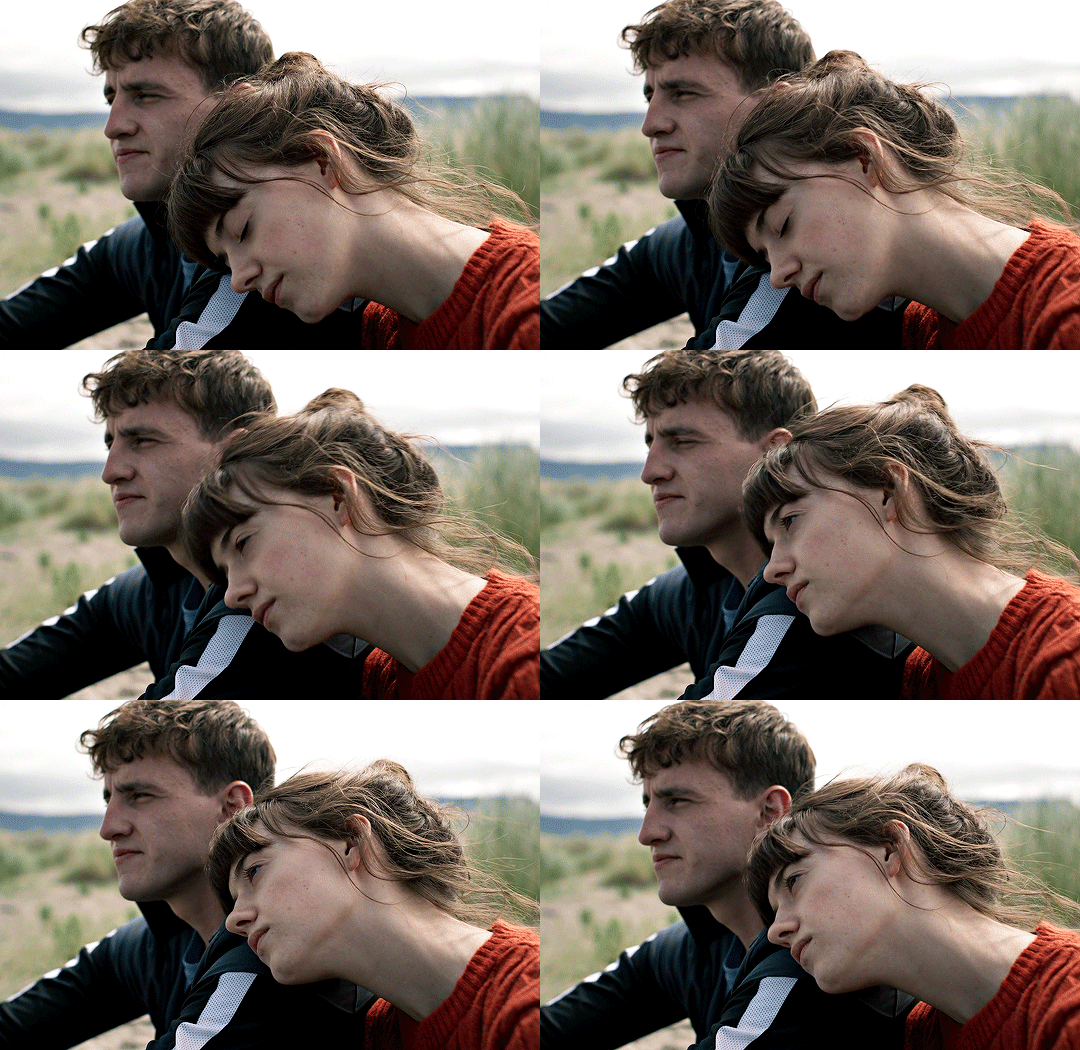
This is one of those exceptionally rare cases where the screen adaptation actually improves on the book. The director, Hetty MacDonald, also directed the single best episode of New Who, Blink. The book is told through Sally Rooney's own intense yet slightly detached voice, all in tight-third present tense. The TV series takes different perspectives, the characters as they see each other and as they might appear to us. It adds depth and richness to how we experience the story.

Of course, it is carried by Paul Mescal and Daisy Edgar-Jones as the protagonists Connell and Marianne. Neither overshadows the other; both have painful journeys to make. At school in Sligo, Connell is the popular one, Marienne is the loner, but they have a secret affair and then both get into Trinity College Dublin where Marianne becomes the popular one and Connell is left struggling. (There is a minority view that his real problem in Dublin is not playing enough GAA.) They observe each other's love lives and then eventually resolve their own relationship. It warmed my heart (though there are some pretty bleak moments along the way).

We get perhaps a little more into Connell's head, but we see Marianne's soul as well. It's a love story, of course, but set in a place and time that I know well enough for it to really grab me. Thanks to gownegirl on tumblr for these GIFs.


“She closes her eyes. He probably won’t come back, she thinks. Or he will, differently. What they have now they can never have back again. But for her the pain of loneliness will be nothing to the pain that she used to feel, of being unworthy. He brought her goodness like a gift and now it belongs to her. Meanwhile his life opens out before him in all directions at once. They’ve done a lot of good for each other. Really, she thinks, really. People can really change one another. You should go, she says. I’ll always be here. You know that.”

NORMAL PEOPLE (2020)

Anyway, another one that was well worth watching, and only twelve 25-minute episodes. What have you got to lose?

Posted in Uncategorised

Thursday reading

Current
The Complete Secret Army: An Unofficial and Unauthorised Guide to the Classic TV Drama Series by Andy Priestner
Our Mutual Friend, by Charles Dickens
The Queen’s Agent: Sir Francis Walsingham and the Rise of Espionage in Elizabethan England, by John Cooper
The Ode Less Travelled: Unlocking the Poet Within, by Stephen Fry
The Wicked + The Divine vol 2: Fandemonium, by Kieron Gillen etc

Last books finished
The Tiger's Wife, by Tea Obreht
Make Room! Make Room!, by Harry Harrison
The Sleeper Awakes, by H.G. Wells
Local Hero, by David Benedictus
The Wicked + The Divine vol 1: The Faust Act, by Kieron Gillen etc

Next books
Modern China: A Very Short Introduction, by Rana Mitter
Yugoslavia's Implosion: The Fatal Attraction of Serbian Nationalism, by Sonja Biserko

Posted in Uncategorised

My tweets

Posted in Uncategorised