
- Mon, 18:24: Dragon’s Claw, by Dave Gibbons, Stebe Parkhouse and Steve Moore https://t.co/SyXTlbbqW2
- Mon, 18:52: Lois McMaster Bujold Named SFWA Damon Knight Grand Master – The Nebula Awards� https://t.co/rFrE6mtIOJ
- Tue, 10:43: RT @CrisisGroup: Not able to attend tomorrow’s event on how European leaders can respond to conflicts in its neighbouring regions? We’ve go…
- Tue, 10:45: RT @sturdyAlex: It’s very interesting indeed. Not only do they all have the same friend. They all have the same person writing their tweets…
Dragon’s Claw, by Dave Gibbons, Steve Parkhouse and Steve Moore
Second frame of third story (“Dreamers of Death”, by Steve Moore and Dave Gibbons):

The second volume of Fourth Doctor strips from Doctor Who Magazine, in between those published in the collections The Iron Legion and The Tides of Time. These are all solid stories, with the two standouts for me being “The Life Bringer” also by Moore and Gibbons, which brings the Doctor into the Prometheus legend, and the grim “End of the Line” by Steve Parkhouse and Dave Gibbons, in which there is no happy ending. I enjoyed them a lot when I first read them almost forty years ago and I enjoyed revisiting them. You can get the collection here.
This was my top unread English-language comic. Next up is another Doctor Who collection, As Time Goes By.
My tweets
- Sun, 14:22: RT @RobinSwannUUP: @nwbrux @geraldinemcg @MLAsAndTheLike @BBCMarkSimpson @markdevenport and instead of barcharts… https://t.co/bTVINBz0QU
- Sun, 14:22: RT @MLAsAndTheLike: @nwbrux @geraldinemcg @BBCMarkSimpson @markdevenport There’s the walk-in music sorted. Maybe term yourselves the VoteB…
- Sun, 14:48: RT @KarlreMarks: How many Lebanese politicians does it take to change a light bulb? They will just extend the old light bulb’s mandate.
- Sun, 15:20: Life in 2020, as portrayed in science fiction https://t.co/vvYiOTmBkq
- Sun, 17:08: RT @gerrylynch: This Strangely Misfiring Tory Campaign Just Makes Me Wonder https://t.co/U0AQChM6hp My latest on @SluggerOToole: the Tories…
- Sun, 17:31: A thread about books, films and TV stories set in the year 2020, but written before 2000. What did previous generat… https://t.co/YoslzS0VOM
- Sun, 20:28: RT @MikNoEorC: @nwbrux The best bit about which was the catchphrase “Expect The Unexpected”, which seems apt.
- Sun, 20:31: RT @Bangordub: Westminster Election 2019 – Change comes dripping slow https://t.co/AjEm66iOja
- Mon, 07:46: BBC News – Finnish minister Sanna Marin, 34, to become world’s youngest PM https://t.co/jVQo2210fS
Life in 2020, as portrayed in science fiction
With a new year coming, it’s a good time to think about how the year 2020 looked from the distant vantage point of science fiction from the nineteenth and twentieth centuries. (I’m therefore not going to mention the 2010 Doctor Who episodes, The Hungry Earth and Cold Blood. Oops, I just did.) So here’s a survey of sf stories set next year, published before the year 2000, inclduing books, films and TV series (but not games, sorry). I have listed them in chronological roder – three from 1890-1907, then a big gap until two in the 1960s, three in the 1970s, nine in the 1980s and ten in the 1990s.
The first three books that I found are all reactions to Edward Bellamy’s classic Looking Backward, 1887-2000, in which his protagonist Julian West awakes after sleeping for 113 years to discover that the USA (and Massachusetts in particular) has now become a socialist utopia. If you haven’t read it, it’s an essential text for political science fiction. (It was one of the first books I reviewed on this blog. You can get it here for free, or here for money.) Since it was set in 2000, it’s fairly natural for writers responding to Bellamy to look two decades further ahead for their setting.

The first of these, published in 1890, is Looking Further Backward: Being a Series of Lectures Delivered to the Freshman Class at Shawmut College by Professor Won Lung Li (Successor of Prof Julian West), Mandarin of the Second Rank of the Golden Dragon and Chief of the Historical Sections of the Colleges in the North-Eastern Division of the Chinese Province of North America: Now, for the First Time, Collected, Edited and Condensed, by Arthur Dudley Vinton. The framing narrative is set in 2023, but looks back to the happy times of 2020 three years earlier, when capitalism was restored to the USA by a Chinese invasion, because socialist America was unable to resist. It’s online here or you can buy it here.

Three years later, in 1893, Josef Ritter von Neupauer published Österreich im Jahre 2020: Sozialpolitischer Roman [Austria in the year 2020: a social-political novel]. Here Julian West from Looking Backward and a friend from another utopian novel of the time visit a future Austria, which has successfully maintained the Hapsburg monarchy and aristocracy and at the same time adopted most of the socialism of Bellamy’s novel. Austria is part of a European Union (that phrase isn’t quite used) which stretches from the Atlantic to the Urals, but does not include England. Unfortunately the novel has not been translated (might be worth someone’s while – it’s fairly short). It’s online here or you can buy it here.

In 1907, the gloriously named Horace Newte published The master beast : being a true account of the ruthless tyranny inflicted on the British people by socialism A. D. 1888-2020, republished in 1919 as The Red Fury: Britain Under Bolshevism. Unlike the other two, Bellamy isn’t mentioned explicitly but it’s clearly a response all the same. Newte’s hero is dismayed to see socialists come to power in Britain at the start of the twentieth century, followed of course by a successful German invasion. He then sleeps from 1911 to 2020, and awakes to find a morally degenerate country where women behave with dreadful freedom. But England is then invaded again, this time by African and Chinese forces, and he escapes to France. It’s online here.

I have not found any examples of stories explicitly set in 2020 from the next half century, including the period generally referred to as the Golden Age, which is a bit surprising. When I did a similar survey for 2015, I found several. Anyway, we now move to the silver screen, though interestingly we stay with communism, to 1962 and one of the greatest Soviet films about space exploration, Planet of Storms (Планета Бурь) in which three intrepid cosmonauts and their robot explore the planet Venus, which is inhabited by prehistoric beasts but whose more humanoid inhabitants elude them. This of course was just after Yuri Gagarin had become the first human in space. A year before Valentina Tereshkova, the cosmonauts have a woman comrade, who is left orbiting the planet while they explore. You can watch the whole thing with English subtitles here:
Roger Corman acquired US rights to the film, and savagely cut it into two more films, dubbing all the Russian actors and adding scenes with Basil Rathbone for the 1965 film Voyage to the Prehistoric Planet, which you can watch here, and then adding more footage from another Russian film and new scenes with bikini-clad actors led by Mamie van Doren for the 1968 film, Voyage to the Planet of Prehistoric Women, which you can watch here. If you really want to.
The first TV science fiction explicitly set in 2020, very much to my surprise, turns out to be Power of the Daleks, Patrick Troughton’s debut in the lead role of Doctor Who, in which the Doctor impersonates an official investigating Dalek infiltration of a human base on the planet Vulcan. The year 2020 is not mentioned at all in the story as broadcast (sadly all video footage has been lost, though you can get an animation and a narrated audio), but the trailer, broadcast on 4 November 1966, makes the date absolutely clear.
Next a couple of novels to which I was alerted by the Science Fiction Encyclopedia (which I’ll quote from). In Wings of the Morning (1971), by Adrienne Anderson, returning to a theme we have already met in this list, the protagonist “awakens in 2020 to find a transformed world”. Exactly how the world has been transformed, I have been unable to discover. If you want to find out and tell me, you can get it here. In Cloning (1972), the author David Shear “complicatedly entwines the presence of androids and cloning in the world of 2020; the protagonist, a molecular biologist who is an unknowing member of a cluster of clones, must cope with profound issues of identity, dramatized through an android campaign for equal rights with humans.” You can get it here. Both were published by Robert Hale Ltd in the UK.


Beck to television, and if you were watching Hanna Barbera cartoons in late 1972, you might have heard this announcement:
This is the year 2020. The place is the Challenger Sea Mount – the top of an underwater mountain, a complex beneath the sea. Two hundred and fifty men, women and children live here, each of them a scientist pioneer. For this is our last frontier – a hostile environment which may hold the key to tomorrow. Each day, these oceanauts meet new challenges as they build their city beneath the sea … This is Sealab 2020.
Sealab 2020 was not a successand was cancelled after 13 of the planned 16 episodes had been shown. But you can find all of them on Youtube. Several of the episodes were later redubbed for the Adult Swim show Sealab 2021.
According to experts on the series, Battle for the Planet of the Apes (1973), the fifth and final film in the original sequence, is set in 2020. However this seems to be extrapolation from other information, not explicitly stated in the film, so I am not sure if it counts.
There is no doubt about the setting of the stories in the 1974 anthology 2020 Vision, edited by Jerry Pournelle. One of them, “A Thing of Beauty” by Norman Spinrad, got a Nebula nomination. The other authors represented were Ben Bova, Larry Niven, Harlan Ellison, Poul Anderson, Dian Girard, David McDaniel and A. E. van Vogt. There’s a Reddit thread about it. Bova, Niven and Spinrad are still with us. I’ve actually ordered this and will report back. You can get it here.

The great Frederik Pohl’s less well-known 1981 novel The Cool War has a mild-mannered clergyman recruited to comic secret service skulduggery between the USA and Europe in a resource-poor future (the Middle EAst’s oil fields have been destroyed by war). A Goodreads reviewer comments, “Computers are rare and a library search engine is treated as a new technological marvel. Everyone still uses typewriters and tapes. The Soviet Union and Yugoslavia still exist. No one has cell phones.” You can get it here.

The Italian-American 1982 film 2020 Texas Gladiators looks like a pretty awful rip-off of the Mad Max subgenre. Only the first part of the film is actually set in 2020 (most of it is five years later). If you can bear it, here’s a trailer. (The full movie can be easily found online.)
We are on much firmer ground with Gerry Anderson’s 1983-1986 series Terrahawks, in which his latest puppeteering techniques were brought to bear on the problem of saving Easrth from the andraids of the planet Guk, invading via Mars in the year 2020. Again, you can get all the episodes on Youtube. Big Finish have recently revived it as an audio series.
We haven’t had any comics yet, but in 1984, the complex Marvel narrative of Iron Man took a trip to the year 2020, in the story Machine Man which also introduced the alternate-history version of the hero, Iron Man 2020, who has returned a couple of times since. You can get it here.

Two more gloomy futures via the Science Fiction Encyclopedia: the Trauma 2020 trilogy (1984-5) by Peter Beere, which “has some efficient moments at the depiction of urban dystopia” (you can get the first volume here, the second volume here and the third volume here). And Goodman 2020 (1986), by Fred Pfeil, set in “the dystopian corporate USA of 2020 CE, where all power has fallen into the hands of priest-like businessmen… The politics of the book may seem naive, but the execution is compelling.” You can get it here.


Now, something which I am really sorry to have missed when it was first broadcast: Knights of God (1987), a British kids sf series which ran for 13 episodes, where Britain in 2020 has been taken over by a theocratic militia and our young resistance hero is aided by his father, played by Gareth “Blake” Thomas, and the mysterious Arthur, played by Patrick “Second Doctor” Troughton (yes, him again). It was filmed in 1985, but by the time it was shown two years later both Troughton and Nigel Stock (who plays one of the baddies) had died. It sounds fantastic. Written by Richard Cooper, who also wrote the 1981 series Codename Icarus which I remember with chills down my spine. All of the episodes are on Youtube; I might watch it when I finish my current Blake’s 7 run. Here’s the first one.
I am less sorry to have missed the 1987 porn film Cabaret Sin, loosely based on Blade Runner. I won’t provide a link but it is easy to find the whole thing online if you want. Also, and I am not making this up, all of the sexy bits were removed from the 85-minute to make a 1988 63-minute release called Droid. Both are set in a dystopian 2020 where sex has become illegal (and yet somehow still happens).


I know DIC Entertainment mainly for Inspector Gadget, The Real Ghostbusters and Sailor Moon. I had forgotten, if I ever knew, that they had a future crime-fighting cartoon series called COPS (which stands for Central Organization of Police Specialists), set in “Empire City” in 2020, which ran to 65 episodes between 1988 and 1989. Here’s the opening sequence.
The weirdest thing on this list is Pamela West‘s 1990 novel, 20/20 Vision, according to the Science Fiction Encyclopedia: “an intricate time-travel tale in which a murder in 1995 is brooded over by a detective in 2020 and solved through the agency of time-travelling archivists from 2040, who send the detective back – via a form of computer-enhanced virtual reality – to explore the causes of the crime”. What the SFE doesn’t say is that the crime in the novel is based on a real-life murder in a university library in 1969; and bizarrely, the local district attorney disappeared in 2005 in circumstances similar to those portrayed in the book, published fifteen years earlier. You can get it here.

Also starting in 1990, but running until 1992, was the TV series Super Force, about an astronaut turned cop in the future city of Metroplex (Wikipedia). Stars Ken Olandt and Patrick Macnee. Guest stars included G. Gordon Liddy of Watergate fame. (That makes three crime-in-2020 shows/novels in a row.) Here’s the opening titles.
The War in 2020 (1991) is by Ralph Peters, who went on to become an analyst on Fox News. Rather weirdly for a book published in 1991, the Soviet Union still exists in 2020 until a Japanese-backed Islamic army invades central Asia, requiring manly pushback by the heroic and enlightened US armed forces. You can get it here if you really want to.

The Ghanaian writer [B.] Kojo Laing is the only African voice on this list. His Major Gentl and the Achimoto Wars is described thus by Mark Bould: “Set in 2020, it tells of the war between Major Gentl and the mercenary Torro the Terrible, with the fate of Achimoto City and perhaps all Africa hanging in the balance. It is dense, fantastical, poetic”. Brenda Cooper however says that Laing “succumbed to the pleasures of the linguistic devices and philosophical riddles and paradoxes to the extent of creating a fiction that is almost unreadable”. Sounds fascinating, actually. You can get it here.

A writer I hadn’t expected to see on this list is Ken Kesey, best known for One Flew Over the Cuckoo’s Nest. According to the publisher’s blurb, his 1992 novel Sailor Song is “set in the near future in the fishing village of Kuinak, Alaska, a remnant outpost of the American frontier not yet completely overcome by environmental havoc and mad-dog development, Sailor Song is a wild, rollicking novel, a dark and cosmic romp. The town and its denizens – colorful refugees from the Lower Forty-Eight and Descendants of Early Aboriginal People- are seduced and besieged by a Hollywood crew, come to film the classic children’s book The Sea Lion. The ensuing turf war escalates into a struggle for the soul of the town as the novel spins and swirls toward a harrowing climax.” You can get it here.

Kim Stanley Robinson’s Mars trilogy is mainly set in the decades and centuries starting in 2026, but the anchor point of the narrative is that John Boone, one of the protagonists, is the first man to walk on Mars in 2020.
Nigel Watts, whose book about writing novels seems to have done better than any of the novels he actually wrote, published Twenty Twenty in 1995. The blurb says: “The year is 2020, and an ageing writer infected with a deadly virus has retreated from the human race to a derelict factory. In the Californian desert, an English woman and an American systems pilot are working on a Virtual Reality programme. Then a connection between the two scenarios emerges.” You can get it here.

The Quint Dalrymple novels by Paul Johnston are set in the 2020s, in an Edinburgh which has become an independent city-state ruled by dubiously enlightened intellectuals. This does sound like an interesting concept, I have to admit. The first of the series, Body Politic (1997) is explicitly set in 2020. You can get it here.

Tracy Hickman, best known as collaborator with Margaret Weis on TSR’s Dragonlance series, published his first solo book The Immortals also in 1997. The blurb says: “The United States in the year 2010 is a country ravaged by V-CIDS, a deadly mutation of the AIDS virus. With proportions reaching epidemic stages, the government has set up isolated intern camps–with shocking intentions!” Kirkus was not impressed, but you can get it here.

Back to comics again with 2020 Visions (the third time we’ve had that title or something like it), a twelve-episode comic by Jamie Delano with art by Warren Pleece, Steve Pugh, Frank Quitely and James Romberger. According to the blurb, it “follows the lives of a disjointed family, struggling to survive in the morally and socially decadent United States of 2020. From symbiotic venereal diseases to exclusive human breeding facilities, the future never looked so bleak, or so hopeful.” You can get the collection here. I’ve ordered this one as well, and will report back.

Finally, the best known book of the lot, Toward the End of Time, by John Updike, published in 1999. It is the only book on this list that I have actually read, and I didn’t like it: “A depressing, miserable piece of whining. Author who hasn’t done much sf writes a post-apocalypse novel where the decline of society mirrors the narrator’s the decline into old age, and thinks it’s something special. Avoid.” If you want to ignore my advice, you can get it here.

My arbitrary cutoff publication date of 2000 means I’ve missed a lot of potentially interesting work – some of which is on this list of SF set in 2020 by Sajal Ghimire. But I think that as 2020 comes closer to the present day, we’re looking less at futurology and more at current affairs (though of course a lot of the novels mentioned above basically are current affairs commentary). Any views on any of these?
My tweets
- Sat, 12:56: RT @erikgahner: Here is why I still trust data from Eurobarometer. I am not saying it’s perfect (no data is), but I would like to see evide…
- Sat, 14:48: Hyderabad encounter: Slippery slope of extrajudicial killings leads to infinite darkness and not justice… https://t.co/nU8ug6q0VD
- Sat, 15:27: My Fair Lady (1964), Pygmalion (1938) and the original script by Bernard Shaw https://t.co/3ny9toVfXJ
- Sat, 20:01: My week on Twitter : 40 Mentions, 122 Likes, 49 Retweets, 5.65M Retweet Reach, 9 Replies. See yours with… https://t.co/lhWntG2ynC
- Sun, 11:59: RT @ProfTimBale: Probably the most profound paragraph about British politics you’ll read throughout this whole sorry election campaign. By…
My Fair Lady (1964), Pygmalion (1938) and the original script by Bernard Shaw
My Fair Lady won the Oscar for Best Picture of 1964, and picked up another seven: Best Director (George Cukor), Best Actor (Rex Harrison as Higgins), Best Cinematography (Harry Stradling), Best Sound, Best Adaptation or Treatment Score (André Previn), Best Art Direction and Best Costume Design (Cecil Beaton). Stanley Holloway and Gladys Cooper were nominated in supporting roles as the protagonists’ parents (Eliza’s father and Higgins’ mother), beaten by Peter Ustinov in Topkapi and Lila Kedrova in Zorba the Greek respectively.

The other Best Picture nominees were Becket and Zorba the Greek, which I have not seen, and Dr. Strangelove and Mary Poppins, which I have. On the two IMDB rankings of 1964 films, My Fair Lady rates 5th on one list and 7th on the other. Dr. Strangelove, Mary Poppins, Goldfinger and A Fistful of Dollars are ranked ahead of it on both lists. 1964 is one of my better years for films: apart from Dr. Strangelove and Mary Poppins, I have also seen Goldfinger, Zulu, A Shot in the Dark, A Hard Day’s Night, Topkapi, Carry On Cleo, and The 7th Dawn (in which my late aunt can be seen dancing at around the 38 minute mark). The Hugo went (as previously discussed) to Dr. Strangelove. Here’s a trailer.
When I was thirteen, I really loved this film. It was a time when our parents’ circle included such linguistic luminaries as Melissa Bowerman (whose daughter I caught up with last month, for the first time in nearly 40 years), Bob Kirsner, Piet Zoetmulder and Mario Alinei, not to mention C.J. Bailey, and I was myself fascinated by how languages evolve and change (a fascination that has not completely left me). And here was a film about my personal obsession, and one with wonderful music and acting as well. I more or less knew it by heart.
And wow, it hasn’t aged well at all. What struck me hard, watching it again for the first time in decades, is just how bad Higgins’ misogynistic treatment of Eliza is – constant negging, undermining and pretty close to gaslighting. And the film is not redeemed by the ending – Higgins shows no sign of remorse or repentance, just continuing desire for Eliza; and yet she comes back to him anyway, after a brief moment of defiance – as an abused partner returns to the devil they think they know. One can only imagine the response she would get if she posted about her situation to r/relationships or Captain Awkward. I’m afraid that despite the spectacular delivery and glorious music, I’m demoting it to three-quarters of the way down my list, below How Green Was My Valley, which also has quaint Brits singing, but gets the gender and class stuff much better, and above Going My Way, whose merits and demerits are both fewer in number.
Before I get into the nitty gritty, I have to be a complete language nerd about one particular line. In the first song, Rex Harrison as Higgins sings, “Norwegians learn Norwegian; the Greeks are taught their Greek.”

I have been wondering a bit about this line. Of course, Lerner and Lowe probably chose Norwegian and Greek as the two examples mainly for rhythm and rhyme. There are not a lot of alternatives. Other languages with more speakers than Norwegian, whose names both describe the people who speak them and are pronounced as amphibrachs include “Bengali”, “Korean”, “Somali”, but I guess that “Norwegian” fits the cultural context of “My Fair Lady” better. (You could also consider “Ukrainian”, “Romanian”, “Hungarian”, “Albanian”, “Bulgarian”, “Armenian” and “Mongolian”, but a lot of people would pronounce them with four syllables, while I think most English speakers would elide the “i” in “Norwegian”.) And the only other language I can think of which would rhyme with “speak” is “Creek“. (One could stretch a point for “Arab-eek” or “Amhar-eek”, or with a bit more geographical outreach “Tajik”, but “Greek” is an understandable choice.)
But the interesting thing about the line “Norwegians learn Norwegian; the Greeks are taught their Greek” is that in 1956, when the musical of My Fair Lady was made, and in 1964, when the film came out, it was not true. At least, not completely. Both Greece (at the time) and Norway are classic examples of countries in a state of diglossia, where there were actually two versions of the official language. Anyone learning Norwegian even today must choose between Bokmål and Nynorsk (Bokmål is a bit like Danish; Nynorsk is a bit like Bokmål). And until 1974, anyone learning modern Greek had to choose between the nineteenth-century Καθαρεύουσα and the (literally) demotic δημοτική (which is now the only standard). It is ironic that the two languages Lerner and Lowe chose for Professor Higgins’ line are the two European languages of which the statement was least accurate at the time they were writing.
I strongly suspect Lerner and Lowe were unaware of this wrinkle. More likely, if there is another reason beyond euphony, they chose Norwegian as a mild homage to Ibsen, whose dramatic influence on Shaw is well attested, and Greek as a reference to the original source of the Pygmalion myth which Shaw drew on for the plot and title of his play.
Moving swiftly on, we have a couple of repeat actors who have been in previous Oscar winners – in fact, the two who got Best Supporting Oscar nominations but did not win were both in Laurence Olivier films. Stanley Holloway was the Gravedigger sixteen years ago in Hamlet. In 1964 he was 73, but really could pass for at least a decade younger.


And Gladys Cooper, aged 76 in 1964, was Beatrice Lacy, the sister of Olivier’s character Maxim de Winter, in Rebecca, twenty-four years ago.


(Here’s a trivia question for your next pub quiz: what do Rex Harrison, the actor Richard Harris, the disgraced Conservative cabinet minister Jonathan Aitken and Aitken’s cousin Peter have in common? The answer is that they all married the same woman, Elizabeth Rees-Williams, who is still with Jonathan.)
Anyway. I was so struck by the misogyny of the film of My Fair Lady that I went back and watched the 1938 Pygmalion, starring Leslie Howard (in Gone With The Wind the following year) and Wendy Hiller, for which George Bernard Shaw won an Oscar for Best Screenplay (making him the first person to win both an Oscar and a Nobel Prize; he has now been joined by Bob Dylan and arguably Al Gore). You can see it in full here. I also consulted the original 1913 theatre script – written 25 years before the 1938 film and 51 years before My Fair Lady hit the screens.
It’s really striking that in the original play, Higgins is clearly directed to be “entirely frank and void of malice that he remains likeable even in his least reasonable moments”, whereas Harrison’s portrayal is not at all likeable at any time; and even more striking that the 1938 version actually tones down Higgins’ chauvinism from the original script, some of the nastier passages about Eliza removed entirely and some of the epithets he uses softened. Both are still pretty bad, but the 1964 film is the worst. The 1938 film, like the musical and the 1964 film, has Eliza returning to Higgins in the end, but given that he has not been as nasty to her it’s a bit more plausible. Shaw, of course, disapproved and wrote a long postscript to the original play, explaining how Eliza successfully manages her relationships with Higgins and Pickering after marrying Freddie.
Part of it also, I think, is the age of the leading men. Rex Harrison was 56 in 1964; Leslie Howard 45 in 1938, and playing young. Harrison’s Higgins is mature and arrogant; Howard’s Higgins discovers that he still has something to learn. (Note also the completely different dynamic for Robert Powell, aged 37, in the BBC’s 1981 adaptation of the original play, which incidentally brings back Mona Washbourne, who plays Mrs Pearce in the 1964 film, for the same role 17 years later.) I have to say also that Audrey Hepburn’s Eliza seems to have much less gumption and depth than Wendy Hiller’s, which contributes to the negative dynamic. Beautiful though Hepburn is, I don’t think she was trying terribly hard here, and I can’t really blame her.


(More trivia for Brussels people – Audrey Hepburn was born at Rue Keyenveld 48, just off Rue du Prince Royal between Louise and Porte de Namur metro stations. It’s a few doors down from Les Brassins which you may have been to. There’s a plaque on the wall.)
One rather sad note – the ambassador hosting the ball (a scene which incidentally was originated by Shaw for the 1938 film) was played by Henry Daniell, who died suddenly the night after his scenes were shot. So we are seeing an actor with literally hours to live.

Also, before I get onto happier topics, I’ll just note that there is not a single non-white face in London in either 1938 or 1964. Tom Jones, set a century and a half earlier, scores better.
OK. To happier things. This film has some wonderful songs, and one or two utterly stunning visuals. My absolute favourite sequence is the Ascot scene, from start to finish, designed by Cecil Beaton, new to the musical and not in either of Shaw’s treatments (which have Eliza’s first faux pas taking place at a tea party chez Mrs Higgins). Here’s the start, mixing 1960s fashions with 1900s reserve:
followed by the actual race:
But it’s a tough call between that and “Wouldn’t It Be Loverly”:
Or indeed the two Stanley Holloway songs, “With A Little Bit of Luck” and “Get me To The Church on Time” (and again, remember, he’s 73):
And the whole thing looks beautiful. So there’s a lot to enjoy, provided you can tune out the message sent about 51% of the human race, and the entrenchment and endorsement of the patriarchy.
You can get the 1964 My Fair Lady here, the 1938 Pygmalion here, and the original script here.
Next up is The Sound of Music. I hope it has aged better.
1920s: Wings (1927-28) | The Broadway Melody (1928-29)
1930s: All Quiet on the Western Front (1929-30) | Cimarron (1930-31) | Grand Hotel (1931-32) | Cavalcade (1932-33) | It Happened One Night (1934) | Mutiny on the Bounty (1935, and books) | The Great Ziegfeld (1936) | The Life of Emile Zola (1937) | You Can’t Take It with You (1938) | Gone with the Wind (1939, and book)
1940s: Rebecca (1940) | How Green Was My Valley (1941) | Mrs. Miniver (1942) | Casablanca (1943) | Going My Way (1944) | The Lost Weekend (1945) | The Best Years of Our Lives (1946) | Gentleman’s Agreement (1947) | Hamlet (1948) | All the King’s Men (1949)
1950s: All About Eve (1950) | An American in Paris (1951) | The Greatest Show on Earth (1952) | From Here to Eternity (1953) | On The Waterfront (1954, and book) | Marty (1955) | Around the World in Eighty Days (1956) | The Bridge on the River Kwai (1957) | Gigi (1958) | Ben-Hur (1959)
1960s: The Apartment (1960) | West Side Story (1961) | Lawrence of Arabia (1962) | Tom Jones (1963) | My Fair Lady (1964) | The Sound of Music (1965) | A Man for All Seasons (1966) | In the Heat of the Night (1967) | Oliver! (1968) | Midnight Cowboy (1969)
1970s: Patton (1970) | The French Connection (1971) | The Godfather (1972) | The Sting (1973) | The Godfather, Part II (1974) | One Flew Over the Cuckoo’s Nest (1975) | Rocky (1976) | Annie Hall (1977) | The Deer Hunter (1978) | Kramer vs. Kramer (1979)
1980s: Ordinary People (1980) | Chariots of Fire (1981) | Gandhi (1982) | Terms of Endearment (1983) | Amadeus (1984) | Out of Africa (1985) | Platoon (1986) | The Last Emperor (1987) | Rain Man (1988) | Driving Miss Daisy (1989)
1990s: Dances With Wolves (1990) | The Silence of the Lambs (1991) | Unforgiven (1992) | Schindler’s List (1993) | Forrest Gump (1994) | Braveheart (1995) | The English Patient (1996) | Titanic (1997) | Shakespeare in Love (1998) | American Beauty (1999)
21st century: Gladiator (2000) | A Beautiful Mind (2001) | Chicago (2002) | The Lord of the Rings: The Return of the King (2003) | Million Dollar Baby (2004, and book) | Crash (2005) | The Departed (2006) | No Country for Old Men (2007) | Slumdog Millionaire (2008) | The Hurt Locker (2009)
My tweets
- Fri, 12:56: Floella Benjamin: ‘They sent the police to arrest us’ https://t.co/cKYg9XY2Df Brilliant interview with the great @floellabenjamin.
- Fri, 14:55: Interesting that Blair won in 2005 despite being 15 points less popular than Michael Howard. https://t.co/BmKZ2qYpZS
- Fri, 15:37: RT @MSmithsonPB: @nwbrux That’s because the chart shows net ratings. Blair had higher positive numbers than Howard
- Fri, 16:05: What rich countries get wrong about the EU budget https://t.co/x8qM5fjt5n Good piece from Romanian MEP @clotilde_armand.
- Fri, 16:08: Grim reading from @pmdfoster on the impact of Boris’s deal on Northern Ireland. Still not as bad as a No Deal Brexi… https://t.co/OZibCCypBY
- Fri, 17:11: Social media networks fail to root out fake accounts: report https://t.co/iNiVIDCsAE Worrying research from NATO.
- Fri, 18:03: March 2004 books https://t.co/0WUG2B6hdC
- Fri, 18:06: RT @theirishworld: Top British diplomat to US Alexandra Hall Hall quits and lashes out at UK politicians’ dishonesty over Brexit – CNN http…
- Fri, 18:55: RT @MichaelAodhan: 1 It’s not Corbyn’s document, it’s a HM Treasury document, you know, part of the Govt 2 It’s not complete nonsense in fa…
- Fri, 20:01: RT @MichaelAodhan: For all you saddos like me who sit up watching/listening to the election results, here is the timings of the results in…
- Fri, 20:02: RT @Richard_Primus: And now, a thread about smart women and misogyny. Whether or not you’re a woman on Twitter, you might know that… (1…
- Fri, 20:48: RT @xtophercook: The whole free ports idea is, incidentally, worth the Treasury spending a lot of capital to kill. They’re both an intensel…
- Fri, 21:47: RT @6Howff: It’s Anglo-Irish treaty day, which means it your annual reminder that the Treaty did not create or finalise partition. Partitio…
- Fri, 21:50: Me: He nearly said “nude nurses.” Wife: You can’t make this enjoyable, stop trying.
- Fri, 22:04: Late one evening in 2007, I was watching the Sarkozy/Royal debate. My son, aged 7, came downstairs and asked what I… https://t.co/wAN4q8HoMP
- Fri, 22:05: RT @alexwilcock: OTD 1989: Doctor Who Survived “Somewhere there’s danger. Somewhere there’s injustice. And somewhere else, the tea is getti…
- Sat, 10:45: Final Justice (Trailer, 1985) https://t.co/s7WXB86yld A somewhat brutal action film, notable for EU watchers becaus… https://t.co/waPn22VvXU
March 2004 books
March 2004 began with a week of travel, to Paris, Washington DC and New York. Riots broke out in Kosovo. We published a report on Serbia. I had to cancel a trip to Oslo (still have never yet been to Norway), but I also visited Budapest, and finished the month with a work conference in Dublin and a day in Belfast, where I met (separately) with Peter Robinson and Denis Donaldson. At home, we parted company with our au pair (a grumpy Belgian). One news item which I knew was important, but had no idea just how important it would be for me, was the announcement of Christopher Eccleston as the new Doctor Who.
Non-fiction 4 (YTD 10)
Eleanor of Aquitaine: Lord and Lady, ed. Bonnie Wheeler and John Carmi Parsons
Chance Witness: An Outsider's Life in Politics, by Matthew Parris
SF 10 (YTD 21)
The Green Gene, by Peter Dickinson
Coalescent, by Stephen Baxter
The Hounds of the Morrigan, by Pat O'Shea
The Sandman Book of Dreams, ed Neil Gaiman and Ed Kramer (and, uncredited, Martin Greenberg)
Kushiel's Avatar, by Jacqueline Carey
The Master, by TH White
5,400 pages (YTD 13,700)
6/14 by women (YTD 12/34); still none by PoC
Some very good books this month, and none that I would particularly disrecommend. I think top non-fiction are Matthew Parris and the Eleanor of Aquitaine book, and top sf are The Master and The Gambler's Fortune, probably in that order.


My tweets
- Thu, 12:56: Walking the wall: my Brexit hike in northern England https://t.co/bae96aIndl The Brexit report from the frontier of the Roman Empire.
- Thu, 16:05: Is Change Afoot in Azerbaijan? https://t.co/wEqWr7CFIn I had missed this interesting piece from @Tom_deWaal in Octo… https://t.co/YBlPFOBy5u
- Thu, 17:11: Income inequality map shows where Americans have most upward mobility https://t.co/gCC6PcmIi4 Very interesting. Wou… https://t.co/TzuBlvcny3
- Thu, 18:35: The Invisible Man, by H.G. Wells https://t.co/U73GCK4mCz
- Thu, 20:42: RT @BBCPolitics: “It is not too late. We have an interview prepared. Oven-ready, as Mr Johnson likes to say” Andrew Neil issues a challeng…
- Thu, 20:48: Recalling the Raincoats and Grease – and the very different effects they had on my teenage self… https://t.co/eVxrq0borH
- Fri, 10:45: Friends reunited: Clive James and the New Statesman https://t.co/6X8EcSnArM A moving note about the poetry of Clive James’ final years.
The Invisible Man, by H.G. Wells
Second paragraph of third chapter:
And he came down the steps towards the tail of the cart as if to lay hands on the smaller crate.
Back when I reread The Time Machine a few months ago, I spotted a complete set of Wells' novels on Kindle for some ridiculously cheap price,and nabbed it, with the result that I now have a lot of Wells novels on my (virtual) unread shelf. I was surprised to realise that I had not previously read this one. It's the classic treatment of invisibility – see also Tolkien, a spinoff film, the Double Deckers and the erotic comics artist Milo ManaraThe Ogre Downstairs:
“Listen, Caspar,” said the Ogre, “this is very kind of you, but I don’t like what you’ve told me about the effects of invisibility at all. It sounds as if Johnny has become all thoughts, and nothing else. And they were angry thoughts to begin with. I think he might harm himself even more than he can harm me. And another thing – I’m pretty sure he’s been invisible now for nearly twenty-four hours, and if we leave him much longer he may be warped for life. Now do you see?”
This is Wells' third sf novel, after The Time Machine and The Island of Dr Moreau, but just before The War of the Worlds. It takes a core proposition, invisbility, and transsforms it from a technical question to a moral and ethical conundrum. The first few chapters are a bit silly, relying on the consternation of the rural folk who don't know what they are dealing with (because they haven't seen the title of the book they are in), but it picks up quickly, and once we get into Griffin explaining his own means and motivation to his old friend Kemp, we are in very interesting territory; having removed all visibile links to society, only taking what he wants, Griffin feels both divided from and superior to humanity. There is a sense, as with Johnny in The Ogre Downstairs, that Griffin is becoming only the sum of his own negative thoughts (the Ogre has presumably read Wells); the difference is that Griffin was clearly an asshole in the first place, behaving entirely out of selfish motives and succumbing, in the end fatally, to delusions of grandeur. Once we get over laughing at the villagers, there's a great sense of pace and tension, and a very satisfactory climax (though in the end we are still meant to laugh at Marvel, Griffin's accomplice). So I'm happy to continue working through the Wells I haven't previously read. You can get this one here.
This was my top unread book acquired this year, and my top unread sf book. Next on both of those piles is Seraphina, by Rachel Hartman, which I'm really looking forward to.
My tweets
- Wed, 12:56: RT @ottocrat: Here’s a thread on the #NHS and why we should aspire to more than a simplistic binary choice between what we have now and an…
- Wed, 16:05: India’s rape crisis won’t be solved by hangman’s noose https://t.co/XMu8NiPvAH Interesting piece by @praveenswami,… https://t.co/uQDm8ipCzL
- Wed, 17:11: The UK election from hell https://t.co/PZ0MAVNRRm @paulayataylor is in despair.
- Wed, 18:45: Two Brothers, by Ben Elton; My Century, by G�nter Grass https://t.co/OeTn2U9HvH
- Wed, 20:48: Trump Is Waging War on America’s Diplomats https://t.co/xr7ZhcdRji Jaw-dropping story. 52% of US ambassadors are no… https://t.co/py3Zm9EdDL
- Thu, 09:15: RT @jonathancoe: I remember having a prolonged argument about this with my grandfather one Christmas Day in the 1970s. Far more amazing t…
- Thu, 10:45: RT @valentinelow: OK, here goes… Princess Anne: the truth. No, she didn’t snub the Trumps. And she wasn’t told off by the Queen. 1/5
Two Brothers, by Ben Elton; My Century, by Günter Grass
Second paragraph of third chapter of Two Brothers:
‘I’m sorry, Frau Stengel,’ the doctor said. ‘The second child is stillborn.’
Second paragraph of third chapter of My Century / Mein Jahrhundert (the chapter set in 1902):
Damals war vieles neu. Zum Beispiel brachte die Reichspost reichseinheitliche Briefmarken in Umlauf, drauf die Germania metallbusig im Profil. Und weil allerorts Fortschritt verkündet wurde, zeigten sich viele Strohhutträger neugierig auf die kommende Zeit. Meiner hat manches erlebt. Ich schob ihn in den Nacken, als ich den ersten Zeppelin bestaunte. Im Cafe Niederegger legte ich ihn zu den druckfrischen und den Bürgersinn heftig aufreizenden »Buddenbrooks«. Dann führte ich ihn als Student durch Hagenbecks Tierpark, der jüngst eröffnet worden war, und sah, so uniform behütet, Affen und Kamele im Freigehege, wie mich hochmütig Kamele und Affen begehrlich mit Strohhut sahen. There was much new at the time. The Imperial Post Office, for instance, had just issued uniform stamps for the entire Reich featuring a metal-bosomed Germania in profile. And since progress was the keynote of the day, many straw hatters were curious about the times to come. My hat had all kinds of adventures. I shoved it back on my neck while admiring the first Zeppelin. I laid it next to the newly published scourge of bourgeois sensibility, Buddenbrooks, while sipping coffee at the Café Niederegger. Then, during my first year at the university, I wore it through Hagenbeck’s Zoological Garden, which had just begun operation, and, thus protected, I observed apes and camels in the open while they covetously observed me and my hat.
One of those nice quirks in my reading lists threw me an interesting pair of novels, both looking at Germany in the twentieth century from different angles which still end up in much the same place.
I know Ben Elton mainly as a left-wing comedian from the 80s and 90s, though I did read his second novel Stark (and wasn’t hugely impressed). I had not realised that his uncle was the historian Geoffrey Elton, or that the Elton family, originally Ehrenberg, had fled Nazi Germany to England. In Two Brothers, Elton takes a family situation very loosely based on that of his own father and uncle, and takes us through the brief but horrible history of Nazi Germany, looked at from the point of view of two brothers who it turns out are not biological twins after all, one of them being a non-Jewish kid adopted at birth by a Jewish couple. There is a framing narrative in the 1950s where one of the brothers, having escaped to England and joined the Foreign Office, goes back to East Berlin in search of the girl they both loved. But the core is the story of what life was like for those who were not as fortunate as Elton’s own family. it’s written from the heart, though I think also with an eye to educating Elton’s core audience (young Anglophones) about how a normal society can swiftly degenerate to horror.
I was a bit annoyed by a couple of Elton’s presentational quirks. There is a comedy MI6 sequence in the 1950s, which takes away from the seriousness of the theme. And the teenage German protagonists refer to each other by very British nicknames, which I suppose could be allowed as a translation convention, but it grated for me. Still, I give the book a lot of credit for effort and good intentions. You can get it here.
I had read both The Tin Drum and the autobiographical Peeling The Onion previously; My Century is different from both in that it is straight non-genre narrative, but telling short snapshots from every year from 1900 to 2000, mostly (though not all) with different protagonists. There are some odd choices – the second war is told in flashback by journalists reminising in the 1960s; the Holocaust is barely mentioned during the war but intrudes on a Frankfurt wedding in 1964; reunification is recounted as experienced through election results. I think the reader is expected to be familiar with a lot of details of twentieth-century German history that a lot of people may not know so well.
But at the same time, if (against the author’s expressed preference) you take the book as a sequence of 100 short stories with some internal links, rather than as a single novel, I think it works very well, with a lot of voices from various levels of society reminding us that a nation is made up of people,and so is its history. Some of the more memorable narrators are women – the actress early on, the Berlin survivor of 1946, the post-reunification Treuhand boss. It’s not at the level of the other books by Grass that I have read, but I found it thought-provoking all the same. You can get it here.
Two Brothers was my top unread book acquired in 2014; next on that pile is The Arc of the Dream, by A.A. Attanasio. I mistakenly thought that My Century was non-fiction, and it came to the top of that pile; next there is Red Notice, by Bill Browder.
My tweets
- Tue, 12:56: RT @moylato: For the record, Santa is GDPR compliant: no history of data breaches acquires consent through letters list is essential…
- Tue, 13:18: Good question, interesting thread attacking deregulation from the Right. https://t.co/fnrBkZQS3C
- Tue, 14:13: RT @KeohaneDan: Of all the European countries that “need NATO more” today, France is probably bottom of that list. https://t.co/GA9UUo8G8z
- Tue, 16:05: How odd. That twitter account “reporting” on corruption hasn’t tweeted in six months. And the associated website ha… https://t.co/bH9t01yw5d
- Tue, 17:11: RT @aigroe: @LaraAdamsMille1 It pisses me off that I have been, without my consent, used to advocate for an ideology I find absolutely abho…
- Tue, 18:48: Tuesday reading https://t.co/3GBpkT6T4e
- Tue, 20:02: RT @IanDunt: What bleak hell is this. https://t.co/BEuyLqgXyo
- Tue, 20:48: How I Defeated the Tolkien Estate https://t.co/9nuCvXJuAF This would have got one of my 2015 Hugo nomination votes,… https://t.co/FXoES1H6nf
- Wed, 08:34: RT @Jack_Blanchard_: Nothing to see here … Just a group of world leaders caught on hot mic having a laugh about the U.S. president behind…
- Wed, 09:30: RT @APCOBXLInsider: Intense week of events as the year nears end at our @apcoworldwide‘s Brussels office. Fascinating talk with former Finn…
- Wed, 10:24: RT @ladyhaja: The Queen chastising Princess Anne for not greeting Trump and Anne not giving a single shit is the mood we all need to take i…
- Wed, 10:45: Nationalism, Brexit and the price of a Labour deal… Sturgeon sets out stall https://t.co/C67DdYLWnX “with Brexit, w… https://t.co/5wWVByxYup
Tuesday reading
Current
The Three Musketeers, by Alexandre Dumas
Girl, Woman, Other, by Bernardine Evaristo
Hild, by Nicola Griffith
Last books finished
Dragon’s Claw, by Steve Moore
My Century, by Günther Grass
Survivants: Anomalies Quantiques, vol 1, by Leo
Children of Time, by Adrian Tchaikowsky
Survivants: Anomalies Quantiques, vol 2, by Leo
Pygmalion, by George Bernard Shaw
Revelation of the Daleks, by Eric Saward
Next books
Western Sahara: War, Nationalism and Conflict Irresolution, by Stephen Zunes
She Was Good-She Was Funny, by David Marusek
My tweets
- Mon, 12:56: Thread. https://t.co/78cH83dITy
- Mon, 16:05: Lisa Page Speaks: ‘There’s No Fathomable Way I Have Committed Any Crime at All’ https://t.co/sutQsHztYK A chilling… https://t.co/p1YwvbbpH4
- Mon, 17:11: RT @miss_s_b: Rare Not The Asshole https://t.co/LlDTXzdwyb
- Mon, 18:32: Halo: The Thursday War, by Karen Traviss https://t.co/LQg6TGgA9e
- Mon, 18:45: RT @DavidMuttering: Suggestion for @BarristerSecret: Can you next blogpost please start: “Dear EU, Please may I revoke that Article 50 thi…
- Mon, 20:48: RT @cstross: I remember when Dilbert seemed edgy AND funny, back around 1993. (When executives came to visit the regional software developm…
- Tue, 08:36: RT @Veronique8802: 26 yrs ago Florence was born with #DownSyndrome, with early intervention & support she has thrived & made a +ve impact o…
- Tue, 10:45: The Real-World Locations of 14 Sci-Fi Dystopias https://t.co/2ii7szpvbY On the map.
Halo: The Thursday War, by Karen Traviss
Second paragraph of third chapter:
The youth stumbled a few paces as he walked backward, still trying to slow her down. He should have known better. She was the wife of a clan elder, and in his absence—temporary absence—she wielded his authority outside the keep.
I picked this up at Novacon in 2013, I think as a freebie. It’s the second volume in a series of novels based on a game I haven’t played, and while I admired the author’s efforts to make a human/alien dynamic that worked, most of it sailed over my head. You can get it here.
Next book on the 2013 pile is another freebie I picked up at the same time, Prophet of Bones by Ted Kosmatka.
Dr. Strangelove, and the books
As well as going through the films that have won the Oscar for Best Picture, I'm planning to also watch the Hugo-winning films for years where there was one to compare and contrast. After a gap of a few years since The Incredible Shrinking Man in 1958 (No Award won in 1959 and 1964, and the TV series The Twilight Zone in the three intervening years) that brings me to the 1965 Hugo, for a 1964 film, specifically Dr. Strangelove or: How I Learned to Stop Worrying and Love the Bomb. (The 1966 Worldcon did not award a Hugo in this category, and the next two years' Hugos went to Star Trek episodes, so the next in this sequence will be 2001: A Space Odyssey which won the 1969 Hugo for a 1968 film.)

This is a year when the Hugo voters rather than the Oscar voters have been vindicated by history; Dr. Strangelove is rated top film of 1964 on one of the IMDB rankings, and third on the other, behind Mary Poppins and (oddly) The Gorgon, with the actual Oscar winner, My Fair Lady, well behind. Mary Poppins is of course also genre, as is arguably A Hard Day's Night, but I can see why Hugo voters chose as they did; the only other recorded nominee is 7 Faces of Dr. Lao. Here's a trailer.
A few familiar faces here. The Russian ambassador, de Sadesky, is played by Peter Bull, who is fresh from playing Thwackum in Tom Jones.


Shane Rimmer, better known of course as the voice of Scott Tracy on Thunderbirds, is Captain 'Ace' Owens here. But he was also Seth Harper in the Doctor Who story The Gunfighters in 1966.


And Glenn Beck (not that Glenn Beck) is the navigator Lieutenant Kivel here, and appeared in another 1966 Doctor Who story, The Tenth Planet, as a TV announcer.


The plane is being flown by Scott Tracy and Darth Vader, Lieutenant Luther Zogg being an early film appearance by James Earl Jones, in restrospect the biggest star to appear in the film (I think unarguably a bigger star than Peter Sellers, taking his entire career into account).

But of course the performer that everyone remembers from Dr. Strangelove is Peter Sellers. I watched the film with F, who did not spot until I pointed out to him that the title character, the British officer and the US President were all payed by the same actor. (Stanley Kubrick is said to have complained that he got three performances out of Sellers for the price of six.)


I would have said it should lose marks for having only one woman in the entire film (Tracy Reed as Miss Scott/Miss Foreign Affairs), but I suspect that's part of the point Kubrick is making.


I had seen it before, but I must say I really enjoyed the return visit (and sharing it with F). The black humour is spot on. It's probably a bit unfair to Wernher von Braun, who is the obvious target of Dr. Strangelove, and possibly a bit unfair in its characterising of the American military ethos and culture, but the wider point of the horrific danger of nuclear war is well made, even though the precise mechanism of global destruction is fictitious. It's not very far in time or concept from here to the famous "Daisy" advertisement which helped LBJ consolidate his victory over Barry Goldwater in 1964. It's only 60 seconds long – watch it, if you haven't seen it.
I found both the book the film was based on, and the novelisation of the film, quick reads. Second paragraph of Red Alert, as by Peter Bryant:
Clint Brown held the plane in a steady port orbit. As soon as Mellows had passed the word to hold at X point he had taken over manual control of Alabama Angel. There was no particular need for him to have done it. The autopilot could hold height, speed, and rate of turn, just as well as he could. Better in fact, he thought wryly, as he noticed he had lost a hundred or so feet since he took over. He made the small correction required, and wondered just why he had taken over. He thought it was almost certainly because, if the word came, he have the bomber under his control as well as his command. It occurred to him he had never felt that way before when the order had come to hold. He concentrated grimly on his instruments, waiting like the rest of the crew. But with a chill presentiment that he already knew what the message would be.
Second paragraph of Dr Strangelove: or How I Learned to Stop Worrying and Love the Bomb, as by Peter George (same writer as Peter Bryant):
Lieutenant Goldberg’s attention was suddenly and unpleasantly disturbed by a clicking from the CRM-114. He watched with vague interest while letters and numerals clicked into place on the dials, reached for his code book, and began decoding. When he had finished, he frowned in puzzlement, tapped the defence-systems officer, Lieutenant Dietrich, lightly on the shoulder to draw his attention, and showed him the message pad.
Neither of the books is very funny. With Red Alert that is entirely intentional; it is written as an Awful Warning, and even so a couple of the better lines survived to the film in improved form.
| Red Alert | Dr. Strangelove (script) |
| [Brigadier General Quinten]: “Paul, you can think what you like of me, and so can the rest of the world. I know that what I’ve done is right. Do you remember what Clemenceau once said about war?” “No, I don’t.” Howard’s voice was almost normal again. “He said war was too important a matter to be left to generals. At the moment he said it, he was probably right. But now it’s swung the other way. When a war can be won and lost an hour after it starts, then war is too important to be left to politicians. The Russians know it. And they also know we don’t work things that way. That’s why, in a couple of hours from now, they’ll have lost. There’ll be no more threats from them. In a few hours the whole shape of the world will be changed. Remember what they did to Hungary back in ’56? They won’t be able to do that again, not ever.” |
General Jack D. Ripper: Mandrake, do you recall what Clemenceau once said about war? Group Capt. Lionel Mandrake: No, I don't think I do, sir, no. General Jack D. Ripper: He said war was too important to be left to the generals. When he said that, 50 years ago, he might have been right. But today, war is too important to be left to politicians. They have neither the time, the training, nor the inclination for strategic thought. I can no longer sit back and allow Communist infiltration, Communist indoctrination, Communist subversion and the international Communist conspiracy to sap and impurify all of our precious bodily fluids. |
| [Brigadier General Quinten, again]: “Men, I want to impress on you the need for watchfulness. The enemy will try any tricks to fool you into letting him on the base. He may come individually, or he may come in strength. He may well come in the uniform of our own combat troops. But however he comes, we have to stop him. “I’m going to give you three simple rules. The first is to trust no one, whatever his uniform, whatever his rank, who is not known to you personally. The second is anyone or anything that approaches within two hundred yards of the perimeter is fired on. And the third—if in doubt, fire anyway. I would sooner accept a few casualties through accident than lose a whole base and its personnel through over-caution. “That’s about all I have to say except for two small points. Any variation on the rules I have given you must come from me. Personally. I want that clearly understood. There are no exceptions to it, whatever the circumstances. And last of all, I know you are all worried about your families both on the base here and all over our country. Well, let’s make sure we defend the families here on the base. Because you can depend on it that other Americans are defending your families elsewhere with the same unyielding spirit we’re going to show here at Sonora. Good luck to you all.” |
General Jack D. Ripper: Your Commie has no regard for human life, not even his own. And for this reason, men, I want to impress upon you the need for extreme watchfulness. The enemy may come individually, or he may come in strength. He may even come in the uniform of our own troops. But however he comes, we must stop him. We must not allow him to gain entrance to this base. Now, I'm going to give you THREE SIMPLE rules: First, trust NO one, whatever his uniform or rank, unless he is known to you personally; Second, anyone or anything that approaches within 200 yards of the perimeter is to be FIRED UPON; Third, if in doubt, shoot first then ask questions afterward. I would sooner accept a few casualties through accidents rather losing the entire base and its personnel through carelessness. Any variation of these rules must come from me personally. Any variation on these rules must come from me personally. Now, men, in conclusion, I would like to say that, in the two years it has been my privilege to be your commanding officer, I have always expected the best from you, and you have never given me anything less than that. Today, the nation is counting on us. We're not going to let them down. Good luck to you all. |
By contrast, the book-of-the-film leaves out a lot of the good lines and really brings home just how much the film owes to Kubrick's directorial genius. You can get Red Alert here, and the book-of-the-film here (thanks to Candy Jar Books).
November 2019 books
Fiction (non-sf): 10 (YTD 41)
(counting the two Dr Strangelove books in this category, even though the punchline depends on a fictional technology)
Normal People, by Sally Rooney
The Camelot Club, by Brian Killick
The Bluest Eye, by Toni Morrison
Tom Jones, by Henry Fielding
A Close Run Thing, by Allan Mallinson
Red Alert, by Peter George
Dr Strangelove: or How I Learned to Stop Worrying and Love the Bomb, by Peter George
Two Brothers, by Ben Elton
One of the 28th: A Tale of Waterloo, by G. A. Henty
My Century, by Günther Grass


Plays 1 (YTD 2)
Pygmalion, by George Bernard Shaw

sf (non-Who): 6 (YTD 73)
The Calcutta Chromosome, by Amitav Ghosh
"Catch That Zeppelin!", by Fritz Leiber
In Black and White, and Other Stories, by Jan Mark
Halo: The Thursday War, by Karen Traviss
The Invisible Man, by H.G. Wells
Children of Time, by Adrian Tchaikowsky

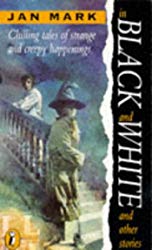


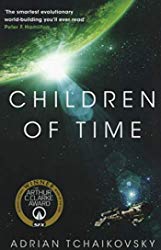
Comics 4 (YTD 31)
The Highgate Horror, by Mark Wright, David A. Roach, Mike Collins, Jacqueline Rayner and Martin Geraghty
Dragon’s Claw, by Steve Moore
Survivants: Anomalies Quantiques, vol 1, by Leo
Survivants: Anomalies Quantiques, vol 2, by Leo


5,600 pages (YTD 60,000)
5/21 (YTD 84/218) by non-male writers (Rooney, Morrison, Mark, Traviss, Rayner)
2/21 (YTD 31/218) by PoC (Morrison, Ghosh)
2/21 (YTD 29/218) rereads (Tom Jones, "Catch That Zeppelin!")
Reading now
The Three Musketeers, by Alexander Dumas
Girl, Woman, Other, by Bernardine Evaristo
Hild, by Nicola Griffith
Coming soon (perhaps)
Western Sahara: War, Nationalism and Conflict Irresolution, by Stephen Zunes
She Was Good-She Was Funny, by David Marusek
Being Human: Bad Blood, by James Goss
Dragonworld, by Byron Preiss
The Cage: The fight for Sri Lanka & the Last Days of the Tamil Tigers, by Gordon Weiss
Seraphina, by Rachel Hartman
Excession, by Iain M. Banks
Oathbringer, by Brandon Sanderson
"Home is the Hangman" by Roger Zelazny
Babayaga, by Toby Barlow
Prophet of Bones, by Ted Kosmatka
Arc of the Dream, by A. A. Attanasio
As Time Goes By, by Joshua Hale Fialkov
Red Notice: A True Story of High Finance, Murder, and One Man's Fight for Justice, by Bill Browder
Auguria, Tome 1: Ecce signum, by Peter Nuyten
The Last Days of New Paris, by China Mieville
A Prayer for Owen Meany, by John Irving
The Widows of Malabar Hill, by Sujata Massey
Unsheltered, by Barbara Kingsolver
My tweets
- Fri, 12:18: The UK’s media failure, by @stephenkb. https://t.co/qQ7toCct6s
- Fri, 12:56: How Belgium Became Europe’s Den of Spies and a Gateway for China https://t.co/QtzGUXY3H4 @PeterMartin_PCM reports.
- Fri, 13:10: RT @FT: Prince Andrew, and some right royal corporate hypocrisy https://t.co/y7NLBntFIY
- Fri, 15:42: RT @pipmadeley: Anyone else remember the time Kate Bush unexpectedly turned up in #DoctorWho? https://t.co/8sdb6j6Xu7
- Fri, 18:19: February 2004 books https://t.co/hmpioYFzAv
- Fri, 20:48: RT @mariafarrell: The people in this photo . . . Peak Gilead. And with a side-order of stealing brown people’s babies. Absolute horrorshow.…
- Fri, 21:15: RT @MalmstromEU: Delighted to spend my last days as commissioner in Barcelona. Now on my way home towards a new life.
- Sat, 08:11: RT @alexstubb: Good morning. Just slept well. Perhaps partially because I finished listening to @sleepdiplomat ”Why We Sleep”. Always worth…
- Sat, 09:03: RT @dotski_w: Even for Marina Hyde, this is outstanding. https://t.co/qMs2n0NVSn
- Sat, 10:45: Elizabeth I’s Translation of Tacitus: Lambeth Palace Library, MS 683 https://t.co/h0faxhV66k Exciting!
February 2004 books
The big work news of February 2004 was the tragic death in a plane crash of Boris Trajkovski, the genial President of Macedonia who was very friendly with me and many others. This was the day after we published a report on pan-Albanianism (concluding that there was not much there there). I also went to London to shadow my boss at a Chatham House meeting where the other speaker was the late great Albert Rohan.
The books I read in February 2004 were:
Non-fiction 3 (YTD 6)
How to Write Science Fiction & Fantasy, by Orson Scott Card
The Daily Telegraph Book of Military Obituaries, ed. David Twiston Davies
The Cambridge Companion to Science Fiction, ed. Edward James and Farah Mendlesohn
Non-genre fiction 3 (YTD 3)
The Woman Who Gave Birth To Rabbits, by Emma Donoghue (collection, including one story which has fantasy elements)
Memories of the Irish Israeli War, by Phil O'Brien
Molvania: A Land Untouched by Modern Dentistry, by Santo Cilauro, Tom Gleisner and Rob Sitch
SF 6 (YTD 11)
Pattern Recognition, by William Gibson
Ilium, by Dan Simmons
Worlds That Weren't, by Harry Turtledove, S.M. Stirling, Mary Gentle, and Walter Jon Williams
The House on the Borderland and Other Stories, by William Hope Hodgson (could not finish The Night Land)
The Meeting of the Waters, by Caiseal Mór
Paths to Otherwhere, by James Patrick Hogan
4,400 pages (YTD 8,300)
3/21 by women (YTD 6/21); none by PoC
Links above to my reviews, links below to Amazon.
The best of these was probably The Cambridge Companion to Science Fiction, which won the Hugo the following year; you can get it here. Molvania has some good lines; you can get it here. The one to skip: The Meeting of the Waters.


My tweets
- Thu, 12:40: RT @MichaelAodhan: Turns out Matt isn’t too hot on history either. Nancy Astor was not in fact the first female MP elected….. And the fir…
- Thu, 12:56: What happens if a prime minister loses their seat in a general election? https://t.co/wRB45so8NS Nobody knows, but… https://t.co/VmX87vTfOg
- Thu, 16:05: My Grandmother Was A Radium Girl – Her Life Was Anything But Normal Afterwards https://t.co/RumsKUDhOZ A lovely and moving piece.
- Thu, 17:11: It Came From The Search Terms: Cold November Wind | Captain Awkward https://t.co/sUOlylfM0A Great as ever from @CAwkward.
- Thu, 18:45: Two Waterloo novels: One of the 28th, by G.A. Henty; A Close Run Thing, by Allan Mallinson https://t.co/pzWG1c8AXw
- Thu, 20:48: RT @joncstone: this reminds me that Boris Johnson wrote a novel in which an undercover Guardian journalist called “Lucy Goodbody” seduces a…
- Thu, 20:48: RT @ClaireRousseau: I just. HE SENT HIS DAD. What the actual fuck? He is a grown ass adult who sent his Dad to do a work thing he didn’t wa…
- Fri, 07:22: RT @CraigWinneker: This is top-notch. Chapeau @JunckerEU POLITICO Brussels Playbook: Europeans ❤️ our money — My moment of weakness — Lis…
- Fri, 08:03: RT @xtophercook: Broadcasters are under no obligation to outsource ed control to the parties, even during an election. Ch4/ITN invited a po…
Two Waterloo novels: One of the 28th, by G.A. Henty; A Close Run Thing, by Allan Mallinson
Second paragraph of first chapter of One of the 28th:
"Yes, it's just right; neither too light nor too heavy. It's rather thick, and I shouldn't be surprised if we get it thicker; but that again don't matter." For in those days not one ship ploughed the waters of our coast for every fifty that now make their way along it. There were no steamers, and the fear of collision was not ever in the minds of those at sea.
Second paragraph of first chapter of A Close Run Thing:
Hervey’s rose did not remain in his shako beyond the convent’s courtyard, for as his troop formed threes and wheeled into column he saw Sister Maria at an open window near the arched entrance. Breaking ranks and trotting over, he stood at full stretch in the stirrups and presented her with the deep-red bloom whose petals were no longer primly clasped. And she in turn presented him with a smile equally open, and a sign of benediction.
Back in 2015, I reviewed several books featuring the Battle of Waterloo, but didn't get around to either of these, which then bubbled to the top of two of my piles simultaneously this month. They are very different. One of the 28th is a classic boys' adventure published by the prolific G.A. Henty in 1890; the copy I have was a Christmas present to my great-uncle Maurice in 1902 (he would have been thirteen, and grew up to survive getting gassed in the first world war, living until 1956). It comes with some glorious illustrations by William Heysham Overend, which I make no apology for including here. In each case, click to embiggen – particularly recommend the third and fourth, "Mabel is Seized with a Fit of Shyness" and "Ralph has an Undesirable Partner".
 |
 |
| The Privateer Captain Hails the Boat (frontispiece) |
The Boat Went Down from under his Feet |
 |
 |
| Mabel is Seized with a Fit of Shyness | Ralph has an Undesirable Partner |
 |
 |
| On the Track of the Red Captain | Mrs. Conway Discovers the Will |
 |
 |
| A Target for the Enemy | At the Moment of Victory |
One of the 28th is a standalone novel, whereas A Close Run Thing, published in in 1999, is the first in a series of thirteen (so far) chronicling the adventures of Matthew Hervey, the latest of which came out last year. I would be astonished if Mallinson had not read Henty before starting to write. There are some clear similarities between the books – both the protagonists are from middle-class family backgrounds (Hervey's father is a vicar, so is Ralph's prospective father-in-law), struggling to rise in the officer caste of the army; both protagonists fall in love and get married at the end of the book (sorry for spoilers); both novels feature questions of inheritance; and in both, the protagonist and his comrades are sent to Ireland – indeed, both to Cork – to keep order during the interval between Napoleon's exile to Elba and the Hundred Days.
But the take of the two books on Ireland is very different. By superior intellect and judgement, Ralph Conway of the 28th manages to capture a Galway ruffian and liberate the locals from the tyranny of untaxed liquor distillation, er, well. Hervey on the other hand gets into trouble for defending the local peasants against eviction, having got himself sensitised to the Irish situation by reading Maria Edgeworth. I don't find either scenario particularly believable, but I do find it interesting that both authors felt they needed to invoke Ireland in some detail to set the scene for the later phases.
One of the 28th also has a glorious parallel plot where Ralph's mother's ex-boyfriend has died, leaving his estate to Ralph and to the local vicar's daughter, but his evil sisters have managed to prevent the will from being found and continue in possession of his property – until Ralph's mother disguises herself as a senior housemaid and successfully locates the missing document. (See picture above.) This is after Ralph has spent the first few chapters a prisoner of the French in the West Indies. It's all quite implausible, but entertaining.
A Close Run Thing is more consciously a Bildungsroman (in fairness, Henty's characters are so two-dimensional that it is unfair to expect character development from them). Hervey is constantly getting into trouble, mainly for doing the right thing and therefore annoying the wrong superior officers, and a lot of the book involves those disentanglements as well as developing his relationship with his girlfriend. (There's also a surprising amount of theology.) Mallinson here is following in the footsteps of Cornwell/Sharpe and O'Brien/Maturin.
When it comes to the actual Battle of Waterloo, both have pretty detailed accounts of the fighting, drawn from the usual sources. Mallinson goes into it in more depth, but wears it a bit better because he has been giving us military detail all through the book (especially about horses). He also puts Hervey, who conveniently speaks German, into a crucial role in liaison between the Prussians and Wellington. Henty's detailed account of the battle is a jarring deviation from the tight-third of most of the book, especially since Ralph himself is more at the worm's eye than bird's eye point of view, rather like Stendhal's protagonist in The Charterhouse of Parma.
However Henty redeems himself a bit by having Ralph's arm shot off during the battle. Hervey gets through unscathed, though dearly beloved comrades are killed in front of him.
I think Vanity Fair remains my favourite Waterloo novel, but these two both round out the literary reception of the battle a bit, from opposite ends of the twentieth century. You can get One of the 28th here (without Overend's illustations, I fear), and A Close Run Thing here.
One of the 28th was my top unread book acquired in 2012, and the non-genre fiction book that had lingered longest on my shelves. Next on those piles respectively are The Cage: The fight for Sri Lanka & the Last Days of the Tamil Tigers, by Gordon Weiss, (if I can find it), and The Ghost of Lily Painter by Caitlin Davies (which will wait until I have finished all unread books acquired in 2012). A Close Run Thing was my top unread book acquired in 2015, and next on that pile is Babayaga, by Toby Barlow.
My tweets
- Wed, 12:41: RT @JeremyCliffe: Von der Leyen’s European Commission is on. Endorsed by a better-than-expected 461 MEPs. Priorities of the new “geopoliti…
- Wed, 12:41: RT @EPinUK: The European Parliament @Europarl_EN has given its green light to the new European Commission @EU_Commission led by Ursula @von…
- Wed, 12:56: RT @HaggardHawks: Some etymological stories are too long to fit into a single tweet, so here’s a quick story about how one man’s awkward en…
- Wed, 15:03: Peter Howell – Greenwich Chorus https://t.co/OeLy53CEhY via @YouTube In memoriam Jonathan Miller.
- Wed, 16:05: RT @pmdfoster: Ivan Rogers is wrong about Boris Johnson – @jameskirkup had a very different take. Tl;dr Boris will extend since politics…
- Wed, 17:04: RT @apcoworldwide: With employees, customers, communities and shareholders are all influencing corporate decisions, our @DrRogerHayes share…
- Wed, 17:11: Melanie C: ‘I’ve had an incredible career. It’s time I accepted myself’ https://t.co/40F1ZUZlKz Great interview wit… https://t.co/EuVHzkLmEW
- Wed, 17:47: Shocked to hear that former MEP Paco Gambús @fgambus_eu has died, aged only 45. Sympathies to his friends and famil… https://t.co/zCUjMkBEf8
- Wed, 18:12: In Black and White, and Other Stories, by Jan Mark https://t.co/XTp335VC45
- Wed, 20:48: RT @OilSheppard: Sad to hear about Gary Rhodes. I worked for him briefly as a runner when he tried, largely unsuccessfully, to launch a re…
- Thu, 10:45: Five Christmas Campaigns We Liked in 2019: vote for your favourite https://t.co/zdAAq7OqCd From PR Week.
In Black and White, and Other Stories, by Jan Mark
Second paragraph of third story (“Nule”):
‘What are they for?’ said Libby one morning, after roving round the house and pushing all the buttons in turn. At that moment Martin pushed the button in the front room and the indicator slid up to Parlour, vibrating there while the bell rang. And rang and rang.
I was moved to search this out by a memory of hearing one of the stories, “Who’s A Pretty Boy Then?”, a chilling tale of haunted budgerigars, on Radio 4 one morning in 1982. It’s a collection of nine short stories for older kids (mostly set around school or family), all of them with elements of horror, most (but not all) with reassuring endings. They are all really good; the other one that particularly stands out for me is “Old Money”, about a cursed shilling coin. I don’t think I had come across Jan Mark otherwise; I see she won the Carnegie Medla twice, for books I haven’t read (Thunder and Lightnings and Handles). One of those authors who if you see one of her books in a second-hand shop, it’s probably worth getting it for a younger friend or relative who you can then borrow it from. Or you can get this one here.
My tweets
- Tue, 12:56: California Dreamgirl https://t.co/UoWIUWy37G Fascinating profile of Michelle Philips (from 2007).
- Tue, 16:05: Fantastic thread on Sir Ivan Rogers’ latest – https://t.co/LOn7p0GQnJ – from @pmdfoster, including analysis of whet… https://t.co/KfQTpyJbfn
- Tue, 17:11: Very interesting interview. https://t.co/9uxI5glDEv
- Tue, 19:25: Tuesday reading https://t.co/kbjQwCSRd3
- Tue, 20:39: RT @tordotcom: On what would have been Frederik Pohl’s 100th birthday, we’re celebrating 5 of the SF Master’s lesser known works: https://t…
- Tue, 20:48: RT @greenmiranda: The L word from @PeterKellner1 Yes, that’s LANDSLIDE https://t.co/HVF2wGRB0I
- Wed, 08:02: Exhibition: Superheroes never die. Comics and Jewish memories https://t.co/Af78ptuHzm So, who’s on for an expeditio… https://t.co/sTgYAalNPU
- Wed, 08:17: RT @HeleenTouquet: @nwbrux @MJB_JMB I went this weekend, it’s great. A bit disappointed there wasn’t a catalogue though
- Wed, 08:58: RT @Dannythefink: My friend was in an airport lounge when a man came in and said “is there an economist in this lounge?” My friend, startle…
- Wed, 09:59: RT @damonwake: Manfred Weber here setting out pretty clearly why he was absolutely the wrong man to lead the commission.
- Wed, 10:18: RT @UKPoliticalNews: The SDLP were just 169 votes behind Sinn Féin in #Foyle in 2017. If they were to win, and take their seat in Westminst…
- Wed, 10:25: RT @MilicaDelevic: Franco-German tensions aren’t structural yet, but they could soon become entrenched – @Mij_Europe for @politico h…
- Wed, 10:45: Can Steve Aiken save the Ulster Unionist Party? https://t.co/Ob5ictJkg2 Very interesting question, and interesting interview.
Tuesday reading
Current
Children of Time, by Adrian Tchaikowsky
My Century, by Günther Grass
Dragon’s Claw, by Steve Moore
Last books finished
Halo: The Thursday War, by Karen Traviss
Dr Strangelove: or How I Learned to Stop Worrying and Love the Bomb, by Peter George
Two Brothers, by Ben Elton
One of the 28th: A Tale of Waterloo, by G. A. Henty
The Invisible Man, by H.G. Wells
Next books
The Three Musketeers, by Alexandre Dumas
Les Survivants, vol 1, by Leo
My tweets
- Mon, 12:56: RT @fozmeadows: All political and immigration stresses aside, I can honestly say that the thing I most dislike about living in America is t…
- Mon, 18:05: Blake’s 7: the third series https://t.co/zbruEmCll6
- Mon, 18:16: RT @Contempislesfic: @nwbrux And the best! Sarcophagus, City at the edge of the world, Deathwatch all great episodes and several other good…
- Mon, 21:08: RT @gallifreyone: Lots of new guests today: Tracy-Ann Oberman, Tilly Steele, Tracie Simpson, Margot Hayhoe, Matt Rohman, Mark McQuoid, Marc…
- Tue, 10:45: RT @APCOBXLInsider: Our Tech Policy Team is looking for an Associate Consultant. If you have 2-4 years of relevant work experience and soli…
Blake’s 7: the third series
So, the third series of Blake's 7 was originally broadcast from January to March 1980, when we were living abroad; but luckily eight of the episodes were repeated in June and July 1981, and I definitely remember watching three of them and probably saw several others. It was a welcome distraction, as I will explain later. (See also the first series, the first half of the second series, the second half of the second series.)
3.1 Aftermath, by Terry Nation, directed by Vere Lorrimer
This is one of the three episodes I definitely remember seeing in 1981. Which was a bit confusing, because I think I missed the last episode of the second series, so had no particular idea why the Liberator was in trouble and why everyone was leaving it. But once the story is firmly on the planet Sarran, we are cooking on gas, Cy Grant (himself an iconic figure in Black British culture) and Josette Simon (who was only 19!) utterly gripping as father-and-daughter team Hal and Dayna Mellanby. She has gone on to great things.

Avon snogs both Dayna and Servalan, which I think is two more snogs than we've had in the previous 26 episodes (though I admit I was not keeping count). The reboot is off to a good start with Avon firmly in leadership and a cliffhanger ending once they get back to the Liberator.
As before, I'm going to waste time identifying actors who have appeared in the Whoniverse (and this season has one particularly big one). Here there are three. Alan Lake, playing Chel, the leader of the barbarian horde, was Herrick in the Tom Baker story Underworld.


The two Federation troopers are played by Richard Franklin, who of course was Mike Yates for much of the Pertwee era, and Michael Melia who is more famous for other roles but played a Terileptil in the Peter Davison story The Visitation (so no photograph as he is not recognisable).


Dialogue:
[Dayna kisses Avon]
Avon: What was that for?
Dayna Mellanby: Curiosity.
Avon: I'm all in favor of healthy curiosity. I hope yours isn't satisfied too easily.
3.2 Powerplay, by Terry Nation, directed by David Moloney
This is the one and only collaboration on Blake's 7 between the writer and director who brought us Genesis of the Daleks. I thought it was brilliant. Blake's 7 at its best balances out two concurrent plots, and here we have two excellent tangled threads: Avon and Dayna dealing with Tarrant and his squad on the Liebrator, and Cally and Vila in danger of having their organs harvested. (We'll skip over the difficult economies of scale with running an organ bank in the middle of nowhere; this has come up in Balkan politics more recently and I am just as sceptical). Steven Pacey as Tarrant is possibly my least favourite of the regular characters, but this is a good intriguing introduction.

Five Doctor Who actors here, and one other returning in a different role from an earlier episode of Blake's 7.
Michael Sheard, here the thuggish Federation NCO Klegg, was in no less than six Doctor Who stories: The Ark, The Mind of Evil, Pyramids of Mars, Castrovalva and Remembrance of the Daleks. I like his Pyramids of Mars role, Laurence Scarman, best.


John Hollis, here Lom the friendly but doomed native, was Professor Sondergaard in the weirdly preachy Pertwee story The Mutants.


Lom's strong silent buddy Mall is played by Michael Crane, Blor in the Pertwee-era The Monster of Peladon (killed horribly at the end of the first episode).


Beautiful but sinister Zee is played by Primi Townshend, who was Mula in the Tom Baker story The Pirate Planet.


And her colleague, equally beautiful but sinister Barr, is payed by Julia Vidler who we saw as the title character of the Series 1 episode Project Avalon.


They deliver Vila to a receptionist, played by Helen Blatch who went on to be Fabian in Colin Baker's first story, The Twin Dilemma.


Dialogue triumph:
Avon: That one's Cally. I'll introduce her more formally when she wakes up. This one is Vila. I should really introduce him now; he's at his best when he's unconscious.
3.3 Volcano, by Allan Prior, directed by Desmond McCarthy
This was not such a great episode, with the script demanding foolish behaviour from the Liberator crew, teleporting down to the planet one by one to get trapped, and increasingly incomprehensible means and motivation for Servalan (sadly this will be par for the course from now on). There's also a truly crap robot (Blake's 7 never did robots well, there was an even worse on in the first season).
A great but wasted guest star here, Michael Gough, playing the treacherous Hower, who was both The Celestial Toymaker in William Hartnell's day and Hedin, one of the Time Lords in the Peter Davison story Arc of Infinity.


Servalan's sidekick Mori is played by Ben Howard, who was the bad guy's sidekick in Pertwee story The Green Death.


Dialogue triumph:
Dayna: Don't look so warlike.
Tarrant: Coming from you that's almost funny.
3.4 Dawn of the Gods, by James Follett, directed by Desmond McCarthy
Er, wow. Follett was about to go and write the radio series Earthsearch, which I listened to at the time and went back to about eight years ago, and here has written a story with a plot that makes almost no sense, except that there is a black hole and the crew are taken prisoner and Cally is offered (but declines) the role of Queen of the Universe. It's all a bit surreal. It looks good at least.

Just one Who crossover casting this time. The prisoner-in-command Groff is played by Terry Scully, previously Fewsham in the Troughton-era The Seeds of Death.


Dialogue triumph:
Groff: There is a member of your crew we cannot find. Orac. Where is he?
The Caliph: [to Tarrant] The neuronic whip is on an automatic setting. It has only to sense one lie and it will boil your brains in your skull. Where is Orac?
Tarrant: If he's not on the ship, I don't know where he is.
The Caliph: How tall is he?
[Tarrant gestures]
The Caliph: A dwarf?
Tarrant: We never think of him as one.
The Caliph: What is the color of his hair?
Tarrant: He hasn't got any. A bald dwarf shouldn't be too hard to find.
3.5 The Harvest of Kairos, by Ben Steed, directed by Gerald Blake
This is the one where Servalan falls in lust with a bit of rough from the other ranks, and where Tarrant seems to be doing a role originally written for Blake. There is lots of well-done tension, particularly in the few minutes where it looks like Servalan is about to take permanent control of the Liberator. But it's left rather uneasily uncertain whether we are meant to think that Servalan's wish for domination by a Real Man is the natural order of things or a foolish aberration; Jarvik does lose in the end, which may redeem it.
Three Doctor Who crossovers this time. Andrew Burt, here the sultry bad boy Jarvik, would go on to be Valgard in Peter Davison story Terminus.


Frank Gatliff, playing Dastor here, was Chancellor Ortron in The Monster of Peladon (vide supra).


And Anthony Gardner, here playing Captain Shad, was Alvis many years back in the Troughton-era The Macra Terror.


Dialogue disaster:
Servalan: Well? Have you nothing to say to Servalan?
Jarvik: Woman, you are beautiful.
[Jarvik grabs Servalan and kisses her]
3.6 City at the Edge of the World, by Chris Boucher, directed by Vere Lorrimer
Oh. My. God. This is one of the three I remember from 1981. The whole set-up is a great sf plot. It must be one of Vila's best stories, where he and a cute mercenary get to go through a mysterious passage to another planet, and quite explicitly have sex, which I think may be the only time this happens in the whole of Blake's 7. Carole Hawkins is intriguing and lovely as repenting mercenary Kerril.

Carole Hawkins was never in Doctor Who, but all three male guest stars this week were. Bayban the Berserker is played by Colin Baker, who was Commander Maxil in the Davison-era story Arc of Infinity, but rather more importantly went on to play the Sixth Doctor himself. Meanwhile the dignified Norl is played by Valentine Dyall, als the Black Guardian in the Tom Baker and Peter Davison eras.


Meanwhile John J. Kearney, here playing Bayban's sidekick Sherm, was another sidekick, Bloodaxe, in the Pertwee story The Time Warrior.


Dialogue triumph:
Vila: I think I just made the biggest mistake of my life.
Orac: It is unlikely. I would predict there are far greater mistakes waiting to be made by someone with your obvious talent for it.
3.7 Children of Auron, by Roger Parkes, directed by Andrew Morgan
This was a promising episode with back-story for Cally – going back to her home planet, meeting her identical twin sister also played by Jan Chappell – and also for Servalan – who it turns out really wants to reproduce without becoming inconveniently pregnant – and a space plague to boot. But somehow I felt it never quite got going. Maybe I was just tired the day I watched it.

Three Who crossovers. Rio Fanning, here Servalan's sidekick Captain Deral, was the bosun Harker in the Tom Baker story Horror of Fang Rock.


Ronald Leigh-Hunt, here doomed commander C.A. One, was the doomed commander Radnor in the Troughton-era The Seeds of Death and also the doomed commander Stevenson in the Tom Baker story Revenge of the Cybermen.


And Michael Troughton, here briefly as Pilot Four-Zero, is of course the son of the Second Doctor, Patrick Troughton, and has written a biography of his father, as well as playing Albert Smythe in the Peter Capaldi story Last Christmas.


Dialogue disaster:
Dayna: What about Cally? Do you think she'll want to go with them?
Avon: Cally will stay with us. We are closer to her than they are. Besides, a nursery of five thousand, would you want to go with them?
[all laugh]
3.8 Rumours of Death, by Chris Boucher, directed by Fiona Cumming
Now, this is a lot more like it. We go back to the storyline of Avon's lost love Anna Grant, and the men who supposedly tortured her to death; and a gripping shifting pattern of loyalties is revealed, with one of the most iconic shots of the entire series rewarding the patient viewer.
Avon: Have you murdered your way to the wall of an underground room?
Servalan: It's an old wall, Avon. It waits. I hope you don't die before you reach it.

I'm also going to shout out for the location, Cornbury Park in Oxfordshire, here portraying Residence One; a brilliant setting brought to life by Fiona Cumming and her team. More on that here.
Chesku: I think it's rather fine.
Sula: You would, Chesku.
Chesku: Her presidential palace.
Sula: A grotesque anachronism, like its owner. We could have built two cities for what it cost to reconstruct that absurdity.

And a shout also for Lorna Heilbron as Sula/Anna, luminously carrying a lot of the burden of the plot.
Sula: You have to make up your minds. Do you want victory, or do you want revenge?

There are four Whovian casting crossovers. As noted previously when he turned up as Senator Bercol in the first two seasons, John Bryans, here the torturer Shrinker, was Torvin in the Tom Baker story The Creature from the Pit.


Donald Douglas, here Major Grenlee, was the much hairier Vural in the much earlier Tom Baker story The Sontaran Experiment.


His subordinate Forres is played by David Haig, who went straight from here to playing Pangol in the Tom Baker story The Leisure Hive.


Phillip Bloomfield also went straight from a bit-part in this story to a bit-part in The Keeper of Traken, but I couldn't be bothered chasing down photographs.
More dialogue triumphs:
Tarrant: Stay awake.
Vila: Of course.
Tarrant: And sober.
[Tarrant breaks communication link]
Vila: [alone at teleport controls] That was uncalled for.
Vila: [pours a drink] I only drink to be sociable.
Vila: [raises glass] Cheers, Orac.
3.9 Sarcophagus, written by Tanith Lee, directed by Fiona Cumming
Er, wow. Woman writer, woman director, extraordinary episode with poor Cally getting possessed yet again but with exceptional visuals which tell a lot of story with very little dialogue – the first lines spoken are fully seven minutes into the episode. And Dayna actually sings a song. There are several psychedelic episodes of Blake's 7 and this is by far the most successful.

No credited guest stars at all, though there are a lot of people doing mime without being annoying.
Dialogue triumph:
Avon: You also talk too much.
Tarrant: Be thankful I'm restricting myself to talk.
Avon: Well now, that's fascinating. You mean you can do something else?
Dayna: [stepping between them] Oh, stop this. What are you doing? Warming up to cutting each other's throats?
Tarrant: Avon. Do you want to forget I said all that?
Avon: It wasn't particularly memorable.
Dayna: We need sleep. All of us. Even you need sleep, Tarrant.
Tarrant: And tomorrow, everything will look different?
Avon: If it does, you can assume you're on the wrong ship.
3.10 Ultraworld, by Trevor Hoyle, directed by Vere Lorrimer
Yeah, this one's a bit silly I'm afraid. Several crew members get put at risk of brainwipe, Tarrant and Dayna snog for Science, and Vila kills the evil computer by telling Orac jokes.

Stephen Jenn, here Ultra 2, had just played Secker in Nightmare of Eden.


Ian Barrett, here Ultra 3, went on much later to play Professor Peach in the David Tennant story The Unicorn and the Wasp.


Dialogue triumphs:
Orac: Another one, please.
Vila: Right. What's the best cure for water on the brain?
Orac: I don't know. What is the best cure for water on the brain?
Vila: A tap on the head.
Orac: "A tap on the head." Yes, I see. In this instance the word "tap" has a double meaning, as in to strike something and as a device for controlling the release of fluid from a tank or pipe. The fluid referred to is water, therefore, "tap on the head" has two ambivalent meanings, one pertaining to the striking of the cranium…
3.11 Moloch, by Ben Steed, directed by Vere Lorrimer
First broadcast 39 years ago this week, on 27 November 1980.
Lots of elements of interest here, but they don't really come together, and it is rather obvious that they were running our of budget – the two brains in boxes look awfully cheap. As with most of Ben Steed's scripts, this one is very dodgy on gender – Servalan once again is deceived by a not obviously smarter man, and the two girls (Debbi Blythe and Sabrina Franklyn) working for the bad guy are passive and forced to submit.

We do get a glorious few minutes of Vila/Servalan.

Only one Doctor Who crossover this time: Vila's new mate Doran is played by Davyd Harries, who was Shapp, the Marshal's aide, in The Armageddon Factor.


Dialogue triumph:
Servalan: Vila; listen. Untie me, and then we can help each other.
Vila: I never imagined you as the sort that would grovel for her life.
Servalan: I am not groveling, you fool. I mean it.
Vila: You are groveling.
Servalan: I am not!
3.12 Death Watch, by Chris Boucher, directed by Gerald Blake
This is one of the episodes that has stood up best to the test of time: a reality televised death match which will decide the fate of two squabbling worlds, with Tarrant's identical twin brother the champion of one of them. Chris Boucher also wrote a Leela novel, Match of the Day, with a similar theme, but it's much less successful. These days it's a cliche, but in 1980 it was pretty fresh. I'm not Steven Pacey's biggest fan but he gets some good material here and uses it well. (The two brothers do not actually meet though.)

Two actors from the Whoniverse here. Max, Tarrant's brother's diplomatic advisor, is played by Stewart Bevan, who like Ben Howard a couple of episodes ago was in The Green Death but in the more prominent role of Clifford Jones, the scientist who falls in love with Jo Grant.


And the announcer is played by David Sibley, who the previous year had been Pralix, Mula's brother, in The Pirate Planet.


3.13 Terminal, by Terry Nation, directed by Mary Ridge
This is the third episode from this series that I remember seeing on repeat in 1981. Apparently it is the longest Blake's 7 episode, at 54 minutes. I couldn't make a lot of sense of it in 1981, and it didn't make an awful lot of sense this time, but there are two absolutely crucial narrative moments: the (faked) return of Blake, and the death of the Liberator and Zen (with gratifying come-uppance for Servalan). The moment when Zen admits failure is surprisingly heart-rending.

Apparently the cast only found out that there was going to be a fourth series via the continuity announcement after this was broadcast on 31 March 1980.
None of the guest actors has appeared in the Whoniverse, unless you count Gareth Thomas in Torchwood.


Dialogue triumphs:
Zen: I have failed you.
Vila: He never referred to himself before. He never once used the word "I".
Zen: I have failed you. I am sorry.
I set out on this project thinking that it would be an exercise in nostalgia, but in fact ten of these thirteen episodes were pretty new to me, and I liked most of them. It's been also instructive to think back to the year of 1981, when I turned 14 and perhaps became more aware of the Northern Ireland situation than I had been. (111 people died in the Troubles that year, including ten Republican hunger-strikers and our local MP, shot dead at his constituency surgery half a mile from our house.) Blake's 7 was a valuable valve of escapism. Let's see how that ended up…
Vere Lorrimer will be at the Gallifrey One convention in Los Angeles this coming February, and so will I; he's not the only draw but I'm looking forward to seeing him there. He wrote lyrics for the theme tune – give it a try:

There's a distant star
in a distant sky
past the edge of time
way past Gemini.
Peace is there,
only beauty meets the eye.
Oh my love,
that's where we must fly,
and let the world go by,
Just you and I.Come, hit the Stardust Trail,
we'll throw our cap at Mars;
we'll catch a comet's tail,
and we'll sail
to the stars!Though the years go by
like a silver stream,
if our love is true,
we will find our dream.
Travellin' on,
suddenly that's where we are;
That distant star,
that distant star,
that shining distant star!
My tweets
- Sun, 14:01: The Highgate Horror, by Mark Wright, David Roach, Mike Collins, Jacqueline Rayner, Martin Geraghty https://t.co/kY32RjSXqD
- Sun, 20:48: Nadine’s story: Day 262 | SheCan365 https://t.co/wPFP1WQEDO My old friend @NadineCCooper explains how she found hap… https://t.co/rIQ9dULNpq
- Mon, 09:30: RT @Mij_Europe: Rare personal intervention. Why is it so difficult for UK politicos to level with public? There’s no senior official, in Bx…
- Mon, 10:45: RT @saloniechawla: My article for @apcoworldwide The Real Influencers: From Pupils to Parliamentarians – APCO Worldwide https://t.co/lH87…
- Mon, 11:34: RT @DavidGauke: Meet Jim, a dismayed longstanding Conservative who’s backing me. https://t.co/sA6EvLRrfF
The Highgate Horror, by Mark Wright, David Roach, Mike Collins, Jacqueline Rayner, Martin Geraghty
Second frame of third story (the title story, "The Highgate Horror", by Mark Wright with art by David A. Roach – NB the character here is not Bill as portrayed by Pearl Mackie, though there are obvious similarities):

The comics from Doctor Who Monthly covering more or less the second Capaldi season, with Clara as the companion in all but the last ("The Stockbridge Showdown", by Scott Gray and a host of artists, which takes the Twelfth Doctor back to Stockbridge for a huge amount of comics continuity which I found gratifying despite not seeing myself as deeply into the comics side of Who fandom).
The best of these is the second last, "The Witch Hunt", story by Jacqueline Rayner and art by David A. Roach, Martin Geraghty and Paul Offredi, which starts off at the Coal Hill School Halloween party, and turns into a time-travelling battle in the 17th century with a malevolent jester figure. Rayner scores again, and did a better job of it than when the Thirteenth Doctor had a similar adventure last year.
You can get it here.