My tweets

  • Tue, 21:19: RT @BBCkatyaadler: EU diplomat from influential member state said to me: “What game is being played here? Boris Johnson tells us, tells eve…
  • Wed, 07:28: RT @pmdfoster: Three things to bear in mind when pondering EU #brexit extension move. 1) all extensions are “flextensions” ™️ 2) delay…
  • Wed, 08:13: RT @pswidlicki: Brexiteer commentators will of course blame MPs for tonight’s setback but I think Government has been own worst enemy, ultr…
  • Wed, 10:45: RT @EndPolioNow: In 1994, @pahowho led the charge to #EndPolio becoming the first of six WHO regions in the world to be certified wild poli…

Posted in Uncategorised

Tuesday reading

Current
The Nannies, by Brian Killick
The Bastard of Istanbul, by Eilif Shafak
Luck and the Irish, by Roy Foster

Last books finished
Sybil, by Benjamin Disraeli
Frédégonde, la sanguinaire, Tome 1, by Virginie Greiner and Alessia de Vincenzi
Is There Life Outside The Box? An Actor Despairs, by Peter Davison
Frédégonde, la sanguinaire, Tome 2, by Virginie Greiner and Alessia de Vincenzi
Be My Enemy, by Ian McDonald

Next books
Normal People, by Sally Rooney
The Computer Connection, by Alfred Bester

Posted in Uncategorised

My tweets

Posted in Uncategorised

The letters of the alphabet

Latin Aa and Cyrillic Аа come from Greek Αα (alpha). Like Hebrew א, Arabic ﺍ and Ge'ez , the root is the Phoenician letter ‎ (Aleph), meaning ox. (NB that א, and are consonants.)
The root is thought to be the Egyptian hieroglyph , meaning the head of an ox.

Latin Bb and Cyrillic Бб and Вв come from Greek Ββ (beta). Like Hebrew ב, Arabic ﺏ and Ge'ez , the root is the Phoenician letter ‎ (Beth), meaning house.
The root is thought to be the Egyptian hieroglyph , meaning house.

Latin Cc and Gg and Cyrillic Гг come from Greek Γγ (gamma). Like Hebrew ג, Arabic ﺝ and Ge'ez , the root is the Phoenician letter ‎ (Gimel), meaning throwing stick (some think camel but I am not convinced).
The root is thought to be the Egyptian hieroglyph , meaning throwing stick.

Latin Dd and Cyrillic Дд come from Greek Δδ (delta). Like Hebrew ד, Arabic د and Ge'ez , the root is the Phoenician letter ‎ (Daleth), meaning door.
The root is thought to be the Egyptian hieroglyph , meaning door.

Latin Ee and Cyrillic Ее, Єє, Ээ come from Greek Εε (epsilon). Like Hebrew ה, Arabic ه and Ge'ez , the root is the Phoenician letter ‎ (He), meaning window (NB that all the Semitic letters are consonants).
The root is thought to be the Egyptian hieroglyph , meaning happy (or a happy person).

Latin Ff comes from archaic Greek Ϝϝ (digamma). Like Hebrew ו, Arabic ﻭ and Ge'ez , the root is the Phoenician letter ‎ (Waw), meaning hook – also the ancestor of Uu, Vv and Ww.
The root is thought to be the Egyptian hieroglyph , meaning mace.

Latin Hh and Cyrillic Ии come from Greek Ηη (eta), even though it is a consonant and the other two are vowels. Like Hebrew ח, Arabic ح and Ge'ez , , the root is the Phoenician letter ‎ (Heth), meaning wall, courtyard.
The root is thought to be the Egyptian hieroglyph , meaning enclosure, which also had the right pronunciation.

Latin Ii and Jj and Cyrillic Іі and Јј come from Greek Ιι (iota). Like Hebrew י, Arabic ي and Ge'ez , the root is the Phoenician letter ‎ (Yodh), meaning hand. (NB that all the Semitic letters are consonants, pronounced like English y or German j.)
The root is thought to be the Egyptian hieroglyph , meaning arm.

Latin Kk and Cyrillic Кк come from Greek Κκ (kappa). Like Hebrew כך, Arabic ﻙ and Ge'ez , the root is the Phoenician letter ‎ (Kaph), meaning palm of a hand.
The root is thought to be the Egyptian hieroglyph , meaning hand.

Latin Ll and Cyrillic Лл come from Greek Λλ (lambda). Like Hebrew ל, Arabic ﻝ and Ge'ez , the root is the Phoenician letter ‎ (Lamedh), meaning goad.
The root is thought to be the Egyptian hieroglyph , meaning whip.

Latin Mm and Cyrillic Мм come from Greek Μμ (mu). Like Hebrew מם, Arabic ﻡ and Ge'ez , the root is the Phoenician letter ‎ (Mem), meaning water.
The root is thought to be the Egyptian hieroglyph , meaning ripple of water.

Latin Nn and Cyrillic Нн come from Greek Νν (nu). Like Hebrew נן, Arabic ﻥ and Ge'ez , the root is the Phoenician letter ‎ (Nun), meaning snake.
The root is thought to be the Egyptian hieroglyph , meaning snake.

Latin Oo and Cyrillic Оо come from Greek Οο (omicron). Like Hebrew ע, Arabic ع and Ge'ez , the root is the Phoenician letter ‎ (Ayin), meaning eye (NB that all the Semitic letters are consonants.)
The root is thought to be the Egyptian hieroglyph , meaning eye.

Latin Pp and Cyrillic Пп come from Greek Ππ (pi). Like Hebrew פף, Arabic ف and Ge'ez , the root is the Phoenician letter ‎ (Pe), meaning mouth, well.
The root is thought to be the Egyptian hieroglyph , meaning mouth (actually pronounced 'r').

Latin Qq and the archaic Cyrillic Ҁҁ and Фф come from the archaic Greek Ϙϙ (qoppa). Like Hebrew ק, Arabic ﻕ and Ge'ez , the root is the Phoenician letter ‎ (Qoph), meaning the eye of a needle or possibly the nape.
The root is thought to be the Egyptian hieroglyph , meaning monkey.

Latin Rr and Cyrillic Рр come from Greek Ρρ (rho). Like Hebrew ר, Arabic ﺭ and Ge'ez , the root is the Phoenician letter ‎ (Res), meaning head.
The root is thought to be the Egyptian hieroglyph , meaning head.

Latin Ss and Cyrillic Сс come from Greek Σσς (sigma). Like Hebrew ש (which is the root of Cyrillic Шш), Arabic س and Ge'ez , the root is the Phoenician letter ‎ (Shin), meaning tooth.
The root is thought to be the Egyptian hieroglyph , meaning bow, but frankly it looks much more likely to me to have been , a pond with lotus flowers, which looks similar and has the right pronunciation.

Latin Tt and Cyrillic Тт come from Greek Ττ (tau). Like Hebrew ת, Arabic ت, ث and Ge'ez , the root is the Phoenician letter ‎ (Taw), meaning mark.
The root is thought to be the Egyptian hieroglyph , meaning mark.

Latin Uu, Vv, Ww and Yy, and Cyrillic Уу, come from Greek Υυ (upsilon). The root is the Phoenician letter ‎ (Waw), discussed above under Ff.

Latin Xx and Cyrillic Хх come from Greek Χχ (chi) even though the Latin letter is pronounced differently from the other two. Like Hebrew ו, Arabic س and Ge'ez ሰ, the root is the Phoenician letter ‎ (Samekh), meaning tentpeg.
The root is thought to be the Egyptian hieroglyph , a mystical symbol based on a column of reeds. Frankly I'm not hugely convinced.

Latin Zz and Cyrillic Зз come from Greek Ζζ (zeta). Like Hebrew ז, Arabic ز and Ge'ez , the root is the Phoenician letter ‎ (Zayin), meaning weapon.
It's not clear which hieroglyph it came from. Some say , meaning two. I'd have thought , meaning dagger, more likely.

Several letters which were used by the Anglo-Saxons have since been dropped from the English version of the Latin alphabet. This post in in English, so I will look at them too.

The origin of Ææ (æsh or ash) is pretty obvious, and likewise Ðð (eth or edh).

The archaic Ȝȝ (yogh), pronounced in various ways, is derived from Gg. (Sometimes it has survived as a Zz, which is why "Menzies" is pronounced as it is.)

But the letters Þþ (thorn), pronounced th, and Ƿƿ (wyn), pronounced w, were not derived from Greek or Phoenician at all, but from the ancient Germanic runes ᚦ (thurisaz) and ᚹ (wunjo).

Personally, I þink we should revive þ at least. Þere's a lot of scope for it. It is still used in þe Icelandic language.

Posted in Uncategorised

My tweets

Posted in Uncategorised

What happened to the 1944 Retro Hugos?

As previously discussed, this year's Worldcon administered (1, 2) and awarded 11 Retro Hugo Awards to honour the sf that fans might have honoured if there had been a Worldcon and Hugos in 1944.

4EED472D-1FC6-459C-AF38-A41A108595ED.jpeg

We did our best to identify copyright holders during the nomination process, but it was not easy, and (as noted previously) only one author's estate authorised us to use their material for a Retro Hugo voter packet (I will reveal that it was Fritz Leiber), so we did not proceed with that.

I'm glad to say that we did have a few designated acceptors in the room on the night. Apart from those noted below, Betsy Wollheim was on hand in case her father Donald won (unfortunately he lost in all three categories where he was nominated); June and Naomi Rosenblum were there for their father-in-law/grandfather J. Michael Rosenblum; Stephanie Breijo was there for her great-grandfather Oscar J. Friend; and Harper Collins sent a rep for C.S. Lewis. So, for 66 finalists, we had acceptors on hand for 10. Future Worldcons might like to bear that in mind when planning whether or not to run Retro Hugo Awards.

This is what happened with the trophies, in increasing order of the difficulty we had in dealing with them.

1) Best Novel: Conjure Wife, by Fritz Leiber

The agents for Leiber's estate, Richard Curtis, designated Patrick Nielsen Hayden to accept the trophy at the ceremony, and we shipped it to Richard Curtis's office.

2) Best Short Story: "R is for Rocket" / "King of the Grey Spaces", by Ray Bradbury

Jason Aukerman of the Center for Ray Bradbury Studies at Indiana University attended the ceremony and accepted the trophy; we shipped it to him at the Center.

3) Best Professional Editor, Short Form: John W. Campbell jr

Campbell's grandson John Hammond attended the ceremony and accepted the trophy; we shipped it to him, but it was mistakenly delivered to Richard Curtis due to a label mix-up (for which I must take responsibility); Richard Curtis kindly sent it on to the correct destination.

4) Best Novella: The Little Prince, by Antoine de Saint-Exupéry

We contacted the office of the Succession Saint Exupéry-d’Agay in Paris, and they agreed to accept the trophy, so we shipped it to them.

5) Best Fan Writer: Forrest J Ackerman

Kevin Burns of Prometheus Entertainment handles Ackerman's literary estate and accepted the trophy.

6) Best Professional Artist: Virgil Finlay

I managed to track down his daughter in Florida, and we sent the trophy to her. She had not yet been born in 1945.

7) Best Fanzine: Le Zombie, edited by Wilson "Bob" Tucker

After some digging it turns out that his literary estate is managed by Curtis Brown, so we shipped the trophy to them. They also manage the literary estate of Ursula K. Le Guin, so uniquely received both a 2019 trophy and a 1944 Retro trophy.

8) Best Novelette: "Mimsy Were the Borogoves", by Henry Kuttner and C.L. Moore

I managed to track down Moore's stepdaughter in California, and we sent the trophy to her. She was already an adult when her father married C.L. Moore in 1963.

9) Best Graphic Story: Wonder Woman #5: Battle for Womanhood, by William Moulton Marston and Harry G. Peter (DC Comics)

We had had good connections with DC's New York publicists; it took a bit longer to get the right contact person in DC's actual HQ in Cailfornia, but we got there in the end and the trophy will be shipped to them as soon as we have corrected an unfortunate spelling error on the plaque. I slightly regret that we did not try to track down the family of William Moulton Marstonwife had two children and he fathered another two with their partner, and there surely must be descendants still around. But our existing contact with DC, who had been pretty proactive about reaching out to us, was a bird in the hand.

10) Best Dramatic Presentation, Short Form: Frankenstein Meets the Wolfman, written by Curt Siodmak, directed by Roy William Neill (Universal Pictures)

Even though Universal won a 2019 Hugo for The Good Place, we could not get a response from them on the Retro Hugos. Eventually I tracked down Curt Siodmak's family, and the trophy will be sent to his 85-year-old son in California.

11) Best Dramatic Presentation, Long Form: Heaven Can Wait, written by Samson Raphaelson, directed by Ernst Lubitsch (20th Century Fox)

Again, there was no response from Fox despite trying to reach them by various means. We also tried to reach the Lubitsch family through several channels, but again heard nothing back. Finally we did get a response from Samson Raphaelson's family, and the award will be shipped to his son (who is 91) in Chicago.

All of this was quite a lot of effort. Again, future Worldcons might like to bear that in mind when planning whether or not to run Retro Hugo Awards.

Posted in Uncategorised

My tweets

  • Sun, 05:01: RT @eucopresident: The extension request has just arrived. I will now start consulting EU leaders on how to react. #Brexit
  • Sun, 09:16: RT @tnewtondunn: The 2nd letter to Tusk. At no stage in it does PM say he will refuse to accept the 3 month extension he has just (albeit v…
  • Sun, 09:23: RT @MarkJohnstonLD: EU-27 ambassadors meet to discuss UK request for more time at 09h30 *today* (Sun). Capitals sign-off by written procedu…
  • Sun, 10:16: RT @tom_nuttall: Given that Tusk accepted the letter, signed or not, as a legitimate extension request, we should be spending a) less time…
  • Sun, 10:17: RT @davidallengreen: And after all “Number Ten Source” briefings and bluster, and clever-seeming amateur hour wheezes to evade Benn Act br…
  • Sun, 10:42: RT @davidallengreen: Boris Johnson surrendered to the Surrender Act
  • Sun, 10:45: Jimmy and Rosalynn Carter have been married 73 years, longer than most presidents’ lifespans – The Washington Post… https://t.co/wS9pceKoVF

Posted in Uncategorised

Lawrence of Arabia, and The Seven Pillars of Wisdom

Lawrence of Arabia won the Oscar for Best Picture of 1962 (the first time the award had that precise title, which it retains to this day), and picked up another six: Best Director (David Lean), Best Original Score (Maurice Jarre), Best Cinematography, Best Art Direction, Best Film Editing and Best Sound. Peter O’Toole and Omar Sharif were nominated for Best Actor and Best Supporting Actor, and Robert Bolt and Michael Wilson for Best Adapted Screenplay, beaten in two of those three cases by To Kill A Mockingbird.

The other Best Picture nominees were The Longest Day, The Music Man, Mutiny on the Bounty and To Kill a Mockingbird, of which I have only seen the last. On the two IMDB ratings, Lqwrence of Arabia is second on one of the two IMDB rankings of 1961 films, and fourth on the other, To Kill A Mockingbird ahead of it in both cases and Harakiri and Lolita ahead of it on one. I have seen both To Kill A Mockingbird and Lolita, and also Dr. No, and I think possibly Five Weeks in a Balloon. In the end I think To Kill A Mockingbird is a better film, but perhaps the Academy voters preferred the story of a white saviour to an account of racism in the Deep South. That year’s Hugo Award went again to The Twilight Zone. Here’a a trailer for Lawrence of Arabia:

You will surely be aware that the film is the story of the Arab Revolt; how towards the end of the first world war, T.E. Lawrence persuaded the feuding Arab tribes to unite and smite the Turks, leading to the creation of independent Arab states in the Middle East. As usual, I’m going to start with the actors who are returning from previous Oscar-winning films. Here’s a nice scene with Jack Hawkins (Allenby), Claude Rains (Dryden) and Alec Guinness (Faisal), all of whom we have seen before. According to legend, people in the street mistook Guinness for the real King Faisal while filming on location. This seems improbable, as the real Faisal had been dead for almost thirty years, but the likeness is impressive.

Jack Hawkins was in both Bridge on the River Kwai five years ago and Ben-Hur three years ago. Here he has shaved the front of his head, and dyed the rest of his hair, to look a bit more like the real Allenby.

Claude Rains, of course, was in Casablanca almost twenty years ago:

And Alec Guinness was also in Bridge on the River Kwai, for which he won an Oscar of his own.

OK, the big thing to notice about this film is the almost complete gender fail. There is not a single woman among the credited cast, which is apparently unique among Oscar-winning films and unique for any film of this length. This is way worse than the book, which at least features a few women in the background as well as Gertrude Bell off-stage and precisely one named woman on-stage. Literally the only visible women in the film appear less than ten minutes from the end, European nurses in the Turkish hospital of Damascus. (There may be women in some of the Arab crowd scenes earlier, but completely invisible if so, and I’m not quite sure about the black attendants in the conference scene immediately after the hospital scene.)

Peter O’Toole and his character are both the best thing about the film and provided the point of greatest dissonance for me. I really found the amount of make-up slathered onto his face a bit of a distraction.

We haven’t seen this much make-up on a leading man since the very first film in this sequence, Wings, thirty-five years ago:

Though I have my doubts also about Laurence Olivier in Rebecca, aged 33 and playing a character at least ten years older:

The film is basically a character study of how Lawrence transforms himself from out-of-place British army officer to Arab commander, and it is tremendously well done, also showing that he is already a damaged person who is perhaps bringing that damage to others. O’Toole isfantastic in it, and the scene where he admires his own reflection in his dagger is particularly effective.

At the same time, it’s not exactly critical of the white saviour narrative. And technology is portrayed as a brutal interruption of the noble savages’ way of life, starting with the German plane buzzing the Arab encampment, and culminating with a couple of attacks on the alien trains sullying the desert. (This is a huge contrast with the book, a lot of which is about blowing up trains.) Actual details of geography and wider strategy are skipped over.

It’s interesting that even if Guinness is regrettably browned-up as Faisal, a number of the other Arab characters are actually played by Arabs or at least by non-white actors, most notably Omar Sharif (who was Egyptian) as Sherif Ali.

The flip side of the absence of women is that this is probably the gayest Oscar-winning film so far. There’s a very clear bromance between Lawrence and Sherif Ali.

And the friendship between Lawrence’s attendants Daud and Farraj is obviously close, if not as obvious as in the book (incidentally the actors were Brazilian and Maltese):

Well, the second best thing about the film is the cinematography. The desert scenes are truly gripping, and the film as a whole must have been a major inspiration for Frank Herbert’s Dune, the first part of which was published in December 1963. There are also some very clear resonances with a later Alec Guinness film, Star Wars. The sounds made by the camels are particularly memorable and have surely inspired desert creatures in many a subsequent film.

The absolute best thing about the film is the music of Maurice Jarre (father, of course, of Jean-Michel). Really, he manages to make the desert scenes memorable and support the drama of the other scenes, and turns the whole film into an epic experience. Give it a listen.

I’m struggling with where to place Lawrence of Arabia on my list. It looks and sounds fantastic. But it’s difficult to ignore the fact that it doesn’t just marginalise women, it erases them completely; and the White Saviour theme, and general approach to race, are impossible to ignore. So I’m putting it exactly half-way down my list, in 18th place out of 35, between Gigi and Marty. You can get it here.

Next up is Tom Jones, based on a classic novel which I read some years ago.

I went back and re-read The Seven Pillars of Wisdom,. The second paragraph of the third chapter is:

This people was black and white, not only in vision, but by inmost furnishing: black and white not merely in clarity, but in apposition. Their thoughts were at ease only in extremes. They inhabited superlatives by choice. Sometimes inconsistents seemed to possess them at once in joint sway; but they never compromised: they pursued the logic of several incompatible opinions to absurd ends, without perceiving the incongruity. With cool head and tranquil judgement, imperturbably unconscious of the flight, they oscillated from asymptote to asymptote.

I first read it in 2008. I wrote then:

This is the story of how Lawrence helped the Arabs revolt against the Ottoman Empire in 1917-1918. Its greatest stength is its vivid description of the landscapes of Arabia, Syria and Palestine; I’ve never been to the desert, and apart from one long weekend in Jerusalem I don’t know that part of the world at all, so I found this tremendously compelling. I was left a bit more ambivalent about the human side of the story: on the one hand, Lawrence is aiding a subject nation to throw off their oppressor; on the other, his heroism is undermined – according to his own account, it should be said – by the brutality of the campaign, by his awareness that his British masters will certainly break their word to their Arab allies, and by the casual racism he himself displays toward them.

It’s a very manly book, for values of “manly” that overlap with “gay”. In the very first chapter, we have Arab lads “quivering together in the yielding sand with intimate hot limbs in supreme embrace”. It is a constant theme, and manly love merges intriguingly with Lawrence’s affection for the landscape. There is I think precisely one woman character of note, an old lady who Lawrence rescues from a train wreck (he blew up the train). Apart from her, there are several other memorable female personalities, but they are all camels.

The book falls rather neatly into two parts, the first half being the desert campaign starting from Mecca going up the coast to eventually capture Akaba (=Aqaba), the second half covering operations more closely linked to Allenby and culminating in the taking of Damascus and consolidation of a new Arab regime. I found it very odd that although Lawrence says he was present at the capture of Jerusalem, he reports almost nothing about this key event apart from an argument between the French diplomat Picot (of Sykes-Picot fame – Sykes too makes an appearance) and the British. Of course, he was not impressed by Jerusalem:

…a squalid town, which every Semitic religion had made holy. Christians and Mohammedans came there on pilgrimage to the shrines of its past, and some Jews looked to it for the political future of their race. These united forces of the past and the future were so strong that the city almost failed to have a present.

My grandfather, who was there about the same time for similar reasons, had a similar reactionmore impressed.

For all its faults (some mentioned above, but I’ll add another: it is too long) I found the book also tremendously enlightening in understanding the roots of today’s politics in the region. Lawrence himself is very aware of the contradiction between his responsibility to his country and his moral obligation to his Arab friends and allies, and his personal dilemma can be read also as a comment on the wider international situation. The ruling family of Mecca, who Lawrence helps put in charge of Syria, now rule Jordan (having also had a go at Iraq in the interim). The boundaries of states were mostly drawn at the convenience of the Great Powers, possibly even more arbitrarily than in Africa; it’s not surprising that they are perceived as having shallow roots.

Anyway, a bit of a slog in places (rather like the campaign it describes), but I’m glad I read it in the end.

Compared with the film, we get tremendous detail of geography and strategy, and also a lot more modern technology (he seems to spend most of the book blowing up trains). I was a little unfair about the lack of women in the book, especially in contrast with their absence from the film – there are actually quite a few others apart from Ayesha, daughter of Jellal el Lei, of Medina, the old lady on the train, though none of them is named, and the two other women who are identified by name are either elsewhere (Gertrude Bell, in Iraq) or dead (Tarfa, who “died the year of samh, in the Snainirat, of a puff-adder”). A soldier suffering from an eye inflammation is described as looking “feminine and tearful; a little, said Lloyd, like an abducted nun”. Yuck.

I was intrigued to see if Lawrence and my grandfather had ever been in the same place at the same time. My grandfather was the C.O. of the 6th Battalion of the Royal Dublin Fusiliers, part of the 10th (Irish) Division which in turn was part of Chetwode‘s XX Corps which was part of Allenby’s Egyptian Expeditionary ForceHareira) during the Battle of Gaza and related campaigns in early November; at that time Lawrence was at the far east of the line, blowing up a train. The 6th Dublins participated in the capture of Jerusalem, where Lawrence says he missed the military action but was there for Allenby’s ceremonial entrance into the city on 9 December. Lawrence then mentions the Ottoman counter-offensive in late December, which my grandfather referred to as his final battle (“Our last stunt, when we counter attacked during Turks attempt to recapture Jerusalem, was I think our best effort”). So they probably never spoke to each other, but must have passed each other in the street or in the corridors of headquarters; my grandfather was promoted to lieutenant-colonel just before arriving in the Middle East in September 1917, and Lawrence reached that rank a few months later, in January 1918.

Anyway, it’s a long book, but you can get it here.

912DDAAA-AC4C-4F96-94B5-79913BDF93B5.jpeg

Winners of the Oscar for Best Picture

1920s: Wings (1927-28) | The Broadway Melody (1928-29)
1930s: All Quiet on the Western Front (1929-30) | Cimarron (1930-31) | Grand Hotel (1931-32) | Cavalcade (1932-33) | It Happened One Night (1934) | Mutiny on the Bounty (1935, and books) | The Great Ziegfeld (1936) | The Life of Emile Zola (1937) | You Can’t Take It with You (1938) | Gone with the Wind (1939, and book)
1940s: Rebecca (1940) | How Green Was My Valley (1941) | Mrs. Miniver (1942) | Casablanca (1943) | Going My Way (1944) | The Lost Weekend (1945) | The Best Years of Our Lives (1946) | Gentleman’s Agreement (1947) | Hamlet (1948) | All the King’s Men (1949)
1950s: All About Eve (1950) | An American in Paris (1951) | The Greatest Show on Earth (1952) | From Here to Eternity (1953) | On The Waterfront (1954, and book) | Marty (1955) | Around the World in 80 Days (1956) | The Bridge on the River Kwai (1957) | Gigi (1958) | Ben-Hur (1959)
1960s: The Apartment (1960) | West Side Story (1961) | Lawrence of Arabia (1962) | Tom Jones (1963) | My Fair Lady (1964) | The Sound of Music (1965) | A Man for All Seasons (1966) | In the Heat of the Night (1967) | Oliver! (1968) | Midnight Cowboy (1969)
1970s: Patton (1970) | The French Connection (1971) | The Godfather (1972) | The Sting (1973) | The Godfather, Part II (1974) | One Flew Over the Cuckoo’s Nest (1975) | Rocky (1976) | Annie Hall (1977) | The Deer Hunter (1978) | Kramer vs. Kramer (1979)
1980s: Ordinary People (1980) | Chariots of Fire (1981) | Gandhi (1982) | Terms of Endearment (1983) | Amadeus (1984) | Out of Africa (1985) | Platoon (1986) | The Last Emperor (1987) | Rain Man (1988) | Driving Miss Daisy (1989)
1990s: Dances With Wolves (1990) | The Silence of the Lambs (1991) | Unforgiven (1992) | Schindler’s List (1993) | Forrest Gump (1994) | Braveheart (1995) | The English Patient (1996) | Titanic (1997) | Shakespeare in Love (1998) | American Beauty (1999)
21st century: Gladiator (2000) | A Beautiful Mind (2001) | Chicago (2002) | The Lord of the Rings: The Return of the King (2003) | Million Dollar Baby (2004, and book) | Crash (2005) | The Departed (2006) | No Country for Old Men (2007) | Slumdog Millionaire (2008) | The Hurt Locker (2009)
2010s: The King’s Speech (2010) | The Artist (2011) | Argo (2012) | 12 Years a Slave (2013) | Birdman (2014) | Spotlight (2015) | Moonlight (2016) | The Shape of Water (2017) | Green Book (2018) | Parasite (2019)
2020s: Nomadland (2020) | CODA (2021) | Everything Everywhere All at Once (2022) | Oppenheimer (2023)

My tweets

Posted in Uncategorised

David Copperfield, by Charles Dickens

Second paragraph of third chapter:

Peggotty had a basket of refreshments on her knee, which would have lasted us out handsomely, if we had been going to London by the same conveyance. We ate a good deal, and slept a good deal. Peggotty always went to sleep with her chin upon the handle of the basket, her hold of which never relaxed; and I could not have believed unless I had heard her do it, that one defenceless woman could have snored so much.

I thought that this was one of the Dickens books that I had read many years ago, but in fact it was all completely new to me – I guess that the characters of Mr Micawber and Uriah Heep are so familiar that I thought I must have read the book. It's not my favourite Dickens – that is A Tale of Two Cities – but it is still pretty enjoyable. It relies a bit too much on coincidence (central London must be a very small place) and the Murdstones and Uriah Heep are gruesomely irredeemable, but in general it's an interesting Bildungsroman which is obviously autobiographical to an extent. The subplot that was both the most painful and the most compelling to read was Copperfield's first marriage to the gormless Dora. The detail that jumped out at me was the "Roman" bath near the Strand in London, which I must go and look at next time I am in that part of the world.

To my surprise, I discovered a link with Blake's 7:

Anyway, you can get it here.

This was the top book on my shelves that I thought I had read and not reviewed online (though as it turned out, I hadn't read it at all). Next on that list is The Three Musketeers, by Alexander Dumas.

Posted in Uncategorised

My tweets

Posted in Uncategorised

The Triple Knife, and other Doctor Who stories, by Jenny T. Colgan

Second paragraph of third story ("Into the Nowhere"):

This was a good sign. Definitely boded well. I risked cracking open an eyelid.

Five stories by Jenny Colgan, three of which I had already read in other collections but two new to me. Nice to have them gathered together like this. They are all good. My favourite I think is the title story, which takes Ashildr to the time of the Black Death in 1348; I also very much liked "Picnic At Asgard" with River Song and Eleven. The other three all have Clara, one with Eleven and two with Twelve. You can get it here.

Posted in Uncategorised

My tweets

Posted in Uncategorised

The Tiptree/Otherwise Award, Peter Handke’s Nobel, The Sparrow and Mountain Ways

The James Tiptree Jr Award, “encouraging the exploration & expansion of gender”, has announced that it is changing its name to the Otherwise Award, based on feedback received after the similar decision of Dell Magazines to change the John W. Campbell Award to the Astounding Award (also in the context of the 2015 decision a couple of years ago to redesign the World Fantasy Award so that it no longer looked like H.P. Lovecraft). It’s their decision, of course; I think it is regrettable.

I understand the hurt and discomfort felt by disabled people who felt that it was wrong to commemorate a carer who killed the person that they were caring for. But first, it’s not completely clear that that is a fair interpretation of what happened in the case of the Sheldon household; and second, Alice Sheldon never urged anyone else to kill their disabled spouse or themselves, whether under her own name or under the Tiptree pseudonym. In fact she did her best to maintain a sharp distinction between the private life of Alice Sheldon and the public literary identity of James Tiptree Jr. The award was the Tiptree Award, not the Sheldon Award.

In contrast, John W. Campbell Jr used his editorial platform to push his own racist political agenda under his own name. H.P. Lovecraft’s stories, also published under his own name, include massive bigotry against immigrants. (And in his letters he made clear what he thought of the Irish.) For me that’s a crucial difference.

This isn’t a question of censorship; people are free to buy and read and discuss the works of Lovecraft, Campbell and Tiptree. It’s a question of who we commemorate and how. The administrators of the Tiptree Award have ended up in a different place to where I think I would have done; it is, of course, their right to do so, just as it is my right to pass comment.

This controversy ties in also to the discussion about the award of the Nobel Prize last week to Peter Handke, who is an apologist for the regime of Slobodan Milošević and for the genocide committed under Milošević’s watch. I had some pushback on Facebook yesterday for reposting a piece by Edi Rama, Albania’s prime minister, regretting this decision in the strongest terms. In brief, I think that this was a very bad decision.

It is ridiculous to assert that the Nobel Prize for Literature is – or should be – seen as a pure literary assessment. Quite apart from the commonplace truth that the political context of the day informs all such decisions anyway, the Swedish Academy has often made blatantly political awards. Is there really anyone who can seriously assert that the most worthy writer of 1953 who did not already have a Nobel Prize was Winston Churchill? Never mind 1974, when the Academy decided to award the prize to two of its own members who were unknown outside Sweden. (And the Academy’s recent internal travails have been very well chronicled.) So it is entirely legitimate for a political decision to be criticised on political grounds. Anyway, this is a case where Handke’s political views cannot be separated from his art; they inform each other.

Again, this is not about censorship; it’s about whose name goes on a list created by a political process, and who gets a million dollars in prize money.

As it happens, I’ve just finished reading the Tiptree winners for 1997, The Sparrow, by Mary Doria Russell, and “Mountain Ways”, by Ursula K. Le Guin. The second paragraph of the third chapter of The Sparrow is:

Sometime during the night, a delivery van had provided the last little bit of weight and vibration that could be withstood by a nineteenth-century street paved over a medieval bedroom constructed from the walls of a dry Roman cistern, and the whole crazy hollow thing collapsed. The road crew managed to extricate the van but hadn’t gotten around to putting up barriers around the hole. John, hurrying as usual, almost walked right into it. Only the odd echo from his footsteps warned him that something wasn’t right and he slowed down, his foot in the air, stopping just short of a historically interesting broken neck. This was the kind of thing that kept him constantly on edge in Rome but that he made comical in his messages home. His entire experience in this city sounded better than it lived.

I read The Sparrow way back at the start of the century, and like many others I was blown away by it. It is one of only two novels to have won the Tiptree, BSFA and Clarke Awards (the other being Air, by Geoff Ryman). It was a little jarring to re-read it and realise that the parts of the book set earliest in time, when astronomers in Puerto Rico (and elsewhere) detect signals from an alien planet, are actually set in early and mid 2019, in a future where Turkey has collapsed into bloody anarchy but humanity has mastered the technology of asteroid mining. The book is told in double flashback, the core narrative being the preparation of an interstellar mission by the Jesuits, framed as the account of the lone survivor of the mission, a Puerto Rican Jesuit who witnessed the horrible death of the rest of his team and was then subjected to horrible abuse before the next mission rescued him.

Coming back to it now, almost twenty years on, the book’s flaws are more apparent (and weirdly they became more apparent with the publication of the sequel, Children of God, which somehow failed to develop the success of The Sparrow). The physics of interstellar spaceflight is pretty implausible, and the grim abuse to which the protagonist is subjected seems over the top. On the other hand, the book’s earnest exploration of faith and religion, and a clash between two world systems of intelligent beings that are not ready for each other, still seems very timely; and the characters in general are vivid, memorable and believable. I would still rate it as a classic.

The Sparrow won the Tiptree Award for 1997 jointly with “Mountain Ways”, a novelette by Ursula Le Guin. A very long “short List” was also published, consisting of another five novels and another five short stories; also published was an even longer “long list”, including another 28 novels and 17 short stories! Angela Carter was also given a special award by the Tiptree jury. Full details here. That was the year that the Hugo went to Blue Mars by Kim Stanley Robinson, and the Nebula to Slow River by Nicola Griffith. For the “other” John W. Campbell Award, The Sparrow came third, Blue Mars second and Fairyland by Paul J. McAuley won (it had also won the Clarke Award the previous year).

It was not until the following year that The Sparrow was published in the UK, so it won the BSFA Best Novel Award for 1997 (awarded 1998) and the 1998 Arthur C. Clarke Award. The other shortlisted novels in each case were completely different. BSFA voters had the alternatives of Earthquake Weather, by Tim Powers; Jack Faust, by Michael Swanwick; Signs of Life, by M. John Harrison; and A Son of the Rock, by Jack Deighton. The Clarke judges also chose Days, by James Lovegrove; The Family Tree, by Sheri S. Tepper; Glimmering, by Elizabeth Hand; Nymphomation, by Jeff Noon; and Titan, by Stephen Baxter. I have only read one other in each list, Jack Faust and The Family Tree, and The Sparrow is definitely better than either.

The second to fifth paragraphs of the third section of “Mountain Ways”, by Ursula Le Guin:

“What is it? what is it, my dear love?”
“You’ll go away. You’re going to go away!”
“But not now—not soon—”
“You can’t stay here. You have a calling. A resp—” the word broken by a gasp and sob—“responsibility to your school, to your work, and I can’t keep you. I can’t give you the farm. I haven’t anything to give you, anything at all!”

I had not read “Mountain Ways” before – it is in the Birthday of the World collection, but also available online. It’s a fascinating tale of a society where the standard marriage, endorsed by religious custom and practice, includes two men and two women, with sex forbidden between two of the potential opposite-sex pairings, but expected between the other two opposite-sex pairings and also between the same-sex pairings. I have whined a bit about some of Le Guin’s work that she sets up interesting societies but doesn’t often look at those who do not fit in those societies’ rules. In this case, she has two women deeply in love with each other, one of whom fills a vacancy in the other’s four-way marriage by pretending to be a man. For such a complex idea, it’s very economically worked out, yet with great emotional depth. I feel that the Tiptree jury made two very good calls that year (I am not familiar enough with the work of Angela Carter to say whether it was three out of three).

“Mountain Ways” was also on the 1997 Hugo final ballot for Best Novelette; it came third, beaten by Bruce Sterling’s “Bicycle Repairman”, which won, and “The Land of Nod” by Mike Resnick. Fourth place went to “Beauty and the Opéra or The Phantom Beast”, by Suzy McKee Charnas, and fifth to “Age of Aquarius” by William Barton. The Nebula in that category went to “Lifeboat on a Burning Sea”, by Bruce Holland Rogers; unusually there was not a single shared finalist between the two ballots. The other short fiction categories went to “Blood of the Dragon”, by George R. R. Martin (Hugo Novella); “The Soul Selects Her Own Society: Invasion and Repulsion: A Chronological Reinterpretation of Two of Emily Dickinson’s Poems: A Wellsian Perspective”, by Connie Willis (Hugo Short Story); “Da Vinci Rising”, by Jack Dann (Nebula Novella) and “A Birthday”, by Esther M. Friesner.

Next in this sequence of reviews will be The Calcutta Chromosome by Amitav Ghosh, which won the Clarke Award in the year that The Sparrow won the Tiptree.

You can get The Sparrow here, and read “Mountain Ways” here.

Arthur C. Clarke Award winners:
The Handmaid’s Tale | The Sea and Summer | Unquenchable Fire | The Child Garden | Take Back Plenty | Synners | Body of Glass | Vurt | Fools | Fairyland | The Calcutta Chromosome | The Sparrow | Dreaming in Smoke | Distraction | Perdido Street Station | Bold as Love | The Separation | Quicksilver | Iron Council | Air | Nova Swing | Black Man | Song of Time | The City & the City | Zoo City | The Testament of Jessie Lamb | Dark Eden | Ancillary Justice | Station Eleven | Children of Time | The Underground Railroad | Dreams Before the Start of Time | Rosewater | The Old Drift | The Animals in that Country | Deep Wheel Orcadia | Venomous Lumpsucker | In Ascension | Annie Bot

My tweets

  • Tue, 12:36: RT @EndPolioNow: On 23 November, @Rotary staff will join @JohnHewko & Rotary members from around the world as cycle up to 100 miles to rais…
  • Tue, 12:38: RT @MichelBarnier: I have just debriefed EU27 Ministers in Luxembourg. unity remains strong. We want an agreement that works for everybo…
  • Tue, 12:52: RT @Mij_Europe: So I hate to be a #Brexit downer. But signals I am getting this morning from very well placed EU sources is much, much more…
  • Tue, 12:56: RT @adamparsons: This, from ⁦@thetimes⁩, is horrible. Not least because, special needs students are, er, pupils. Actually, the most vulnera…
  • Tue, 16:05: RT @Keffy: I realize that I am on the wrong side of fandom for this, but I will not be changing the designation of “Tiptree Honor Book” on…
  • Tue, 17:11: Bye-Bye, Balkans: A Region in Critical Demographic Decline https://t.co/j3yGHeiuXI Absolutely fascinating – and worrying – from @timjudah1.
  • Tue, 17:52: RT @davidallengreen: …riverrun, past Eve and Adams, from swerve of shore to bend of bay, brings us by a commodius vicus of recirculation…
  • Tue, 18:05: RT @Mij_Europe: So optimism definitely rising that deal can now be done. Govt seems to be moving in EU’s direction. Another quick update -…
  • Tue, 18:06: RT @Mij_Europe: So. Shortage of time is forcing Johnson to move very fast, in French view. They see the situation as the reverse of what Jo…
  • Tue, 18:15: RT @MatthewOToole2: Another Brexit first https://t.co/2WlyuA1G8x

Posted in Uncategorised

Tuesday reading

Current
Sybil, by Benjamin Disraeli
Is There Life Outside The Box? An Actor Despairs, by Peter Davison
Be My Enemy, by Ian McDonald

Last books finished
The Sparrow, by Mary Doria Russell
Seven Pillars of Wisdom, by T.E. Lawrence
The Triple Knife, and other Doctor Who stories, by Jenny T. Colgan
David Copperfield, by Charles Dickens

Next books
The Bastard of Istanbul, by Eilif Shafak
Frédégonde, la sanguinaire, Tome 1, by Virginie Greiner

Posted in Uncategorised

My tweets

Posted in Uncategorised

Mission to the Unknown

The 1965 single-episode Doctor Who story Mission to the Unknown is unique in a number of ways. It is the only single-episode story of Old Who. It is the only episode of TV Doctor Who ever in which none of the then current TARDIS crew (then William Hartnell as the Doctor, Peter Purves as Steven, and Maureen O’Sullivan as Vicki) actually appears, though William Hartnell does get credited as the Doctor. Less unusually, it is one of the episodes that was wiped from the BBC archives; it was never shown abroad, so there is little chance of an copy appearing in some forgotten store in Nigeria or Cyprus, and no footage at all survives (which is true of only two other stories, Marco Polo and The Massacre).

I’d previously listened to the BBC release of the audio with Peter Purves narrating, and also watched the Loose Cannon reconstruction (the original sound track with still photos and a few new bits of animation), so I was familiar with how it sounded. The University of Central Lancashire have now done their best to recreate the original broadcast, shot for shot. It was launched last Wednesday, 54 years to the minute after Mission to the Unknown was first broadcast. Well worth a look, book-ended with words from Edward de Souza, who played Marc Cory, the lead role, in 1965.

There’s also a nice “Making of” feature, including more Edward de Souza and also Peter Purves:

My conclusion is that this is a very interesting experiment that probably succeeds as a didactic exercise but maybe doesn’t quite come off quite as well as the lost original may have done. The point that jumped out at me is that the 2019 actors are much younger – Marco Simioni, in the lead role, graduated last year so must be about 22; Edward de Souza was 33 in 1965 (he is 87 now). Dan Gilligan, playing Lowery, the second astronaut, is a year older than Marc Simioni; Jeremy Young, who played Lowery in 1965, is two years younger than Edward de Souza. (He also played Kal the caveman in the very first Doctor Who story, An Unearthly Child, and was married to Kate O’Mara.) So the relative ages are a bit jarring.

It is also notable that the actors of 1965 had developed an instinct of how to stay in shot in a small camera field on a small set. The 2019 actors start off OK but get a bit relaxed towards the end and drift off screen a bit. And the climax of the episode, Cory’s final desperate fumbling with the crucial tape recording before the Daleks exterminate him looked a bit under-rehearsed. It’s a labour of love, rather than great art.

My preference is still for the Peter Purves audio narration, which inevitably doesn’t show but does tell, with Purves’ sympathetic tones explaining what was going on onscreen.

In addition to the Loose Cannon animation, which also features Edward de Souza at a sprightly 68, I’ve found a three-part animation starting here which I haven’t yet watched in full; it seems rather adventurously colourised.

I also found a 2010 graphic novel version of the entire story of Mission to the Unknown and the Daleks Master Plan, produced for Children in Need by Richard Lundeen. It’s a tremendously loyal piece of work – difficult to get hold of, but worth the effort.

Anyway, it’s great to see Old Who still provoking creativity, and perpetually being retold.

My tweets

Posted in Uncategorised

Dordrecht part 2: a Biblical robot, more Art, history and food

As mentioned yesterday, we spent last weekend in Dordrecht, enjoying the art and environment of this Dutch city.

One thing I didn't mention about the Grote Kerk is that it has been commemorating the 400th anniversary of the Synod of Dordrecht, and the consequential commissioning of the Statenvertaling, the Dutch authorised text of the Bible. In the courtyard of the Hof, a former monastery where the Synod moved after its opening sessions in the Grote Kerk, a robot is writing out every word of the Statenvertaling. When we got there it was on 2 Maccabees. The ambition was to finish the whole Bible by the end of this month, but if it hadn't quite got to the end of the Old Testament by last weekend (having started in November 2018) I don't think it will meet the deadline.

IMG_7363.JPG

The Hof is now part of the Dordrechts Museum where we spent the Sunday morning. I'm not normally a huge fan of art museums; maybe it was the mood I was in (wedding anniversary weekend, so some celebration) but I saw a lot to like here. The pictures of the art are not mine, mostly from the museum's official website. There were several temporary exhibitions on, two on individual artists which didn't do much for me but also a brilliant one about fish in art. Here's an erotic fish market by an unknown artist around 1597 adapting from an earlier picture by Joachim Beuckelaer (1533-1575):

And here's a brilliant 1613 Tobias catching the fish, the archangel Raphael cheering him on, by Pieter Lastman (1583-1633):

Tobias fish.jpg

The main collection has some more vivid biblical scenes. I love the exchange of looks between the two principals in The Call of Matthew by Arnold Houbraken (1660-1719):

DM-006-876.jpg

And in the Adoration of the Magi by Benjamin Cuyp (1612-1652), one of them has brought an elephant.

DM-985-606.jpg

Benjamin Cuyp was the uncle or cousin of Aelbert Cuyp (1620-1691), one of Dordrecht's two best known painters, commemorated with this rather odd 2006 monument by Maria Roosen:

IMG_7344.JPG IMG_7343.JPG

Cuyp went in for rather dreamy landscapes; the one I liked best was this study of the ruins of Rijnsburg Abbey.

rijnsburg.jpg

I also liked his portrait of Pieter de Roovere and son, founding the Dordrecht salmon trade:

Going forward in time a bit, I loved the light illuminating the Reading Woman at the Window by Abraham van Strij (1753-1826), the Grote Kerk visible behind her:

Apart from Aelbert Cuyp, Dordrecht's other famous painter was Ary Scheffer (1795-1858), who moved to France and made it reasonably big. He too gets a statue in one of the squares, by his admirer Joseph Mezzara (1820-1901), a model for it in the museum:
IMG_7367.JPG IMG_7397.JPG

Scheffer was one of the two artists featured in a temporary exhibition and on the whole I wasn't convinced. However his Heavenly and Earthly Love amused me – the two look rather into each other (or perhaps Heavenly wants a nibble of Earthly's snack):

DM-000-777.jpg
As opposed to the 1911 treatment of the same subject by Jan Sluiters (1881-1957) where they both look pretty bored:
compositie-aardse-en-hemelse-liefde-jan-sluijters-52062-copyright-kroller-muller-museum.jpg

While I'm on art, the breakfast room of the place where we stayed (Oranjepark B&B at Toulonsestraat 81) had this somewhat disturbiung version of the print Sing Little Bird Sing by the Dutch artist Fake (1980-):

IMG_3176.JPG

The Hof, where we saw the Bible-writing robot, is now a history museum which features a rather good video re-enacting the 1572 First Assembly of the Free States, a fundamental moment of Dutch history. It sends shivers down the spine and I think for Dutch people it would bring a lump to the throat. Here's the trailer – in Dutch only, but worth watching for the cinematography:

At the end of the film the screen rises to show you that you are literally in the room where it happened:

IMG_7391.JPG

The rest of the museum had a series of artifacts from Dordrecht's history:

IMG_7392.JPG

And a not hugely functional touch-operated personalised information system:

IMG_7393.JPG

At the end you are invited to sign up to the same principles as the Assembly of 1572: an independent country where you are free to think what you think, believe what you believe and be who you are:

IMG_7394.JPG

A couple of notes on food to finish off with. Our Sunday lunch was at Pim's Poffertjes and Pancakes, which is adorned by this little train running around just below the ceiling:

We got there just after it opened at 1pm, and it filled up rapidly. The pancakes and poffertjes were indeed yummy.

IMG_7388.JPG IMG_7389.JPG

And for dinner on Saturday we had a traditional rijsttafel at the Mulia Indonesian restaurant:

IMG_7346.JPG

I should also say that we called in to Kees and Angelique van Toorn on the way home, as they live in the neighbourhood, and finished the weekend with a fannish twist. A good time.

Posted in Uncategorised

My tweets

Posted in Uncategorised

Dordrecht part 1: public Art, the Grote Kerk and the Biesbosch

We went on a wedding anniversary trip last weekend to Dordrecht, a lovely old town in the Netherlands, a bit less than two hours' drive north of here. Here's the Grote Kerk, seen from one end of one of the canals.

IMG_7276.JPG

One of the locals was waiting anxiously for his master to come home.

IMG_7278.JPG

The street architecture is interesting and varied. Here's the former home of the Fishermen's Guild:

IMG_7353.JPG

And a former cinema with Art Nouveau reliefs of the Muses:

IMG_7309.JPG
IMG_7310.JPG IMG_7311.JPG

There is a street named after an annoying duck.

IMG_7356.JPG

Some of the public art is striking – here are a speaking (or singing, or shouting?) head and an ear, facing each other along a canal:

IMG_7313.JPG IMG_7312.JPG

Here's a statue commemorating local boys Johan and Cornelis de Witt. Johan de Witt more or less ran the Netherlands for almost two decades from 1653, and Cornelis commanded the 1667 raid on the Medway recorded so memorably by Samuel Pepys. Eventually politics turned against them, and they were literally torn to pieces by a lynch mob in the Hague in 1672 (see the opening chapters of Alexandre Dumas' The Black Tulip, which I read at an impressionable age). As Dordrecht's most famous sons, they are honoured in their own country.

IMG_7308.JPG

Some of the public art is less beautiful. ("The closer you are to Dordrecht, the lovelier it gets.")

IMG_7355.JPG

Some hasn't yet been unveiled – a statue of William the Silent was to be inaugurated the day after we left.

IMG_7275.JPG

Almost the first public sculpture we saw was this war memorial in Merwestein Park, by Hans Petri, a great Dutch sculptor of whom I had not previously heard, born a hundred years ago this year. (Not my first such artistic encounter of the weekend.)

IMG_7273.JPGIMG_7274.JPG

We got interested in Petri after seeing this and then his sculpture of Job in the Grote Kerk.

IMG_7292.JPG IMG_7293.JPG

Here is Jonah in the Whale, also by Hans Petri, on the wall of a school to the east of the city centre.

IMG_7349.JPG

His wife Greetje Petri-Eyskoot was a scupltor as well (not mentioned in Dutch Wikipedia, surprise, surprise), and her five-stemmed candlestick is also in the Grote Kerk:

IMG_7302.JPG

The church also has a memorable set of icons by Wasili Wasin, this being the Last Supper:

IMG_7294.JPG

The 17th-century choir stalls are remarkable too; here is a dragon coming to an untimely end:

IMG_7303.JPG

And here is a mural of the legend of St Sura, who founded the Grote Kerk despite being inconveniently martyred by three rogues. She was brought back to life, and asked the Pope to free them on promise of good behaviour. (I failed to note the name of the artist.)

IMG_7285.JPG

What really makes the Grote Kerk are the stained glass windows, this from the 1930s:

IMG_7289.JPG

And this more contemporary:

IMG_7296.JPG
IMG_7300.JPG

The view from the top is spectacular despite the flat landscape – here's the first shot at the top of this post, taken from the other direction.

And in the other direction is the iconic bridge between Dordrecht and Zwijndrecht.

IMG_7304.JPG

More art in another post tomorrow. On the Saturday afternoon we went to the Biesbosch nature reserve right beside Dordrecht, a massive wetland filled with wildlife. We would probably have been better to go there in the spring, but it was a pleasant walk.

IMG_7322.JPG
IMG_7325.JPG
IMG_7330.JPG
IMG_7332.JPG
IMG_7329.JPG
IMG_7327.JPG
IMG_7321.JPG

More tomorrow, on art, history and food.

Posted in Uncategorised

My tweets

Posted in Uncategorised

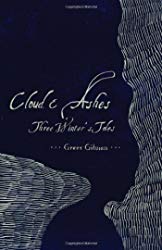
Cloud and Ashes, by Greer Gilman

Second paragraph of third chapter of third section:

In the green dark of another morning, Annot rose. She laid aside her mantle and her gown of black for petticoats of green, May mourning; mirrorless, she combed her leaf-red hair, and as she braided it all down her back, she sang beneath her breath. “ … and a thought come in her head to run in the wood … ” She left my lord’s ring and my lady’s baubles—though she traced the earrings with a finger, half-regretfully: her chains became her well. She left her needle in her work, too nearly done: the one unfinished sleeve. “ … to pull flowers to flower her hat … ” A smock to be bedded in, a shroud. Too fine for the greenwood, to sully and snag. But she wore her old ring that had been her grandam’s, her namesake: that she kept.

Lots of people loved Cloud and Ashes; I didn’t. Its a dense fairy tale set in northern England, with lots of sex (not at all titillating) and magic (which may or may not work). Maybe it will reward readers who put in the effort to understand who the characters are and what is going on. I read for relaxation and escapism, and this was too much like hard work for me. It won the Tiptree Award in 2006, along with the first two volumes of Ōoku: The Inner Chambers, which I enjoyed (onetwo). You can get it here.

My tweets

  • Thu, 20:45: RT @DanielAtkinson7: Varadkar has carefully managed the reporting of Johnson meeting. Allowed narrative to develop that Johnson has moved t…
  • Fri, 10:45: RT @rice_e: This is not the biggest crisis of Boris Johnson’s career. Let us never forget the time he lost an ancient Greek rap-off to Mich…

Posted in Uncategorised

Sheelagh Murnaghan, 1924-1993: Stormont’s Only Liberal MP, by Ruth Illingworth

Second paragraph of third chapter:

In March 1956, a meeting took place in Belfast which resulted in the setting up of a new autonomous Ulster Liberal Association for Northern Ireland — later renamed The Ulster Liberal Party. The first chairman of the party was Albert McElroy. Albert was born in Scotland in 1915 to parents originally from Ulster. When he was 15, his family moved to Northern Ireland. He attended Trinity College Dublin and served in the British Army during the Second World War. He was ordained in 1954 as a minister of the Non-Subscribing Presbyterian Church of Ireland, which is Unitarian in tendency. He was its Moderator from 1967 to 1969. Originally McElroy had been a socialist, and stood for the Northern Ireland Labour Party in the 1945 Northern Irish and 1950 and 1951 UK general elections. Gradually, however his political opinions shifted towards liberalism. While accepting that Northern Ireland would remain British until the majority of its people decided otherwise, he himself believed that Ireland would one day be reunited and was proud of the 'Radical and Liberal tradition' of the Ulster Presbyterians and their role in the United Irishmen of the 1790s and America's independence struggle. He was also proud of the Liberal Party's support for Irish Home Rule. McElroy's ambition was to offer the voters of Northern Ireland an alternative to the tribal politics of Unionism and Nationalism.

I never had the privilege of meeting Sheelagh Murnaghan, though I had the melancholy duty of issuing a press release when she died in 1993, and one of her (many) cousins is an old family friend. From 1961 to 1969 she was the only member of the Northern Ireland Parliament at Stormont elected for the Liberal Party. This short book (97 pages for the main text) looks at her life and achievements.

I was aware of the main details. She captained the Irish Women's Hockey team in the 1950s. She was the first (and for several years the only) woman barrister in Northern Ireland. She won a by-election for the rather odd four-seat Queen's University constituency in 1961, and held hit at the next two general elections (safely in on the first count in 1962, uncontested in 1965) before the constituency was abolished in the last election for the Northern Ireland Parliament in 1969. In her eight years in Stormont, she four times introduced a Human Rights Bill, which would have created structures for human rights accountability in Northern Ireland. The Unionist government were not interested, arguing that there was no problem in the first place, that Nationalists were discriminating just as badly in the second place, and finally that the proposed remedies could not be effective. (There are still some defenders of the old Stormont who will argue the first two of these points, without noticing that they are contradictory.) They thus rejected a massive opportunity to create confidence and draw the sting from minority grievances. Most of the reforms that the Ulster Liberal Party supported were enforced by the mid-70s, but by then it was far too late.

I had not known that in 1983, as chair of an industrial tribunal, Sheelagh Murnaghan handed down the first judgement in the UK or Ireland finding an employer guilty of allowing sexual harassment in the workplace, the important case of Mortiboys v Crescent Garage Ltd. The former Crescent Garage is still there, but rebranded, on Orangefield Crescent (I suspect several owners on from 1983). I wonder what happened to Ms Mortiboys in the end? I hope she found something better to do with her life (it could hardly have been much worse).

I was briefly the chair of the Northern Ireland local branch of the Liberal Democrats, the heir to the Ulster Liberal Party of which Sheelagh Murnaghan was the senior elected official (its leader however was the Non-Subscribing Presbyterian minister Albert McElroy). In my day it was basically a group of enthusiasts who met every year or so to reconfirm the strategic decision not to contest elections against the Alliance Party (I have no idea what the situation is now for Lib Dem members in Northern Ireland). The leading veteran at the time was Berkley Farr, who contributed a lot to this little book. The other person whose work is drawn on (and perhaps should have got a little more credit) is Constance Rynder, a Florida history professor who sadly died in 2017 but did a lot of research on women in Stormont in general but also on Sheelagh Murnaghan in particular.

Sheelagh Murnaghan never married and is not known to have had a relationship other than her devotion to her dogs. I don't think that one can read any more into this. I did attend her funeral, which was taken by Alec Reid, and she clearly left many friends and fond memories behind her. This is a nice little book and you can get it here.

Posted in Uncategorised

My tweets

Posted in Uncategorised

Paper Girls, vols 1-6, by Brian K Vaughan and Cliff Chiang

Second frame with dialogue in from the third chapter of each of the six volumes:

Volume 1 (originally in issue #3)

Volume 2 (originally in issue #8)

Volume 3 (originally in issue #13)

Volume 4 (originally in issue #18)

Volume 5 (originally in issue #23)

Volume 6 (originally in issue #28)

I bought the first volume of this series in Portland in 2016, just on impulse, and it proved a wise investment. Volumes 1, 3 and 4 were all Hugo finalists, and the sixth and final volume came out last month, so I read them all in one sitting.

This is the story of four 12-year-olds delivering newspapers in 1988 in Cleveland, Ohio, all from different ethnic backgrounds, who get swept up into a mysterious time war which takes them to the future and past, both near and far. Unlike with some comics compilations, each of the sic volumes has its own arc, though I don't think you could describe them as completely self-contained; I definitely would have benefited from reading Volume 2 before Volume 3.

It's awfully well done. The four girls are Erin (Asian), Mac (tomboy), KJ (Jewish and gay) and Tiffany (African-American and the most nerdy). Each of them gets to confront different versions of their own future – I think the best bit is in Volume 2, where the girls meet Erin's 40-year-old future self in 2016 Cleveland.

The art is great throughout. There is a particularly strong part in Volume 6 where the four girls are scattered into different timelines and we follow each of them on her own line across the pages, like a musical score.


(Click on each page to embiggen)

One is never in any danger of getting confused between the main characters, and when people turn up at different ages, they remain recognisable.

I haven’t seen Stranger Things (apart from one episode which I watched for the 2017 Hugos) but I understand it’s along the same lines, and that if you like one, you’ll probably like the other. I found this immensely satisfying. You can get the six volumes here, here, here, here, here and here.

This was my top unread comic (well, vols 2 and 5 were). Next on that pile is the Fourth Doctor collection, Dragon’s Claw.

Posted in Uncategorised

My tweets

Posted in Uncategorised

Tuesday reading

Current
The Sparrow, by Mary Doria Russell
David Copperfield, by Charles Dickens
Seven Pillars of Wisdom, by T.E. Lawrence

Last books finished
Sheelagh Murnaghan, 1924-1993: Stormont’s Only Liberal MP, by Ruth Illingworth
Cloud and Ashes, by Greer Gilman

Next books
Be My Enemy, by Ian McDonald
The Bastard of Istanbul, by Eilif Shafak

Posted in Uncategorised