Top blog posts of 2023 (and some social media)

In past years I’ve done a roundup of my best performing posts on social media and on my blog. This year I’m skipping almost all of my social media analysis, because Twitter/X’s analytics are broken (a real shame after years of providing interesting information, but it’s in catastrophic decline anyway) and Facebook seems also to have made it much more difficult to scrape useful data off the system. There seems to be no analytical capability for Bluesky at all, and I’ve not been on Threads for long enough for it to count. Thanks to MastoMetrics, I can give you my most liked post on Mastodon of the year:

And my most boosted post on Mastodon:

Instagram also tells me my most liked post there:

And LinkedIn, where I could be more active perhaps, also tells me which post has gained the most impressions:

But what you lose on the swings, you may gain on the roundabouts, and WordPress has given me a very good summary of the performance of my blog posts here over the last year. These are the top ten.

10) William Wordsworth, Annette Vallon and their daughter Caroline

Even though most of this blog consists of book reviews, this is the only book review in the top ten. Published in April, it had a surge of interest from August on, with a peak in mid-November. I assumer that someone put it on a university curriculum reading list, and it was then picked up by Wordsworth fans.

9) Social media in the age of Mastodon and Bluesky

This was my response to a friend’s query about social media after the decline of Twitter. He linked it from his blog, and we both linked to it from LinkedIn, which made a big difference. My top LinkedIn post of the year was my link to his blog post about it, probably because I tagged the other people mentioned.

8) 2023 Hugos: Best Series – why I voted No Award

One of several Hugo / WorldCon posts in the top ten, this got some traction among people who care about this sort of thing. NB that the vote for “No Award” in the Best Series category this year was higher by far than for any other.

7) The Oberkassel puppy

One of my own favourite posts from this year, published in early January. I boosted it on social media and it resonated for some people.

6) Chengdu Worldcon 1: Doctor Who in China

5) Chengdu Worldcon 4: The people you meet along the way

I think that both of these posts were boosted in China in places I can’t see, as well as by Westerners wanting to see what had happened at WorldCon. My two other WorldCon posts were both in the top twenty.

4) The 2023 WSFS Business Meeting

My analysis of the resolutions up for a vote at the WSFS Business Meeting in Chengdu. As it turned out I did not attend much of the proceedings myself, but this may have been the only detailed look at the agenda pre-meeting that was widely available.

3) Gallifrey One 2023

After some reflection, I boosted this on LinkedIn as well as the usual sources, and got a lot more views as a result. My link to it was my second-best performing LinkedIn post of the year. Also, cute pictures.

2) Hugo 2023 ballot – a couple of thoughts

At a point when some really outrageous things were being said about the 2023 Hugo ballot, this was my attempt to inject some sanity into the process. I suspect that the article was widely shared on Discords etc that I am not in.

1) What to expect in 2023, according to science fiction

Literally my first post of the year, with 600 views, 530 of them in January. Also featured on File 770, and maybe elsewhere. Somehow I caught the Zeitgeist. Will try and do another for Monday week.

So, I’ve learned two things from this. First, even though I put most effort into the book reviews here, it’s not what my public are especially reading. That doesn’t matter hugely, because in the end the primary target readership for my book reviews archive is myself in future years. Second, LinkedIn makes a heck of a difference. I posted very few of the above to LinkedIn – Gallifrey at #3 and social media at #9 – but it’s noticeable that substantial commentary pieces there do resonate, so I will be trying to cross-post there more often next year.

Giants at the End of the World: A Showcase of Finnish Weird, eds. Johanna Sinisalo and Toni Jerrman

Second paragraph of third story (“Snowfall” by Tiina Raevaara):

Kohotan katseeni. Aurinko on ehtinyt täyteen kirkkau-teensa, jäiset puut kimaltelevat. Talon takana metsästä työn-tyvä kallio kiiltelee huurteisena sekin. Kallion takia kuk-kapenkeissä on turha yrittää kasvattaa mitään: kesällä se piilottaa auringon taaksensa, heittää pihalle valtavan varjon. Nyt maa on jo jäässä.I look up. The sun has reached its full brightness, the icy trees are glittering. The rock pushing out from the forest behind the house is also glimmering with frost. Because of this rock, it’s useless to try to grow anything in the flowerbeds: in the summer it hides the sun behind it and throws a huge shadow into the garden. Now the ground is frozen already.
Translated by Sara Norja

This was given as a freebie to all attenders of Worldcon 75 in Helsinki back in 2017, to boost the visibility of Finnish writers among attendees. To be honest the stories are skewed a little more towards horror than is my usual taste, but I really enjoyed the first one, “The Haunted House on Rockville Street” by Pasi Ilmari Jääskeläinen, and one in the very middle, “The Bearer of the Bone Harp”, by Emmi Itäranta. You can read it on the Internet Archive.

This was both the shortest unread book that I had acquired in 2017, and the sf book that had lingered longest unread on my shelves. Next on those piles respectively are Recollections of Virginia Woolf by her Contemporaries, ed. Joan Noble Russell, and Attack on Thebes by M.D. Cooper.

Facing Fate: The Good Companion, by Nick Abadzis et al

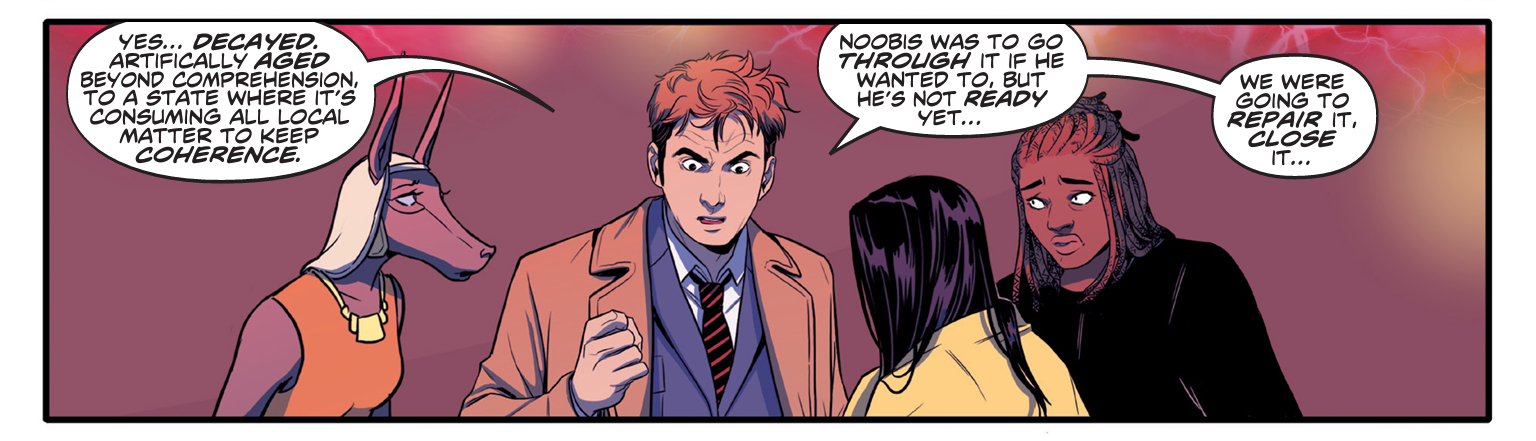
Second frame from third part:

The culmination of the series of IDW Tenth Doctor comic albums that I’ve been reading since March, here all the various companion plotlines come together and there is a very satisfactory ending to the character arc for Gabby Gonzalez, the comics-only companion from New York. Really this whole series deserves the same recognition that the early DWM strips have; it’s beautifully done. It was especially evocative to read it at the same time as the Doctor / Donna story unfolded on TV. You can get it here.

This was the first book that I finished reading in December, so I’m three weeks off more or less. This gap will probably only widen over the break!

The Metamorphosis, by Franz Kafka

Second paragraph of third section:

Und wenn nun auch Gregor durch seine Wunde an Beweglichkeit wahrscheinlich für immer verloren hatte und vorläufig zur Durchquerung seines Zimmers wie ein alter Invalide lange, lange Minuten brauchte – an das Kriechen in der Höhe war nicht zu denken –, so bekam er für diese Verschlimmerung seines Zustandes einen seiner Meinung nach vollständig genügenden Ersatz dadurch, daß immer gegen Abend die Wohnzimmertür, die er schon ein bis zwei Stunden vorher scharf zu beobachten pflegte, geöffnet wurde, so daß er, im Dunkel seines Zimmers liegend, vom Wohnzimmer aus unsichtbar, die ganze Familie beim beleuchteten Tische sehen und ihre Reden, gewissermaßen mit allgemeiner Erlaubnis, also ganz anders als früher, anhören durfte.Because of his injuries, Gregor had lost much of his mobility—probably permanently. He had been reduced to the condition of an ancient invalid and it took him long, long minutes to crawl across his room—crawling over the ceiling was out of the question—but this deterioration in his condition was fully (in his opinion) made up for by the door to the living room being left open every evening. He got into the habit of closely watching it for one or two hours before it was opened and then, lying in the darkness of his room where he could not be seen from the living room, he could watch the family in the light of the dinner table and listen to their conversation—with everyone’s permission, in a way, and thus quite differently from before.

Well known, fascinating and awful; the story of a man who ceases to be a man, who finds that humanity, including his close family, collectively turns its back on him. Does his transformation represent disability? Sexual identity? Mental illness? Something else entirely? It doesn’t matter in a way; the writing is mesmerising.

It’s also thoroughly infused with a spirit of place. Kafka comprehensively conveys the feeling of those central European apartment blocks which you will find in Prague, Vienna, Budapest, Bratislava, Zagreb, Ljubljana, and dozens if not hundreds of other towns and cities throughout the former Habsburg Empire. And you really feel that you are in the city, with its trams, bureaucracy and social structure.

It’s a short story, but it packs a heck of a punch.

This was the top book by LibraryThing populatiry on my shelves that I had not yet blogged here. Next on that list is Doctor Zhivago, by Boris Pasternak.

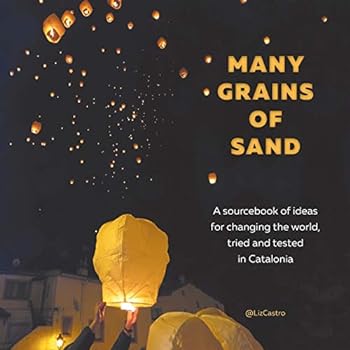
Many Grains of Sand, by Liz Castro

Second paragraph of third chapter:

AMI is a cross-party organisation that grew out of three initiatives: the group of city governments which passed motions declaring themselves “morally excluded” from the Spanish Constitution to express theirc omplete frustration with the Constitutional Court ruling against the Catalan Statute of Autonomy on June 28, 2010, the popular “consultations” that were held in more than 500 municipalities between 2009 and 2011, ad the spirit of the demonstration of July 10, 2010 itself, which represented a broad swath of the population which supports the Catalan right to decide.

A beautifully illustrated book, given to me by the author, listing numerous campaign tactics used by the proponents of independence for Catalonia in the heady years from the 2006 Statute of Autonomy to the botched independence declaration in 2017. A lot of this is genuinely inspiring activism: the people who went to all 50 US state capitals to present their case to the governors; the human towers and works of permanent and less permanent art; the integration with sports.

A lot of this could in fact be copied elsewhere in a society with a reasonable amount of freedom of expression, though there’s not many places with both a strong independence movement and an open society. You can get it here.

The Catalan debate is moving onto another plane now, with the Spanish government attempting to draw a line under 2017 and move on, while being subjected to attempted sabotage by the Right both at home and abroad. My personal suspicion is that a fairly held official referendum on independence in Catalonia would deliver a majority for continued participation in the Spanish state, and would kill serious talk of independence for a generation. (If it had not been for Brexit, this would have been the medium-term outcome in Scotland.) Those who say that it’s against the law and the constitution need to remember that in the end, the law and the constitution are shaped by popular sentiment and not vice versa.

This was the non-fiction book that had lingered longest unread on my shelves. Next in that pile is Atlas of Irish History, by Ruth Dudley Edwards.

The Hidden Lives of Tudor Women: A Social History, by Elizabeth Norton

Second paragraph of third chapter:

Infancy was also the stage of experimentation and play, universal for children of all social classes, which could begin in earnest when the swaddling was finally removed. It was Cecily Burbage who was responsible for taking Princess Elizabeth out of her cradle to play,4 and it was she who, when Elizabeth was around a month old, released her hands from the swaddling bands, after which her arms were covered by loose little sleeves.5 This was the first freedom of movement Tudor babies enjoyed, allowing them to ‘use and stir’ their hands.
4 Harrison, op. cit., f34v.
5 Guillimeau, op. cit., p.22

An interesting look at the experience of half of the English people during the reigns of the five Tudor monarchs, going from top to bottom – linking the lives and deaths of princesses and queens to what is known of the rest of the population. The framework is around Shakespeare’s Seven Ages of Man, taken as applying to all of us, so from infancy to old age and the various options between.

There are some very good bits here; the chapters on crime and religion in particular are fertile ground for the imagination. It’s also interesting to learn of Katherine Fenkyll, a multiply married businesswoman in the City of London. As usual with this sort of book, sadly, the word “Ireland” is missing from the index, and there’s not even much about Wales. But it’s good to come at a well-known subject – life in Tudor England – from a different direction, and I certainly learned as much as I had hoped from it. You can get it here.

This was my top unread book acquired in 2018. Next on that pile is The Unsettled Dust by Robert Aickman.

Sunday reading

Current
Into the Unknown, ed. Laura Clarke
The Haunting of the Villa Diodati, by Philip Purser-Hallard
Marking Time, by Elizabeth Jane Howard

Last books finished
Doctor Who: Wild Blue Yonder, by Mark Morris
Invasion of the Dinosaurs, by Jon Arnold
Atlas of Irish History, by Ruth Dudley Edwards
Jaren van de olifant, by Willy Linthout
Doctor Who: The Giggle, by James Goss

Next books
The Ides of Octember A Pictorial Bibliography of Roger Zelazny, by Christopher S. Kovacs
A Long Day in Lychford, by Paul Cornell
The New Machiavelli, by H. G. Wells

2023 travels

I think it’s unlikely that I’ll spend any more nights away from home this year, so it’s probably safe to do the overnights meme. This year it’s 20 places in 9 countries, with those place where I spent non-consecutive nights marked with an asterisk.

*London, UK
Los Angeles, USA
The Hague, Netherlands
Geneva, Switzerland
Birmingham, UK
Kidderminster, UK
Cambridge, UK
Glasgow, UK
*Paris, France
St-Hilaire-sur-Helpe, France
Hoofddorp, Netherlands
Zagreb, Croatia
*Ferry between France and Ireland
*Loughbrickland, UK
Heathrow, UK
Beijing, China
Chengdu, China
Oslo, Norway
Natick, USA
Providence, USA

I am counting the overnight ferry, which I feel is in the spirit of the meme, though not four intercontinental overnight plane flights (two from the USA to Europe, two between Brussels and Beijing). Whether nineteen or twenty, it’s bang in the middle of the historical range since I started counting.

I also changed places in Germany and Denmark, and drove through the Republic of Ireland, and I live in Belgium, so my total country tally for the year is 13, the fourth lowest of the fourteen years that I have tracked, even though I added two new countries this year.

YearOvernightsCountries
20232012
20221514
202175
2020811
20192314
20182320
20172015
20162923
20152821
20141515
20131711
20121614
201111
201025
200914
20081716
20072417
200625
200521

Next year will be the twentieth that I have done this calculation.

Threads, Twitter, Mastodon, Bluesky, Facebook, Instagram, LinkedIn, WeChat, etc

Update from my previous thoughts:

Threads, the new platform offered by Meta as a rival to Twitter, is now open to these of us in the EU, so I have signed on. Slightly odd to find that I already had 199 followers from the get-go. Very disturbing that the default view on the iOs app is not the accounts you are following but those that the app selects “For You”, which had content that I’m not really in the habit of seeking out routinely. Anyway, I sorted that out, and it now seems much the same as the others to be honest.

So for now I’m going to largely post the same content across Threads, X/Twitter, Mastodon, Bluesky and sometimes Facebook. Photo-led content will go on Instagram and Facebook first and then probably on the others. Professionally relevant stuff goes on LinkedIn, which is becoming increasingly important as a marketplace of ideas.

Also, when I wake up in the morning I try to remember to post last night’s blog to WeChat, for my 98 followers there, most of whom are asleep by the time I post most of my content. (If you want to add me there, go ahead.)

In a few months I will reassess and see which of them I find worth the effort. To be honest, if I were to drop out of just one of them right now, it would be Mastodon. As previously noted, I can’t find the conversations there that I might like to be in, and in addition, the app on iOs is clunky – rather slow to show me my updated timeline, doesn’t like uploading photos, crashes far too often. Mastodon’s advocates will earnestly assure me that it has been designed that way for Reasons, or that I am just Doing It Wrong. They have a right to their own opinions, but I work the way I do for Reasons too.

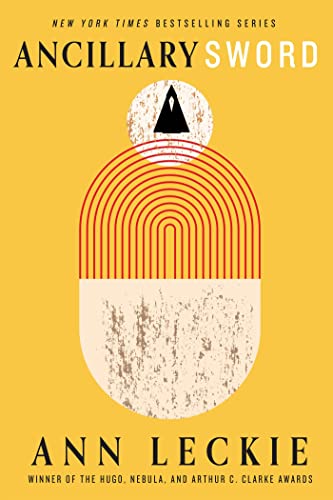
Ancillary Sword, by Ann Leckie

Second paragraph of third chapter:

She arrived at my quarters still unsettled. The collar of her jacket was slightly askew—none of her Bos were awake to see to her, and she had dressed in nervous haste, dropping things, fumbling at fastenings that should have been simple. I met her standing, and I didn’t dismiss Kalr Five, who lingered, ostensibly busy but hoping to see or hear something interesting.

I wasn’t originally planning to re-read this, but then I thought since I was re-reading the Tiptree and Clarke winners from 2015 I should go and look again at the BSFA winner. I actually voted for it for both the BSFA and the Hugos, and wrote then:

I actually liked it more than the first book in the series; it’s self-contained and fuelled by righteous anger, forensically directed at planetary and sexual politics. It’s several months since I read it as one of the Clarke submissions, but I think I still like it best of the three. [The other two non-Puppy novels being The Goblin Emperor, by Katherine Addison [Sarah Monette], and The Three-Body Problem, by Cixin Liu, which of course won.]

Re-reading it this time, I found the first 20-30% slightly hard going with the density of description of a human society from a slightly non-human perspective; and then the book suddenly catches fire after an act of violence, and the narrator, an artificial intelligence incarnated into a human body, must navigate entrenched societal structures to reach something resembling justice without causing complete disintegration. It’s tremendously tightly done, and took my breath away once again while I was reading it. You can get it here.

There were eight novels on the BSFA Best Novel ballot that year, more than any other year except 2020. The others were Europe in Autumn by Dave Hutchinson and The First Fifteen Lives of Harry August, by Claire North, both of which we shortlisted for the Clarke Award; Cuckoo Song, by Frances Hardinge; Lagoon, by Nnedi Okorafor; The Moon King, by Neil Williamson; The Race, by Nina Allan; and Wolves, by Simon Ings. I stand by the decisions we made as the Clarke jury, but there were some very good novels out that year.

On to the Clarke winner, Station Eleven.

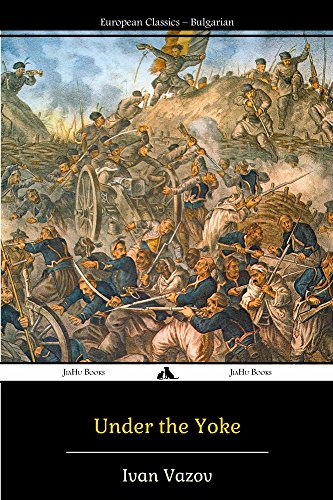
Under the Yoke, by Ivan Vazov

Second paragraph of third chapter:

Преди няколко години тая стара ограда се гордееше с исполински бор, който със своята рунтава шапка, дето пееха хиляди птичи гнезда, заслоняваше старовремската черкова. Но бурята катури бора, а игуменът – черковата и съгради нова. Сега тя, със своя висок, по новото зодчество издигнат купол, странно противоречи с осталите стари постройки, паметници на миналото, и даже грози като къс нова хартия, залепена на стар пергамент. Старата черкова и старият бор паднаха под ударите на съдбата и оттогава манастирът затъмня, не весели вече окото с гигантското дърво до облаците; не възвишават благочестиво душата зографисаните по стените образи на светци, архангели, преподобни отци н мъченици с изчовъркани очи от кърджалии и делибашии.Some years before, the old building had rejoiced in a gigantic pine-tree, which sheltered the church with its high- spreading branches—the home of a thousand feathered songsters. But a storm had uprooted the pine and the church tower, and a new tower, which had been erected in its place, with a lofty new-fashioned cupola, made a strange contrast to the dilapidated old remains of a past age: it gave one the same shock that is produced by a piece of fresh white paper stuck on a time-worn parchment. The old church and tower have fallen under the assaults of time and destiny, and henceforth the monastery has become sombre: the eye no longer follows the towering pine to the clouds: the soul no longer draws pious inspirations from the paintings on the walls representing saints, archangels, holy fathers, and martyrs, defiled and with their eyes put out by the Kirjalis and Delibashis.
translated by William Morfill

A classic of nineteenth-century Bulgarian literature, a mercifully short novel about the 1876 uprising against Turkish rule. I must admit that I was surprised by how well it reads, given that I have read any number of much worse-written books about Ireland (or England, or the United States) at the same period. Vazov’s revolutionaries, all men, are outnumbered, outgunned and fight valiantly to the end; his women are in fact also three-dimensional characters; you can’t really say the same for the Turks, and it’s a rather black and white novel, but still it’s a good and digestible insight into that particular part of Europe at that particular time. You can get it here.

This was the non-genre fiction book that had lingered longest unread on my shelves. Next on that pile is a collection of Three Plays by George S. Kaufman and Moss Hart, but it will have to wait until I have read all the other unread books acquired in 2017.

Tomorrow will be Eleanor of Aquitaine’s 900th birthday

The most intellectually exciting thing I have ever done, or am ever likely to do in my career, was to discover the likely date of birth of Eleanor of Aquitaine. She was Duchess of Aquitaine in her own right from 1137 to 1204, Queen of France from 1137 to 1152, and then Queen of England from 1154 to 1189 having married and divorced Louis VII of France and then married and survived Henry II of England. She lived until 1 April 1204. Her children included King Richard I (“the Lionheart”) of England and his younger brother King John. The only contemporary image we have of her is from her tombstone; but in popular culture, the dominant image is Katharine Hepburn’s Oscar-winning portrayal of her in the 1968 film The Lion in Winter.

Doing my M Phil thesis in 1991, I was trying to get to grips with a medieval astrological text by one Roger of Hereford, Liber de arte astronomice iudicandi. It’s a hodge-podge of Arabic astrological lore translated into Latin, sometimes well, sometimes less well, and I had great fun identifying the sources that Roger had used. Various clues pointed to the date of writing as being the early to mid 1190s. But then I ran into a problem at the end. There is a worked example of a horoscope, giving precise positions for the planets at a particular time, and then an interpretation of what this horoscope means. It seems to be original text, not copied from other sources like most of the rest of the book. The details given are:

Sun29° Sagittarius
Moon15° Gemini
Venus15° Capricorn
Jupiter20° Cancer
Mars10° Gemini
Mercury20° Sagittarius
Saturn22° Leo
Ascendant15° Libra
Mid-heaven18° Cancer

Now, there is an immediate problem. There is no historical date that fits those planetary positions. But I think that the following assumptions about Roger’s working methods are not unreasonable:

1) The solar position is likely to be the most accurate. This is because the sun’s apparent motion was accurately known, even using the geocentric model in use in the middle ages. The sun passes through the same point of the ecliptic at roughly (to within a day) the same time every year. During the 12th century it passed through 29° Sagittarius on December 14. Roger would have known that the sun could only be at that position on that day.

2) Jupiter and Saturn, the slowest moving planets, will be the most useful for determining the year in question. In this case there is a problem; there is no good fit for Jupiter at 20° Cancer and Saturn at 22° Leo in the historical period. However, Saturn was at 22° Leo in late December 1123, and Jupiter at that time passed through 20° Gemini (next to Cancer) on December 9 and reached 19° Gemini on December 16. If “Cancer” could be a mistake for “Gemini” in the Jupiter position, the horoscope would be consistent for 14 December 1123.

3) Mars provides an extra element of confirmation, having passed through 10° Gemini on December 9 1123, which is close enough given that it’s more difficult to calculate. So we have close matches for Saturn and Mars, and Jupiter precisely one sign out, for 14 December 1123.

4) The positions of the inner planets for 14 December 1123 are wildly discrepant with the positions in our horoscope. However on 14 December 1122, Venus was at 21° Capricorn (having passed through 15° Capricorn on the 9th), Mercury at 14° Sagittarius (having passed through 20° Sagittarius on the 8th) and the Moon at midnight is at 21° Gemini, having passed through 15° Gemini about ten hours earlier.

5) We therefore have the three outer planets fitting 14 December 1123 within a degree of longitude (if the assumption about Jupiter being put in the right degree but the wrong sign is correct), the three inner planets fitting early December 1122 a bit less well, and the Sun fitting both dates.

So, why choose 1123 rather than 1122? It seems to me – having tried it for myself – that the inner planets are much more fiddly to calculate using the available methods, and it is more likely that Roger of Hereford read the wrong line from the algorithm in the more complex process. (Though in my story he got Jupiter wrong too).

One other interesting point is that the distance between Ascendant and Mid-Heaven is too small for this to be a horoscope cast for a British latitude at that time of day and that time of year. The Ascendant is the part of the Zodiac rising on the eastern horizon; the Mid-Heaven is the part of the Zodiac directly due south. The farther from the equator you go, the more the distance between them will vary. The numbers given are consistent with 44° North, with a leeway of about 6°, probably calculated using an astrolabe plate for 45° North. Roger is not know to have worked anywhere other than England, almost all of which is north of 50°.

So, let’s look at what this is supposed to mean. Roger says:

Primum considerarem domini ascendentis, et qui ipse ab angulo recte respicit ascendens. Ab eo inciperem. Primum inspicio a quo separatur. Separatur autem a sole qui est dominus 10m, et est in quarto. Scio igitur per he quod cogitat de aliqua re amata que per quartum signatur vel de patre vel de matre; sed quia luna separatur est a domino 7 qui est domus mulierum id est de matre. Quum vero est in domo vie quod de via mulieris est iuncta mercurio domino vie, in alia domo viarum. Et quum venus coniuncta est iovi in domo regis dico quod ad regem tendit cum ipse etiam sit in exaltatione sua. Sed quum est retrogradus et in oppositione veneris et venus in casu eius, rex non bene eam recipiet. Sed quum est fortuna etiam in exaltatione sua et in angulo celi liber a male postea exaudiet eam. Sed et luna que est recepta ideam signat et est de inimicis, quod virgo est signum humanum et quod est in humano signo, est dominus 12.

Roger’s interpretation of the horoscope that he has just cast is a bit confused and mumbo-jumbo-ish, but like any good soothsayer he starts off by predicting what he already knows to be true: that the inquiry is about a loved one, a parent, a woman, therefore a mother. Then things get interesting. He seems to be saying that this mother is travelling to meet a king, that the king will not give her a good reception, but will give her a hearing afterwards, and that there are enemies involved.

As I said, we know that the most likely date of composition of Roger’s text is in the early to mid 1190s. Why is he casting a horoscope for a date in 1122 or 1123? Who could be the mother going on a journey to meet a king, where she could expect a poor reception but could hope to prevail in the end? Could this be anything other than a horoscope cast for Eleanor of Aquitaine, or some other interested party, to assess the chances of her planned mission to ransom her son Richard I from German captivity in 1193-4, after she raised literally a king’s ransom from the English taxpayer?

It may seem a bit of a stretch, but it’s difficult to imagine another set of circumstances in which a woman (a mother, indeed) born in 1122 or 1123 would be going on a long journey to argue with a king in the 1190s. (If you want to check my working, my M Phil thesis is available in RTF format here. There’s a lot of it that I would write rather differently, thirty-two years on, but I stand by the main conclusion.)

Also, remember the Ascendant/Mid-Heaven calculation that was consistent with 44° North, with a leeway of about 6°? Eleanor was born in Poitiers, whose latitude is 46°35′ North. A lot of other places are in that range, of course. (Though we can probably rule out Minneapolis.)

Scholarly consensus leans more towards 1122 than 1123 for Eleanor’s birth, I must admit, and the case for reading the planetary positions as intended to represent 1122 rather than 1123 is strong. But the very earliest document has her aged 13 in the spring of 1137, when her father died and just before her first marriage, which would mean that she was born between mid 1123 and early 1124; and I’m inclined to believe that the closest report to the event is likely to be the most accurate. There is no document indicating her precise birthday.

So, all in all, I reckon that tomorrow is the 900th birthday of one of my favourite historical characters. Let’s raise a glass of Bordeaux to her. She’d have appreciated it.

I hope that I’ll get the chance to write this up properly some day, to proper rigorous academic standards. I fear it will be a retirement project, almost fifty years after I did the original research. But twelfth-century history is not a terribly fast-moving discipline.

One Foot in Laos, by Dervla Murphy

Second paragraph of third chapter:

Clouds of mosquitoes were tormenting the four passengers already aboard and I hastily applied repellent to my bare parts before passing the bottle around. But it is a fallacy that clothes protect one; soon this swarm was feasting off my thighs and buttocks. Happily Vientiane is not malarial, at least in winter; dengue fever, borne by a soundless daytime mosquito, is more of a hazard. It kills many children and ‘break-bone’ fever debilitates adults for weeks, causing agonising pain; there is neither a prophylactic nor a cure. Perhaps its worst symptom – certainly the most alarming, from the patient’s associates’ point of view – is psychological: dengue violence. A mild-mannered elderly expat told me that while fevered she hit her gardener over the head with a trowel. When she had fully recovered the young man suggested their going to the wat together, to sit in silence in front of the Lord Buddha and be reconciled. In our world, he’d have sued her.

The late great Irish travel writer Dervla Murphy, who I worked with briefly and at long distance back in 1991, travelled around Laos in late 1997 and early 1998, and produced one of her typically empathy-filled accounts of the country and its people, along with the difficulties of getting around on a bicycle. (The title of the book refers to the fact that she injured a foot quite early in the trip, which also hampered her mobility.) It becomes gradually clear that this is a society in deep trauma after the American bombed it to smithereens in an unreported sideshow to the Vietnam War. Murphy generally enjoys and learns from her interactions with the locals; other foreigners are a different matter (to her annoyance, she finds that a fellow passenger on a ferry boat has brought along a copy of one of her earlier books).

Murphy was anti-globalisation and anti-capitalist, and deeply hostile to western interventions in the developing world. That’s not quite where I am coming from, but I really appreciate her candid and unflinching commentary on the consequences, intended or unintended, of economic transition. But I must say that I appreciate even more her description of the glorious landscapes through which she travels, cycling along uncertain roads through the middle of the Laotian mountains. The one thing that the book lacks is a proper map; when I tried to identify some of the spots where she travelled, I was astonished at the distance she covered. I foolishly thought that crossing Bosnia on bombed-out roads in 1997 in our Belfast-bought Skoda was a bit of an adventure, but really there’s no comparison. It’s a fascinating read, and you can get it here.

We got this book because, as a regular Oxfam donor, Anne was invited to Laos in late 2019, twenty-two years on from Dervla Murphy, to see what the NGO money is being spent on. It’s her story to tell, not mine, but they made a promotional video about the trip which features her several times (starting at 0:19, and you can hear her speaking Dutch at 5:06).

This was my top book acquired in 2019. Next on that pile is The Lost Puzzler, by Eyal Kless.

The J.R.R. Tolkien Miscellany, by Robert S. Blackham

Second paragraph of third chapter:

By the time Tolkien was at Exeter College, he was a committed smoker, mostly smoking a pipe but sometimes cigarettes. Smoking was socially acceptable back then and a lot cheaper than it is today, and Tolkien was most happy when with his fellow students talking and smoking late into the evening.

One of those books of Tolkieniana that I picked up ages ago for a pound on the remainder shelves. Aspects of Tolkien’s life and writing (but mainly his life) are packaged into short, thematic, well-illustrated chapters, though the presentation confusingly alternates between the roughly chronological and the more broadly cultural. There wasn’t much here that was new to me, but it might do for the sort of reader who doesn’t want to tackle Carpenter or one of the other biographies. You can get it here.

This was the shortest book that I had acquired in 2017. Next on that pile is Giants at the End of the World, by Johanna Sinisalo.

Sunday reading

Current
Doctor Who: Wild Blue Yonder, by Mark Morris
Atlas of Irish History, by Ruth Dudley Edwards
Jaren van de olifant, by Willy Linthout

Last books finished
Giants at the End of the World, by Johanna Sinisalo
Doctor Who: The Star Beast, by Gary Russell
Doctor Who and the Dinosaur Invasion, by Malcolm Hulke
Recollections of Virginia Woolf by Her Contemporaries, by Joan Russell Noble
Station Eleven, by Emily St. John Mandel

Next books
Invasion of the Dinosaurs, by Jon Arnold
Into the Unknown, ed. Laura Clarke
Marking Time, by Elizabeth Jane Howard

Wild Blue Yonder and The Giggle; the Fourteenth Doctor ends. (And the Celestial Toymaker)

So, unabashed squee from me for the second and third of the Fourteenth Doctor’s three episodes. A real feeling that the grownups are back in charge, wanting to make a show that is fun to watch and accessible, while also being much less shy about its past than it was in 2005. (It was not until Christmas 2006, in Catherine Tate’s first episode, that the word “Gallifrey” was even mentioned.)

I watch Wild Blue Yonder with a couple of fellow fans in the USA last weekend, and was really impressed at taking a fairly simple story (which has been done many times before, including by RTD in what I still think is his best single episode, Midnight) and making it come alive again. It’s rare to have a Doctor Who story that depends so much on the principals, though of course it was first done in The Edge of Destruction in 1964. The special effects show the money that Disney has thrown at it. The Isaac Newton bit was sheer humour, combined with a poke in the eye for bigots by casting a non-white actor in the role, but I don’t see any harm in either of those objectives. And of course lovely and emotional to see Bernard Cribbins again at the end.

The Giggle brought back the Celestial Toymaker, from a story shown in 1966 of which only one episode survived, for a grand confrontation that was suitably climactic. I thought the scenes of the Toymaker creating havoc inside UNIT came close to missing the mark, with comedy violence against women characters and a rather peculiar reference to American Beauty, but otherwise I really loved it.

Catherine Tate got a bit less to do here, apart from a great lost-in-corridors scene, but that’s because we were also introduced to Ncuti Gatwa a bit earlier than most of us had anticipated, with him emerging from David Tennant’s body wearing half his clothes (a gag also used in James Hadley Chase’s Miss Shumway Waves a Wand) and then joining forces with Tennant to defeat the villain – in a simple game of Catch, though that is very well filmed. Neil Patrick Harris was great too; of course real Germans don’t talk anything like that, the whole point is that the shop-keeper aspect of the Toymaker is a fake.

Some sensitive souls have complained that one of the central messages, that people are too often unkind on social media and it would be a bad world if we did this to each other in real life, suggests that it’s wrong to speak your mind frankly. Personally I think it’s reasonable to regret that so much public discourse is polarised these days, and also to acknowledge that RTD has been targeted for grossly unfair online criticism for his Doctor Who work since at least 2005, and you can’t expect that not to sting. I also thought the subtle commentary on television as a force for barbarism was nicely subversive of the very medium we were watching.

The return of UNIT (in a much nicer building than the one that got blown up last year) was not a huge surprise; some were surprised by the return of Bonnie Langford as Mel Bush. I was not. Why not? Because Mel was the only other character present at the final regeneration of Old Who, when the Sixth Doctor was transformed into the Seventh Doctor by BBC internal politics. Having her witness the regeneration from Fourteenth Doctor to Fifteenth Doctor confirms the message that we are saying goodbye to the first era of New Who and moving on to something new.

And I must say that the idea of the Fourteenth Doctor, representing all his predecessors, can settle down to a nice retirement with friends after sixty years, is tremendously moving for those of us who are also closer to sixty than to our youth. Perhaps something got in my eye at the end there. Anyway, I loved it.

Afterwards F and I rewatched the final episode of The Celestial Toymaker. The lore is that The producer of the day (John Wiles) had actually planned to make this what we would now call the first ever regeneration story. The First Doctor spends the second and third episodes invisible as a punishment by the Toymaker (and to accommodate William Hartnell’s holiday schedule); the idea was that when he returned to visibility it would be in a different body. But the BBC higher-ups moved to prevent this, the producer resigned and William Hartnell got another six months in the role.

The episode is manifestly made on a much smaller budget than any 21st century Doctor Who, and the pace is glacial. But the moments of confrontation between Hartnell and Michael Gough, playing the Toymaker, are well done, and the Doctor’s dilemma of how to play the final move in a game that will destroy their pocket universe when it ends is a good plot device (recycled in The Three Doctors and elsewhere). And we have this prophetic exchange at the end:

As Elizabeth Sandifer has written, this is a very problematic story (though see also here), and it was interesting to see it being reinvented in a very different way last night.

It isn’t over for the Fourteenth Doctor as far as this blog is concerned; I have three novelisations and a comic strip to report back on in due course. But that will do for now.

Ancestors in Eastern Connecticut: exploring the graveyards

As mentioned, I spent last weekend in Providence, Rhode Island, and used the Monday morning to explore four cemeteries in eastern Connecticut where ancestors of mine are buried.

These are all forebears of my great-great-grandfather William Charlton Hibbard, who himself is buried in West Roxbury near Boston. He was born in New Hampshire, as were his parents; his Hibbard grandparents, David Hibbard and Eunice née Talcott, had moved north from Connecticut in the 1770s (perhaps to avoid the war?), but their parents’ graves are all recorded, three of the four in the cemetery at Coventry CT and the fourth at nearby Windham. Earlier Hibbards vanish into the mists, but all four of Eunice’s grandparents seemed also findable; her maternal grandparents also in Coventry, her father’s father in nearby Bolton and her father’s mother (possibly) a bit further away in Windsor.

(Click to embiggen)

Along with my third cousins P and L, who had joined me to find our great-grandparents’ graves last year, and with the estimable Esther as official photographer (so most of the photos below are hers not mine), I set off to track down the last resting places of our forebears.

I rented an electric Kia in Providence on a one-way trip to Logan Airport, and we enjoyed the lovely autumnal drive through southern New England to Windham, where my 5x great grandmother Eliza Hibbard née Leavens is buried.

From the official Hibbard family history

It would have been truly fantastic maybe three or four weeks earlier when the leaves were at full autumnal glory, but as it was, we really weren’t complaining; it was a crisp December day with cheerful sunshine.

Windham cemetery is quite extensive, but the older graves are concentrated near the road. It took me a couple of minutes’ frustrated roaming to remember that there is a photograph of Eliza’s grave on the excellent Findagrave website. She has a very distinctive pentagonal headstone.

The inscription is now obscured by lichen, but it said:
February 13 1762 departed
this life Elizabeth, wife of David
Hebbard, at 38
years of her age

Poor Elizabeth! She was married at 19, and had six children that we know of, three of whom died young; she herself died at 38, and you have to wonder if that was related to yet another pregnancy. Her fourth but oldest surviving child, David, named for his father, was our ancestor. I know nothing about her except the dates of her birth, marriage and death, and the same for her parents, husband and children; nobody who knew her in life has drawn breath since the middle of the nineteenth century; and yet I felt an electric shock of connection as I found her last resting place.

We continued our journey to find the five graves at Coventry, where we converged with P and L, coming in opposite directions from Boston and New Haven respectively. A navigation error (mine) meant that we were the last to arrive, but still in good time for the morning’s plans. The South Street Cemetery, aka the Old South Burying Ground, is much the smallest of the four we visited, and has very few recent graves.

It did not take us long to find Eliza’s husband, our 5x great-grandfather David Hibbard, and his second wife Dorcas née Throop. He lived to 1800, lucky chap, outliving poor Eliza by almost forty years. Dorcas was the same age as Eliza, and David married her less than a year after Eliza’s death; they had three more children who all survived to adulthood and have living descendants, the last born when Dorcas was 43.

Mr David Hibbard died
Auguſt 13th 1800
aged 84 years

In melancholy ſilence here I lay
When Chriſt has call’d my ſoul away
In Gods own arms I left my breath
And O my friends prepare for death

L and P are half-second cousins to each other, sharing a great-grandfather, Thomas Hibbard. He was the older brother of my great-grandfather, Henry Deming Hibbard, so L and P are both third cousins of mine. All three of us are signed up to both Ancestry.com and 23andMe; the two sites disagree about whether I share more DNA with L or with P, but in any case it’s somewhere between 0.6% and 1%. You can judge for yourself if it is visible.

David and Eliza’s son, David junior, married Eunice Talcott, also from Coventry, and they moved up north to the borders of New Hampshire and Vermont, and are buried there. Like David junior, Eunice was named for one of her parents (our 5x great-grandparents); they were Joseph Talcott and Eunice née Lyman, and we found them not far away, next to each other.

Eunice’s headstone (between me and L) reads:

In memory of Mrs. Eunice
Talcott, relict of Capt. Jo-
seph Talcott, who died
August 11th 1813 in the
80th year of her age.

And it is appointed unto
men once to die, but after
this the judgment.

Blessed are the dead,
which die in the Lord

Joseph Talcott fought in the Connecticut militia during the war of independence, and is listed second of the men of Coventry who participated in the first battle of the war, at Lexington in April 1775.

His grave has been adorned with a flag, presumably by local patriots.

This Monument is erected
in memory of Cap. Joſeph
Talcott, who was caſually
Drowned in the Proud Wa-
ters of Scungamug River:
on the 10th Day of June 1789
in ye 62nd Year of his Age.

For man alſo knoweth not his
time, as the fiſhes that are taken in
an evil net, and as the bird that
are caught in the ſnare: ſo are
the ſons of men ſnared in an
evil time, when it falleth sudden-
ly upon them.

The memory of ye juſt is Bleſsed.

We mused about the record of his death, “casually drowned in the proud waters of Scungamug River”. The river is easy; the Skungamaug River, as it is now spelt, runs north to south through Tolland County, in which Coventry is situated. But what does “casually drowned” mean? Are we meant to infer that his death was accidental, or suicide, or something else? A bit of googling suggests that accidental death is intended, but the fact is that this very inscription seems to be the best-recorded use of the phrase. And “proud waters”?

His in-laws, Eunice Talcott née Lyman’s parents, our 6x great-grandparents, are also not too far away in the same cemetery.

Left:
In Memory of Mr
Samuel Lyman
who died Febr ye
4th 1754 in ye 54th
Year of his Age

As You are now
So once were we
As we are now
So You muſt be.

Right:
In Memory of Mrs
Eliſabeth Lyman
ye wife of Mr Samu
Lyman who Died
Febr ye 28th 1751 in
ye 48th year of her
Age

Elizabeth’s maiden name was Smith, which unfortunately makes it very difficult to trace her ancestry further back as there are just too many Smiths around. Her married name, Lyman, became a recurrent first name for boys in the Hibbard family, including my grandmother’s brother, six generations later. (Lyman was also the first name of L. Frank Baum, author of The Wizard of Oz; he never used it, and I have not been able to establish if he was yet another relative, but as it happens my grandmother’s name was Dorothy.)

Benjamin Talcott, Joseph Talcott’s father and therefore another 6x great-grandparent, rests in nearby Quarryville Cemetery in Bolton CT. The cemetery itself is on a rise surrounded by a drive; we parked at the first available opportunity and resigned ourselves to a long search.

But to our surprise we had parked right beside him. His headstone is by far the most dramatic of all of those we saw – it also had the easiest to read inscription, which helped. As usual, it is topped by a rather grotesque winged figure, and has a suitably chilling message.

(Unlike the other pictures here which are either mine or Esther’s, this was taken by L.)

This Monument is
Erected in Memory of
Benjamin Tallcott Esq.
who Departed this Life
on the 9th Day of March
AD 1785 in ye 83d Year
of his Age.

So man Lieth down, and
riſeth not till ye Heavens be no more.

Hark! Death’s Motto from the Silent Tomb
With awful voice Proclaims aloud
Mortals, prepare for you must come
And mingle with the Ghastly Crowd

Interpreting this was a lot of fun. The biblical quote is from Job, but the doggerel appears to be original, or at least the source is not known to Google.

A smaller memorial stone behind the larger one commemorates Benjamin’s service in Captain Rudd’s Company during the French and Indian War (which lasted from 1752 to 1763, so he would have been an elderly Sergeant given that he was born around 1702).

I was charmed by the church steeple a few hundred metres away, and the gables of the nearer farm buildings.

Finally, and a good bit further on, we reached the Palisado cemetery in Windsor, which according to Findagrave.com is the resting place of Benjamin Talcott’s wife Esther, née Lyman, another 6x great-grandparent. (Her daughter-in-law Eunice was also her second cousin twice removed.) This is a huge cemetery, still in use, with an active railway line skirting its boundaries. P took this photo of me and L trying to work out where to find the ancestral Esther, with today’s Esther offering encouragement.

And in fact it was Esther who found Esther.

Unfortunately I’m not convinced that this is the right Esther Talcott. The stone is clearly more recent than 1751, when my 6x great-grandmother died; this Esther rests beside a John H. Talcott, also undated, and a Guy Talcott whose date of death is given as February 28, 1857, aged 78, which is much too late.

Guy Talcott was the son of Daniel Talcott (1744-1824) and Eunice née Moore (1751-1838), distant cousins of our Talcott ancestors, and he had a sister, Esther, and a brother, John (middle initial not otherwise recorded). So I think these are the three Talcotts in Windsor, rather than our direct relatives. Still, it was good that we found the grave we were looking for.

We went for a very decent pub lunch at the Union Street Tavern, and then set off in our separate directions, P dropping Esther back to Providence as I needed to get straight to Logan Airport for my flight. This turned out to be a bit more hair-raising than expected as it took me ages to find out how to charge the electric car, which didn’t quite have enough oomph for the full journey; I eventually sorted it out, and arrived at the departure gate just five minutes before boarding started for my transatlantic flight. Don’t do that, folks, find out how to charge your electric car before driving it. Otherwise it was a good driving experience.

And a good day over all – many thanks to L, P and Esther for being comrades in research. We must do it again some time – I think there are some more graves to be found in a cluster near Worcester, and more again farther north around Littleton NH. In fact I have a photograph from a similar expedition in 1941, when my great-grandfather (right, with beard) and his nephew, P’s grandfather (left) found the graves of David and Eunice Hibbard’s son Lyman and his wife Rebecca there.

Photograph taken by my grandmother’s brother Lyman.

If it’s been done once, it can be done again.

The Girl in the Road, by Monica Byrne

Second paragraph of third chapter:

“Who are you?” I say.

This was joint winner of the Tiptree Award in 2015, along with My Real Children by Jo Walton. It’s set in near-future Asia and Africa, with two different timelines converging on Djibouti from the east (across the ocean) and the west (across the continent). I really liked the two timelines, and was kept guessing until quite near the end as to how they actually meshed together. I was not sure about the ending, where 1) both time lines end up with fatal love triangles and 2) the resolution of the earlier of the two timelines struck me as medically improbable, even with future technology. But I really loved the central images of the two roads, one across the ocean (though why ending in Djibouti rather than Bossasso?) and the other across the Sahel. You can get it here.

The Tiptree honor list also included three other books that I have read, Kaleidoscope, eds Alisa Krasnostein & Julia Rios, Lagoon by Nnedi Okorafor and Memory of Water by Emmi Itärantal; three books that I have not read, Ascension by Jacqueline Koyanagi, The Beauty by Aliya Whiteley and Elysium by Jennifer Marie Brissett; and four shorter pieces, “In Her Eyes” by Seth Chambers, “The Lightness of the Movement” by Pat MacEwen, “Neither Witch nor Fairy” by Nghi Vo and “A Woman Out of Time”, Kim Curran.

On to Ancillary Sword.

Lovecraft’s Providence

I spent last weekend at SMOFCon in Providence, Rhode Island, mostly inside the sheltered environment of the Marriott Bonvoy hotel. I did get out for a walk on a damp Sunday morning to attempt the Necronomicon walking tour of sites associated with H.P. Lovecraft in the College Hill district of the city.

The eponymous College Hill, location of Brown University, is edged by a sharp ridge, along which Benefit Street runs from south to north, with a steep drop to the Providence River an the canal to the west. It was easy to imagine tendrils of horrible fog swirling up from below, from the less salubrious parts of the town to trouble the white middle-classes on the higher ground.

135 Benefit Street, supposedly the basis of The Shunned House, “a particular house on the eastern side of the street; a dingy, antiquated structure perched on the abruptly rising side-hill, with a great unkempt yard dating from a time when the region was partly open country… that house, to the two persons in possession of certain information, equals or outranks in horror the wildest phantasy of the genius who so often passed it unknowingly, and stands starkly leering as a symbol of all that is unutterably hideous.”
The home of Henry Anthony Wilcox in The Call of Cthulhu, 7 Thomas Street, “the Fleur-de-Lys Building in Thomas Street, a hideous Victorian imitation of seventeenth-century Breton architecture which flaunts its stuccoed front amidst the lovely colonial houses on the ancient hill, and under the very shadow of the finest Georgian steeple in America.”

I’m also pretty certain that I took a selfie in front of Lovecraft’s residence at the time of his death, which has been moved from its original address at 64 College Street to 65 Prospect Street; but the picture seems to have been eliminated from my device, probably by some nameless eldritch unearthly power, unprepared to share the image with the human world.

I did take a picture of the sign marking H.P. Lovecraft Memorial Square, which is flanked by an arcane but mangled symbol on a metal plate to the right, and a graphic display of a flashing hand with numbers counting down to the end of time on the other. (Actually the numbers may just be counting down until the traffic lights change; sometimes what you get from these experiences is what you bring to them.)

Lovecraft is of course a tremendously problematic figure, but his descriptive powers are extraordinary, and it was fascinating, though also damp, to walk the streets that had inspired him.

2023 Hugo final ballot – quick take and details

The Hugo final ballot statistics are out! Though the nominations stats are not yet available.

There were some notably close results:

  • Chris Barkley won Best Fan Writer by *one* vote
  • Zero Gravity Newspaper beat Journey Planet by 8 votes in Best Fanzine
  • Strange Horizons lost to Uncanny Magazine by 18 on the last count for Best Semiprozine, despite having led throughout

The only possible closer vote in the final ballot is a tie, which has happened only once since 1993, when The City & The City and The Windup Girl both won Best Novel in 2010. Between 1953 and 1993 there were ten tied results for the Hugos – two in 1953, one each in 1966, 1968, 1973 and 1974, two again in 1977 and one each in 1989 and 1993. Plus also the Campbell Award in 1974, for a total of twelve. We also had a tie in the 1945 Retro Hugo for Best Dramatic Presentation (Short Form) in 2020, which I think is the only tied result for the Retros ever.

Other results this year were much more one-sided, very few going to all stages of the count. Best Short Story (“Rabbit Test”), Best Related Work (the Terry Pratchett biography), and Best Professional Artist (Enzhe Zhao) were all decided on first preferences, and Everything Everywhere All at Once got exactly 50% of the first preferences for Best Related Work (but of course had to got to a second count). Rob Wilkins’ biography of Terry Pratchett got a massive 59.7% of first prefs in Best Related Work.

Camestros Felapton crunched the numbers, and there are only 11 first-count wins on record from this century, five of which were “No Awards” in 2015, and another three were the Lord of the Rings films in 2002, 2003 and 2004. (The other three were Naomi Novik winning the then Campbell Award in 2007, Sarah Webb winning Best Fan Artist in 2014, and “Cat Pictures Please” winning Best Short Story in 2016.)

But we have had them much more often in the Retro Hugos : John W. Campbell for Best Editor (Long) in 1996, 2001, 2014, 2016, 2018, 2019 and 2020, Margaret Brundage for Best Professional Artist in 2020, “Foundation” for Best Novelette in 2018, Fantasia  for Best Dramatic Presentation, Long Form in 2016, “The War of the Worlds” for Best Dramatic Presentation, Short Form, in 2014, “The Nine Billion Names of God” for Best Short Story in 2004, and three other than John Campbell in 1996 – Animal Farm in Best Novella, “First Contact” in Best Novelette and Bill Rotsler in Best Fan Artist. That’s fifteen in total, twelve this century.

1674 final ballot votes is the lowest since 2010. It is only the third time since my records begin in 1971 that that nomination votes have exceeded final ballot votes; the other two occasions were 2016, which was a side-effect of the Puppy wars, and 1994, when the previous year’s convention made a determined effort to get members to nominate.

“No Award” votes are significantly higher for Best Series than any other category – 12.2% of first preferences (next highest is 7.0% in Fan Artist); 21.2% in the runoff (next highest is 11.1% in Fanzine). I have to say that this confirms me in my view that the problem with the Best Series category is not that it needs various tweaks relating to eligibility, but that it exists in the first place.

Best Novel had the highest participation, 1068 (63.8%); and Best Fancast had the lowest, 572 (34.1%), still comfortably ahead of the old 25% threshold, which has anyway now been abolished – it would have applied this year, but no category was anywhere near the danger zone.

To the details. I note below whenever a result was decided by less than 20 votes. I voted for four of the winners, which is a little more than usual.

Best Novel
Nettle and Bone beat both The Island of Dr Moreau and The Kaiju Preservation Society on the fifth pass; Legends and Lattes then beat The Island of Dr Moreau for second place; The Kaiju Preservation Society beat The Island of Dr Moreau for third place; The Island of Dr Moreau (my own choice) finally won fourth place ahead of The Spare Man, which came fifth with Nona the Ninth sixth.

Best Novella
The Drowned Girls beat both Ogres and Even Though I Knew the End on the fifth pass; Ogres beat Even Though I Knew the End for second place, Even Though I Knew the End came from behind to beat What Moves the Dead by only 19 votes for third place, What Moves the Dead (my own choice) beat Into the Riverlands for fourth place, Into the Riverlands beat A Mirror Mended for fifth place, and A Mirror Mended took sixth.

Best Novelette
“The Space-Time Painter” beat “If You Find Yourself Speaking to God, Address God with the Informal You” on the sixth count, by 112 votes; “If You Find Yourself Speaking to God, Address God with the Informal You” beat “A Dream of Electric Mothers” by 15 votes for second place; “A Dream of Electric Mothers” beat “Murder By Pixel: Crime and Responsibility in the Digital Darkness” for third place; “We Built This City” sneaked ahead in a tight field to beat “The Difference Between Love and Time” for fourth place; “Murder by Pixel” (my own choice) beat “The Difference Between Love and Time” for fifth place; and “The Difference Between Love and Time” came sixth.

Best Short Story
As noted above, “Rabbit Test” won on the first count, with “Zhurong on Mars” next but a very long way behind. “D.I.Y.” beat “Resurrection” for second place, “Zhurong on Mars” beat “Resurrection” for third place and finally “Resurrection” beat “The White Cliff” for fourth place. “The White Cliff” beat “Razor’s Edge” for fifth place and “Razor’s Edge” came sixth. For once, I too voted for the winner.

Best Series
Children of Time won a convincing victory on the fourth round, with October Daye, the Scholomance and Rivers of London still in the field. As noted above, this was also the category in which No Award had by far its best performance. Rivers of London beat The Locked Tomb by 16 votes for second place; The Scholomance beat October Daye by 10 votes for third place; The Locked Tomb beat October Daye for fourth place, October Daye beat the Founders Trilogy for fifth place and the Founders Trilogy came sixth, beating No Award by the relatively slim margin of 313 votes to 213. As noted previously, I voted No Award in this category but put Children of Time second.

Best Graphic Story or Comic
Cyberpunk 2077, which I hated but is massively popular in China, won on the third pass with everything except No Award and Once and Future still in the picture. The Dune adaptation beat Saga for second place by 5 votes; Monsters beat Supergirl for third place also by 5 votes; Supergirl (my own choice) beat Saga for fourth place by 17 votes; Once and Future beat Saga by 20 votes for fifth place, and finally Saga, which had been within five votes of taking second place, came sixth.

Best Related Work
As noted above, Terry Pratchett: A Life With Footnotes won a stinking first-round victory with almost 60% of the votes cast. The other placings, in order, with the runner-up for each place winning the next one, and no results particularly close, were Chinese Science Fiction, An Oral History, Volume 1 in second place, Blood, Sweat & Chrome third, Still Just a Geek fourth, Ghost of Workshops Past fifth and the Buffalo World Outreach Project sixth. Here too I voted for the winner.

Best Dramatic Presentation (Long Form)
As previously noted, Everything Everywhere All at Once got exactly half of the first preference votes and was easily brought over the threshold by the elimination of No Award. The other placings, in order, with the runner-up for each place winning the next one, and only one close result, were: Turning Red second; Nope third; Severance fourth by 8 votes; Black Panther: Wakanda Forever (my own choice) fifth and Avatar: The Way of Water sixth.

Best Dramatic Presentation (Short Form)
The Expanse: “Babylon’s Ashes” won on the fourth count with Andor: “One Way Out”, Stranger Things: “Chapter Four: Dear Billy” and She-Hulk: “Whose Show is This?” still in the game. The other placings, in order, with the runner-up for each place winning the next one, and several close results, were: Andor: “One Way Out” second, Stranger Things: “Chapter Four: Dear Billy” third by 19 votes, Andor: Rix Road” fourth by 9 votes, For All Mankind: “Stranger in a Strange Land” (my own choice) fifth by 18 votes, and She-Hulk: “Whose Show is This?” sixth.

Best Editor, Long Form
This only went to five counts, but that was because of a double elimination; Lindsey Hall won a convincing victory over Haijun Yao. The other placings, in order, with the runner-up for each place winning the next one, and only one close result, were: Haijun Yao second, Lee Harris third, Ruoxi Chen fourth by 12 votes, Sarah Peed fifth and Han Yan sixth. I have my doubts about the existence of this category, but it was really very nice to see Lindsey Hall’s joy as she accepted the award on the night.

Best Editor, Short Form
Neil Clarke won on the third count, with Xu Wang, Feng Yang, Sheree Thomas and Oghenechovwe Donald Ekpeki still in the picture. This was one category where Chinese finalists did not get many transfers from non-Chinese finalists. Sheree Thomas beat Xu Wang for second place; Oghenechovwe Donald Ekpeki beat Scott H. Andrews for third place, after Xu Wang was eliminated by a 5-vote margin on the penultimate count; Scott H. Andrews beat Xu Wang for fourth place; Xu Wang beat Feng Yang by 15 votes for fifth place; and Feng Yang came sixth.

Best Professional Artist
As noted, Enzhe Zhao pulled off a first-round victory, with Alyssa Winans the least far behind of the others. Kuri Huang beat Jian Zhang for second place; Sija Hong beat Alissa Winans for third place; Alyssa Winans beat Jian Zhang for fourth place; Jian Zhang beat Paul Lewin for fifth place; and Paul Lewin came sixth, with none of the results particularly close. I actually found myself chatting to Kuri Huang and Sija Hong on the way to the ceremony, which was nice as I had myself voted for Sija Hong.

Best Semiprozine
Strange Horizons led on all counts except the last, when Uncanny Magazine got enough transfers from FIYAH to win by 18 votes, the only result of the night where the winner did not also have the most first preference votes. Strange Horizons then pulled off a rare first-round victory for second place, with FIYAH the least far behind; FIYAH beat Escape Pod for third place, Escape Pod beat khōréō for fourth place, PodCastle beat khōréō for fifth place and khōréō took sixth place, none of them terribly close.

Best Fanzine
In the first home victory announced on the evening, Zero Gravity Newspaper was nip and tuck with Journey Planet but eventually won by 8 votes. Journey Planet beat Chinese Academic SF Express for second place; Nerds of a Feather beat Chinese Academic SF Express by 11 votes for third place; Unofficial Hugo Book Club Blog beat Chinese Academic SF Express for fourth place; and finally Chinese Academic SF Express beat Galactic Journey for fifth place with Galactic Journey coming sixth.

Best Fancast
Hugo, Girl! won an impressive second-round victory on the first count, with Coode Street Podcast next in line. Hugos There, which had actually had the fewest first preferences, took second place ahead of Coode Street Podcast by 13 votes. Coode Street Podcast came third, 19 votes ahead of Octothorpe. Octothorpe beat Worldbuilding for Masochists for fourth place, Worldbuilding for Masochists beat Kalanadi for fifth place and Kalanadi came sixth.

Best Fan Writer
As noted, Chris Barkley beat RiverFlow by just one vote, the closest result of the night and probably of the decade. He had been ahead throughout, and transfers from Arthur Liu were not quite enough to make the difference. RiverFlow beat Arthur Liu for second place; Arthur Liu won a convincing third place with both Bitter Karella and Örjan Westin still in the game; Bitter Karella beat Jason Sanford for fourth place, Jason Sanford beat Örjan Westin for fifth place and Örjan Westin came sixth.

Best Fan Artist
Richard Man (my own choice) won on the fifth round, with Iain Clark and Laya Rose still in. The other placings, in order, with the runner-up for each place winning the next one, and no close results, were Iain Clark second, Lara Rose third, Alison Scott fourth, España Sherriff fifth, and Orion Smith sixth.

Lodestar Award for Best Young Adult Book
Akata Woman won a fifth-round victory with The Golden Enclaves and Osmo Unknown and the Eightpenny Woods still in the game. The Golden Enclaves beat Osmo Unknown and the Eightpenny Woods for second place; Dreams Bigger Than Heartbreak beat The Serpent’s Wake for third place; The Serpent’s Wake beat Osmo Unknown and the Eightpenny Woods for fourth place; and Osmo Unknown and the Eightpenny Woods (my own choice) finally beat Bloodmarked for fifth place, with Bloodmarked coming sixth.

Astounding Award for Best New Writer
Travis Baldree was close to a first round victory and clinched it on the second round, with Isabel J. Kim the least far behind. Isabel J. Kim (my own choice) came from behind to beat Everina Maxwell by 17 votes for second place, narrowly avoiding elimination in favour of Maijia Liu by 2 votes in the penultimate round. Everina Maxwell beat Maijia Liu for third place, Maijia Liu beat Naseem Jamnia for fourth place, Naseem Janina beat Weimu Xin by 7 votes for fifth place and Weimu Xin got sixth place. Personally I thought Weimu Xin’s stories were excellent, but they were only made available in Chinese, and I fear that not many non-Chinese voters will have bothered to run them through the translation sites.

Looking forward to seeing the nomination statistics.

Sunday reading

Current
Giants at the End of the World, by Johanna Sinisalo
Station Eleven, by Emily St. John Mandel

Last books finished
Under the Yoke, by Ivan Vazov
Ancillary Sword, by Ann Leckie
The Hidden Lives of Tudor Women, by Elizabeth Norton
Many Grains of Sand, by Liz Castro
Metamorphosis, by Franz Kafka
Facing Fate: The Good Companion, by Nick Abadzis et al

Next books
Doctor Who: The Star Beast, by Gary Russell
Recollections of Virginia Woolf by Her Contemporaries, by Joan Russell Noble
Metamorphosis, by Franz Kafka

William of Ireland

A week ago I was working (and staying) next to Charing Cross in London, and found myself exploring the intellectual rabbit hole of the Eleanor Crosses. To refresh your memory, when Eleanor of Castile, the wife of King Edward I of England, died in 1290, her grieving husband erected large memorial crosses at every point where her funeral procession had rested overnight en route from Nottinghamshire, where she died, to Westminster Abbey, where she was buried. There were originally twelve of these, the last one at the top of Whitehall on what is now Trafalgar Square, in an area then known as Charing. Outside Charing Cross station there is an ornate Victorian re-imagining of what the original cross might have looked like, and I guess I have been familiar with that since I started going to London on my own.

Only three of the original crosses survive, in Geddington and Hardingstone in Northamptonshire and Waltham Cross in Hertfrodshire. The royal accounts for the 1290s also survive, and so we know the names (if little more) of the craftsmen who built them. My eye was caught by one name in particular: “William of Ireland”. He provided the sculptures of Queen Eleanor for the crosses in Lincoln and Hardingstone, and the latter survive. He was paid 5 marks per figure (difficult to equate but around £3000 in today’s money). I find them striking.

Photograph from Bob Speel’s website, 2014

William of Ireland must be the earliest Irish artist whose name is known to us. (The earliest known Irish painter is Garret Morphy, who died around 1716.) None of William’s other work survives, as far as we know. But these four graceful figures are quite special. Northamptonshire is not on my usual circuit (I did work in Raunds for two months in 1985) but I would make a substantial detour to go and see this.

Carsten Dilba has apparently taken the study of William of Ireland as far as it can go in his 2009 book Memoria Reginae, but it is difficult to find, and in German. Oddly enough he is one of the sculptors celebrated on the Frieze of Parnassus around the base of the Albert Memorial, itself based on the Eleanor Crosses (one of which features behind him). Of course, John Birnie Philip, who did that bit of the frieze, can have had no idea at all of what William of Ireland actually looked like.

 detail from a photo by David Iliff. License: CC BY-SA 3.0

In a 1925 article in the English Dominicans’ Blackfriars magazine (“A Causeway and a Cross”, Frank Byrne waxes lyrical about him:

I wonder if William of Ireland, artist in stone and marble, ever gave it a thought that some of his sculptures might resist the ravages of time to such an extent that they would still be standing, objects for admiration, well over six hundred years after they had left his hands ! I wonder if this Irish craftsman, as in the fading years of the thirteenth century he worked with chisel and mallet fashioning the lineaments of the deceased wife of Edward I, King of England, ever dwelt on the possibility that in centuries to come there might be people who, while admiring the work of his hands, would inwardly wonder what manner of man he himself had been, and why in his own day he was sometimes styled ‘ The Imaginator.’

William of Ireland ! There is something that pleases the ear and intrigues the mind in the sound of his name. It possesses a touch of regal grandeur, or suggests ecclesiastical authority of no mean order. Yet he was a sculptor, a craftsman in stone; but undoubtedly a craftsman whose capabilities were known and appreciated. The cross as a whole was designed and carried out by John de Bello, or de la Battaille, and he, with John Pabenham, was responsible for its erection; but William of Ireland appears to have had separate contracts for the statues and the head of the cross. In the Accounts of Queen Eleanor’s Executors, where he is occasionally shown as receiving something in part payment and in settlement of his account for the statues, the shaft, the head and the ring of the cross, he is diversely designated ‘ William of Ireland,’ ‘Master William of Ireland,’ or ‘ William of Ireland, the Imaginator.’

[…]

What was it that stirred the soul of this Irish sculptor as he fashioned those works of classic beauty? Surely not merely his genius or his admiration for the departed consort of the King of England? To me the statues seem to betoken some deeper motive than either of these, and the remark recently made by a little child strengthened an opinion on the matter which was, and still is, at the back of my mind.

On the last occasion I visited Queen Eleanor’s cross I was accompanied by a little girl, a child of six years of age. After I had silently studied it once more we came away. As we did so, I casually asked this little one what she thought of it. She was very dubious. She thought it very old, and dirty, and that it wanted a good clean; but, brightening up, she added : But I liked the statues of Our Lady very much. They were very nice ! ‘

I think that if the truth were really known, William of Ireland was not only a sculptor of great ability, but was also a deeply religious man. This it was that fired his imagination and stirred his artistic soul. Having, in all probability, executed figures representing Our Divine Lord hanging on the Cross, with Our Blessed Lady and St. John standing by His side as the terminating adornment of the whole memorial, he proceeded for the next stage to carve statues in keeping with the figures above. For this purpose he used the form of Queen Eleanor as his model and glorified it in his work. Hence the delightfully sweet expression, the gracious dignity, the captivating benignity, and the exquisitely virginal pose.

Conjectural? Quite. Far-fetched? Possibly. Yet think again—and again ! It might at least account for the soubriquet that appears to have been bestowed upon William of Ireland by someone—perhaps playfully, or sarcastically, or jealously—’ The Imaginator.’

I regret to say that a subsequent issue of Blackfriars carried a letter from an anonymous correspondent:

‘ There was an English family of de Ireland, later Ireland, supposed to trace back to Lancashire ; but a Thomas de Ireland was a witness to a Yorkshire deed in 1284. As a place name, the Imperial Gazetteer of 1872 gives Ireland a hamlet in the parish of Southills, Bedfordshire. There may have been other places of the name amongst the thousands of forgotten places; but one is enough to refute the assertion that William of (de) Ireland was Irish.’

Wikipedia (for what that is worth) tells me that the “Ireland” in Bedfordshire was known as “Inlonde” in the 16th century. One of the Jesuits who was lynched for the Popish Plot in 1679 is recorded in some sources as “William of Ireland”, but more often just as “William Ireland” and his real name may have been Iremonger. It seems to me rather unseemly that in 1925 someone felt compelled to desperately grasp for other possible origins than the island of Ireland for a sculptor who produced a lovely portrait of an English queen.

A postscript: I wrote this last weekend, and on Tuesday I had lunch with an old friend, visiting Brussels, who lives within five minutes walk of the Hardingstone cross; to make the coincidence even better, as it happens, my friend is Irish – but his name is not William.

All Things Made New, by Diarmaid MacCulloch

Second paragraph of third chapter (“The Virgin Mary and Protestant Reformers”):

The scandal of Cranmer on the Lady altar tells us a good deal about the ambiguous feelings of the Reformers for Our Lady. On the one hand they saw it as a major work of piety to demolish and demystify the cultic and devotional world of which she was the centrepiece. On the other, they needed her as a bastion to defend the Catholic faith against the more militant forces which the Reformation had unleashed. They wished her to play her part in the biblical narrative which they were proclaiming to the world, and which they felt was threatened from the two opposed forces of papistry and radicalism. But in the ambiguity of their feelings towards Mary, they were being true to what they found in the biblical text: here was a story of Mary which not only was restricted in scope but also contained elements of both praise and reserve. The Reformers’ task was one of restoration as much as destruction.

I hugely enjoyed MacCulloch’s massive History of Christianity when I read it in 2012; this is a shorter collection of essays on different aspects of the Reformation. I found most of it very interesting, though I must admit I had not heard of Richard Hooker and am little the wiser now. But in general, it’s a set of pleas for English Reformation history to be understood as a specifically English historical experience, but also one that was linked to developments on the European continent and which also had reverberations in America. (I wish there had been more on Scotland and Ireland, or indeed Wales, but this is a collection of pieces mainly published elsewhere so it’s unreasonable to expect global coverage.)

MacCulloch comes back to the question of English religious texts several times, and explains why on the one hand the King James Version (and he unpacks that name) is used for most of the Anglican services, but on the other the Psalms are generally Myles Coverdale’s version. There’s also an interesting short piece on the Bay Psalm Book, the first book in English known to have been published in America (in Boston, in 1640). I like that sort of thing myself, though of course we have to be aware that we tend to focus on the artefacts that survive from history which can lead to a lack of perspective on less tangible things.

Anyway, apart from Hooker I enjoyed this and learned from it, and you can get it here.

This was my top unread book acquired in 2017. Next on that pile is Recollections of Virginia Woolf by Her Contemporaries, ed. Joan Russell Noble.

November 2023 books

Travel this month: Oslo, Paris, London, and tonight in Natick, MA, via Copenhagen.

Non-fiction 8 (YTD 79)
Racing the Beam: The Atari Video Computer System, by Nick Montfort and Ian Bogost
The Hand of Fear, by Simon Bucher-Jones
Dalek, by Billy Sequire
All Things Made New, by Diarmaid MacCulloch
The J.R.R. Tolkien Miscellany, by Robert S. Blackham
One Foot in Laos, by Dervla Murphy 
The Hidden Lives of Tudor Women, by Elizabeth Norton
Many Grains of Sand, by Liz Castro

Non-genre 2 (YTD 27)
The Prisoner of Zenda, by Anthony Hope
Under the Yoke, by Ivan Vazov

SF 5 (YTD 159)
The Road to Amber, by Roger Zelazny
My Real Children, by Jo Walton 
The Girl in the Road, by Monica Byrne
Ancillary Sword, by Ann Leckie
The Metamorphosis, by Franz Kafka

Doctor Who 4 (YTD 32)
Doctor Who and the Androids of Tara, by Terrance Dicks
Doctor Who: The Androids of Tara, by David Fisher
Doctor Who and the Hand of Fear, by Terrance Dicks
Doctor Who: Dalek, by Rob Shearman

Comics 2 (YTD 26)
Facing Fate: Vortex Butterflies, by Nick Abadzis et al
Eldrad Must Live! by Bob Baker, Stephen B. Scott,  Andrew Orton and Colin Brockhurst

4,400 pages (YTD 82,000)
7/21 (YTD 141/330) by non-male writers (Murphy, Norton, Castro, Walton, Byrne, Leckie, illustrators of Vortex Butterflies)
None (YTD 42/330) by a non-white writer
9 rereads (The Prisoner of Zenda, My Real Children, The Girl in the Road, Ancillary Sword, The Metamorphosis, Doctor Who and the Androids of Tara, Doctor Who: The Androids of Tara, Doctor Who and the Hand of Fear, Doctor Who: Dalek)

338 books currently tagged unread – down 6 from last month.

Reading now
None – typing this up just after I finished The Metamorphosis on the plane.

Coming soon (perhaps)
Facing Fate: The Good Companion, by Nick Abadzis et al
Doctor Who: The Star Beast, by Gary Russell
Doctor Who and the Dinosaur Invasion, by Terrance Dicks
Invasion of the Dinosaurs, by Jon Arnold
The Haunting of the Villa Diodati, by Philip Purser-Hallard
Giants at the End of the World, by Johanna Sinisalo
Recollections of Virginia Woolf by Her Contemporaries, by Joan Russell Noble
Atlas of Irish History, by Ruth Dudley Edwards
Station Eleven, by Emily St. John Mandel
Jaren van de olifant, by Willy Linthout
Marking Time, by Elizabeth Jane Howard
A Long Day in Lychford, by Paul Cornell
The New Machiavelli, by H. G. Wells
Our Share of Night, by Mariana Enriquez
Fevered Star, by Rebecca Roanhorse
Notes from the Burning Age, by Claire North
Land of the Blind, by Scott Gray et al
Tristram Shandy, by Laurence Sterne
How Democracies Die, by Steven Levitsky and Daniel Ziblatt
The Pragmatic Programmer, by David Thomas
“Georgia On My Mind”, by Charles Sheffield
Small Gods, by Terry Pratchett
The Lost Puzzler, by Eyal Kless
The Unsettled Dust, by Robert Aickman
Doctor Zhivago, by Boris Pasternak

My Real Children, by Jo Walton

Second paragraph of third chapter:

In due course Oswald left his minor public school at seventeen, and went straight into the RAF, where he ended up in Bomber Command. He was killed in the autumn of 1943 flying a raid over Germany. Patty went home to Twickenham that Christmas, all heartiness and perpetual appetite, in the middle of a late growth spurt. She found her mother trying to be proud of her heroic son but succeeding only in being desolate. Her father looked ten years older. She knew she was no compensation to them for Oswald’s loss, and did not try. Her own loss was constantly with her.

A novel of a woman whose life bifurcates when she accepts – or rejects – her boyfriend’s marriage proposal in the 1940s; we follow her through two different timelines of England (mostly) in the late twentieth century, with neither timeline being the same as ours – one is a little more hopeful, with colonies on the moon; one less so, with war and conflict. I enjoyed it and was moved by it, but not as much as by Walton’s previous Among Others. I found the biographical details of the main character’s parallel lives a bit staccato in places, especially towards the end, and I wasn’t at all convinced that her early decision was a plausible jonbar point for the two histories – though that appears to be the point of the story. However the depiction of how differently family dynamics can play out under varied circumstances is compassionate and convincing.

It was one of the novels submitted for that year’s Clarke Award, when I was one of the judges, but in the end we didn’t even shortlist it. It did, however, jointly win the Tiptree Award (along with The Girl in the Road, by Monica Byrne), and was shortlisted for the World Fantasy Award and a bunch of others. You can get it here.

The Road to Amber, by Roger Zelazny; and the story behind “Manna from Heaven”

Second paragraph of third story, “Come Back to the Killing Ground, Alice, My Love” (as presented in this collection; in earlier publication this text is merged with the previous and following sentences to form a longer first paragraph)

At first I didn’t recognize her. And when I did I knew it still couldn’t be right, her, there, with her blindfolded companion in the sandals and dark kimono. She was dead, the octad broken. There couldn’t be another. Certain misgivings arose concerning this one. But I had no choice. Does one ever? There are things to do. Soon she will move. I will taste their spirits.

I complained last month that I had already read all of the stories in the fifth volume of the collected Roger Zelazny. More of the material in this final volume seemed new to me; it starts with an adaptation of the Grimm tale Godfather Death, which Zelazny also turned into a musical (never staged); the final Amber stories are here, but so also is some background writing about Amber which was not widely available in his lifetime; and there are some non-fiction pieces about his concept of his own craft, as well as emotional reminiscences about Zelazny the man and mentor, from friends and family. It’s a thoroughly satisfactory capstone to the five volumes that went before.

I am very glad to report that NESFA, the publishers, have just released all six volumes in epub and mobi format. I was happy to spend quite a lot for the hard copies, with the gorgeous Michael Whelan wraparound cover, but for a lot of fans $9.95 for the electronic version makes more sense. But if you want to, you can get the six volumes here, here, here, here, here and here.

The majority of the sort fiction here was previously published in the 2003 collection Manna from Heaven, which I read in 2005 and was underwhelmed by. A commenter on my original Livejournal post had this to say:

Manna from Heavan is a piece of trash…

There are very good reasons why you were *underwhelmed* by the book. One of the big collectors Scott Zrubek, (laughingly misspelled in book) bought the rights to print Roger’s short-stories and had a Pre-determined list for inclusions. Then he asked for suggestions on story inclusions, then ignored them all and did exactly what he wanted to, its what I call *hardheaded*. He also had a pre-determined name for the book, his favorite story Mana from Heaven, but the estate said that name cannot be used for legal reasons, so again with a hardhead, he changed the Mana to Manna simply so he could keep his original title. But the crowning mis-achievement is that despite offers of financial backing (ahem… me!) he proceeded to use a friend of his to actually produce the book, and all the hype about a wonderfully bound, high-quality acid-free paper with smythe-sewn binding, etc, etc, became a total piece of well…. the paper couldnt be any cheaper, the binding couldnt be any cheaper, the boards warp over time, etc. etc. etc. as his *friend* gave the printing to the cheapest bid and the book was printed in TAIWAN. His friend went for the bucks of profit and the book went to the dogs.
Just thought you might want to know what happens when *one* man and *his* friend decide to ignore all reason and requests and produce an item on their own as a lasting legacy to someone HA HA HA….

This provoked a response from a Livejournal user using the handle “madmoravian”, who from context must be Scott Zrubek:

Unfortunately, some of what you say is true and some of what you say is completely unknown to me.

My goal with the book was to get stories that had not seen the light of day back before the public’s eye. The stories I could get my hands on (there are some stories of which I have no copies) were not all of the ones I wanted to publish. Also, because of space reasons for a commercially viable book, a number of stories are sitting on the editing floor. Calling me “hardheaded” is, to me, a bit callous, considering the struggle I had deciding which ones went in and which ones were left out and which ones I had access to.

Someone had to make the final call and, since I’d paid for the rights, I figured it should be me. I put 6 years of my life into the book and quite a bit of money. I’m pleased with the way it turned out, but not overjoyed. Could it have been better? Absolutely. There are a number of things that occurred during the process that I would love to be able to change. Alas, ’tis not to be.

My favorite story of the book is not “Mana from Heaven”. Probably “Blue Horse, Dancing Mountain” is. I thought that title to be an appropriate one for the entire book, with either spelling of mana/manna. I don’t know whether I came up with that for the title of the book, or if one of the other two folks involved did.

I’d be interested to know who you are. Granted, this occurred a long time ago, and I could be forgetting facts, but I don’t remember offers of financial backing from anyone. Financial backing was not the only consideration, there had to be a way to get the book out and distributed. The method that actually occurred pretty much fell flat on its face, but it looked good at the beginning.

I personally don’t believe that I ignored all reason and requests. I ignored some reason and was not able to fulfill some requests, but that is life as a human being, is it not?

I know nothing more.

The Road to Amber was the sf book that had lingered longest unread on my shelves. Next on that pile is Giants at the End of the World, edited by Johanna Sinisalo, the 2017 WorldCon anthology.

Racing the Beam: The Atari Video Computer System, by Nick Montfort and Ian Bogost

Second paragraph of third chapter:

Before all of these looms Adventure, Warren Robinett’s second game for Atari. (His first, Slot Racers, was a combat racing game in which each player navigated a rudimentary slot car through a maze, attempting to fire a bazooka and hit the opposing player’s car.) Robinett was the first Atari employee who had a degree in computer science, which may have had something to do with his visiting the Stanford Artificial Intelligence Laboratory and encountering another kind of maze there – one that would inspire the cartridge he created. The game he devised was not at all obvious at the time, but it would manage to establish the basic conventions of the graphical adventure.

I know very little about computer games, and still less about the early history of the Atari system; but sometimes it does you good to read about a field of human endeavour with which you are completely unfamiliar. This is a tremendous analysis of how coding is affected by external factors, especially the way in which the business of game development is financed and structured, but also from learning about player preferences and making crazy bets about game features which turn out to pay off (or not).

This slim volume looks in depth at six games, only one of which I had heard of – Combat, Adventure, Pac-Man, Yars’ Revenge, Pitfall and Star Wars: The Empire Strikes Back, but also in passing at the other games developed before or at the same time in each case, to paint a picture of the intellectual moment in which the writing of the game took place. There is a modest amount of machine code, but a lot of analysis of how ideas get turned into player experience. I don’t think I have retained very much of the information, but I come away struck by the cultural profundity of the whole enterprise. Recommended even for those like me who are not immersed in the subject. You can get it here.

This was my top book acquired in 2019 which is not by H.G. Wells. Next on that pile is The Lost Puzzler, by Eyal Kless.

Sunday reading

Current
Under the Yoke, by Ivan Vazov
Ancillary Sword, by Ann Leckie
The Hidden Lives of Tudor Women, by Elizabeth Norton

Last books finished
The Girl in the Road, by Monica Byrne
The J.R.R. Tolkien Miscellany, by Robert S. Blackham
One Foot in Laos, by Dervla Murphy 

Next books
Many Grains of Sand, by Liz Castro
Station Eleven, by Emily St. John Mandel
Metamorphosis, by Franz Kafka

Doctor Who: The Star Beast

This afternoon I hunted down my very dusty copy of The Iron Legion and refamiliarised myself with the story of Beep the Meep, as originally told in 1980. Reaction on social media ranged from “That’s an impressive artistic team” to “I spent 12p out of my 50p pocket money on that”.

It a great story, with the first ever non-white companion becoming part of the Doctor’s adventures. I was not living in the UK when it was first published in the spring of 1980, but I must have caught up with it pretty soon, at the latest when it was republished in 1984. So I’ve been wondering how Beep the Meep could be put on screen for almost forty years. I was glad to see about 60% of it transferred to tonight’s story.

Stunned to see just how much you would need to pay for a second-hand copy of The Iron Legion, but you can try and get one here.

I also had a listen while out at the shops a bit later to the 2002 Big Finish audio The Ratings War, by Steve Lyons, which brings back Beep the Meep as a sinister broadcasting magnate and has a lot of sly references to the state of Doctor Who at the time, delivered pointedly by Colin Baker. The central theme was used for a couple of TV Ninth Doctor stories a couple of years later, but it’s still worth a listen to get a sense of where things were at the time, and it’s actually available for free from Big Finish here.

So, wasn’t tonight’s episode brilliant? Tennant and Tate back on form, resolving some of the dangling plot points from 2010, incorporating almost all of the good bits from the 1980 comic strip, and with some suitable reflections on who the Doctor is, and what it means to be human in all our forms. (The coffee bit at the end was just a bit silly, but I forgive it, just because). I’m really hopeful for a new surge of consistent quality for the next two weeks, and beyond. The music was good too. But yeah, I loved it.

Edited to add: Just watched the behind the scenes video. Real lump in the throat to see Dave Gibbons and Pat Mills reacting to a 40-year-old story hitting the screen.

Doom’s Day: 24 Doctor Who stories in different media, of which less than half feature the Doctor

For the 60th anniversary, we have been given a slightly weird thing: a 24-part story featuring a time-travelling assassin called Doom, in which the Doctor figures only occasionally, told across various media with, frankly, varying degrees of success. The two big problems are that murder isn’t actually all that funny a topic, so it’s awkward to find the tone for a set of funny stories about assassination; and that Doom actually isn’t a very good assassin, in that all of her missions seem to end in failure.

Hour One, by James Goss (online story) – third paragraph:

“I’m dying.”

As my regular reader knows, I’m normally a huge fan of James Goss’s writing, but I’m afraid that this first chapter made very little sense to me. You can read it here for free.

Four Hours of Doom’s Day, by Jacqueline Rayner, art by Russ Leach, Mike Summers and Roger Langridge (comic strip supplement to DWM #592) – second frame of third story:

Again, I normally enjoy Jacqueline Rayner’s prose, and again, I felt that this was far too rushed; the four stories have only 16 pages between them, and the first has only two. We get an appearance from the Sixth Doctor, and separately we also get Jo Grant, River Song, Cybermen and Nestenes. But there’s really not much there.

A Doctor in the House? by Jody Houser, art by Roberta Ingranata, Warnia K. Sahadewa, Richard Starkings & Jimmy Betancourt (Titan comics) – second frame of third story:

Given a bit more space to breathe in – 64 pages across the four stories – I enjoyed this much more; also there’s a nice consistency in that Missy appears in each of the four, creating a fun dynamic with our heroine, and the Twelfth Doctor turns up in the last of them. It’s not yet out as a single volume but you can get the two issues here and here.

AI am the Doctor, by Mario M. Mentasti (video game)

I downloaded the Lost in Time videogame purely so that I could get to this installment of the Doom’s Day story. It is an exceptionally dull game, where you don’t have to do much except poke at the screen to score points, interrupted by occasional bits of plot. If you play the game for long enough, you get to the two Doom-related bits. I poked my way through to the first of these, realised that I had not absorbed any of the plot, closed the game down and have not started it up again.

Extraction Point, by M.G. Harris (novel) – second paragraph of third section:

Huh, cave art. Didn’t expect that.

Four more stories in which the Ninth Doctor appears briefly in the first and the Second Doctor plays a larger role in the last. (There is a confusing misprint on page 220: “The Doctor was already lowering herself into the elevator” which from context should clearly be “himself”.) It’s Harris’s first contribution to Who, and as with some of the other Doom’s Day components I found it a bit rushed. Still, interesting use of shape-changing aliens – the Kraals and Slitheen do have that in common. You can get it here.

Wrong Place at the Right Time, by Garner Haines (video game)

As mentioned above, I lost patience with the Lost in Time game, which this is part of, and did not get to this bit.

Four from Doom’s Day, by Darren Jones (audiobooks)

Four more stories, of which my favourite was the first, read by Sooz Kempener (who also reads the last of the four) and involving Ian and Barbara on a Mediterranean cruise. The Twelfth Doctor shows up in the last of them. You can get them here.

Dying Hours, by Jacqueline Rayner, Robert Valentine, Simon Clark and Lizzie Hopley (Big Finish audio plays)

These are the only parts of Doom’s Day that actually feature actor Sooz Kempener in the title role, along with Becky Wright as her controller Terri. Probably each of the audio plays took more combined creative effort from all the the professionals involved than any of the other segments, and it certainly pays off; you can’t rush an hour-long story with real actors into two pages of text. Even so, the four plays have various levels of success; the one that worked best for me was the last, The Crowd by Lizzie Hopley, which brings Doom into contact with the Eighth Doctor and Charley Pollard (a welcome return from India Fisher) at the scene of the murder of Thomas Becket. You can get it here.

Out of Time, by James Goss (online story – third paragraph:

The Doctor.

Actually this is short, funny and to the point; the First Doctor shows up and sorts everything out, though in such a way that, once you pause for thought, you slightly wonder if it all really mattered that much in the first place. You can read it for free here.

And finally, there’s a game called Doom’s Minute on the BBC website. It took me a while to work out how to play it, and it’s not all that exciting, but you can play it here.

I can see why the BBC decided to try and do a multiplatform story – it’s a good idea to try and draw those who may not have been into all of the available varieties of media together. Sooz Kempener is a great performer and it’s a shame that we only actually get her in the audio plays towards the end. But this honestly felt rather rushed in places; the bits that worked best for me – the Big Finish audios and the Titan comics – were probably the ones that took the most energy and creativity, and it shows.