
- Sun, 12:56: Thread! https://t.co/LcQdahQHnO
- Sun, 14:57: What awful news. I enjoyed banter with Chris for almost twenty years, going back to when he won my election prediction contest for the 2003 Assembly election. Thoughts with his family. Really sad. https://t.co/y04LKtbGTB
- Sun, 18:20: Pyramids of Mars, by Kate Orman (and Robert Holmes and Terrance Dicks) https://t.co/HnI3d3lBMV
- Sun, 23:38: Hi #gally1, I do the daily Doctor Who anniversaries on the Facebook group and I blog about the show a lot (especially books). These are my latest blog posts: https://t.co/E4q9gjnirM Follow me if you like!
- Mon, 00:15: There are two Doctors here at @gallifreyone #gally1 – I’ve had my pic taken with Sylvester McCoy a couple of times, but this is my first with @therealjomartin! https://t.co/eCxK6xGiXD
- Mon, 02:10: RT @H_Bettsworth: I must have rewatched Jodie’s lockdown Doctor messages so many times back then; she’s just so much joy and light #gally1
- Mon, 02:41: RT @H_Bettsworth: “Whatever happens, Gallifrey Stands.” #gally1
- Mon, 07:42: RT @niroads: @bazhef_MUFC @10thbnRIR @Redeyes1878 @carlalockhart Absolutely unbelievable that people are choosing now to have a go at the t…
- Mon, 10:45: Really important point. #gally1 https://t.co/ocpGEocv2o
Pyramids of Mars, by Kate Orman (and Robert Holmes and Terrance Dicks)
I’m not sure if I saw Pyramids of Mars when it was first broadcast in 1975; I know I did catch the edited rebroadcast in November 1976, which got a larger TV audience than any previous episode of Doctor Who, and I also remember devouring the novelisation by Terrance Dicks at a young age. Once New Who had rekindled my fervour, it was one of the first DVDs I got. When I watched in 2006, I wrote:
Pyramids of Mars (1975) – from Tom Baker’s second year as the Doctor, which also included The Seeds of Doom and The Brain of Morbius, surely near the top of any fan’s listing of best stories. This is the one with the mummies and ancient Egyptian gods. It survives pretty well, and the DVD commentaries give it extra value – in fact it’s particularly touching that Michael Sheard, who of course died last August, obviously really enjoyed reliving his Who days via fandom and especially cons. The one serious problem is the special effects towards the end… but more than compensated for by the mini-documentary about Philip Hinchcliffe’s influence on the show.
When I returned to it for my great rewatch, I wrote:
This is a strong season of Who in any case, but it would have been even stronger if as originally planned Pyramids of Mars had been the first story of the season. It starts with the Doctor declaring his independence from UNIT, proclaiming a break with the past, and ends with UNIT HQ being destroyed (well, the building on the site anyway). The Doctor restates his fundamental purposes several times in the first episode, reminding us that this is a show about an alien Time Lord, not UNIT’s eccentric Scientific Adviser.
In other news, it is a particularly good story: Holmes as so often comes up with a good script, where pace and wit disguise the occasional hole in the plot, and stellar performances from Bernard Archard, Michael Sheard and Gabriel Woolf, as well as Baker and Sladen, combined with Paddy Russell’s inspired directing and some excellent design – note particularly how seamlessly we move from studio to location shots – make this one of the most effective stories of one of the better seasons. As it happened I was able to watch most of it with 11-year-old F and so can confirm that it remains good family viewing after 35 years.
Lewis Greifer, who wrote the first version of this script, also wrote an episode of The Prisoner (The General, the one with the teaching computer). He would qualify as the only person to have written for both great cult shows, had Robert Holmes not preformed such radical surgery on Greifer’s original text as to leave it unrecognisable (and, one suspects, much better).
Rewatching this time, I found the story mesmerising and fascinating, and I frequently found myself just replaying particular scenes to enjoy them still further. In my two previous write-ups I failed to pay adequate tribute to Elisabeth Sladen’s performance as Sarah Jane Smith. She really crackles in a way that few previous companions did (with the possible exception of Barbara, right at the beginning). It’s her third season in the role, but the first where she is mainly travelling on her own with Tom Baker’s Doctor, so the relationship has in a sense been rebooted.
I happened to see Sadie Miller, Elisabeth Sladen’s daughter, on a panel at Gallifrey One on Friday, and she commented that Tom Baker’s deep love for her mother, who died eleven years ago, still comes through in every interaction she has with him. That love is almost half a century old now, and I think it’s here where we really see it starting to take hold. We take the format of the Doctor with one lead female companion as being standard now, with the Peter Davison and Jodie Whittaker eras as exceptions, but this is actually where it starts. You can get it here.
The second paragraph of the third chapter of the novelisation is:
The Doctor listened, puzzled, as the sound of Namin’s movements suddenly moved away from him. The second pursuer, the larger one, was moving too. The sound came closer, then died away, as it moved past him somewhere just out of sight.
When I first re-read it in 2008, I wrote:
A good novelisation of one of the great stories. Dicks has topped and tailed the narrative with an explanation of the Osirians, and a nice vignette of Sarah going back to see what the local newspapers said about it all at the time. Again, some of the effects work better on the page than on the screen. (Though the written word can never give us the excellent performances of the guest cast here.)
I devoured the novelisation again on my flight to Los Angeles on Thursday. It’s still a good read. Terrance Dicks’ crisp and simple prose pulls the screen onto the page, with Sarah (who he had of course introduced when he was script editor) as the viewpoint character. You can get it here.
The second paragraph of the third chapter of Kate Orman’s book on the story is:
While the chinoiserie of Talons draws on the single source of Fu Manchu fiction and films, Pyramids of Mars is the inheritor of a longer tradition of ‘Egyptomania’ which started in the early 19th century with the deciphering of hieroglyphs and the publication of the multi-volume, richly-illustrated, and wildly successful Description de l’Égypte115. France and Britain, rivals for control of Egypt, shipped home obelisks from the city of Luxor to stand in Paris and London. In Victorian Britain, Egypt was everywhere: at exhibitions, public mummy unwrappings, and the opera (Verdi’s AidaPyramids.
115 Lupton, Carter, ‘“Mummymania”’ for the Masses’: Is Egyptology Cursed by the Mummy’s Curse?’. MacDonald, Sally, and Michael Rice, eds, Consuming Ancient Egypt, p23.
I commented in yesterday’s write-up of Simon Guerrier’s The Evil of the Daleks that these books have varied quite a lot in the attention they give to the script vs the performance. This one is unusual in that there is very little discussion of the actual TV programme. A quick search reveals that the main text does not mention director Paddy Russell, or of the stars Tom Baker and Elisabeth Sladen, or most of their acting colleagues, at all. (Three of the guest cast are mentioned briefly, once each.) Orman has concentrated almost entirely on the script and its sources, with a few references to casting, design and effects, but none at all to acting or cinematography. Everyone must write the book they want to write, of course, but this is the least complete guide to any story that I have yet read in the Black Archive series.
On the plus side, it’s a very deep dive into the roots of the script, which as noted above was originally written by Lewis Greifer and then heavily revised by script editor Robert Holmes. I love the story, as repeatedly stated above, but it invites and deserves critique of its treatment of race and gender (Sarah is the only woman seen, all the other characters, including non-speaking extras, are men).
The chapters cover:
- Briefly, the question of why the story is set in 1911
- At length, Egpytian mythology and its depiction of Set, rather different from what we are told about Sutekh in the script.
- At length, mummy fiction.
- Briefly, Mars in science fiction.
- At length, the links between pyramids and the occult.
- a conclusion which finishes with a personal reflection:
Growing up with the ABC’s constant repeats of Doctor Who, I was never troubled by the frequent failure of the special effects to look realistic. It didn’t matter that, when Sutekh sends the TARDIS key through the time tunnel and into Scarman’s hands, it’s obviously dangling from strings; what mattered was that Sutekh had control over the Doctor and the TARDIS. When I was a little older, I remember thinking the show could be seen as a dramatisation of real events. Obviously, the strings weren’t there when Sutekh really sent the key through. It was a useful way to excuse internal contradictions, errors of science and history, and other blemishes: the TV show was only an attempt to approach the truth of the original – so that multiple, seemingly incompatible attempts were all valid. Later still I could see how this could be applied to Doctor Who beyond the small screen. Novels, comics, audios, and so on, are all efforts to reach some basic truth – most importantly, I think, about the nature of the Doctor himself – which none of them can ever precisely define. Perhaps the Egyptians’ ‘multiplicity of approaches’ could be a useful alternative approach for a fandom obsessed with continuity and canonicity.


The Black Archives
1st Doctor: The Daleks (82) | The Edge of Destruction (67) | Marco Polo (18) | The Aztecs (71) | The Dalek Invasion of Earth (30) | The Romans (32) | The Myth Makers (65) | The Massacre (2) | The Ark (81)
2nd Doctor: The Underwater Menace (40) | The Evil of the Daleks (11) | The Mind Robber (7)
3rd Doctor: Doctor Who and the Silurians (39) | The Ambassadors of Death (3) | The Dæmons (26) | Carnival of Monsters (16) | The Time Warrior (24) | Invasion of the Dinosaurs (55)
4th Doctor: Pyramids of Mars (12) | The Hand of Fear (53) | The Deadly Assassin (45) | The Face of Evil (27) | The Robots of Death (43) | Talons of Weng-Chiang (58) | Horror of Fang Rock (33) | Image of the Fendahl (5) | The Sun Makers (60) | The Stones of Blood (47) | Full Circle (15) | Warriors’ Gate (31) | Logopolis (76)
5th Doctor: Castrovalva (77) | Kinda (62) | Black Orchid (8) | Earthshock (51) | Mawdryn Undead (80) | The Awakening (46)
6th Doctor: Vengeance on Varos (41) | Timelash (35) | The Mysterious Planet (79) | The Ultimate Foe (14)
7th Doctor: Paradise Towers (61) | The Happiness Patrol (68) | Silver Nemesis (75) | The Greatest Show in the Galaxy (66) | Battlefield (34) | The Curse of Fenric (23) | Ghost Light (6)
8th Doctor: The Movie (25) | The Night of the Doctor (49)
Other Doctor: Scream of the Shalka (10)
9th Doctor: Rose (1) | Dalek (54)
10th Doctor: The Impossible Planet / The Satan Pit (17) | Love & Monsters (28) | Human Nature / The Family of Blood (13) | The Sound of Drums / Last of the Time Lords (38) | Silence in the Library / The Forest of the Dead (72) | Midnight (69)
11th Doctor: The Eleventh Hour (19) | Vincent and the Doctor (57) | The Pandorica Opens / The Big Bang (44) | A Christmas Carol (74) | The Impossible Astronaut / Day of the Moon (29) | The God Complex (9) | The Rings of Akhaten (42) | Day of the Doctor (50)
12th Doctor: Listen (36) | Kill the Moon (59) | Under the Lake / Before the Flood (73) | The Girl Who Died (64) | Dark Water / Death in Heaven (4) | Face the Raven (20) | Heaven Sent (21) | Hell Bent (22)
13th Doctor: Arachnids in the UK (48) | Kerblam! (37) | The Battle of Ranskoor av Kolos (52) | The Haunting of Villa Diodati (56) | Ascension of the Cybermen / The Timeless Children (70) | Flux (63)
15th Doctor: The Devil’s Chord (78)
My tweets
- Sat, 14:48: RT @reclamation2022: We can’t wait to see you at Radisson Hotel & Conference Centre London Heathrow, 15th to 18th of April 2022. Don’t f…
- Sat, 17:35: Saturday reading https://t.co/TJp2peLJN2
- Sat, 18:01: RT @lise_andreasen: Yes! Read the debarkle! #SadPuppies https://t.co/okWhYZURkM
- Sat, 18:03: At #gally1 with @H_Bettsworth as the Eighth Doctor. https://t.co/54BZSgwjJG
- Sat, 18:19: The Evil of the Daleks, by Simon Guerrier (and John Peel) https://t.co/BYRs6sxyvH
- Sat, 20:48: RT @0tralala: Feeling a bit sorry for myself with COVID and everything, so cheered by this glowing review from someone whose opinions of al…
- Sat, 21:52: Ambitious cosplay. #gally1 https://t.co/egipVG1yOc
- Sun, 01:53: RT @H_Bettsworth: Three Eights #gally1 https://t.co/9WUJ9BY6aY
- Sun, 10:45: RT @JohnathanPerk: HISTORY: Thomas Jefferson was 44 when he began what many today refer to as a romance or affair with Sally Hemings. Sall…
The Evil of the Daleks, by Simon Guerrier (and John Peel)
The eleventh of the generally excellent Black Archive series of short books on individual Doctor Who stories addresses The Evil of the Daleks, the last story of the fourth season of the show, first broadcast soon after I was born in 1967, written by David Whitaker and directed by Derek Martinus, both big names in the history of Who. It had seven episodes, but only the second of the seven survives in video. When I first listened to the audio tape of the story, narrated by Fraser Hines from a script by Sue Cowley, I was taking B out of the way so that F could enjoy his seventh birthday in 2006. I wrote:
Spent most of this afternoon driving to the Ardennes and back, so finished listening to The Evil of the Daleks, the last story of Patrick Troughton’s first season as the Doctor, and the one voted the Best Ever Doctor Who Story by readers of Dreamwatch in 1993. Only one episode out of seven survives on video, and I haven’t seen it (yet).
I have to say that I was very unsatisfied with the plot of this classic story. The Daleks’ plan to manipulate the Doctor, and the Doctor’s attempts to manipulate Jamie, are both unrealistically convoluted as well as being very out of character. We never find out how the Daleks got photographs of the Second Doctor, whom they otherwise met only on the planet Vulcan, and of Jamie, whom they did not otherwise meet at all (unless you believe the Season 6B theory). (We also know that the first two episodes of Evil of the Daleks are contemporaneous with The War Machines, so the Daleks would have been better off trying to grab the First Doctor who was elsewhere in London at the same time.) When we hit the nineteenth century, Arthur Terrall’s presence is not very satisfactorily explained, and the fact that he is a robot is just left hanging (or rather, Ruth is told to take him as far away as possible, as if this will somehow cure him of being mechanical). And it seems difficult to imagine that the Daleks are so bad at keeping track of individual units, however de-personalised they may be, that they simply lose track of the first three humanised Daleks. (The Discontinuity Guide further asks, “Why not just kidnap the Doctor and Jamie? Why does Terrall get Toby to kidnap Jamie? Since Jamie is so essential to Dalek plans, why are the traps set for him so lethal?”)
Having said that, the acting is great, and it’s clear from the BBC photosnaps that the series looked fantastic (Maxtible’s beard!!!!!). It’s also a really great idea to return to the Dalek City on Skaro (apparently the first time the Doctor had ever been seen to return to any planet except Earth) [other than a return within the same story, eg Kembel]. And I loved the Victoriana; I especially liked Waterfield’s horror-filled explanation, “We had opened the way for them with our experiments. They forced me into the horror of time travel, Doctor” – sounded very HP Lovecraft! And the references to Poe were clear (and even at one point explicit). And Troughton is great, dominating every scene (and this partly accounts for the flagging pace of episode 4 when he was on holiday).
So anyway, more good than bad, but I’m very sorry not to have actually seen any of it.
In retrospect, that was really a bit grumpy of me, and I guess I was put out by spending a nice summer day entirely in a car. In 2010 I watched the reconstruction of still photographs combined with narrated audio, and wrote:
Well, I have revised my opinion of Evil of the Daleks upwards thanks to watching the reconstruction. I still rate it below Troughton’s debut story, The Power of the Daleks, because the plot has some large holes (why go to the bother of the elaborate entrapment via the cafe in 1966? how is the Doctor supposed to spread the Dalek Factor through history? what’s up with Terrall anyway?) and also I just don’t like Victoria (though again, maybe I will change my mind after doing her stories in sequence).
There are a couple of things about Evil of the Daleks, however, that really appealed to me this time. First, Marius Goring as the deranged Maxtible is a compelling vilain, especially as backed up by John Bailey as Waterfield – together they are the two sides of the scientist character portrayed by Lesterson in the previous story. Second, Dudley Simpson is on top of things as composer – the Daleks have a “diggerdy-dum” leitmotif, Victoria has a more wistful theme. Third, while I’m not a huge fan of turning the Daleks into something else by giving them humanity, Whitaker handles it better here than Helen Raynor did in Daleks of Manhattan / Evolution of the Daleks. Fourth, it’s a nice early example (or perhaps foreshadowing) of the steampunk subgenre.
Finally, the two episodes on Skaro are an excellent climax to not just this story but the five Dalek stories of the black-and-white era; the return to their home planet somehow gives the Daleks more cultural depth than they previously had, with the thrilling appearance of the Emperor and the excitement of the civil war. So more of a thumbs up than I expected.
I took advantage of family travel earlier this month to experience Evil of the Daleks in two different ways – the Fraser Hines/Sue Cowley audio that I had first listened to in 2006, and the brand new animation released last year by the BBC, which I watched in colour rather than black and white, though I made an exception for the surviving episode 2. As it happens, I met Rob Ritchie who did much of the work on the animations on Thursday evening in the bar at Gallifrey One. He was interesting and disarming about the challenges of the process, and the flaws of the final result, none of which I spotted when watching. I have to say that I still feel that the telesnaps reconstruction, with Fraser Hines narration, which I watched in 2010 is the version that works best for me. But the animation does take us to places where the recon cannot go.
Somewhat sheepishly, I will admit that I liked the story as a whole even more this time than previously. Troughton is on top form; the varied settings keep you guessing as to what will happen next; Maxtible and the Emperor are suitably deranged; the essence of what makes us human and the Daleks monsters is core to the plot; we move from a stolen blue box in Gatwick to planetary destruction. And Victoria is given a new home by the Doctor and Jamie. I am amused at myself for liking this story more every time I experience it.
You can get the audio here, and the DVD including both animation and telesnaps reconstructions here.
The second paragraph of the third chapter of John Peel’s novelisation is:
‘Bit of a bad area, know what I mean?’ the driver observed. ‘You want me to hang around?’ He was obviously hoping for another fare, since he’d overcharged the Doctor outrageously for their trip here.
When I first read it in 2008, I wrote:
This was the last official Target/Virgin adaptatation (a few remaining stories were produced in book form by fans subsequently) and therefore also the last Second Doctor novelisation and the last in the impressive series of five Dalek novelisations by John Peel. I have to say that I am among that heretical minority who regard the original story here as of less than top quality: the plot is absurdly convoluted, requiring both the Doctor and the Daleks to behave out of character, and Victoria as a new companion is awfully wet. But having said that, Peel improves on the original in a number of ways, giving the characters more comprehensible motivations, and embedding the narrative in the Dalek continuity he has been developing. I still preferred his others, but this is a good effort.
Oddly enough I also met John Peel the night before last, in the bar at the Marriott; he chortled with delight when I told him I had just been reading this – it had been great fun to write, he said. It shows.
I would add to the points made above that Peel resolves a number of points left hanging by the original TV plot – in particular, the situation of Arthur Terrell, who is not semi-robotic as I had thought, but a victim of Dalek experiments on mind control. You can get the novelisation here (for a price).
The second paragraph of the third chapter of Simon Guerrier’s monograph is:
The Daleks were – and remain – a key part of Doctor Who. Their first appearance, in the second Doctor Who story, helped establish the series, and their subsequent stories saw peaks in the numbers of people watching. When the production team took the risky step of recasting Doctor Who’s lead actor in 1966, they cushioned the blow by having this new incarnation immediately face The Power of the Daleks. Viewers stuck with the programme.
This really is one of the best Black Archive volumes that I have read so far, and also I think the longest. Some earlier ones went rather far into the literary origins of particular Who stories, perhaps because there wasn’t all that much to say about the actual stories in question. Guerrier looks at that a little, but doesn’t waste too much time on it, and is much more interested in telling the story of Evil of the Daleks – both production and reception – as a social process, carried out in real time by real people. As I’ve done before, I’ll list out the (few and long) chapters in summary:
- London, 20 July 1966: Looks at the difficulties of analysing a story that is mostly lost, and at the production background and influences on the fist episode and a half (no woman appears in the 1966 scenes; originally Ben and Polly would have been in the first two episodes, and the Samantha Briggs character from The Faceless Ones would have been the new companion);
- Outside Canterbury, 2 to 3 June 1866: looks at the Victorian setting of the middle episodes and Victoriana in general, but also at the character of Maxtible (Marius Goring, the lead guest star, had a fixation with Henry Irving and his play The Bells, which is one of the artistic source for Evil) and what we learn about the Doctor;
- Skaro: Date Unknown: goes into great detail on the Daleks and on what Terry Nation and David Whitaker might have argued about, given that Whitaker arguably had an equal share in their creation; and
- Earth, 1967-2017: looking at the reception and preservation of the story over fifty years – lot of deep research into how and where the scripts were preserved, featuring in places my old friend Rebecca Levene; the Beatles’ song Paperback Writer was played during the original cafe scene in the first episode, but has been dropped from releases of the sound track for copyright reasons; new photographs and off-air recordings keep coming to light.
Guerrier ends by appealing for the animation of the missing episodes which has since been accomplished, but also (as usual for these books) has a decent bibliography. It’s a really solid piece of work.
My one complaint is that yet again the footnotes have been botched on the epub version. Clicking on any of the hundreds of footnote links in the text takes you to the start of the footnote section rather than to the relevant footnote itself. When you have found your footnote and ty to click back to where you were in the main text, you are taken instead to the start of the relevant chapter – and these are long chapters. No blame attaches to the author for this, but really, publisher, this is not rocket science and you got it right in several of the others.


The Black Archives
1st Doctor: The Daleks (82) | The Edge of Destruction (67) | Marco Polo (18) | The Aztecs (71) | The Dalek Invasion of Earth (30) | The Romans (32) | The Myth Makers (65) | The Massacre (2) | The Ark (81)
2nd Doctor: The Underwater Menace (40) | The Evil of the Daleks (11) | The Mind Robber (7)
3rd Doctor: Doctor Who and the Silurians (39) | The Ambassadors of Death (3) | The Dæmons (26) | Carnival of Monsters (16) | The Time Warrior (24) | Invasion of the Dinosaurs (55)
4th Doctor: Pyramids of Mars (12) | The Hand of Fear (53) | The Deadly Assassin (45) | The Face of Evil (27) | The Robots of Death (43) | Talons of Weng-Chiang (58) | Horror of Fang Rock (33) | Image of the Fendahl (5) | The Sun Makers (60) | The Stones of Blood (47) | Full Circle (15) | Warriors’ Gate (31) | Logopolis (76)
5th Doctor: Castrovalva (77) | Kinda (62) | Black Orchid (8) | Earthshock (51) | Mawdryn Undead (80) | The Awakening (46)
6th Doctor: Vengeance on Varos (41) | Timelash (35) | The Mysterious Planet (79) | The Ultimate Foe (14)
7th Doctor: Paradise Towers (61) | The Happiness Patrol (68) | Silver Nemesis (75) | The Greatest Show in the Galaxy (66) | Battlefield (34) | The Curse of Fenric (23) | Ghost Light (6)
8th Doctor: The Movie (25) | The Night of the Doctor (49)
Other Doctor: Scream of the Shalka (10)
9th Doctor: Rose (1) | Dalek (54)
10th Doctor: The Impossible Planet / The Satan Pit (17) | Love & Monsters (28) | Human Nature / The Family of Blood (13) | The Sound of Drums / Last of the Time Lords (38) | Silence in the Library / The Forest of the Dead (72) | Midnight (69)
11th Doctor: The Eleventh Hour (19) | Vincent and the Doctor (57) | The Pandorica Opens / The Big Bang (44) | A Christmas Carol (74) | The Impossible Astronaut / Day of the Moon (29) | The God Complex (9) | The Rings of Akhaten (42) | Day of the Doctor (50)
12th Doctor: Listen (36) | Kill the Moon (59) | Under the Lake / Before the Flood (73) | The Girl Who Died (64) | Dark Water / Death in Heaven (4) | Face the Raven (20) | Heaven Sent (21) | Hell Bent (22)
13th Doctor: Arachnids in the UK (48) | Kerblam! (37) | The Battle of Ranskoor av Kolos (52) | The Haunting of Villa Diodati (56) | Ascension of the Cybermen / The Timeless Children (70) | Flux (63)
15th Doctor: The Devil’s Chord (78)
My tweets
- Fri, 12:56: RT @archivetvmus71: Happy Birthday Graeme Garden, born this day in 1943. https://t.co/eAjresYc59
- Fri, 16:05: RT @DmitryOpines: I don’t care how much of a Tankie anti-imperialist you are, Ukraine is not about to launch an attack on Russian backed se…
- Fri, 17:11: RT @AlexKane221b: Some thoughts on unionism and inter-unionist party voting https://t.co/3tyEcFpZpo
- Fri, 17:43: Unexpected meeting on the beach with @cleothilde13 ! https://t.co/mfDWjHC2Vj
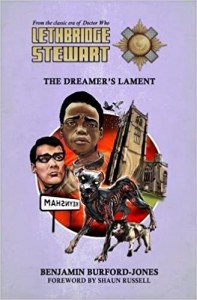
- Fri, 18:02: The Flaming Soldier, by Christopher Bryant; The Dreamer’s Lament, by Benjamin Burford-Jones https://t.co/Re85OiJsu2
- Fri, 20:48: RT @scoutwithnick: Never worked for Ivan Reitman, but I had a pretty surreal encounter with him back in summer ’03. They were doing the Cen…
- Fri, 23:00: RT @gallifreyone: A Meeping Angel. Is this one of the best things ever, or what? 😉 #gally1
- Sat, 03:31: Sylvester McCoy: “When you play Hamlet, you always get compared with other Hamlets… omelettes… well, I certainly got a lot of egg on my face!” #gally1 https://t.co/S5ZPhEsZBS
- Sat, 04:21: Me: Can I reserve a table for dinner please? Nice lady: Certainly sir. And do you have a phone number? Me: Yes, but it’s Belgian. Nice lady: That’s part of Germany isn’t it? Me: No. Nice lady: So it’s +49…? Me: +32… Nice lady: Why, so it is, I see that in our system! Thank you!
- Sat, 05:11: RT @gallifreyone: Day one status report! #gally1 https://t.co/0HshTMWdIc
- Sat, 10:45: RT @AITA_online: AITA – I provided scones for a work function and made some with cream first then jam and others with jam first then cream…
Saturday reading
Current
84K, by Claire North
Last books finished
The Dreamer’s Lament, by Benjamin Burford-Jones
Scherven, by Erik de Graaf
Project Hail Mary, by Andy Weir
Fireheart Tiger, by Aliette de Bodard
The Postmistress, by Sarah Blake
Doctor Who: The Evil of the Daleks, by John Peel
After Atlas, by Emma Newman
The Evil of the Daleks, by Simon Guerrier
Doctor Who and the Pyramids of Mars, by Terrance Dicks
Pyramids of Mars, by Kate Orman
Duran Duran: The First Four Years of the Fab Five by Neil Gaiman
Next books
The Twinkling of an Eye, by Brian Aldiss
Lost in Translation, by Ella Frances Sanders
The Flaming Soldier, by Christopher Bryant; The Dreamer’s Lament, by Benjamin Burford-Jones
Moving up my queued Doctor Who reviews in honour of my presence at Gallifrey One this weekend, here are a novella and novel in the generally good Lethbridge-Stewart spinoff series.
Second paragraph of third chapter of The Flaming Soldier, by Christopher Bryant:
For a moment, Oliver considered lingering by the local literature table, leafing through the pamphlets about historical smugglers and recently-opened attractions while eavesdropping, but in the end lethargy won the day and he headed up to his room for a bit of an afternoon nap.
It was only after I had read this rather good novella that I discovered that the main guest character, Eileen Younghusband, was an entirely real person who also wrote for the publisher, Candy Jar Books. Often attempts to shoehorn real characters into fictional universes can fall flat (thinking of Lindsey Davis's The Accusers as a case in point), but this one has really worked well. There are two converging timelines, Eileen and colleagues managing a captured alien spacecraft in the middle of WW2, and the Brigadier and proto-UNIT colleagues managing a situation of spontaneous combustion in the ranks. It's short and punchy, and recommended. You can get it here.
Second paragraph of third chapter of The Dreamer’s Lament, by Benjamin Burford-Jones:
‘Any joy?’ he asked Dovey.
I'm afraid this is the first really poor volume in the Lethbridge-Stewart series that I have encountered, though that's not a bad ratio given that it's the nineteenth (I think) that I have read. Burford-Jones' writing style is rather lurid (especially in the first chapter, which almost made me close the book without going any further); I could not take seriously his set-up, that there is a lost time-shifted corner of countryside near Bristol existing in a parallel dimension, including disappearing passenger trains; and it's basically a story about zombies, a sub-genre which has never done anything for me. You can get it here.

My tweets
- Thu, 12:56: RT @RRRDonner: #OTD My great-great-aunt Mildred Harnack was beheaded on Hitler’s direct order. Born in Milwaukee, she was 26 when she moved…
- Thu, 18:15: The [Unofficial] Dr Who Annual [1965], by David May https://t.co/7Q5MFSaTS3
- Fri, 02:23: @DrMatthewSweet Are you at Gallifrey yet? Am an admirer of your work, hope we can meet up.
- Fri, 05:16: Mega jet lag… I got up 25 hours ago, and it’s still only a quarter past eight!
- Fri, 10:45: RT @redhistorian: Good piece by @DavidGauke. It was not the “woke left” that tried to overthrow a democratic election in the US, suspended…
The [Unofficial] Dr Who Annual [1965], by David May
Second paragraph of third chapter ("The Space Buoy", by Paul Vought):
He flicked a switch on the control panel and waited for an image to appear on the monitor. Seconds ticked by, the screen remained black. Although it normally took a short while to show an image, this was taking too long. What was wrong with the confounded thing now? He had only recently replaced the valves in the device. He flicked the switch back and forth but the screen was still resolutely black.
There is a bit of a cottage industry at the moment in producing unofficial annuals for old TV series; I had already tried the 1984 Blake's 7 Annual, and I have a few more Doctor Who ones on the shelf.
The very first Doctor Who annual was the 1966 one, published in late 1965, the only one featuring William Hartnell. What if the BBC had got into the game a year earlier, and published an annual at the end of the show's first full year? David May and collaborators have produced 156 pages of material, mostly prose stories, though with a couple of comic strips, a few little features (including a mock interview with William Hartnell) and the usual rather pointless games and puzzles.
The stories are a mix of standard sf and historicals, the latter including encounters with Amundsen and Magellan, and a visit to the Russian Revolution. None of the TV aliens or companions appear, though the Doctor rescues a girl from 1918 Russia who stays with the TARDIS for the last few stories. (The real 1966 Annual also had the Doctor travelling alone, but featured several aliens from the TV show.) Most of the stories are decent enough – though there is one awful battle-of-the-sexes tale by Gordon Tarrant – and the art is lovely.
I normally provide a link where you could buy this for yourself, but I see that the Lulu webpage where I got it from has been closed down, so I guess you'll have to look for a second-hand copy. (Not selling mine!!!)

My tweets
- Wed, 18:36: March 2015 books https://t.co/f3RgFOVgmK
- Wed, 19:24: Waiting for the 337 @delijn at Leuven station. Ten minutes late (and this is the first stop of the route), miserable weather, with nowhere to sit. As usual, no explanation and no advice of when it will come, if ever. Thanks guys.
- Wed, 20:28: I’ll be there! https://t.co/fwNHVh1KZf
- Wed, 22:06: RT @DebStanish: On this date, at this time, at the last @gallifreyone (2020) I was on stage with @taigooden having a lovely chat with Chris…
- Thu, 08:11: See you very soon! https://t.co/O64jxpmhV1
- Thu, 10:45: Why Performing Stage Combat With Cerebral Palsy Was a Real Battle https://t.co/az4jr4cptn I know the author’s parents well; lovely to read this from Z.
March 2015 books
This is the latest post in a series I started in late 2019, anticipating the twentieth anniversary of my bookblogging which will fall in 2023. Every six-ish days, I've been revisiting a month from my recent past, noting work and family developments as well as the books I read in that month. I've found it a pleasantly cathartic process, especially in recent circumstances. If you want to look back at previous entries, they are all tagged under bookblog nostalgia.
I started the month by giving my inaugural lecture as a Visiting Professor at Ulster University. (The cycle of time being what it is, I'm due to give another five weeks from now.) I also had work trips to Paris, London and rather more exotically Iraq, where I attended a conference in Suleimaniya.

On my way back from Iraq, I got the awfully sad but not at all unexpected news that we had lost Terry Pratchett.
I read 16 books that month.
Non-fiction: 3 (YTD 14)
The Charm of Belgium, by Brian Lunn
The Wretched of the Earth, by Frantz Fanon
Shan Mohangi: 95 Harcourt Street, by Kevin Higgins


SF (non-Who): 7 (YTD 31)
The Jonah Kit, by Ian Watson
The Defenders, by Will McIntosh
The Peripheral, by William Gibson
The Bees, by Laline Paull (did not complete reread)
The Girl with All the Gifts, by M.R. Carey
Europe in Autumn, by David Hutchinson
The Mussel Easter, by Octavia Cade

Doctor Who, etc: 4 (YTD 11)
Lethbridge-Stewart: The Forgotten Son, by Andy Frankham-Allen
Grave Matter, by Justin Richards
The Last Resort, by Paul Leonard
Beyond the Sun, by Matthew Jones


Comics : 2 (YTD 6)
Saga vol 3, by Brian K. Vaughan and Fiona Staples
With The Light Vol 8, by Keiko Tobe


~4,958 pages (YTD 18,958)
4/16 by women (YTD 20/64) – Paull, Cade, Staples, Tobe
3/16 by PoC (YTD 4/64) – Fanon, Staples, Tobe
The best new read here was Volume 3 of Saga, which you can get hereThe Jonah Kit, which you can get here.
My tweets
- Tue, 12:56: RT @drgurner: Some patterns I’ve seen in people who are Outliers, incredibly high performers in their areas, specifically in tech or financ…
- Tue, 16:05: Why Liz Truss is unfit to be prime minister https://t.co/95eZe8tSPC I wish @mfletchertimes would tell us what he really thinks.
- Tue, 20:02: 700 days of plague https://t.co/Fnqt5flj0n
- Wed, 10:45: RT @David_K_Clark: This tweet is so densely packed with Kremlin disinformation that no light can escape it. https://t.co/agChyOaLND
700 days of plague
The end may be in sight. Other countries have moved a bit quicker than Belgium; I don’t really begrudge the authorities here their caution, but I’m very glad that restrictions are going to be drastically reduced from Friday.
I won’t be here for it. I’m going to the USA on Thursday for a week and a half, first to Gallifrey One in Los Angeles, reprising my last big trip before everything went wrong in 2020; then I hope a day in Vancouver, and a weekend in Seattle with an old friend, before getting home on the 28th. So I’ve been rather frantically trying to close off various work files this week, not helped of course by major developments for two of our more sensitive clients over the weekend.
I’ve also been following the Ottawa protests, with mounting disbelief. Gareth Evans, my former boss, used to joke that Canada is such a polite country that people say “thank you” to the ATMs when getting their money from the bank. We haven’t seen as much of that in recent days, as an externally funded group of unrepresentative activists has disrupted the life of the capital city. Here’s Amal El-Mohtar, expressing herself eloquently (as usual):
I’m just going to reiterate what I’ve been saying in private to family abroad thinking they’re supporting “freedom”: Centretown is under aggressive, belligerent, illegal occupation by white supremacists, & if you support them you are hurting me personally & I am ashamed of you.
— Amal El-Mohtar is on Hiatus until Feb 15 (@tithenai) February 6, 2022
These “protesters” want to decide government health policy by mob intimidation and are calling for the overthrow of a democratically elected government. I think it says a lot for Canadian tolerance that they have been allowed to endure this long. But as with 6 January 2021 in Washington, it’s a direct challenge to the rule of law, and it’s not clear that the rule of law has won.
The other direct challenge to the rule of law of course is the continuing awfulness of Boris Johnson, unapologetic for his repeated breaches of his own rules, or for his appalling slur on the Leader of the Opposition and the subsequent inflamed mob. Part of me hopes that the Conservatives dump this charlatan quickly, for the sake of the UK as a whole. Part of me hopes that he is allowed to linger on for months, with steadily dwindling authority, and that his successor is unable to rally a damaged and divided Conservative party in time to prevent a Labour victory. Keir Starmer has disappointed me on occasion, but at least he is not an instinctive, habitual liar and cheat.
Health-wise, the last of my follow-ups from my hospital visit in November revealed the rather surprising news that I have a granuloma on my larynx. It’s one of those psychological things where I went into the consultation convinced that there was nothing at all wrong, and came out of it convinced that I could clearly feel a lump in my throat. Apparently it is probably caused by acid reflux, can be treated with drugs and should go away without surgery. (It also turns out that I have extra arteries feeding my kidneys, but apparently this is found in 25% to 40% of cases, so it’s not quite as unusual as the extra bronchus in my trachea.)
As regards other people’s health, I was very sorry to see the news about Paul Byrne, who was only 44. He was probably a teenager when I last saw him, when his sister and my brother were an item, so it’s very sad news. (Also sad but less of a shock: former Slovak foreign minister and MEP Eduard Kukan, aged 82.)
I love Belgium in general. But I have been very frustrated by the post-Brexit customs charges on imports from the UK. Last week I finally received a keyboard for my iPad which physically arrived in Belgium in September. It was a replacement for faulty goods, so should not have been subject to VAT or import costs. I made many phone calls and sent many emails over the months, asking what had happened to my purchase; what struck me was the complete refusal of anyone I contacted to take responsibility for the delivery of my goods. A couple of times I got the answer that the package had been handed over to the customs service for a technical check; my problem with this response is that it clearly wasn’t true the first few times it was given, and in any case the responsibility for timely delivery still rests with the post office even if a different government department is involved. To a certain extent, Belgium is a country created by bureaucrats for bureaucrats; one is not reminded of this too often, I suppose. There would of course have been no need for an import procedure without Brexit, but there was no need for the import procedure to take 21 weeks.
My tweets
- Mon, 12:56: RT @wake_oliver: Terry Nation’s work on Doctor Who, Survivors and Blake’s 7 is well-known, but his earlier science fiction work which led t…
- Mon, 18:21: The Complete Debarkle: from 1880 to 2020, by Camestros Felapton https://t.co/e0QunSjEtZ
- Mon, 21:16: RT @SkyNews: Former Prime Minister of Finland Alexander Stubb says Putin has already “got what he wanted”, adding “the world is right now f…
- Mon, 21:55: RT @Ianblackford_MP: This is just awful. @Keir_Starmer has has death threats and yet @BorisJohnson shows no empathy or appreciation that he…
- Tue, 10:45: RT @castlvillageman: To remind people that you needed a travel permit to go from Britain to Northern Ireland before EU membership. https://…
The Complete Debarkle: from 1880 to 2020, by Camestros Felapton
Second paragraph of third chapter:
Part 1 of our Debarkle saga is estories [sic] about the past. Most of them take place this century but some of the precursors to the events in our saga take place in the Twentieth Century. I can’t hope to do justice to the full breadth of science fiction’s history but I will be looking at selected events from that history that have repercussions to later events. What follows in this chapter is a whistle-stop tour over many decades up to the early 1990s to just briefly touch on some elements of the past that will re-appear later. We’ll touch briefly on the roots of early fandom but mainly highlight some parts of US history that will be important later.
This is on the BSFA Awards long-list; a chronology and analysis of the Sad and Rabid Puppies, and their unsuccessful attempts to take over the 2015 and 2016 Hugo Awards, by the anonymous Australian blogger known as Camestros Felapton. I’ll be upfront and say that I vote for (almost) anything with my own name in it, and I am quoted half a dozen times here so it’s getting my vote to go on the BSFA short-list. In particular, it becomes clear that my own 2011 review, of Larry Correia’s Monster Hunter International was a major cause of resentment for him, the one thing he kept coming back to when complaining about mean people in SMOFdom. (At the time I wrote it, of course, I was not a SMOF at all; my involvement with Worldcons did not begin until the following year, and I was appointed as a future Hugo administrator for the first time only in 2015.)
I think in general Debarkle is fair, and attempts to understand both the Puppies and their opponents on their own terms. Throughout, the wider cultural and political context from which the Puppies emerged is linked to the specifics of the story – this includes Racefail, the Requires Hate affair and a bunch of other sf controversies, but also Gamergate, and the future Trump and Brexit victories of 2016.
After all that analysis, one is left a little mystified as to what the goal of the Sad Puppies actually was, once the founder Larry Correia had bowed out and his wounded pride was no longer a factor; the various mission statements made by Brad Torgersen and the Mad Genius Club are somewhat contradictory, to put it mildly. Torgersen is eloquent without actually being articulate, and this meant that a number of naïve, mostly right-wing fans with a vague political grievance threw their lot in with him, whereas other more sensible people took one look at his frothing blog posts and decided they’d seen enough.
As for the Rabid Puppies, they were a manifestation of Vox Day’s determined self-promotion and general evil intention of wrecking other people’s fun. (Vox Day has self-described as “evil” on numerous occasions, so I don’t feel that I am being judgemental here.) Some people saw the (very partial) success of the Rabid Puppy slate as proof of Vox Day’s cunning; in fact all it showed was that he was able to persuade his acolytes to throw away their money. His dismal lack of critical thinking skills, clear enough at the time from his political polemics, have been vividly demonstrated since by his gormless adoption of the QAnon / Trump mythos.
The book ends with the author’s “unified puppy theory” which attempts to explain Correia and Torgersen’s behaviour as manifesting a business development strategy, and it makes some sense, though really I think the briefest summary is that the principals simply lost the run of themselves, as we say back home.
The author has made the whole book available for free here. I wish they had spent a bit more time chasing down typos and tightening up the prose, and also I wish that they’d hyperlinked the footnotes, which would make for an easier read. But it’s very much worth getting, if you lived through that period, and it probably will stand as the best record of what exactly happened.

My tweets
- Sun, 12:56: 5,000-year-old drum and three Stonehenge-era children found in England – The Washington Post https://t.co/9iH0nJYFlt It’s a hugely important discovery. But what does it mean?
- Sun, 15:05: Check out my walk on Strava. https://t.co/chyU1YDm2m https://t.co/xDGJfRArRw
- Sun, 16:03: The stucco ceilings of Jan-Christian Hansche, part 7: a visit to Gent https://t.co/7oatabMs1Q
- Sun, 23:47: Le Mot (@WordleFR) #35 4/6 ⬛ ⬛⬛ ⬛ ⬛ ⬛ ⬛ https://t.co/lzGrzAR3uk Didn’t realise that was a word in French!
- Mon, 10:45: North Macedonia’s President walks bullied 11-year-old girl with Down syndrome to school https://t.co/rfsuxKqIsd I am proud to call President @SPendarovski my friend.
The stucco ceilings of Jan-Christian Hansche, part 7: a visit to Gent
F and I went to Gent last weekend to track down a couple more of the seventeenth century stucco ceilings of Jean-Christian Hansche. One of them is in the library of the law faculty of the University of Gent;Luc De Bie, the faculty secretary, wants it to be known that he is very happy to show visitors around by appointment, and he gave us a great tour of the buildings as a whole. I think I would recommend going at a warmer time of year, to take advantage of the courtyards.
The building is lovely, but I’m afraid I only had eyes for the library and its ceiling.

As you can see from the picture, there is a gallery all round the side of the room, from which you can get a closer look at the detail though you lose the big picture.

We were a group of six: left to right, here are F, Luc De Bie, and three friends of mine who live in Gent, R, JC and L – all masked and socially distanced.

To be honest, it’s the least adventurous of the seven Hansche ceilings that I have seen so far, and we wondered if it might have been one of his earlier works. It lacks the shocking three-dimensionality of the Park, Perk and Modave stuccos, or the lost ones in Germany, and even the Antwerp and Franc-Waret ceilings have a few projections into our space.
However, the detail is still beautiful. Mythological beasts cavort in pursuit of wisdom, and people and plants soothe the nerves.


Incidentally I think those are boy dragons. (Or possibly gryphons, someone on social media suggested.)


Hansche certainly had balls.
It did make me reflect that there are not very many women figures in Hansche’s work, and they generally aren’t as striking as the men. On the law library ceiling there are a couple of rather crude bat-like creatures with chest bumps, not quite as vivid as the dragons or whatever they are.


So that’s the Gent law library: a lovely space which students are fortunate to be able to use, as originally intended. It’s had a bit of a history – at one point it was a laboratory for chemistry students (one shudders to think of the effect on the stucco) and at a different time it was a gymnasium.

That is not the only work by Hansche in the Gent area. The other is in a private house,whose owner, Mrs D, generously allowed me and F to look at it last weekend while we were in the neighbourhood. What’s now Mrs D’s living room was originally built as a meeting room for one of the guilds, and has since been a coach repair shop and a perfume shop – again, think of the chemical effects on the plaster!
Mrs D’s ceiling is spectacular, at the top of my list along with the Park and Modave ceilings. It’s also less elevated than any of the others, including the law library, so you feel that you are right in the middle of Hansche’s world. At Mrs D’s request, we did not take photographs of her ceiling ourselves. However, there is a brilliant picture showing the scale in a 1995 book called Flanders: The Art of Living by Piet Swimberghe with photographs by Jan Verlinde.

In addition, the Gent city archive has several in stock, taken many years ago, which they have given permission for me to copy here. The most striking panel is the centrepiece, Phaethon and his chariot falling from the sky (Collection Archive Gent, Inventory number SCMS_FO_7496), also in the 1995 photograph above.

The figures of Phaethon and the horses are correctly proportioned and intruding into our space. It’s really startling. This was also the subject for one of the lost Hansche panels in Kleve:

The other panels in Gent are scenes from the Labours of Hercules, all again very three-dimensional. Here Herk is biffing the Lernaean Hydra, with his head, his club and the monster’s neck and head all solidly protruding – though the Hydra is usually depicted with more than one head (Collection Archive Gent, Inventory number SCMS_FO_7497):

It’s much more ambitious than Hansche’s treatment of the same subject at Modave, where the monster has more heads (as is traditional) but the 3D execution is much less:

Back in Gent, here is Hercules killing the dragon that guards the golden apples of Hesperides with a single arrow. His bow, like Phaethon’s reins, is ironwork rather than plaster. His arm and the dragon’s head, and the bow, are all in our space. The dragon’s tongue is slightly tinted red even after all these years (Collection Archive Gent, Inventory number SCMS_FO_7494, rotated).

Though again I found myself questioning Hansche’s depiction of women. This may possibly be Hercules seizing the belt of the Amazon queen Hippolytathe lion’s mane that he is wearing (Collection Archive Gent, Inventory number SCMS_FO_7493, cropped).

Anyway, I’m tremendously grateful to Mrs D for letting us see her ceiling.
So, I still have three nearby castles to visit with Hansche stucco ceilings, all in private ownership; I am in touch with one of the owners so far, but my next trip will have to wait until I get back from my coming US trip. This is a very interesting little project.
My tweets
- Sat, 16:12: Howl’s Moving Castle https://t.co/fo1N4mYXvt
- Sat, 18:14: Saturday reading https://t.co/L2ztBiFheW
- Sat, 19:01: RT @chortle: ‘He knew funny better than anyone’ | Tributes after stand-up comedy director Paul Byrne dies at 45 https://t.co/g2UkZmYUg7 htt…
- Sun, 10:45: How London almost got its own Eiffel Tower | CNN Travel https://t.co/FdPQJxWcp6 London was once on track to have its own bigger, better Eiffel Tower, a gigantic metal creation that would reach to 1,200 feet. But as the creation rose over the city’s suburbs, it all went wrong.
Saturday reading
Current
Scherven, by Erik de Graaf
The Postmistress, by Sarah Blake
The Dreamer’s Lament, by Benjamin Burford-Jones
Project Hail Mary, by Andy Weir
Last books finished
Roger Zelazny, by F. Brett Cox
The Flaming Soldier, by Christopher Bryant
Chaos on CatNet, by Naomi Kritzer
Next books
After Atlas, by Emma Newman
Duran Duran: The Book by Neil Gaiman
Howl’s Moving Castle
Howl's Moving Castle won the 2006 Nebula Award for Best Script, beating Batman Begins, a Battlestar Galactica episode and Doctor Who's "The Girl in the Fireplace". It came nowhere near the Hugos, probably the farthest away from the Hugo Awards of any Nebula-winning film (I have not checked), with 58 nominating votes where 92 would have been needed to get on the 2006 ballot, beaten not only by the finalists but also by Peter Jackson's King Kong. IMDB counts it as a 2004 film, where it is ranked respectably, 13th on one list, 20th on the other, behind The Incredibles in both cases.

It's on Netflix in Belgium, so we decided to watch it with the Japanese soundtrack and English subtitles (therefore failing to share the experience of the Nebula voters, who were working from the English translation rather than Hayao Miyazaki's original text). I have to say that we thoroughly enjoyed it. Here's a trailer:
In case you don't know, the story is about young Sophie, who becomes involved with the wizard Howl; she is transformed into an old woman by a wicked witch, and spends the rest of the story trying to help Howl, return to her own youth, and incidentally stop the war between her kingdom and the one next door.
I felt it was a beautifully realised mixture of Japanese and European elements. The city-scapes are clearly Central European, as are Sophie and her family and neighbours, but Howl himself and junior wizard Markl are straight out of Japanese manga. Howl's castle is very reminiscent of Terry Gilliam's Monty Python animations, except done rather better. The music is great and the script sparkles. The airborne sequences are particularly memorable. The plot resolution is a bit rushed and compressed at the end, but I was forgiving after having really enjoyed the first hour and fifty minutes.
I did find it intriguing that so many of the characters have names that are difficult to say in Japanese – Howl himself, junior wizard Markl, the fire demon Calcifer, the evil sorceress Suliman, Sophie's sister Letty. This may simply be my ignorance of Japanese, and heaven knows I am probably badly mangling every Japanese name that I attempt to say.
Anyway, I liked it a lot more than The Incredibles, another award-winning animated film of the same year, and I'm putting it halfway down my league table, just below Young Frankenstein but above Who Framed Roger Rabbit.
I had not read the original novel by the late great Diana Wynne Jones. the second paragraph of the third chapter is:
Her hand could not come near it. Some invisible wall stopped her hand about a foot from the door. Sophie prodded at it with an irritable finger. When that made no difference, she prodded with her stick. The wall seemed to be all over the door from as high as her stick could reach, and right down to the heather sticking out from under the doorstep.
There are a lot of differences with the film, and I guess it made me more conscious of what DWJ was reaching for as a writer. For a start, the novel is very English, and also Welsh, in a way that the film is not. The suburban streets are definitely not Continental, in a way that's difficult to describe but impossible to mistake. But also, DWJ is much more into complex family dynamics than into spectacle. Howl's apprentice Michael (rather than the Alpine-sounding Markl) is a grown young man rather than a boy. Sophie has two sisters and a stepmother. There is a lot (as usual with DWJ) about family dynamics, both Sophie's birth family and her adopted household in the moving castle. There is a distinct lack of spectacular flying scenes. The plot is still a bit tangly, and the resolution is just about better than the film, untidier than usual for DWJ. However, it's great fun and you can get it here.

My tweets
- Fri, 12:56: Material from asteroid Ryugu starts to give up secrets of early Solar System https://t.co/UeUfmJJe1u Wow.
- Fri, 16:05: RT @Mikeachim: I recently learned something mindblowing about the geological history of the Mediterranean Sea, and I just can’t get it out…
- Fri, 17:11: A Voice from the Past https://t.co/YtrjgPmQ5j Interview with Blake’s 7 director Des McCarthy.
- Fri, 18:15: Scream of the Shalka, by Jon Arnold (and Paul Cornell) https://t.co/0KO175UmSk
- Fri, 20:48: RT @chrischirp: THREAD: I keep being asked when we can go “back to normal” or “like it was before”. My personal thoughts: We’ve added a ne…
Scream of the Shalka, by Jon Arnold (and Paul Cornell)
Next in the sequence of Black Archive monographs about individual Doctor Who stories, this time it’s the 2003 webcast which briefly promised to be a new start for the show, and was then blown out of the water by BBC Wales. I rewatched the actual story again, having been underwhelmed on first watching in 2012 when I wrote:
Scream of the Shalka is the reboot that didn’t come off. It is a shame in some ways because it has its strengths – notably the animation, which is far ahead of the other three in quality, Paul Cornell’s story-line of alien beings breaking into our world from an unexpected direction, and Sophie Okonedo’s performance as one-off companion Alison, and Derek Jacobi, not for the last time, as the Master. (Also keep an ear out for a brief appearance by David Tennant as a minor character.) But the biggest problem is Richard E. Grant’s Doctor, a pale and vampire-like presence whose arrogant character lies somewhere between the low point of Pertwee’s Doctor and the mid-point of Colin Baker’s for likeability. (Which is to say, not very high.) In the last episode we are told – by the Master, no less – that the Doctor is dealing with the scars of some dreadful conflict too awful to describe, an idea brought into NewWho also; and he gradually mellows throughout the story. In the end it feels a bit like The Movie, a false start, which relies a bit too much on continuity and does not do enough to make this about a character you would want to watch another seven, or twenty-six, or fifty years of. (For instance, Old Who fans will be baffled that the Master is now n sevraqyl ebobg; those new to Who will wonder why they are meant to care.) And there is an awful lot of screaming, though of course the clue is in the title.
This time around, I took it at an episode every evening, mostly glancing at the iPad while cooking, and it works maybe a little better at that pace, with the tension of the narrative tightly linked to the episodic structure (Cornell after all knew his stuff, as a reasonably experienced screenwriter). It’s also worth noting that the Shalka!Doctor is dealing with the recent loss of a dear companion, and presumably if this continuity had been prolonged we’d have learned more about that. You can (still) watch it here.
I also revisited Cornell’s novelisation. Second paragraph of third chapter:
The figure was green, its features smooth, like a polished marble statue. Its mouth was flexible and muscular, the only part of it that spoke of function over form. It was androgynous, and had no need for clothes. It was a representation of a human-being as seen from a distance, as seen from a superior culture.
When I first read it, also in 2012, I wrote:
I was really surprised and pleased by how much I enjoyed this book, the novelisation of the webcast story starring Richard E. Grant as the other Ninth Doctor. Perhaps it is partly that, at least in the opening pages, it so consciously draws on the style of the Dicks and Hulke novelisations of the Third and Fourth Doctor stories which meant so much to fans of the same sort of age as the author and me. But also a lot of the sequencing that didn’t quite work for me in the webcast seemed to me to be much better here: the Master’s new situation, the reasons for the Doctor’s emotional coldness, the back story to Alison’s relationship. We do miss out on Conor Moloney’s performance as Greaves, though. Perhaps the last week of work before the Christmas hols was a bad time to watch the webcast; I am certain that if I had read the book before watching it, I would have enjoyed both more.
Some of the similarities between Shalka continuity and New Who are even more noticeable here: that the Ninth Doctor is suffering PTSD after an awful war in which many people he cared about were killed, and that the new companion chooses to travel with the Doctor rather than remain in a (dull) interracial relationship. (As in Rose, there is also a monster leader underground controlling its minions who burst into the normal world to terrify humans, and the Doctor must descend to their lair to do battle, but those are fairly standard plot elements.)
The book also comes with a long afterword – a quarter of its total length – including the original story proposal and the author’s account of how the story came to be made, told with Cornell’s typical enthusiasm, but with first-hand accounts patched in from the production team as well. This may have turned out to be just a sidetrack in Who history but we are lucky that it is so well chronicled, including the story of how Cornell, on honeymoon in New Zealand, had to get a friend to break into his house to transmit the script to the BBC after an email went astray. It certainly adds to what is already a good book for fans to track down.
Not much to add this time. I really enjoyed the return to both the novelised story and the lengthy afterword. You can get it here.
Second paragraph of third chapter of Jon Arnold’s monograph, with footnotes (the third chapter is about the Master):
The role played by the Master was originally intended to be played by a holographic representation of a former Doctor. Cornell suggested that this should be the fifth Doctor, as ‘his kind and open personality would provide a nice contrast with our rather more harsh and edgy Doctor.’112 This was a contrast he’d used before, in his New Adventures novel Timewyrm: Revelation (1991), where the fifth Doctor was portrayed as an almost saintly presence in contrast to the seventh Doctor, who carried the weight of the universe on his shoulders. This would have given Shalka a very different flavour; the fifth Doctor was established as an unambiguously heroic figure, and whilst he often demonstrated a dry sense of humour, any edge to the relationship would have had to come from Grant’s Doctor, rendering him even less sympathetic than he initially appears to be. Cornell changed this setup for two reasons: firstly because he felt that holograms had been overdone in telefantasy shows113, and secondly so that this assistant could have a ‘complicated, somewhat dangerous relationship’ with the Doctor and be ‘programmed to do the nastier things that our emotionally wounded and defensive Doctor couldn’t bring himself to do’114. Essentially then, this version of the Master would retain the amoral methodology he had often demonstrated in his prior television appearances but, with apparently less selfish aims, he was now redefined as a hero.
112 Cornell, Scream of the Shalka, p202.
113 The obvious telefantasy antecedents Cornell is referring to which feature holograms able to assist but not interfere would have included Quantum Leap (1989-93), whose main character Sam was assisted by Al, a hologram of a person from Sam’s original time; the Emergency Medical Hologram called ‘the Doctor’ in Star Trek: Voyager (1995-2001); and possibly even the command hologram from Mighty Morphin Power Rangers (1993-95). He may have also been referring to Red Dwarf (1988-99 and since revived) and Stargate SG:1 (1997-2007); however, the holographic characters in these series serve very different roles. Holography was relatively uncommon in the series to this point, only appearing under that name in The Talons of Weng-Chiang (1977), The Leisure Hive (1980), Time and the Rani (1987) and Dragonfire (1987). The series’ use of holograms has become more common since 2005.
114 Cornell, Scream of the Shalka, p202.
Arnold actually wrote the very first of the Black Archive series, on Rose which came out the year after Scream of the Shalka and thoroughly stole its thunder. The actual analytical content of the book is the shortest of any of the Black Archives I have seen so far. Given that Scream of the Shalka turned out to be a dead end in continuity, there is not a lot to say, and most of it had already been said by Paul Cornell.
However there’s one particularly interesting point covered off by Arnold in the first chapter, which is on the nature of the Doctor; namely, why is it that the average viewer (Arnold quotes Russell T. Davies and Elizabeth Sandifer, but I would agree with them) finds Grant’s performance rather lacking in vigour, while those who were present at the actual shoot (Paul Cornell and James Goss, both of whom I would normally regard as reliable witnesses) describe him as thoroughly and energetically engaged in the recording? Arnold’s answer is that the medium itself is the issue:
The problem is that each line is delivered clearly and in full before the next line begins; everyone politely waits for the other person to fully finish speaking before they begin their line. As Who’s Next‘s verdict on Shalka notes, this feeling of the ‘in-the-room intimacy of a radio drama […] sits oddly when you’re watching pictures on a screen at the same time.’82 Conversations therefore rarely develop the energy of genuine interaction between two people, and instead feel like two people speaking in the same place and same time but not actually communicating. Whilst animation ameliorates this to a degree by the simple use of close-ups and characters facing each other, it drains the energy and emotion from performances; we don’t get proper reactions to build a scene.
82 Clapham, Mark, Eddie Robson and Jim Smith, Who’s Next: An Unofficial and Unauthorised Guide to Doctor Who (2005), P390.
This is one of the most interesting production-related insights I’ve gleaned from the Black Archive series so far.
Just for completeness, the (few) chapters of Arnold’s monograph cover:
- the nature of the Shalka!Doctor, as already discussed, and his roots in Dracula, Sherlock Holmes and Cornell’s other work;
- Alison as a companion;
- The Master, as noted;
- Scream of the Shalka as a reboot story;
- a conclusion to the main narrative: “It’s a brave, flawed attempt to find a future for Doctor Who when no-one thought it had one.”
- an appendix debating the extent to which Scream of the Shalka is canon;
- another appendix looking at “The Feast of the Stone”, the only other published story in Shalka!Doctor continuity;
- a final, very long appendix presenting the sequel which came closest to being made, Simon Clark’s “Blood of the Robots” (other script proposals by Paul Cornell and Jonathan Clements were recycled elsewhere in the Whoniverse; the one by Stephen Baxter has not resurfaced).
If you’re intrigued by the possibilities of the Shalka!Doctor continuity, this book will tick your boxes. You can get it here.


The Black Archives
1st Doctor: The Daleks (82) | The Edge of Destruction (67) | Marco Polo (18) | The Aztecs (71) | The Dalek Invasion of Earth (30) | The Romans (32) | The Myth Makers (65) | The Massacre (2) | The Ark (81)
2nd Doctor: The Underwater Menace (40) | The Evil of the Daleks (11) | The Mind Robber (7)
3rd Doctor: Doctor Who and the Silurians (39) | The Ambassadors of Death (3) | The Dæmons (26) | Carnival of Monsters (16) | The Time Warrior (24) | Invasion of the Dinosaurs (55)
4th Doctor: Pyramids of Mars (12) | The Hand of Fear (53) | The Deadly Assassin (45) | The Face of Evil (27) | The Robots of Death (43) | Talons of Weng-Chiang (58) | Horror of Fang Rock (33) | Image of the Fendahl (5) | The Sun Makers (60) | The Stones of Blood (47) | Full Circle (15) | Warriors’ Gate (31) | Logopolis (76)
5th Doctor: Castrovalva (77) | Kinda (62) | Black Orchid (8) | Earthshock (51) | Mawdryn Undead (80) | The Awakening (46)
6th Doctor: Vengeance on Varos (41) | Timelash (35) | The Mysterious Planet (79) | The Ultimate Foe (14)
7th Doctor: Paradise Towers (61) | The Happiness Patrol (68) | Silver Nemesis (75) | The Greatest Show in the Galaxy (66) | Battlefield (34) | The Curse of Fenric (23) | Ghost Light (6)
8th Doctor: The Movie (25) | The Night of the Doctor (49)
Other Doctor: Scream of the Shalka (10)
9th Doctor: Rose (1) | Dalek (54)
10th Doctor: The Impossible Planet / The Satan Pit (17) | Love & Monsters (28) | Human Nature / The Family of Blood (13) | The Sound of Drums / Last of the Time Lords (38) | Silence in the Library / The Forest of the Dead (72) | Midnight (69)
11th Doctor: The Eleventh Hour (19) | Vincent and the Doctor (57) | The Pandorica Opens / The Big Bang (44) | A Christmas Carol (74) | The Impossible Astronaut / Day of the Moon (29) | The God Complex (9) | The Rings of Akhaten (42) | Day of the Doctor (50)
12th Doctor: Listen (36) | Kill the Moon (59) | Under the Lake / Before the Flood (73) | The Girl Who Died (64) | Dark Water / Death in Heaven (4) | Face the Raven (20) | Heaven Sent (21) | Hell Bent (22)
13th Doctor: Arachnids in the UK (48) | Kerblam! (37) | The Battle of Ranskoor av Kolos (52) | The Haunting of Villa Diodati (56) | Ascension of the Cybermen / The Timeless Children (70) | Flux (63)
15th Doctor: The Devil’s Chord (78)
My tweets
- Thu, 12:56: RT @ClaireHanna: This puts on public record the truth families on the lower Ormeau have been telling for 30 years and it is difficult readi…
- Thu, 15:38: The extraordinary “Reading Between the Lines”, a sculpture in Borgloon in eastern Belgium. There’s quite a lot of public art in Borgloon, but this is the most spectacular. We went in May 2015. #ArtOnThursday https://t.co/il1WjKrNu2
- Thu, 16:05: RT @jwsal: ‘I don’t understand why the camel’s back was broken, when we look back on Straw-gate, we will wonder what the fuss was all about…
- Thu, 17:11: 50 Very Bad Book Covers for Literary Classics https://t.co/HKRvx8XqN7
- Thu, 18:09: A loss for Parliament. https://t.co/KyXi8zpCHA
- Thu, 18:26: The Three-Body Problem and The Dark Forest, by Cixin Liu https://t.co/vvQA6YpdsL
- Thu, 20:35: RT @PippaCrerar: BREAKING Dame Cressida Dick leaves Met Police after string of Scotland Yard scandals https://t.co/SoFwyFKrKn
- Thu, 20:36: RT @BBCBreaking: Dame Cressida Dick to step down as head of the Met Police, BBC told https://t.co/KUinUa0ydi
- Thu, 20:36: That aged well. https://t.co/ip1jTnQ8QM
- Thu, 20:48: RT @jonlis1: I don’t think we pay enough attention to the fact the prime minister’s own brother resigned from his government saying his lea…
- Thu, 22:49: RT @georgermburn: Whatever I think of Truss – and I don’t think much of her – @b_judah is right. Lavrov’s crude mind-games do nothing to…
- Fri, 10:45: Awwwwwww!!!!!!!!!! https://t.co/BPb5ZvRmdr
The Three-Body Problem and The Dark Forest, by Cixin Liu
Second paragraph of third chapter of The Three-Body Problem (first half of third paragraph in the English translation):
她听到有个男声在轻轻叫自己的名字。 She heard a male voice softly calling her name.
Second paragraph of Part III of The Dark Forest:
罗辑从冬眠中醒来。 Luo Ji awoke from hibernation.
Young F kindly got me the second volume of the Remembrance of Earth's Past trilogy for Christmas, having correctly noted that I already had the first and third, and I decided to reread all three to give me the full sense of the narrative. Then the BSFA long list came out just as I was about to finish The Dark Forest, so I've put Death's End on hold for now.
When I first read The Three-Body Problem, I ranked it second on my Hugo ballot for that year (which of course it won) and wrote:
This is a novel about contemporary Chinese scientists dealing with alien contact, video games and the legacy of the Cultural Revolution. It's very neatly constructed and convincing. Ken Liu's footnotes on Chinese politics and history inform without intruding. It slightly lost me when the aliens actually appeared, but I still really enjoyed it.
On re-reading, if anything I felt it worked better this time round; the aliens are suitably alien and internally divided, and I think first time round I had slightly lost patience because the book is quite long. You can get it here.
The Dark Forest slightly threw me near the beginning when the United Nations appoints four people (all men) with plenipotentiary and unaccountable power to spend public money as they see fit on resources to deal with the alien Trisolaran menace. But having swallowed this implausibility, I thought it was worked out well, with two particularly good sequences – an orbital assassination and a spaceship battle. The last part of the book is set 200 years on, and I liked the portrayal of the problems of someone who has been asleep for two centuries trying to integrate with a world that has changed. I'm sorry I didn't get to this sooner; I might have enjoyed the third volume more. You can get it here.


My tweets
- Wed, 12:56: In 1922, a Novelist Predicts What the World Will Look Like in 2022: Wireless Telephones, 8-Hour Flights to Europe & More | Open Culture https://t.co/LUhdLmjPRi Missed this when I was doing my list of sf set in 2022!
- Wed, 16:05: Disputed Presidential Elections and the Collapse of Constitutional Norms by Matthew Seligman https://t.co/CaqvYdaCJV Wow. Detailed and rather horrifying.
- Wed, 17:11: Why Scottish nationalism is simultaneously safe and stuck https://t.co/mo3LJXaq38 “unlike Ukraine or Ireland, Scotland isn’t so much a cause as a complaint”
- Wed, 18:27: February 2015 books https://t.co/pXpGic4dKY
- Wed, 20:48: RT @BySteveReilly: We researched some of the biggest Facebook groups promoting the Canadian trucker protest before they were shut down yest…
- Wed, 22:53: RT @alexwilcock: OTD 1996: The South Quay bombing Always a horrific memory. I was visiting my Grandad when I saw the news. Hours before I c…
- Thu, 10:03: Sorry to hear that Eduard Kukan has died at 82. Always great to work with him when he was an MEP, and of course that was only the last step of a distinguished career. https://t.co/RC3qfqLWTn
- Thu, 10:45: RT @chrisgreybrexit: Beyond belief. Really. This MP – the MP for Dover of all places – seems genuinely not to understand that it was EU mem…
February 2015 books
This is the latest post in a series I started in late 2019, anticipating the twentieth anniversary of my bookblogging which will fall in 2023. Every six-ish days, I've been revisiting a month from my recent past, noting work and family developments as well as the books I read in that month. I've found it a pleasantly cathartic process, especially in recent circumstances. If you want to look back at previous entries, they are all tagged under bookblog nostalgia.
As was increasingly routine, I had two work trips to London that month; also Anne and I went to a concert in Antwerp, commemorating the 150th anniversary of the birth of my favourite composer, Sibelius. And at the end of the month my sister C and her daughter S came to visit, and we went to the Atomium.

I read 20 books that month.
Non-fiction: 3 (YTD 11)
Het Achterhuis, by Anne Frank / The Diary of a Young Girl, by Anne Frank, see also later note on Alfred Dussel / Fritz Pfeffer
Anne Frank: The book, the life and the afterlife, by Francine Prose
Tree and Leaf, by J R R Tolkien (has a little more non-fiction content than fiction)


Fiction (non-sf): 1 (YTD 2)
I Don't Know How She Does It, by Allison Pearson

SF (non-Who): 9 (YTD 24)
The Girl in the Road, by Monica Byrne
Mars Evacuees, by Sophia McDougall
The Abyss Beyond Dreams, by Peter Hamilton – did not finish
Amnesia, by Peter Carey
Firefall, by Peter Watts
The Blood Red City, by Justin Richards
Cataveiro, by E.J. Swift – not finished
Transit of Earth (anthology, no editor credited)
Descent, by Ken MacLeod


Doctor Who, etc: 4 (YTD 7)
Warmonger, by Terrance Dicks
Reckless Engineering, by Nick Walters
Dragon's Wrath, by Justin Richards
Doctor Who Annual 2015


Comics : 2 (YTD 4)
Bétélgeuse, v2: Les Survivants, by Leo
Boerke bijbel, by Pieter De Poortere


~6,000 pages (YTD 14,500)
6/19 by women (YTD 16/48) – Frank, Prose, Pearson, Byrne, McDougall, Swift
0/19 by PoC (YTD 1/48)
Always worth returning to Anne Frank, whose diary you can get hereDescent, by Ken MacLeod, which you can get here. Unimpressed with both Hamilton's Abyss Beyond Dreams, which you can get here, and Boerke Bijbel, which you can get here.
My tweets
- Tue, 12:56: Will Kate Forbes be Scotland’s next leader? https://t.co/Oy0HjCxOyt Very interesting.
- Tue, 16:05: Good thread. Two of these currently held by Unionists, five by Nationalists. And the Nationalist ones look safer, in general. https://t.co/lxSz4XIjOa
- Tue, 16:41: This keyboard for my iPad arrived at my house today. It had arrived in Belgium in 16 September, 145 days ago. In the meantime it has been waiting for customs clearance through @bpost_nl. I lost count of the number of phone calls and emails I sent asking what had happened to it. https://t.co/Sp9LWfKaSk
- Tue, 17:11: RT @HickeyWriter: The thing that gets me about the “free speech defenders” is that the only threat I ever get to my speech, the only pressu…
- Tue, 18:09: Why I Write, by George Orwell https://t.co/6DIqsA0GKg
- Tue, 20:48: RT @thomas_wier: Weekly Georgian Etymology: სოკო soḳo ‘mushroom’, from Old Georgian ႱႭႩႭ soḳo, from Georgian-Zan *soḳo, from Nakh-Daghestan…
- Wed, 10:45: RT @NoContextBrits: https://t.co/OenbccADc9
Why I Write, by George Orwell
This is a nice collection of four essays by Orwell, three very short and one much longer, and I'm going to treat them separately, because that gives me an excuse to inflict Orwell's gorgeous prose on you several times.
"Why I Write"
Third paragraph:
However, throughout this time I did in a sense engage in literary activities. To begin with there was the made-to-order stuff which I produced quickly, easily and without much pleasure to myself. Apart from school work, I wrote vers d'occasion, semi-comic poems which I could turn out at what now seems to me astonishing speed — at fourteen I wrote a whole rhyming play, in imitation of Aristophanes, in about a week — and helped to edit a school magazines, both printed and in manuscript. These magazines were the most pitiful burlesque stuff that you could imagine, and I took far less trouble with them than I now would with the cheapest journalism. But side by side with all this, for fifteen years or more, I was carrying out a literary exercise of a quite different kind: this was the making up of a continuous "story" about myself, a sort of diary existing only in the mind. I believe this is a common habit of children and adolescents. As a very small child I used to imagine that I was, say, Robin Hood, and picture myself as the hero of thrilling adventures, but quite soon my "story" ceased to be narcissistic in a crude way and became more and more a mere description of what I was doing and the things I saw. For minutes at a time this kind of thing would be running through my head: "He pushed the door open and entered the room. A yellow beam of sunlight, filtering through the muslin curtains, slanted on to the table, where a match-box, half-open, lay beside the inkpot. With his right hand in his pocket he moved across to the window. Down in the street a tortoiseshell cat was chasing a dead leaf," etc. etc. This habit continued until I was about twenty-five, right through my non-literary years. Although I had to search, and did search, for the right words, I seemed to be making this descriptive effort almost against my will, under a kind of compulsion from outside. The "story" must, I suppose, have reflected the styles of the various writers I admired at different ages, but so far as I remember it always had the same meticulous descriptive quality.
An interesting bit of self-reflection, available here, in which Orwell starts by describing his own artistic growth, and then the impact of politics on his thoughts and words. But he finished with a description which I recognise from some writers who I have known:
All writers are vain, selfish, and lazy, and at the very bottom of their motives there lies a mystery. Writing a book is a horrible, exhausting struggle, like a long bout of some painful illness. One would never undertake such a thing if one were not driven on by some demon whom one can neither resist nor understand.
"The Lion and the Unicorn: Socialism and the English Genius"
Second paragraph of third section:
One gets a better view of this question if one considers the minor point first. It is quite true that the so-called races of Britain feel themselves to be very different from one another. A Scotsman, for instance, does not thank you if you call him an Englishman. You can see the hesitation we feel on this point by the fact that we call our islands by no less than six different names, England, Britain, Great Britain, the British Isles, the United Kingdom and, in very exalted moments, Albion. Even the differences between north and south England loom large in our own eyes. But somehow these differences fade away the moment that any two Britons are confronted by a European. It is very rare to meet a foreigner, other than an American, who can distinguish between English and Scots or even English and Irish. To a Frenchman, the Breton and the Auvergnat seem very different beings, and the accent of Marseilles is a stock joke in Paris. Yet we speak of “France” and “the French”, recognizing France as an entity, a single civilization, which in fact it is. So also with ourselves. Looked at from the outside, even the cockney and the Yorkshireman have a strong family resemblance.
The longest essay in the book, taking up more than two thirds of the 120 pages, available separately here. On the one hand, it's very much moored in the particular time it was written – 1941, when it was not at all clear who was going to win the war – and with a particular agenda in mind – the necessity and inevitability of a Socialist government which would win the war and modernise Britain. In fact, of course, the Labour victory came only after the war was over, though it's certainly fair to say that the war could not have been won without the social changes that came with it. On the other, some of Orwell's observations are simply brilliant.
Since the ’fifties every war in which England has engaged has started off with a series of disasters, after which the situation has been saved by people comparatively low in the social scale. The higher commanders, drawn from the aristocracy, could never prepare for modern war, because in order to do so they would have had to admit to themselves that the world was changing. They have always clung to obsolete methods and weapons, because they inevitably saw each war as a repetition of the last. Before the Boer War they prepared for the Zulu War, before the 1914 for the Boer War, and before the present war for 1914. Even at this moment hundreds of thousands of men in England are being trained with the bayonet, a weapon entirely useless except for opening tins.
When I posted that last sentence admiringly to Facebook, lots of people jumped on me with examples of successful bayonet charges since Orwell wrote; but his point is that the soldiers were not being taught anything else.
"A Hanging"
Third paragraph:
Eight o'clock struck and a bugle call, desolately thin in the wet air, floated from the distant barracks. The superintendent of the jail, who was standing apart from the rest of us, moodily prodding the gravel with his stick, raised his head at the sound. He was an army doctor, with a grey toothbrush moustache and a gruff voice. ‘For God's sake hurry up, Francis,’ he said irritably. ‘The man ought to have been dead by this time. Aren't you ready yet?’
A detailed account of an execution in a jail in Burma, effectively and efficiently conveying the horror and pointlessness of the situation.
I found that I was laughing quite loudly. Everyone was laughing. Even the superintendent grinned in a tolerant way. ‘You'd better all come out and have a drink,’ he said quite genially. ‘I've got a bottle of whisky in the car. We could do with it.’
"Politics and the English Language"
Third paragraph:
These five passages have not been picked out because they are especially bad – I could have quoted far worse if I had chosen – but because they illustrate various of the mental vices from which we now suffer. They are a little below the average, but are fairly representative examples. I number them so that I can refer back to them when necessary:
This is a tremendous piece on writing clearly. He is particularly interested in political writing, which he felt was especially bad:
In our time it is broadly true that political writing is bad writing. Where it is not true, it will generally be found that the writer is some kind of rebel, expressing his private opinions, and not a ‘party line’. Orthodoxy, of whatever colour, seems to demand a lifeless, imitative style.
I don't know if things have improved much since Orwell's day. But his six rules for good writing should be on the wall of everyone who writes for a living, or indeed for a hobby:
i. Never use a metaphor, simile or other figure of speech which you are used to seeing in print.
ii. Never use a long word where a short one will do.
iii. If it is possible to cut a word out, always cut it out.
iv. Never use the passive where you can use the active.
v. Never use a foreign phrase, a scientific word or a jargon word if you can think of an everyday English equivalent.
vi. Break any of these rules sooner than say anything outright barbarous.
A short book that I picked up at the John Rylands Library in Manchester in November, but you can get it here. It almost immediately hit the top of my unread non-fiction pile. Next on that pile is Lost in Translation, by Ella Frances Sanders.

My tweets
- Mon, 12:04: Am not going to link to the article in question, but I am very amused by the notion that the EU was all set to cave to Unionist demands on the Protocol until the non-Unionist political parties went to Brussels and stiffened Šefčovič’s spine!!!!!
- Mon, 12:56: RT @MaddowBlog: “An officer filled out and signed a certificate confirming her probation had ended.” https://t.co/oG8Rw4wY3V
- Mon, 13:32: RT @Simon_Nixon: Boris Johnson is not a complete clown, says the British prime minister’s new spokesman.
- Mon, 16:05: The view from Ottawa. https://t.co/dRzZwCBJrD
- Mon, 17:11: RT @Samfr: New post just gone out from me. What Dominic Cummings Gets Wrong. Looks at our fundmental difference of opinion about policy.…
- Mon, 18:40: The God Complex, by Paul Driscoll https://t.co/ixouL3fFLN #doctorwho #mattsmith
- Mon, 20:48: RT @martinwolf_: Martin Wolf: The levelling-up white paper is a necessary call to arms https://t.co/qzYlB1EOOi
- Mon, 21:03: The actual quote was “Dydy e ddim yn glown i gyd”. https://t.co/tq2hv2oR5t
- Mon, 21:17: RT @ifanmj: @MayCharitos @Samfr The translation looks correct to me as a first language Welsh speaker: ‘Dydy e ddim yn glown i gyd, ond mae…
- Mon, 21:23: Would love to read this but alas @CjcHowarth blocked me after I bested him in this exchange: https://t.co/2pg3G6Yrla https://t.co/pAHTk2KebI
- Tue, 10:45: RT @RobDotHutton: It’s a paradox that the choice Tory MPs face is made harder, not easier, by the fact that we have learned nothing about B…
- Tue, 11:12: RT @endamcclafferty: .@BrandonLewis rules out an early assembly election, says it will take place as planned on May 5th
The God Complex, by Paul Driscoll
Second paragraph of third chapter:
One of the more plausible interpretations of The Shining covered in the documentary movie, Room 237 (2012), is that the movie is a reworking of the Theseus and the Minotaur myth. At the end of the film Jack dies inside a hedge maze, a location that Kubrick added to King’s novel. The association of Jack with the Minotaur is foreshadowed elsewhere in the movie: there are moments when Jack appears taurine-like – as if he’s a bull about to charge; there is a poster of a skier who looks like the Minotaur beside another of a cowboy riding a bull; and in another scene, Jack’s wife, Wendy, makes a comment about leaving a trail of breadcrumbs, reminiscent of Ariadne’s thread. The God Complex is far more explicit in its mining of the Minotaur myth, but its association with The Shining extends far beyond this shared mythical inspiration.
Next in the sequence of Black Archive monographs on individual Doctor Who stories, which I am reading at the rate of two a month in an attempt to catch up. (Both this and the next one in sequence are numbered #10 on the cover, but it seems that this is really #9.)
The God Complex is one of my less favourite episodes in one of my less favourite series of New Who, and I didn’t write it up at the time, nor did I recommended it in my epic “Which New Who to Watch” post. In case you need your memory refreshed, here’s the “Next Time” trailer:
It’s the one where the Doctor, Amy and Rory are stuck in a hotel with a few other characters, of whom the best developed is Rita, played by Amara Karan; but it turns out that the hotel is a prison for a Minotaur. Personally I didn’t feel that the plot held together at all, and the scene at the end, where the Doctor basically kicks Amy and Rory out of the Tardis to start their lives without him, was disappointingly underdeveloped. But others differ; here, for instance, is Matt Smith reflecting on what the story might have told us about the Doctor:
In a panel at Dragon Con 2017, Matt Smith revealed his own theory for what was in the mysterious Room 11 in The God Complex and it’s much darker than you’d expect. #DoctorWho #MattSmith pic.twitter.com/It95XFR3PJ
— Tom Bowen (@ThetaSigma2017) January 27, 2022
Driscoll is clearly also a fan of the story, finding a lot more depth to it than I had imagined was there. The chapters are as follows:
- The symbolism of the Minotaur, and modern treatments of the story in and beyond Doctor Who;
- The roots of the story in Orwell’s 1984 (surveillance in particular);
- The roots of the story in The Shining, film rather than book (hotel horror, obviously, though he also blames it for the weakness of the closing scene);
- The roots of the story in previous Who stories about bases under siege and about religion (though I think he misses a couple of interesting examples on religion);
- A rather good chapter on fear and terror as storytelling devices;
- A more confused chapter trying to work out what the story is trying to tell us about faith and religion;
- A long chapter on the Doctor’s fallibility as a hero;
- A chapter on the role of the companions in Doctor Who;
- a concluding short chapter wondering what the hell the symbolism of the fishbowl is meant to be?
Driscoll likes the story more than I did, but is not unaware of its flaws. I went back myself and watched it again to prepare for this post, but I think it will be a while before I repeat the effort. You can get Driscoll’s book here.

The Black Archives
1st Doctor: The Daleks (82) | The Edge of Destruction (67) | Marco Polo (18) | The Aztecs (71) | The Dalek Invasion of Earth (30) | The Romans (32) | The Myth Makers (65) | The Massacre (2) | The Ark (81)
2nd Doctor: The Underwater Menace (40) | The Evil of the Daleks (11) | The Mind Robber (7)
3rd Doctor: Doctor Who and the Silurians (39) | The Ambassadors of Death (3) | The Dæmons (26) | Carnival of Monsters (16) | The Time Warrior (24) | Invasion of the Dinosaurs (55)
4th Doctor: Pyramids of Mars (12) | The Hand of Fear (53) | The Deadly Assassin (45) | The Face of Evil (27) | The Robots of Death (43) | Talons of Weng-Chiang (58) | Horror of Fang Rock (33) | Image of the Fendahl (5) | The Sun Makers (60) | The Stones of Blood (47) | Full Circle (15) | Warriors’ Gate (31) | Logopolis (76)
5th Doctor: Castrovalva (77) | Kinda (62) | Black Orchid (8) | Earthshock (51) | Mawdryn Undead (80) | The Awakening (46)
6th Doctor: Vengeance on Varos (41) | Timelash (35) | The Mysterious Planet (79) | The Ultimate Foe (14)
7th Doctor: Paradise Towers (61) | The Happiness Patrol (68) | Silver Nemesis (75) | The Greatest Show in the Galaxy (66) | Battlefield (34) | The Curse of Fenric (23) | Ghost Light (6)
8th Doctor: The Movie (25) | The Night of the Doctor (49)
Other Doctor: Scream of the Shalka (10)
9th Doctor: Rose (1) | Dalek (54)
10th Doctor: The Impossible Planet / The Satan Pit (17) | Love & Monsters (28) | Human Nature / The Family of Blood (13) | The Sound of Drums / Last of the Time Lords (38) | Silence in the Library / The Forest of the Dead (72) | Midnight (69)
11th Doctor: The Eleventh Hour (19) | Vincent and the Doctor (57) | The Pandorica Opens / The Big Bang (44) | A Christmas Carol (74) | The Impossible Astronaut / Day of the Moon (29) | The God Complex (9) | The Rings of Akhaten (42) | Day of the Doctor (50)
12th Doctor: Listen (36) | Kill the Moon (59) | Under the Lake / Before the Flood (73) | The Girl Who Died (64) | Dark Water / Death in Heaven (4) | Face the Raven (20) | Heaven Sent (21) | Hell Bent (22)
13th Doctor: Arachnids in the UK (48) | Kerblam! (37) | The Battle of Ranskoor av Kolos (52) | The Haunting of Villa Diodati (56) | Ascension of the Cybermen / The Timeless Children (70) | Flux (63)
15th Doctor: The Devil’s Chord (78)