Wednesday reading

Current
The Principle of Moments, by Esmie Jikiemi-Pearson
Old Babes in the Wood, by Margaret Atwood
Irish Conflict in Comics, by James Bacon

Last books finished
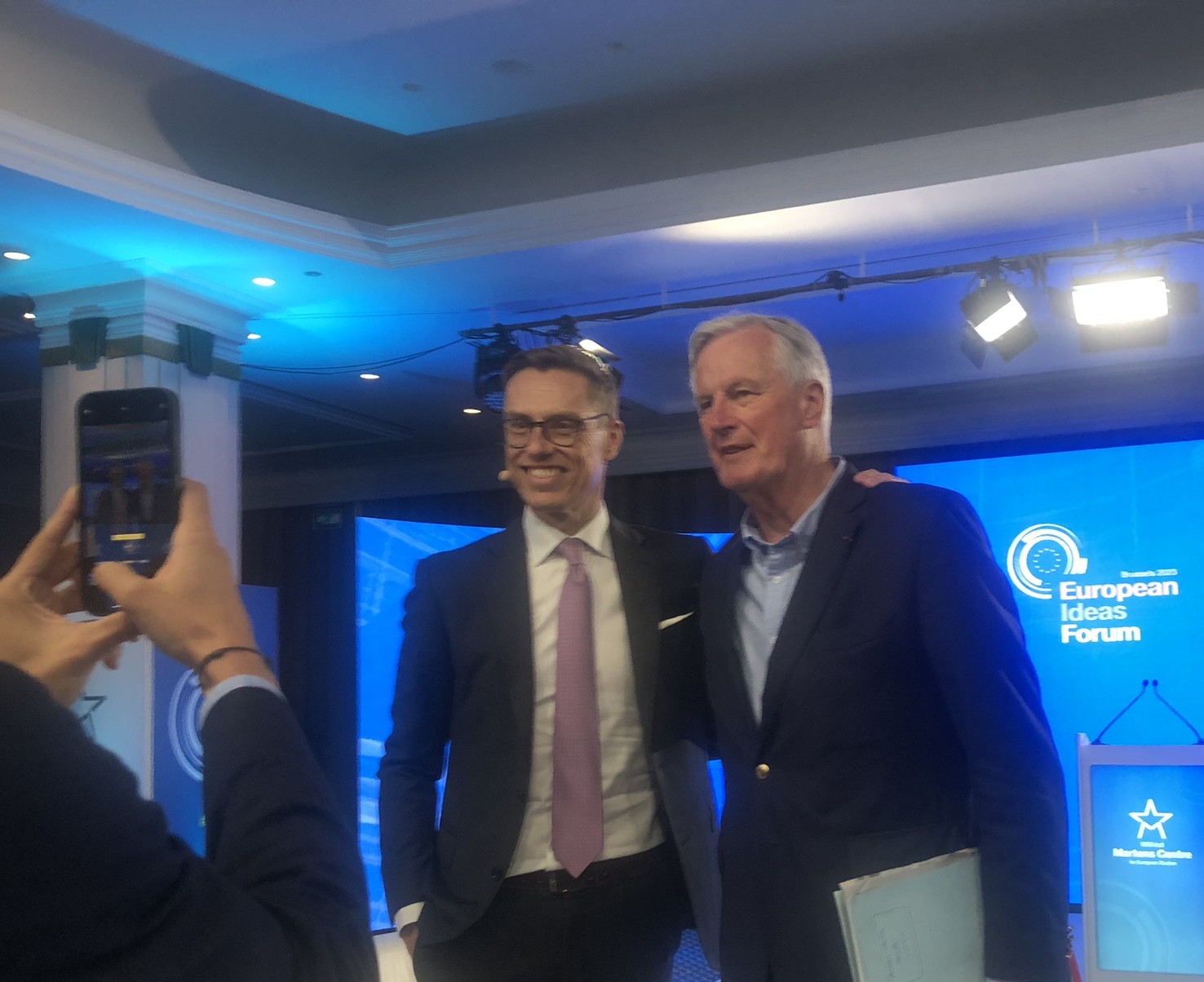
My Secret Brexit Diary: A Glorious Illusion, by Michel Barnier
The Women Could Fly, by Megan Giddings 
London Centric: Tales of Future London, ed. Ian Whates
Somna: a bedtime story, by Becky Cloonan and Tula Lotay
The Five Red Herrings, by Dorothy L. Sayers
A Tall Man In A Low Land: Some Time Among the Belgians, by Harry Pearson

Next books
The School of Death, by Robbie Morrison et al
Black Mountain, by Gerry Adams
Prophet Song, by Paul Lynch 

The last three NZ fantasies: Ringlet and the Day the Oceans Stopped, by Felicity Williams; Light in My Blood, by Jean Gilbert & William Dresden; The Crawling Wood, by Casey Lucas

At the end of my list of books acquired in 2020 are these three from the Sir Julius Vogel Award packet; none of them particularly grabbed me, I’m afraid.

Second paragraph of third chapter of Ringlet and the Day the Oceans Stopped:

What had happened? She’d left Ninky’s (at least she thought she had) and the Number Three had been carrying her forwards (at least she thought it was) and then there’d been someone … a merwoman who had asked in a concerned voice where she was headed … and without even waiting for her reply had taken her by the hand … dangerous, the oceans after dark, murmured the stranger … for one so young … and she’d felt relieved, rescued even, from untold horrors, as they sped forwards together.

Yet another fantasy that failed to grab me in the first fifty pages, so I put it down (well, closed the ebook file with no intention of reopening it). Derivative world-building, and uncertainty on my part as to whether it is aimed at a YA audience or not. You can get Ringlet and the Day the Oceans Stopped here.

(Nice cover though.)

Second paragraph of third chapter of Light in my Blood:

Jack could still see the bioluminescent glow of the strange trees and flowers, the soft backlit atmosphere. Every glimmer. Every shimmer. The smell of Juliper and Bluebells as yet clung to the back of his nostrils.

I quite liked this to begin with – it’s a portal fantasy with teenagers from our world (from an anonymous suburban English-speaking country) becoming enmeshed in the magical and dynastic feuding of the world of Nön while navigating their own emotional connections, and even though it is the second of a series, I found it easy enough to get into and read it all.

But I rather went off it at the end; the continuing drip of minor but annoying typographic errors started getting to me; then there is a sudden yet inevitable betrayal; and then it turns out that we are left on a cliff-hanger to try and get us to buy the next book and find out what happens. I probably won’t. You can get Light in My Blood here.

Second paragraph of third chapter of The Crawling Wood:

“You still feeling good about this gig?” he asked Gaz with a tilt of his head. Gaz shrugged a single time, quiet.

I’m afraid that I am pretty jaded with secondary worlds by now, and gave this only a few dozen pages before I gave up. You can read the entire ongoing Into the Mire webseries here.

These were the very last unread books that I had acquired in 2020, only four months after I finished the last unread book that I had acquired in 2019. I have been deliberately accelerating in recent times (also I have been merciless about putting aside New Zealand fantasies that didn’t grab me).

Last books acquired in 2020, read in August 2025 (Ringlet and the Day the Oceans Stopped, by Felicity Williams; Light in My Blood, by Jean Gilbert & William Dresden; The Crawling Wood, by Casey Lucas)
Last book acquired in 2019, read in April 2025 (Joan and Peter)
Last book acquired in 2018, read in November 2024 (The Geraldines)
Last book acquired in 2017, read in January 2024 (Rule of Law: A Memoir)
Last book acquired in 2016, read in August 2023 (Autism Spectrum Disorders Through the Lifespan)
Last book acquired in 2015, read in November 2022 (Rauf Denktaş, a Private Portrait)
Last books acquired in 2014, read in October 2021 (The Empire of Time and Crashland)
Last book acquired in 2013, read in October 2020 (Helen Waddell)
Last book acquired in 2012, read in May 2020 (A Sacred Cause: The Inter-Congolese dialogue 2000-2003)
Last book acquired in 2011, read in October 2019 (Luck and the Irish)
Last book acquired in 2010, read in January 2019 (Heartspell)
Last book acquired in 2009, read in December 2016 (Last Exit to Babylon)

That takes me to the fairly small pile of unread books acquired in 2021; I have hopes of finishing them this calendar year. (The 2022 pile is much bigger though.) The 2021 books will start with:

  • The Dream House, by Lee Berridge (shortest)
  • London Centric: Tales of Future London, ed. Ian Whates (unread sf book longest on my shelves)
  • A Tall Man in a Low Land: Some Time Among the Belgians, by Harry Pearson (top unread book on LibraryThing, also unread non-fiction book longest on my shelves)
  • Black Mountain, by Gerry Adams (unread non-genre fiction book longest on my shelves)

There will be a bit of a gap as I deal with the holiday backlog.

The Incandescent, by Emily Tesh

Second paragraph of third chapter:

Kenning was right underneath their new visitor. What was she doing?

Emily Tesh again shows her extraordinary versatility, with a story of a queer teacher in charge of safeguarding vulnerable pupils at a magical boarding school against dark forces while securing her own back against bureaucratic enemies. This is contemporary Britain, but with demons and a professional structure for the magically talented people who control them; it’s also a Britain where our friends class and race are alive and well, especially in a school where some of the scholarship pupils are also orphans. There’s cracking emotional chemistry as well between Sapphire Walden, the damaged but still idealistic protagonist, and her love interests; and finely observed dynamics of how a small group of gifted teenagers interact with the outside world.

It’s brilliant stuff, and really it makes you realize how few of the well-known magic school stories, from Roke to Hogwarts to the Scholomance, tell the story from the viewpoint of the teachers rather than the pupils. (There’s Unseen University in Discworld, but it’s a third-level institution rather than school and it also seems to have very few students.) Of course there’s always mileage in a rite-of-passage story, but the children’s point of view sees only the part of the educational iceberg that is above the surface. If you see what I mean.

Anyway, you can get The Incandescent here, and you should.

Deadfall, by Gary Russell

Second paragraph of third chapter:

The robarman, Charlie X, at the Witch and Whirlwind was keeping them nicely supplied with drink, so who could complain? And – she smiled at this – she had neatly convinced Professor Shingbourne that none of them needed to be in class until one thirty tomorrow afternoon. As her class automatically followed his, she could have a lie in until about three.

A curious Bernice Summerfield novel in that she’s not in it much; the real protagonist is her ex-husband Jason Kane, who gets mixed up in an archaeological dig gone wrong and also discovers the amnesiac Chris Cwej, a companion from the Seventh Doctor New Adventures novels. There’s also a planet which has got out of place, and Benny trying to work out what is happening at long distance (as are we all). Solid stuff; I see some rave reviews and some very negative, but I was simply satisfied. You can get Deadfall here.

Alice Everett, 1865-1949

Reading Forrest Reid’s autobiography, I was intrigued by his mention of his early education at “Miss Grant’s School” in Belfast, before he went on to Inst. Miss Grant was based at 9 Fitzwilliam St, opposite the location of the Institute of Irish Studies when I was a Fellow there in the mid 1990s.

The only other person I could find who had been a pupil at Miss Hardy’s was someone I had never heard of, Alice Everett, daughter of the Professor of Natural Philosophy at Queen’s College Belfast (as it then was). Her story is fascinating. She started studying at Queen’s too, and got first place in her first-year examinations in 1884, but did not get the prize because the university would not award it to a woman. She then studied maths at Cambridge from 1886 to 1889 and passed the Tripos, but was not awarded a degree, because Cambridge did not award degrees to women until 1928.

She was the first woman to work at the Royal Greenwich Observatory, and then moved to Potsdam where she became the first woman to work at an observatory in Germany. After a year in Vassar College, she became fed up with the lack of career prospects for a woman in astronomy and moved back to London to help her retired father with his research on optics.

Thanks to the First World War, she got hired by the National Physical Laboratory’s optics section in 1917 and worked there until she retired in 1925. She was probably present at the demonstration of the first television image by John Logie Baird in January 1926, and applied jointly with him for a relating to television optics in 1933. She was one of the founders of the Television Society, now the Royal Television Society. She was granted a £100 civil list pension in recognition of her work on television in 1938 – better late than never, I suppose – and died in 1949.

I literally wrote my PhD thesis on Irish science at the time she was active, and I cannot remember having heard of her.

There is a brilliant interview with her from The Sketch in 1893, published on the RGO website and well worth a look.

“Observing is, then, the part of the work you like best?” said I.

“Oh, yes,” responded Miss Everett with enthusiasm. “You feel that you really are an astronomer then, doing practical business. Besides, there is a certain charm about having the handling of a fine and powerful instrument. I scarcely know why it is, but I find the hours fly when I am observing, though the old hands say it grows very monotonous in the course of years. In winter, though the roof is partly open and the dome kept at the temperature of the outer air, we are too actively employed to feel the cold much, unless it be windy. In summer, though, perhaps, the irregular hours may prove trying in time, the quiet, fresh night is much pleasanter than the hot and dusty London day. Towards dawn it is quite interesting to observe what a difference the dim light makes in the aspect of the earth.”

When I posted this on social media, QUB were kind enough to get back to me with an article by Shannon Devlin about the first women students at Queen’s, looking at the ten women in this photograph and exploring what is known about them.

Alice Everett is labelled as being second from the left on the back row. Only two of the women in the middle row are named. For some reason, the one on the left is not, but the evidence is clear – she was Florence “Flora” Hamilton (1862-1908), who did not live to an old age but is remembered as being the mother of C.S. Lewis.

The best known books set in each country: Chile

See here for methodology. Books are disqualified if less than 50% of them is set in Chile. 

These numbers are crunched by hand, not by AI.

TitleAuthorGoodreads
raters
LibraryThing
owners
The House of the SpiritsIsabel Allende 305,44914,895
Twenty Love Poems and a Song of DespairPablo Neruda79,8494,108
VioletaIsabel Allende101,7891,330
Of Love and ShadowsIsabel Allende36,2113,327
Inés of My SoulIsabel Allende32,3582,778
Maya’s NotebookIsabel Allende32,0021,246
My Invented Country: A Nostalgic Journey Through ChileIsabel Allende11,9992,589
100 Love SonnetsPablo Neruda18,3111,695

There’s a very clear winner here, and equally clear domination of the list by a single author – and that doesn’t include the books by Isabel Allende that I disqualified because as far as I could tell there was not sufficient Chile-based content; they were Daughter of Fortune, Eva Luna, Paula, A Long Petal of the Sea, Portrait in Sepia, City of the Beasts, The Stories of Eva Luna, In the Midst of Winter and The Infinite Plan.

I disqualified another six, which I think all have Chilean authors but are not set there. Roberto Bolaño may be Chilean, but his two best known books, 2666 and The Savage Detectives, are set in Mexico. When We Cease to Understand the World, by Benjamín Labatut, is about scientists globally. I credited In Patagonia, by Bruce Chatwin, to Argentina a while back. Luis Sepúlveda’s The Old Man Who Read Love Stories is explicitly set in Ecuador, and his The Story of a Seagull and the Cat Who Taught Her to Fly sounds like it could be set anywhere with seagulls.

I admit I’ve stretched a point with a couple of those that I allowed onto the list: I suspect that Neruda’s poetry is not full of explicit geographical references, but it can hardly be set anywhere other than Chile; and I gave Maya’s Notebook the benefit of the doubt as the framing narrative is definitely in Chile even if most of the book is flashbacks.

That was unexpectedly tough, and I think they will get tougher as I go on. Next up are Somalia, Senegal, Romania and Guatemala.

Asia: India | China | Indonesia | Pakistan | Bangladesh (revised) | Russia | Japan | Philippines (revised) | Vietnam | Iran | Türkiye | Thailand | Myanmar | South Korea | Iraq | Afghanistan | Yemen | Uzbekistan | Malaysia | Saudi Arabia | Nepal | North Korea | Syria | Sri Lanka | Taiwan | Kazakhstan | Cambodia | Jordan | UAE | Tajikistan | Israel
Americas: USA | Brazil (revised) | Mexico | Colombia | Argentina | Canada | Peru | Venezuela | Guatemala | Ecuador | Bolivia | Haiti | Dominican Republic | Honduras | Cuba
Africa: Nigeria | Ethiopia (revised) | Egypt | DR Congo | Tanzania | South Africa | Kenya | Sudan | Uganda | Algeria | Morocco | Angola | Mozambique | Ghana | Madagascar | Côte d’Ivoire | Cameroon | Niger | Mali | Burkina Faso | Malawi | Zambia | Chad | Somalia | Senegal | Zimbabwe | Guinea | Benin | Rwanda | Burundi | Tunisia | South Sudan | Togo
Europe: Russia | Türkiye | Germany | France | UK | Italy | Spain | Poland | Ukraine | Romania | Netherlands | Belgium | Sweden | Czechia | Azerbaijan | Portugal | Greece
Oceania: Australia | Papua New Guinea

Pronouncing the names correctly at the Hugo ceremony

This year’s Hugo ceremony was held last weekend, a couple of hours after I returned home from a thirty-hour journey by land and sea from Ireland, so for the first time in many years I did not watch it live. I did groggily come to, just as the Best Novel announcement was being made at the end of the ceremony, and checking the winners I see that I voted for three of the twenty-one, which is about my average.

The biggest surprise – and a very pleasant one – was Emily Tesh and Rebecca Fraimow winning Best Fancast, by a single vote as it turns out. I was also frankly glad that voters decided to turn the page on Chengdu, and gave the Best Related Work award to an academic critique of the genre (for the first time since 2018) and Best Fan Writer to Abigail Nussbaum.

Having missed the ceremony meant that I missed the grotesque mishandling of the names of finalists and winners perpetrated by the hosts, Nisi Shawl and K. Tempest Bradford, including simply omitting to read out the name of one of the finalists. (It is worth noting that K. Tempest Bradford was one of those who rightly expressed rage at George R.R. Martin’s mangling of finalist names at the infamous 2020 Hugo ceremony. Nisi Shawl has apologised to one of the finalists. Nothing so far from Bradford or from the convention itself.)

I’m familiar with the glitches that can happen in Hugo ceremonies. In 2019, the auto-captioning did such a bad job of transcribing Ada Palmer’s impassioned presentation of what turned out to be the last Campbell Award that it had to be turned off for the rest of the ceremony. In Glasgow last year, a video presentation of one category simply didn’t work, and more seriously, the Chinese text on the finalist slides was transformed to gobbledygook at a late stage in the process and nobody caught it on time. These things can happen, unfortunately.

And bigger mistakes have been made. The 2020 Hugo disaster has already been mentioned. I was in the room for the dreadful 2012 BSFA ceremony. And there is also the classic example of something that may have seemed like a good idea when the organisers had had a few drinks after a planning meeting, but went down like a lead balloon in practice, the hoax awards announcement at the 2016 Angouleme comics festival. However that also means that lessons have been learned, or should have been.

The 2025 Hugo ceremony has been described in detail by several people who were there, including Cora Buhlert who was a finalist and was participating virtually, and Grigory Lukin who was not a finalist but was physically in the room. I won’t go into the gory details, but I do see a lot of people jumping up and down in various channels proposing solutions to make this sort of mistake less likely in future.

Folks, this is a solved problem.

When compiling the ballot announcement this year and last year, we in the then Hugo team made sure to get and use the correct pronunciations of finalist names and titles and we used them in the final ballot announcement. Last year, when there were a lot of Chinese finalists, I did the ballot announcement along with Sophia Xue, a Chinese writer and fan; this year I did it with Cassidy who was then the WSFS division head.

In 2024 we then used those recordings on the night of the ceremony too, precisely to avoid the risks of asking presenters to work their way through the list. Where I knew there was a potential problem, I made sure that the card with the winner’s name included pronunciation instructions, and if possible I took the presenter through the pronunciation in advance.

I can’t claim sole or even much credit for this. The template for getting the Hugo ceremony right was set by Mary Robinette Kowal when she took over as chair of Discon 3 in 2021. There is absolutely no reason that that could not have been done this year as well. When I resigned as Hugo Administrator in May, I passed along all the information about pronunciations in good order. But it seemed that the singing of a song at the 2025 ceremony had been rehearsed more than the presentations, despite the obvious fact that the presentations are what the ceremony is actually about.

Responsibility for this mistake lies with the convention leadership and the hosts, and not with the WSFS / Hugo team. Cassidy and I, along with Esther MacCallum-Stewart, resigned from the Hugo team in May; I simply got tired of fighting all the time. All sympathy and strength to the remaining team members, who kept plugging away, but I am absolutely certain that their efforts to make things go better were stymied.

I’m not planning to be involved with the Hugos again for the next few years, but I wish the best of luck to those who are, especially when it comes to seeing your team’s hard work celebrated at the ceremony. No innovative solutions are needed; just common sense, and putting in the work in advance. As Flanders and Swann sang, if you practice beforehand, it ruins the fun; but the Hugo ceremony can be a career-changing moment for the winners, and that needs to be treated seriously by the organisers. And this year, they didn’t do that.

Who Killed Nessie?, by Paul Cornell and Rachael Smith

Second frame of third page:

I encountered Rachael Smith in 2016, when I bought her early House Party from her at a Brussels Comic Con, and I have known Paul Cornell for decades. Here the two combine their talents for a story of a murder at a convention for cryptos and mythical creatures, solved by plucky heroine Lyndsay Grockle who is getting over a breakup and has been left in charge of the convention hotel for the weekend. Paul Cornell’s humane text combines with Rachael Smith’s unambiguous ligne claire style to make a short sweet tale. I got an advance copy – it will be published next month, and then you will be able to get Who Killed Nessie? here.

Hyperion, by Robbie Morrison et al

Second frame of third issue:

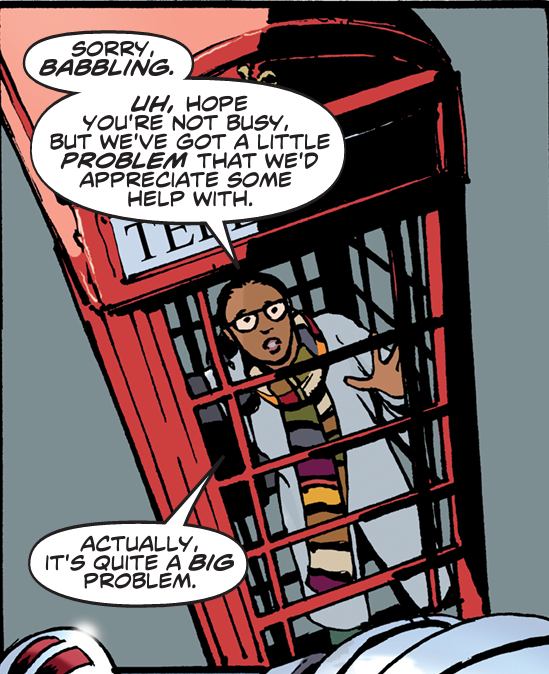
Doctor!
Ah, There you are, Clara. About time too.

A tale of two parts, a one-shot by George Mann with a twist punchline that you can see coming from a mile off (apology for spoilers, but you probably weren’t going to read it anyway):

And a much better four-parter by Robbie Morrison, picking up the story of the sun-like Hyperion creatures from Fractures, featuring also a heroic fireman and a very venal (“I for one welcome…” politician. I felt that the art sometimes din’t quite get the Doctor and Clara, but otherwise quite enjoyed it.

You can get Hyperion here. Next up is The School of Death by Robbie Morrison et al.

Wednesday reading

Current
The Women Could Fly, by Megan Giddings 
London Centric: Tales of Future London, ed. Ian Whates
The Principle of Moments, by Esmie Jikiemi-Pearson

Last books finished
Voyage to Venus, by C.S. Lewis
The Bone Woman: A Forensic Anthropologist’s Search for Truth in the Mass Graves of Rwanda, Bosnia, Croatia, and Kosovo, by Clea Koff 
Colourfields: Writing About Writing About Science Fiction, by Paul Kincaid
Agent of Death: Memoirs of an Executioner, by Robert Greene Elliott
Inferno, by Gary Russell and John Ridgway
Three Eight One, by Aliya Whiteley 
Feet of Clay, by Terry Pratchett 
False Value, by Ben Aaronovitch 
The Dream House, by Lee Berridge
The Last Song of Penelope, by Claire North

There’s nothing like 24 hours on a ferry with patchy WiFi to boost your reading tally for the week. (And the month, come to that.)

Next books
Black Mountain, by Gerry Adams
Old Babes in the Wood, by Margaret Atwood
Prophet Song, by Paul Lynch 

Inspector French and Sir John Magill’s Last Journey, by Freeman Wills Crofts

Second paragraph of third chapter:

At his next visit, to the motor agency for which Victor Magill acted as representative, he drew almost as complete a blank. It was true that he did not expect to learn much. But as a matter of routine, it was necessary to see everyone who might in any way throw light on the case.

One of the very few novels with a Northern Ireland setting between 1921 and 1968 (see also: Odd Man Out, and er I think that’s it from my own reading in the last twenty-five years or so), this is a murder mystery published and set in 1930, in which an Ulster industrialist disappears on his way home after a long absence, and is soon found murdered. The Norn Iron bits are pretty much restricted to the East Antrim coast, though there are some nice bits of local colour, and there is also much exploration of the Scottish train line to Stranraer and the northwest English and southwest Scottish coasts.

The solution depends rather on an improbable set of motivations for the killing, and also an equally improbably carefully calculated set of timings for journeys by train, car and boat, to the point that the suspension of my disbelief became a bit eroded. But this was the high period of Agatha Christie and Dorothy L. Sayers, and I guess it was what the market expected of a detective story. (There is even a reference to Hercule Poirot in the novel.)

I had read elsewhere that this book rather whitewashed the new-ish devolved Northern Ireland government, given the author’s Ulster Protestant background. (Stormont itself was still being built in 1930.) I did not find this charge firmly substantiated. True, there’s no reflection at all about the sectarian basis of the statelet; but as I said earlier, the Norn Iron settings are mostly along the coast Carrickfergus and Ballygalley Head, with a couple of excursions to Cave Hill and into central Belfast, and one to Bangor, which doesn’t really take you into contested territory. (The victim is reportedly seen on Sandy Row, which is described as ‘more or less working class’.)

On the other hand, I got a sense that the author felt the smallness of the interlocking circles of government and industry in the province could be a problem rather than a solution. And as for Dublin,

He [Inspector French] had not been over since the troubles [ie 1920-22] and he was impressed by the air of smartness and prosperity which the city wore. It seemed cleaner than before and the new buildings made O’Connell Street a really imposing thoroughfare.

Not exactly the sentiments of a raving Unionist!

The plot of the book has a couple of eerie similarities with the real-life murder of Patricia Curran twenty-two years later, the victim being from a prominent local family, the body found in the grounds of their East Antrim home, and a close relative suspected of the crime. The differences are fairly significant too of course, and I suspect it’s unlikely that the 1952 murderer, whoever that was, took any inspiration from Crofts.

Anyway, as I said, the book is of interest for the period colour, if not completely satisfactory as a murder mystery. You can get Inspector French and Sir John Magill’s Last Journey here.

House of Odysseus, by Claire North

Second paragraph of third chapter:

These are the things the poets say she shall dream of.

Second of Claire North’s excellent Penelope trilogy, this time narrated by the goddess Aphrodite, with our heroine still waiting for her husband (who is dallying far away with the nymph Calypso), and also dealing with the desperately ill Orestes and the greedy Menelaus, kings of adjoining cities on the mainland whose quarrel is being played out in Ithaca. There is also a locked-room murder mystery for Penelope to solve, with the help of Helen who is vividly sketched as a character.

I was reading this at the same time as Emily Wilson’s translation of The Iliad (review coming soon) but actually my mind kept turning to Roger Lancelyn Green’s The Luck of Troy, told from the point of view of Nicostratus, Helen’s son by Menelaus who accompanied her to Troy at the start of the war. Nicostratus is a key character here as well, but North has him as Menelaus’ illegitimate son, full of resentment and an all round bad guy who is at the centre of the murder mystery. North’s characterization is very memorable, even of names who have been talked about for millennia.

You can get House of Odysseus here.

The Master, by Louise Cooper

Second paragraph of third chapter:

‘You look tired, my love.’ Her voice was warm with concern. ‘You should take time to rest for a while – the world won’t stop turning while you sleep.’

Conclusion to Cooper’s Master trilogy, in which she successfully shifts the focus so that the Bad Guy protagonist and his cute sidekick, pursued separately by the forces of order, now engage our sympathy, and the society with which they are in conflict reveals its flaws so that we realise the Bad Guy may not have been so bad after all; meanwhile both are at the mercy of super-powerful supernatural forces. Dramatic and well-executed conclusion to an enjoyable series. You can get The Master here.

This was my top unread book acquired in 2022. Next on that pile is The Bone Woman, by Clea Koff.

The best known books set in each country: Kazakhstan

See here for methodology. Books are disqualified if less than 50% of them is set in Kazakhstan. 

These numbers are crunched by hand, not by AI.

TitleAuthorGoodreads
raters
LibraryThing
owners
One Day in the Life of Ivan DenisovichAleksandr Solzhenitsyn122,253138,542
The Day Lasts More than a Hundred YearsChingiz Aitmatov7,918594
How I Learned GeographyUri Shulevitz5389739
Half a World AwayCynthia Kadohata 2,089260
Apples Are from Kazakhstan: The Land that DisappearedChristopher Robbins 1,309264
A Shadow Intelligence Oliver Harris1,82184
The Dead LakeHamid Ismailov 959112
The Faculty of Useless KnowledgeYury Dombrovsky376186

I was a bit surprised by the winner this time, but it is indeed firmly set in Kazakhstan, so it matches my criterion. It’s really unusual for such a well-known book to have more LibraryThing owners than Goodreads raters – the ratio is usually more like 10 or 20 to 1 in favour of GR. It’s also getting increasingly rare that I have read the top book in the list – the last one was Sri Lanka a month ago, the one before that was Saudi Arabia in April.

There is a distinct lack of Kazakh writers on this list. Chingiz Aitmatoc is Kyrgyz, and Hamis Ismailov is Uzbek (though born in what is now Kyrgyzstan). The top Kazakh writer from my survey was some way below my threshold; it is Mukhamet Shayakhmetov, whose best known book is The Silent Steppe.

I’m a little uncertain about a couple of these. Half a World Away starts in the USA, and A Shadow Intelligence in the UK. But my assessment from what I could fins about them online is that probably more than 50% is set in Kazakhstan in both cases.

I disqualified ten books this time. The top book that I disqualified just has one character from Kazakhstan, and as far as I can tell isn’t set there at all; it is The Zahir by Paulo Coelho. Most of the others cover Kazakhstan as part of Central Asia, of the old Mongol Empire, or indeed the whole post-Soviet region. They were The Silk Roads, by Peter Frankopan; Bones of the Hills, by Conn Iggulden; The New Silk Roads, by Peter Frankopan; Sovietistan, by Erika Fatland; The Lost Heart of Asia, by Colin Thubron (which I have read); The Border, by Erika Flatland; On the Trail of Genghis Khan, by Tim Cope; The Catch Me if You Can, by Jessica Nabongo; and

The Tombs by Clive Cussler and The Good Angel of Death, by Andreï Kourkov, both have their protagonists on odysseys that end up in Kazakhstan, much more than half way through the book. Jamilia, by Chingiz Aitmatov, is set in Kyrgyzstan, but I think some taggers are confused about the difference. (I don’t think any of Ken MacLeod’s books qualifies either, and anyway GR and LT users have not tagged them.)

Coming next: Chile, Somalia, Senegal and then our first European country for a while, Romania.

Asia: India | China | Indonesia | Pakistan | Bangladesh (revised) | Russia | Japan | Philippines (revised) | Vietnam | Iran | Türkiye | Thailand | Myanmar | South Korea | Iraq | Afghanistan | Yemen | Uzbekistan | Malaysia | Saudi Arabia | Nepal | North Korea | Syria | Sri Lanka | Taiwan | Kazakhstan | Cambodia | Jordan | UAE | Tajikistan | Israel
Americas: USA | Brazil (revised) | Mexico | Colombia | Argentina | Canada | Peru | Venezuela | Guatemala | Ecuador | Bolivia | Haiti | Dominican Republic | Honduras | Cuba
Africa: Nigeria | Ethiopia (revised) | Egypt | DR Congo | Tanzania | South Africa | Kenya | Sudan | Uganda | Algeria | Morocco | Angola | Mozambique | Ghana | Madagascar | Côte d’Ivoire | Cameroon | Niger | Mali | Burkina Faso | Malawi | Zambia | Chad | Somalia | Senegal | Zimbabwe | Guinea | Benin | Rwanda | Burundi | Tunisia | South Sudan | Togo
Europe: Russia | Türkiye | Germany | France | UK | Italy | Spain | Poland | Ukraine | Romania | Netherlands | Belgium | Sweden | Czechia | Azerbaijan | Portugal | Greece
Oceania: Australia | Papua New Guinea

Dark Winds Over Wellington: Chilling Tales of the Weird & the Strange, by TL Wood

Second paragraph of third story (“Last Chapter”):

Jebediah Cole came mostly from a place of fiction; imagination touched by the hand of experience, and peppered with a dash of wistful desire. A pastiche of the many strange and dodgy people Maurice once had the misfortune to know. An ex-armed-forces, ex-law-enforcement, leather-faced, battle-worn bounty hunter; he was a solid, deliberate, hulk of a man. Despite his rough edges, arrogance, and sexist attitude — and the fact that he was really little more than a walking cliché —his readers seemed to find the bloke endearing. His fans clamoured to hear more.

I’ve been zooming through my stash of New Zealand fantasy books acquired in 2020 with some disappointment at the rather unoriginal generic secondary world settings, but this one made me sit up and pay attention: these are almost all tales of fantastic intrusion, where the normal world of Wellington, which is realized in rich detail, becomes the unwilling host of something or some things more weird and awful. Most of the stories are very short (thirteen of them in 180 pages), so each basically represents one idea developed as far as it will go. There are a few recurrent themes – manipulative older men, ex-boyfriends named Joshua – but overall I was impressed by the number of different twists that Wood was able to put on a basic structure. Rather a delight. You can get Dark Winds Over Wellington here.

(Posting this early so that New Zealanders will see it.)

This was the shortest unread book of those I had acquired in 2020. Next on that pile, indeed on all three of my 2020 piles, is Ringlet and the Day the Oceans Stopped, by Felicity Williams.

Exterminate/Regenerate: The Story of Doctor Who, by John Higgs

Second paragraph of Chapter 3:

Michael [Troughton], however, was to see very little of his father as he grew up. While he was still a baby, Patrick set up a second home in south London, near Kew, with his girlfriend Ethel ‘Bunny’ Nuens. Patrick and Bunny would go on to have three children together, but Patrick and his wife Margaret never announced a separation. The couple kept up the pretence that they still had a normal marriage. Patrick’s long absences from the family home were explained away as his having to work away from home, due to the nature of the acting profession. When Patrick’s mother died twenty-four years later, in 1979, she was still unaware of the separation. Patrick and his original family had kept up the façade by visiting her every Christmas Day and pretending that nothing had happened. She never knew she had three more grandchildren.

This is a nice chunky book about the history of Doctor Who, from 1963 to 2024, by the author of the book about Watling Street which I enjoyed a few years ago. It takes an interesting approach: a chapter per Doctor (two for the First and Fourth Doctors), looking very much at the story behind the scenes, why particular decisions were made, why particular people were hired and fired, and treating the sixty years of the show as a whole, single phenomenon to be explained as a whole.

A lot of the material was familiar (indeed the Second Doctor chapter seemed very familiar to me, though others seemed more original). I wished also that a bit more space had been given to the spinoff series (sadly neither The Curse of Fatal Death nor The Scream of the Shalka is mentioned), and to the comics, books and audios (and indeed games); although the TV series is by definition the core, there’s a lot more Whoniverse out there.

(Also, it is not entirely Higgs’ fault, but I cannot completely forgive him for inspiring me to seek out Jon Pertwee’s two scenes in the 1977 sex comedy Adventures of a Private Eye. I urge you not to look for them. Some things are better left in well-deserved obscurity.)

However, Higgs brings a lot of good stuff here. His analysis of how the show got created in the first place in 1962-63 is one of the best of the many that I have read, bringing in some new facts and circumstantial material. I think he is also right to split the First and Fourth Doctor eras; the case for treating Four/Hinchcliffe distinctly from Four/Williams+JNT is fairy obvious, but I have long felt that there’s a similar case for One/Lambert and One/Wiles+Lloyd, and Higgs just does it effortlessly.

It also feels to me like it’s fairly rare to take the holistic approach and treat Old Who just the same as New Who (and the Movie). Even within Old Who, we tend to treat the so-called black-and-white era separately from the color era. But in principle, there’s no reason not to apply the same analytical approach to all of it, and Higgs demonstrates that such an approach can be successful.

A particular sub theme that I will have to think about is Higgs’ insistence that some key stories should be seen as direct reflections of what was happening in the production history of the show at the time. So, the two trials of the Doctor in The War Games and in Season 23 reflect the pressures of potential cancellation of the entire show (as does The Greatest Show in the Galaxy). This only gets you so far, but it does get you a certain distance.

In the end, Higgs is entitled to write the book he wanted to write, which is not completely the book I wanted to read, but is certainly close enough to it to make this very worthwhile. It’s only just out, folks, so you may not have seen much hype around it – well worth getting, and I will nominate it for the BSFA Non-Fiction award next year. You can get Exterminate/Regenerate here.

Three New Zealand fantasies: We All Fall, by Helen Vivienne Fletcher; Tyrelia, by S.R. Manssen; Dragon Rift, by Eileen Mueller 

Three more of the books that I had not got around to from the 2020 Sir Julius Vogel packet. One OK, two less so.

Second paragraph of third chapter of We All Fall:

Luca was there, waiting for me after not being able to talk last night. He grinned as he saw me, and I smiled, happy to have the distraction.

I thought this was OK. A short, effective story about a girl growing up in a circus family, getting to grips with disability, same-sex love and the paranormal stuff that seems to be happening around her. You can get We All Fall here.

Second paragraph of third chapter of Tyrelia:

The Golden City was the capital of Medar and home to the Master. It was a conical mountain surrounded entirely by a moat and a tall, gleaming white wall. The only way in was via the drawbridge to the single gateway. The dwellings within the city were perched one above the other on the steep hillside, like decorations on an elaborate cake. Narrow roads wound their way between them. All the houses were whitewashed, with terracotta tiled roofs, and many had pots of brightly coloured geraniums hanging from the windowsills. The Master’s mansion, shrouded in cloud, crowned the city. It was said that it was covered in glittering gold.

This on the other hand failed to engage me and I put it down after fifty pages. The fourteen-year-old heroine is sent on a quest by rather nonchalant elders, and finds herself in a land of plenty which is obviously going to turn out as something more sinister. Possibly didn’t help that it’s the second book in a trilogy where I have not read the first. You can get Tyrelia here.

Second paragraph of third chapter of Dragon Rift:

Ezaara was lost for words. Her mind spun. Roberto was captive. Surely Zens would kill him.

This is the third volume in a series of six, and I don’t think the other five would have helped convince me; it’s a world which is a knock-off of Pern with a few imports from Middle Earth, and lost me rather with the super-effective magical healing ointments. I just about managed fifty pages, but no more. You can get Dragon Rift here.

These three had all bubbled to the top of my rapidly dwindling stacks of books acquired in 2020. We All Fall was the shortest unread book acquired in that year, Tyrelia was the SF book that had lingered longest unread on my shelves and Dragon Rift was the most popular unread book acquired in 2020. The next shortest is Dark Winds Over Wellington, by TL Wood; the next on the other two piles is Ringlet and the Day the Oceans Stopped, by Felicity Williams.

Private Road, by Forrest Reid

Second paragraph of third chapter:

It was towards the end of my business career that The Kingdom of Twilight appeared, and an early result was that I learned of the existence in Belfast of a very minor echo of the Dublin literary and dramatic movement. The Ulster Literary Theatre had been founded, and had produced two plays-The Reformers, by David Parkhill, and Brian of Banba, by Bulmer Hobson. The experiment was written up in the columns of The Whig by [J.W.] Good, and in another paper, The Evening Telegraph, by Rathcol (W. B. Reynolds). Moreover, in imitation of Yeats’s magazine Samhain, a literary quarterly called Ulad had been Started, under the joint editorship of Reynolds and Parkhill, and it was from the former that I received a note asking me to call upon him.

This is the second volume of Belfast-born writer Forrest Reid’s autobiography, published in 1940, fourteen years after Apostate, the first volume. I did not find Private Road as interesting; a lot of it is about the back-story behind each of Reid’s novels (more than a dozen at that stage), and as I haven’t read any of them, I did not learn much. There are however some interesting chapters about his education, at Inst and then at Christ’s, Cambridge, and about the rather small circle of literary enthusiasts in Belfast in the early 1900s; and there’s also a rather moving chapter about his love for his dogs and cats (in that order).

Reid does not seem to have had a long-term romantic partner, though it’s fairly clear what was going on with his series of male house-mates; there are a few women in the narrative (and I’m glad to see that he stayed in touch with his nurse Emma) but it’s mostly a story of men talking to men. Or not talking – an early dramatic moment is his friendship with Henry James, cut short when James apparently was mortally offended by Reid’s dedication to him of his very gay second novel, The Garden God.

I think that if I were going to make a serious effort to get into Reid’s fiction, and the circles he moved in, this would be a really interesting book, and I wonder if someone enterprising might produce an annotated version; but unlike with Apostate, I am not particularly interested in taking that on myself.

You can get Private Road here.

Wednesday reading

Current
Colourfields, by Paul Kincaid
Voyage to Venus, by C.S. Lewis
The Bone Woman: A Forensic Anthropologist’s Search for Truth in the Mass Graves of Rwanda, Bosnia, Croatia, and Kosovo, by Clea Koff

Last books finished
Deadfall, by Gary Russell
Light in My Blood, by Jean Gilbert & William Dresden
The Incandescent, by Emily Tesh
Doctor Who: The Robot Revolution, by Una McCormack
The Crawling Wood, by Casey Lucas (did not finish)
The Iliad, by Homer, tr. Emily Wilson
The Devil’s Chord, by Dale Smith

Next books
The Dream House, by Lee Berridge
Feet of Clay, by Terry Pratchett
False Value, by Ben Aaronovitch

From a Shadow Grave, by Andi C. Buchanan

Second paragraph of third chapter:

In the future, there are many stories of those who go back. Those who go back to find a better time, and those who go back to change their own time. They go back to kill or to save, or for one to achieve the other. These stories centre on particular points in history, feature moral dilemmas and unintended consequences.

Brief but efficiently chilling story of a 1930s murder victim in Wellington, New Zealand, who comes back in three different alternative supernatural ways. One of the Sir Julius Vogel packet from 2020, which contains my dwindling pile of unread books acquired that year. You can get From a Shadow Grave here.

Spirits Abroad, by Zen Cho

Second paragraph of third story (“The Fish Bowl”):

She did not have strong feelings about Puan Lai, but she liked the house. Between the entrance and living room there was an expanse of cool, white marble floor that would have been a hallway in a normal house. Puan Lai had dug out a hole in the floor and filled it with water. The pond was rectangular, like a swimming pool, but the water was green, swarming with koi and goldfish.

This is a tremendous collection of short stories by Zen Cho, including “If At First You Don’t Succeed, Try, Try Again” which won the Hugo in 2019 (one of my years). They are all in the fantasy vein with some of them slipping towards horror. They all feature Malaysian culture, especially Malaysian Chinese culture, which is a particular point of interest for me as I get on with editing my grandmother’s memoirs of her time living and loving in Penang. Some are set in Malaysia, some in England, some elsewhere entirely. The ones I liked most were “House of Aunts”, a story of an undead teenager and her older (much older) relatives; “Prudence and the Dragon”, about an unlikely love story; and the Hugo-winning “If At First You Don’t Succeed, Try, Try Again”, another unlikely love story. But they are all excellent. You can get Spirits Abroad here.

Ventiforms, by Sean Monaghan, and The Blacksmith, by Barbara Howe

Two more stories from the New Zealand pile, which I’ll deal with quickly.

Second sentence of third section of Ventiforms:

Pilot’s seat was a misnomer, really. Tailé just sat. Surprise flew herself. There was a bit of shaking, but Tailé was still able to eat her wrap as they descended. It was good, the eggplant tasted fresh, and the sauce was divine. She complimented the ship on it.

Very short piece about a mother looking for her lost son, and some memorably unusual aliens. Decent world-building for the length. You can get Ventiforms here.

Was my shortest unread book acquired in 2020 (and turned out to be even shorter than I thought). Next on that pile is We All Fall by Helen Vivienne Fletcher.

Second paragraph of third chapter of The Blacksmith:

“Ah, hell, Granny, what’d I do now?”

Third in a fantasy trilogy. I found it very clunky; a world with placenames partly borrowed from Britain and partly made up, with apparently normal Christianity and magic coexisting, and leaden exposition. You can get The Blacksmith here.

Was the SF book that had lingered longest unread on my shelves. Next on that pile is Tyrelia, by S R Manssen.

Spectral Scream, by Hannah Fergesen

Second paragraph of third chapter:

And it just … kept … going. A howl of deep, horrible agony, a soul-shredding pain.

A Fifteenth Doctor novel set during his travels with Belinda, probably between Lux and The Interstellar Song Contest, with the Doctor and Belinda exploring a world where a dying sentient spaceship’s screams are disrupting the mental state of everyone withing range, most notably the descendants of the original crew who live in Sevateem-like conditions. It’s a fairly standard plot, but what I like is that we get a lot more characterisation of Belinda than we did onscreen; one of the things I didn’t like about the most recent season was that we didn’t really get to know her, and Fergesen has done well by her in this story. Not a book for non-Whovians, but a pleasing extra for fans, especially younger fans. You can get Spectral Scream here.

The best known books set in each country: Chad

See here for methodology. Books are disqualified if less than 50% of them is set in Chad.

These numbers are crunched by hand, not by AI.

TitleAuthorGoodreads
raters
LibraryThing
owners
The Roots of HeavenRomain Gary2,653526
Rain SchoolJames Rumford 803472
Told by Starlight in ChadJoseph Brahim Seid16036
African Rice HeartEmily Star Wilkens 7210
To Catch a Dictator: The Pursuit and Trial of Hissène HabréReed Brody5510
The Trial of Hissène Habré: How the People of Chad Brought a Tyrant to JusticeCeleste Hicks186
France’s Wars in Chad: Military Intervention and Decolonization in AfricaNathaniel K. Powell75
The Plagues of FriendshipSem Miantoloum Beasnael44

This was unusually tough. Several users of both Goodreads and LibraryThing have used the “chad” tag for a lot of their books which have absolutely nothing to do with the country, and it must therefore refer to something else. Several political analyses had a handful of owners on LibraryThing, but none on Goodreads. This is the first time that I’ve had to go down to single figures on either system. I’m not going to list the disqualified books because there are too many of them and most of them are completely irrelevant.

Today’s winner was famously adapted into a 1958 film starring Errol Flynn, and it sounds interesting enough to track down. Two Chadian writers appear in today’s list. As well as the non-fiction, there’s also a high-scoring children’s book and a missionary testimony. But I think that all in all, Chad is the most literarily obscure country I have yet covered. I am sure that there will be more.

Next up: Kazakhstan, Chile, Somalia and Senegal.

Asia: India | China | Indonesia | Pakistan | Bangladesh (revised) | Russia | Japan | Philippines (revised) | Vietnam | Iran | Türkiye | Thailand | Myanmar | South Korea | Iraq | Afghanistan | Yemen | Uzbekistan | Malaysia | Saudi Arabia | Nepal | North Korea | Syria | Sri Lanka | Taiwan | Kazakhstan | Cambodia | Jordan | UAE | Tajikistan | Israel
Americas: USA | Brazil (revised) | Mexico | Colombia | Argentina | Canada | Peru | Venezuela | Guatemala | Ecuador | Bolivia | Haiti | Dominican Republic | Honduras | Cuba
Africa: Nigeria | Ethiopia (revised) | Egypt | DR Congo | Tanzania | South Africa | Kenya | Sudan | Uganda | Algeria | Morocco | Angola | Mozambique | Ghana | Madagascar | Côte d’Ivoire | Cameroon | Niger | Mali | Burkina Faso | Malawi | Zambia | Chad | Somalia | Senegal | Zimbabwe | Guinea | Benin | Rwanda | Burundi | Tunisia | South Sudan | Togo
Europe: Russia | Türkiye | Germany | France | UK | Italy | Spain | Poland | Ukraine | Romania | Netherlands | Belgium | Sweden | Czechia | Azerbaijan | Portugal | Greece
Oceania: Australia | Papua New Guinea

Tides of the Titans, by Thoraiya Dyer

Second paragraph of third chapter:

He arrived at the clockmaker’s tree shortly after dawn.

As will be apparent, I’m working through the material given to us as part of the Hugo and Sir Julius Vogel voter packets as I reach the end of my stack of (mostly electronic) books acquired in 2020. This popped up as part of the Hugo submission of Diana Pho for Best Editor, Long Form, along with nine other books, and I think it’s the last of them.

This started off really well; a fantasy secondary world (which doesn’t always float my boat) where the protagonist, a young magical warrior who is also the queen’s secret lover, starts to find out more about how it all functions. It’s the third book in a trilogy, which often means a harsh did-not-finish for me, but it worked well at first – I believe that the three books have different protagonists, so the plots are not too intertwined.

And then in the last quarter or so, it simply lost me. We shifted to a confusing landscape with confusing characters, where we found out confusing things about our unreliable protagonist. It was disappointing after what I felt was a strong start. Maybe I lost energy and it’s on me. Anyway, you can get Tides of the Titans here.

This was both my top unread book acquired in 2020, and the sf book that had lingered longest on my shelves. Next on those piles are From a Shadow Grave, by Andi Buchanan, and The Blacksmith, by Barbara Howe.

Around the World in 80 Games, by Marcus du Sautoy

Second paragraph of third chapter:

But India is also home to some of the most iconic games of all time. If the Middle East gave us one of the best racing games, then India is the birthplace of one of the greatest war games that humans have in-vented: the game of chess.

An outline of 80 classic games from the mathematical point of view, framed as a voyage around the world to explore the games of each continent and subcontinent. Unfortunately this framing turns out to be a bit problematic, as he sort of has to ignore the actual geography and the history of colonialism to make his points, whatever they are. There’s a weird five page chunk near the end about women writing games. The bit about Azad seems oddly familiar to me from elsewhere. There’s some very interesting material here, but I think it could have been much better organised, and the researchers whose work he has, er, depended on could have been given more credit. Still, you can get Around the World in 80 Games here.

Down, by Lawrence Miles

Second paragraph of third chapter:

‘Ssseize him!’ snarled Dr Harbinger, but the robots had already released the dauntless Binky Sharperton, and were e‘en now closing on Harbinger‘s escaped nemesis. The first of the diabolical automata raised the electrical tendril to which its miniaturized chronon ray was mounted, but even steel was no match for Mr Misnomer‘s legendary right hook. The leather gauntlet pounded the brute machine‘s trisilicate face, and sparks flew from its antennae as it blew a fuse.⁵
⁵ Passages like this one demonstrate a wilful ignorance of basic cybernetics theory. Oobert Valdeburg (see Bibliography) claims this suggests a dearth of Public Domain robotics data in the 2530s, a theory which is provably untrue. More likely, it indicates a mistrust of technology typical of puritanical ‘back-to-basics’ cultures. Ironic, then, that almost all of Mr Misnomer‘s adventures were written by autolit engines. Note also how electronic menaces such as the Nemesis Doomsday Engine and Dr Harbinger‘s Megalomanopticon are always fitted with built-in self-destruct mechanisms, against all sense and reason.

I thought this was a rather good entry in the Bernice Summerfield spinoff series of books. Benny appears on a hollow world, encumbered with two junior archaeologists, and encounters various archetypes (dinosaurs, cavemen, useless Nazis (the best kind)) and threatening situations. Perhaps a little more going on than I had braincells to process at the time. But it all seemed to make sense. You can get Down here.

Next in this sequence is Deadfall, by Gary Russell.

Little Wars and Floor Games, by H.G. Wells

Second paragraph of Little Wars:

(1) The Country must be arranged by one player, who, failing any other agreement, shall be selected by the toss of a coin.

Second paragraph of third chapter of Floor Games:

We always have twin cities, or at the utmost stage of coalescence a city with two wards, Red End and Blue End; we mark the boundaries very carefully, and our citizens have so much local patriotism (Mr. Chesterton will learn with pleasure) that they stray but rarely over that thin little streak of white that bounds their municipal allegiance. Sometimes we have an election for mayor; it is like a census but very abusive, and Red always wins. Only citizens with two legs and at least one arm and capable of standing up may vote, and voters may poll on horseback; boy scouts and women and children do not vote, though there is a vigorous agitation to remove these disabilities. Zulus and foreign-looking persons, such as East Indian cavalry and American Indians, are also disfranchised. So are riderless horses and camels; but the elephant has never attempted to vote on any occasion, and does not seem to desire the privilege. It influences public opinion quite sufficiently as it is by nodding its head.

Two very short non-fiction pieces by H.G. Wells, one about a very specific set-up for wargaming with model soldiers (infantry, cavalry and artillery) and one about a rather richer fantasy society built up by him with his sons. These are both very engaging, and Little Wars in particular is at the root of much else. Full of imperialist fervour and outright racism of course, and Wells was far from an outlier in his time and place.

A kind friend got me the reprint of both pieces as a 64-page double by Shilka Publishing, which you can get for a few quid here, but sadly lacks the illustrations which are referred to throughout the text. This is a loss for Floor Games in particular, where Wells’ own sketches really enliven it – the second paragraph of the third chapter was originally published looking like this:

You can find Little Wars here and Floor Games here on Project Gutenberg.

Wednesday reading

Current
The Iliad, by Homer, tr. Emily Wilson
Deadfall, by Gary Russell
Light in My Blood, by Jean Gilbert & William Dresden
The Incandescent, by Emily Tesh

Last books finished
Ringlet and the Day the Oceans Stopped
, by Felicity Williams (did not finish)
Hyperion, by Robbie Morrison et al
Who Killed Nessie?, by Paul Cornell and Rachael Smith

Next books
Doctor Who: The Robot Revolution
, by Una McCormack
Into the Mire: The Collected Works, by Casey Lucas
Voyage to Venus, by C.S. Lewis

Year’s Best Aotearoa New Zealand Science Fiction and Fantasy: Volume I, ed Marie Hodgkinson

Second paragraph of third story (“The Garden”, by Isabelle McNeur):

Adams left a wife and a kid behind. I don’t know how he did it. I had enough trouble leaving my dog. For the first time in my life I had been glad my parents had already passed.

Collection of stories by Aotearoa New Zealand writers, all of which had previously been published elsewhere. I guess it was in the Sir Julius Vogel packet for 2020 as it won the award for Best Collection that year. A lot of the stories are post-apocalyptic; a lot of them are about how we lose contact with nature. Probably the two best are “Logistics”, by A.J. Fitzwater, which was on the 2018 Tiptree long-list, and “The Glassblower’s Peace”, by James Rowland, which had me looking up Venetian history. You can get Year’s Best Aotearoa New Zealand Science Fiction and Fantasy: Volume I here.

This was my top unread book acquired in 2020. Next on that pile is Tides of the Titans, by Thoraiya Dyer.