“Hell is the Absence of God”, by Ted Chiang

“Hell is the Absence of God” won both the 2002 Hugo and the 2002 Nebula for Best Novelette.

Second paragraph of third section:

What people assumed about Neil had in fact happened to Janice. When Janice’s mother was eight months pregnant with her, she lost control of the car she was driving and collided with a telephone pole during a sudden hailstorm, fists of ice dropping out of a clear blue sky and littering the road like a spill of giant ball bearings. She was sitting in her car, shaken but unhurt, when she saw a knot of silver flames—later identified as the angel Bardiel—float across the sky. The sight petrified her, but not so much that she didn’t notice the peculiar settling sensation in her womb. A subsequent ultrasound revealed that the unborn Janice Reilly no longer had legs; flipperlike feet grew directly from her hip sockets.

Back in 2006, I wrote of this story:

“Hell Is the Absence of God” is a story set in a world very like ours, but where there is no doubt about whether angels, Heaven and Hell are all real. This does raise an interesting question as to whether it can be counted as fantasy or science fiction; Chiang himself is clear that he sees the work as fantasy, but as Jeremy Smith and Niall Harrison [dead link] have argued, apart from the supernatural premise, the world he has created is a pretty mechanistic one, with angels behaving like natural forces (what an earlier age termed “acts of God”); there is no means of mediating with them. (There is, however, a possibility of interaction directly with God, which must surely undermine the classification of the story as science fiction rather than fantasy.)

But the story is not about God or angels. It is about what it is like to be human in this world, and in particular on the nature of devotion and religion when faith is no longer an issue. Only those who love God can go to Heaven; Hell, however, is not a place of torment, but simply somewhere “not physically worse than the mortal plane”, occasionally visible below our own world, characterised by (as we are told in the story’s title) the absence of God.

This is not a story about Christianity, not even about evangelical Christianity, though a lot of people have made that mistake (including me when I first read it, and the writer of the blurb for one of the collections it has been published in). Explicitly, Christ is not mentioned anywhere in the text. Implicitly, faith as such has been taken out of the equation by the empirical and undeniable proofs of God’s existence. There are no unbelievers in Chiang’s world. There are, however, people who are not religious. 

Some readers didn’t get this crucial point, including John C. Wright on the Amazon site, who calls it “trite antichristian propaganda” and William December Starr on usenet [dead link], who described is as “just yet another “God’s a jerk” story, big deal”. (Elf Sternberg has repeatedly praised it for much the same reasons, suggesting that Chiang is telling exactly the same story here as C.S. Lewis in The Great Divorce, but from a different perspective.) I find it rather interesting that those readers who react to the story as thin anti-Christian propaganda tend to also describe themselves as non-believers. I haven’t yet found a Christian writer who had the same reaction, though it will be interesting to see what Mirtika Schulz’s group  [dead link] makes of it when they get there. (Kathy Wang  [dead link] actually thought it a pro-Christian, proselytising story at first, though realised her mistake on further reading.) My suspicion is that for most believers, and for some non-believers (and perhaps for anyone who is interested in exploring the spectrum of opinion between Richard Dawkins and Billy Graham, rather than pledging their allegiance to one side or the other), Chiang’s thought-experiment is in fact an interesting one. 

It is made more interesting by the style of narrative – tight third-person, but with no direct speech at all. It gives the story some of the qualities of a documentary: it is as if the camera focusses on each person individually, and then moves on. There are three main characters: Neil Fisk, introduced in the first sentence, whose wife is killed by an angelic visitation and whose quest to become devoted to God in order to join her in heaven is the core of the plot; Janice Reilly, disabled and then cured, whose career as a motivational speaker is bound up with Neil’s quest; and Ethan Mead, whose quest for meaning in the world is perhaps meant to be closest to the experience of the reader. Through the characters, Chiang also explores grief  [dead link] and disability  [dead link], both of which are of course key elements in the eternal question of why a loving God allows bad things to happen in the world. Again, Chiang is not trying to answer this question himself, but he is exploring how people do answer it, in a world where “God doesn’t exist” is not an option. He is also by his own account, if to a very small extent, exploring the role of God.

Chiang has in fact written up the roots of this story, in an afterword in his Stories of Your Life and Others collection. He mentions briefly Gregory Widen’s film, The Prophecy, and the work of modern mystic Annie Dillard, but then goes on to devote two paragraphs (out of four in the short piece) to the Book of Job.

For me, one of the unsatisfying things about the Book of Job is that, in the end, God rewards Job. Leave aside the question of whether new children can compensate for the loss of his original ones. Why does God restore Job’s fortunes at all? Why the happy ending? One of the basic message of the book is that virtue isn’t always rewarded; bad things happen to good people. Job ultimately accepts this, demonstrating virtue, and is subsequently rewarded. Doesn’t this undercut the message?

It seems to me that the Book of Job lacks the courage of its convictions. If the author were really committed to the idea that virtue isn’t always rewarded, shouldn’t the book have ended with Job still bereft of everything?

The Book of Job is one of the most interesting and puzzling parts of the Bible (and, according to one reference work I consulted, the one book whose text is most corrupt). Job, an upright and honest man, is inflicted with tremendous suffering by Satan as part of a wager with God (Satan betting that suffering will make Job turn against God). Much poetry ensues, Job’s friends attempting to persuade him that his suffering is just punishment for something, Job himself asserts his own righteousness, and then God Himself appears in a whirlwind; Job is overwhelmed by the divine presence, and the book ends as Chiang describes it.

Apologists for the Book of Job can of course mutter that the original text may well have concluded without this disappointing and inconsistent happy ending. The prose narrative of verses 7-17 of the last chapter has the feel of being by a different hand to most of the rest of the book (perhaps the two introductory chapters are from the same source or a similar one). But Chiang is right. The text we have is the one we have, not what one might wish it to be, and the ending is inconsistent. His choice of ending for his story – where Neil Fisk is, as we would see it, unfairly damned by God, is a direct response to the climax of the Biblical story, where Job is, as Chiang sees it, unfairly saved. 

In a different year, one could imagine that the Hugo and/or Nebula might have gone either to a traditional hard sf story like Allen Steele’s tale of the one man who wakes up on a starship where everyone else is asleep in cold storage, or to Charles Stross’ vibrant vision of the the founder of a post-Singularity, post-human dynasty. I think it would have had a good chance of winning anyway – I tipped it for the Hugo myself, and scoffed at those who felt it was unworthy of the Nebula. But (I owe this point to Glenn Gillette [dead link]) in the months after September 2001, Chiang’s tale of humans trying to come to terms with tragedy and disaster happened to hit the Zeitgeist in a way that (I hope) he never anticipated, and this must have made a difference with the voters of both SFWA and Worldcon.

Nineteen years on, I agree with myself and I don’t have much to add. I think the story remains a really good thought experiment, emotionally charged yet sparsely written, with perhaps some understated rage at an irrationally cruel world and its creator.

One point I should have made is that the angels, who are impersonal forces of disruption and often destruction, are given names by the human onlookers to their passage, even though there is no hint that they actually have any personalities or intelligence, exactly as we give names to hurricanes. It raises the question, to what extent do we really know anything, let alone control it, by giving it a name?

I have it in the collection Stories of your Life and Others, which you can get here (also for sale under the variant title Arrival). Back in the days of FictionWise, you could get it separately, but that’s long gone now.

Other novelettes on final ballot for both Hugo and Nebula: “The Days Between”, by Allen Steele and “Lobsters”, by Charles Stross.

Other novelettes on final ballot for Hugo: “Undone”, by James Patrick Kelly and “The Return of Spring”, by Shane Tourtellotte.

Other novelettes on final ballot for Nebula: “The Pagodas of Ciboure”, by M. Shayne Bell; “The Ferryman’s Wife”, by Richard Bowes; and “Madonna of the Maquiladora”, by Gregory Frost.

Other winners of 2002 Hugos: American Gods, by Neil Gaiman (best novel); “Fast Times at Fairmont High”, by Vernor Vinge (best novella); “The Dog Said Bow-Wow” by Michael Swanwick (best short story); The Lord of the Rings: The Fellowship of the Ring (dramatic presentation).

Other winners of 2002 Nebulas: American Gods, by Neil Gaiman (best novel); “Bronte’s Egg”, by Richard Chwedyk (best novella); “Creature”, by Carol Emshwiller (best short story); The Lord of the Rings: The Fellowship of the Ring (dramatic presentation).

Normally I’m reviewing joint Hugo and Nebula winners from the same year together, but I don’t feel like revisiting American Gods right now. For the same reason, I’m going to skip Coraline, which won both the 2003 Hugo and the 2003 Nebula for Best Novella, and will go on to Paladin of Souls, by Lois McMaster Bujold, for my next write-up in this sequence.

War Childhood: From Sarajevo to Syria, Memories of Life and Hope, by Jasminko Halilović

Second paragraph of third section:

My “before the war” is in those photographs. Photographs in front of the tree to celebrate the last prewar New Year, photographs with favourite toys, photographs from kindergarten…

When I went back to Bosnia in 2019, my very last stop was the War Childhood Museum, which had been recommended by a couple of people. This book is essentially a collection of very short reminiscences gathered via Twitter (back in the olden days) from people who were children during the siege of Sarajevo, answering the question ‘Šta je za tebe djetinjstvo u ratu?’ – ‘What was war childhood for you?’ This is topped by the author’s own story of his childhood in the besieged city, and tailed by some photographs of toys and other artefacts donated to the museum, and the story of how the museum was set up.

It’s grim stuff. You can fit a lot of pathos into 140 characters, and there must be more than two thousand tweets archived here. Some of the children’s experiences are very Bosnia-specific – for instance, the horrible tinned meat supplied as humanitarian aid, some of which was rumoured to be left over from the Vietnam War twenty years earlier.

But a lot of it is universal for children in conflict zones – the violent deaths of siblings, schoolfriends and parents; the shortage of entertainment and safe places to play; the rarity of sweets, candy and chocolate; the smells.

At the time I bought the book, conflict was raging in Syria; since then we’ve had Ukraine and Gaza, not to mention the less reported wars in Africa. Whatever view one may have of the politics behind these situations, it’s important to be reminded of the real human horror of living under fire and constant threat of death, and that ordinary people cannot and must not be blamed when their home becomes a war zone.

A sobering read. You can get it here.

Eight Cousins, by Louisa May Alcott

Second paragraph of third chapter:

The sun was shining, and Rose opened her window to let in the soft May air fresh from the sea. As she leaned over her little balcony, watching an early bird get the worm, and wondering how she should like Uncle Alec, she saw a man leap the garden wall and come whistling up the path. At first she thought it was some trespasser, but a second look showed her that it was her uncle returning from an early dip into the sea. She had hardly dared to look at him the night before, because whenever she tried to do so she always found a pair of keen blue eyes looking at her. Now she could take a good stare at him as he lingered along, looking about him as if glad to see the old place again.

This turned out to be the best known book published in 1875 among today’s readers, by a long way, with Anthony Trollope’s The Way We Live Now some way behind in second place and then The Adolescent / Подросток by Dostoevsky (well ahead of the rest of the field).

I tried Little Women almost twenty years ago, and didn’t really get on with it; I found Eight Cousins even less to my taste. Orphaned Rose is sent to live with her great-aunts (one of whom is amusingly morbid) and her uncle near Boston; she finds herself thrown in with seven boy cousins all of roughly her age (thirteen) and below.

It’s all wholesome stuff. Rose is nice to the servant girl. When one of the cousins is seriously ill, she gets the others to be nice to him. Her uncle discourages her from ambitions of actually studying medicine at college, but gives her just enough (unspecified) information about human anatomy to be useful.

There are no doubt important things being said here about the status of girls and women in 1870s Massachusetts, and people who are more interested in that than I am will find the book more interesting than I did, and can get it here.

Louisa May Alcott probably knew my great-great-grandfather, William Charlton Hibbard, who was fifteen years older and lived in the same suburb of Boston. Both were definitely directly influenced by the radical Unitarian minister, Theodore Parker, who was the pastor of Hibbard’s local church in West Roxbury from 1837 until he resigned in 1846 and set up his own congregation with the help of Amos Bronson Alcott, Louisa’s father.

This was my top unread book by a woman, and my top unread non-genre fiction book. Next on those piles respectively are The Vegetarian, by Han Kang, and Cutting for Stone, by Abraham Verghese.

The best known books set in each country: Morocco

See here for methodology. I am excluding books of which less than 50%, as far as I can tell, is actually set in Morocco. (It doesn’t help that Morocco is illegally occupying the country immediately to its south.)

TitleAuthorGoodreads
raters
LibraryThing
owners
The Sheltering SkyPaul Bowles 29,4994,508
The Time in BetweenMaría Dueñas 47,8941,992
Stolen Lives: Twenty Years in a Desert JailMalika Oufkir24,2652,103
Destination UnknownAgatha Christie 16,2972,394
TangerineChristine Mangan 33,388935
Who Is Maud Dixon?Alexandra Andrews 39,137651
Garment of Shadows Laurie R. King 10,2591,039
This Blinding Absence of LightTahar Ben Jelloun 13,106569

It’s interesting that the only two books on the list by Moroccan writers (Stolen Lives and This Blinding Absence of Light) are about being imprisoned in the same jail at the same time, though one is autobiography and the other fiction.

There are several of these that I’m not completely certain about, either because (eg The Sheltering Sky) it’s not 100% clear that the North African setting is Morocco, or because (eg The Time In Between) it’s not 100% clear to me that the Moroccan setting amounts to more than half of the book, but in those cases and a couple of others, I gave the one on the list the benefit of the doubt.

I excluded the top four books which came up in my calculations, and another two lower down. Top was Paulo Coelho’s The Alchemist, where it’s not clear that the desert setting is in Morocco; then Less by Andrew Sean Greer, which is about a man who goes around the world and visits Morocco; then Chanson Douce / The Perfect Nanny / Lullaby, by Leïla Slimani, set in Paris; then King of the Wind: The Story of the Godolphin Arabian, by Marguerite Henry, which is about a horse that actually (as far as I can see) spends most of its life outside Morocco.

The other two books that I disqualified ranked between Who Is Maud Dixon? and Garment of Shadows, both by Leïla Lamani (as opposed to Laila Slimani): The Other Americans and The Moor’s Account, both of which are set in the Americas.

Coming next: Angola, Ukraine, Uzbekistan and Malaysia.

Asia: India | China | Indonesia | Pakistan | Bangladesh (revised) | Russia | Japan | Philippines (revised) | Vietnam | Iran | Türkiye | Thailand | Myanmar | South Korea | Iraq | Afghanistan | Yemen | Uzbekistan | Malaysia | Saudi Arabia | Nepal | North Korea | Syria | Sri Lanka | Taiwan | Kazakhstan | Cambodia | Jordan | UAE | Tajikistan | Israel
Americas: USA | Brazil (revised) | Mexico | Colombia | Argentina | Canada | Peru | Venezuela | Chile | Guatemala | Ecuador | Bolivia | Haiti | Dominican Republic | Honduras | Cuba
Africa: Nigeria | Ethiopia (revised) | Egypt | DR Congo | Tanzania | South Africa | Kenya | Sudan | Uganda | Algeria | Morocco | Angola | Mozambique | Ghana | Madagascar | Côte d’Ivoire | Cameroon | Niger | Mali | Burkina Faso | Malawi | Zambia | Chad | Somalia | Senegal | Zimbabwe | Guinea | Benin | Rwanda | Burundi | Tunisia | South Sudan | Togo | Sierra Leone
Europe: Russia | Türkiye | Germany | France | UK | Italy | Spain | Poland | Ukraine | Romania | Netherlands | Belgium | Sweden | Czechia | Azerbaijan | Portugal | Greece | Hungary | Austria | Switzerland | Belarus
Oceania: Australia | Papua New Guinea

Boon, The Mind of the Race, The Wild Asses of the Devil, and The Last Trump, by H. G. Wells

I spent today at Picocon, held at Imperial College London, H.G. Wells’ alma mater, so it’s not inappropriate to be writing up one of his novels tody. Unfortunately it’s not one of his science fiction novels; even more unfortunately, it’s not one of his good ones either.

Second paragraph of third chapter:

“‘We begin,’” he said, “‘in a minor key. The impetus of the Romantic movement we declare is exhausted; the Race Mind, not only of the English-speaking peoples but of the whole world, has come upon a period of lethargy. The Giants of the Victorian age ——’”

It had to happen sooner or later; as I work my way through Wells’ less well known works, I knew there would be at least one which is rubbish, and this is rubbish. (Adam Roberts found it much more interesting, but also argues that to really understand it you need to have also read a different book by a different writer published in 1877.)

Boon is presented as material assembled by fictional writer Reginald Bliss from the papers of recently deceased and equally fictional writer George Boon, reflecting on the literary personalities of the time. A lot of it is a sustained, brutal and not very funny attack on Henry James, which I would probably find more interesting if I cared more about Henry James than I do. It is illustrated by childish cartoons drawn by Wells.

Its only redeeming feature is that it is very short, so I did finish it despite being very unimpressed by the first half. But you can skip it. If you really want to, you can get it here.

This was the shortest unread book on my shelves acquired in 2019. Next on that pile is Hooleygan: Music, Mayhem, Good Vibrations, by Terri Hooley and Richard Sullivan.

February 2025 books

Non-fiction 6 (YTD 14)
Inside the Stargazers’ Palace, by Violet Moller
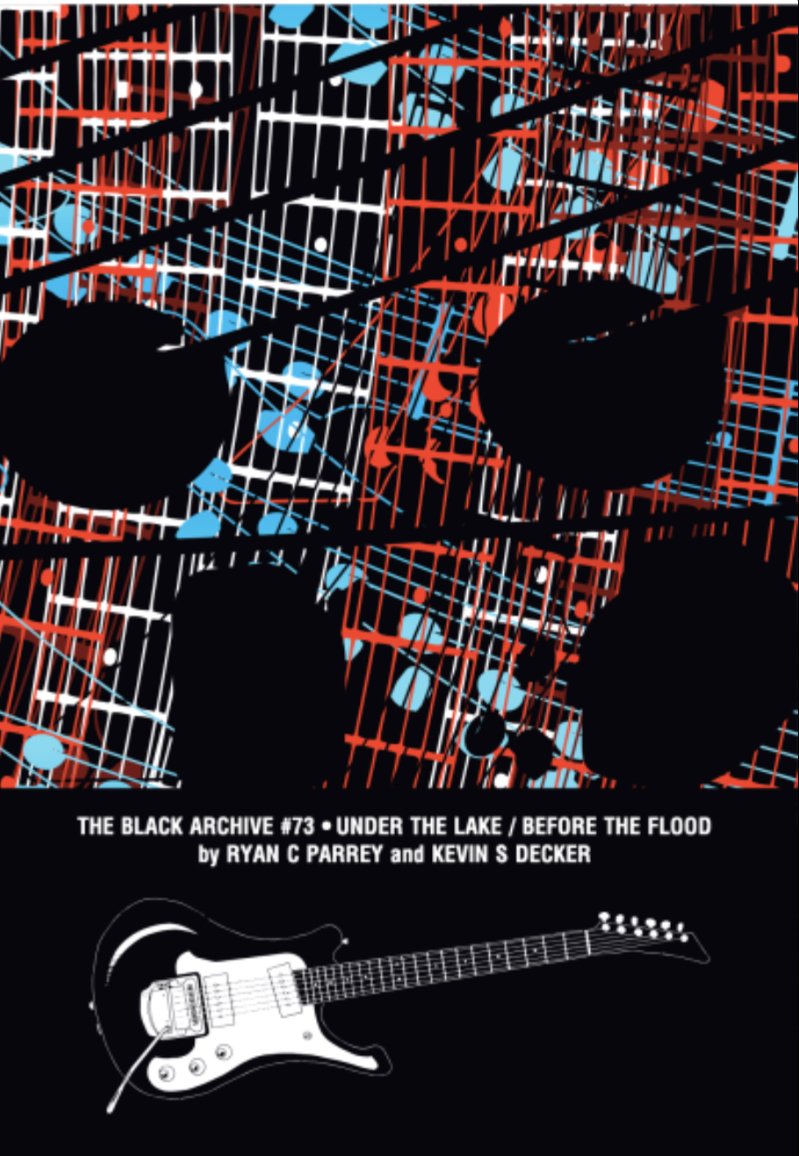
Under the Lake / Before the Flood, by Kevin Decker and Ryan Parrey
War Childhood: From Sarajevo to Syria, Memories of Life and Hope, by Jasminko Halilović
Eastern Nights and Flights, by Alan Bott
Hooleygan: Music, Mayhem, Good Vibrations, by Terri Hooley and Richard Sullivan
From “Narnia” to a “Space Odyssey”: Stories, Letters, and Commentary By and About C.S. Lewis and Arthur C. Clarke, ed. Ryder W. Miller

Non-genre 5 (YTD 10)
Caleb Williams, or Things as They Are, by William Godwin 
Boon, The Mind of the Race, The Wild Asses of the Devil, and The Last Trump, by H.G. Wells
Eight Cousins, by Louisa May Alcott
The Secret Places of the Heart, by H.G. Wells
The Queen’s Gambit, by Walter Tevis

SF 10 (YTD 20)
Light From Uncommon Stars, by Ryka Aoki
Silver in the Wood, by Emily Tesh
A Brilliant Void, ed. Jack Fennell
The Professor in Erin, by L. McManus [Charlotte Elizabeth McManus] (did not finish)
Drowned Country, by Emily Tesh
“Hell is the Absence of God”, by Ted Chiang
Five Ways to Forgiveness, by Ursula K. Le Guin
Childhood’s End, by Arthur C. Clarke
DallerGut Dream Department Store: The Dream You Ordered is Sold Out, by Miye Lee
The Tainted Cup, by Robert Jackson Bennett

Doctor Who 2 (YTD 6)
Mission: Impractical, by David A. McIntee
TARDIS Type 40 Instruction Manual, by Richard Atkinson and Mike Tucker

Comics 2 (YTD 4)
De bondgenoten 1, by Brecht Evens
The Eye of Ashaya, by Andy Diggle, Joshua Hale Fialkov, Richard Dinnick et al

5,800 pages (YTD 13,000)
8/25 (YTD 18/54) by non-male writers (Moller, Alcott, Aoki, Tesh x2, McManus, Le Guin, Lee)
3/25 (YTD 7/54) by non-white writers (Aoki, Chiang, Lee)
5/25 rereads (Light From Uncommon Stars, Silver in the Wood, “Hell is the Absence of God”, Childhood’s EndMission: Impractical)
233 books currently tagged unread, down 14 from last month, down 76 from January 2024.

Reading now
The Research Magnificent, by H.G. Wells
Men at Arms, by Terry Pratchett

Coming soon (perhaps)
Sky Jacks!, by Andy Diggle et al
Oh No It Isn’t!, by Paul Cornell
The Child of Time, by Jonathan Morris et al
A Christmas Carol, by Jaime Beckwith and Leslie Grace McMurtry

The Dramatic Works of Denis Johnston: Radio and Television Plays
Bealby, by H.G. Wells
The Undying Fire, by H.G. Wells
Joan and Peter, by H.G. Wells

Lies Sleeping, by Ben Aaronovitch
A History of the Bible: The Book and Its Faiths, by Dr John Barton
The Mysterious Island, by Jules Verne
The Vegetarian, by Kang Han
Cutting for Stone, by Abraham Verghese
Paladin of Souls, by Lois McMaster Bujold
Nine Lives, by William Dalrymple
City of Last Chances, by Adrian Tchaikovsky
Footnotes in Gaza, by Joe Sacco
The Burgundians: A Vanished Empire, by Bart van Loo
All American Boys, An Insider’s Look at the U.S. Space Program, by Walter Cunningham
Ancient Paths, by Graham Robb
Métal Hurlant Vol. 1: Le Futur c’est déjà demain, by Mathieu Bablet et al
Voyage to Venus, by C.S. Lewis

Inside the Stargazers’ Palace: The Transformation of Science in 16th-Century Northern Europe, by Violet Moller

Second paragraph of third chapter (a long one):

John Dee was a unique figure in his own time, but in the breadth of his interests, which are expressed in his writings and the library he amassed, he epitomises the dizzying scope of intellectual knowledge in this period. The most important autobiographical source we have is the Compendius Rehearsall, a wordy (brevity was not one of Dee’s strengths) curriculum vitae describing his ‘studious life, for the space of halfe an hundred yeeres’, along with extracts of his diaries and two manuscript copies of his library catalogue made in 1583 before he left for Poland.¹ This is an unusually rich amount of source material for someone in this period, especially the diaries, which give us a rare view into the private life of this intensely confounding man. The personal nature of some of the entries – he described his children’s injuries and maladies in detail, he was interested in his wife’s menstrual cycle and noted when she got her periods,* and he recorded their involvement in a wife-swapping incident in Bohemia – were distasteful and confusing to many historians, especially those viewing him through the prism of traditional science. Added to this, Dee spent the last decades of his life pursuing knowledge by talking to angels through a medium or ‘scryer’. This was a problematic, marginal activity that caused him serious difficulties; it has only become more problematic over time, as science has moved away from religion. It condemned Dee in the eyes of many historians of science and made him vulnerable to all sorts of interpretations – in the early twentieth century, he was taken up by the occultist poet-mountaineer Aleister Crowley, which did nothing to enhance his credentials.
* He also recorded her pregnancies and miscarriages. Serious study of the female body and its workings is a relatively recent phenomenon; today, Dee’s interest appears far-sighted rather than strange. (See Angela Saini, Inferior. London: 4th Estate, 2017.)
¹ CR, p. vii.

As a lapsed historian of science, especially astronomy, I always like to keep an eye on things in that domain; this book, published last year, looks at astronomy in the immediate aftermath of Copernicus, through the focus of seven northern European locations, telling a story which is unfamiliar to most people from a slightly different angle. The chosen locations include Leuven (here ‘Louvain’), so it was of particularly local interest to me; also Prague, which we visited last year, John Dee‘s house at Mortlake, Tycho Brahe’s observatory-statelet on the island of Hven, and the fictional Atlantis of Francis Bacon. (The other two are Nuremberg and Kassel in Germany.)

The Leuven chapter did give me some more insights into our local history – although the Mercator museum is in Sint-Niklaas, it was in Leuven that he did most of his best known work in the 1530s and 1540s, and collaborated closely with the astronomer Gemma Frisius (and John Dee came to visit).

But I wasn’t totally convinced that the organisation of the book around geography really helps the reader’s understanding all that much. In the end, the history of ideas is a history of people, and the stories are stories of humans rather than of places, and it gets a bit confusing when the same person pops up non-chronologically in different chapters.

Also for us locals, it would have been nice to be more specific about the street addresses where these various individuals lived and worked, in case there is anything left to see today.

But I can’t complain too much; it’s a clearly written book which takes us from point A to point B efficiently, and certainly fills in a lot of blanks which I had not even realised were blank. You can get it here.

Wednesday reading

Current
The Tainted Cup, by Robert Jackson Bennett
Men at Arms, by Terry Pratchett

Last books finished
Eastern Nights and Flights, by Alan Bott
The Secret Places of the Heart, by H.G. Wells
Childhood’s End, by Arthur C. Clarke
DallerGut Dream Department Store: The Dream You Ordered is Sold Out, by Miye Lee
The Queen’s Gambit, by Walter Tevis
Hooleygan: Music, Mayhem, Good Vibrations, by Terri Hooley and Richard Sullivan

Next books
Sky Jacks, by Andy Diggle et al
The Research Magnificent, by H.G. Wells
Lies Sleeping, by Ben Aaronovitch

The Professor in Erin, by L. McManus [Charlotte Elizabeth McManus]

Second paragraph of third chapter:

He turned from the window on hearing a knock at the door. MacFirbis came in. Had the Herr Professor passed a good night, he asked in German; was he well? And the Professor, declining to speak his own language, answered in Irish that he had slept soundly and felt in good health.

I was inspired to seek this out by reading Jack Fennell’s anthology, A Brilliant Void. Originally serialised in Arthur Griffith’s Sinn Féin newspaper before the First World War, and then published by M.H. Gill in 1918, it’s the story of a German professor of the Irish language, who is visiting Dungannon, Co Tyrone, falls and hits his head, and awakens in a parallel universe where the Irish side won the Battle of Kinsale in 1601. Ireland has subsequently developed as a civilised and powerful state, proud of its Gaelic heritage, ruled as a constitutional monarchy by the High King in a rebuilt Tara and with the provinces ruled by junior monarchs.

Our hero has a series of increasingly treacherous adventures, being mistaken for a German spy (including by the German ambassador) and becoming involved with romantic dynastic conspiracy between the different clans of historians, as well as a spot of guerrilla gardening. He also has no idea what has happened to him, and is very confused by the absence of any familiar Irish landmarks constructed after 1601. This is all very amusing and really quite fun.

The geography in the book is somewhat confused – starting from Dungannon, we are told that it’s only 30 miles to Westport in Mayo (in fact it’s more like 150 miles, 240 km) and the route that is taken from Dungannon to Tara and Dublin doesn’t make much sense. Possibly the author decided at a very late stage to make the location of the story Dungannon, the ancient capital of Ulster, rather than Rathcroghan, the ancient capital of Connacht; though even that is 60 miles / 95 km from Westport. It’s odd; as a Mayo woman herself she must have known the geography well.

The first 22 chapters are online here, and I calculate that that takes us roughly 80% of the way through the book. Unfortunately I have not been able to find the last 20% online anywhere, and paper copies of the one and only edition published in 1918 are selling for vast amounts online, so I will have to remain in suspense about the ending until I find it in a decent Irish reference library. Though it’s pretty obvious what is going to happen; there will be a rousing climax and then the protagonist will return to our timeline – the author says as much in the introduction.

McManus died in 1944 (at the age of 91) so A Professor in Erin has long been in the public domain; some enterprising publisher – perhaps even Gill Books, who brought it out in the first place 106 years ago, and are still going strong – could probably profitably revive it.

A Brilliant Void, ed. Jack Fennell

Second paragraph of third story (“The Age of Science”, by Frances Power Cobbe):

For obvious reasons the particulars of this most marvellous invention, and the name of its author, must be withheld from the public till the patents (and the enormous profits) be secured to the Company which is invited to undertake to work it (with limited liability). We are only permitted by special favour to hint that the natural Force relied on to set the machinery in action is neither Electric, Magnetic, nor Galvanic; nor yet any combination of these; but that other great correlated imponderable agency, whose existence has been for some time suspected by many intelligent inquirers, called the Psychic Force. That no scepticism may linger in the minds of our readers, we desire to add that we have at this moment in our hands a complete transcript of a newspaper bearing date January 1st, 1977. As the printed matter of this gigantic periodical equals at least in bulk the whole of Gibbon’s History, or Mr. Jowett’s edition of Plato, we cannot attempt to do more than offer our readers a few brief extracts.

Jack Fennell has been fighting the good fight to uncover the historical traditions of Irish science fiction for many years, and this is quite an extraordinary collection of stories from various writers, many of them women and radicals, from the nineteenth and early twentieth centuries; and all of the stories are firmly on the science fiction rather than fantasy side of the divide.

The potted biographies of the authors frequently spurred me to seek more information from Wikipedia, and I realised the depth of my own ignorance of the science fictional side of the cultural revival – which is ironic, because in my PhD thesis I made the closely related argument that the pro-science agenda of revolutionary Irish nationalism had been ignored.

I was particularly intrigued by Clotilde Graves (1863-1932), a distant cousin of Robert Graves, who wrote plays as “Clo Graves” and novels as “Richard Dehan”, cropped her hair short, wore men’s clothes and smoked cigars in public. One of her plays compared marriage to prostitution and her work is generally feminist. I don’t think I had heard of her before.

Not all of these stories are top-notch, but I’m glad that Jack Fennell has revived them. The other authors represented are William Maginn, Fitz-James O’Brien, Frances Power Cobbe, George William Russell / Æ, Amelia Garland Mears, Margaret Wolfe Hungerford, Jane Barlow, Robert Eustace and L. T. Meade, L. McManus, Dorothy Macardle, Art Ó Riain, Tarlach Ó hUid and Cathal Ó Sándair. You can get it here.

This was both my top unread book acquired in 2019 which is not by H.G. Wells, and the sf book that had lingered longest unread on my shelves. Next on those piles respectively are Hooleygan: Music, Mayhem, Good Vibrations by Terri Hooley and Richard Sullivan and Ganny Knits a Spaceship, by David Gerrold.

Silver in the Wood and Drowned Country, by Emily Tesh

After the success of Emily Tesh’s first novel, Some Desperate Glory, at last year’s Hugos, I went back and reread her previous two publications, the Greenhollow Duology, a pair of fantasy novellas published in 2029 and 2020. (Actually I got them for Anne for Christmas, in the confident and correct expectation that she would enjoy them too.)

The second paragraph of the third section of the first of the two chapters of Silver in the Wood is:

The cry was coming from somewhere outside. Tobias groaned softly as time sped up again to let him hear it. The wound in his thigh was aching, and not with the dull throb of healing pain. Who was disturbing him now? Hell, who was there left who even knew his name?

I wrote of it in 2021:

Short and sweet. Lovely fantasy story of contemporary England with m/m romance told from the point of view of the Green Man himself.

To expand on that a bit, it’s really very magical in several ways. Tobias, the Green Man protagonist, forms a deep and understatedly romantic friendship with a folklorist called Silver who moves into his woods (hence the title); when Silver mysteriously vanishes, his mother comes on the scene and we move into sorcerous retrieval.

The second paragraph of the third section of Drowned Country is:

The silence lengthened. Silver knew this tactic intimately but crumpled anyway. “Well, what?” he said.

Two years later, Silver and Tobias are no longer on good terms, for reasons that gradually become clear; and Silver’s mother summons them to a blasted English seaside resort, which people who know more than me tell me is rather similar to Whitby, to investigate the disappearance of a young woman. But it turns out that the young woman herself has her own agenda, and the story becomes a surprising twist on the standard vampire narrative.

This is all very different from Some Desperate Glory, but what all three share is a strong yet clear-eyed sympathy for her characters by the author, combined with a tremendous sense of place. Tobias’s woods, Silver’s home, and the various seaside locations are all vividly and economically realised, and the two novellas tell quite big stories in a small number of pages. You can get Silver in the Wood here, and Drowned Country here. And Tesh’s second full novel, The Incandescent, comes out in May.

I rather cheated on my lists by bumping Silver in the Wood to the top of my pile of unread books by women, even though I had already read it. Next on that pile is Eight Cousins, by Louisa May Alcott.

The best known books set in each country: Poland

See here for methodology. I am excluding books of which less than 50% is actually set in today’s Poland. This is a case where you would think that only one thing had ever happened in the country’s history…

TitleAuthorGoodreads
raters
LibraryThing
owners
NightElie Wiesel1,301,25028,893
The Boy in the Striped PajamasJohn Boyne893,26115,839
The Tattooist of AuschwitzHeather Morris1,063,0847,136
Maus I: A Survivor’s Tale: My Father Bleeds HistoryArt Spiegelman352,31911,169
The Complete MausArt Spiegelman236,1849,215
Schindler’s ListThomas Keneally162,8378,261
Maus II: A Survivor’s Tale: And Here My Troubles BeganArt Spiegelman153,0937,736
Salt to the SeaRuta Sepetys232,2823,802

Art Spiegelman (deservedly) does well here, if not quite as dominant as Marjane Satrapi was for Iran. But it’s clear that the winning place goes to Elie Wiesel’s Night. All eight of these books are about Nazi Germany and the Second World War, and seven of them are about the Holocaust.

I wasn’t quite sure about Salt to the Sea, which centers around the sinking of the Wilhelm Gustloff, but apparently the characters spend a lot of the book getting to and then hanging around in what is now Gdynia (then Gotenhafen), so I’m allowing it on the list.

I disqualified several books which have Polish authors, and so are tagged “Poland” by LT and GR users, but are not actually set in Poland. These were Heart of Darkness, by Joseph Conrad, in which the words “Poland” and “Polish” do not even appear; The Last Wish and Blood of Elves from the Witcher series by Andrzej Sapkowski, which may have roots in Slavic mythology but are clearly set in a fantasy world; Lilac Girls, by Martha Hall Kelly, which seems to be more set in Germany than anywhere else; and The History of Love, by Nicole Krauss, which is mainly set in the USA.

Well, that was grim. Next up, Morocco, then Angola and Ukraine.

Asia: India | China | Indonesia | Pakistan | Bangladesh (revised) | Russia | Japan | Philippines (revised) | Vietnam | Iran | Türkiye | Thailand | Myanmar | South Korea | Iraq | Afghanistan | Yemen | Uzbekistan | Malaysia | Saudi Arabia | Nepal | North Korea | Syria | Sri Lanka | Taiwan | Kazakhstan | Cambodia | Jordan | UAE | Tajikistan | Israel
Americas: USA | Brazil (revised) | Mexico | Colombia | Argentina | Canada | Peru | Venezuela | Chile | Guatemala | Ecuador | Bolivia | Haiti | Dominican Republic | Honduras | Cuba
Africa: Nigeria | Ethiopia (revised) | Egypt | DR Congo | Tanzania | South Africa | Kenya | Sudan | Uganda | Algeria | Morocco | Angola | Mozambique | Ghana | Madagascar | Côte d’Ivoire | Cameroon | Niger | Mali | Burkina Faso | Malawi | Zambia | Chad | Somalia | Senegal | Zimbabwe | Guinea | Benin | Rwanda | Burundi | Tunisia | South Sudan | Togo | Sierra Leone
Europe: Russia | Türkiye | Germany | France | UK | Italy | Spain | Poland | Ukraine | Romania | Netherlands | Belgium | Sweden | Czechia | Azerbaijan | Portugal | Greece | Hungary | Austria | Switzerland | Belarus
Oceania: Australia | Papua New Guinea

De bondgenoten, deel 1, by Brecht Evens

First frame of first page (the third page, which I’d usually select, is a bit graphic):

I used to be weak.

I have been hugely impressed by the previous graphic novels of Brecht Evens, but I was not quite sure about this one, which is the first part of a promised two-part series. Our protagonist, 10 year old Arthur, lives on the Breton coast with his father. (Yep, Arthur of Brittany, though it’s not clear what to read into that.) His father brings him up in the knowledge that they are fighting a peculiar battle at the front line of the war between Good and Evil, and then he disappears, leaving Arthur to navigate a world where the neighbours are presumptively all spies for the dark side.

Arthur’s father is clearly clinically paranoid, and it’s not yet clear how Evens is going to resolve the plot; it could go well or badly, to be honest. But as usual, what makes the book is Evens’ fantastic art, drawing perhaps on James Ensor but with very much his own twist on it, often conveying a great deal with just a few lines, capturing character traits and settings with complete conviction. It’s a gorgeous run of 288 pages, and I hope it all makes sense when the next volume comes out.

The Dutch title means “The Allies”, but the French title, Le Roi Méduse, means “The Jellyfish King”. Heaven knows how they will translate it into English. Meanwhile you can get it in the original Dutch here and in French here.

This was my top unread comic which is not in English. Next on that pile is Panter, also by Brecht Evens.

Sorrowland, by Rivers Solomon, and Light of Uncommon Stars, by Ryka Aoki

These two books jointly won the 2022 (and so far last) Otherwise Award, formerly the Tiptree. I had read Light of Uncommon Stars previously, but it was from one of my Hugo years so I didn’t write it up at the time and have returned to it now.

Second paragraph of third chapter of Sorrowland:

At least summer brought an end to the dreary dead fawn show, and Vern was able to get some work done. She tied one babe to her hip and the other to her back in a way that made it possible to walk ten or even fifteen miles to forage without tiring.

I rather bounced off Solomon’s first two books, An Unkindness of Ghosts and her novelisation of the .clipping song The Deep. But I found this worked much better for me – like the other two, it furiously addresses race and gender and historical oppression, but somehow seemed more under control. The protagonist is a very young black woman, escaping a cult by fleeing into the nearby wooded wilderness where she gives birth, and her allies and enemies as she undergoes strange physical changes as well. It still got a bit off the rails towards the end, but most of it made sense in a very angry way. You can get it here.

The second paragraph of the third chapter of Light from Uncommon Stars is:

Once common in LA’s Eisenhower years, just a few of these giant donuts remained in greater Los Angeles. There were Kindle’s Donuts, Dale’s Donuts, and Randy’s Donuts, of course. Donut King II was in Gardena. In La Puente, there was the drive-through Donut Hole.

This worked less well for me, both when I first read it in 2022 and again three years later. There are a couple of elements that work really well – the very sympathetic portrayal of the trans protagonist, and the life of Asians in contemporary California, and there’s some good stuff about violin playing. But the two main plot lines are about a music teacher who sells her pupils’ souls to the Devil, and a doughnut restaurant which is really a front for a stranded alien starship, and both seemed to me rather silly; my disbelief rapidly became unsuspended and didn’t pick up again. Obviously my tastes are in the minority here, because it was the runner-up for the Hugo after A Desolation Called Peace, which I enjoyed much more. You can get Light from Uncommon Stars here.

There was an unusually strong overlap between the 2022 Otherwise Award and that year’s Hugos. As mentioned up top, co-winner Light From Uncommon Stars was a Hugo finalist; the honor list included Lodestar finalist Cemetery Boys and Hugo finalist She Who Became the Sun, by Shelley Parker-Chan, and seven other books that I have not read. The Clarke Award that year went to Deep Wheel Orcadia, by Harry Josephine Giles, the BSFA Award to Shards of Earth, by Adrian Tchaikovsky, and the Nebula to A Master of Djinn, by P. Djèlí Clark.

I’ll do a write-up of the Tiptree / Otherwise Awards as a whole soon, but just to note that this takes me to the end of a reading project that I started in 2017 with A Woman of the Iron People, back when the world was a very different place.

What’s on the TARDIS bookshelves?

Back in September 2015, I was lucky enough to get a look at the Doctor Who set in Cardiff, including the TARDIS. This was just after filming had been completed on The Husbands of River Song. I took loads of photos, but the studio lights were off so it was all a bit dark and the pictures are out of focus. However, looking at them the other day, I realised that there is enough detail to make out the titles of most of the books on the TARDIS bookshelves. Lesson learned – if I ever have another chance, I’ll make sure to get better and more complete shots.

I took photos of two sets of bookshelves, and the books on this one are much less easy to distinguish than the other. On the top shelf, beside the wooden horse, are two volumes of a History of England, Vol II to the left of Vol I, and three volumes of what looks like the collected works of some author (or possibly “Philosophical Works“), Vol VIII, Vol X and Vol VII.

On the middle shelf, I can’t make out the book on the left; the next two appear to be The Holy Bible, Vol I and Vol II; another two that I can’t make out, and then The Holy Bible Vol IV followed by Vol III. The two paperbacks to the left of the skull are Term of Trial, by James Barlow, and a combined Penguin edition of D.H. Lawrence’s short novels St Mawr and The Virgin and the Gipsy. I can’t make out anything of the next two titles, to the right of the skull, but on the spine of the last fully visible book, the middle word is Plays.

On the bottom shelf, the light is too bad to see any titles clearly.

The other bookshelf that I photographed is much clearer, thanks to all of the books being paperbacks and most of them being Penguins. I can identify all 35 books on the top shelf, and 25 of the 30 on the bottom shelf with reasonable guesses at two of the other five.

On the top shelf we have:

  • Pride and Prejudice, by Jane Austen
  • Hard Times, by Charles Dickens
  • Selected Short Stories, by Guy de Maupassant
  • The Mayor of Casterbridge, by Thomas Hardy
  • King Solomon’s Mines, by H. Rider Haggard
  • Man and the Vertebrates: 1, by A.S. Romer
  • The Political Economy of Growth, by Paul A. Baran
  • New Horizons in Psychiatry, by Peter Hays
  • Roman Britain (Political History of England 1), by I.A. Richmond
  • The Simplicity of Science, by Stanley D. Beck
  • Language in the Modern World, by Simeon Potter
  • Family Policy, by Margaret Wynn
  • Mister Johnson, by Joyce Cary
  • The Secret Agent, by Joseph Conrad
  • Elizabeth and Essex, by Lytton Strachey
  • Gormenghast, by Mervyn Peake
  • The White Monkey, by John Galsworthy
  • Heart of Darkness, by Joseph Conrad
  • Bliss and Other Stories, by Katherine Mansfield
  • The Loved One, by Evelyn Waugh
  • Introduction to Sociology: A Humanistic Perspective, by Peter L. Berger
  • Birth Control in the Modern World, by Elizabeth Draper
  • Modern Science and the Nature of Life, by William S. Beck
  • The True Wilderness, by H.A. Williams
  • The Reader’s Guide, edited by Sir William Emrys Williams
  • Organic Chemistry Today, by F.W. Gibbs
  • Maid in Waiting, by John Galsworthy
  • To Let, by John Galsworthy
  • Left Luggage, by C. Northcote Parkinson
  • In Chancery, by John Galsworthy
  • A Little of What You Fancy, by H.E. Bates
  • a second copy of In Chancery, by John Galsworthy
  • A Breath of French Air, by H.E. Bates
  • When the Green Woods Laugh, by H.E. Bates
  • Blood Rights, by Mike Phillips

The lower shelf is more out of focus, but I’m pretty sure that we see:

  • Shardik, by Richard Adams
  • Debbie Go Home, by Alan Paton
  • a second copy of Shardik, by Richard Adams
  • two copies of The Wild Cherry Tree, by H.E. Bates
  • Birds of America, by Mary McCarthy
  • The Group, by Mary McCarthy
  • one that I have difficulty reading but it might be The Innovators by Michael Shanks
  • The Chemistry of Life, by Steven Rose
  • Voters, Parties and Leaders, by Jean Blondel
  • one that I cannot read
  • A High Wind in Jamaica, by Richard Hughes
  • Anna of the Five Towns, by Arnold Bennett
  • Britain on Borrowed Time, by Glyn Jones and Michael Barnes
  • The Jungle, by Upton Sinclair
  • Goodbye to All That, by Robert Graves
  • another that I cannot read, though the author’s first name looks like “Henry” or possibly “Hilary”
  • North and South, by Elizabeth Gaskell
  • a book by H.E. Bates whose title is unreadable, but it seems very odd that the Doctor would not have a copy of The Darling Buds of May despite having all four of its sequels, so that’s probably it
  • The Portrait of a Lady, by Henry James (upside down)
  • two copies of The Cold Moons, by Aeron Clement (the title of the second book is unreadable, but Aeron Clement’s name is clear, and he only wrote one book, so it’s got to be a duplicate)
  • a second copy of The Mayor of Casterbridge, by Thomas Hardy
  • Three Plays by John Webster (The White Devil, The Duchess of Malfi, and The Devil’s Law-Case)
  • Little Dorrit, by Charles Dickens
  • Owls and Satyrs, by David Pryce-Jones
  • a third copy of Shardik, by Richard Adams
  • a second copy of A Little of What You Fancy, by H.E. Bates
  • The N****r of the Narcissus, Typhoon and Other Stories, by Joseph Conrad
  • finally, one more that I cannot read, though the author’s first name looks like “Henry”.

So: there’s a fair number of classics; a lot of middle-brow twentieth century literature (H.E. Bates, John Galsworthy); very little science fiction or fantasy (apart from Shardik, of which the Doctor has no less than three copies, and two copies of The Cold Moons, a Watership Down-style novel about badgers [edited to add: Rich Horton points out that Gormenghast surely counts too]); lots of well-meaning Penguin 1960s and 1970s sociology; some rather odd popular science books; only two history books (Roman Britain and Elizabeth and Essex); and precisely one book about religion (The True Wilderness, by H.A. Williams), though of course there’s a multi-volume Bible on the other shelf.

Unfortunately I think the Glyn Jones who co-wrote Britain on Borrowed Time is not the same person who wrote The Space Museum. That would have been nicely recursive.

There were more books in the TARDIS than this, as you can see from this screenshot from The Husbands of River Song, but I’m happy to have salvaged some information from my own archives.

Caleb Williams, or Things as They Are, by William Godwin

Second paragraph of third chapter:

The person in whom these calamities originated was Mr. Falkland’s nearest neighbour, a man of estate equal to his own, by name Barnabas Tyrrel. This man one might at first have supposed of all others least qualified from instruction, or inclined by the habits of his life, to disturb the enjoyments of a mind so richly endowed as that of Mr. Falkland. Mr. Tyrrel might have passed for a true model of the English squire. He was early left under the tuition of his mother, a woman of narrow capacity, and who had no other child. The only remaining member of the family it may be necessary to notice was Miss Emily Melville, the orphan daughter of Mr. Tyrrel’s paternal aunt; who now resided in the family mansion, and was wholly dependent on the benevolence of its proprietors.

I was reading this at the rate of a chapter every couple of days since November, as part of the same group who have previously read War and Peace, Anna Karenina, Our Mutual Friend and The Monk. I must say that a group read like this is a great way to maintain the pace of reading a heavy text and exchanging insights on plot developments and social commentary. Having read work by his wife and daughter, I was also interested to see how Godwin himself came across.

So, first of all: it’s not really all that good as a novel. The protagonist, Caleb Williams, acquires a rich patron, Mr Falkland; discovers Falkland’s dark secret, which is that he committed a murder and allowed two other people to be executed for it; and then flees Falkland’s wrath for the rest of the book, pursued by the sinister thief-taker Gines.

The long chase is not really very interesting – Godwin could have made it more vivid with descriptions of landscape and townscape, but instead just has Caleb hiding, being found by Gines, fleeing and hiding somewhere else all over again. There’s one good bit set in London (which had me looking up sources on the historic synagogues of the city). The chase sequence is reminiscent of the one in Frankenstein, but his daughter did it better.

The moral core of the book is the relatively short section where Caleb is imprisoned unjustly, and faces Falkland’s wrath through the justice system. Godwin was determined to expose the ways in which the judicial system in England served only to impose the will of the rich on the poor. The sections where Caleb is in prison are footnoted as if to say “I am not making this bit up”. There is a wronged young woman character who also dies tragically in prison. It appears to be impossible to hold Falkland accountable for his wrongs. These sections are passionate and fluent.

(I did wonder also if there was a bit of a spurned lover vibe between Caleb and Falkland.)

It’s also mercifully short, and we rather dragged it out by reading only four or five pages a day. Next time I’d prefer to do it a chapter at a time, though I realise that Caleb Williams has only 42 chapters, including the postscript but not the prefaces. Anyway, you can get it here.

Ithaca, by Claire North

Second paragraph of third chapter:

Of these, the three men and the boy consider themselves the most pertinent. They stand round a table of yew set with shards of tortoiseshell, and bicker.

This is the first of a trilogy about Odysseus’ wife Penelope, waiting for him to return to Ithaca (if he ever will), balancing the interests of the suitors who have come to try and persuade her to marry them, narrated by the goddess Hera who is observing closely and just occasionally interfering to counter the interference of Athena, Artemis and the others.

Ithaca is being raided by pirates, supposedly Illyrians from the north; it doesn’t take the reader, or Penelope, long to work out what is really going on – one of the suitors is behind it; it takes a lot longer to sort out, given the male domination of legitimate violence, even in a kingdom ruled by a woman. In the meantime Clytemnestra has fled Mycenae and her vengeful children, and the consequent instability is spreading west to Ithaca too. It’s all convincingly told, in the constraints of myth.

I have generally enjoyed Claire North’s books, and I enjoyed this too; and now that I realise there are another two books to go, I’ll be getting them. You can get it here.

This was my top unread book acquired in 2022. Next on that pile is Ancient Paths, by Graham Robb.

Wednesday reading

Current
DallerGut Dream Department Store: The Dream You Ordered is Sold Out, by Miye Lee
Childhood’s End, by Arthur C. Clarke
The Secret Places of the Heart, by H.G. Wells

Last books finished
Under the Lake / Before the Flood, by Kevin Decker and Ryan Parrey
Eight Cousins, by Louisa May Alcott
War Childhood: From Sarajevo to Syria, Memories of Life and Hope, by Jasminko Halilović
“Hell is the Absence of God”, by Ted Chiang
Five Ways to Forgiveness, by Ursula K. Le Guin

Next books
Hooleygan: Music, Mayhem, Good Vibrations, by Terri Hooley
Men at Arms, by Terry Pratchett
Lies Sleeping, by Ben Aaronovitch

The Wife of Sir Isaac Harman, by H.G. Wells

Second paragraph of third chapter:

Lady Beach-Mandarin always had her luncheons in a family way at a large round table so that nobody could get out of her range, and she insisted upon conversation being general, except for her mother who was impenetrably deaf and the Swiss governess of her only daughter Phyllis who was incomprehensible in any European tongue. The mother was incalculably old and had been a friend of Victor Hugo and Alfred de Musset; she maintained an intermittent monologue about the private lives of those great figures; nobody paid the slightest attention to her but one felt she enriched the table with an undertow of literary associations. A small dark stealthy butler and a convulsive boy with hair (apparently) taking the place of eyes waited. On this occasion Lady Beach-Mandarin had gathered together two cousins, maiden ladies from Perth, wearing valiant hats, Toomer the wit and censor, and Miss Sharsper the novelist (whom Toomer detested), a gentleman named Roper whom she had invited under a misapprehension that he was the Arctic Roper, and Mr. Brumley. She had tried Mr. Roper with questions about penguins, seals, cold and darkness, icebergs and glaciers, Captain Scott, Doctor Cook and the shape of the earth, and all in vain, and feeling at last that something was wrong, she demanded abruptly whether Mr. Brumley had sold his house.

Ellen Sawbridge, aged 18, marries Isaac Harman, who is rich, twenty years older and receives a knighthood on their wedding day. After bearing him four children, she undergoes an epiphany; she discovers the need to exert her own individuality and do her own things, and also realises that her husband’s wealth is based on ruthless exploitation of the workers in the chain of cafes that he owns. “She began to read more and more in order to learn things… and less and less to pass the time.”

Helping her in this process is George Brumley (a viewpoint character in a novel by a writer whose middle name was George and was born in Bromley), a widower who is deeply in love with Lady Harman and of whom Sir Isaac becomes (justifiably) very jealous. I thought that the personal journeys of the two protagonists were very nicely and credibly done, without too much of the speechifying that many of Wells’ political characters are prone to indulge in.

Unfortunately the novel is colossally spoiled by the casual and systematic anti-semitism in the portrayal of Sir Isaac Harman. The word ‘Jew’ is never directly used, but there is constant insinuation about him; the pointiness of his nose (and of his children’s noses); his unsporting attitude to sports; his obsession with wealth; his accent. Adam Roberts has gone into this at much greater length (also he didn’t like the rest of the book as much as I did).

It would be possible to do a perfectly good dramatisation of this story with the anti-semitism removed; though you would have to change the title. You can get it here.

This was my top unread book by H.G. Wells. Next on that pile is The Secret Places of the Heart.

Gallifrey One, 2025 (also the Getty Museum and the Last Bookstore)

So, on my way back from Gallifrey One, the top Doctor Who convention in the world, having had as usual a whale of a time. Though I will start with two less happy things. First, my back has been playing up for the last few weeks, so I was very careful not to overdo it, and napped during the day a bit more than usual (to compensate for sleeping worse). In 2009 and again in 2013, I had back problems which were serious enough to keep me off work for ten days each time, so I know the danger signs and am religiously doing my stretches.

The second less than happy thing was the announcement that the 2028 Gallifrey One will be the last. Mostly the same team have been running it since 1991, and they prefer to conclude the series rather than hand over the reins. Understandable, but there was a palpable air of sadness and shock in the hall as the announcement was made. Apparently there are moves to assemble a replacement structure, and with four years to go, there is time. Meanwhile we are all grateful for the immense amount of work put in by the team over the decades.

A lot of other things went well. For the first time since 2012, I got a room at the conference hotel, and that makes a big difference to lugging things around. Though the escalators between the lobby and the ballroom floors were out, so we got used to the labyrinthine alternative routes.

Outside the hotel, I had breakfast most days at Denny’s about half a mile away, and that was tremendously good value, setting me up well so that I didn’t need as much of the hotel’s somewhat inflated bar food. Other places I ate:

  • The Getty Museum Cafe, for lunch on Thursday, which was fine
  • Jino’s Pars, for dinner on Saturday with Jon Arnold, about a mile from the Marriott, yummy Persian food
  • Blu Jam Cafe, in Downtown LA on Monday morning, a substantial brunch which was too substantial for me to finish
  • Wolfgang Puck in Terminal 7 at LAX for a late lunch as we left, where they charged me $33 for a small sad overcooked chunk of salmon which took over half an hour to arrive. When I complained they refunded half the price.

Also apparently there were two earthquakes in Malibu late Friday and early Saturday, but I must admit I failed to notice.

One other thing that went well, not especially related to the convention: I got an eSIM for my phone, and that meant that i had cheap data for he entire trip. Based on the recommendation of my former colleague Robert, I went with Airalo, who also offer coverage in China where I will go next month. I’m sure there are others available, but I was very satisfied with what I had.

So: H and I travelled on Wednesday this time, to have got over the jetlag by the time the convention started on Friday morning, and I had a very pleasant Wednesday evening in the bar with Nicola Bryant, Andrew Smith (writer of Full Circle), Big Finish writer Lisa McMullin and others.

Formal shot with Nicola Bryant – many more photos but all in my shipped baggage as I write from Heathrow
Andrew Smith signs the novelisation of Full Circle, published 42 yeas ago when he was 20.

I took fewer cosplay photos than in previous years, but as usual the effort put in was impressive.

Amy and Vincent
Time Lord
A Silent
Doctors & co
K-9 variations
Dodo
The unseen villain of Rogue. Fluent in many languages and scolds you for not doing your homework, before eating you.

The great set-pieces of the convention are the presentations by the stars, and I got to most of them, back permitting. Sylvester McCoy, in an amazingly high energy performance from a man who has recently turned 80, wandered around the audience in his session, and H got this great photo of me asking him about Vision On, to which he gave a good five-minute answer.

H got to do a script reading with Colin Baker:

Wendy Padbury and her daughter Charlie Hayes were an effective double-act, Charlie threatening to ask her mother to tell us everything she knows about astrophysics.

Louise Jameson was also charming, but complained facetiously when her Leela clothing got a round of applause: “Upstaged by a costume!”

The headline star this year was not either of the Doctors present (Colin Baker and Sylvester McCoy) but Steven Moffat, who did a solo Q&A, commented on a showing of Boom!, crashed Jenna Coleman’s Q&A, did a small group analysis of The Girl in the Fireplace and signed my copy of the novelisation of The Day of the Doctor.

As well as seeing lots of old friends I made new friends as well. Here Ruadhri from London, who was doing a series of mini-interviews with participants for later publication, has the tables turned on him by Jack from Boston.

Altogether I had a really good time and hope that I can make it to the last three, in 2026, 2027 and 2028.

On the Thursday before it all started, I decided to go to the Getty Center, a half-hour’s drive north – I had planned to do that last year, but it is closed on Mondays so I went to LACMA instead that time. I am therefore now equipped for many weeks of my #Thursdayart posts, which you may have seen on my social media channels. The Getty Villa is still closed after last month’s fires, but its sister institution is fine; head literally in the clouds on a very rainy day.

After the Rijksmuseum, which we had visited only a few days before, the Getty is rather exposed as what it is, the perpetuation of a rich man’ whims rather than the nation-building project over in Amsterdam. But there is plenty of good stuff; the five I picked for social media posts were:

Van Gogh’s Irises, very much the star of the show

I was fascinated by the human detail in The Bird Catchers, painted by by François Boucher in 1748.

I envied the relaxation of Princess Leonilla of Sayn-Wittgenstein-Sayn, painted by Franz Xavier Winterhalter in 1843:

And finally here’s a bust of Felix Mendlesohn, from 1848 (just after his death) by Ernst Friedrich August Rietschel.

But plenty more where all of that came from.

Yesterday, for my last morning, I braved the public transport system (cheaper now that I am over 55!) and ventured downtown to The Last Bookstore. I didn’t actually buy anything, but I always find bookshops good for recharging.

It too has unusual artworks. Going up the stairs you will meet Nuestra Señora La Reína de la Librería Última de Los Ángeles:

And at the top you will see “Diagnosis” by Jena Priebe and David Lovejoy.

Got back to the hotel in time to chat with my old friend D, who then dropped me to the airport. And 14 hours of travel and 3 hours of sleep later, here I am in Heathrow. See you soon.

Under the Lake / Before the Flood, by Ryan C. Parrey and Kevin S. Decker (and Toby Whitehouse)

This was a two-part Twelfth Doctor story from Series 9 in 2015, set in the early 22nd century in a base under a Scottish reservoir, and also in 1980, in the abandoned village that was there before the reservoir was built. I don’t appear to have written it up at the time – I was a bit sparing when the last name on the screen was my first cousin, which may have been too cautious of me.

The TARDIS, with the Twelfth Doctor and Clara on board, arrives in the year 2119, in an underwater base under siege from ghosts, which appear linked with a mysterious alien vessel at the bottom of the lake. The crew of the base start getting picked off one by one. The Doctor goes back to 1980 to try and sort things out, but apparently returns as a ghost. The trouble is being caused by a semi-dead alien called the Fisher King, but I confess I did not really follow that part. Eventually all is resolved with the use of time paradoxes – the Doctor has a breaking-the-fourth-wall conversation with the viewer about who really wrote Beethoven’s music. There are some very good shots of Capaldi in particular.

Notably, Cass, the woman who takes command of the crew for most of the story (after the original commander is an early victim) is deaf, played by deaf actor Sophie Leigh Stone, and communicates with everyone else by signing through an interpreter.

I also noted with interest that two characters played by actors of Asian heritage, Zarqa Ismail and Arsher Ali, are given the thoroughly Anglo names Tim Lunn and Mason Bennett. (I don’t think we ever find out Cass’s first name.)

The writer was Toby Whitehouse, who also wrote School Reunion, one of my favorite New Who episodes; Greeks Bearing Gifts, one of my favourite Torchwood episodes; the series Being Human; and the New Who episode The God Complex, which I didn’t rate as highly and have written up here along with its Black Archive.

Rewatching Under the Lake / Before the Flood, I would rank it as average or slightly below. Over on X/Twitter, it did better, at 120th of 309 Who stories in @heraldofcreatio’s poll. Anne could not remember having seen it first time round. I find the plot decently sfnal and the base well realised, but the energy somehow not quite there, and the means and motivation of the alien menace obscure. Full marks of course for the portrayal of Cass’s disability, which we’ll get back to.

Ryan C. Parrey and Kevin S. Decker have done a solid though relatively short Black Archive on the story. The first chapter is an introduction which briefly touches on bases under siege, evil capitalism, and the reversed sequence of the narrative.

The second and longest chapter, “The Bootstrap Paradox”, goes in detail into the exploration of time paradoxes in this story and in other Doctor Who stories, and the extent to which they also carry the freight of moral dilemmas.

The third chapter, “‘Only Room for One Me’”, looks at Clara’s arc overall in the wider Doctor Who narrative. Its second paragraph is:

“This two-part story contributes important elements to Clara’s arc during her time with the 12th Doctor, an arc that begins before Danny’s death and that sees Clara act on her fascination with the Doctor’s power and responsibility. Making a conscious decision to leave certain inhibitions behind after Danny dies, she experiments here and elsewhere in series nine with, in effect, becoming the Doctor.

Incidentally I am writing this at Gallifrey One, where Jenna Coleman as usual is charming the participants.

The very brief fourth chapter, “Ghosts in the Machine”, looks at the ghosts in the story as compared to other Who stories, and unpacks how they are not really ghosts.

The fifth chapter, “New Waste Lands”, which is also short, looks at the alien Fisher King and successfully explained to me what is actually going on in the story, better than the script did.

The sixth and best chapter, “The Case of Cass”, looks at the varying ways that disabled people are portrayed in the media, especially in Doctor Who, coming to the conclusion that Cass is uniquely well depicted in this story. Hard to disagree with that, and it’s well argued.

The seventh and concluding chapter takes us back to ethics and invokes Jean-Paul Sartre.

I rate this about average of the Black Archives, but with significant bonus points for the discussion of disability. You can get it here.

The Black Archives
1st Doctor: The Daleks (82) | The Edge of Destruction (67) | Marco Polo (18) | The Aztecs (71) | The Dalek Invasion of Earth (30) | The Romans (32) | The Myth Makers (65) | The Massacre (2) | The Ark (81)
2nd Doctor: The Underwater Menace (40) | The Evil of the Daleks (11) | The Mind Robber (7)
3rd Doctor: Doctor Who and the Silurians (39) | The Ambassadors of Death (3) | The Dæmons (26) | Carnival of Monsters (16) | The Time Warrior (24) | Invasion of the Dinosaurs (55)
4th Doctor: Pyramids of Mars (12) | The Hand of Fear (53) | The Deadly Assassin (45) | The Face of Evil (27) | The Robots of Death (43) | Talons of Weng-Chiang (58) | Horror of Fang Rock (33) | Image of the Fendahl (5) | The Sun Makers (60) | The Stones of Blood (47) | Full Circle (15) | Warriors’ Gate (31) | Logopolis (76)
5th Doctor: Castrovalva (77) | Kinda (62) | Black Orchid (8) | Earthshock (51) | Mawdryn Undead (80) | The Awakening (46)
6th Doctor: Vengeance on Varos (41) | Timelash (35) | The Mysterious Planet (79) | The Ultimate Foe (14)
7th Doctor: Paradise Towers (61) | The Happiness Patrol (68) | Silver Nemesis (75) | The Greatest Show in the Galaxy (66) | Battlefield (34) | The Curse of Fenric (23) | Ghost Light (6)
8th Doctor: The Movie (25) | The Night of the Doctor (49)
Other Doctor: Scream of the Shalka (10)
9th Doctor: Rose (1) | Dalek (54)
10th Doctor: The Impossible Planet / The Satan Pit (17) | Love & Monsters (28) | Human Nature / The Family of Blood (13) | The Sound of Drums / Last of the Time Lords (38) | Silence in the Library / The Forest of the Dead (72) | Midnight (69)
11th Doctor: The Eleventh Hour (19) | Vincent and the Doctor (57) | The Pandorica Opens / The Big Bang (44) | A Christmas Carol (74) | The Impossible Astronaut / Day of the Moon (29) | The God Complex (9) | The Rings of Akhaten (42) | Day of the Doctor (50)
12th Doctor: Listen (36) | Kill the Moon (59) | Under the Lake / Before the Flood (73) | The Girl Who Died (64) | Dark Water / Death in Heaven (4) | Face the Raven (20) | Heaven Sent (21) | Hell Bent (22)
13th Doctor: Arachnids in the UK (48) | Kerblam! (37) | The Battle of Ranskoor av Kolos (52) | The Haunting of Villa Diodati (56) | Ascension of the Cybermen / The Timeless Children (70) | Flux (63)
15th Doctor: The Devil’s Chord (78)

TARDIS Type 40 Instruction Manual, by Richard Atkinson and Mike Tucker

Second paragraph of third chapter:

The key maintains a direct link with the TARDIS at all times. Even if the TARDIS is isolated by a temporal disturbance the key should be able to summon it back (see Case Study, page 32). Conversely, the TARDIS can be concealed, a second out of sync with your current time zone, using the key as an anchor.

This is one of those really lovely BBC spinoff books, looking in detail at the TARDIS, presented as an operator’s manual and pulling together all the TARDIS lore from the first 55 years of Doctor Who (it features Jodie Whittaker but not any of her stories). None of this is new, but it’s put together very imaginatively and entertainingly. I had forgotten that many of the early stories include a TARDIS malfunction of some kind, and the authors heroically retcon everything together, even the Eye of Harmony from the TV movie. A lovely effort. You can get it here.

Mission: Impractical, by David A. McIntee

Second paragraph of third chapter:

Most people called it the Jewelled City, because they had no imagination of their own and just picked up on what some down-market visnews journalist correctly thought would make a catchy slogan. The planet had originally been colonised as a source of jethryk, but the mining boom had long since died out, and it reverted to being just another human world. Nowadays there were no more jewels around than there were in any other colonial capital.

I never had the pleasure of meeting David McIntee, but we were Facebook friends for years, and like many others I was shocked and saddened when he died last December, two weeks before his 56th birthday. He wrote twelve Doctor Who novels between 1993 and 2004, one of which (Autumn Mist) is among the very few Doctor Who stories set in Belgium. My favourite is The Face of the Enemy, set while the Doctor and Jo Grant are off in Peladon, so that UNIT has to bring in the Master and some bloke called Chesterton and his wife to help out.

Mission: Impractical is the last of the Sixth Doctor novels that I read a decade ago, failed to write up at the time and have now reread again. It’s a comedy heist story, not usually one of my favourite sub-genres, but done very well here. The cast of characters includes Sabalon Glitz and his sidekick Dibber, who appeared in a couple of TV stories, and Frobisher, originally a DWM comic strip companion, who is a shape shifting alien Whifferdill and prefers to take the shape of a penguin. There are also Ogrons and an ancient artifact which is the McGuffin. McIntee had a good ear for dialogue and robustly characterizes both the continuity characters and the bad guys who turn up in this story, and the settings are vivid. So I am ending this mini-project on a high note.

The purchase link says it’s out of print and that Amazon doesn’t know of any second-hand copies. But who knows, you may be lucky?

I find that I also never wrote up some of the early Bernice Summerfield books, so I will do them next, possibly alongside the early Big Finish audio adaptations.

The Eye of Ashaya, by Andy Diggle, Joshua Hale Fialkov, Richard Dinnick et al

Second frame of third section:

Three stories here. The title story by Andy Diggle and Craig Hamilton brings Lady Christina de Souza back for a space heist with the Doctor, Amy and Rory, and raised a smile or two. The second, “Space Oddity” by Joshua Hale Fialkov and Horacio Domingues, is an excellent tale of the Vashta Nerada and an early undocumented Soviet space mission. The third, “Time Fraud” by Richard Dinnick and Josh Adams, has bird-like aliens and fake Time Lords. You can get it here.

Next in this series is Sky Jacks!, by Andy Diggle, Eddie Robson and Andy Kuhn

The Companion Chronicles: The First Doctor Vol 1: The Sleeping Blood by Martin Day, The Unwinding World by Ian Potter, The Founding Fathers by Simon Guerrier, The Locked Room by Simon Guerrier

Big Finish had a First Doctor sale last month, and I took advantage of it to get hold of some of the audios I would have liked to have caught at the time. This is the first of three quartets of First Doctor Companion Chronicles, each featuring an original series actor and a guest performer, in this case released in October 2015 (so I am some way behind).

The Sleeping Blood, by Martin Day, has Carole Ann Ford as Susan travelling with her grandfather before they arrive on Earth, and looking for medical treatment when the Doctor is struck down by a mysterious infection. She ends up at a medical facility where the local security team are fighting off a mysterious terrorist (both the terrorist and the head of security are played by Darren Strange). It’s a smart Doctor-lite script, exploring truth and trust and the use of violence, and giving Ford a bit more space to perform than she really got on screen.

The Unwinding World, by Ian Potter, has Vicki telling the story of how she, together with the Doctor, Ian and Barbara, are stuck doing grunt work on a boring but repressive planet. This is framed as a conversation between Maureen O’Sullivan and Alix Dunmore, who plays the all-powerful computer and a couple of other female parts. I started off wondering exactly what was going on, but then realised that a nicely constructed plot – expressed basically as a dialogue – was coming to a clever and satisfactory conclusion.

The Founding Fathers is one of two stories in this set by Simon Guerrier, sequels to The War to End All Wars, with a framing narrative where Steven Taylor, having retired as king of the planet of the Elders/Savages, is engaged in long conversations with the copy of the Doctor’s brain made by Jano long ago. The main plot element is a flashback to a Doctor-and-Steven trip to Paris in 1762, where they encounter Benjamin Franklin and give him pointers on the future governance of the American colonies and also electricity. But there’s a subsidiary plot set on Steven’s planet, where his granddaughter Sida (played by Alice Haig, now Alice Tate, who does all the female characters) is listening and learning.

Finally, in Simon Guerrier’s The Locked Room, we get not only the First Doctor returning in the flesh, but also the Vardans, of all monsters, to trouble Steven and Sida on their home world, which is of course itself in the middle of a huge political crisis involving them both in different ways. The soundscape of all of these is vey good, but I felt this was particularly impressive, where two actors in adjacent sound booths summon up an entire planet under threat. Peter Purves’ version of Hartnell is uncanny as ever.

So, basically my mini-project of catching up with Big Finish’s First Doctor stories is off to a good start. You can get this set here.

Wednesday reading

Current
Eight Cousins, by Louisa May Alcott
Five Ways to Forgiveness, by Ursula K. Le Guin
War Childhood: From Sarajevo to Syria, Memories of Life and Hope, by Jasminko Halilović

Last books finished
A Brilliant Void, ed. Jack Fennell
The Professor in Erin, by L. McManus [Charlotte Elizabeth McManus] (did not finish)
Drowned Country, by Emily Tesh
Inside the Stargazers’ Palace, by Violet Moller
Mission: Impractical, by David A. McIntee
TARDIS Type 40 Instruction Manual, by Richard Atkinson and Mike Tucker
Boon, The Mind of the Race, The Wild Asses of the Devil, and The Last Trump, by H. G. Wells
Under the Lake / Before the Flood, by Kevin Decker and Ryan Parrey

Next books
The Secret Places of the Heart, by H.G. Wells
DallerGut Dream Department Store: The Dream You Ordered is Sold Out, by Miye Lee
“Hell is the Absence of God”, by Ted Chiang

The Lights Go Out in Lychford by Paul Cornell

Second paragraph of third chapter:

Then she heard applause. The applause of centuries.

This is the fourth book in the Lychford series, where once again the village is under attack from hostile magical forces and the three women who have become the central characters of the series have to try and stop it. It’s lyrically done, with the old world’s natural crumbling being given extra momentum by the external threat; characters float in and out of different stages of awareness – there’s a sympathetic portrayal of dementia – and it all comes across beautifully. Quite a short book but it packs a lot into its 162 pages. You can get it here.

This was my top unread book acquired in 2020. Next on that pile is All American Boys, An Insider’s Look at the U.S. Space Program, by Walter Cunningham.

How I Learned to Understand the World, by Hans Rosling

Second paragraph of third chapter:

A Portuguese slogan had been painted on the side of the plane: “We carry not only passengers but solidarity”. Indeed, about half the passengers were from aid organisations. People were flooding into Mozambique and we pompously called ourselves ‘solidarity workers’.

This is the autobiography of Hans Rosling, the Swedish scientist whose Factfulness was my book of the year for 2018. I must admit that I had given no thought at all to how one might become a guru of data visualisation, so it was fascinating to read of his career in public health in Sweden and the developing world.

The moral core of the book are the third and fourth chapters, recounting his experience of working as a District Medical Officer in northern Mozambique, in a situation where to describe resources as scarce and medical facilities as overstretched is something of an understatement. I must say that the end of the third chapter made me cry on the train, which I don’t often do.

Apart from that, it’s a good account of a professional doctor shuttling around the world and accommodating himself to different cultures, and to the rapid changes in societies (including Sweden) brought about by economic growth and technical innovation. There is a very entertaining encounter with Fidel Castro in Cuba. And then thanks to his son’s software skills, he found that he was famous, and his medical career turned into something quite different. He doesn’t go on about his success of middle age; he knew we would be much more interested in how he got there.

I had high expectations of this and they were more than fulfilled. You can get it here.

This was my top unread book acquired in 2021. Next on that pile is the English translation of The Burgundians, by Bart van Loo.

The Atlas of Unusual Languages, by Zoran Nikolić

Second paragraph of third chapter:

The Hadza or Hadzabe people (meaning ‘people’) have inhabited the area around Lake Eyasi in Tanzania, south of the Serengeti National Park and Ngorongoro Crater, for tens of thousands of years. Archeological findings show that this area has been inhabited by hunter-gatherers, such as the Hadza, for at least 50,000 years, while the Bantu people came to this region much later, about 2,000 years ago. There is a (not widely accepted) theory that the entire human race consists of three ‘branches’: the Hadza people, the Jul’hoan people of Namibia, and all other people. This idea is based on the fact that the Hadza and Jul’hoan use clicks in their speech, as well as having the most divergent known mitochondrial DNA of any human population, indicating that they are descended from those that first separated from the rest of the human ‘tree’.

Along similar lines to the same author’s Atlas of Unusual Borders, this brings together trivia about language isolates from all over the globe. It’s much the same story over and over again, for 230 pages, but the message is clear: language diversity is part of human experience, and that can include ancient languages which are just about hanging on in their native places, but also new-ish creoles which have been created to help communication.

There were a lot more cases that I had not heard of here than in the same author’s Unusual Borders book. Most of these would be well enough known in their own countries (most Poles know about Kashubian, for instance). But almost every country seems to have some linguistic quirk hidden in a corner. (For instance, the Germanic section ends with French Flemish.)

I did wish Nikolić had gone a little more into unusual grammar or phonology. The front cover of my copy of the book references the ǃXóõ language of Namibia, which has the most phonemes of any known tongue – 87 consonants, half of which are clicks, 20 vowels, and two tones by one count. There must be a few more like that. Information is of course difficult to come by.

Some of the languages are illustrated with a paragraph from The Little Prince, which does help a little with getting a sense of the structure. Again, I’d have liked to see a bit more here, for instance emphasising the words for “sunrise” would give you a better feeling for how the language works.

However, I don’t know of any other book quite like this and I’m glad to have it. You can get it here.

In the north – Leiden and the Rijksmuseum

An early Valentine’s weekend up north (sorry, Dutch-based chums, this was a just-us romantic weekend and we didn’t see anyone else) to visit a few museums.

Accommodation: IBIS Leiden Centre, cheap and cheerful.

Friday lunch: Tapa Thai, Stationsweg 3, Leiden; decent value, rice a bit dry.
Friday dinner: Surakarta, Noordeinde 51-53, Leiden; very satisfactory Indonesian, helpful explanations of unfamiliar food.
Saturday lunch: The Rijksmuseum Cafe; friendly service and filling victuals
Saturday dinner: Verboden Toegang, Kaiserstraat 7, Leiden; hearty stuff, good service, better value than I would get in PLux.
Sunday lunch: Pieterskerk Cafe, quiet and healthy.

The National Museum of Antiquities: the Bronze Age

This was what sparked the idea for our trip, a big exhibition about the Bronze Age in Europe, bringing together some prize exhibits from other museums, and basically selling the message that the Europe of 3000 years ago had intense internal cultural links and also communications deep into Asia.

The hit of the exhibition is is the Nebra Sky Disc, from 1600-1800 BC, the oldest known visual representation of the universe from anywhere in the world. Found by illegal treasure hunters in East Germany in 1999, sold by them as soon as they dug it up, recovered by Swiss police in a raid in Basel in 2002, now permanently on display in Halle (but on loan to Leiden). Some of you may have seen it in the British Museum last year.

It’s a truly striking artefact. You know exactly what it is meant to be. The makers have communicated their interest in the night sky to you directly, 3,600 years on.

There are a couple of other personal artefacts that spoke to me. The Mold gold cape, for instance, from about the same time as the Sky Disc but found at the far end of the trade routes, in Wales, on loan from the British Museum:

Or the Schifferstadt Sun hat, one of four such hats found in France and Germany, perhaps for celebrants to wear at ceremonies welcoming / summoning the return of the Sun?

Just a week ago, on 2 February, worshippers paraded around our local chapel bearing candles to celebrate the arrival of spring. I bet that ceremony has been going on longer than Christianity in our part of the world.

Another stunning display has six ceremonial (magic?) swords, made in the same East Anglia workshop, found separately in England, France and the Netherlands, brought together here for the first time.

They are not practical for combat, but instead were all found ritually placed into damp ground and abandoned; one of them (the second from the right) was carefully and perhaps ritually warped before the deposition. A sacrifice of weapons, specially commissioned from Norfolk, to show unity with the land? Though I cannot be the only visitor who thought of Monty Python:

We tend to think of Bronze Age archaeology as concerned with beautiful material artfacts, like the gold and weapons above and the torcs and bracelets below. And they are lovely.

But a couple of other exhibits really got me.

It’s a stone from a grave in Anderlingen, Germany, with three figures on it. One has outstretched hands, one has an axe, one has a robe. Are they fighting? Dancing? Worshipping? All three? Something else?

But what got to me most was the reconstruction of women’s clothing from grave goods.

On the right, we are told, is the oldest dress in the Netherlands, from 800 BC near Eindhoven. Enough survives to be sure that there was a check pattern coloured by cochineal and wode; this high status woman was buried in her favourite clothes..

But on the left we have the Egtveld Girl, found in Denmark with her clothes in good preservation. She wore a belt with a big gold disc, and a short corded skirt. She was only a teenager, but had moved around a lot in her short life. Her skirt is surely made for dancing; to move from the sublime to the ridiculous, here are my own colleagues performing “Hips don’t lie” by Shakira:

Anyway, it’s a tremendous exhibition, and you have five more weeks to go to it.

The National Museum of Antiquities: the rest

To be honest, we didn’t see a lot of the permanent collection, but this piece really jumped out at me, at the end of a small gallery of cameos:

It is the Gemma Constantiniana, created by the Senate of Rome as a trophy for the Emperor Constantine in 315 after he vanquished his rival emperor Maxentius at the Battle of Milvian Bridge in 312. Drawn by (male) centaurs, trampling Maxentius, Constantine and his fmily ride to glory and accept a triumphal wreath from an angelic figure.

What happened to it in the next 1,300 years is obscure, but it came into the hands of the Dutch East India Company in 1628, possibly via the collection of Pieter Paul Rubens. They decided to sell it to the Mongol Emperor Jahangir, who was a big collector, and packed into the cargo of the East India Company’s biggest ship, the Batavia. However, the Batavia was wrecked off the coast of Australia, and the surviving passengers held hostage by mutineers until reinforcements arrived a year later.

The Gemma Constantiniana was successfully salvaged, but Jahangir had died (he had actually died before the Batavia left) and his heir Shah Jahan (builder of the Taj Mahal) was less interested in that kind of thing, so it returned to the Netherlands and is now on permanent display in Leiden.

Two other great cameos survive, one of Augustus in Vienna and one of Tiberius in Paris. They have less exciting histories.

The Rijksmuseum

We had missed out on the Rijksmuseum on our 2023 trip to Amsterdam due to poor planning on my part. But it’s less than an hour by train and we grabbed the opportunity yesterday.

Wow. The Rijksmuseum is very big. We stayed in it for almost five hours (including a lunch break) but it still wasn’t enough. Despite knowing the Netherlands well, I think it may have been my first visit. I hope it will not be my last.

Starting with the Night Watch – carefully protected from the public, which is probably just as well as it allows you to take it all in. But I guess I hadn’t realised that it is in a genre of squad portraits. Here is another by Bartholomeus van der Helst, the Banquet of the Amsterdam Civic Guard in Celebration of the Peace of Münster, from 1648:

On the cuirasse of the large chap on the right, you can see the reflections of three of his neighbours.

Also up in that gallery there is a little Vermeer alcove with seven of his household scenes. There’s something very attractive and eye-catching about his use of light. The Milkmaid is (by a small margin) my favourite.

Much much food for future #ThursdayArt posts here (I do this occasionally on most of my social media channels). Three other things at the Rijksmuseum that made me stop in my tracks:

This isn’t Great Art, but it’s the transom of the English navy’s flagship, the Royal Charles, captured by the Dutch in 1667, in full sight of the impotent English leadership. When he heard the news, Samuel Pepys lamented, “I do fear so much that the whole kingdom is undone…” and warned his family that he himself, as a senior naval administrator, might be the target of political violence. It was the worst ever defeat for the English navy in home waters. The Dutch used the captured flagship as a party boat for a while, but scrapped it a few years later, saving the stern for public display.

Both Anne and I stopped and went ‘gosh’ when we saw this 1815 portrait of Emma Jane Hodges, daughter of the Anglo-Dutch painter Charles Howard Hodges. She was born in 1791 (so is 24 here) and lived to 1868; she did not marry, and left her collection of her father’s paintings to the Rijksmseum. Something about the use of light and the expression on her face really grabbed us.

And the third thing that grabbed me goes without saying. Most of the Van Goghs in Amsterdam are (unsurprisingly) in the Van Gogh Museum, but the 1888 Wheatfield really calls out to you across a crowded room.

Other things that caught our eye in the Rijksmuseum:

Lots of model ships!

In the navy – Yes, you can sail the seven seas
In the navy – Yes, you can put your mind at ease
In the navy – Come on now, people, make a stand
In the navy, in the navy

Two different but similar treatments of St Ursula with her virgins.

One of several magnificent doll’s houses (the Dutch royals are really into them).

Also a brilliant exhibition of American photography, and much else that I ran out of energy before recording.

I should say two more things. First, the 18th-century art is really not a patch on the 17th-century Golden Age stuff. It picks up again during and after the Napoleonic wars, but it’s as if the artistic impulses were exhausted after Remrandt, Vermeer and all those folks.

Second, there was a very interesting section about art and Dutch colonialism in Asia and the Americas (apart from the Caribbean and Suriname, I had forgotten that they occupied a large chunk of Brazil for 24 years). The commentary is frank about the nature of colonial exploitation and the human damage done by the enterprise.

Wereldmuseum Leiden

We had been to what used to be the National Museum of Ethnology in Leiden back in 2021, but returned to it for a temporary exhibition on gold. Lots of gold to see here, including these reliquaries:

And Thom Puckey’s sculpture, The Wife of the Alchemist, dedicated to the legend of Perenelle Flamel.

Also one can never get enough of the Buddha Room.

The Observatory and Hortus Botanicus

Not the best of weather for the Leiden botanical gardens, but the observatory had a nice little art exhibition about time and science and plants.

Here at the entrance is a fantastic rotating assembly of lenses with spotlights shining through them, by Jos Agasi.

And this is very simply the decay of a shoe over the ages, by Oscar Santillán.

The Pieterskerk

The deconsecrated Pieterskerk was the last of our tourism stops; it has a nice corner dedicated to the Pilgrim Fathers who worshipped there.

And then home. It’s a bit more than two hours to drive for us; for those of you coming from further away, there’s a direct train connection to Schiphol airport, and plenty to see (and eat and drink). Recommended!