As he approached the end of his life, Ian Paisley really wanted to be the man who was seen to have brought an end to the Troubles in Northern Ireland.
In the last few years I’ve become friendly with John Bruton, former Taoiseach and former EU ambassador to the United States, and he kindly gave me this volume of his collected writings a few years back. Most of the pieces first saw the light of day as blog posts, newspaper articles or lectures, so it is all very digestible. Little will come as any surprise to readers who have followed Bruton’s career; he’s defensive of Ireland’s record as a nation (especially when he was in office, starting in 1973); he’s a convinced European, but troubled at the difficulty of herding cats (he has been at both ends of this dynamic, as a national leader and a senior EU representative); he takes economics seriously but is not obsessed by it.
A couple of points jumped out at me. First, his controversial but well-argued point that if there had been no Easter Rising, by 1930 or so Ireland would probably have ended up in the same place as in our time-line – a Home Rule government would have pushed for full independence and London would have been compelled to concede in the context of Canada, Australia and New Zealand getting similar powers.
I’m not so sure; part of the motivation for 1916 was the Nationalist perception that the UK had consistently failed to keep its promises to Ireland and the known risk that a post-war Conservative and Unionist government might revoke Home Rule before it was implemented, and this perception has some basis in reality. But Bruton makes a fair point that the achievement of Redmond in getting Home Rule onto the statute book in the first place deserves greater recognition.
Secondly, I was struck by the essays in his last section about Christianity and politics. It’s all fairly sensible stuff, arguing the need for an ethical framework to politics and government, and advocating the virtues of a faith background. He does not mention abortion or same-sex marriage. If church leaders were to follow his example and talk more about ethics in the broadest sense, they would have more credibility.
You can get it here. This was the non-fiction book that had lingered longest unread on my shelves. (Sorry, John!) Next on that list is The Ahtisaari Legacy, edited by Nina Suomalainen.
When I first watched The Dalek Invasion of Earth in 2006, I wrote:
Bought this in London last week. Excellent value – six Hartnell epsiodes of classic story, plus various mini-documentaries, including a short silent film shot by Carole Ann Ford on her last day as Susan (featuring William Hartnell with no wig and looking ten years younger).
The Dalek Invasion of Earth is good – in fact, the first three episodes are excellent, with the Dalek coming out of the river at the end of episode one, and episode three a real high point, with the scenes of the Daleks in London, wandering past Westminster, congregating in Trafalgar Square, and patrolling the Albert Memorial (having obviously somehow got up the steps) particularly effective. That is also the episode where Susan tells David of her feeling of dislocation: “I never felt that there was any time or place that I belonged to. I’ve never had any real identity.” And the incidental music is great – I hadn’t heard of the composer Francis Chagrin before but he was apparently a well known film composer; shall look out for his other work. There is a real feeling of occupied Europe resisting the Nazis (and I write this in a village which experienced that directly rather than just in the cinema).
It is a bit let down by episode four, with no Doctor in sight and the rather rubber-suited Slyther, and the Daleks’ actual plan when revealed stretches our suspension of disbelief. But the pace is kept up (especially by Jacqueline Hill as Barbara).
And finally the departure of Susan. Beautifully done, the first time that a member of the regular cast had left the show. “Just go forward in all your beliefs, and prove to me that I am not mistaken in mine,” says the Doctor, promising to return, but we know he never will.
When I rewatched it in sequence four years later, I wrote:
After a couple of frankly ropey sf stories (The Keys of Marinus and The Sensorites) we have a very marked improvement with The Dalek Invasion of Earth. As with Planet of Giants, we are on familiar English territory, but this time warped by the passage of time rather than perspectives of scale. There are lots of brilliant moments here, and the whole is for once equal to the sum of its parts. The impact of the Dalek emerging from the Thames at the end of the first episode is slightly lost if we know what the name of the whole story is, but several people who saw it first time round in 1964 have picked this as the most memorable moment in all of Old Who. Myself, I just love the sequence of Barbara, Jenny and Dortmun dodging Daleks across London to Chagrin’s haunting tortured incidental music in the middle of episode 3; I could watch that again and again. And at long last, as she leaves, Carole Ann Ford is called upon to do some acting, and rises to the challenge. Susan’s departure scene is really rather moving, especially watching it (as I now have done, and as original viewers had to do) as the 51st episode in sequence rather than the last of a vintage 6-part DVD. One point lost on 1964’s viewers that strikes one forcibly today is Peter Fraser’s eerie resemblance, as David Campbell, to David Tennant (who of course was not born until 1971).
Since then of course I’ve also watched the great 1970s TV series Secret Army, which is about the German occupation of Belgium; it’s possible that Gerald Glaister watched Doctor Who in 1964, but both stories are drawing from a common well of war narratives. I enjoyed watching it again, and the scene of evading the Daleks in the third episode is thrilling every time.
Terrance Dicks’ novelisation was, I think, the very first Doctor Who book I bought for myself, shortly after it came out in 1977, at the Blackpool exhibition. The second paragraph of the third chapter is:
When he’d grabbed Barbara at the steps, he’d released her almost at once, saying he’d just wanted to make sure she didn’t scream. ‘They’ had their patrols everywhere, and he’d already carried Susan to shelter so she wouldn’t be spotted.
When I reread it in 2008, I wrote:
Doctor Who and the Dalek Invasion of Earth leans a bit on the Peter Cushing film as well as on the originally broadcast story. Its most remarkable innovation, and improvement on the screen version, is the Daleks’ pet monster, the Slyther, which is much more terrifying on the page. But unfortunately a lot of the good bits of the TV story – the desperate chase across a deserted London in episode 3, and even the Doctor’s farewell to Susan at the end – are truncated and lose their effect. It’s still a good story but this comes across rather in spite of than because of Dicks’ efforts.
I was not entirely fair here. The opening paragraph is one of Dicks’ real crackers:
Through the ruin of a city stalked the ruin of a man. His clothes were tattered and grimy, his skin blotched and diseased over wasted flesh. On his head was a gleaming metal helmet. He walked with the stiff, jerky movements of a robot—which was exactly what he had become.
And the prose is taut as 150 minutes of screen time are condensed into 142 pages. The cover is fantastic too (and unrealistically raised my ten-year-old expectations for the look of the original TV series). You can get it here.
This is one of only two Doctor Who stories to have been converted to the big screen, as a film starring Peter Cushing as the human scientist Doctor Who, Bernard Cribbins as policeman Tom Campbell, and Roberta Tovey and Jill Curzon as Dr Who’s granddaughter Susan and niece Louise. I had seen it on TV as a kid; when I rewatched it in 2010, I wrote:
It is much inferior both to the original six-part TV Dalek Invasion of Earth and to its own predecessor which I reviewed earlier. Somehow where the TV series succeeded in making the sets appear a realistic future occupied England, the big screen fails to do so; the sequences around the mines are particularly striking, where the original show achieved five times the effect for perhaps a tenth of the money. The music is often terrible, though of course the TV version had some of the best incidental music ever to feature in Who. Peter Cushing and Roberta Tovey, returning from the previous film, are much less effective; the more striking performances are Jill Curzon as Dr. Who’s niece Louise, Philip Madoc as a short-lived black marketeer, Andrew Keir as a Scottish freedom fighter, and particularly Bernard Cribbins as Tom Campbell, a 1960s policeman who accidentally enters Tardis thinking it is a police box and gets swept forward to 2150.
I have some suggestions as to why this film manifestly fails where its predecessor did not, and where the TV story succeeded. First off, the TV series has an ensemble of regular characters with established relationships; the film loses time and momentum setting that up (and also has no particularly good reason for it). Second, the switching round of the narrative strands fails to work in the film’s favour. Here, Tom and Louise, rather than Ian and a local, head up to Derbyshire in the Dalek saucer; and Dr. Who and granddaughter Susie travel by land separately rather than together. (Susie follows roughly the route of Barbara on TV, accompanied by Weir’s Scottish resistance fighter.) Opportunities are missed to generate much spark between Tom and Louise, let along their terrestrially travelling friends. Of the good scenes from the TV story, only Dortmun’s last stand and the treacherous women in the woods survive, and are done less well. (The women are played by Eileen Way and Sheila Steafel.) Finally, the geology of the Daleks’ plan actually – and this is difficult to believe – makes less sense than the original TV version.
Rewatching again, the changes to the narrative annoyed me even more. But on the other hand I appreciated the thrill of seeing Doctor Who in colour, years before the TV show got there (in 1970).
Along with the Black Archive sequence, Obverse Books have produced four “novelisations” of films starring the Peter Cushing Doctor, only two of which were actually made of course. The author is the pseudonymous Alan Smithee. The second paragraph of the third chapter is:
‘Run,’ Dr Who whispered under his breath. ‘Run!’ he said again, far more forcibly this time.
The mysterious “Smithee” has done well here, adding quite a lot of background detail about a number of the human characters and how their lives were affected by the Dalek invasion – something that I now realise is missing from the Dicks novelisation (unlike his books with more contemporary settings). You can get it and the other three here.
Before I get to the main business, I’m also going to mention the recent Big Finish play, After the Daleks, which I listened to recently and will write up properly Real Soon Now. It’s set in the aftermath of the Dalek defeat, and features Susan and friends attempting to reconstruct society. Some monsters are human in shape. You can get it here. Edited to add: Silly me! I had already written it up.
LibraryThing tells me that I have 42 books and audio plays by Jonathan Morris, and I know I have not been diligent about logging my audio collection there, so the real total is a bit higher. I really loved his early Big Finish play Bloodtide and his Fourth Doctor novel Festival of Death, but this Black Archive monograph on The Dalek Invasion of Earth is the first non-fiction that I have read by him.
Unlike most of the other Black Archives, this concentrates largely on the development of the script and the story in its various iterations. Morris does enlarge on something I had learned from the DVD commentary. Originally the character of Jenny, played by Ann Davies (whose husband was Richard Briers), was to be a much younger Anglo-Indian girl, played by Pamela Franklin, who was then only 14, and would have ended the story replacing Susan by stowing away on the TARDIS. But the BBC bureaucracy screwed up on the contracts, and it didn’t work out.
On the one hand, it would have been great to have a non-white companion forty years before Martha Jones. On the other, we may have dodged a bullet: my impression is that Pamela Franklin, though born in Japan, has exclusively European ancestry, so she would have needed make-up for the role, which would have been very dubious indeed. She hit the big time a few years later as one of the pupils in The Prime of Miss Jean Brodie.
The books has the following chapters, all fairly short:
An introduction where, like me, Morris reveals that the novelisation was the first Doctor Who book he ever bought (he was seven, I was ten)
Chapter 1, “The Return of the Daleks”, looking at the instability around the show and its place in the BBC in mid-1964, and the role of the Daleks in securing its future;
Chapter 2, “Doctor Who and the Daleks’, looks at the roots of the story in war stories, H.G. Wells and Earth vs the Flying Saucers;
Chapter 3, “The Invaders”, looks in detail at Terry Nation’s original script. The second paragraph, and the quote it introduces, are:
Nation’s delivery date for his draft scripts was 19 June. The existing paperwork doesn’t record when he delivered them, but it seems reasonable to assume that he didn’t deliver them before that date. Interviewed in 1973 2, Nation recalled: ‘I was in demand from all sides, besieged by offers to write comedies, plays, science fiction. We worked out that there was some work of mine shown on television for 40 weeks out of 52 that year. Fortunately I work very fast, and work best under pressure. The [Doctor Who] scripts became my Saturday job. They were written one a week, each Saturday. 2 For the Radio Times Special celebrating the series’ 10th anniversary.
Chapter 4, “Serial K”, looks in detail at the changes made by David Whitaker to the script;
Chapter 5, “The Dalek Invasion of Earth”, looks at the changes to Whitaker’s script made by director Richard Martin and others as it was being filmed;
Chapter 6, “The Daleks are here!”, briefly looks at the way the story was marketed;
Chapter 7, “Daleks Invade Earth”, looks at Milton Subotsky’s original draft of the film script;
Chapter 8, “Daleks’ Invasion Earth 2150 AD“, looks at how the shooting script differed from Subotsky’s original draft;
Chapter 9, “Doctor Who and the Dalek Invasion of Earth“, looks at Terrance Dicks’ novelisation;
and Chapter 10, “Legacy of the Daleks”, looks at how this story more than almost any other has been referenced explicitly and implicitly in later Doctor Who stories, both on and off screen. The book was written before the 2021 Big Finish play After the Daleks, but references among others Whatever Happened to Susan Foreman?, a BBC play in which she returns to our time and becomes a European Commissioner.
The floor was mouse-grey, smooth, chilly concrete. There were no windows, just two narrow shafts Of gilded motes, crossing, from air-holes slit High in each gable. The one door meant no draughts
I met Seamus Heaney only once, a chance encounter in a pub (the Foggy Dew in Temple Bar in Dublin, some time around 1989); he offered to buy me a drink on the basis of having known my parents in his Belfast days, but I was too shy to accept. I wish I had. I would have learned something from even ten minutes’ conversation with him. I also once sat opposite his wife Marie at a dinner, but did not pluck up the courage to say much to her.
He came from Bellaghy, 30 km up the River Bann from my own ancestors in Aghadowey, and this first collection is very much about growing up there and growing into his role as a poet. I knew a few of them from school days: the opening “Digging”, where he sees his vocation as poetry rather than agriculture:
Between my finger and my thumb The squat pen rests. I’ll dig with it.
The heart-wrenching “Mid-Term Break”, about the death of his younger brother in a car accident:
No gaudy scars, the bumper knocked him clear. A four foot box, a foot for every year.
The rather regrettable “Docker”:
Mosaic imperatives bang home like rivets; God is a foreman with certain definite views
Reading the full collection is well worth it. There’s a real underlying narrative, of a shift from his family heritage on the farm and boyhood fascinations with the land, to adulthood and poetry, There are some lovely natural images, such as “Waterfall”:
Simultaneous acceleration And sudden braking; water goes over Like villains dropped screaming to justice.
And romance in a sequence beginning with “Twice Shy”:
Her scarf à la Bardot, In suede flats for the walk, She came with me one evening For air and friendly talk. We crossed the quiet river, Took the embankment walk.
And at the end, another moment of self-dedication in “Personal Helicon”:
I rhyme To see myself, to set the darkness echoing.
I don’t read a lot of poetry, and I should read more.
And there are those who say: chaotic. This interpretation seems to allow the words, which are all that we have of the beginning, their voice. Tohu vavohu. Higgledy-piggledy. Upside down. Inside out. Hither and thither. The Creator wanted to show us the first contraction of all-that-is. All modes of expression were open to Him, every human sense. He chose words—tohu vavohu. Tumble-jumble.
I’ve read two other books by Naomi Alderman, a Doctor Who story and a novel where all women have the power to strike down their enemies, and enjoyed them both. Disobedience is not sf; it’s a closely observed story of a Jewish woman returning to London from New York after her rabbi father’s death, and becoming simultaneously enmeshed in and rejected by the dynamics of the Jewish community in which she grew up, where the new rabbi is her cousin who has meanwhile married the girl she loved as a teenager. The dynamics of grief and disruption of a conservative community are very well described; the Hendon synagogue isn’t quite the Satmar sect of Unorthodox, but that actually means it is recognisably closer to the Irish Catholicism that I experienced growing up. Recommended. You can get it here.
This was the top unread book by a woman on my shelves. Next on that pile is Madam Secretary, by Madeleine Albright.
This is the latest post in a series I started in late 2019, anticipating the twentieth anniversary of my bookblogging at the end of October 2023. Every six-ish days, I’ve been revisiting a month from my recent past, noting work and family developments as well as the books I read in that month. I’ve found it a pleasantly cathartic process, especially in recent circumstances. If you want to look back at previous entries, they are all tagged under bookblog nostalgia.
I started the month with Brussels Comic Con, and got photographs with both Billie Piper and Michelle Gomez.
The following weekend I went to Kosovo for a conference (dubbed into Albanian from 38:00 here) and caught up with my former intern – now the same age as I was when she worked for me, fifteen years before.
But my big trip that month was to Nashville, Tennessee, to give a lecture on Brexit, which I linked with a couple of days in Washington where I admired the portrait of Alice Roosevelt Longworth in the Willard Hotel.
In Nashville, the goddess Athena inside the replica of the Parthenon is very disturbing.
I took B and F for a walk in the park, and frites.
I ended a month of much travel in Dublin, filming the Hugo announcement video. Our last filmed segment was on Howth Head with the legendary artist Jim Fitzpatrick.
The grimmest news of the month was the murder of Northern Irish journalist Lyra McKee. I did not know her, but we had a lot of mutual friends.
It being the month when Hugo nominations closed, and when the Brexit drama was occupying much of my thinking time, I read only five books.
1,500 pages (YTD 11,000) 1/5 (YTD 12/36) by non-male writers (Newman) 2/5 (YTD 4/36) by PoC (Lee, Thompson)
With only five books I won’t go into great detail about what was bad and what was good, but Rosewater by Tade Thompson was good, and you can get it here.
Hoegaarden is a white beer for most of us, and a small town near Tienen for some of us; it is the home of my daughter’s secret boyfriend. I also discovered, via the Megalithic Portal site, that it has a potential menhir, standing by the river of a side street. There is very little detail available about this stone (some mutter darkly that it’s a deliberate imitation of the Pierre de Brunehaut, the largest menhir in Belgium). The Megalithic Portal site says that it was “found at the end of the 1990’s, a bit further down the road, near the river where it was lying flat. Hardly documented so far, and little known. Its overall shape and type of stone are common characteristics of several menhirs found in the region.” There used to be a much bigger megalith in the neighbourhood, but it is long gone.
So I went to see it with B. It was a cold day and she was not prepared to give me a smile, but she gives the stone a sense of scale.
As Spın̈al Tap almost put it,
No one knows who they were or what they were doing But their legacy remains Hewn into the living rock… Of Hoegaarden
We stopped off to visit B’s secret boyfriend as well. He got a bit of a smile.
Current A Darker Shade, ed. John-Henri Holmberg φ1 Official Secrets, by Cavan Scott, Adriana Melo, Cris Bolson and Marco Lesko Filter House, by Nisi Shawl
Last books finished υ1 The Road To Kosovo: A Balkan Diary, by Greg Campbell The Lost Child of Lychford, by Paul Cornell Song of Time, by Ian R. MacLeod
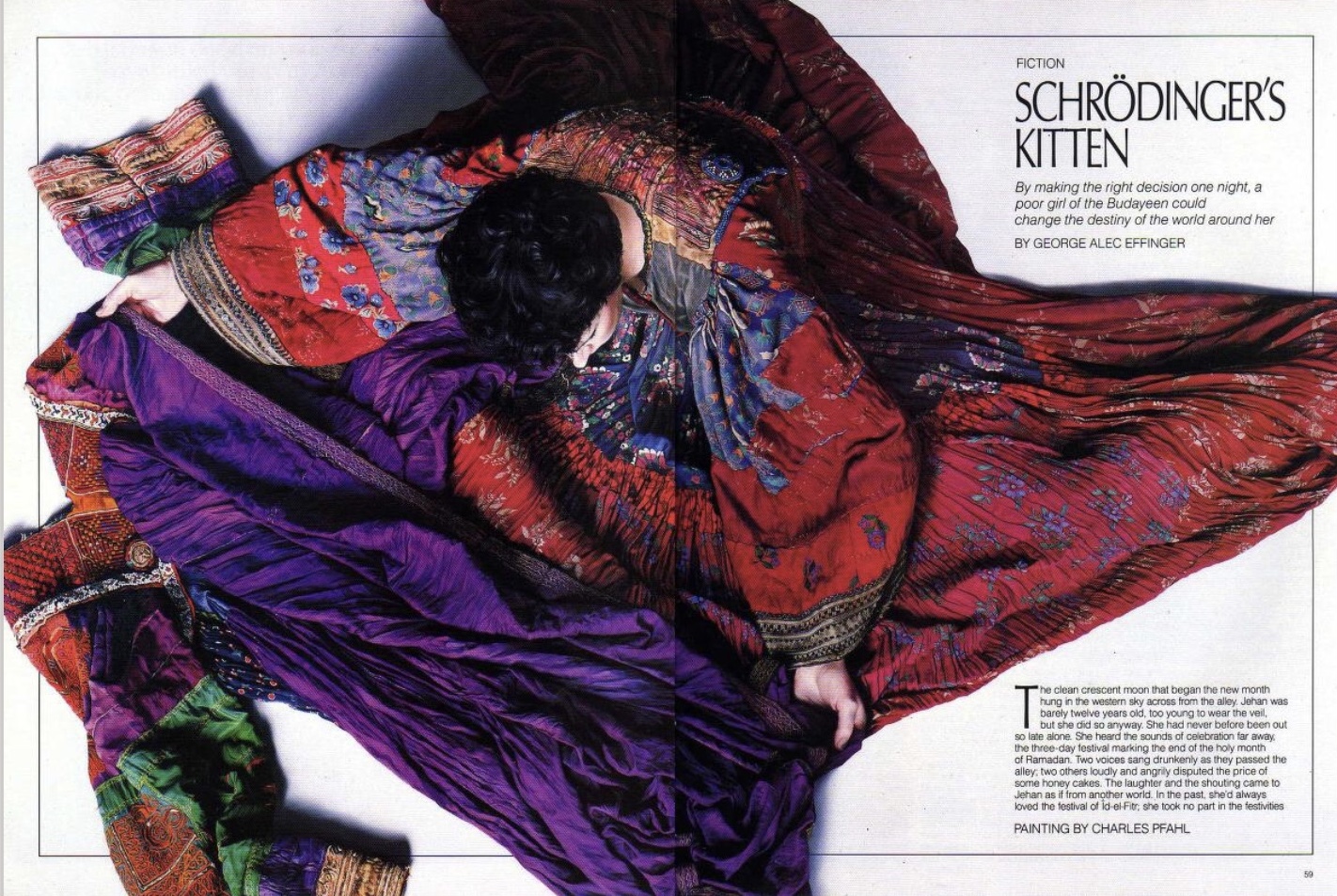
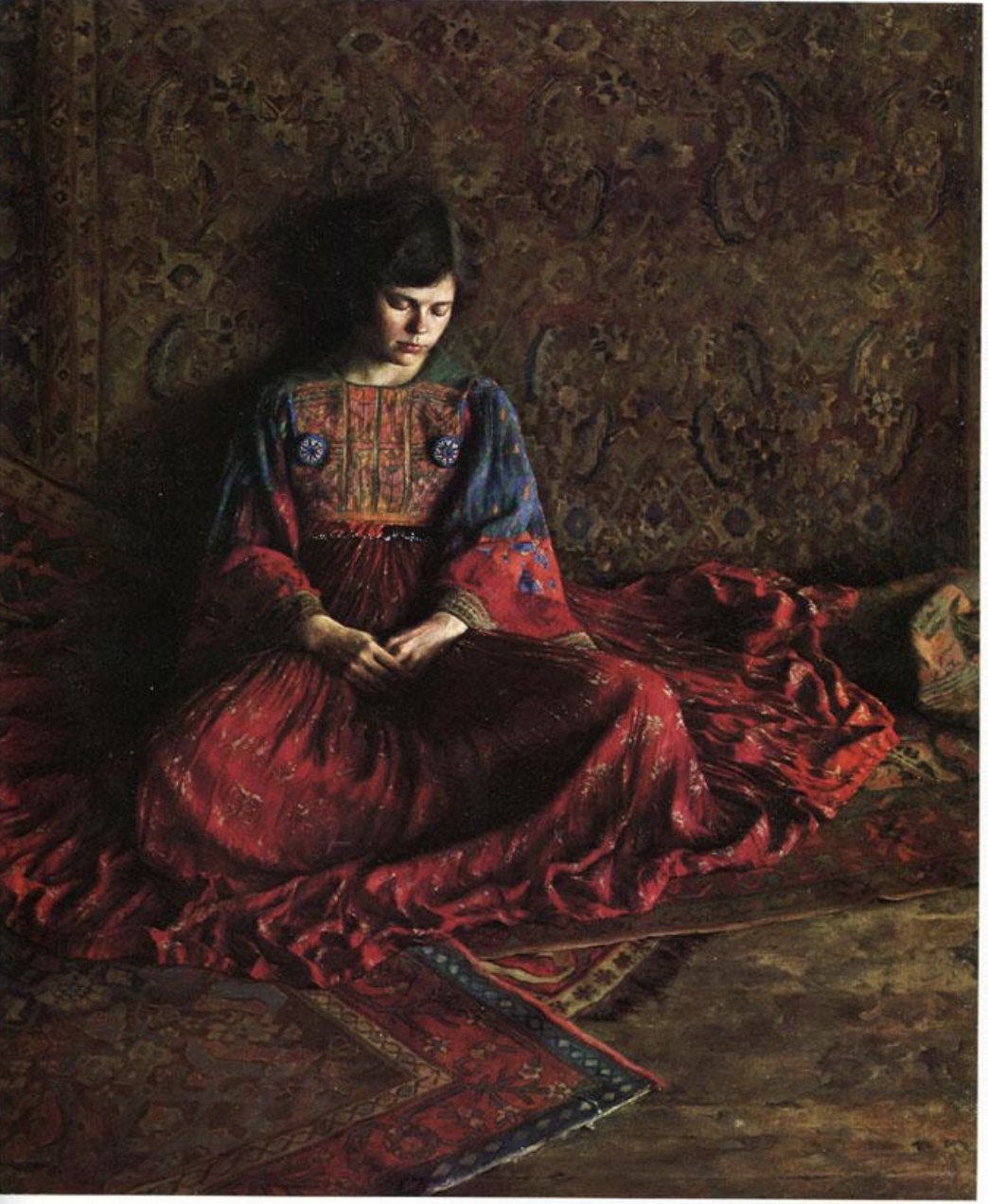
Next books Doctor Who: Origin Stories (no editor given) Barsk: The Elephant’s Graveyard, by Lawrence M. Schoen “Schrödinger’s Kitten”, by George Alec Effinger
Mad Max: Fury Road won the Ray Bradbury Award in 2016; it was on the Hugo ballot, but beaten by The Martian. Also on both ballots were Ex Machina and Star Wars: The Force Awakens, with Inside Out and a Jessica Jones episode rounding out the Bradbury list. More important in the wider scheme of things, it won six Oscars, more than any other film that year – the Best Picture winner, Spotlight, won only two. IMDB users rate it top film of the year on one ranking and third on the other.
I found only one actor who had been in a previous Bradbury/Hugo-winning film, and none who had been in Oscar-winners or in Doctor Who. But it’s a big role: Max himself is played by Tom Hardy, who was the forger Eames in Inception.
I don’t often drift into real-world politics in these reviews, but during the worst agonies of the Brexit debate back in 2018, British minister David Davis incautiously promised that the UK, after leaving the EU, would not be plunged into a “Mad Max-style world borrowed from dystopian fiction”. Robert Shrimsley in the Financial Times had great fun with this:
To the undoubted relief of everyone concerned, David Davis, the Brexit secretary, announced on Monday that the UK was not seeking a dystopian “Mad Max-style” Brexit. At one level this is a shame because the cars in that movie are well cool. Kudos, though, to Mr Davis, who was of course trying to mock the fears of Brexit’s opponents, for an A-grade effort in expectation management. However bad it may be, Brits can rest easy that Brexit will not be a post-apocalyptic dystopia characterised by societal collapse, murder and Jacob Rees-Mogg and his gang terrorising the roads in pinstriped suits and Bentleys.
Then again, there was a disturbing specificity to Mr Davis’s point. He did not rule out all dystopian visions. Only Mad Max. While murderous biker-gangs form no part of the Brexit planning, this column understands that several other movie dystopias remain on the table. Indeed, the 62 Conservative MPs in Mr Rees-Mogg’s European Research Group are said to be urging the prime minister to hang tough on the “dystopia red lines” they consider to be part and parcel of a hard Brexit. The Financial Times has seen a secret memo listing the options:
The options include:
the Hunger Games Brexit (24 children from Remain enclaves are chosen by ballot and offered each year as tributes to the European Commission in return for continued British access to the single market)
the Fahrenheit 451 Brexit (the fire service no longer exists to put out fires, but to burn books and reports issued by the Bank of England, the Treasury and any other economic experts)
the Blade Runner Brexit (it is always raining.)
the Terminator Brexit (a robotic terminator is sent back from the future to the year 1972 to murder Sir Edward Heath before he can sign the Treaty of Accession)
the RoboCop Brexit (a frictionless technological solution for policing the Irish border)
The Matrix Brexit (UK citizens are implanted with devices which make them believe everything is normal and that life is good)
and worst of all the Real Life Brexit.
Anyway. Mad Max: Fury Road is an unashamed action film, which basically consists of an extended chase across the desert in a post-apocalyptic world where everyone seems to be white. Good Max and his good ally Imperiosa escape from the evil Citadel with the five wives of evil Joe. Imperiosa finally finds the all-woman clan from which she originally came and together with other good people they capture the Citadel and kill evil Joe. Max and Furiosa do not wander romantically into the sunset together but respectfully part company at the end.
There’s a lot of action here, and a lot of special effects. The most striking special effect is small in scale but big in impact: Imperiosa is missing a hand and arm below the elbow, while Charlize Theron who plays her is fully endowed. This was achieved by her wearing a green sleeve which was then edited out by CGI. At one point she accidentally broke co-star Tom Hardy’s nose by hitting it with the sleeve, which was hard.
Although Hardy’s Max is the title character, the central figure is the story is definitely Theron’s Imperiosa, whose personal journey is much more interesting. Max has only 52 lines in the entire film. Hardy was apparently difficult during filming, and later made a public apology to Theron and director George Miller for his behaviour. (Meanwhile Theron and Hardy’s stunt doubles fell in love and got married.)
It’s good to see a successful rebellion against an oppressive patriarchy led by women, even if they are all white. But I prefer a little more plot and characterization in my movies, and although the stunts and effects are spectacular (and as the FT said, the cars are well cool) I don’t think I’ll rewatch this film often in the years to come.
I’ve decided that I’m going to stop my sequence of rewatching Hugo, Nebula and Bradbury-winning films after The Martian, which is next, because I saw all of them shortly after they came out, which was in the last five years. I might go back and rewatch the Retro Hugo winners which I never wrote up, but I didn’t actually like them all that much so I’m not in a big rush.
As my regular reader knows, I like to preface my write-ups of the Black Archive series of monographs on Doctor Who stories with my previous writings on each story. In this case, the two-parter that opened Matt Smith’s second season as the Doctor in 2011, I seem to have failed to write anything much about it previously. I watched it on first broadcast and again before reading the Black Archive.
If you saw it, you’ll remember that The Impossible Astronaut / Day of the Moon is the story that starts with the Doctor apparently being killed by a mysterious astronaut, and then reappearing as a younger self; it turns out that a mysterious alien race called the Silents have been infesting humanity for a very long time, but people forget that the Silents exist as soon as they stop looking at them. The TARDIS team (Eleven, Amy, Rory, River Song) discover this while visiting Richard Nixon as president in 1969.
The Doctor embeds a subliminal message in the broadcast of the first moon landing encouraging humanity to rise up and destroy the Silents, and meanwhile a little girl who has been phoning the Oval Office regenerates a la Time Lord.
I’ll be frank. Series 6 is my least favourite of the three Matt Smith seasons, and my second least favourite of New Who as a whole (after last year’s Flux), and the opening two-parter is a large part of that. It’s difficult to take the supposed shock of the Doctor being killed too seriously; we know he’s going to be bouncing around again for more adventures after it’s all resolved. Too many threads are left hanging after the second episode (and resolved in haste months later at the end of the series). Steven Moffat is working so hard on trying to make us interested in the complex scenario that he has dreamed up that he forgets to be funny.
And to be honest, the Silents don’t actually seem to be very evil; sure, they look scary, and one of them vaporises a White House staffer, but if we decide that we’re going to exterminate any species where one of them has vaporised a White House staffer, where will we stop?
One casting comment – we’ve been watching Firefly, from a few years earlier, and it’s been amusing to see Mark Sheppard as Badger there; here he is the 1969 version of FBI agent Canton Everett Delaware (the 2011 version being played by his father, William Morgan Sheppard).
The story came in at a respectable 85th in last year’s rankings of all Doctor Who stories, run by Twitter user @Heraldofcreatio, below Robot and ahead of The Seeds of Death, but I’d put it lower myself.
John Toon had previously written the Black Archive volume on the Tom Baker story Full Circle; I commented then that it was largely about the intellectual ideas behind the story rather than on how the story was actually made, and why certain things were done or not done in the course of production, and the same is true this time. There are indeed a lot of ideas in this story, but they are not as well executed as they might have been; Toon does a good job of pulling them into the light, without going into too much agony about the story’s disappointments.
A short introduction talks about withholding key information from the audience, and conspiracy theories.
The first chapter, “Who World Order”, briefly looks at conspiracy theories around the Moon landings, Men in Black, Area 51, fake celebrity deaths, secret underground tunnels, government mind control, subliminal advertising, the Templars and Freemasons, and (at more length) Watergate.
The second chapter, “A Conspiracy of Silents”, looks at the general phenomenon of conspiracy theories, and in particular how they have fed into and been presented in Doctor Who over the years.
The second paragraph of the third chapter, “Killing in the Name of the Doctor”, is:
The term ‘genocide’ has been in circulation for less than a century. It was created in 1944 by Raphäel Lemkin in a book describing the murderous social policies of the Nazi regime that would later come to be known collectively as the Holocaust; genocide was first recognised as a crime under international law in 1946 and codified as such by the United Nations in the 1948 Convention on the Prevention and Punishment of the Crime of Genocide. Article II of that convention specifies that genocide is an act ‘committed with intent to destroy, in whole or in part, a national, ethnical, racial or religious group, as such’ and lists five behaviours that could be defined as genocidal: ‘a. Killing members of the group; b. Causing serious bodily or mental harm to members of the group; c. Deliberately inflicting on the group conditions of life calculated to bring about its physical destruction in whole or in part; d. Imposing measures intended to prevent births within the group; e. Forcibly transferring children of the group to another group.’3 3 ‘Definitions: Genocide’.
The chapter looks at the dubious ethics of the Doctor’s instruction to humanity to kill the Silents, and whether or not the audience is intended to question the Doctor’s morality. He doesn’t go on about it for fifty pages, at least.
The fourth chapter’s title is “‘Waste No More Time Arguing What a Good Man Should Be. Be One.'” It attempts to find a justification in plot terms for the Doctor’s actions against the Silents, looking also at other similar plot twists in the Moffat era. The discussion is interesting but the justification is not really found.
The fifth chapter, “Controlling the Narrative”, looks at the Moffat-era shift to the Doctor finding more aggressive solutions in general, and also speculates that the Silents are a metaphor for a particular type of fan, closing the main thread of discussion in the book.
The sixth chapter, “When the President Does It, It’s Not a Celebrity Historical”, switches tracks completely and asks if the story can be considered a “celebrity historical” story in the same was as The Unquiet Dead (Dickens), Tooth and Claw (Queen Victoria), The Shakespeare Code (I needn’t say) and Victory of the Daleks (Churchill), if we grant that The Girl in the Fireplace (Madame de Pompadour) may not fit that category. The answer is, probably yes.
So, I felt that the book is a valiant attempt to look at themes of interest in a story that doesn’t quite deliver. You can get it here.
Third of the four books in the prequel series to Roger Zelazny’s Chronicles of Amber, by the much less gifted writer John Betancourt. Oberon, our hero, starts to put together a governing regime for Amber, the new magical centre based around the mysterious Pattern. I confess I had lost track of all of his brothers and sisters, and they are pretty indistinguishable as characters – apart from the one who is obviously going to perpetrate a sudden yet inevitable betrayal, and duly does so. Unnecessarily confusing that there is a princess called Blaise here and the original Chronicles had a prince called Bleys. You can get it here.
This was the sf book that had lingered longest unread on my shelves. Next on that pile is the fourth and (thank God) last of this sequence, Shadows of Amber.
Doctor Who 3 (YTD 31) The Danger Men, by Nick Walter Doctor Who and the Dalek Invasion of Earth, by Terrance Dicks Dr Who: Dalek Invasion Earth 2150AD, by “Alan Smithee”
7,400 pages (YTD 69,400) 9/32 (YTD 100/268) by non-male writers (Çerkez, Alderman, North, Scarborough, μ1, ν1, ο1, ρ1, σ1) 2/32 (YTD 35/268) by a non-white writer (ν1, ρ1)
395 books currently tagged “unread”, 15 more than last month, with more Clarke Award submissions
Reading now A Darker Shade, ed. John-Henri Holmberg φ1
Coming soon (perhaps) Official Secrets, by Cavan Scott et al Doctor Who: Origin Stories (no editor given) Rise of the Dominator, by Robert Mammone Doctor Who and Warriors’ Gate, by John Lydecker Warriors’ Gate, by Frank Collins Doctor Who: The Romans, by Donald Cotton The Romans, by Jacob Edwards Barsk: The Elephant’s Graveyard, by Lawrence M. Schoen Zink, by David Van Reybrouck Shadows of Amber, by John Betancourt The Ahtisaari Legacy, ed. Nina Suomalainen Filter House, by Nisi Shawl “Schrödinger’s Kitten”, by George Alec Effinger Metamorphoses, by Ovid What If? by Randall Munroe All the Names They Used for God, by Anjali Sachdeva Pale Fire, by Vladimir Nabokov Guards! Guards! by Terry Pratchett Madam Secretary, by Madeleine Albright The Revolution Trade, by Charles Stross Alternating Current, by Jody Houser et al Penric’s Progress, by Lois Bujold The World Set Free, by H.G. Wells Neptune – Épisode 1, by Leo Roadside Picnic, by Arkady Strugatsky and Boris Strugatsky Ratlines, by Stuart Neville Complexity, by John H. Holland Tales from Planet Earth, by Arthur C Clarke A Ship is Dying, by Brian Callison
This is the latest post in a series I started in late 2019, anticipating the twentieth anniversary of my bookblogging at the end of October 2023. Every six-ish days, I’ve been revisiting a month from my recent past, noting work and family developments as well as the books I read in that month. I’ve found it a pleasantly cathartic process, especially in recent circumstances. If you want to look back at previous entries, they are all tagged under bookblog nostalgia.
sf (non-Who): 4 (YTD 12) The Fire Sermon (sample), by Francesca Haig Tess of the Road, by Rachel Hartman Bitter Angels, by C. L. Anderson The Glass Bead Game, by Hermann Hesse
Several really good books this month; I’m going to single out Tess of the Road, by Rachel Hartman, which you can get here, and Astounding, by Alec Nevala-Lee, which you can get here, both of them on the Hugo ballot. I’ll draw a veil over the less worthy.
‘Sorry? Sorry?’ The other man looked at him as if he were insane. ‘Say what?’
Next in the sequence of Lethbridge-Stewart books, though this one barely features the Brigadier. Lethbridge-Stewart’s chum Bill Bishop is swept back in time to the distant days of 1999 and finds himself in the body of a British spy on a mission which may or may not be officially sanctioned. It’s well enough told, but has practically no connection with the Whoniverse, apart from references to concepts such as the beryllium clock (from The Movie). You can get it here.
“After a hundred years of deliberation,” said a dry old gentleman who sat by me, and in reply to a remark, a half shrink, rather, of mine— “the English ladies of 1922 razed to the ground what the English ladies of 1822 set up against the skies. It was a late vindication of their sex’s character.” “Pardon me,” I replied, only half comprehending how this could have chanced, “but I was never inclined to agree with the objections to the fine nakedness of that fine statue. Much sarcasm and many witty things were squibbed off against it: national decorum was outraged, the critics said, and national modesty assaulted, by the coup-de-ceil. But I fear there was false taste, or worse affectation in all this; certainly it would prove us the merest simpletons, or else the very best or very worst connoisseurs, inasmuch as the statue had been admired by the whole civilized world, until it fell under the more rigid or discerning eye of our British critics; and, further, had never been known to cause much national depravity. Did the society for suppressing vice prosecute, sir?” I asked. The old gentleman snappishly answered, “no.” “Then,” said I, “let us say no more about the abstract question of immorality; and I only remark, that I should think just as well of the virtue that looked on a brass or marble figure without any predominant indulgence of sensual association. It is to be feared, that the modesty which is foremost to appear alarmed and fidgety, is not always the true modesty. Moreover, are we to stay away from Somerset House, altogether? I once saw a sleeping Bacchanal and other things there, just as naked as this was; for that matter, ‘the taking down,’ by Rubens, is a sin against maids and matrons; and asking your excuse for the unseemly abruptness of the transition, sir, the two little men who strike the chimes at St. Dunstan’s are almost as impudently undressed as any specimen of good sculpture in the world.”
I have started looking at fiction set in 2023, and found a few sf novels set next yer and written in the last few decades; and then came across this curious work, published in 1824, written by the Irish writer John Banim and largely set 199 years in the future. (Strictly, he specifies 198 years and a quarter, but he also specifies 1824 and 2023 as his anchor points, so he must be starting from the end of 1824 and ending up at the beginning of 2023.)
The narrator puts himself into a fasting-induced trance, aided by ingesting mystical clay supplied by a friendly Otomac tribe (in present-day Venezuela). He is transported to London in 2023, where the first thing he notices is that the “Bronze Colossus”, which we know as the Wellington Monument at Hyde Park Corner, is no longer there. (Not quite the first thing actually; on his way in from his materialisation point on Putney Bridge, he notices that Fulham has completely disappeared and been replaced by a common, though Kensington has got much bigger.)
Most of the book concerns sardonic observations by the artistic community of 2023 London, telling our narrator that he (and therefore his contemporaries) have totally misunderstood the painters, writers, sculptors and actors of their day, and that the tastes of the future will run completely contrary to those of the early nineteenth century. It is a bit tedious (even a contemporary reviewer thought so) and reminded me of the way the Book of Mormon, which was written about the same time, presents supposedly ancient rebuttals to theological debates which were of interest only in 1820s America and not before or since.
I did find some points of interest even in this section. A comment was made that actors of the 1820s were overpaid: “Some of them were allowed a salary beyond that of a judge of the land, and of the first personages in other countries; beyond that of the president of the United States, for example.” The President of the United States then had a salary of $25,000, $800,000 in today’s money (the current President gets half of that). There are indeed actors today who earn more, but not very many. In Banim’s 2023, actors’ salaries are capped by law at £12 per week (£1550 per week in our money, or £80k annually, which could be worse.)
It’s also intriguing that the one contemporary painting that Banim singles out for unalloyed praise is one that survives today in the bowels of the Tate Gallery in very poor condition: The Raising of Lazarus, by Benjamin Robert Haydon.
There are various other cultural developments in Banim’s 2023. You know the way wig-makers in 1824 display their wigs on the busts of classical figures like Caesar or Demosthenes? Well, in 2023, get this, they use busts of contemporary political and cultural figures as well. Crazy times, eh?! MPs and peers sort out their differences in public boxing matches. The courts deliver blatantly perverse judgements. There is a fashion for holding mock public funeral processions for people who have not died, or perhaps who never lived. It’s not, actually, all that exciting.
Given that high politics and technology were not Banim’s main interest, it’s intriguing to see what innovations he does allow for his 2023, which is otherwise 1824 with less Fulham and more Kensington (and more parliamentary boxing). We are told that in the 1830s, Britain once again intervened in Spain, with Russia then mounting a successful invasion of the undefended east coast and demolishing the Tower of London. Napoleon, who it turned out was not dead after all, came out of hiding and joined forces with the Duke of Wellington to throw the Russians out, and then retired to comfortable obscurity in Yorkshire. Meanwhile an Orange rebellion in Ireland was quashed by the militant women of Dublin, in return for which a grateful Britain granted Catholic Emancipation. At that point Banim’s imagination runs out, and he changes the subject.
He has a few robotic gadgets – when the narrator first sits down for a meal, he is astounded by the automatic cutlery that cuts up his food and feeds it to him; and walking around the streets, automated brooms sweep the pavements and automatic hurdy-gurdies replace the need for beggars to play them. Mr Drudge, the narrator’s friend in the future, speculates about armies of automata, but it’s clear that technology is not there yet. Meanwhile in central London, freight waggons are drawn by camels rather than by horses.
Most startling of all, Mr Drudge and another friend, Mr Angle, reveal at the end of the book that in the last three years, English balloon-ships have successfully colonised the Moon, to the envy of Alexander V of Russia and Ferdinand XII of Austria, who are now about to go to war in space in a dispute over their own claims on lunar territory; the colonised lunar inhabitants having no say, of course, and Britain still being Top Nation.
“Ti’s a pretty little planet, only very bare in timber,” said Mr. Angle: “and the manners and minds of the poorer inhabitants unsettled, predatory, and, according to our scale, necessarily immoral and benighted. When I was last there, however, the prevalence of Bible societies, and the general adoption of Mr. Owen’s villages in our colony, seemed to promise a speedy amelioration.”
“Indeed so congenial and attractive are the soil and atmosphere, that the constant emigration thither has seriously thinned the motherplanet; we have scarcely left among us a conscientious dealer, a just judge, a handsome woman, who is not vain, a virtuous wife, an humble priest, a sincere patriot, or a disinterested friend; almost all have gone to the moon, long since,” said Mr. Drudge.
And – with apologies for the massive spoiler, but you weren’t really ever going to read this, were you? – just as we are getting into the details of future war and lunar colonisation, and the balloon-ship artillery starts firing, our narrator wakes up and he is back in 1824 again, leaving his pregnant wife abandoned in the future. One feels that Banim had just run out of things to say.
So that’s it – a look at 2023 from almost 200 years in the past. I’ll hope to work my way through a few more recent looks at 2023 before the end of the year:
The Carnival of Immortals, by Enki Bilal (1980)
Islands in the Net, by Bruce Sterling (1988)
The Turing Option, by Harry Harrson and Marvin Minsky (1992)
Killing Time, by Caleb Carr (2000)
The Free Lunch, by Spider Robinson (2001)
I’m not counting anything written in the last twenty years.
Current Song of Time, by Ian R. MacLeod A Darker Shade, ed. John-Henri Holmberg
Last books finished π1 (did not finish) Doctor Who and the Dalek Invasion of Earth, by Terrance Dicks ρ1 (did not finish) Disobedience, by Naomi Alderman Dr Who: Dalek Invasion Earth 2150AD, by “Alan Smithee” σ1 (did not finish) Death of a Naturalist, by Seamus Heaney The Dalek Invasion of Earth, by Jonathan Morris Faith in Politics, by John Bruton τ1 The Clockwise War, by Scott Gray Revelations of the Dead-alive aka London and Its Eccentricities in the Year 2023, by John Banim
Next books Official Secrets, by Cavan Scott et al Barsk: The Elephant’s Graveyard, by Lawrence M. Schoen The Lost Child of Lychford, by Paul Cornell
Birdman won the Oscar for Best Picture of 2014 and three others, Best Director (Alejandro G. Iñárritu), Best Original Screenplay and best Cinematography. The Grand Budapest Hotel also won four Oscars that year. It was one of the other contenders for Best Picture, the others being American Sniper, Boyhood, The Imitation Game, Selma, The Theory of Everything and Whiplash. I have seen both The Grand Budapest Hotel and The Theory of Everything and to be honest I liked them both more.
It’s another year from which I have seen very few films. Apart from The Grand Budapest Hotel and The Theory of Everything, noted above, and Guardians of the Galaxy, noted two weeks ago, I’ve seen The Hobbit: The Battle of the Five Armies, The Lego Movie and Annie. I liked Birdman more than Guardians of the Galaxy, and maybe about the same as the third Hobbit movie, but less than the rest. (Everything is special!!!) IMDB users rank Birdman12th best film of the year on one ranking and 22nd on the other. Interstellar tops both rankings, and another nine films are ahead of Birdman on both.
Here’s a trailer:
Surprisingly, none of the cast had previously been in Oscar, Hugo or Nebula/Bradbury-winning films. There is a crossover with Doctor Who: Lindsay Duncan, who plays theatre reviewer Tabitha here, was Adelaide Brooke four years earlier in the Waters of Mars special.
It’s the third year out of four where the Oscar went to a film which looked at show biz (after The Artist and Argo), and I slightly suspect the Academy of rewarding story-telling about their own industry. The film is about a washed-up actor known for his superhero films from two decades earlier, trying to regain his credibility by staging a Broadway adaptation of a Raymond Carver short story, haunted by the Birdman, a superhero who he played on film many years ago, and by various family and professional insecurities.
I’m sad and surprised to write this about such a recent film, but I don’t think there’s a single African-American with a speaking part, and the Asian-Americans all have very minor roles – in a film set in New York in 2014.
I also have to say that the film as a whole didn’t really grab me. It shifts between three realities – 2014 New York, the stage play which is at the core of the plot, and the Birdman fantasy – and maybe I’ve just read too much sf not to find it all a bit glib. The central character is not very attractive and it’s difficult to sympathise with his (largely self-inflicted) problems.
The star is Michael Keaton, who of course had played Batman in a similar timeframe to his character’s Birdman. There’s a very good dynamic in his interactions with his girlfriend, played by Andrea Riseborough, his ex-wife, played by Amy Ryan, his co-star, played by Naomi Watts, his rival actor, played by Ed Norton, and especially his daughter, played by Emma Stone. Stone is in only a couple of scenes but really stands out.
The big gimmick is that it’s presented as if it’s been filmed in (almost) a single take, so the pacing is very intense, and we get a lot of close-up dialogue shots (while presumably props and scenery are being rapidly moved around behind the camera). Not having seen many of the other contenders, I can well believe that it deserved the Oscar for Best Cinematography. The music is also good, but was ruled ineligible for the Oscar on a technicality. (The Grand Budapest Hotel won that category.)
However, it’s not one of my favourite films, and I’m putting it in the bottom 25 of my list, between two other films set in New York about self-centred male protagonists, Annie Hall and Gentleman’s Agreement.
Next up will be the award-winning films of 2015: Mad Max: Fury Road, The Martian and Spotlight.
It is tempting but misleading to see the seventy-year Soviet experiment as just a second Russian imperial project. Ultimate power resided in Moscow and Russia played the role of big brother, but the Soviet Union was much more complex and contradictory. The Soviet state modernized, terrorized, and Russified the Caucasus but also gave it new kinds of nationalism. It also went through radically different phases: from the Bolshevik would-be utopia of international class liberation to the Stalinist authoritarian state of the 1930s to the corrupt, Brezhnev-era multinational state. Modernization meant both the destruction of old traditions and emancipation for women and technological progress. Policy toward the nationalities veered from the implementation of a liberal “affirmative action empire,” which gave new opportunities to non-Russian nations, to genocide. While some small ethnic groups benefited hugely from “nativization” programs, others were subjected to deportation and mass terror.
I have known Tom de Waal for many years, going back to my own intense Caucasus engagement in 2003-06 and again in 2012. He is lambasted by Armenian activists for being too pro-Azeri, and by Azerbaijani activists for being too Armenian, and by all sides in Georgia for favouring their opponents. I think he is generally right. I had been looking forward to this book for ages and attended its Brussels launch in 2019; my memory is that we went for a very nice dinner afterwards.
To get the obvious point out of the way, unfortunately one of the core sections of the book now needs to be updated after the Nagorno-Karabakh war of late 2020. This occasioned one of the few points of disagreement between us, and I actually wrote to de Waal to say that I thought the “both-sides” narrative which was prevalent in the early weeks of the 2020 conflict was obscuring the important fact that Azerbaijan was winning.
But I don’t think he can be faulted for not seeing precisely into the future when writing the book. In any case, he, and I, and many others, had been warning of the likelihood of a bloody denouement to the Nagorno-Karabakh conflict for many years (here’s me and Damien Helly in 2004, and me and Sabine Freizer in Russian in 2006). In 2004 the Prime Minister of Azerbaijan told me to my face that they were saving up their profits from fossil fuels in order to upgrade their armed forces to drive Armenia out of their territory by force, and if he was saying that to me, he was saying it to a lot of other people. This was not a difficult war to predict.
So, could the conflicts in the region have been averted or mitigated? I get the gloomy feeling from de Waal’s narrative that the forces of political gravity generally favoured violent conflict. The collapse of the Soviet Union brought hard-line nationalists to power in all three countries, and eliminated the political habits and institutions that might have channeled the energy of disagreement away from the precipice of war. I found his analysis of the 2008 South Ossetia conflict particularly interesting, as it happened after my first round of Caucasus engagement. His view (in crude summary) is that Saakashvili decided to pick a fight quite early on, and the Russians decided to give it to him.
It’s fair to say that international engagement with the conflict has often been less than vigorous. It seemed to me grimly appropriate that the OSCE mechanism to resolve the Nagorno-Karabakh conflict, co-chaired by the USA, Russia and France, was named after a conference that never actually took place. But I know individual officials who have made great efforts, and in any case it’s easy to think of better-known conflicts where huge investment of time and energy in international mediation has failed to pay off.
Anyway, recent developments aside, de Waal’s book is a warmly engaging look at the three South Caucasus countries – Georgia (including South Ossetia, Abkhazia and Adjara), Armenia and Azerbaijan (including Nagorno-Karabakh) – in their historical context between Russia, Turkey and Iran, with the Russia relationship being the most important for all three cases. (Though other powers got involved too – Azerbaijan was briefly a British protectorate, with democratic elections, women’s suffrage and proportional representation in 1918-1920.) He concentrates on the political history, but also explores the rich literature of all of the region, and touches on the cuisine as well (I personally love Georgian cooking). He argues that the important regional context has been lost, with the independence of the three states inevitably making them look inwards rather than at their neighbours. It’s a good and informative read. You can get it here.
This was my top unread book acquired in 2019. Next on that pile is Complexity: A Very Short Introduction, by John H. Holland.
On leaving Miss Maxwell’s ‘Academy’, I followed [his brother] Michael to Aldro, a boarding school in Eastbourne. I was about seven and a half and not at all happy at the idea of being so far from home. There was a kind old master there called Mr Craft, who closely resembled Rudyard Kipling; well, he seemed old, but as I received Christmas cards from him for twenty years afterwards, he was probably only about thirty-five at the time. To me he represented kindness. Mr Hill, the Headmaster, on the other hand represented unkindness, for I was often to be caned by him. ‘Go and change into gym shorts and wait for me in the gymnasium,’ he would order. That wait was more terrible than the thrashing. Even at seven and a half, I could take the beating, but the waiting made me sick with apprehension.
First volume of Jon Pertwee’s autobiography, though he did not write much more apart from an out-of-print account of his time on Doctor Who. It’s an entertaining set of anecdotes about his early life, difficult relations with parents (he did not actually know that his father‘s friend was his biological mother), his wartime service in the navy (which takes up almost half of the book), his love of girls and cars. If I had been editing it, I might have taken out some of the exclamation marks.
Lots of names are dropped, many of them of showbiz figures now long forgotten, though a couple stood out; visiting his father’s friend A.A. Milne as a child, Milne’s son “was good enough to introduce me to his toy animal friends, Piglet, Owl, Kanga, Kanga’s son Roo, and best of all, his teddy bear, Winnie the Pooh.” At the other end of the book, when he is assigned to Naval Intelligence, one of his office-mates is future prime minister James Callaghan. (Callaghan, who lost the 1979 election, is the most recent prime minister to have served in the armed forces and the only one to have been in the Navy.)
But Doctor Who fans like me won’t find much to chew on here. Pertwee did not really have hidden depths; what you saw was what you got, and that personality is on display in his book. You can get it here.
This is the latest post in a series I started in late 2019, anticipating the twentieth anniversary of my bookblogging at the end of October 2023. Every six-ish days, I’ve been revisiting a month from my recent past, noting work and family developments as well as the books I read in that month. I’ve found it a pleasantly cathartic process, especially in recent circumstances. If you want to look back at previous entries, they are all tagged under bookblog nostalgia.
I started the year by taking B for a walk to a castle near where she lives.
We went to Mechelen to see the mysterious Enclosed Gardens, which I must write up some time.
It slid open with a quiet hiss, revealing the main corridor of the starboard passenger deck. Doors to passenger quarters (four bunks per room) lined either side of the corridor. Here and there men in Royal Castakaran Army fatigues lay slumped on the floor, unconscious from the gas. Malcolm saw no corpses and no sign of any possessed men.
I got this in 2016 out of admiration for the author’s decision to decline nomination for the Hugo Awards; his story had been boosted onto the final ballot by slating and he wanted very much to distance himself from it, and not only that, he kept quiet about it until the full results were announced. However it took me until now to get around to reading it. It’s a well-written enough story of horrors lurking between the stars, while humans fight the artificial intelligences they have created, with some interesting narrative twists. I’d still have voted for the winner of this category, “Folding Beijing”. You can get it here.
This was the shortest unread book that I acquired in 2016. Next is Zink, by David van Reybrouck.
Judge Raif, although instrumental in helping Rauf to navigate through the intricacies of Cyprus’ politics, hoped his legacy would extend to more than Rauf becoming better informed. He also wanted to instil in Rauf the importance of becoming an active member of the law profession. The dedicated Judge had maintained an almost obsessive stance on the necessity to have educated Turkish Cypriots remaining on home sod. His opinions stemmed from the idea that knowledgeable citizens would not only advocate amendments to the law but also be in a position to challenge and produce effective changes beneficial for the Turkish Cypriot community.
I never met Rauf Denktaş, though I once walked past his car as it was leaving the presidential office in northern Nicosia, and he gave me a friendly smile and an amicable wave; I was on my way in, to a meeting with Mehmet Ali Talat, his successor, and I guess he had just been there for the same reason. I spent four years immersed in the Cyprus issue a few years ago, first with the International Crisis Group and then as an adviser to President Talat with Independent Diplomat; I stay in touch as best I can, though it has frankly gone off the boil in recent years.
This is an unapologetically positive biography of the Turkish Cypriot leader, written presumably on the basis of many conversations with him (he was famously talkative) and with no claims or pretence to objectivity. This is actually refreshingly honest; in Cyprus, as in many other conflicts, many writers feel the urge to prove that their own truth is the only truth, whereas here we are just getting Denktaş’s version of events. He had a remarkable career, a London-trained lawyer who rose to the top of a small embattled community and, for good or ill, created a state for them which still exists, even if unrecognised.
There is a lot of good chewy detail about Denktaş’s early years and family. (The half-way point in the book, page 150 of 300 pages of the main narrative, comes at the end of the 1964 crisis when Denktaş had just turned 40 and had almost another half century to live.) It’s a bit less satisfying once we get into the weeds of Cyprus politics, because the book is only interested in one person, and although he was indeed pretty important, there are other important figures too. Beyond a couple anecdotes of Denktaş arguing or joking with them (or both) we don’t get much of a feeling for Makarios, Küçük or Clerides, let alone any of the Turkish political leaders.
The most interesting thing politically for me was that Denktaş (by his own account) had to lobby very hard to get attention from Ankara to the Cyprus issue in the years up to 1974. The received wisdom by the time that I got involved was that Turkey and the TRNC were in a symbiotic relationship, and there were mutterings about the tail wagging the dog when Denktaş was at the height of his powers. But in fact Turkey did not take its treaty responsibilities very seriously at first, and in the 1950s and 1960s Denktaş was constantly frustrated by Ankara. (This is where a Turkey-focused perspective would have been really illuminating. The received wisdom is that Denktaş got a lot more help from Turkey than he allows here.)
The book skips over a lot of key questions, presumably because Denktaş himself didn’t want to talk to the author about them because he found the topics either embarrassing or boring (or both). What was the extent of his involvement with the TMT’s violence in the 1950s? How did he lose the confidence of both Ankara and his own voters at the end of his career? After everything that happened, was it all worth it?
But in the end, it doesn’t pretend to be more than it is; primary material, rather than a primer.
This was the very last book that I had acquired in 2015 that was still on my unread shelf. (Actually acquired rather early in that year, at a memorial service in London to mark the second anniversary of his death in January 2013.)
The end of Rose, New Who’s first episode, from Mickey’s point of view
Second in the series of Titan Comics graphic novels about the Ninth Doctor, with three stories:
“Hacked”, a very short story with a reference to the Eye of Orion and the Braxiatel Collection, in which the Ninth Doctor, Jack and Rose are kidnapped by an intergalactic criminal who they duly defeat.
The title story, “Doctormania”, has the crew landing on a world where everyone is a Doctor Who fan, an immediately glorious concept. There is a fake Doctor who everyone loves and a fan who gets annoyed with Rose. But it turns out that a familar foe is behind it all. Nicely executed.
The third story, “Transformed”, brings Mickey back into the narrative (though at a point where he has already met the Tenth Doctor). The whole team ends up in San Francisco for an adventure with shape-changing gargoyles with super powers. Nicely done.
Current Disobedience, by Naomi Alderman π1 Faith in Politics, by John Bruton
Last books finished To Rule in Amber, by John Betancourt ξ1 The Danger Men, by Nick Walter The Impossible Astronaut / Day of the Moon, by John Toon ο1 (did not finish)
Next books Doctor Who and the Dalek Invasion of Earth, by Terrance Dicks A Darker Shade, ed. John-Henri Holmberg Death of a Naturalist, by Seamus Heaney
There has been a certain amount of discussion in the SF community about next year’s Worldcon, scheduled to take place in Chengdu, China, and about a previous bid to host Worldcon from Saudi Arabia and coming bids from Africa (Egypt and Uganda). Some people argued that the human rights record of these countries should exclude them as potential Worldcon locations. I feel a bit differently. It seems to me that an inclusive fandom should instinctively be embracing and encouraging of our fellow fans in different and challenging political environments, which they did not choose and cannot change; and that there is a limit to how far people should be held accountable for the actions of their governments – normally it is the other way round. (And that’s without getting into the undeniable fact that many fans in Western countries also suffer oppression and discrimination from the governments under which which they live.)
I am even fairly relaxed about state support for these bids. I don’t think it should be considered a crime to mobilise resources from the public sector on behalf of your bid to run a Worldcon; in fact I think it would be good to see more of it in Europe and America. I pushed for a local politician (the late Jyrki Kasvi MP, who had campaigned in Klingon) to award the Hugo for Best Novel in Helsinki in 2017, and helped to get President Higgins to send a welcome to participants in Dublin 2019. I had my problems with CoNZealand, but I had no problem with their obtaining a ringing endorsement from Prime Minister Jacinta Ardern. Some people looked at the sponsorship of Chengdu’s bid by the local government and saw the Chinese Communist Party attempting to annex Worldcon fandom; I don’t think anyone in CCP headquarters, whether in Sichuan or Beijing, was losing sleep over the results of the 2021 site selection count. (Personally, I did lose sleep over it, but that’s on me.)
I was at one point a formal advisor to the 2023 Chengdu Worldcon committee, but I have stepped back in order to concentrate my fannish energies on the Arthur C. Clarke Award and Glasgow 2024. Chengdu Worldcon is doing some things that I do not like. I was deeply dismayed that Sergei Lukanienko, who thinks that Ukrainians are not fully human, was named as a Guest of Honour (though his name is now mysteriously absent from their current English language website). Other Worldcons, including some that I was involved with, have done things I did not like in the past. But I also feel that Worldcons, and fans, will inevitably make mistakes. I won’t go to China next summer, but I wish them well.
So. I have watched every World Cup since 1978 enthusiastically. It’s one of the most fun things in the sports cycle for me. For us numbers geeks, there’s the fascination of the permutations of qualification from the group stage, along with the trivia and lore of 92 years of history. Back in the late 1980s, I knew by heart the result of every match in every one of the twelve World Cup tournaments that had been held up to then. I have special memories of many matches, including the 2018 final, which I watched in a cafe in a small French village as their team won.
Sometimes you make the most of what you’ve got.
I can’t do it this year. The 2022 World Cup is not a group of fans getting together to put on a show. It’s a determined push by the host government to present themselves as culturally significant actors on the world stage. That’s not a crime in itself, of course. But I am sickened by the reports of the human cost of building the infrastructure, and by FIFA’s unrepentant approach to the local human rights situation. A gay friend of mine – not even someone who I know all that well – posted on Facebook that they would unfriend anyone who expresses enthusiasm about this year’s World Cup. I can understand their feelings.
It you want to read some expert perspectives on sport and the Arab world, Reynoud Leenders has recommended the latest issue of Middle East Report, on “Football—Politics and Passions”. I should note that it closes with an essay by five sports fans and political science scholars, challenging the narrative that Qatar has been “sportswashing” its image and warning that some of the commentary is simply Orientalist, based on hostility to non-white people doing something for themselves. It’s a valid perspective, and I think it does apply to some of the critique of the Worldcon bids that I mentioned above.
But in the end I feel that a state-run tournament organised on the deaths of workers, where journalists are already facing harassment for trying to find their own narrative, doesn’t deserve my attention, let alone my enthusiasm. You may feel differently; that’s up to you. But this will probably be my only commentary on the tournament.
This is the latest post in a series I started in late 2019, anticipating the twentieth anniversary of my bookblogging at the end of October 2023. Every six-ish days, I’ve been revisiting a month from my recent past, noting work and family developments as well as the books I read in that month. I’ve found it a pleasantly cathartic process, especially in recent circumstances. If you want to look back at previous entries, they are all tagged under bookblog nostalgia.
I started the month at SmofCon in Santa Rosa, California, as previously noted, and went to London twice for work purposes. In the world of politics, the Belgian government collapsed thanks to the dishonesty and opportunism of the N-VA, for whom I don’t think I will ever vote; and sadly, Paddy Ashdown died.
Christmas service in the chapel in the woods:
Decent photo of the whole family on Christmas Day:
3) Provenance, by Anne Leckie – not directly connected to her previous books, but a convincing story of politics and truth. Finalist for both BSFA and Hugo Awards, and I voted for it both times, though it did not win either. 2) In Other Lands, by Sarah Rees Brennan – one of the Hugo YA finalists, I thought this was a brilliant look at young wizardry with a bisexual protagonist. 1) The Sudden Appearance of Hope, by Clare North – increasingly one of my favourite authors, here with another tale of someone whose interaction with our world is very different, combined with a sinister Facebook-meets-Social-Credit Big Tech conspiracy.
The one you might not have heard of: Anne Charnock’s novella The Enclave, another BSFA Award finalist, which I thought caught a lot of things about Brexit Britain very well.
36 (14%) – lower than any year apart from the previous two and 2021.
Again, some welcome rereads (Proust, Kavalier and Clay). My three top new non-sf fiction books:
3) And The Mountains Echoed, by Khaled Hosseini – a generational tale of Afghanistan and other places which really worked for me. 2) Fingersmith, by Sarah Waters – Waters was my real discovery this year, and Iliked this most of the books by her which I read. 1) Moon Tiger, by Penelope Lively – really blown away by this twentieth-century life story, set mainly in England but with other excursions; I should probably read more by this author.
The one you haven’t heard of: Something Like Normal, by Trish Doller – author is my twin (born the same day and year); this was her first novel, about a young American soldier returning fro the wars and finding it very difficult to fit in.
The one you may not heard of: Ergens Waar Je Niet Wil Zijn / The Wrong Place by Brecht Evens – vivid evocation of two Flemish chaps whose relationship is not exactly what either of them think it is, played out against a background of suburbia, disco and sex.
The one to skip: Dark Satanic Mills, by Marcus Sedgwick – confused near-future English dystopia trying to riff off William Blake and not really succeeding.
Doctor Who (and spinoff) fiction
21 (12%) – a historic low here, basically because I had now read almost all of the Doctor Who books that there are to read.
Exactly a year today since I went down with COVID, having probably caught it at Novacon a couple of days earlier. A grim but in my case survivable experience. Get your booster shots, folks!
My mind felt as rumpled as my bed and my face was swollen with tears and sleep. I still felt like applying the nearest blunt object to all within this confusing household but was also aware that in doing so I was no doubt sealing my own doom. What galled me most, I suppose, was that in selling myself into this arrangement, I had inadvertently fallen into domestic problems as painful as those I had sought to avoid by evading my mother’s relatives. The gods do not like to have their plans thwarted, I suppose.
An orientalist fantasy, drawing heavily on the Arabian Nights, but subverting it in that the women characters take charge and have to rescue their husband, Aman Akbar, who has been transformed into a donkey. I don’t think the racial stereotypes would really fly today, but I can see what Scarborough was trying to do and it’s (intentionally) quite funny in places. You can get it here.
This was my top unread book acquired in 2016. Next on that pile is Barsk: The Elephant’s Graveyard, by Lawrence M. Schoen.
I very much liked four of the previous five books I have read by Claire North – The First Fifteen Lives of Harry August, Touch, The Sudden Appearance of Hope and 84k – and also enjoyed seeing her at Novacon a year ago.
I’m afraid The End of the Day fell into the less good category for me. The writing as ever is good,and there are some lovely vignettes, but I did not quite gel with the central plot concept: Charlie, the protagonist, has been recruited to be the harbinger of Death, who together with the other three Horsemen of the Apocalypse is active in today’s world; bad guys are trying to interfere with Death, and there’s some incidental observations on US politics that didn’t really come together for me. Still, liking four out of six books by her is not bad and I’ll still be looking to buy more. You can get this one here.
This was the top unread book on my shelves acquired in 2018. Next on that pile is Ratlines, by Stuart Neville.
This is another of the volumes put together by my cousin Edward “Wick” Hoffman, drawing on the family letters left by his mother in a vodka box. This time he looks at his great-grandmother, my great-great-grandmother, Frances Wyatt Belt (1837-1912), and her ancestors – previous volumes looked at her relationship with her husband, Samuel Morris Wickersham, before and after their marriage. This includes Frances’ great-aunt, Elizabeth Bordley Gibson (1777-1863), who was friends with George Washington’s foster-daughter Nellie Custis and featured in contemporary art, but lived long enough to mentor her great-niece, whose grave I recently visited.
The early letters are really social chitchat from the first part of the nineteenth century. But we soon get onto the intriguing figure of my 3xgreat-grandfather, Frances’ father Richard Grafton Belt (1784-1865). For reasons that I will come to, I have been delving into his early life recently. His father, a farmer in the neighbourhood of Baltimore, died when he was 12, leaving him the oldest of five or six surviving siblings. In the Federal Gazette and Baltimore Daily Advertiser for 18 December 1807, we find this notice:
I haven’t been able to track this location down directly, but thirteen miles out of Baltimore on the York Road, now Route 45, gets you to the area now known as Cockeysville.
Leaping forward a couple of decades, this page on medicine in Maryland lists Richard Grafton Belt as an “M.D., apothecary and druggist” in 1827, a “doctor and druggist” in 1829, and an “apothecary” in 1833, all at 13 Market St (not Baltimore St) in Baltimore, a really central location. In 1843 he is at 125 Fayette St, not quite as central, listed as a “doctor” and, intriguingly, “Spanish consul”. I have no idea where he got his medical qualifications.
In 1831 he had married Sally Rebecca Heath Sims Bordley, who was at least twenty years younger than him, born around 1805 as far as I can tell. They had half a dozen children, my great-great-grandmother Frances (“Fanny”) somewhere in the middle. Wick’s collection of letters to and from him and his daughters dates from the 1850s. By this stage Richard Grafton Belt had rejected conventional medicine and taken up homeopathy. He completely failed to make it pay (not surprising, since homeopathy is bullshit), and basically had no money at all.
His daughter Fanny started working in a textile factory in Rhode Island at the age of 15 to keep the family going. Her father’s letters are full of the “it’s-really-going-to-work-this-time” narrative to the point that you can feel his teenage daughter shrugging her shoulders; what, again?
As well as being a rabid homeopathist, Richard Grafton Belt was also mawkishly religious and urged his children to get confirmed and attend church regularly in his absence. His grandson, Francis Sims McGrath, reflects on him thus in his book Pillars of Maryland:
So. DNA analysis reveals that there may have been more going on. There is a particular group of people on AncestryDNA who have a common link with me and each other. Most of this group appear to be African-American, or at least to have a large part of their heritage from that source. A lot of them also seem to have ancestry that can be traced back to Annapolis and/or Baltimore in Maryland. The link is sufficiently close that an early nineteenth-century common ancestor is plausible.
I am inclined to think that Richard Grafton Belt had a relationship with an African-American woman in Baltimore, and that the children of that relationship have many living descendants who are cousins of mine. I conjecture that Richard Grafton Belt’s relationship with the mother of his black child or children ended badly, causing him to seek redemption in religion and homeopathy, and leaving DNA that endures in my own body and in the bodies of dozens of Marylanders. (And a few in Alabama, for reasons we can only speculate about.)
There are of course other possibilities. But Richard Grafton Belt had only two sons; one died aged 16, and the other spent most of his adult life in Philadelphia (and is not known to have married or had children), so neither seems likely to have left DNA traces in Baltimore’s African-American community. He had several brothers, and one of them, Thomas Hanson Belt, could be a possibility as he too lived most of his life in Baltimore; his wife, Elizabeth Key Heath, was the aunt of Richard Grafton Belt’s wife Sally Rebecca Heath Sims Bordley. (The other brothers all seem to have moved away as soon as they were adults.) Still, the strength of the DNA connections points to Richard Grafton Belt rather than his brother as the most likely common ancestor.
For my Black Archive write-ups I like to give heavily documented notes of my previous comments on each story and novelisation. This works well for Old Who, but less so for New Who where there are fewer novelisations and I didn’t always write up the stories on first broadcast. So for Love & Monsters, I have only the following note from my Great Rewatch in 2013:
Love and Monsters[sic] is one of the most daring episodes of Who ever. Paul Cornell has written a spirited defence of the story as an episode about fandom, about the show Doctor Who rather than its central character, and he makes a good case. But the fact is that this had not been done before in New Who, and only really in passing in Old Who (most notably in The Greatest Show in the Galaxy, though talk of fans of the Doctor goes back to The Savages). The episode is doubly daring in that it is the first of the Doctor-lite episodes that we now accept as a regular event in New Who. It is a bit bizarre, and it doesn’t fit with the previous run of the programme at all, but I think it’s OK for Who to be experimental occasionally and that it more or less works.
Watching it again, almost a decade later, we’ve had a lot more Who stories, both on TV and off, that were self-referential and reflexive; Paul Cornell’s The Girl Who Loved Doctor Who is a particular high point for me, but a lot of the Moffat era treated the Doctor as a figure of intergalactically mythic importance. And the Doctor-lite episodes also became the norm for the rest of the Davies era, including my favourite episode of the whole of New Who, Blink. So Love & Monsters now seems less disruptive and more trend-setting. But it’s still unusual.
It’s also striking in that it gets a tremendous performance from Camille Coduri as Jackie Tyler. At first the story mocks her obsession with Elton, but it rapidly shifts to heart-breaking as he betrays her. It is very good writing to take a character you have been laughing at, and turn them into an object of sympathy, without missing a beat. Davies actually tries to do this fairly often, but is not always as successful as he is here.
The world of Who is sometimes quite small. In 1988-89, I was the External Officer of what was then the Clare College Students Association in Cambridge. The Welfare Officer was a more arty chap, who moved in generally different circles to me. About five years later, I caught a very well-made short film on TV called That Sunday, starring Minnie Driver and Alan Cumming. I enjoyed the 16 minutes hugely – I’m a Minnie Driver fan anyway – and then my jaw dropped when the credits revealed that it had been both written and directed by my old comrade from the JCR Committee.
That was as nothing to my surprise when the credits rolled at the end of Love and Monsters, a dozen years after that, and I saw the director’s name. Dan Zeff has gone on to be a medium-to-big name in the UK film industry, but Love and Monsters is his only venture into the Whoniverse. (Incidentally the credits sequence on my DVD copy cuts off before the director’s name is displayed; I hope he’s getting compensated for that. I haven’t checked extensively but it seems to be the case for several other episodes from that season.)
So, let’s go forward another eight years, to one of the first Belgian conventions I attended, the 2014 Antwerp Convention, where guests included Colin Baker. As I made myself comfortable for his presentation, I got into conversation with the fan sitting beside me; we found that our tastes were aligned on a number of points regarding Doctor Who, and have stayed in touch ever since, though I think that is the only time we have actually met. I was delighted when he got the commission to write this book, drawing on his literary studies and fan-writing experience.
Here’s Niki’s own blogpost introduction to the book. He says up front that he loved the episode from the first time he saw it, but also recognises that this is not a universal view. Writing the book helped to work through the reasons for both love and hate, but especially love.
I found a wonderful community while writing this Black Archive. So many people came up to me to say how much they loved the episode. Sure, they could all see the awkwardness and camp, the disgusting rubber-suit monster, the fan characters becoming creepy stalkers, but they still adored the whole thing because it spoke to them. I made so many new friends who helped me with my investigation ‘n’ detection, and my book became a love letter to the comradery of Doctor Who fandom itself.
The first chapter, “I had to invent this rudimentary pulley system”, looks at the production reasons why the story was made in the first place, and why it had such a tight budget. It identifies “The Zeppo”, one of my favourite Buffy episodes, as partial inspiration.
The second chapter, “Spaceships and lasers and everything”, looks at how the viewer is estranged from the action by the way the story is told, invoking Viktor Shklovsky’s concept of oстраннение (often translated as “defamiliarisation”, but here as “estrangement”) and its implementation in the works of Bertold Brecht, especially The Threepenny Opera. I am not familiar with either, but I found this tremendously interesting. He also looks at the queerness of Elton’s relationship with Ursula after her transformation, and how the dynamics of fandom are portrayed in LINDA.
The third chapter’s title is “This isn’t, you know, my whole life”. Its second paragraph, and the quote it introduces, are:
It was decided that the comic pitch would make a good TV episode instead. The female protagonist became a male one. The reason for this change, according to Davies, was that there had already been too many female characters who fancied the Doctor. He explains: ‘Very soon after drawing this up, I looked at the amount of women in Series 2, especially those arguably in love with the 10th Doctor – Sarah Jane, Madame de Pompadour, not to mention Rose – and I decided that he’d broken too many female hearts! Time for a man! And so Elton was born.’3 3 Davies, ‘Second Sight’, p9.
The chapter looks briefly at Elton as a character, and the unreliability of his narration.
The fourth chapter, “Great big absorbing creature from Outer Space”, looks at the Absorbaloff, about the role of fans in creativity around Doctor Who (including the fact that Davies and Tennant were both long-term fans themselves), culminating in the idea for the monster coming from a nine-year-old fan, and finishes with more analysis of what the Absorbaloff really stands for.
The fifth chapter, “We’ve got the place to ourselves”, looks in depth at Jackie, but reminds us that there are two other mothers in the story as well – Elton’s own mother, whose death is linked with the Doctor, and Bridget, the LINDA member who is looking for her own daughter and is one of the first to be absorbed.
The sixth chapter, “Fetch a Spade!”, examines how the story hints at the darker side of the Doctor’s personality, and quotes Jon Arnold on Amy Pond, before going back to Shklovsky’s oстраннение and also Itō Gō’s concept of キャラ (kyara), instantly recognisable archetypes. as manifested in the characters of Love & Monsters and then meditating on the nature of fandom and the character of the Tenth Doctor.
The seventh chapter, “What he never won’t represent”, starts by asking the reader, “Am I a good fan?” But we are reassured. “If you’re reading this book, chances are you’re not satisfied with just taking Doctor Who at face value. You probably want to dive in a little, poke it, look at it from different angles and see what’s hidden inside. Luckily, there are endless ways to do so.” Haringsma invokes Barthes’ Death of the Author, and goes on to unpack Ursula as a paving slab and romantic partner, taking us in some surprising directions.
A brief conclusion invokes Brecht again, and leaves us with these thoughts:
Maybe as you’re reading this, a text-only Target Love & Monsters novelisation will have seen the light of day as well. And maybe Ursula’s transformation will be obviously queer this time around, or maybe the Abzorbaloff will remind us a bit more of some particularly obnoxious fan. Or maybe not. Because the world is changing and transforming too, making room for new lessons that can be taught, new fannish circles of new geeks hungry to seize the reins. Maybe this strange adventure that’s been absorbed into fandom’s consciousness can be re-imagined to tell another story altogether. But it will always have been this wonderful little side-step in the Doctor’s life. And as fans, we have the opportunity to look beyond the episode’s awkwardness and camp – and to celebrate Love & Monsters for all that it is. Because it’s so much darker… …and so much madder… …and, y’know, it’s got a blowjob joke and everything.
It’s always nice when someone I like writes a book I like about a subject I like. Niki is a friend, the book took me to some very interesting places that I had not really considered, and while I’m still not completely sure if I like Love & Monsters, I love Doctor Who. You can get the book here.