I am hugely enjoying the Big Finish audios starring Christopher Eccleston. This is already the fifth three-play collection, released last summer, and it includes one really standout story which I must admit I listened to three times: Salvation Nine by Timothy X Atack.
Salvation Nine is about an abandoned tribe of crashed space travellers who have developed their own culture, and moved far away from their origins to the point of oblivion; they live a happy life but their singing is absolutely terrible. They are Sontarans, and the rest of the galaxy wants to destroy them. It’s really well done by everyone – Dan Starkey in particular, demonstrating that he’s so much more than just a funny voice, and Eccleston switching register from tragic to comic effortlessly. I listen to a lot of Big Finish audios (I have been very slack about recording them here), but this was one of the freshest takes on a well-established feature of the Whoniverse that I can remember for a while. Atack also wrote the earlier Ninth Doctor audio Planet of the End, which I also enjoyed.
The middle story, Last of the Zetacene by James Kettle, was less to my taste and has the same theme of unpleasant people engaged in hunting as his previous Ninth Doctor audio, Hunting Season. But there is a superb bit of stunt casting with Maureen O’Brien, who turns 80 next week, as one of the nastier characters.
The third story, Break the Ice by Tim Foley, is back up to Big Finish’s usual standards with a story of elemental peril from a deity of frost. Again, it’s closely linked to the writer’s previous Ninth Doctor story, Auld Lang Syne, but has some good twists and good performances from the two lead guest stars, Thalissa Teixeira and Amy Manson.
But anyway, the first story almost justifies the three on its own. You can get them here.
This ceaseless mixing of the population makes nonsense of all the familiar assumptions of ‘Gaelic origins’ or ‘the Irish race’. The distinctive nature of Irishness arises specifically from the interaction of newcomers with natives (the perennial cliché of Irish historical writing). Strictly speaking, there are no natives; or, to put it the other way round, all the Irish are natives. ‘Irish’, if it means anything, simply means being born in Ireland, even if, like Swift or the Duke of Wellington, you did not want to be. Many of the characteristics which are regarded as ‘typically Irish’, for instance, are demonstrably the legacy of the Old English, or the Anglo-Irish or the Lowland Scots just as much as they are of the Celts, whom we now call the Gaels. Interest in the Gaels, in their language which Irish people still spoke, in their literature and culture generally, revived in the eighteenth century. More specifically, both Protestants and Catholics, though divided from each other politically by the penal laws and structures based on them, tried to establish a connection with the Gaelic Irish culture, which was still extraordinarily healthy. By the middle of the nineteenth century it was in decline, and speaking Irish was regarded as a mark of social inferiority, something associated only with backward rural communities. Then, by the end of the century, a revival was under way, and Gaelic culture was being presented to the Irish population as the indigenous culture.
A.T.Q. Stewart was a colleague of my father’s in Belfast, and his sons were friends of ours – indeed I shared a house in Cambridge with one of them for a year. His perspective was a bit different, as one of the few prominent Irish historians of our parents’ generation who came from the Unionist tradition. I found a 1977 review in Fortnight of Stewart’s award-winning The Narrow Ground, written by my father, which began:
This is one of the most depressing books yet published on Ulster.
and concluded:
His book is beautifully written, as readers of Dr Stewart’s previous books will expect. Again and again, one pauses with pleasure at some felicitous phrase. ‘Ireland, like Dracula’s Transylvania, is much troubled by the undead’. (p.15) ‘The factor which. distinguishes the siege of Derry from all other historical sieges in the British Isles is that it is still going on’ (p.53) ‘What the Catholics have been saying for fifty years about the Ulster government springs from a well that was made bitter long before Stormont was built’. (p.179) I wish I could write like that. But I wish also that Dr Stewart had used his literary gifts to write a more constructive work.
My father also criticised Stewart in 1977 for not reading in other scholarly disciplines beyond history, including anthropology in particular. It’s interesting that in the opening chapter of The Shape of Irish History, published in 2001, eleven years after my father died (and nine years before Stewart’s own death) he too appeals to historians to read beyond their own discipline, particularly anthropology (E. Estyn Evans was a key figure in the history of the history of Ireland). There is probably not a direct connection with my father’s review.
The Shape of Irish History is a quirky book, probably written knowing that it would be the author’s last substantial work. I find the basic thesis very attractive: that we should not regard Irish history as a train on a direct journey (“The 10.14 from Clontarf”) with an inevitable destination; if we analyse people and events in the context of their own times, rather than trying to fit them into a story of national destiny, we will learn more. Subsequent chapters look at interesting diversions off the course of the train, especially in the eighteenth century, where I recently read a very interesting microstudy of one particularly vicious cultural practice of the time (duelling). I also learned a lot from the very brief dissection of what actually happened in 1798. There are lots of fun facts here, including the ballooning career of Richard Crosbie.
At the same time, my father’s observation from 1977 about style and tone still stands. It’s beautifully written, but the conclusion is thoroughly depressing:
There is no misunderstanding between Catholic and Protestant in Northern Ireland, none whatsoever. Nor do they need to get to know each other better. They know each other only too well, having lived alongside each other for four centuries, part of the same society yet divided by politics and history. This is not just a clash of cultures; it is a culture in itself.
This embrace of the inevitability of perpetual conflict is as unjustifiable as the narrative of the inevitable ‘10.14 from Clontarf’ train to Irish national destiny, which Stewart rightly criticises. There’s very little reference to other countries, and none to other conflicts, beyond the British Isles here. Stewart had clearly integrated the findings of other scholarly disciplines about Ireland into his worldview between 1977 and 2002; it’s a shame that he didn’t also look further afield.
Anyway, it’s not a book for beginners in Irish history, but it will be of interest to anyone who is already familiar with the basics. You can get it here.
This was the shortest unread book acquired in 2016 still on my shelves. Next on that pile is Comparing Electoral Systems, edited by David Farrell.
I enjoyed this a lot. Great sequel to the first volume, which I voted for for the Hugo last year. Fantasy, so not eligible for the Clarke Award. You can get it here.
I watched The Robots of Death when it was first shown in 1977, and hugely enjoyed it as a nine-year-old. I have rewatched it several times since and still feel the same way. When I first blogged about it in 2006, I wrote:
The Robots of Death has worn pretty well. I had seen it twice before – the original showing in 1977 when I was 9, and I think again some evening about ten years ago watching someone’s video when there may have been booze and conversation as distractions. The robots themselves look superb – swisstone has commented on the origins of the design. I had not previously picked up the very interesting tension between Uvanov, the captain of the trawler, and the First Families representatives Zilda and Cass – it is an interesting inversion of racial politics, since Zilda and Cass are clearly of non-European origin, unlike the rest of the crew, but are also deferred to socially.
I had forgotten how good Louise Jameson is as Leela. She doesn’t steal the show – as always, that is centred on Tom Baker’s Doctor – but it’s a very interesting performance, I guess the only seriously physically assertive female companion bar perhaps Ace. My sister-in-law giggled manically at the line, “You talk like a Tesh!” for a reason that is only comprehensible if you know who my in-laws are. Which is why I think we’ll watch The Face of Evil next. (After catching up with Sunday’s Torchwood and re-watching yesterday’s Doctor Who.)
It’s also unusual to see a Doctor Who story which is quite so obvious in its homage to classic sf. As long-time readers of this blog well know, I hate cute anthropomorphic robots. But the Robots of Death, despite being designed to Asimovian specifications (at least as far as the First Law is concerned), are not cute at all, even if they are anthropomorphic. The one person who does think they are cute turns out to be the psychopathic murderer. There’s a moral there; are you listening, Mike Resnick? Also the mining machine on the surface of a desert planet is very reminiscent of Dune(though no sandworms here as far as we know).
The plot, of course, doesn’t stand up to a lot of scrutiny – as ever, the Doctor happens to arrive just at the moment of crisis, and the powers-that-be accept his credentials as a benevolent actor pretty swiftly (though it must be admitted not as swiftly as in some stories); and we find out who the villain of the piece is long before the characters do (though the Doctor seems to have worked it out). But it’s all done with great conviction, and the whole thing just looks fantastic.
When I came back to it for my Great Rewatch in 2010, I was still convinced, though more briefly:
The Robots of Death is another jewel of a story – Baker and Jameson on top form, a stellar guest cast, a claustrophobic and believable scenario, understated but convincing special effects. Gregory de Polnay’s heroic D84 stands out as a particularly great character – “Please do not throw hands at me!” – but everyone is good; Davids Baillie and Collings as baddie Dask and good guy Poul, and Russell Hunter as the besieged commander Uvanov, Pamela Salem as loosely-dressed Toos. And Louise Jameson, now playing Leela in a high-tech envornment, is just fantastic. I really found it something of a struggle to keep to my one-episode-a-day discipline while watching this.
It’s also interesting that The Robots of Death has a substantial aftertrail. Chris Boucher’s novel Corpse Marker takes up the story of the Doctor and Leela returning to Kaldor City to see what happened to the Sandminer crew, and there are then a series of excellent audios set in Kaldor City by Alan Stevens, Jim Smith, Fiona Moore, Daniel O’Mahony and Chris Boucher, including not only Uvanov but also Paul Darrow playing a sinister character who is obviously Avon under a pseudonym (Boucher was of course script editor for Blake’s 7). Strongly recommended.
Rewatching it again, I still think it is great. Why can’t Doctor Who, or indeed life, be that good all the time? You can get the DVD here.
The second paragraph of the third chapter of Terrance Dicks’ novelisation is:
Doctor Who and the Robots of Death loses in the transition to the written page; the TV version just looks so memorable, and I think hints better at the background setting of Kaldor City.
Again I have little to add; where Dicks sometimes enriched the narrative for the printed page, here he simply transposed from the TV script. Not one of his more memorable efforts, but you can get it here.
On the other hand, I went back to Chris Boucher’s sequel novel Corpse Marker, and found it an excellent expansion of the Robots of Death continuity. The second paragraph of the third chapter is:
Watching them, the Doctor had begun to think that what one member of any particular group of six learned, the others in that group would also know. How the information was communicated within the group he was not yet sure and he could not tell whether there was the same communication between the different groups. Were they factory-produced clones? He wondered. Was each group of six effectively a multiple of one single individual? And was that the root of their mysterious powers of communication?
Corpse Marker takes us to Kaldor City and the three surviving crew members from The Robots of Death, several years on, in a complex web of political intrigue and threat. Once again Leela gets some good bits, and for once Boucher’s world-building is on form: Kaldor City feels pretty real, and there are a number of very visual moments. One of the characters actually has escaped from Blake’s Seven, but I think I missed that particular episode. My caveats about Boucher’s portrayal of the Doctor still apply, though.
Again, I don’t have much to add: perhaps one point is that we don’t often get to revisit a society after the Doctor has intervened and see what effect he has had. You can get Corpse Marker here.
Unusually for a Black Archive author, Fiona Moore has already contributed fictionally to the Robots of Death universe via the Kaldor City audios, which you can get here. So it’s not very surprising that she comes to the story with an even more positive approach than me, wanting to explain why it works so well, without explaining it away. She succeeds in this.
The first chapter, ‘The Robots of Death in Context’, starts with the big picture of 1970s arty TV, then zooms in on the Hinchcliffe era of Doctor Who and then briefly examines some of the aspects of the story that make it work.
The second chapter, ‘Script to Screen’, delightfully finds that some of the best bits were added at the last moment, by the actors including Tom Baker.
The third chapter, ‘The Machine Man’, looks at the very direct impact of Expressionism on the design of the story, specifically through the classic film Metropolis. The second paragraph is:
There are three reasons why the design of The Robots of Death is effective. Firstly, it is of a high aesthetic standard; much of it could work out of context, simply as art. Secondly, it makes use of the common technique of using past design rather than ‘futuristic’ designs, which can wind up dating a story. However, above all of this, the past society being referenced was one whose interests and concerns harmonised with the themes of the story itself.
The fourth chapter, ‘Artificial Intelligence and Artificial Stupidity’, points out that contra some descriptions, the robots themselves don’t actually rebel; and finds roots for the story’s take on AI in the back-story of Dune.
The fifth chapter, ‘Class and Power in the Works of Chris Boucher’, looks at how these themes played out in The Robots of Death and in his other TV work, the series Blake’s 7, Gangsters and Star Cops and the two other Doctor Who stories (both of which have been Black Archived), The Face of Evil and Image of the Fendahl.
The sixth chapter, ‘Cast All Ethnicities’, makes the point that the story is ahead of its time in assembling a multi-ethnic cast and treating them equally, though the character of Leela is a little problematic.
The seventh chapter, ‘The Legacy of The Robots of Death’, lists at the various Kaldor-set sequels in print and audio (though curiously does not mention Moore’s own authorship explicitly, except in a footnote), and then also looks at the treatment of similar themes in the Ood stories of New Who, and Voyage of the Damned, Oxygen and Kerblam!.
All in all this is a good roundup of why the story is a good one, and it also spurred me to reread Corpse Marker. You can get it here.
The nearest town was a little tourist place that was just one street of stores. Both ends of the street led to mountains that rose in layers of dark green forest and bleached brown rock, until the farthest peaks were misty blue, as if heaven were visible from this town and its citizens could just walk out their front doors and hike into the afterlife. There was no one out and nothing was open. No cars. I drove through the streets alone.
I remember from Newman’s first book, The Country of Ice Cream Star, that there were some very good ideas let down by the execution. I felt that here too. Strong images and thoughts but badly let down by the ending. And I’m very bothered by the transphobia. But you can get it here.
This is the latest post in a series I started in late 2019, anticipating the twentieth anniversary of my bookblogging at the end of October 2023. Every six-ish days, I’ve been revisiting a month from my recent past, noting work and family developments as well as the books I read in that month. I’ve found it a pleasantly cathartic process, especially in recent circumstances. If you want to look back at previous entries, they are all tagged under bookblog nostalgia.
On 27 January 2002 I turned 20,000 days old (54 years, nine months and a day). We were still in the uneasy post-COVID restrictions, so I had no special commemoration apart from a blog post.
Another month when I did not leave Belgium, but I toured two more of the stucco ceilings of Jan Christiaan Hansche, a rather modest one near Namur and a much more ornate one in Antwerp.
Non-fiction 11 A Radical Romance, by Alison Light Where Was the Room Where It Happened?: The Unofficial Hamilton – An American Musical Location Guide by BdotBarr [Bryan Barreras] Calvin, by F. Bruce Gordon Twice a Stranger: How Mass Expulsion Forged Modern Greece and Turkey, by Bruce Clark The Wandering Scholars, by Helen Waddell The Doctor – his Life and Times, by James Goss and Steve Tribe Neither Unionist nor Nationalist: The 10th (Irish) Division in the Great War by Stephen Sandford The God Complex, by Paul Driscoll Why I Write, by George Orwell Scream of the Shalka, by Jon Arnold The Complete Debarkle, by Camestros Felapton
Non-genre 6 Animal Dreams, by Barbara Kingsolver The Gift of Rain, by Tan Twan Eng Embers, by Sándor Márai Million Dollar Baby, by F.X. Toole Breasts and Eggs, by Mieko Kawakami High Fidelity, by Nick Hornby
SF 7 Peter Davison’s Book of Alien Monsters Peter Davison’s Book of Alien Planets The Three Body Problem, by Cixin Liu “Bloodchild”, by Octavia E. Butler “Press Enter ◼️”, by John Varley The Dark Forest, by Cixin Liu Neuromancer, by William Gibson
Doctor Who 3 Of the City of the Saved…, by Philip Purser-Hallard (did not finish) The Daughters of Earth, by Sarah Groenewegen Scream of the Shalka, by Paul Cornell
Comics 1 Carbone & Silicium, by Mathieu Bablet
7,300 pages 6/28 by women (Light, Waddell, Kingsolver, Kawakami, Butler, Groenwegen) 6/28 by PoC (Barreras, Tan, Kawakami, Liu x2, Butler)
A lot of good books this month – I see that I have given five out of five to six of them, only one of which was a reread; the other five were all non-fiction. They were:
I remember learning about people of this type in a class on historical geography; how long ago, when our country India was called South Asia, they lived in a place that was also called Asia, but specifically Far East Asia. These Far Eastern people apparently shared a number of bizarre characteristics. One was an inability to distinguish between the virtual and real world: stories were told of people who, when severely beaten by an Internet gang, would die of their wounds, and of youngsters in love with online stars diving into their computer screens, never to be seen again. There were even tales of laborers who worked eighty-hour shifts without sleeping, which would astound even our most ascetic yogis.
A really interesting read, several characters interlocking their lives in a world where Japan has mysteriously vanished – in fact, never existed, though there are plenty of Japanese people. Lots of challenging stuff about languages and the Japanese experience of Europe. Especially liked that some of the action is set in the German city of Trer, which I visited last October). You can get it here.
Second paragraph of third chapter (discussing Memling’s Portrait of a Man with a Roman Coin):
It would be easier to suggest a particular reason if we knew for sure the identity of the portrait’s main subject. Recent views have favoured Bernardo Bembo, the Venetian scholar, collector and politician of the late fifteenth century, who in the 147os spent time in Flanders, where Memling was then working, and whose personal emblem included a palm tree and laurel leaves (unusual elements visible in the landscape background and on the lower edge of the portrait). If so, then the coin might be a flattering reference to the quality of Bembo’s own collection; for some Renaissance experts in ancient coinage insisted that, whatever the emperor’s despicable character, Nero’s coins were particularly fine works of art. But there have been plenty of other identifications and explanations too. One idea is that the coin makes a visual pun on the otherwise anonymous sitter’s name: perhaps this was a hint that he was called ‘Nerione’, a not uncommon Italian name at the time. Or maybe a more subtle moral point was being made. It might have been a reminder, as one art historian has recently put it, ‘that worldly fame and visual commemoration cannot always be associated with virtue’.1 1 The identification of the sitter and interpretation of the Roman coin: Lobelle-Caluwe, ‘Portrait d’un homme’ (the first to propose Bembo); Borchert (ed.), Memling’s Portraits 160; Campbell et al., Renaissance Faces 102-5 (quotation on ‘worldly fame’ p. 105), Lane, Hans Memling, 205-7,213-14, Christiansen and Weppelmann (eds), Renaissance Portrait, 330-32; Nalezyty, Pietro Bembo, 33-37. Vico, Discorsi 1,53 writes of the coins of Nero (along with those of Caligula and Claudius) as ‘surpassing the others in beauty’; see also Cunnally, Images of the Illustrious, 160.
Beautifully illustrated and very detailed description of the iconography of the Twelve Caesars, as made classic by Suetonius, in sculpture and art, based on (but updated from) a series of lectures given in 2011. There’s a huge amount of detail, including a sarcophagus that Andrew Jackson refused to be buried in, and fascinating stuff about lost art that we still know about. Hamton Court alone merits almost a whole chapter. Not my usual thing, and I’m not close enough to the subject to really learn as much as I would like to from this, but it is entertaining and informative. You can get it here.
This was my top unread book acquired in 2021. Next up is Racing the Beam: The Atari Video Computer System, by Nick Montfort.
“Jarvis, give me some music,” I growl. The gym is far too quiet at four in the morning. Unnervingly so. And my nerves have already had their fill of nerves today.
YA, fast paced, apparently doomed protagonist overthrowing the unnatural order of things, doesn’t quite deliver on the premise. You can get it here.
Second paragraph of third story (“The Time Thief”):
The secret of this huge ornate building was a NuSev technical innovation, known as a holo cloak. The entire exterior of the museum, was, in fact, a massive 3D virtual reality illusion, projected across the building by tiny holo emitters, dotted around the building’s base, ensuring that it looked like a solid bygone age structure when seen from afar. The truth of the building was only revealed when visitors entered it, disrupting the light emitters. Walking in, visitors found themselves in a massive hall made of marble and artificial sandstone. Upon entry, visitors were required to wear holo glasses so exhibits could be viewed clearly, even though in reality they were all held in high security light box cages.
A modest volume of four short stories featuring K9 Mark 1, subsequent to his Australian adventures. For two of the stories Baker revives other Whoniverse creations, namely Axos and Drax, and the Axos story in particular is an interesting revisiting of the concept. Bt in the end there’s not so much to see here; K9 can never progress much as a character, so it’s really adventure-of-the-week stuff. Out of print, I’m afraid.
`I don’t understand why you have brought me here,’ says the individual. ‘Why not simply kill me, on Earth? Bringing me all the way here, transporting eighty kilos of carbon and water all this way — it is a waste of effort.’
I sometimes feel that Roberts is keener to show us how clever he is than to write a decent story, and this was yet another example. The chapter with a parallel narrative track running in a footnote killed my enthusiasm, and it’s pretty early in the book. But you can get it here.
Current The Cider House Rules, by John Irving Franco-Irish Relations, 1500-1610: Politics, Migration and Trade, by Mary Ann Lyons
Last books finished The Shape of Irish History, by A.T.Q. Stewart The Robots of Death, by Fiona Moore π3 Corpse Marker, by Chris Boucher City of Soldiers, by Kate Fearon Tomorrow, and Tomorrow, and Tomorrow, by Gabrielle Zevin World’s Fair 1992, by Robert Silverberg The Pandorica Opens / The Big Bang, by Philip Bates
Next books Comparing Electoral Systems, by David M. Farrell The Memory Librarian, by Janelle Monáe
There are more former British prime minsters alive today than at any time since the office was created in 1721.
Liz Truss, Boris Johnson, Theresa May, David Camero, Gordon Brown, Tony Blair and John Major make a total of seven living PMs since Truss’s resignation on 25 October last year. And from the looks of things, that number is likely to increase before it decreases – Rishi Sunak’s government looks to be in worse health than any of his predecessors.
On two previous occasions there have been six living ex-Prime Ministers.
Between the end of Sir Robert Peel’s first term, on 8 April 1835, and the death of Henry Addington on 15 February 1844, there were six living ex-prime ministers: Addington (whose time at the top was decades previously, 1801-1804), Viscount Goderich, the Duke of Wellington, Earl Grey (he of the tea), Lord Melbourne and Robert Peel. Though in fact Melbourne had a second term from 1835 to 1841, and Peel then came back until 1846, so there is an argument that there were only five living men who were former and not current prime minsters for that period.
Similarly, from the end of Ramsay MacDonald’s first term, on 4 November 1924, until the death of H.H. Asquith on 15 February 1928, there were also six living former prime ministers: the rather obscure Lord Rosebery (briefly PM in 1894-95), Arthur Balfour, Asquith, David Lloyd-George, Stanley Baldwin and MacDonald. Again, however, Baldwin was back in for a second term.
The most recent period when there was only one living ex-prime minister was between the death of Baldwin on 14 December 1947 and the end of Attlee’s term on 26 October 1951. The only living ex-PM then was the leader of the opposition, Winston Churchill.
When the first prime minister, Robert Walpole, died on 18 March 1745, there were no living ex-PMs. His successor, the Earl of Wilmington, died in office, as did the next in line, Henry Pelham, and there was no living ex-PM until the end of the first term of Pelham’s brother, the Duke of Newcastle, on 11 November 1756.
The number of ex-Taoisigh (?iar-taoisigh?) is also at an all-time high, at six (Bruton, Ahern, Cowen, Kenny, Varadkar, Martin) though again we have to enter the caveat that Varadkar is currently enjoying his second run.
That level has been hit twice before. Between the end of John Bruton’s term in 1997 and the death of Jack Lynch in 1999, Lynch, Liam Cosgrave, Charles Haughey, Garret Fitzgerald, Albert Reynolds and Bruton himself were all living, and as Bruton’s successor Bertie Ahern had not previously been Taoiseach, there are no ifs nor buts.
And more recently, for the two months in 2011 between the end of Brian Cowen’s term and the death of Garret Fitzgerald, the living ex-Taoisigh included also Liam Cosgrave, Albert Reynolds, John Bruton and Bertie Ahern; and again Enda Kenny was a first-time Taoiseach during that period.
There has been no period when there were no living ex-Taoisigh, thanks in part to the longevity of Eamon de Valera. After the death of John A. Costello in 1976, Jack Lynch was the only living ex-Taoiseach until Liam Cosgrave lost the 1977 election (and Lynch came back to power).
The number of living former heads of the devolved administration in Northern Ireland is also current at an all-time high, at five (Mark Durkan, Peter Robinson, Arlene Foster, Paul Givan and Michelle O’Neill – counting First Minister and Deputy First Minister equally, but not counting those who served only in an acting capacity such as Reg Empey and John O’Dowd).
In the olden days there was no living ex-Prime Minster of Northern Ireland until John Miller Andrews was kicked out in 1943, Lord Craigavon having died in office, and then again from Andrews’ death in 1956 until Brookeborough retired in 1963. James Chichester-Clark, briefly PM ion the dying days of Stormont, lived to 2002, by which time devolution had been more or less restored.
Revisionism is never content. Those tangible innovations of pottery, cattle, pigs, wheat and barley seeds and the introduction of well-shaped stone tools have been explained away as ‘essentially it was an idea’.1 Ideas do not communicate by themselves. They need people, not a phantom rope-line of grain-filled pots bobbing like homing-pigeons across the Channel or herds of eagerly emigrating cows and bulls chesting the waves of the North Sea. The ‘essential idea’ came from living people, and during the fifth millennium the people came from the mainland of western Europe to settle in Britain. They were farmers. Some settled on the chalklands of Wiltshire where the ground could easily be tilled and planted. 1 ‘Essentially it was an idea’, Francis Pryor, Britain BC: Life in Britain and Ireland Before the Romans (HarperCollins, London, 2003): ‘There must however have been a small element of migration’, domestic animals ‘had to be introduced from outside’, pp. 121-22.
I’ve long been fascinated by megalithic monuments in general, and Stonehenge is a very special case, one of the most elaborate stone circles of northwestern Europe. We visited in 2016; it’s pretty crowded these days.
Aubrey Burl was the doyen of British megalithic studies, publishing his first book on stone circles in the 1970s and inspiring many other enthusiasts. This was his last book, published in 2007 when he was already 81 (he died in the early weeks of the 2020 pandemic, aged 93).
It’s a generally lucid explanation of the archaeological sequence of the development of Stonehenge, which (as you possibly know) went through several evolutions over a period of 1500 years from 3100 to 1600 BC, the massive trilithons coming in around 2500 BC, though built on a smaller but much older alignment of stones from maybe 8000 BC. These are barely imaginable timelines on a human scale. There are a couple of churches across the Dijle valley from here which have been in use since the eleventh century, and the oldest church in Belgium claims to have been founded in 823 AD. Across the border, the Protestant church in Trier was built as the emperor’s throne room in 1700, and the Roman gate of the city still stands. But these are individual buildings, rather than an entire sacred landscape. Burl is very good at giving us a sense of how Stonehenge and its setting would have seemed to the people who built it, and rebuilt it.
He also starts well, with a review of how Stonehenge came to popular attention 300 years ago, and often refers back to earlier writers. There’s one chapter, unfortunately, where the prose becomes rambling and disjointed, and it’s the most controversial chapter, in which Burl insists that the older standing stones (the ‘bluestones’) were not transported to Wiltshire from Wales by prehistoric humans, but by Ice Age glaciers long before. This is not well supported by the known evidence of known glaciation, even according to Burl’s own account.
Another curious lapse is his attempt to demonstrate that there is a prehistoric substratum of words in Welsh, Breton and Cornish which are unrelated to other neighbouring languages. He seems to be completely unaware of two centuries of research into Indo-European, which has demonstrated that quite a lot of the Celtic words that he sees as independent are in fact related to similar words in English and Latin: for example Welsh rhew and Cornish rew, meaning ‘ice’, come from the same root as English ‘freeze’ and Latin pruina, meaning ‘frost’; and more crucially for his argument, Welsh haul and Breton heol, meaning ‘sun’, are definitely related to Latin sol. It’s an odd lacuna on Burl’s part.
This was the top unread book on my shelves acquired in 2016 (I could not find Can You Solve My Problems? by Alex Bellos, which would have been ahead in the queue). Next on that pile is World’s Fair 1992, by Robert Silverberg.
‘The pictures are very pretty, doctor. I’ve never seen a book so nice.’
Very nicely done and interesting linkage of the protagonist in several similar but different timelines – the Arctic in the nineteenth century, the Antarctic in the twentieth, and outer space in the near future. I tend to think of Reynolds as a hard sf writer, but this goes in some unexpected directions. You can get it here.
This is the latest post in a series I started in late 2019, anticipating the twentieth anniversary of my bookblogging at the end of October 2023. Every six-ish days, I’ve been revisiting a month from my recent past, noting work and family developments as well as the books I read in that month. I’ve found it a pleasantly cathartic process, especially in recent circumstances. If you want to look back at previous entries, they are all tagged under bookblog nostalgia.
I started the month still recovering from COVID, and did not venture far, except for exploring another of Jan Christiaan Hansche’s ceilings, at Perk, and also an expedition to find the Goddess Nehalennia in Brussels. (This was the famous occasion when the guard asked if little U really needed her spoon in the museum.)
I reviewed sf novels and films set in 2022. The DC Worldcon finally happened, with massive controversy over the site selection process which nonetheless ended with the bid that got the most votes being declared the winner. And I continued my ten-day plague posts.
Non-fiction 9 (2021 total 53) The Republic: The Fight for Irish Independence, 1918-1923, by Charles Townshend The Mind Robber, by Andrew Hickey An Introduction to the Gospel of John, by Raymond E. Brown Black Orchid, by Ian Millsted The Idiot Brain: A Neuroscientist Explains What Your Head is Really Up To, by Dean Burnett A Little Gold Book of Ghastly Stuff, by Neil Gaiman (more non-fiction than sf content) The 48 Laws Of Power, by Robert Greene (Did not finish) Northern Ireland a Generation after Good Friday, by Colin Coulter, Niall Gilmartin, Katy Hayward and Peter Shirlow The Young H.G. Wells: Changing the World, by Claire Tomalin
Non-genre 3 (2021 total 30) Staring At The Sun, by Julian Barnes Ann Veronica, by H. G. Wells Lying Under the Apple Tree, by Alice Munro
SF 9 (2021 total 131) A Desolation Called Peace, by Arkady Martine The Secret, by Eva Hoffman “Blood Music”, by Greg Bear Black Oxen, by Elizabeth Knox The Lord of the Rings, by J.R.R. Tolkien Startide Rising, by David Brin An Excess Male, by Maggie Shen King The Martian Chronicles, by Ray Bradbury Jani and the Greater Game, by Eric Brown
Doctor Who 7 (2021 total 30, 40 inc non-fiction and comics) Doctor Who Annual 2022, by Paul Lang This Town Will Never Let Us Go, by Lawrence Miles The Life of Evans, by John Peel Night of the Intelligence, by Andy Frankham-Allan The Wonderful Doctor of Oz, by Jacqueline Rayner Doctor Who – The Mind Robber, by Peter Ling Doctor Who – Black Orchid, by Terence Dudley
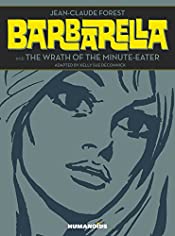
Comics 6 (2021 total 48) Seven Deadly Sins, by Roz Kaveney, Graham Higgins, Tym Manley, Hunt Emerson, Neil Gaiman, Bryan Talbot, Dave Gibbons, Lew Stringer, Mark Rodgers, Steve Gibson, Davy Francis, Jeremy Banks, Alan Moore and Mike Matthews Les Mondes d’Aldébaran: L’Encyclopédie Illustrée, by Christophe Quillien Barbarella vol 1, by Jean-Claude Forest, tr Kelly Sue DeConnick Barbarella vol 2: The Wrath of the Minute-Eater, by Jean-Claude Forest, tr Kelly Sue DeConnick Once & Future Vol. 1: The King is Undead, by Kieron Gillen, Dan Mora and Tamra Bonvilain Once & Future Vol. 2: Old English, by Kieron Gillen, Dan Mora and Tamra Bonvilain
9,300 pages (2021 total 77,200) 13/34 (2021 total 124/296) by non-male writers (Hayward, Tomalin, Munro, Martine, Hoffman, Knox, King, Rayner, Kaveney, DeConnick x2, Bonvilain x2)
On the other hand The 48 Laws of Power is fascist incel rubbish; you can get it here but please don’t.
2021 roundup
I read 296 books in 2021, the fifth highest of the nineteen years that I have been keeping track, and the highest since 2011 (though exceeded again last year).
Page count for the year: 77,200, eighth highest of the nineteen years I have recorded, closer to the middle.
Books by non-male writers in 2020: 124/296, 42% – a new record in both absolute numbers and percentages.
Books by PoC in 2020: – 42/296 (14%) – highest absolute number, second highest percentage.
Most-read author this year: Neil Gaiman.
1) Science Fiction and Fantasy (excluding Doctor Who)
131 (44%): highest total ever, fourth highest percentage.
Top SF book of the year:
I was really impressed by Set This House in Order: A Romance of Souls, by Matt Ruff, winner of the James Tiptree Jr Award in 2003, a story of multiple personalities and strange things in Seattle; the author went on to write Lovecraft Country, now a TV series. (get it here)
Honourable mentions to:
My votes for the BSFA Award for Best Novel and the Hugo for Best Novel went to, respectively: (BSFA) Comet Weather, by Liz Williams, a great English fantasy (get it here) (Hugo) The City We Became, by N.K. Jemisin, a great New York fantasy (get it here)
Welcome rereads:
Favourite classics: The Lord of the Rings, by J.R.R. Tolkien (get it here) The Martian Chronicles, by Ray Bradbury (get it here)
BSFA Award winners: River of Gods, by Ian McDonald (get it here) The Separation, by Christopher Priest (get it here)
Short fiction which won both Hugo and Nebula: “Sandkings”, by George R.R. Martin (get it here) “Stories for Men”, by John Kessel (get it here)
The one you haven’t heard of:
A collection by new-ish British writer Priya Sharma, All the Fabulous Beasts – not sure why she is not better known, I think her writing is great (get it here)
The one to avoid:
The 2002 collection of Roger Zelazny’s short stories with the title The Last Defender of Camelot – not because of the content, but because of the lazy and incompetent formatting; the 1980 collection of the same name is much better (get it here)
2) Non-fiction
53 (18%): joint ninth highest total of nineteen years, so squarely in the middle; only 16th highest percentage, near the bottom.
Top non-fiction book of the year:
Carrying the Fire, by Michael Collins; more on that below.
Honourable mentions to:
Goodbye To All That, by Robert Graves, mainly about the First World War but also about his privileged background and family (get it here) A Woman in Berlin, a first-person account of the collapse of the Third Reich, particularly the attendant sexual violence (get it here)
The one you haven’t heard of:
I was very sorry that The Unstable Realities of Christopher Priest, by Paul Kincaid, did not win the BSFA Award for Non-Fiction. I like both author and subject, as writers and also as people, but even without that I think it’s a great insight into a great writer. (get it here)
The one to avoid:
Exploding School to Pieces: Growing Up With Pop Culture In the 1970s, by Mick Deal – sloppy and contributes very little to our knowledge of a well-researched era. (get it here)
3) Comics (and picture books)
48 (16%): highest total ever, second highest percentage. I’ve padded a little (but only a little) by including a photo book and an art book here, but that wouldn’t change the rankings.
Top comic of the year:
Wake: The Hidden History of Women-Led Slave Revolts, by Rebecca Hall – brilliant and timely historical exploration of slavery in places where we don’t often think of it as having happened (get it here)
Honourable mentions:
Octavia E. Butler’s Parable of the Sower: A Graphic Novel Adaptation, by Damian Duffy and John Jennings – the only thing I voted for that actually won a Hugo; great treatment of a classic story (get it here) Le dernier Atlas, tome 1, by Fabien Vehlmann, Gwen de Booneval, Hervé Tranquerelle and Frédéric Blanchard – a great start to a counterfactual series; I felt the other two volumes didn’t quite live up to the promise of the first, but still worth reading (get it here) My Father’s Things, by Wendy Aldiss – lovely lovely book about dealing with grief (get it here)
The one you haven’t heard of:
Mijn straat: een wereld van verschil, by Ann De Bode – beautiful portrayal of a diverse Antwerp street (get it here)
The one to avoid:
Kaamelott: Het Raadsel Van de Kluis, by Alexandre Astier and Steven Dupre – based on a TV series, does nothing new (get it here in Dutch and here in French)
4) Doctor Who
30 (10%), 40 (14%) counting non-fiction and comics. I ended my sabbatical from DW reading late in the year. 14th highest total, 16th highest percentage for DW fiction; 15th highest total and again 16th highest percentage for all DW books.
Top Doctor Who book of the year:
(Black Archive) The Massacre, by James Cooray Smith – second and best so far of the Black Archive analyses of past Doctor Who stories. (get it here)
Honourable mentions:
(Comics) Old Friends, by Jody Houser et al – the Doctor meets the Corsair (get it here) (Novelisation) The Crimson Horror, by Mark Gatiss – adds a lot to the TV story (get it here) (Official BBC spinoff) Adventures in Lockdown – somewhat random collection but it works (get it here)
The one you haven’t heard of:
(Non-BBC spinoff: Lethbridge-Stewart) Night of the Intelligence, by Andy Frankham-Allen – pulls together a lot of threads in this excellent series (get it here)
The one to avoid:
(Non-BBC spinoff: Erimem) Angel of Mercy, by Julianne Todd, Claire Bartlett and Iain McLaughlin – you know what’s going to happen really very early in the book (get it here)
5) Non-genre fiction
30 (10%): 13th highest total, 16th highest percentage, so pretty far down; not quite sure why that is.
Top non-genre fiction of the year:
Joint honours to two novels which were both the basis for Oscar-winning films: The Silence of the Lambs, by Thomas Harris – chilling story of a mass murderer (get it here) and Schindler’s List, by Thomas Keneally – chilling story of mass murder (get it here)
Honourable mention:
Jack, by Marilynne Robinson – another look at the same events she has told us about before, from a new perspective (get it here)
Welcome reread:
Middlemarch, by George Eliot – one of my favourite books ever (reviewget it here)
The one you haven’t heard of:
The Ice Cream Army, by Jessica Gregson – ethnic tensions in WW1 Australia (get it here)
The one to avoid:
Forrest Gump, by Winston Groom – also the basis of an Oscar-winning film; awful film, worse book (get it here)
6) Others: poetry and scripts
I read four works of poetry, of which the best new read was Maria Dahvana Headley’s Hugo-winning translation of Beowulf (get it here); and four script books, of which the best were the first two Welcome to Night Vale volumes, Mostly Void, Partially Stars (get it here) and Great Glowing Coils of the Universe (get it here)
My Book of the Year for 2021
My Top Book of 2021 is Carrying the Fire, by astronaut Michael Collins. Funny, moving, gripping, who would have thought that the best account of the first Moon landing would be written by the guy who wasn’t there? (And died aged 90 earlier this year.) Absolutely worth reading, not just for space exploration fans but for anyone interested in the human side of one of the most famous events of the twentieth century. You can get it here.
Other Books of the Year:
2003 (2 months): The Separation, by Christopher Priest (review; get it here) 2004: (reread) The Lord of the Rings, by J.R.R. Tolkien (review; get it here) – Best new read: Samuel Pepys: The Unequalled Self, by Claire Tomalin (review; get it here) 2005: The Island at the Centre of the World, by Russell Shorto (review; get it here) 2006: Lost Lives: The stories of the men, women and children who died as a result of the Northern Ireland troubles, by David McKittrick, Seamus Kelters, Brian Feeney, Chris Thornton and David McVea (review; get it here) 2007: Fun Home: A Family Tragicomic, by Alison Bechdel (review; get it here) 2008: (reread) The Diary of a Young Girl: The Definitive Edition, by Anne Frank (review; get it here) – Best new read: Vanity Fair: A Novel without a Hero, by William Makepeace Thackeray (review; get it here) 2009: (had seen it on stage previously) Hamlet, by William Shakespeare (review; get it here) – Best new read: Persepolis 2: the Story of a Return, by Marjane Satrapi (first volume just pipped by Samuel Pepys in 2004) (review; get it here) 2010: The Bloody Sunday Report, by Lord Savile et al. (review of vol I; get it here) 2011: The Decline and Fall of the Roman Empire, by Edward Gibbon (started in 2009!) (review; get it here) 2012: The Tenant of Wildfell Hall, by Anne Brontë (review; get it here) 2013: A Room of One’s Own, by Virginia Woolf (review; get it here) 2014: Homage to Catalonia, by George Orwell (review; get it here) 2015: collectively, the Arthur C. Clarke Award shortlist, in particular the winner, Station Eleven, by Emily St John Mandel (get it here). However I did not actually blog about these, being one of the judges at the time. – Best book I actually blogged about: The Life and Death of Mary Wollstonecraft, by Claire Tomalin (review; get it here) 2016: Alice in Sunderland, by Bryan Talbot (review; get it here) 2017: Common People: The History of an English Family, by Alison Light (review; get it here) 2018: Factfulness, by Hans Rosling (review; get it here) 2019: Girl, Woman, Other, by Bernardine Evaristo (review; get it here) 2020: From A Clear Blue Sky: Surviving the Mountbatten Bomb, by Timothy Knatchbull (review; get it here) 2021: Carrying the Fire, by Michael Collins (review; get it here) 2022: The Sun is Open, by Gail McConnell (review; get it here)
Chad was standing on an unbroken spur of the former sea road, staring out at the remains of the town’s old seaside pier when he felt the phone vibrating in his pocket. The rusty upright piles of the pier managed to hold on somehow, still visible and prodding up at low tide, although low tide had itself become something of a rarity. The sunshine on the white foam of the breakers was dazzling. Greg’s name was on his screen. He turned his back on the sea.
An intricate story, involving (as usual from Priest) twins and (unusually for him) climate change, with three timelines (late 19th century, early 20th, mid-21st) whose interlinkages gradually come into view, meshing to form a complete story. Not my all-time favourite book by this writer but I still liked it a lot. You can get it here.
Second frame of third story (actually a full page):
Next in my sequence of Tenth Doctor graphic novels, this pulls together three very different stories, of which the first story is the best: the Doctor and comics-only companion Gabby end up on a world where some of th inhabitants are intelligent forms of music, a concept that is difficult to portray in any medium, but done very well here. There’s also a New York vignette with Jack Harkness, and an interesting aliens-at-the-dawn-of-time story which has a pretty overt anti-colonialist theme. You can get it here.
The problem this time is that his phone has died, so he can’t use it to navigate, and he has no cash, having given it to a man whose wife was dying and needed medical care. (A man who, in retrospect, might not have been telling the truth.)
Hugely enjoyed this near-future tale where memory editing has become an established practice, and the drawbacks are now becoming clear, especially when people start trying to get their deleted memories back and buried secrets re-emerge. Well told with lots of different viewpoint characters. Recommended. You can get it here.
The woman in the wheelchair hummed towards the receptionist’s station. ‘Iris Beckstein, to see Dr. Darling. He’s expecting me.’ She smiled at the secretary: the self-assured smile of the financially secure.
This is a compilation and revision of what were originally the fifth and sixth volumes of this series, following on from The Bloodline Feud and The Traders’ War, and laying the ground for the first in the next series, Empire Games. It is a very good romp through a slightly alternate early-noughties America, twinned with a couple of parallel universes where history worked out differently; in all three there are rapid and drastic changes of government, with extraordinary violence in our own world and a rapid turnover of US leadership. Stross maintains his fascination with economics and the management of intelligence services, and his central figure remains a largely sympathetic character trying to improve the worlds that she lives in but also getting to grips with her own limits. I may go back to Empire Games now, and look for the rest in the series. You can get it here.
This was my top unread book acquired in 2017. Next on that pile is Dawn of the New Everything: A Journey Through Virtual Reality, by Jaron Lanier.
This was also the first book I finished this month, posting this review on the 13th.
‘But I’ve been offered a place at Sussex University,’ said Cara. She wore a white loopback cotton sweater and pre-distressed, wide-cut jeans with no socks. For two years her OCEAN Personality Test Score had been 40 89 15 60 90, within a tolerance of 0.4%.
Marginalised non-humans trying to integrate into our society. Two and a half narrative strands that did not really add up. Omnipresent narrator has weird obsession with precise measurements, including of characters’ personalities. I didn’t like it all that much, but you can get it here.
I don’t seem to have written anything about The Rings of Akhaten when it was first broadcast in 2013, nor did I pick is as one of my essential Twelfth Doctor watches in my 2017 guide to New Who. Both on first watching and on rewatching ten years later, I enjoyed it without especially loving it. It’s Clara’s first proper adventure as a companion, after several previous appearances, and I like the variety of alien races and the back-story for Clara, while regretting that more wasn’t made of either of these in the continuity. Emilia Jones rather glows as the main guest actor, in a story filmed when she was ten years old. She went on to star in an Oscar-winning film (CODA). I am less wild about planet-sized (let alone star-sized) evil aliens. Like I said, I enjoyed it without especially loving it.
It has not been adapted for print, and no subsequent adventure in TV or other media has returned to Akhaten. Several of the alien species have been seen again, notably as exhibits in Nightmare in Silver, and the story itself is moored into the wider continuity by the Doctor’s remark that he had previously visited Akhaten with his granddaughter. (And one of the alien races is a Hooloovoo, encountered differently in The Hitch-hiker’s Guide to the Galaxy.)
William Shaw’s Black Archive monograph has really opened my eyes to what was actually going on in the story. and succeeded in making me feel that I need to give it another go to catch what I missed first time round. (Though I don’t think of myself as a careless watcher, so perhaps I should not take all the blame for my having missed some of these points.)
A brief introduction defends Shaw’s choice of The Rings of Akhaten to analyse, and introduces the themes of the book.
The first and longest chapter, “The Doctor as New Atheist”, jumps right in by looking at the impact of Richard Dawkins and other New Atheists on Doctor Who in the Russell T. Davies years (Dawkins himself actually appears on the show, of course) and examines how the Moffatt years saw a shift to a more measured engagement with gender, race, colonialism and indeed religion. The Rings of Akhaten is in fact a story about a religious ceremony, and the Doctor, coming in with a dismissive attitude to religion, is proved wrong several times. That’s a lot more interesting than I had realised.
The second chapter, “Clara, Merry, and the Most Important Leaf in Human History”, looks at the centrality of Clara and her relationship with Merry in the story, taking some time also for consideration of Murray Gold’s music and Orientalism by Edward Said. Again, I realised that there was more going on than I had noticed, especialiy if you consider the story’s place in Clara’s narrative arc.
The second paragraph of the third chapter, “Marks out of Akhaten” is:
This chapter therefore focuses on The Rings of Akhaten’s flaws, in terms of both its storytelling and its wider political context. In particular, it examines the episode’s relationship to some key concepts in postcolonial and feminist theory, and the ways in which it both exceeds, and ways in which it both exceeds, and tragically fulfils, the expectations of these schools of thought. None of this is to denigrate the episode. It is simply to argue that, while The Rings of Akhaten represents a positive step forward for Doctor Who, there are several ways in which it could have gone further.
I like very much that Shaw concedes that the story has flaws; some other Black Archive writers feel the need for total defence of their chosen story even when it’s a much worse story than The Rings of Akhaten. He mentions that its narrative beats are a bit uneven, which I agree with, and that there are not enough non-white actors, which I also agree with. He also looks at the disappointment felt by fans of writer Neil Cross’s previous career who may have expected something closer to the “gritty cop drama” Luther for which he is best known. I was not familiar with any of Cross’s non-Who work so that point passed me by.
The fourth chapter, “Anniversary Anxiety”, looks in a little more detail at the wider arc of story-telling in Moffat-era Who (though that phrase is not used), and how the story is one of the building bricks of the Clara narrative, interrogating and subverting what the show is actually about (ie the nature of the Doctor himself).
A brief conclusion explains Shaw’s own journey from sceptic to fan, having not enjoyed The Rings of Akhaten on first broadcast to realising its deeper significance.
An appendix asks whether Akhaten is a planet or a sun.
A second appendix has a decently long interview with the director, Farren Blackburn, explaining some of the artistic choices made during production.
A third appendix reproduces Blackburn’s “Director’s Statement”, his vision for the episode.
This is one of the longer Black Archives, but it really opened my mind to some of the aspects of the story that I wished I had caught for myself on watching. The last in this series that really excited me in the same way was Alyssa Franke’s monograph on Hell Bent. You may be able to get The Rings of Akhatenhere. (Or here.)
Standing in her kitchen with a glass of water in hand, which means he went through her cupboard to find it. His big hand out-stretched to touch the thyme growing behind the sink, in the patch of light that comes in from the emergency stairwell. He’s wearing a chain around his neck. At the end of it, a ring with a purple stone that she recognizes as his mother’s.
Young woman who is the tool of a dystopian surveillance state conspires to overthrow it. Has been done better elsewhere. You can get it here.
Current The Shape of Irish History, by A.T.Q. Stewart π3 The Robots of Death, by Fiona Moore Tomorrow, and Tomorrow, and Tomorrow, by Gabrielle Zevin
Last books finished φ3 A Brief History of Stonehenge, by Aubrey Burl K9 Megabytes, by Bob Baker Twelve Caesars: Images of Power from the Ancient World to the Modern, by Mary Beard Doctor Who and the Robots of Death, by Terrance Dicks β2
Next books The Pandorica Opens / The Big Bang, by Philip Bates City of Soldiers, by Kate Fearon The Cider House Rules, by John Irving
I enjoy cooking, but I don’t always have the time I would like for it. We have a lot of recipe books in the house, but there are four that I find myself returning to, usually to remind myself about old favourites, but sometimes to branch out a bit into new territory.
The Good Housekeeping Cookery Book, first published in 1948, was a wedding present almost thirty years ago. It’s still my go-to for reminders of how long to cook various types of meat. All the basic resipes are there, and a few more adventurous ones as well. (Last Saturday I tried out the one for baked trout, with success.) The version we have is available for a pound plus postage, and there is an updated Ultimate Recipe Collection as well.
The New Internationalist Food Book, by Troth Wells, was also a present, more recently, from my sister. We’ve found it very good at helping us to step outside the usual Euro-Atlantic comfort zone and sample recipes from Africa, Asia and Latin America – all made with standard enough ingredients, and simple to follow. You can get it here.
I first visited Georgia (the real place, not the American wannabe state) in 2003, and immediately became obsessed by the food; several of the recipes in this book are among my standards – chakhokhbili (chicken stew), sousi (beef stew), tevzis buglama (salmon stew), chanakhi (lamb stew), cauliflower satsivi (walnut sauce), pkhali (beetroot salad), lobio (beans with egg), all very yummy indeed. Khatchapuri is too cheesy for me, unfortunately, and I have not been successful with khinkali (dumplings). You can get The Georgian Feast here.
The much-missed Maureen Kincaid Speller recommended the Indian cookery writer Mridula Baljekar a couple of years ago, and I was lucky enough to score a copy of the Best Ever Indian Cookbook, which she co-authored. I love Indian food anyway, and will always settle for tipping a jar of curry sauce (korma, jalfrezi or whatever) into the pot. But there’s something very satisfying about doing it from first principles. You can get the Best Ever Indian Cookbook here; I see it’s rather expensive now, even second hand, so I must have simply been lucky.
Happy cooking, folks. I must admit that I do it much more willingly and imaginatively when I have people to cook for; the advantages of family life.
This is the latest post in a series I started in late 2019, anticipating the twentieth anniversary of my bookblogging at the end of October 2023. Every six-ish days, I’ve been revisiting a month from my recent past, noting work and family developments as well as the books I read in that month. I’ve found it a pleasantly cathartic process, especially in recent circumstances. If you want to look back at previous entries, they are all tagged under bookblog nostalgia.
So, the first half of November 2021 wasa pretty good to me. We started with a family expedition to Modave, to see more of the ceilings of Jan Christiaan Hansche:
But I paid a price; in the corridors at Novacon, after twenty months of pandemic, I picked up a dose of COVID that put me in bed for sixteen days, as chronicled here. I don’t remember much about the rest of the month.
But I did read 31 books.
Non-fiction 6 (YTD 44) Paul: A Biography, by Tom Wright Building Healthy Boundaries: An Over-giver’s Guide to Knowing When to Say ‘Yes’ and How to Say ‘No’ in Relationships, by Helen Snape Image of the Fendahl, by Simon Bucher-Jones Ghost Light, by Jonathan Dennis A Beautiful Mind, by Sylvia Nasar Exploding School to Pieces: Growing Up With Pop Culture In the 1970s, by Mick Deal – did not finish
Non-genre 3 (YTD 27) The Ice Cream Army, by Jessica Gregson Summer, by Ali Smith Beautiful World, Where Are You, by Sally Rooney
Poetry 1 (YTD 5) The Lay of Aotrou and Itroun, by J R R Tolkien, ed. Verlyn Flieger
SF 13 (YTD 122) Not Before Sundown, by Johanna Sinisalo The Empire of Gold, by S.A. Chakraborty – did not finish The Eyre Affair, by Jasper Fforde The Burning God, by R.F. Kuang Camouflage, by Joe Haldeman Mortal Engines, by Philip Reeve River of Gods, by Ian McDonald Waste Tide, by Qiufan Chen Iron Council, by China Miéville – did not finish One Bright Star to Guide Them, by John C. Wright The Last Witness, by K.J. Parker [Tom Holt] The Last Defender of Camelot, by Roger Zelazny (2002) – did not finish Shanghai Sparrow, by Gaie Sebold
Doctor Who 5 (YTD 23, 31 inc comics and non-fiction) The Book of the War, ed. Lawrence Miles The HAVOC Files 3, ed. Andy Frankham-Allen The Witchfinders, by Joy Wilkinson Doctor Who and the Image of the Fendahl, by Terrance Dicks Doctor Who – Ghost Light, by Marc Platt
Comics 3 (YTD 37) Sweeney Todd & Other Stories, by Neil Gaiman The Story of Sex: From Apes to Robots, by Philippe Brenot and Laetitia Coryn Le dernier Atlas, Tome 3, by Fabien Vehlmann and Gwen de Bonneval
7,300 pages (YTD 67,900) 12/31 (YTD 111/262) by non-male writers (Snape, Nasar, Gregson, Smith, Rooney, Flieger, Sinisalo, Chakraborty, Kuang, Sebold, Wilkinson, Coryn; Gwen de Bonneval is male) 4/31 (YTD 41/262) by PoC (Nasar, Chakraborty, Kuang, Chen)
The best of these were two translated sf novels, Waste Tide by Qiufan Chen, which you can get here, and Not Before Sundown by Johanna Sinisalo, which you can get here; and Helen Snape’s very brief self-help book with a long title, Building Healthy Boundaries: An Over-giver’s Guide to Knowing When to Say ‘Yes’ and How to Say ‘No’ in Relationships, which you can get for free here.
I’m feeling a bit uncharitable so I’m going to call out three particularly poor books. The iBooks collection of Zelazny stories, The Last Defender of Camelot, insults the writer and the stories with appalling production values, at least for the ebook; you can get it here. Mick Deal’s Exploding School to Pieces, on 1970s TV, is superficial and poorly researched; you can get it here. And John C. Wright’s One Bright Star to Guide Them is derivative and disjointed, and not exactly subtle in its ideology; you can get it here.
Second paragraph of third story (“The Time-Tombs”, by J.G. Ballard):
Most of the time-tombs on the southern edge of the sand-sea had been stripped centuries earlier. But Shepley liked to saunter through the straggle of half-submerged pavilions, the warm ancient sand playing over his bare feet like wavelets on some endless beach. Alone among the flickering tombs, with the empty husks of the past ten thousand years, he could temporarily forget his nagging sense of failure.
An anthology of ten stories from the sf magazine Worlds of If, all published between 1963 and 1967, all by white men (though two at least were British). Several of these were familiar to me from their appearances in other collections, mostly chosen by their authors; the one exception, published only here and in its original magazine appearance, is a spooky-little-girl story, “Toys for Debbie”, by Dave Kyle, who is better remembered for his activities in fandom but published three authorised Lensman novels in the 1980s, ten short stories between 1941 and 1994, and contributed art including the cover of the first edition of Asimov’s Foundation. Most of these are effective enough, but there are noticeably few women (Brian Aldiss scores here, with his tough warrior girl in “In the Arena”).
My copy, the 1951 Sphere edition, has no table of contents or index, and clearly the publishers struggled to squish the material into 256 pages. You can get it here.
This was the sf book that had lingered longest on my unread shelves. Next up is an Ace double, Collision Course, by Robert Silverberg / Nemesis from Terra, by Leigh Brackett, half of which I have already read.
Now that the Clarke shortlist is out, I’m posting my brief notes on those books which were not shortlisted and which I do not intend to reread. In many cases it’s because I didn’t think the book was all that good, though often enough (including today) it was a decent enough book which just didn’t end up in the top six, or clearly not sf or not a novel and therefore not eligible. There are about a dozen that I do intend to get back to in due course, so I won’t be publishing my original notes about them here.And we’re starting with Braking Day, by Adam Oyebanji.
Second paragraph of third chapter:
The pattern began to disappear. Slowly at first, then ever faster under tendrils of green mold that spread across the surface until all that was left of the plate beneath was its shape. And soon, not even that. The mold kept growing. Thicker and higher, and thicker and higher, until it was reaching his face and forcing his mouth apart and putting roots down in his throat.
The first of the 98 books submitted for the Arthur C. Clarke Award which I read. A good example of the generation starship tale, which held together very well though there were a couple of twists that didn’t quite work for me. Debut novel, so will look forward to more from this writer. You can get it here.
I’ll do these Mondays to Fridays until I run out. That will take several months.