Kerblam!, by Naomi Jacobs and Thomas L. Rodebaugh

Next in the sequence of Black Archive analyses of Doctor Who, and the first to tackle the Thirteenth Doctor, published in 2019 about a story broadcast in 2018. I did not much like Kerblam!, and thought it one of the weakest stories of Jodie Whittaker’s first season. I wrote at the time:

[Kerblam!] left me cold. I was not happy that the Doctor leaves an evil system un-overthrown, having defeated the revolutionary who was trying to bring it down. As Darren Mooney points out, “The episode’s happy ending has the company giving the employees four weeks off, but only paying them for two of those four weeks.” It is totally out of whack with the show’s progressive history. The script, performances and especially the effects were all good, but the politics left a bad taste in my mouth.

Re-watching it four years later, I felt much the same. I also felt that the fridging of the youngest woman guest character was a bit gratuitous.

The Black Archive on the story is by Naomi Jacobs, who co-wrote the volume on Human Nature / The Family of Blood which I enjoyed, and Thomas L. Rodebaugh, who wrote the volume on The Face of Evil, which I enjoyed rather less. The result is somewhere in between.

An introduction admits that the story is politically problematic, and also asks about Doctor Who’s attitude to robotics and artificial intelligence, finishing with the question, “Who killed Kira?”

The first chapter, “Political Animals”, goes to some lengths to try and quantify the political ideology of the Doctor (and the show) along left-right and libertarian-authoritarian axes, which I did not really find compelling. It makes a valid comparison between the Doctor’s approach to Charlie in Kerblam!, and his approach to Taran Capel in The Robots of Death, making the point that the resort to violence is generally a problem for the Doctor. But this ignores the fact that Taran Capel is literally genocidal, whereas Charlie is not.

The second chapter, “Thinking Machines”, looks into the concepts of artificial intelligence and thinking machines, and the extent to which we could realistically expect a future computer to behave like the computer behind Kerblam.

The third chapter, “Some of my best friends are Robots!”, looks at the depiction of robots in fiction in general and in Doctor Who in particular. The second paragraph, along with the quote it introduces, is:

Karel Čapek first used the word ‘robot’ in his 1920 play RUR (Rossum’s Universal Robots), which told the story of artificial workers in a factory who gain self-awareness and incite others around the world to rise up against the humans. The word was originally coined by his brother Josef, and comes from a Czech word ‘robota’, which means ‘forced labour’ or an indentured servant 1. The play deals with issues not dissimilar to Kerblam! in considering human dependence on commodified labour and its consequences. The word and concept have a long history in science fiction, and the research field of robotics takes its name from the works of writer Isaac Asimov, who popularised many of the modern ideas and concepts of robots in his work. Most famously, he coined the Three Laws of Robotics, rules that he described as forming the foundations of the programming of any autonomous robot. These are:
‘First Law: A robot may not injure a human being or, through inaction, allow a human being to come to harm.
‘Second Law: A robot must obey the orders given it by human beings except where such orders would conflict with the First Law.
‘Third Law: A robot must protect its own existence as long as such protection does not conflict with the First or Second Laws.’ 2
1 Pappas, Stephen, ‘Karel Čapek and the Origin of the Word Robot’.
2 Asimov, ‘Runaround’ (1942), reprinted in the collection I, Robot (1950).

The fourth chapter, “Making Connections”, looks at the Internet of Things and RFIDs and drones as they are today, and compares their depiction in Kerblam! with that in the Twelfth Doctor story Smile.

The fifth chapter, “Automated for the People”, looks at automation and employment, and the economic effects of greater mechanisation of work.

The sixth chapter, “Automated Message”, looks frankly at the weakness of the episode’s writing, proposing that it evades deeper analysis of the societal questions raised by its setting because of the demands of writing an exciting plot. It also looks at why the death of Kira is so problematic – unlike the traditional fridging, it doesn’t even change the behaviour of the key character (Charlie in this case). “[W]e are left with the sense that it is perhaps not so much that the episode doesn’t know what to do with the exciting inspiration from which it has plucked ideas, but that it thinks that merely using them in pursuit of structure and plot is clever enough.”

The seventh chapter, “Wrapping it all up”, finds a convincing metaphor for the story and indeed for the book. “The bubble wrap is not a plot hole, but, as with Kira’s death, is symptomatic of how the allegiance to the story’s structure makes many of the story’s clever concepts seem somewhat hollow: shiny on the surface, but liable to burst if some critical pressure is applied.”

Like Philip Purser-Hallard’s volume on Battlefield, this volume looks at a story I did not like so much and analyses what it was trying to do. I found it refreshing that the authors admitted the story’s weaknesses, but I ended up not really convinced that it could sustain the level of analysis that they had brought to bear. Be that as it may, you can get it here.

The Black Archives
1st Doctor: The Daleks (82) | The Edge of Destruction (67) | Marco Polo (18) | The Aztecs (71) | The Dalek Invasion of Earth (30) | The Romans (32) | The Myth Makers (65) | The Massacre (2) | The Ark (81)
2nd Doctor: The Underwater Menace (40) | The Evil of the Daleks (11) | The Mind Robber (7)
3rd Doctor: Doctor Who and the Silurians (39) | The Ambassadors of Death (3) | The Dæmons (26) | Carnival of Monsters (16) | The Time Warrior (24) | Invasion of the Dinosaurs (55)
4th Doctor: Pyramids of Mars (12) | The Hand of Fear (53) | The Deadly Assassin (45) | The Face of Evil (27) | The Robots of Death (43) | Talons of Weng-Chiang (58) | Horror of Fang Rock (33) | Image of the Fendahl (5) | The Sun Makers (60) | The Stones of Blood (47) | Full Circle (15) | Warriors’ Gate (31) | Logopolis (76)
5th Doctor: Castrovalva (77) | Kinda (62) | Black Orchid (8) | Earthshock (51) | Mawdryn Undead (80) | The Awakening (46)
6th Doctor: Vengeance on Varos (41) | Timelash (35) | The Mysterious Planet (79) | The Ultimate Foe (14)
7th Doctor: Paradise Towers (61) | The Happiness Patrol (68) | Silver Nemesis (75) | The Greatest Show in the Galaxy (66) | Battlefield (34) | The Curse of Fenric (23) | Ghost Light (6)
8th Doctor: The Movie (25) | The Night of the Doctor (49)
Other Doctor: Scream of the Shalka (10)
9th Doctor: Rose (1) | Dalek (54)
10th Doctor: The Impossible Planet / The Satan Pit (17) | Love & Monsters (28) | Human Nature / The Family of Blood (13) | The Sound of Drums / Last of the Time Lords (38) | Silence in the Library / The Forest of the Dead (72) | Midnight (69)
11th Doctor: The Eleventh Hour (19) | Vincent and the Doctor (57) | The Pandorica Opens / The Big Bang (44) | A Christmas Carol (74) | The Impossible Astronaut / Day of the Moon (29) | The God Complex (9) | The Rings of Akhaten (42) | Day of the Doctor (50)
12th Doctor: Listen (36) | Kill the Moon (59) | Under the Lake / Before the Flood (73) | The Girl Who Died (64) | Dark Water / Death in Heaven (4) | Face the Raven (20) | Heaven Sent (21) | Hell Bent (22)
13th Doctor: Arachnids in the UK (48) | Kerblam! (37) | The Battle of Ranskoor av Kolos (52) | The Haunting of Villa Diodati (56) | Ascension of the Cybermen / The Timeless Children (70) | Flux (63)
15th Doctor: The Devil’s Chord (78)

December 2020 books, and 2020 books roundup

This is the latest post in a series I started in late 2019, anticipating the twentieth anniversary of my bookblogging at the end of October 2023. Every six-ish days, I’ve been revisiting a month from my recent past, noting work and family developments as well as the books I read in that month. I’ve found it a pleasantly cathartic process, especially in recent circumstances. If you want to look back at previous entries, they are all tagged under bookblog nostalgia.

Lockdown having hit again, I did not go very far this month except to nip across the border to France for a haircut. However I did have the satisfaction of comiling a video about science fiction predicitons for the year 2021 – probably a little too long, but I did love the Moon Zero Two opening titles.

And I kept up my ten-day updates in plague times.

And on Christmas Day I managed to get a rare picture of the family all looking in the same direction and all looking happy.

I read 27 books that month.

Non-fiction: 4 (2020 total 50)
Our War: Ireland and the Great War, ed. John Horne
Utopia For Realists, by Rutger Bregman
House of Music, by Kadiatu Kanneh-Mason
Explaining Humans, by Camilla Pang

Fiction (non-sf): 3 (2020 total 38)
Terms of Endearment, by Larry McMurtry
Tono-Bungay, by H.G. Wells
The Prisoner of Brenda, by [Colin] Bateman

Scripts: 2 (2020 total 2)
Amadeus, by Peter Shaffer
A Belgian Christmas Eve, by Alfred Noyes

sf (non-Who): 15 (2020 total 114)
After Me Comes the Flood, by Sarah Perry
Ash: A Secret History, by Mary Gentle
“The Persistence of Vision”, by John Varley
The Children of Men, by P.D. James
Dreamsnake, by Vonda McIntyre
The Company Articles of Edward Teach, by Thoraiya Dyer/Angælien Apocalypse, by Matthew Chrulew
2010: Odyssey Two, by Arthur C. Clarke
Above, by Stephanie Campisi/Below, by Ben Peek
Perdido Street Station, by China Miéville
Planetfall, by Emma Newman
Macrolife, by George Zebrowski
The Anything Box, by Zenna Henderson
Ormeshadow, by Priya Sharma
Palimpsest, by Charles Stross
Piranesi, by Susanna Clarke

Doctor Who: 2 (2020 total 18)
All Flesh is Grass, by Una McCormack
Tales of Terror, no editor given

Comics: 1 (2020 total 45)
Doctor Who: The Thirteenth Doctor Volume 1: A New Beginning, by Jody Houser, Rachael Stott, Giorgia Sposito, Enrica Eren Angiolini

8,200 pages (2020 total 70,400)
14/27 (2020 total 77/266) not by men (Henderson, Kanneh-Mason, Perry, Gentle, James, McIntyre, Dyer, Campisi, Newman, Henderson, Sharma, Clarke, McCormack, Houser et al)
3/27 (2020 total 25/266) by PoC (Kanneh-Mason, Pang, Sharma)

Several really good books this month, and I’m going to single out the RTE history Our War, which you can get here, and Priya Sharma’s short Ormeshadow, which you can get here. On the other hand I completely bounced off Sarah Perry’s After Me Comes the Flood, which you can get here.

2020 books roundup

I read 266 books in 2020, the ninth highest of the nineteen years that I have been keeping track, and 70,400 pages, eleventh highest of nineteen, so pretty much in the middle.

Books by non-male writers in 2020: 77/266, 29% – fifth highest absolute number, eighth highest percentage of the last nineteen years.

Books by PoC in 2020: – 25/266, 9% – fifth highest in both absolute numbers and percentages, higher than any year before 2018.

Most-read author of 2020: Kieron Gillen, as I read all nine volumes of The Wicked + The Divine.

1) Science Fiction and Fantasy (excluding Doctor Who)

2020/2019/2018/2017/2016/2015/2014/2013/2012/2011/2010/2009/2008/2007/2006/2005/2004/
11477108688013012465627873785475687976
43%33%41%29%38%45%43%27%24%26%26%23%15%32%33%55%51%

114 (43%), fifth highest total and percentage of nineteen years.

Top SF book of the year:

The first book I read in 2020 was Ted Chiang’s collection Exhalation, which included some old favouites and a couple of brilliant new stories, both of which got on the Hugo final ballot. You can get it here.

Honourable mentions to:

Tade Thompson’s The Rosewater Insurrection, a BSFA finalist, in which near-future Nigeria (like other parts of the world) has been subject to an alien intrusion; this plays out on the ground in micropolitics, including sexual politics, for an interesting and intelligent exploration of what it actually means to be human in an unforgiving and rapidly changing world. You can get it here.

Naomi Kritzer’s Catfishing on CatNet, a Lodestar finalist, a cracking good read, with conscious AI, dysfunctional family, a courageous road trip across the northeastern USA, and a hilarious robot sex education scene. You can get it here.

The ones you haven’t heard of:

The BSFA long-list included several stories from two anthologies which I consequently sought out and enjoyed, Distaff: A Science Fiction Anthology by Female Authors, eds. Rosie Oliver & Sam Primeau, which you can get here, and Once Upon A Parsec: the Book of Alien Fairy Tales, ed. David Gullen, which you can get here. Sadly none of them made it to the short-list.

The one to avoid:

The worst book I read all year, with some stiff competition, was A Woman in Space, by Sara Cavanaugh (probably a pseudonym). Our heroine is twenty-six, and already a spaceflight veteran. The entire plot lacks any credibility even in its own terms. The sexual politics is awful, and the sex is pretty badly written as well. It’s so bad you have to finish it once you’ve started. (It’s only 192 pages.) You can get it here.

2) Non-fiction

50 (19%), bang in the middle of the historical range.

Top non-fiction book of the year:

From A Clear Blue Sky: Surviving the Mountbatten Bomb, by Timothy Knatchbull. More on this below.

Honourable mentions to:

Two biographies of women. The first is Felicitas Corrigan’s biography of the Ulster writer and historian Helen Waddell, looking at how her star rose and fell – she was invited to lunch at 10 Downing Street with J.M. Barrie and Queen Mary, but died in obscurity. You can get it here.

The other is a finalist for the Hugo for Best Related Work, Mallory O’Meara’s biography of Milicent Patrick, a Hollywood designer who rose and fell much more quickly than Helen Waddell; after the triumph of creating the Creature from the Black Lagoon, she was basically fired for not being invisible enough. You can get it here.

The one you haven’t heard of:

Philip Winter’s personal account of co-ordinating the internal peace process within the Democratic Republic of Congo in 2000-2002, a fascinating view of implementation of peace agreements at the sharp end with many lovely glimpses of detail and a real sense of time and place. You can get it here.

The one to avoid:

A Popular History of Ireland, by Thomas D’Arcy McGee – chloroform in print (as Mark Twain said of the Book of Mormon). You can get it here.

3) Comics

45 (17%), highest ever percentage, total number only exceeded in 2021, due to Hugos and Retro Hugos, and because of more Doctor Who comics coming through the system.

Top comics of the year:

Two of the Hugo finalists which were standalones, LaGuardia, written by Nnedi Okorafor, art by Tana Ford, colours by James Devlin, which you can get here, and Mooncakes, by Wendy Xu and Suzanne Walker, letters by Joamette Gil, which you can get here.

Honourable mention:

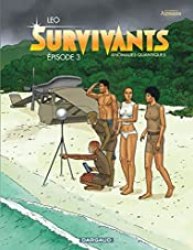
The second half of Leo’s Survivants series, continuing the Aldebaran cycle. You can get them in English translation here, here and here.

The one you haven’t heard of:

Rick Lundeen’s glorious adaptation of The Daleks’ Master Plan, not on sale anywhere but you can find it in the darker corners of the internet.

The ones to avoid:

The ending of Marc Legendre’s Amoras, an adult reworking of classic Belgian kids’ comic heroes Suske en Wiske, fell pretty flat for me. You can get the last two volumes here and here.

4) Non-genre fiction

40 (15%). In the middle of the historical range, though higher than 2021 or 2022.

Top non-genre fiction of the year:

The triumphant conclusion to Hilary Mantel’s Cromwell trilogy, The Mirror and the Light. We’ve always known where this wasa going to end up, but the journey is a tremendous achievement. You can get it here.

Honourable mentions:

I found myself enjoying Larry McMurtry’s Terms of Endearment, on which the film was based, much more than I expected – funny and also humane. You can get it here.

Michael Morpurgo’s Listen to the Moon is a sensitive and effective story about wartime in the Scilly Isles for young adult readers. You can get it here.

The one you haven’t heard of:

A wee jewel from a family member, Muddy Lane by Andrew Cheffings, about men loving each other in a lost corner of England. You can get it here.

The one to avoid:

Bruges-la-Morte by George Rodenbach. Very silly and over-written. Ends with the protagonist strangling his lover with a lock of his dead wife’s hair. There, I’ve saved you the bother, but if you still want to, you can get it here.

5) Doctor Who

Novels, collections of shorter fiction, etc excluding comics: 18 (7%), lowest since 2005.

All Who books including comics and non-fiction: 25 (9%), also lowest since 2005.

I took a bit of a sabbatical from Who reading in 2020.

Top Doctor Who books of the year:

Una McCormack’s novel All Flesh Is Grass, featuring the Eighth, Ninth and Tenth Doctors, which you can get here, and Jody Houser’s graphic novel Defender of the Daleks with the Tenth and Thirteenth (marketed for some reason with a very similar cover to Una McCormack’s novel, showing Eight, Nine and Ten, rather than Ten and Thirteen), which you can get here.

Honourable mention:

Paul Cornell’s Third Doctor story Heralds of Destruction is true to the spriti of early 70s Who and takes it a little further. You can get it here.

The one you haven’t heard of:

Already mentioned under comics: Rick Lundeen’s graphic novel adaptation of The Daleks’ Master Plan.

The one to avoid:

The 2020 Official Annual is a poor piece of work. You can get it here. Glad to say that the 2021 version is better.

My Book of the Year

No hesitation at all in naming my Top Book of 2020 as From A Clear Blue Sky: Surviving the Mountbatten Bomb, by Timothy Knatchbull, the account of a life punctuated by the 1979 bomb which killed his 14-year-old twin brother, along with their grandfather Lord Mountbatten, their other grandmother and another boy. As one might expect, Knatchbull’s relationship with Ireland is very complex. It was a magical place of childhood holiday memories, which turned to horror in an instant. He has found a way of making sense of the terrible thing that was done to his family, and it is a truly compelling read. I’d had it on the shelves for years but only now got around to it, and I should not have waited. You can get it here.

All Books of the Year:

2003 (2 months): The Separation, by Christopher Priest (review; get it here)
2004: (reread) The Lord of the Rings, by J.R.R. Tolkien (review; get it here)
– Best new read: Samuel Pepys: The Unequalled Self, by Claire Tomalin (review; get it here)
2005: The Island at the Centre of the World, by Russell Shorto (review; get it here)
2006: Lost Lives: The stories of the men, women and children who died as a result of the Northern Ireland troubles, by David McKittrick, Seamus Kelters, Brian Feeney, Chris Thornton and David McVea (review; get it here)
2007: Fun Home: A Family Tragicomic, by Alison Bechdel (review; get it here)
2008: (reread) The Diary of a Young Girl: The Definitive Edition, by Anne Frank (review; get it here)
– Best new read: Vanity Fair: A Novel without a Hero, by William Makepeace Thackeray (review; get it here)
2009: (had seen it on stage previously) Hamlet, by William Shakespeare (review; get it here)
– Best new read: Persepolis 2: the Story of a Return, by Marjane Satrapi (first volume just pipped by Samuel Pepys in 2004) (review; get it here)
2010: The Bloody Sunday Report, by Lord Savile et al. (review of vol I; get it here)
2011: The Decline and Fall of the Roman Empire, by Edward Gibbon (started in 2009!) (review; get it here)
2012: The Tenant of Wildfell Hall, by Anne Brontë (review; get it here)
2013: A Room of One’s Own, by Virginia Woolf (review; get it here)
2014: Homage to Catalonia, by George Orwell (review; get it here)
2015: collectively, the Arthur C. Clarke Award shortlist, in particular the winner, Station Eleven, by Emily St John Mandel (get it here). However I did not actually blog about these, being one of the judges at the time.
– Best book I actually blogged about: The Life and Death of Mary Wollstonecraft, by Claire Tomalin (review; get it here)
2016: Alice in Sunderland, by Bryan Talbot (review; get it here)
2017: Common People: The History of an English Family, by Alison Light (review; get it here)
2018: Factfulness, by Hans Rosling (review; get it here)
2019: Girl, Woman, Other, by Bernardine Evaristo (review; get it here)
2020: From A Clear Blue Sky: Surviving the Mountbatten Bomb, by Timothy Knatchbull (review; get it here)
2021: Carrying the Fire, by Michael Collins (review; get it here)
2022: The Sun is Open, by Gail McConnell (review; get it here)

Sunday reading

Current
Erasing Sherlock, by Kelly Hale
η4
The Cyprus Crisis and the Cold War, by Makarios Drousiotis
My Family And Other Animals, by Gerald Durrell
θ4

Last books finished
ε4 (did not finish)
ζ4 (did not finish)
Redwood and Wildfire, by Andrea Hairston
δ4

Next books
Home Fires Burn, by Gareth Madgwick
Creation Machine, by Andrew Bannister
When Christians Were Jews: The First Generation, by Paula Fredriksen

The Best of Ian McDonald

Second paragraph of third story:

If he likes the tilt of your hat or the colour of your luggage, if the smell of the cologne you’ve splashed on in the washroom reminds him of all those Oldsmobile days hung up with his jacket on the peg by the door, Sam My Man will solicit you with his magic never-ending cup of coffee. He’s a dealer in biography, paid for by the minute, the hour, however long it takes until the driver calls you on into the night. Sam My Man has whole lifetimes racked away under the bar where he keeps the empty bottles. He can tell a good vintage just by looking: given the choice between the kid in tractor hat, knee-high tubes, and cut-off T-shirt, the bus-lagged pair of English Camp-Americas propping their eyelids open with their backpacks and coffee the strength of bromine, and the old man with the old precise half-inch of white beard and the leather bag like no one’s carried since the tornado whisked Professor Marvel off to the Emerald City, Kelly By the Window knows which one he’ll solicit with his little fill-‘er-ups of complimentary coffee.

I got this at the Eastercon where Ian McDonald was a Guest of Honour in 2015, and he kindly signed it for me; though looking at it now, I realised that I cannot read what he had written, and when I sent this picture to him, he said he he couldn’t read it either!

This is a great collection of great stories by a great writer, taking in the first 25 years of his career from 1988 to 2013. A lot of them I already knew, some of them are set in the same world as some of his novels, some were completely new to me. I guess from the earlier stories, the one that stood out for me was “After Kerry”, a tale of dysphoria and dysfunctional families; of the later ones it was the Belfast-set “Tonight We Fly”. Ian McDonald doesn’t set all that many of his stories in either part of Ireland, but that’s still more than most writers. All written in that lush, enviable prose. I’ll come back to this, I think. You can get it here.

This was (shamefully) the SF book that had lingered longest unread on my shelves. Next on that pile is Creation Machine, by my former cohabitee Andrew Bannister.

The HAVOC Files: The Laughing Gnome, ed. ?Shaun Russell

Second paragraph of third story (“A Moment in History”, by Andy Frankham-Allan):

At least this time he wasn’t a child. If he were to guess, he’d place his new… host? As good a term as any… in his mid- to late-twenties. Intelligent blue eyes, fair hair slicked back, cut very short, and dressed in formal clothes. Shirt and tie, brown slacks, brown shoes. A professional of some sort? Although, going by the paraphernalia in the surrounding room, he had a feeling this was just how men dressed in the era he’d found himself in. The bedroom had a distinctly 1930s feel to it. Everything from the light shade hanging from the ceiling, to the dresser before him and the design of the blanket covering the ornate looking bed. But who was he?

A set of short stories set in the sub-sub-narrative of the Laughing Gnome, where Alastair Lethbridge-Stewart and his comrades Bill Bishop and Anne Travers Bishop find their minds displaced into people and places in the past century or so. I must say that while I have been frankly disappointed with a couple of the novels of this sequence, the short story format worked very well for me. Particular standouts are S.J. Greonewegen’s “Locked In”, a quick tale on a botched WW2 military exercise that has more than it seems, and Roland Moore’s “The Last House on Sandray”, which brings back an unexpected character from Classic Who. Overall generally an uptick. You can get it here.

Two formatting points though: there is no table of contents, and the editor (if it is Shaun Russell) is credited in tiny print on the inside cover.

Next in this sequence: Home Fires Burn, by Gareth Madgwick.

The Secret to Superhuman Strength, by Alison Bechdel

Second frame of third chapter:

I hugely enjoyed Bechdel’s first major work, Fun Home, a secret biography of her father, but was less wowed by her second, Are You My Mother? In The Secret to Superhuman Strength, she turns to herself, and her own relationships with fitness, literature, writing and other women. I loved this. Wry and self-deprecating, but also raging when it is appropriate and necessary, she takes us into the world of the fitness maniac (which I am not, though many are) and also relates her own struggles to those of, for instance, Wordsworth and Coleridge; Ralph Waldo Emerson and Margaret Fuller; and Jack Kerouac and Adrienne Rich. Margaret Fuller in particular sounds like someone I should know more about.

Anyway, this is excellent and would be a great gift for any fitness fanatics, literature nerds or even normal people in your life. You can get it here.

Warring States, by Mags Halliday

Second paragraph of third chapter:

‘Ah, of course,’ he remarked. ‘I suppose you can’t enter the building without permission? Like a vampire?’

I gave the Faction Paradox series a try last year before abandoning them as just not really interesting enough. This short novel would have been next in the list if I had persisted. It’s actually not bad, with the Factions of the series getting tangled up in Chinese politics (and European interference) of the Boxer Rebellion period, and the return of the enigmatic Doctor Who character Compassion (featured in several of the Eighth Doctor novels). I was interested enough to finish reading it, though not enough to try getting back into the series again. (I do have one more to get through.) You can get it here.

November 2020 books

This is the latest post in a series I started in late 2019, anticipating the twentieth anniversary of my bookblogging at the end of October 2023. Every six-ish days, I’ve been revisiting a month from my recent past, noting work and family developments as well as the books I read in that month. I’ve found it a pleasantly cathartic process, especially in recent circumstances. If you want to look back at previous entries, they are all tagged under bookblog nostalgia.

Very little travel in November 2020, thanks to the newly reimposed COVID restrictions, but on the first day of the month I took B to the nearby park at Helecine.

https://twitter.com/nwbrux/status/1322903906754666498?s=20

I discovered that the American artists Howard Gardiner Cushing and his daughter Lily Emmet Cushing were distant cousins of mine; and better yet, that Lily was married to the grandfather of one of my best friends in the USA.

My ten-day updates on the COVID situation continued:

F and I mounted an expedition to see various megalithic monuments roughly south and east of us, listening to The Daleks’ Master Plan as we travelled.

More art, this time at the abbey of Villier-la-Ville, by Jean-Michel Folon – Anne and I had visited his museum near Brussels a few weeks before.

I updated my list of the appearances of Belgium in Doctor Who:

And in the real world, Joe Biden convincingly defeated Donald Trump in the US election, though it took a worrying length of time before the result was acknowledged and some are still not convinced. I got some decent press coverage for predicting (correctly) that Trump did not have any chance of overturning the result in court.

I managed to read 25 books that month, but several were very short and I failed to keep a record of what I thought of them.

Non-fiction: 2 (YTD 46)
Selected Prose, by Charles Lamb (did not finish)
Mahatma Gandhi: His Life and Times, by Louis Fischer

Fiction (non-sf): 1 (YTD 35)
The Inside of the Cup, by the other Winston Churchill

sf (non-Who): 7 (YTD 99)
Do Androids Dream of Electric Sheep?, by Philip K. Dick
Borderline, by Mishell Baker
SS-GB, by Len Deighton
Painless, by Rich Larson
The Time Invariance of Snow, by E. Lily Yu
Blood is Another Word for Hunger, by Rivers Solomon
More Real Than Him, by Silvia Park

Doctor Who: 5 (YTD 16)
The Nth Doctor, by Jean-Marc & Randy Lofficier
The Official Doctor Who Annual 2021, by Paul Lang
Doctor Who: Mission to the Unknown, by John Peel
Doctor Who: The Mutation of Time, by John Peel
The Astraea Conspiracy, by Lizbeth Myles

Comics: 5 (YTD 44)
Neil Dreams, by Neil Gaiman
An Honest Answer & Other Stories, by Neil Gaiman
The Daleks’ Master Plan, adapted by Rick Lundeen
The Empire Strikes Back, written by Archie Goodwin, art by Al Williamson and Carlos Garzon
Return of the Jedi, written by Archie Goodwin, art by Al Williamson and Carlos Garzon

4,000 pages (YTD 62,800)
6/20 (YTD 75/239) not by men (Baker, Yu, Solomon, Park, Lofficier, Myles)
3/20 (YTD 22/239) by PoC (Yu, Solomon, Park)

The best new read was Rick Lundeen’s graphic story adaptation of The Daleks’ Master Plan, which unfortunately is not commercially available anywhere. It was also good to return to Do Androids Dream of Electric Sheep?, which you can get here. Several less good books this month, but I will draw a veil over them.

Madam Secretary, by Madeleine Albright

Second paragraph of third chapter:

The young women who entered Wellesley in the fall of 1955 (the class of’ 59) were either the last of the silent generation with its contingent of bright, dutiful daughters prepared to join the ranks of well-educated, bright, dutiful wives or the first class of women eager to be taken seriously in the workforce and recognized as independent individuals, not just appendages to their much sought-after husbands. Actually, they were both; in any case, I was both. I was preparing myself for a career in journalism or diplomacy, while I wanted to get married as soon as possible to the perfect partner. The notion that there might be a contradiction between these two aspirations didn’t occur to me. So I concentrated on my studies and worried about my social life.

My closest encounter with Madeleine Albright was in Banja Luka in the summer of 1997, when she descended on the Bosnian Serb capital with the full force of the State Department to visit the local leader, President Biljana Plavšić. The US government took over the central Hotel Bosna for the day; I was among the crowds that watched as the official motorcade took the Secretary of State from the hotel to the President’s offices in the main government building, the Banski Dvor. But the Banski Dvor is literally across the road from the Hotel Bosna, the front doors being less than 100 metres apart; the American motorcade was literally longer than the distance it needed to travel. It was a strange sight.

Anyway, this is a fascinating if rather long first-person account of life on the way to the top, and then at the top, of American politics. Though born in Prague in 1937, her family fled to the USA after the Communist take-over in 1948 and she settled down to become a smart American in an immigrant family. Her father, formerly a zech diplomat, became a political science professor; she followed in his footsteps, but also managed to catch a superbly well-connected journalist husband, which can’t have done any harm as she rose in DC.

A side hobby of fund-raising got her the attention of Democratic veteran Ed Muskie, who hired her for his Senate team in 1976; Zbig Brzezinski then snagged for the the National Security Council in the Carter presidency. The Democrats were out of office for the next twelve years, though she was involved as a senior foreign policy adviser in the unsuccessful 1984 and 1988 campaigns. Finally, a victorious Bill Clinton appointed her as ambassador to the United Nations in 1993, and Secretary of State in 1997, shortly before my near brush with her in Bosnia. She was also closely involved with the National Democratic Institute, my employers in Bosnia, though she had stepped back from it while in office. The book was published in 2002, very soon after the end of the Clinton presidency.

The circumstantial detail of her life before Washington is all very interesting, but like most readers I was fascinated by the insider accounts of Washington (and New York) policy-making. The Rwanda genocide, the Bosnia and Kosovo wars, the escalation against Saddam Hussein (which was firmly bipartisan in Washington in those days), relations with China and Russia, and above all the ins and outs of the Middle East from the high point of the Oslo accords in 1993 to the failure at Camp David in 2000, are all lucidly described; I am more familiar with some of these than others, but had no difficulty in following the thread. She is pretty clear on her own motivation, which usually coincided with US policy – though not always; she happily confirms that she tended to be on the hawkish side regarding the use of force, particularly after Rwanda.

There is a particularly moving chapter where, newly appointed as secretary of state, she discovers that her parents were Jewish and that three of her grandparents, who she remembered from her own childhood, had been killed in the Holocaust (one grandfather had died in 1938). Her parents had brought her up as a Catholic and she had no idea of her personal connection. Having been delving into my own family history of late, I know the feeling of genealogical surprises, though I don’t think that anything quite like that is lying in wait for me.

Anyway, it’s a lengthy book, but I found it enlightening. You can get it here.

This was my top unread book by a woman writer. Next on that pile is Winter, by Ali Smith.

Sunday reading

Current
Redwood and Wildfire, by Andrea Hairston
δ4

Last books finished
υ3
The Kosova Liberation Army, by James Pettifer
φ3
χ3 (did not finish)
ψ3 (did not finish)
ω3
Ratlines, by Stuart Neville
The Face of Britain, by Simon Schama
α4
β4
The Weeping Angels of Mons, by Robbie Morrison, Daniel Indro and Eleonora Carlini
Galactic Girl, by Fiona Richmond
γ4

Next books
Erasing Sherlock, by Kelly Hale
The Cyprus Crisis and the Cold War, by Makarios Drousiotis
My Family And Other Animals, by Gerald Durrell

Revolutions of Terror, by Nick Abadzis, Elena Casagrande and Arianna Florean

Second frame of third part:

Next in the sequence of Tenth Doctor comics, this one published in 2015 but set immediately after the departure of Donna. The Doctor visits Brooklyn, and ends up with a new companion, Gabby Gonzalez, fresh from working at her father’s laundromat – where it is the washing machines that provide the terror of the title. I must say I’ve always thought of them as potentially a gateway to another dimension; there’s something primordial and strange about the rotational sloshing of the water. The opening three-part story is very good, the other two parts are a new story, “The Arts in Space” which is a bit sillier but still gives Gabby some more characterisation as well as just being fun. This series clearly had a lot of vim. You can get this here.

Next up is The Weeping Angels of Mons, by Robbie Morrison with art by Daniel Indro and Eleonora Carlini.

This was actually the first non-Clarke book that I finished reading in March, so my blogging here is almost exactly a month behind my real-life reading.

March Books

Non-fiction 9 (YTD 22)
Madam Secretary, by Madeleine Albright
Management Lessons from Game of Thrones: Organization Theory and Strategy in Westeros, by Fiona Moore
Terry Pratchett: A Life with Footnotes, by Rob Wilkins
Wordsworth’s French Daughter, by George McLean Harper
Kerblam!, by Naomi Jacobs and Thomas L. Rodebaugh
William Wordsworth and Annette Vallon, by Émile Legouis
The Sound of Drums / Last of the Time Lords, by James Mortimer
The Kosova Liberation Army, by James Pettifer
The Face of Britain, by Simon Schama

Non-genre 1 (YTD 4)
Ratlines, by Stuart Neville

SF 23 (YTD 64)
θ3 (did not finish)
ι3 (did not finish)
κ3 (did not finish)
λ3
μ3
ν3
ξ3 (did not finish)
Luca, by Or Luca
Of Charms, Ghosts and Grievances, by Aliette de Bodard
Ogres, by Adrian Tchaikovsky
ο3
The Best of Ian McDonald
Trouble the Waters: Tales from the Deep Blue, eds. Sheree Renée Thomas, Pan Morigan and Troy L. Wiggins
π3
ρ3
σ3
τ3
υ3
φ3
χ3 (did not finish)
ψ3 (did not finish)
ω3
α4

Doctor Who 2 (YTD 10)
Warring States, by Mags Halliday
The HAVOC Files: The Laughing Gnome, ed ???

Comics 2 (YTD 7)
Revolutions of Terror, by Nick Abadzis, Elena Casagrande and Arianna Florean
The Secret to Superhuman Strength, by Alison Bechdel

10,100 pages (YTD 26,200)

17/37 (YTD 46/110) by non-male writers (Albright, Moore, Jacobs, θ3, λ3, μ3, ξ3, Luca, de Bodard, ο3, Thomas/Morigan, σ3, τ3, α4, Halliday, Casagrande/Florean, Bechdel)

7/37 (YTD 21/110) by a non-white writer (θ3, ξ3, Luca, de Bodard, ο3, Thomas/Wiggins, ψ3)

395 books currently tagged “unread”, 10 more than last month with the final Clarke submissions in.

Reading now
Redwood and Wildfire, by Andrea Hairston
β4
γ4
The Weeping Angels of Mons, by Robbie Morrison, Daniel Indro and Eleonora Carlini
Galactic Girl, by Fiona Richmond

Coming soon (perhaps)
Erasing Sherlock, by Kelly Hale
Home Fires Burn, by Gareth Madgwick
Doctor Who and the Cave-Monsters, by Malcolm Hulke
Doctor Who and the Silurians, by Robert Smith?
Doctor Who: The Underwater Menace, by Nigel Robinson
The Underwater Menace, by James Cooray Smith
The Cyprus Crisis and the Cold War, by Makarios Drousiotis
Creation Machine, by Andrew Bannister
The Race, by Nina Allan
The Shape of Sex to Come, ed. Douglas Hill
My Family And Other Animals, by Gerald Durrell
When Christians Were Jews: The First Generation, by Paula Fredriksen
Guards! Guards! by Terry Pratchett
A Marvellous Light, by Freya Marske
The Revolution Trade, by Charles Stross
Twelve Caesars: Images of Power from the Ancient World to the Modern, by Mary Beard
Winter, by Ali Smith
The Cider House Rules, by John Irving“Bears Discover Fire”, by Terry Bisson
The Memory Librarian, by Janelle Monáe
“Bears Discover Fire”, by Terry Bisson
Partitions irlandaises, by Vincent Baily and Kris
Falling to Earth, by Al Worden
Love and Mr Lewisham, by H.G. Wells
The Man Who Died Twice, by Richard Osman
Doctor Who Magazine Presents: Daleks
Living with the Gods
, by Neil MacGregor
Ancient, Ancient by Kiini Ibura Salaam

Tales from Planet Earth, by Arthur C. Clarke

Second paragraph of intro to third story (“Publicity Campaign”):

Although the references in the story are somewhat dated, the questions it raises are certainly not. And by a curious coincidence, I’ve re-read it the very week the media are ruefully celebrating the fiftieth anniversary of Orson Welles’ famous War of the Worlds broadcast. (CBS’s Mercury Theatre of the Air, 31 October, 1938.)

Second paragraph of text of “Publicity Campiagn”:

R.B. heaved himself out of his seat while his acolytes waited to see which way the cat would jump. It was then that they noticed that R.B.’s cigar had gone out. Why, that hadn’t happened even at the preview of ‘G.W.T.W.’!

Of the three great mid-century sf writers, Clarke has aged much better for me than Asimov or Heinlein. This collection, originally published in 1989, brings together some familiar friends (“‘If I Forget Thee. O Earth…'”) and some unexpected discoveries (“Wall of Darkness”) in the Clarkeian œuvre. (I checked, and they are all in the Collected Stories of Arthur C. Clarke which I read in 2016, but not all of them had lingered with me.) What’s also nice is to read his introductions to each story, written in 1988 when he had just turned 70. It’s old-fashioned stuff but I found it really refreshing, reading it in the middle of my Clarke Award duties for this year. You can get it here.

I also want to shout out to Michael Whelan’s art. The cover is also rather glorious – though he notes on his website that the spaceship to the top right of the primitive human’s head was added at the publisher’s insistence, rather than the egg which the artist had originally painted. Greyscale snippets from the cover photo illustrate each of the sixteen stories.

This was the top unread book that I acquired in 2021. Next on that pile is Twelve Caesars, by Mary Beard.

October 2020 books

This is the latest post in a series I started in late 2019, anticipating the twentieth anniversary of my bookblogging at the end of October 2023. Every six-ish days, I’ve been revisiting a month from my recent past, noting work and family developments as well as the books I read in that month. I’ve found it a pleasantly cathartic process, especially in recent circumstances. If you want to look back at previous entries, they are all tagged under bookblog nostalgia.

Alas, after several months of relaxation, COVID restrictions were re-imposed in the middle of the month and working from home started again. This meant that I also re-started my ten-day updates on the COVID situation, which continued until early 2022.

I don’t seem to have written it up elsewhere, but little U and I got to the newly opened permanent exhibition at the Royal Library in Brussels just before the museums closed.

Art commentary on Jean Mayné and his daughter Berthe Flaminé Mayné:

Sadly, we lost Colin Wilkie. And I admitted my Reddit addiction.

Non-fiction: 3 (YTD 44)
Darwin’s Island: The Galapagos in the Garden of England, by Steve Jones
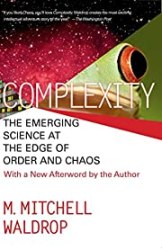
Complexity: The Emerging Science at the Edge of Order and Chaos, by M. Mitchell Waldrop
Helen Waddell, by Felicitas Corrigan

Fiction (non-sf): 9 (YTD 34)
Kramer vs. Kramer, by Avery Corman
Secret Army, by John Brason
Secret Army Dossier, by John Brason
Ordinary People, by Judith Guest
Secret Army: The End of the Line, by John Brason
This Must be the Place, by Maggie O’Farrell
Kessler, by John Brason
Titus Groan, by Mervyn Peake
Zen and the Art of Motorcycle Maintenance: An Inquiry into Values, by Robert M. Pirsig

sf (non-Who): 6 (YTD 92)
Palestine 100: Stories from a century after the Nakba, ed. Mazen Maarouf
Gateway, by Frederik Pohl
Carmilla, by J. Sheridan Le Fanu
To Be Taught, if Fortunate, by Becky Chambers
The Tropic of Serpents, by Marie Brennan
Wild Life, by Molly Gloss

Doctor Who: 1 (YTD 11)
The Knight, the Fool and the Dead, by Steve Cole
B088KQYGBB.01._SX180_SCLZZZZZZZ_[1].jpg

Comics: 6 (YTD 39)
Defender of the Daleks, #1, by Jody Houser and Roberta Ingranata
Survivants, Tome 3, by Leo
Defender of the Daleks, #2, by Jody Houser and Roberta Ingranata
Survivants, Tome 4, by Leo
Survivants, Tome 5, by Leo
For the Love of God, Marie!, by Jade Sarson
DotD1.jpg DotD2.jpg

5,900 pages (YTD 58,800)
9/25 (YTD 69/219) by women (Corrigan, Guest, O’Farrell, Chambers, Brennan, Gloss, Hoser/Ingranata x2, Sarson)
1/25 (YTD 19/219) by PoC (Maarouf)

The best new book of the month was Felicitas Corrigan’s biography of Helen Waddell, which you can get here, but I also enjoyed returning to Gateway, which you can get here, and Zen and the Art of Motorcycle Maintenance, which you can get here. Nothing too awful.

BSFA Short Fiction

This rounds off my BSFA posts this year – see previously how to get the finalists, Best Art and Best Non-Fiction. I’m a Clarke judge this year so won’t comment on the Best Novel finalists, and won’t have time to read the Best YA finalists.

I found it fairly easy to rank these, though I think the vote between my top two will be close.

5) ‘Seller’s Remorse’, by Rick Danforth, Hexagon Magazine, Issue 11

Second paragraph of third section:

At the gloomy door, Sheytl performed his routine of slicking back the hair and a triple knock.

A bit of a Shaggy God story. Our protagonist tries to raise supporters for a dying deity and shenanigans ensue. A bit uneven in writing style.

4) ‘A Moment of Zugzwang’, by Neil Williamson, ParSec #4

Third paragraph (there are no sections):

Wehlstrasse was a quiet street. Seldom frequented stores and cafés lined one side. Along the other, trees evenly ranked like soldiers guarded the low balustrade above the rolling, grey river. They’d proved poor guardsmen, at least as far as Albert Vogel was concerned. Stina had watched the bee footage a thousand times. The old man visible at the edge of the frame making his way down that side of the street, coming and going behind the trees as he approached the bridge. The distinctive bushy beard jutting before him. The slow but steady gait suddenly faltering, the hand going to the jaw is if he’d forgotten something as the induced heart failure had kicked in. The stumble, the lurch. The plummet into the waters below. No witnesses, either in person or online, so no one had come to his aid and his body hadn’t been found until a couple of days later among the Hundred Island reed beds six miles downstream. Bloated, the skin of his extremities wrinkled and nibbled at by hungry critters.

A near-future police procedural about a perfect murder committed despite panopticon surveillance. I’m always a bit wary of future police stories where the boys and girls in blue don’t behave much like real policemen in our timeline, and in addition here the technology is just sufficiently flawed to allow the twist in the plot to happen. God world0building though.

3) Luca, by Or Luca

Second paragraph of third section:

She’s sitting on the stone-cold floor of the shower, folded into herself. She watches the blood run from her wrist and into the drain.

Some good things in this novella: impressive depiction of the two major characters’ psychological and personal issues, and they are brought together neatly at the end. But I did wonder if it actually qualifies as science fiction or fantasy? The unreal elements of the story are explicitly the title character’s hallucinations, which didn’t seem to me to have much direct impact on anyone other than her. I also wasn’t hugely convinced by the setting, a country in the Middle East which doesn’t feel very Middle Eastern.

2) Ogres, by Adrian Tchaikovsky

Second paragraph of third section:

Stunned silence from them. And then… a medley of reactions; quite the range, now you think back on it. Because some still have that core in them, hammered there by church and village life before they did whatever each one did to make them outlaw. Some are shocked that you could even lift a hand against the Masters, let alone shed so much of that vast reservoir of blood that it might kill one. Taboos like that, beat into you from earliest childhood, they don’t get shaken free so easily. Garett, the oldest of them, is pale and shaking his head, and Nell Wilso sucks at her toothless gums. But some of the others, their eyes are lit up. They’re the ones whose crimes were against the property, not of humans but of ogres. They lost that reverence, and maybe they’ve dreamed of doing just what you did every night since. And right then you’re in no position to appreciate it, lost in a welter of guilt and panic, but it’s the first time people look at you like that. Not fond, not exasperated. You’re not the prodigal son or the lovable rogue right then. You’re the hero who slays the monster.

Dystopian agricultural future where an elite minority of big people (the ‘ogres’ of the title) holds the majority of humanity in brutal slavery, and our protagonist discovers the awful truth and begins the overthrow of the system. Enjoyed it, but it didn’t quite convince me.

1) Of Charms, Ghosts and Grievances, by Aliette de Bodard

Second paragraph of third chapter:

When Asmodeus saw the unfamiliar dragon trailing behind Thuan, his hand moved — and came back holding a knife he didn’t bother to hide.

I found this a total delight and it’s getting a firm first preference from me. I didn’t completely get on with the earlier parts of the Dominion of the Fallen series, set in a magically devastated Paris, but this is very digestible; the protagonists are a dragon prince and a demon, and the story has them sorting out a murder mystery where the ghost is still around while also babysitting some very inquisitive children. Unlike ‘A Moment of Zugzwang’, there is no police force to get wrong here, and one has the sense of a small but fascinating incident in a much broader and richly thought out society. I hope it wins.

Elizabeth I and Ireland, ed. Brendan Kane and Valerie McGowan-Doyle

Second paragraph of third chapter (“Elizabeth on Ireland”, by Leah S. Marcus):

In shortchanging Ireland in our volume of Works we were doubtless influenced by an anachronistic view of Britain as comprising its present territories and therefore including Scotland, but not most of Tudor Ireland. We were likewise influenced by the fact that James VI of Scotland went on to become James I of England. But we were, I suspect, also motivated by a desire to present Queen Elizabeth I in a positive light. The project of editing her writings was hatched during the heyday of second-wave feminism: we wanted to show that a woman could demonstrate all the skills and savvy that were usually attributed to men, and Elizabeth was for us a prime example. We avoided Ireland, perhaps, because the story of Elizabeth in relation to Ireland is not, by and large, a success story. Most of Elizabeth’s biographers – especially the most hagiographic among them – have also had disproportionately little to say about Elizabeth in Ireland.

Back in 2009 I had immense fun attending a conference on Elizabeth I and Ireland, held at the Storrs campus of the University of Connecticut. This is the book of that conference, with a number of the papers that were presented, refined for the delectation of an academic audience.

Lots of interesting stuff here. I admit that some of the literature chapters sailed over my head – my Irish is not up to epic poetry, even in short doses, and my tolerance for Spenser is rather low as well. But this is amply compensated by the chapters on politics and what might be called ideology; what did the rulers of Ireland, including Elizabeth herself, think that they were doing, or trying to do? Of course, it’s a messy picture, with individuals located along a spectrum ranging from those who wanted to engineer a durable political settlement to those who were just in it to get as much property as possible. But it’s lovely to have so much evidence, from different perspectives, gathered in one set of covers, and it took me back to that exciting weekend in 2009, of which I still have fond memories.

My not very secret agenda in reading books about Elizabethan Ireland is to look for mentions of my ancestor, Sir Nicholas White, who as Master of the Rolls was one of the leading Irish politicians of the day. I spotted three: Ciaran Brady describes him as one of “the most far-seeing members of the English-Irish elite”, and Valerie McGowan-Doyle mentions him twice, once briefly as the object of a patronage dispute but also quoting at length from one of his letters to Burghley, defending the right of the Queen’s loyal subjects in Ireland to complain about high taxes. All very useful if I ever get my project of writing his biography off the ground.

This was the unread non-fiction book that had lingered longest unread on my shelves. Next on that pile is The Deep State of Europe: Welcome to Hell, by the late great Basil Coronakis.

Sunday reading

Current
The Face of Britain, by Simon Schama
Ratlines, by Stuart Neville
The Kosova Liberation Army, by James Pettifer
υ3
φ3

Last books finished
The Sound of Drums / Last of the Time Lords, by James Mortimer
ρ3
σ3
τ3

Next books
The Weeping Angels of Mons, by Robbie Morrison, Daniel Indro and Eleonora Carlini
Galactic Girl, by Fiona Richmond
Redwood and Wildfire, by Andrea Hairston

The Shape of Water

Back after a bit of a break, this is the 90th post I have done on winners of the Best Picture Oscar. Only five more to go.

The Shape of Water won the 2017 Best Picture Oscar, and three others: Best Director (Guillermo del Toro), Best Original Score and Best Production Design. Four Oscars is a relatively low total haul for a Best Picture winner, but no other film did better that year. The other contenders for Best Picture were Get Out, which I have seen and which won the SFWA Ray Bradbury Award, and Call Me by Your Name, Darkest Hour, Dunkirk, Lady Bird, Phantom Thread, The Post and Three Billboards Outside Ebbing, Missouri. To my surprise, The Shape of Water came only fifth out of six in that year’s Hugos; I voted for it myself, though I also enjoyed Wonder Woman, which won.

The only films I have seen from 2017 are the Hugo finalists, which I ranked as follows from top to bottom: The Shape of Water, Wonder Woman, Star Wars: The Last Jedi, Get Out, Blade Runner 2049 and Thor: Ragnarok. IMDB users rank The Shape of Water 9th and 16th of the year’s films on the two rankings, which is not super high but is better on aggregate than any Oscar winner since No Country for Old Men, a decade previously. Blade Runner 2049 is top of one ranking, and Logan on the other. Other films ahead of The Shape of Water on both metrics are Get Out, It, John Wick: Chapter 2 and Three Billboards Outside Ebbing, Missouri.

Here’s a trailer.

No actors had previously appeared in any Oscar-winning film, or in Doctor Who. (A lot of them are Canadian.) Doug Jones, here the amphibian creature, was also the main non-human in Pan’s Labyrinth, which won the Hugo and Nebula. (We know him also as Captain Saru in Star Trek: Discovery.)

Shout out also to Octavia Spencer, who was in the previous year’s Hidden Figures and got Oscar nominations for both performance, the first African-American actress to do so in consecutive years.

Set in Baltimore in 1962, this is about a humanoid amphibian captured by the US military and brought to a research centre in Baltimore for experimentation. One of the janitors, a mute woman played by Sally Hawkins, falls in love with him and engineers his escape, facilitated by her friend and colleague Zelda (Octavia Spencer), her gay artist landlord (Richard Jenkins) and a disenchanted Russian spy (Michael Stuhlberg). The baddies are the US military personified in the head of the base (Michael Shannon). In the end the amphibian man rescues Elisa, his saviour, from apparent death and she becomes like him and, we are told, they live happily ever after.

I found myself in a surprising debate on Facebook the other day as to whether The Shape of Water is science fiction or fantasy. I must say I had automatically assumed that it is science fiction. A non-human race, albeit from Earth and therefore not alien, getting mixed up with government-funded scientific research – it seemed to me an exact parallel with the Silurians and Sea Devils from Doctor Who, and nobody calls them anything other than science fiction. (Indeed in New Who it turns out that Silurians can have sex with humans too, or at least the females of each species can.)

But I see that the film is generally classified as fantasy, including by the makers, and I suppose the creature’s paranormal healing abilities, and the parallels with the non-human creatures of mythology, establish a case for that reading as well. It’s a live issue for me at the moment as we decide which books are and aren’t science fiction for the Arthur C. Clarke Award.

Anyway. I loved it. I wrote briefly in 2018:

I really liked the detailed paranoid portrayal of the world of 1962, the navigation of race, gender and disability, and the core question of what makes us human at the end of the day. It looks and sounds fantastic.

I will add to that that the acting and direction are also fantastic. There is a great contrast between the explicit but not at all erotic sex between base commander Strickland and his wife, and the erotic but not at all explicit sex between Elisa and the creature. And the music is memorable while also not being at all intrusive.

I’m putting this in the top 20% of my Oscar film rankings, just below Midnight Cowboy and above A Man for All Seasons.

Incidentally, my 3x great-grandfather‘s uncle, Richard Key Heath, had an office on the docks at Baltimore (specifically at the corner of Cheapside, now the intersection of Light Street and Pratt Street). However, The Shape of Water was entirely filmed in Canada and the docks here are not the Baltimore docks of the script but at Hamilton, Ontario.

Now that we’re up to the 90th Oscar winner, I’m going to split my ranking of previous winners by thirds. These are my bottom 30, with those from the last ten years in red:

90) Platoon (Oscar for 1986)
89) The Great Ziegfeld (1936)
88) Cimarron (1930-31)
87) Cavalcade (1932-33)
86) Wings (1927-28)
85) The Broadway Melody (1928-29)
84) All the King’s Men (1949)
83) Argo (2012)
82) Forrest Gump (1994)
81) Patton (1970)
80) Braveheart (1995)
79) American Beauty (1999)
78) The Artist (2011)
77) No Country for Old Men (2007)
76) A Beautiful Mind (2001)
75) Mutiny on the Bounty (1935)
74) The Greatest Show on Earth (1952)
73) Crash (2005)
72) Tom Jones (1963)
71) Gone with the Wind (1939)
70) The Departed (2006)
69) The Hurt Locker (2008)
68) Ordinary People (1980)
67) Kramer vs. Kramer (1979)
66) Gentleman’s Agreement (1947)
65) Birdman (2014)
64) Annie Hall (1977)
63) Going My Way (1944)
62) The French Connection (1971)
61) My Fair Lady (1964)

And the middle 30:

60) Gladiator (2000)
59) How Green Was My Valley (1941)
58) Mrs. Miniver (1942)
57) On The Waterfront (1954)
56) The Godfather, Part II (1974)
55) In the Heat of the Night (1967)
54) Grand Hotel (1931-32)
53) The Life of Emile Zola (1937)
52) Marty (1955)
51) The Deer Hunter (1978)
50) Rocky (1976)
49) Driving Miss Daisy (1989)
48) The Last Emperor (1987)
47) Titanic (1997)
46) Out of Africa (1985)
45) Dances With Wolves (1990)
44) Lawrence of Arabia (1962)
43) Gigi (1958)
42) Slumdog Millionaire (2007)
41) It Happened One Night (1934)
40) You Can’t Take It with You (1938)
39) The Lost Weekend (1945)
38) Hamlet (1948)
37) From Here to Eternity (1953)
36) Around the World in Eighty Days (1956)
35) Ben-Hur (1959)
34) The English Patient (1996)
33) Chicago (2002)
32) Spotlight (2015)
31) The Sting (1973)

And my personal top 30 of the first 90:

30) The Godfather (1972)
29) Unforgiven (1992)
28) 12 Years a Slave (2013)
27) Oliver! (1968)
26) The Apartment (1960)
25) All About Eve (1950)
24) The Best Years of Our Lives (1946)
23) Amadeus (1984)
22) Moonlight (2016)
21) Gandhi (1982)
20) West Side Story (1961)
19) A Man for All Seasons (1966)
18) The Shape of Water (2017)
17) Midnight Cowboy (1969)
16) Terms of Endearment (1983)
15) Shakespeare in Love (1998)
14) Rain Man (1988)
13) The Silence of the Lambs (1991)
12) One Flew Over the Cuckoo’s Nest (1975)
11) The Lord of the Rings: The Return of the King (2003)
10) Million Dollar Baby (2004)
9) The Bridge on the River Kwai (1957)
8) All Quiet on the Western Front (1929-30)
7) Rebecca (1940)
6) Schindler’s List (1993)
5) Chariots of Fire (1981)
4) An American in Paris (1951)
3) The King’s Speech (2010)
2) The Sound of Music (1965)
1) Casablanca (1943)

A somewhat polarising decade for me, with half of the winners in my top third, but four out of ten in my bottom third.

Slumdog Millionaire is the only one of the most recent ten based on a novel. The King’s Speech, Argo and 12 Years a Slave are all based on published biographies or autobiographies. The other seven were original material for the screen, though The Hurt Locker and Spotlight drew to a lesser or greater extent on historical events.

Only six and a half of the most recent ten were set in the United States of America, in .a variety of places: Hollywood (The Artist), Washington and Hollywood (Argo), mostly Louisiana (12 Years a Slave), New York (Birdman), Boston (Spotlight), mostly Miami (Moonlight), and Baltimore (The Shape of Water). The others are set in Mumbai, India (Slumdog Millionaire), somewhere in Iraq (The Hurt Locker), Tehran, Iran (Argo again) and London, England (The King’s Speech) – so two and a half in Asia, and one in Europe.

One of these last ten was set in the 19th century (12 Years a Slave), two mostly in the 1930s (The King’s Speech and The Artist), one in the 1960s (The Shape of Water), one in the 1970s (Argo), one stretching from the 1990s to the present day (Moonlight), two in the recent past (Spotlight and The Hurt Locker) and two in the present day (Slumdog Millionaire and Birdman). I’ll do a tally of historical periods when I get to the end of the whole exercise.

Next up is Green Book.

Winners of the Oscar for Best Picture

1920s: Wings (1927-28) | The Broadway Melody (1928-29)
1930s: All Quiet on the Western Front (1929-30) | Cimarron (1930-31) | Grand Hotel (1931-32) | Cavalcade (1932-33) | It Happened One Night (1934) | Mutiny on the Bounty (1935, and books) | The Great Ziegfeld (1936) | The Life of Emile Zola (1937) | You Can’t Take It with You (1938) | Gone with the Wind (1939, and book)
1940s: Rebecca (1940) | How Green Was My Valley (1941) | Mrs. Miniver (1942) | Casablanca (1943) | Going My Way (1944) | The Lost Weekend (1945) | The Best Years of Our Lives (1946) | Gentleman’s Agreement (1947) | Hamlet (1948) | All the King’s Men (1949)
1950s: All About Eve (1950) | An American in Paris (1951) | The Greatest Show on Earth (1952) | From Here to Eternity (1953) | On The Waterfront (1954, and book) | Marty (1955) | Around the World in 80 Days (1956) | The Bridge on the River Kwai (1957) | Gigi (1958) | Ben-Hur (1959)
1960s: The Apartment (1960) | West Side Story (1961) | Lawrence of Arabia (1962) | Tom Jones (1963) | My Fair Lady (1964) | The Sound of Music (1965) | A Man for All Seasons (1966) | In the Heat of the Night (1967) | Oliver! (1968) | Midnight Cowboy (1969)
1970s: Patton (1970) | The French Connection (1971) | The Godfather (1972) | The Sting (1973) | The Godfather, Part II (1974) | One Flew Over the Cuckoo’s Nest (1975) | Rocky (1976) | Annie Hall (1977) | The Deer Hunter (1978) | Kramer vs. Kramer (1979)
1980s: Ordinary People (1980) | Chariots of Fire (1981) | Gandhi (1982) | Terms of Endearment (1983) | Amadeus (1984) | Out of Africa (1985) | Platoon (1986) | The Last Emperor (1987) | Rain Man (1988) | Driving Miss Daisy (1989)
1990s: Dances With Wolves (1990) | The Silence of the Lambs (1991) | Unforgiven (1992) | Schindler’s List (1993) | Forrest Gump (1994) | Braveheart (1995) | The English Patient (1996) | Titanic (1997) | Shakespeare in Love (1998) | American Beauty (1999)
21st century: Gladiator (2000) | A Beautiful Mind (2001) | Chicago (2002) | The Lord of the Rings: The Return of the King (2003) | Million Dollar Baby (2004, and book) | Crash (2005) | The Departed (2006) | No Country for Old Men (2007) | Slumdog Millionaire (2008) | The Hurt Locker (2009)
2010s: The King’s Speech (2010) | The Artist (2011) | Argo (2012) | 12 Years a Slave (2013) | Birdman (2014) | Spotlight (2015) | Moonlight (2016) | The Shape of Water (2017) | Green Book (2018) | Parasite (2019)
2020s: Nomadland (2020) | CODA (2021) | Everything Everywhere All at Once (2022) | Oppenheimer (2023)

September 2020 books

This is the latest post in a series I started in late 2019, anticipating the twentieth anniversary of my bookblogging at the end of October 2023. Every six-ish days, I’ve been revisiting a month from my recent past, noting work and family developments as well as the books I read in that month. I’ve found it a pleasantly cathartic process, especially in recent circumstances. If you want to look back at previous entries, they are all tagged under bookblog nostalgia.

The highlight of the month was a trip to western Belgium with Anne, staying at my old friend Lex’s R&Breakfast in Roeselaere. This gave rise to several blog posts:

Only later did I realise that part of my attraction to the portrait of the Jonet family may be that I have almost exactly the same age difference with my own daughters.

We also had an appropriately socially distanced work party in a park near the office; I was going in three days a week at this point.

I read only 17 books that month, but some were very long.

Non-fiction: 3 (YTD 41)
An Inland Voyage, by Robert Louis Stevenson
East West Street, by Philippe Sands
Barcelona, Catalonia: A View from the Inside, by Matthew Tree

Fiction (non-sf): 2 (YTD 25)
Bruges-La-Morte, by Georges Rodenbach
The Mirror and the Light, by Hilary Mantel

sf (non-Who): 7 (YTD 86)
Jerusalem: Vernal’s Inquest, by Alan Moore
The Sky Road, by Ken MacLeod
Shadow Scale, by Rachel Hartman
Distraction, by Bruce Sterling
Beren and Luthien, by J.R.R. Tolkien
“Jeffty is Five”, by Harlan Ellison
“Stardance” by Spider Robinson and Jeanne Robinson

Comics: 5 (YTD 33)
Isabelle, by Jean-Claude Servais
Blood Monster, by Neil Gaiman and Marlene O’Connor
Chronin Volume 1: The Knife at Your Back, by Alison Wilgus
Chronin Volume 2: The Sword in Your Hand, by Alison Wilgus
Being An Account of the Life and Death of the Emperor Heliogabolus, by Neil Gaiman

5,000 pages (YTD 52,900)
6/17 (YTD 64/194) by women (Mantel, Hartman, Robinson, O’Connor, Wilgus x2)
None AFAIK (YTD 18/194) by PoC

Standouts this month were Hilary Mantel’s triumphant The Mirror and the Light, which you can get here, and East West Street by Philippe Sands, which you can get here. Bruges-la-Morte by Georges Rodenbach is total rubbish, but you can get it here.

Lyra McKee, and why I split up with the News Letter

I had the great pleasure last night of watching Alison Millar’s documentary, Lyra, about the life and death of journalist Lyra McKee. It’s a tremendous portrait of a committed young woman, killed in the middle of doing her job just before Easter in 2019. The showing was presented by the UK mission to the EU and the Northern Ireland representation in Brussels, as part of the Brussels Irish Film Festival, and Alison Millar was on hand to answer questions both formally and informally. The film is beautiful and I strongly recommend it. Here’s a trailer:

I did not know Lyra McKee myself – she was six years old when I left Northern Ireland – but inevitably we had a lot of mutual friends (38 according to Facebook, I’m sure a lot more in reality), all of whom seem to remember her fondly. She first hit my radar screen in 2013, when she began her research into the murder of Robert Bradford, nineteen years before she was born. This particularly fascinated me because he was our local MP, and he and the caretaker for his office were killed just ten minutes’ walk from our home. Her book was eventually published, available here, an extract here.

In July 2019, three months after Lyra’s death, the News Letter, one of the main Belfast news outlets, ran a front page story revealing that the royalties from the book were going to a non-profit organisation, one of whose directors was a former paramilitary. The article evoked a furious response from Lyra McKee’s publisher and family. I too felt that this was a crappy piece of journalism. A former paramilitary being associated with a non-profit organisation is hardly news and not really interesting, and it was barely relevant to Lyra McKee’s work. The News Letter subsequently successfully defended a libel case, with the defence that the article was true (or at least, that the points complained of in the article were true). But what is true is not always right, even without considering the innuendo in the piece.

Over the previous few years I had written a few pages of political analysis for the News Letter in advance of each election in Northern Ireland, often featuring on the front page of the newspaper’s election specials. But I felt very uncomfortable about what they were now putting on the front page. I wrote to the then editor, saying that in my view the article was “sensationalist and did not serve the public interest. I am very disappointed. I thought you were better than that.” Consequently, I permanently severed my relationship with the newspaper. I am all in favour of being part of a broad spectrum of voices, but only if I can feel confident in the ethical values underlying the editorial choices being made.

I haven’t discussed any of this in public previously because fundamentally it’s not really about me. But I had the chance to tell the brief story last night to Alison Millar, and now that I’ve ticked that box I may as well go public here.

Peculiar Lives, by Philip Purser-Hallard

Second paragraph of third chapter:

He had put his mother, a highly intelligent woman of German parentage, through a long and difficult confinement: she had died a few days after his birth, leaving Percival in the care of his father and aunt. Theirs was a modestly well-to-do Cornish family, whose ancient Celtic stock had been infused, perhaps since pre-Roman times, with the blood of successive exotic visitors to Cornwall’s shores. Percival’s father, who had been a child at the time of the Great War, joined up soon after the more recent hostilities were declared, and died in France when Percival was twelve.

A book in the series based on Honoré Lechasseur aka the Time Hunter, a character from Daniel O’Mahoney’s Telos novella, Cabinet of Light, which I see I read in April 2017 but never wrote up here. This particular one is a bit of a homage to Olaf Stapledon; I’m afraid I felt it was too invested in a fandom that I don’t share, and it went over my head. You can get it here.

This was the shortest unread book that I acquired in 2016. Next on that list is Galactic Girl, by Fiona Richmond.

BSFA Best Non-fiction

Five finalists here, three of them online essays and two monographs. I found it pretty easy to rank them, and I will be very surprised if voters choose something other than my own first preference. (Having said that, I was surprised last year!)

5) “Preliminary Observations From An Incomplete History of African SFF”, by Wole Talabi

Second paragraph of third section, with footnotes and graphs:

The database contains 30 nationalities represented by 497 authors, but Nigeria and South Africa make up more than 73% of the works. Reasons for this are likely colonial legacies of proximity to Western publishing, size, economics, etc. Looking at this in the context of population[3] and gross domestic product (GDP)[4] and limiting to countries with total works having proportional significance (> 1%), it’s clear that these are key factors in the trend, and the number of works is most strongly correlated to GDP with a linear regression R2 value of 0.97. South Africa produces a lot more than its population would suggest, and Ghana and Tanzania produce less.
[3] Based on the United Nations (UN) official 2021 statistics.
[4] Estimates for 2022 from the International Monetary Fund (IMF).

I’m always up for a good bit of statistical analysis, and this has some decent crunchy numbers about science fiction in Africa. I must say that I am surprised to see so little from Francophone countries (let alone others) and wonder if there is some selection effect going on. The writer disarmingly admits up front that it is incomplete.

While I found it interesting, I’m not ranking it higher than fifth out of five. The main text has less than 1100 words.

4) “Too Dystopian for Whom? A Continental Nigerian Writer’s Perspective”, by Oghenechovwe Donald Ekpeki

Third paragraph (there are no sections):

It has often been surmised, most especially around discussions of war, climate change, natural disasters, and more recently the outbreak of COVID-19, in articles like this in Wired and on The Apeiron Blog we are living in a dystopia. This realization has weaned many of the need for apocalyptic, post-apocalyptic, and dystopian fiction, and has them preferring instead to immerse themselves in lighter, more upbeat and positive work. This is of course valid, as we all must do what we feel right. But beyond personal preferences of individuals for lighter, “happier” works in this period of gloom, there is a wider and more general assertion that dystopias, apocalypses, grimdark, dark fantasy, and the like are now unnecessary because we live in and have it all around us. A Publishers Weekly piece talks about dystopian fiction losing its lustre due to the pandemic and spells doom for the subgenre of doom. But is this really so? In a viral tweet, the account tweets its disagreement, which I quite agree with, saying that “Dystopian fiction is when you take things that happen in real life to marginalized populations and apply them to people with privilege.” The dystopian reality is not new and has been with us for a while. Its fictionalizing continues till date despite those debates regarding its relevance or necessity.

Another very interesting piece, making the point that a lot of concepts which European and US writers consider to be the stuff of dystopian fiction are happening right now in the reality of Africa, specifically in Nigeria. It’s an important perspective and I hope people read it. I’m marking it down, however, for two reasons: first, it could have done with a bit of editorial smoothing – it reads rather first draft-y (even the above paragraph shows this); second, again, it is rather short (3100 words) and I prefer the BSFA Award for Non-Fiction to celebrate substantive contributions.

3) “The Critic and the Clue: Tracking Alan Garner’s Treacle Walker“, by the much-missed Maureen Kincaid Speller

Second paragraph of third section:

Similarly, Garner has ranged back and forth in time. The Stone Book Quartet (1976–8), ostensibly about Garner’s own family—and its cantankerous patriarch, the stonemason, Robert—brought with it the first hint of Garner’s interest in deep time. When Robert takes his daughter, Mary, under Alderley Edge to visit a chamber whose clay floor is marked by thousands of footprints, representing all the Garners who has visited it, we are asked to marvel at this sense of continuity. It is presented as a family rite of passage, although so far as anyone knows, there was no actual family ritual of this sort.

One of MKS’s last bits of criticism, this is a detailed examination both of the reception and of the content of Alan Garner’s recent novel, ending with a reflection on the role of the critic which is perhaps a suitable envoi for her own career. Over 8,000 words, which is getting a bit more substantial compared to the two above. I have not read Treacle Walker, and to be honest Maureen’s review doesn’t strongly incline me to do so. But I like her ending:

As I’ve noted, disagreeing is very much part of the critical process. And reviews are part of the critical process too, even if, in this instance, they do not offer that much critical insight into the novel.

And it is the insight I’m in search of, both when I read criticism and when I write it. I’m not interested in whether X likes a novel, any more than you should be interested in whether I dislike a novel. The questions should always be, “What is this piece of fiction doing, does it work, and if not, why not?” Everything else unfolds from that.

2) Management Lessons from Game of Thrones: Organization Theory and Strategy in Westeros, by Fiona Moore

Second paragraph of third chapter:

The first type of leadership theories we will be considering are the earliest to emerge, largely between the 1920s and the 1960s, and are known as “behavioural theories of leadership”. What they have in common is that they generally assume (a) that there are leaders (as opposed to followers); (b) that leaders can be identified and classified into types; and (c) that those types can be defined by certain ways of behaving. Despite their age, they also, more or less overtly, still tend to have a strong influence on popular management literature and leadership teaching, and some of them have passed into popular culture with regard to leaders and leadership.

Fiona Moore is a professor of Business Anthropology in her day job, and a fan and critic on the side (at least I think it’s that way round), and this is her elucidation of some of the principles of basic management theory as they are demonstrated in the TV series Game of Thrones, with occasional reference to the books where needed. It’s always useful for someone like me to see some of the principles I find myself engaged with at work applied in fiction, so in a sense the book ticks both a fannish box and a professional box for me. Also mercifully short.

1) Terry Pratchett: A Life with Footnotes, by Rob Wilkins

Second paragraph of third chapter:

Granny Pratchett, Terry’s paternal grandmother, rolled her own cigarettes. Then, having smoked them, she would take the butts from the ashtray, pick the paper apart and return any strands of unburnt tobacco to the tin where she kept her supply. Waste not, want not. As Terry wrote in a short essay about her in 2004, ‘As a child this fascinated me, because you didn’t need to be a mathematician to see that this meant there must have been some shreds of tobacco she’d been smoking for decades, if not longer.’

This is also a very good book about a very important subject. A lot of us know parts of the Terry Pratchett story – I first heard him speak in public in Cambridge in, I think, 1987, and last saw him at the 2010 Discworld Convention, and spoke to him a couple of times in between. It’s lovely to have it all between two covers, with the laughs and the tears, and with Rob also explaining the complicated nature of his relationship with Terry over the years, beginning as amanuensis and ending as nurse. At 439 pages, it’s easily twice as long as the other four finalists combined, and also surely has more weight and relevance than the other four combined; I am voting for it and I expect that others will do so as well.

I’m conscious that I have ranked these in order of increasing length; but to be honest, if we are ranking finalists by the extent of their contribution to our appreciation of the genre, length is an important indicator of the magnitude of that impact. It’s nice that the BSFA final ballot has a certain diversity of form, but it doesn’t always turn into a fair comparison for the shorter pieces.

Pale Fire, by Vladimir Nabokov

Second paragraph of third section:

My knowledge of garden Aves had been limited to those of northern Europe but a young New Wye gardener, in whom I was interested (see note to line 998), helped me to identify the profiles of quite a number of tropical-looking little strangers and their comical calls; and, naturally, every tree top plotted its dotted line toward the ornithological work on my desk to which I would gallop from the lawn in nomenclatorial agitation. How hard I found to fit the name “robin” to the suburban impostor, the gross fowl, with its untidy dull-red livery and the revolting gusto it showed when consuming long, sad, passive worms!

The only Nabokov book I knew before this was Lolita. Pale Fire is very different. It’s an international political murder mystery told through the medium of footnotes to an epic poem. I have to confess that I really wondered what the heck was going on, until it all became clear quite late in the day. It’s a great example of an unreliable narrator who reveals unwittingly what is really going on – rather like Humbert’s unwitting self-revelation in Lolita; I wonder if this is a common theme for Nabokov? Anyway, I enjoyed it more than I expected at first. You can get it here.

This was my top unread book acquired last year and my top unread non-genre fiction book. Next on those piles respectively are My Family and Other Animals, by Gerald Durrell, and The Man Who Died Twice, by Richard Osman.

Sunday reading

Current
The Face of Britain, by Simon Schama
ρ3
σ3
The Sound of Drums / Last of the Time Lords, by James Mortimer

Last books finished
Of Charms, Ghosts and Grievances, by Aliette de Bodard
Ogres, by Adrian Tchaikovsky
The HAVOC Files: The Laughing Gnome, ed. ?Shaun Russell
ο3
The Best of Ian McDonald
Kerblam!, by Naomi Jacobs and Thomas L. Rodebaugh
π3
William Wordsworth and Annette Vallon, by Émile Legouis

Next books
Galactic Girl, by Fiona Richmond
Ratlines, by Stuart Neville

Enoch Burke, attention-seeker: what the judges said

I don’t know to what extent the tedious case of Enoch Burke has been covered outside Ireland, or Irish circles. He is currently at the centre of a series of court cases surrounding his misconduct as a teacher at a school in central Ireland. Last May a pupil at the school came out as trans and requested the school to use a new name and they/them pronouns. Burke – who did not actually teach any classes including the child in question – wrote to the principal of the school saying that he was not prepared to do so, spoke angrily about the issue at a staff meeting and then disrupted a school religious service by heckling the principal and the local bishop in front of the pupils.

The school suspended him as a teacher and and then fired him, on the grounds of misconduct, but he continued to turn up to the school demanding to be allowed inside to continue teaching. The police and court system got involved; he continued to defy court orders to tell him to stay away from the school and ended up in prison for contempt of court for several weeks before Christmas. After he was formally fired in January, he continued turning up at the school, and was arrested when he went inside. The court has now imposed a fine of €700 per day for each day he turns up at the school premises; he now owes the school over €24,000.

The usual suspects are trying to make a case that this crazy bigot who refuses to give assurances that he will not harass a child who is going through a difficult phase of their life, disrupted a religious service, attempted to intimidate his colleagues and their pupils and has repeatedly defied the law, is in fact a heroic martyr for the cause of free speech and standing up for the principle that biological sex is real. Although it should be noted that Fred Phelps Jr of the Westboro Baptist Church thinks he has ‘gone too far’, which is a line you won’t see often.

I read with interest the rulings of three judges on the Court of Appeal who threw out Burke’s attempt to overturn the previous judgements against him on 7 March. (The Burke family disrupted the Court of Appeal session and had to be removed by police. Since then, Burke lost another case last week.) The three judges take somewhat different routes to arrive at the same conclusion.

The most interesting judgement is from Justice John A. Edwards. You can read it in full here. He goes in some detail into the history of Irish legislation on recognising gender transition, particularly the Foy case, which I wasn’t really aware of. He then looks at cases of people taking controversial stances of conscience, including (rather to my delight) Eric Liddell in Chariots of Fire. He makes this important point:

Conscientious objections are to be taken seriously. Beliefs sincerely held are to be respected, whether they be on social or religious or other principled grounds. All the more so, where the beliefs on which the objection is founded, and the right to express them, are supported by personal rights guaranteed to the citizen under the Constitution, and perhaps also under international instruments. However, nobody has a monopoly on rights and rights such as freedom of conscience, the right to free profession and practice of religious belief, and freedom of expression are not wholly unqualified rights. Further, those rights may intersect with the same or other rights, arising under the Constitution or otherwise, of others who do not share their beliefs.

If you are in the mood for it, the two other rulings bear reading too. The President of the Court of Appeal, George Birmingham (who in a previous life was Ireland’s first ever Minister of State for EU Affairs, back in 1986), mainly looks at the legal technicalities (because the Court was looking at alleged failures of procedure, according to the Burkes, in the previous court rulings). You can read his judgement here. But he too makes some very important points of wider application. I was struck by this at the end:

It seems to me that the approach of the school is very much in accordance with wider public policy as articulated in legislation such as the Gender Recognition Act 2015. That Act is not directly applicable in the circumstances of this case, as the pupil involved, being under 18 years of age, has not applied for and is not in a position to apply for a gender recognition certificate. However, it is part of the statute law of the State, and is, to a degree, I believe, declaratory of public policy. The long title of the Act is that it is “An Act to recognise change of gender; to provide for gender recognition certificates; to amend the Irish Nationality and Citizenship Act 1956, the Civil Registration Act 2004, the Passports Act 2008 and the Adoption Act 2010; and to provide for matters connected therewith.” Against the background of the statute law of the State, it seems clear to me that the decision of the principal and of the school is in no sense an outlier.

Isn’t it interesting that Ireland has come to the stage where recognising transgender people for who they are is seen by a 68-year-old senior judge as the default, and the behaviour of the Burkes is in every sense an outlier?

Finally, Justice Maire Whelan, formerly the second longest-serving attorney-general in the history of the Irish state, whose own appointment to the court in 2017 was somewhat controversial, weighs in on the school’s ethos and duties to its pupils, and Burke’s failure to respect either. One of the points of interest of the case is that the school is actually a Protestant school by background, run by the Church of Ireland. The village where the school is located has a total population of less than 200, and only 2% of the 95,000 population of the whole of County Westmeath identify as Church of Ireland, so it seems likely that the school takes in pupils of other faiths and none. (My research, not Justice Whelan’s.) Justice Whelan looks at the role and responsibilities of the school and of Enoch Burke, and comes down very firmly on the side of the school.

Contrary to Mr. Burke’s contentions the safety, health and welfare of the individual student is of central importance in this case. In was incumbent upon the school to ensure that a parental request that respect be afforded by the school for the diversity arising should be accommodated in accordance with the school’s own Admission Statement and characteristic spirit.  As stated above, both the school and Mr. Burke stood in loco parentis to the student. It was incumbent upon the school to ensure that no conduct, by act or omission, as might cause harm or be potentially discriminatory or that could impact detrimentally upon the student in question or the student body would be engaged in…

Leaving aside all legislation, the school and its Board had continuing and significant common law obligations towards children in respect of which it stood in loco parentis.  Mr. Burke himself had – and continues to have – like obligations at law… 

Further parents and students were entitled to expect that no individual student would be at risk of less favourable treatment than their peers, of being left vulnerable to discrimination, of not being accorded or treated equally with other students in terms of their human dignity by virtue of the potential conduct of a teacher in the school.  The school having adopted its mission statement and statement of ethos as it was required to do by statute was bound by its terms.  Not alone was it not open to the school, by omission, to resile from its obligations but, in my view, it had a positive duty to defend and vindicate the school policy in circumstances where a clear risk had been identified in the conduct of Mr Burke which was capable of visiting discrimination and/or impacting detrimentally on the welfare of the student body in general and the individual student in particular. That was particularly important where the school was one which in the very words of Mr Burke “ all teachers have interaction with all pupils”.

It is powerful stuff. Apparently several St Patrick’s Day parades yesterday featured floats mocking Burke’s removal from the school and the High Court by Gardaí, to cheers from the crowds. Ireland has changed.

(Though I hope that the student is getting the necessary support from their family and community. They did not pick this fight, and just want to live life as their own self.)

August 2020 books

This is the latest post in a series I started in late 2019, anticipating the twentieth anniversary of my bookblogging at the end of October 2023. Every six-ish days, I’ve been revisiting a month from my recent past, noting work and family developments as well as the books I read in that month. I’ve found it a pleasantly cathartic process, especially in recent circumstances. If you want to look back at previous entries, they are all tagged under bookblog nostalgia.

The month began grimly, with the notorious 2020 Hugo Awards ceremony unfolding in the early hours of 1 August (in my time zone). I think we have to be clear that it went very badly wrong. Having put many hours of my own time into working on the awards that year, I felt personally that my efforts had been thrown back in my face. The fact that the first actual Hugo winner was not announced until more than an hour into the ceremony demonstrated a fundamental lack of respect for the people who should have been at the heart of the occasion. (Not to mention the rest of us.)

There was some emotional high points of the grim evening, however, and the one that will linger with me was Neil Gaiman’s acceptance speech for Good Omens.

I blogged about the Hugos, the Retro Hugo trophies and the Retro Hugos that weren’t; I also blogged about famous Welsh lesbian Amy Dillwyn, who was a distant relative; the Lib Dem leadership election; and the Bible and the Bechdel test.

This was another month when, due to the pandemic, I did not leave Belgium, but I plucked up my courage to go to Train World with U for a Paul Delvaux exhibition.

Also culturally, Anne and I went to the Fondation Folon south of Brussels, which I strongly recommend.

And I had an exciting physical meeting with an EU official.

I made one last local video on a cartographic curiosity.

Not so many books this month – several were very long, and my demi-commute hit my reading.

Non-fiction: 1 (YTD 38)
From Barrows to Bypass: Excavations at West Cotton, Raunds, Northamptonshire, 1985-1989, by Dave Windell, Andy Chapman and Jo Woodwiss

Fiction (non-sf): 5 (YTD 23)
Our Mutual Friend, by Charles Dickens
Jerusalem: The Boroughs, by Alan Moore
One Flew Over the Cuckoo’s Nest, by Ken Kesey
Wolf Hall, by Hilary Mantel
Bring Up the Bodies, by Hilary Mantel

sf (non-Who): 3 (YTD 79)
A Boy and His Dog, by Harlan Ellison
Jerusalem: Mansoul, by Alan Moore
The Conqueror’s Child, by Suzy McKee Charnas

Comics: 1 (YTD 28)
Star Wars IV: A New Hope, by Roy Thomas and Howard Chaykin

Doctor Who: 2 (YTD 10)
The Secret in Vault 13, by David Solomons
The Maze of Doom, by David Solomons

3,700 pages (YTD 47,900)
4/12 (YTD 58/177) by women (Woodwiss, Mantel x2, McKee Charnas)
None AFAIK (YTD 18/177) by PoC

Best books this month were the first two volumes of Hilary Mantel, Wolf Hall (which you can get here) and Bring up the Bodies (which you can get here), and One Flew Over the Cuckoo’s Nest (which you can get here).

Hugely unimpressed by Dickens’ Our Mutual Friend (which you can get here).

Wild Cards: Deuces Down, ed. George R. R. Martin

Second paragraph of third story (“Walking the Floor Over You” by Walton Simons):

A lot of the customers were smoking, but Carlotta’s routine was doing the opposite. It wasn’t the material, and her delivery was spot on. Well, as good as it ever was, anyway.

The last of the books I got with the Zelazny Humble Bundle in early 2016, an anthology of vaguely linked stories in the Wild Cards series. I quite liked the first one, “Storming Space” by Michael Cassutt, about a secret space programme. None of the rest was particularly special, and one of them, “Promises”, by Stephen Leigh, really annoyed me.

“Promises” is set in Rathlin Island, off the coast of Northern Ireland, and like the rest of the Wild Cards stories the background is that an alien virus has infected a small but significant proportion of humanity with superhuman (or just inconvenient) powers. The major infection was in New York in 1946 but it turns out that there was also a smaller infection in Belfast in 1962. The infected “jokers” have been isolated on Rathlin Island.

So, two points of detail. First of all, although it is made clear that Rathlin Island and Northern Ireland as a whole are still part of the UK in the 1990s (as in our own dear timeline), the local police in Northern Ireland are referred to as the “garda” (sic). As many of you know, the Garda Síochána are the police in the Republic; “garda” is not a viable Irish translation of either “Royal Ulster Constabulary” or “Police Service of Northern Ireland”. (That would be “póilíní”.)

Also, one of the protagonists talks casually about how she could have got an abortion in Belfast in 1962. I know we are in alternate history here, but I can’t see the late Brookeborough government suddenly legislating to overturn the Offences Against the Person Act 1861 even under alien attack.

On top of that the ebook is badly formatted, as is the case with other ebooks in the Humble Bundle published by the now defunct iBooks.

Deuces Down was republished by Tor.com in 2021 with more stories and a linking narrative, and reviews suggest that this has been a significant improvement. You can get the new version here.

This was both my top unread book acquired in 2016 and the sf book that had lingered longest on my unread shelves. Next on those piles respectively are The Face of Britain, by Simon Schama, and The Best of Ian McDonald.

Roadside Picnic, by Arkady and Boris Strugatsky

Second paragraph of third chapter:

— Мы всё это учтём, — сказал наконец Нунан, дорисовав десятого для ровного счёта чёртика и захлопнув блокнот. — В самом деле, безобразие…“We’ll keep all that in mind, Valentine,” Noonan said finally, finishing his tenth doodle for an even count and slamming his notebook shut. “You’re right, this is a disgrace.”

One of the classic sf works of Eastern Europe, well indeed of the world, which I realised that I had never actually read in English – when living in Germany in 1986 I bought a German translation, which is probably the most recent work of any length that I have read in German.

I enjoyed it more than I expected. There have been some notable incomprehensible alien incursion stories since, thinking of Ian McDonald, Jeff VanderMeer and Tade Thompson in particular, but this is the first really detailed exploration of what the SF Encyclopedia calls a Zone. The aliens have come and gone, leaving obscure and dangerous objects for us to look at and attempt to exploit; the effect this has on the immediate human society of those who try to explore it is brutally depicted. It’s interesting that the characters are coded as Americans, even in the original Russian. It’s also mercifully short. You can get it here.

This was my top unread sf book. Next on that pile is A Marvellous Light, by Freya Marske.

BSFA Best Art

This year, because I am a Clarke judge, I won’t have time to read the BSFA Awards’ YA category and I also won’t be commenting on Best Novel. But that still leaves three categories, and the easiest in term of research is Best Art. It’s also easy in that all six finalists are book or magazine covers, and indeed four of the six feature single human or humanoid figures as the centre of attention. (One of the other two is centred on a single non-humanoid creature, and the other has two humanoids.)

6) You’ve got to start winnowing them down somewhere, and I’m afaid my last place goes to Vincent Sammy’s cover of Parsec 4. We lose a bit by not seeing the hooded central figure’s face, and there’s something not quite right about the dynamics of the posture. (Also, though this is hardly the artist’s fault, I was surprised to see a couple of pilcrows ¶¶ on the cover text.)

5) Jay Johnstone’s cover of The Way the Light Bends, by Lorraine Wilson, has a very pretty dragonfly with Celtic knotwork, but others are more eloquent.

4) There’s a lot to like about Alyssa Winans’ cover of The Red Scholar’s Wake, by Aliette de Bodard, with the central couple of the story in front of a starscape, their attention on each other. In the end I just like the others a little more.

3) Manzi Jackson’s cover for Africa Risen: A New Era of Speculative Fiction, edited by Sheree Renée Thomas, Oghenechovwe Donal Ekpeki and Zelda Knight, has a young woman in a spacesuit regarding us implacably from a flower-filled dell. I hope there is a good story there.

2) There is clearly a story in Miguel Co’s cover for Song of the Mango and Other New Myths, by Vida Cruz-Borja. It’s graphically the simplest of any of the finalists, but I feel that it says a lot very economically.

1) Fangorn/Chris Baker’s cover for Shoreline of Infinity 32, edited by Teika Marija Smits, hints not just at a story but at a whole universe. On the front we see a feminine robot, plugged into the ceiling (which itself is held up by classical columns), examining a fragment which seems suspended in space; but over on the back cover, we see that this is just part of a wider scene with two more sprawled robots, various discarded pieces of equipment and several masks, and you know that there is more going on. It gets my vote.

The Number Mysteries: A Mathematical Odyssey Through Everyday Life, by Marcus du Sautoy

Second paragraph of third chapter:

From ancient civilizations all around the world we have a fascinating assortment of games. Stones thrown in the sand, sticks tossed in the air, tokens placed in hollows carved into wooden blocks, hands used to compete, pictures drawn on cards. From ancient mancala to Monopoly, from the Japanese game of go to the poker tables of Vegas, games are invariably won by whoever is best at taking a mathematical, analytical approach. In this chapter I will show you how maths is the secret to the winning streak.

I read another of du Sautoy’s books twenty years ago in my early book-blogging days. This one is a straightforward romp through various bits of mathematical theory – prime numbers, topology, probability, cryptography and dynamics. I didn’t learn a lot from it, but it is breezily done and will probably appeal to smart older kids who are presumably the target audience. You can get it here.

This was my top unread book acquired in 2016. Next on that pile is Deuces Down, edited by John Jos. Miller.