The cost of water has gone up again. And I heard on the news today that more water peddlers are being killed. Peddlers sell water to squatters and the street poor—and to people who’ve managed to hold on to their homes, but not to pay their utility bills. Peddlers are being found with their throats cut and their money and their handtrucks stolen. Dad says water now costs several times as much as gasoline. But, except for arsonists and the rich, most people have given up buying gasoline. No one I know uses a gas-powered car, truck, or cycle. Vehicles like that are rusting in driveways and being cannibalized for metal and plastic.
I discovered to my surprise, after reading the Hugo-winning graphic adaptation of this classic novel in 2021, that I had not read the original version, though I had read the Nebula-winning sequel soon after it came out and again in 2009. It’s of special interest right now because the first part of the story is set this year, starting on 20 July 2024 (the 65th anniversary of the Apollo 11 moon landing), though it runs through to 2027.
On the one hand it’s a grim narrative of the disintegration of society in an all too credible future, where the state no longer protects people against each other, climate change is out of control and the narrator’s safe home enclave becomes steadily less safe. There are some gruesome moments of psychological and physical horror, and the whole situation seems a lot more plausible now than it must have done in 1993 (which was the exact time that the Republican Party declared war on the Constitution).
At the same time the narrator, Lauren Olamina, is a symbol of hope, founding a new belief system that allows her and her found family, her tribe, to start rebuilding society for the future. The book ends on a note of optimism despite the horror. One can question how realistic it is that even the most gifted eighteen-year-old could start a successful religious movement for the long term, even (especially?) under such extreme circumstances, but great stories are often written about unlikely events. You can get it here.
Not surprisingly, an easy Bechdel pass, with the narrator and her stepmother discussing the stars in the first chapter.
This was my top unread sf book, my top unread book by a woman and my top unread book by a non-white author. Next on those piles respectively are Hard to Be a God, by Arkady and Boris Strugatsky; The Virgin in the Garden, by A.S. Byatt; and Fevered Star, by Rebecca Roanhorse.
The Enigma machine was revolutionary, but actually, the principle that it worked on was as old as the centuries. Despite the technological sophistication, it was still all about substituting one letter for another. The encryption puzzles in this section are intended to reflect the patient discipline that Bletchley codebreakers had to acquire. Especially when facing the prospect of diving into a vortex of chaos.
(Actually read a few weeks ago but the review lingered in drafts for longer than it should have.)
A breezy collection of puzzles, aimed perhaps at older teenagers, with lots of stories about what life was like for the men and women who worked at Bletchley Park during the second world war. A lot of people are into the Bletchley Park fandom and I guess this will feed those cravings and also provide some intellectual stimulation. You can get it here.
Several friends have parents (or older relatives) who worked at Bletchley Park; I’ve had two very minor and remote personal connections – first, John Herivel went back to Belfast after the war and set up the History of Science programme from which I believe I was the first PhD student several decades later (long after he had retired); second, Mavis Batey herself posted a comment on my Livejournal in 2005 when I reviewed her book about Alice in Wonderland (she would have been 84 then, and died in 2013).
Lewis Carroll So glad you liked the Story Of Alice . There were no reference footnotes because it was all my own research as a local historian and Carroll admirer. Yes Christ Church is a wonderful place. My husband was Treasurer of Christ Church and his rooms looked over Alice’s garden . In many ways the donnish creatures hadn’t changed much since Carroll’s days and I suppose you might say with Humpty Dumpty ‘You’ve been listening at doors- and behind trees- and down chimneys – or otherwise you couldn’t have known it’ Mavis Batey.
This was the non-fiction book that had lingered longest unread on my shelves. Next on that pile is a photograph album, Ara Güler’s Istanbul.
His dreams were filled with stars: the great river of the Milky Way as seen from the desert, and the fireflies of spaceships and habitats in low earth orbit that shone just overhead.
Interesting setting, well realised, but I’m not a big fan of cute robots. Mercifully short. You can get it here.
Envious of all my US-based friends who managed to catch the eclipse yesterday. Back in August 1999, we saw that year’s eclipse with Anne’s parents, a very small F (just two and a half weeks old) and two-year-old B who could still talk a bit at that stage. We fought through traffic which had come from most of Northern Europe and eventually came to rest just outside Guise. Clouds covered the sky as the light dimmed and eventually totality fell. B commented “Dark”, and then, thoughtfully, “Sunset”. The clouds broke just as totality was ending and we had a good view of the “diamond ring” effect, and of the rest of the partial phase. It was pretty amazing.
I must admit I’m looking now at options for northern Spain or western Iceland on 12 August 2026…
Current How Democracies Die, by Steven Levitsky and Daniel Ziblatt The Adventures of Amina al-Sirafi, by Shannon Chakraborty Conversion, by Al Ewing et al Reminiscences of a Bachelor, by Sheridan Le Fanu
Last books finished All These Worlds, by Niall Harrison The Code of the Woosters, by P.G. Wodehouse Kinda, by Frank Collins De verdwijning, by Guido Eekhout
Next books Doctor Who: The Church on Ruby Road, by Esmie Jikiemi-Pearson DOOM 94, by Janis Jonevs Foxglove Summer, by Ben Aaronovitch
‘What the devil…?’ the Judge demands, springing out of bed like a suddenly switched on fountain. ‘Why is that ruddy Gulgul cavorting about naked in my garden like a sturdy gazelle?’
I hugely enjoyed Anuja Chauhan’s story of an Indian parliamentary by-election, Battle for Bittora, when I read it in 2014. As a respite from Hugos last month, I sought out her top book on Goodreads, Those Pricey Thakur Girls, and devoured it fairly quickly. Romance novels are not my usual fare, but sometimes it’s good to have a change.
To my surprise, though published in 2013, the book is firmly set in a specific few months of 1988, with a major subplot being the male love interest’s attempts to hold a government minister accountable for the deadly pogrom against Delhi’s Sikhs in the aftermath of Indira Gandhi’s assassination four years before. This is grim stuff for a romantic comedy, and I felt that the author did it justice.
Otherwise, it’s a nicely observed comedy of manners, as the fourth of Judge Thakur’s five beautiful daughters, newly hired as a TV newsreader on India’s main evening bulletin, navigates her romantic destiny, finding her backbone as well as her love. There is a healthy dose of political scepticism too, but the main thrust of the humour is in the character observation.
No actual sex on page (unlike Battle for Bittora) but lots of more than significant glances and fragile egos needing any support they can get. I didn’t like it as much as Battle for Bittora, but then I liked Battle for Bittora a great deal. You can get Those Pricey Thakur Girls here.
Not surprisingly, an easy Bechdel pass, with the two youngest sisters discussing how to get smart for a TV appearance in the middle of the first chapter.
The novel is in English, but the 2015 TV series based on it is in Hindi and you can find every single one of the 150 episodes on Youtube. (Five 25-minute episodes every week for more than six months! Phew!) Here’s the trailer.
I do not like the London Underground. I do not like the noise of the tracks, the rush of warm air that heralds the approaching train, the throngs of people, the brush of synthetic clothing on my hand as someone passes too close. I do not normally use the London Underground, but the AutoBus will not be an efficient mode of transport at this time of day, so I am given no choice.
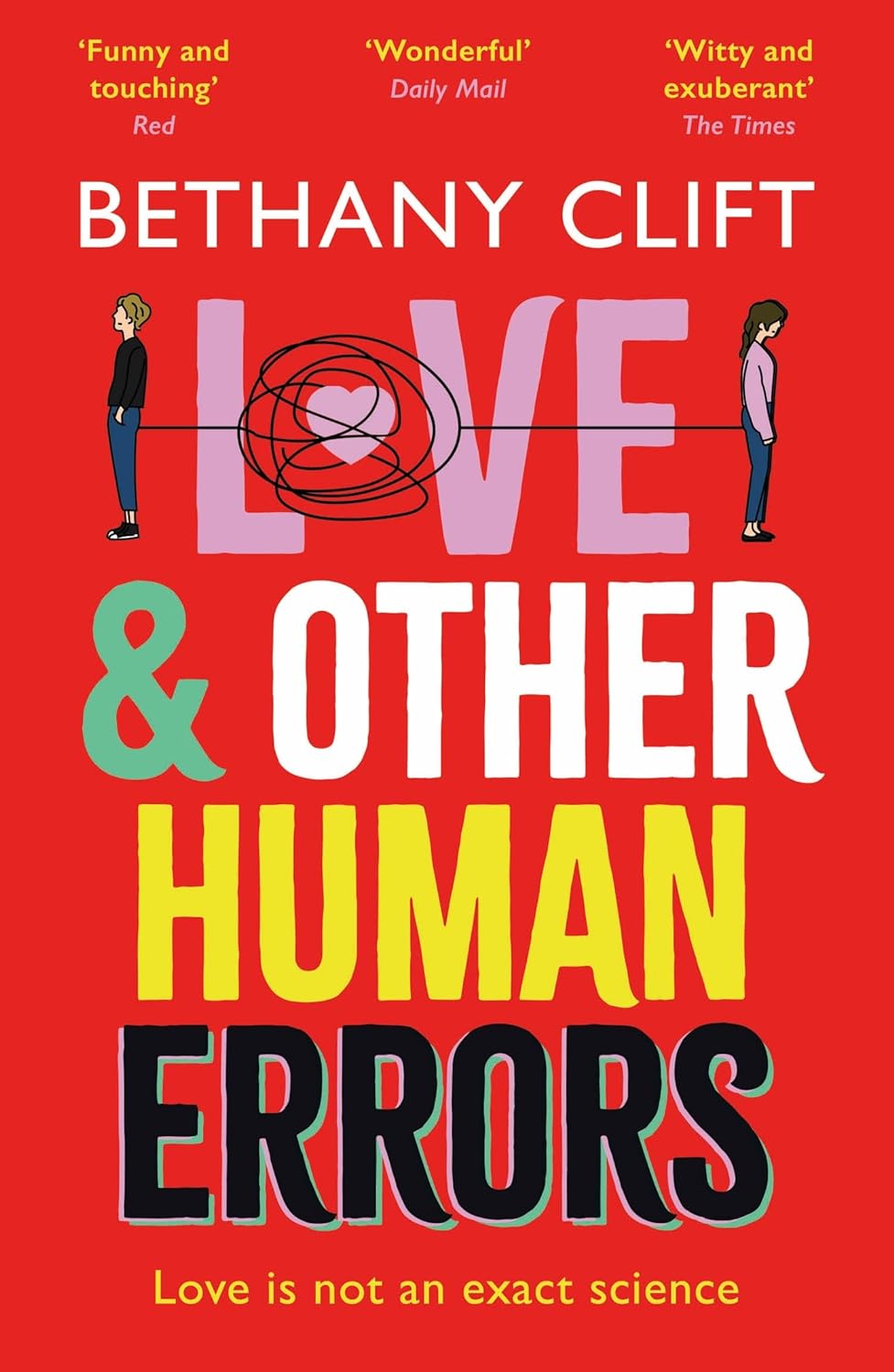
I really enjoyed this story of AI and dating algorithms, but I did not push it for the Clarke shortlist let alone the award – plotwise, it’s obvious what is going to happen from a very early stage, and it does indeed duly happen. I enjoyed the ride but I won’t claim it as Great Literature. A really nice palate-cleanser. You can get it here.
My cousin Wick Hoffmann has done a lovely write-up of the life of his grandfather, my great-great-uncle Morris Shallcross Wickersham (1872-1962). A lot of it is just family detail of interest only to us relatives, but there was one point that jumped out at me from Morris’s diary for 1952, when at the age of 80 he flew across the Atlantic for the second time, to visit his sister Lily in London and his niece, my grandmother Dorothy Whyte, in Northern Ireland. (The image is of Wick’s transcript of his grandfather’s notes.)
The first thing that jumped out at me was the price of an air ticket from New York to London – $395 single, $711 return. Today’s dollar prices are generally a bit more, but it’s only a couple of years ago since those numbers were comfortably within the lower end of the cost of a transatlantic flight. But for 1952, those prices are massive; the inflation calculator tells me that the $395 single is $4,650 in 2024 prices, and the $711 return is $8,300. Luckily Morris’s sister Lily was very rich and could cover the cost.
The fare for a flight from Morris’s local airport in Erie, Pennsylvania, to New York was initially quoted to him as $17.42, which equates to $204 in 2024. It would be impossible to do that flight now. At present, Erie is serviced only by American Airlines, and the only flights out of the airport go to Charlotte, North Carolina, so if you want to fly from Erie to New York you have to detour 900 km to the south. Prices start at $220.
In fact he ended up going to New York by train, paying $32.83, which is $384 today. The trip took nine and a half hours (and presumably he had a sleeper or equivalent). Today you’d pay $65, but the trip takes 11 hours and there is no overnight option.
The transatlantic flight experience sounds pretty gruelling. His first flight was cancelled after he had arrived in New York, so he went home again. On his second flight, the first leg took him from New York to “Labrador” (which must mean Gander, Newfoundland), leaving at 5pm and arriving at 10pm, a three and a half hour journey allowing for time differences. That would be even worse today – there are no direct flights from New York these days, and you have to change in Montreal.
Then the passengers were stuck in a military barracks in Newfoundland, sleeping in dormitories, for two days when their plane had to turn back after it developed engine trouble. Morris is surprisingly positive about this experience – I guess that the Canadian ground staff made a special effort for the stranded octogenarian.
Finally the flight took off at 9.15pm Labrador time, two days late, and landed in London at 6.15pm the next evening. That’s fourteen and a half hours, though that surely includes time taken for refuelling at Shannon Airport. The Pan Am ticket he had originally booked would have been quicker, leaving New York at 3pm and landing in London at 11.05am the next day, just over fifteen hours in total. I guess it skipped either Gander or Shannon.
You’ll note that amidst the travel detail, Morris notes on 21 May that he had given up smoking. This was neither the first nor the last time that he made such a note in his diary!
One other point of wider interest: during Morris’s previous trip to England and Ireland, in 1950, he notes the following for October 14th:
John Whyte and I went to Stamford bridge stadium to a football game between Chelsea (the home team) and Tottenham Hotspurs, Tottenham won 2 to 0. about 70,000 people attended. We got home at 5 P.M. This stadium seats 65,000 people we with thousands of others had to stand.
I was fascinated by this because I have never thought of my father (Morris’s great-nephew, then aged 22 and an Oxford postgraduate student) as much of a football fan. In fact it was a rather significant match. The win at Stamford Bridge on 14 October was Spurs’ third win in a row, and their first away win in London of the season, an important proof of concept of manager Arthur Rowe’s “push-and-run” strategy. Spurs had only just been promoted from the Second Division, after winning it in 1949-50. They went on to win the First Division for the first time in 1950-51, also the first time that any club had won the two divisions in successive years, and in retrospect the Chelsea match was the turning point in their fortunes after a shaky start to the season.
The total attendance is recorded as 65,992, so I suspect that if the capacity of the stadium was really 65,000, there were hundreds rather than thousands standing. (But they included 78-year-old Morris!)
It’s the first sunny and warm Saturday of the year, and the rest of the family all had other plans, and also I discovered that I had missed half a dozen megaliths to the east of us in my previous explorations of Belgium’s prehistoric heritage. So I recruited H, once again my partner in crime, and we spent the day exploring them.
The big news is that over at Wéris, where I have been a couple of times previously, a new alignment of standing stones has been discovered, excavated and re-erected, giving an intensified sense of the sacred landscape of the town. I’m glad to say that it is in the same linear arrangement as most of the known Wéris monuments. This was the fourth of the seven new places (to me) that we visited, so it’s halfway down this page.
Holsteen
(50.996000N 5.417000E)
The very first rock that we visited is the Holsteen, in an attractive park in Zonhoven, northeast of Hasselt and northwest of Genk. The setting is lovely, but the stone itself a little disappointing despite its size; it appears to be a natural outcrop, which was however used by Stone Age humans for sharpening their tools.
The Devil’s Stones of Langerlo
(50.945160N 5.498960E)
On the other side of Genk, these are a little more exciting, two of them aligned with a rather ugly flower pot, and a Christian chapel in the background:
And a third a bit farther off at the other end of the green.
The Devil’s Dolmen
(50.601360N 5.666010E)
Next was a long drive south to Fléron on the outskirts of Liège, for what was frankly the least impressive thing we saw today; some rather small overgrown rocks at the base of a steep slope.
Someone had shoved a brick inside it, and it had a bit of a Stone’enge vibe, as in Spın̈al Tap.
The Danthine Alignment (and Wéris)
(50.325970N 5.516960E)
On the other hand, the entire day’s trip was justified by the new alignment of standing stones at Wéris. These were discovered a couple of years ago, and re-erected last year; they had been buried in the 16th or 17th century, presumably as part of the fight against superstition. They’re a spectacular addition to the already well-endowed spiritual geography of the location.
Still photos don’t give a really good sense of the alignment, so here’s a blustery video.
It was H’s first visit to Wéris, so we had to also visit the two big dolmens, both within easy walking distance of the new alignment with is directly between them. Here’s Wéris I, in photographs taken today and in 2009:
And the dolmen and nearby menhirs at Wéris II.
Great Stone of Ellemelle
(50.464000N 5.432000E)
The Great Stone of Ellemelle is either a fallen menhir or a dolmen with its legs knocked out. Stark and alone in a field far from anywhere, it’s pretty big but doesn’t have much to say.
Menhir du Grand Bois (Jehay Castle)
(50.575688N 5.323281E)
The second last of today’s stones has been transferred to the formal gardens of Jehay Castle, whose owner, Count Van den Steen, married one of the last heiresses of the Marquesses of Ormond, and left it to the Belgian state on his death in 1999. The building is undergoing refurbishment but is spectacular.
The menhir itself is regarded as of dubious authenticity by experts, but is nicely presented for what it is.
There are numerous statues in the grounds, all I think by Count Van den Steen himself. This nymph is particularly striking:
Time was pressing, so we did not give the castle the attention it deserved, but I’ll definitely go back some time – only 5 euro for entry (and just 2.50 if you are only doing the gardens).
The Stone of Saint-Gitter
(50.746175N 5.063662E)
B lives in the vicinity of the last stone of the trip and joined us for that part of the itinerary, and in fact I realised that I had brought her to the site in 2010 without noticing that there was a menhir there too. The site combines a tumulus with a small museum showing the Merovingian palace of Pepin the Elder, who was Charlemagne’s great-great-great-grandfather and therefore probably an ancestor of yours too, if you are of European descent.
The Stone of Saint Gitter has been moved to a corner of the museum, and B enjoyed the feel of it against her tummy and also liked watching the shadown of her fingers on the rock surface.
On the way back, we took her to the Chapel of the Holy Cross, where as usual she enjoyed lighting a candle.
So, in summary, Wéris remains a key Belgian attraction; Jehay is worth a return visit; and some day I’ll find time to go to the Sint-Gitter museum when it is open. Thanks to H (and B in her own way) for travelling companionship.
‘Mollie, Mollie, Mr McCrimmon has been kidnapped. It means the end of us unless we can find him quickly!’
I wrote at length about the TV story, John Peel’s novelisation and Simon Guerrier’s Black Archive on it just over two years ago; however I’m coming back to it now because Frazer Hines, who starred as Jamie in the original show, has produced an alternative novelisation, assisted by Mike Tucker and Steve Cole. The authors have taken the step of the framing narrative of the second (and last) showing the the TV story in 1968, when newly acquired companion Zoe was invited to watch it as an example of the Doctor’s previous adventures.
Is there a point? Yes, I think so; John Peel in his novelisation was trying to make sense of Dalek mythology in the context of the show as a whole, whereas here we have Hines and co-writers humanising the experiences of both Jamie and Victoria, giving a lot more back-story to the companions and indeedto the other characters.
One of the problems I have with The Evil of the Daleks is that quite a lot of the plot doesn’t really make sense. But the TV story keeps you entertained with the pace of events, and this novelisation does the same, from a slightly different direction to John Peel’s. You can get it here.
Bechdel fail, as is the TV story. (Some argue that Ruth Maxtible telling Mollie to get some tea at the end of episode 2 crosses the Bechdel threshold, but this is incorrect, because the tea is for Jamie.)
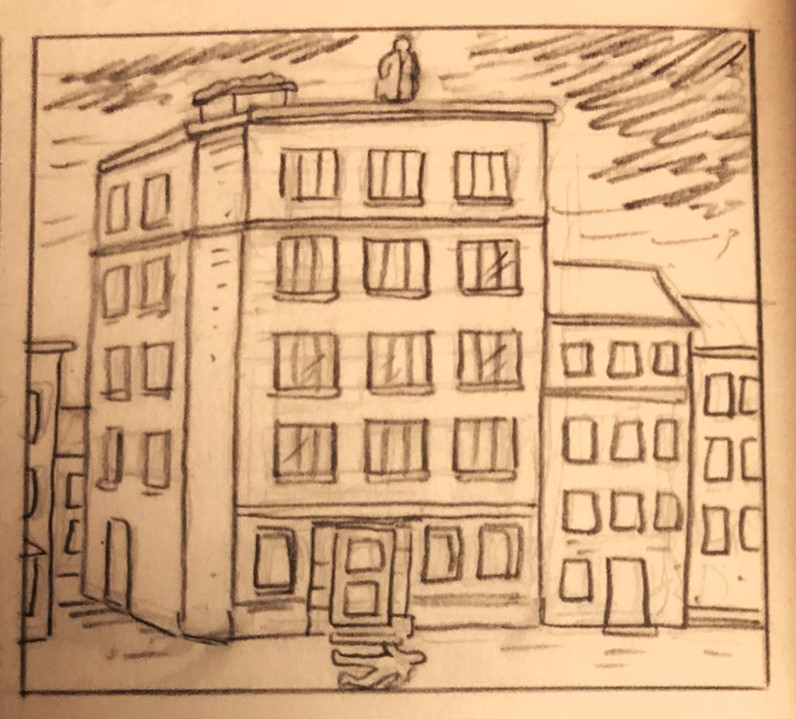
After all that wild splendour, it’s an odd jolt to find himself in Victoria in those tamed and pretty streets. There are Englishmen everywhere; he steps out of the train and the accents of his homeland surround him. He could stay here for a while he thinks.
It has time-travelling, and a plot that turns out to make sense. I wasn’t really into it at first, but loved the ending. You can get it here.
Justin’s family background was conventional. He had one sister, four years older than him. Her name was Amanda. Her friends called her Mandy, but Justin and his parents invariably called her Amanda. His father’s name was Mortimer, and his mother was Nicole. Their names for each other were Mort and Nicky.
A weird little jewel at the end of Christopher Priest’s writing career, this book’s protagonist, a film student who grows up to be a film critic, becomes obsessed with the disappearance of a Hollywood film star at Heathrow Airport in 1948. There’s a lot of exploration of film history and of airports and the human process of flight, and although I worked out what had happened to the actress some time before the characters did, there was more than enough momentum to keep me going. Like most of Priest’s books, this one will set your mind racing rather than your pulse. A decent note to end on. You can get it here.
Bechdel fail, I think. Most of the book is tight-third to the male protagonist. There are a couple of scenes where his girlfriend is talking to an older actress, but he is present and in the conversation too.
I have never understood why people would rather attempt to open conversations with strangers when they could be quiet instead.
I loved her first book, Memory of Water, and was on the Clarke jury when it was shortlisted in 2015. But I found this less engaging. Single-note emotionally, and the means and motivation of the eco-terrorists not very well explained in the end. (I also noticed repeated mentions of feline ears!) You can get it here.
He was at a cheap, unstable table barely held together by rusty nails and the efforts of a unskilled carpenter. A half-eaten bowl of pepper soup, a mostly eaten plate of suya, and three tall, brown, empty bottles of Gulder beer were sloppily spread in front of him like reluctant offerings. Everything around him vibrated, including his own head, pulsating with the loud music and the rising rush of alcohol. Up on the makeshift stage, where a yellow-painted board spelled out the words: Fela Kuti and the Africa 70 in dark blue letters, a thin, shirtless man in tight trousers with chalk markings on his face sang into the microphone while simulating sex with a sweaty, skinny woman in a gold miniskirt and bra, cowrie shell bangles shaking around her ankles and wrists. Fela’s voice strained as he sang in pidgin.
There is probably a whole subgenre out there of books about stealing items from the British museum. The only other one I have read is a Lovejoy novel, The Very Last Gambado. Both Lovejoy and the protagonist here, Shigidi, arbitrate between their own homelands and cultures (East Anglia and Nigeria respectively) and the symbolic centre of imperial cultural theft, the British Museum, and obviously we cheer for the insurgents both times.
It’s a richly imagined, sexy contemporary magical world, with the metaphors about colonialism and cultural appropriation text rather than subtext; and the sense of place is very good in both Nigeria and London. Entertaining to see Aleister Crowley still alive and taking an interest in contemporary affairs. I did feel that the system of magic and godhood was rather over-bureaucratised, using frankly Western concepts of management which are good for the 21st century in Nigeria or England but would hardly have been around for the millennia! Still, enjoyable and short, and you can get it here.
Bechdel fail, I think. Shigidi’s main accomplice is a succubus called Nneoma, but I don’t thik she speaks to another woman without him being present and in the conversation.
A straggle of year twos darts past like startled fish, first one way, then the other. Did I ever run like that? It’s hard to imagine. My body is calcifying; with every failed conception it grows more inert. Sometimes, it feels as if I’ve been dropped down a very deep well, and I’m lying there, watching the clouds roll past, listening to the far-off lives of others.
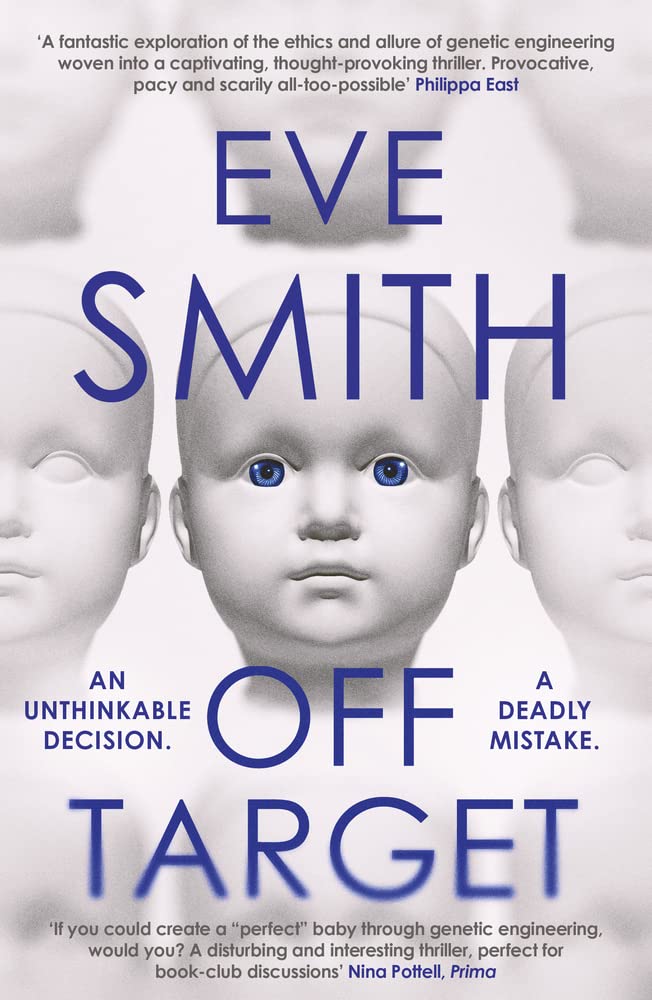
I enjoyed this. A really well depicted moral and personal dilemma which is not too far from today’s tech. The threat to the protagonist and her family is as much from the legacy of her own choices as from external bigotry. Raised my eyebrow a bit at a world where laboratories in Russia, Ukraine and Georgia routinely collaborate, but sometimes there are things in novels that are not true. You can get it here.
(Alice, thinking): “The Doctor would smile, that special excited-little-boy grin he got when something wonderful and impossible and brilliant happened. And he’d say something like:” Doctor: “Ha! Yes! Temporal protogenic reversal!“
Second in the sequence of Titan Eleventh Doctor comics, continuing his adventures with recently bereaved London librarian Alice, anonymous musician Jones and chameleon entity ARC. Alice is much more interesting than the other two and gets much more plot, especially when her dead mother appears to come back. The standout however is the first episode where time starts running backwards – this has been done a couple of times before in Who, but it’s difficult to do well and it is carried off with aplomb. You can get it here.
Bechdel fail. When Alice meets her resurrected mother, they talk about the Doctor. There is a flashback scene to Alice’s childhood, but it’s not a dialogue.
John had no siblings. And he had grown up sterile, thanks to a gene-warfare attack on London when he was a boy. So Sarah was precious to the whole extended family – and had always seemed especially so to John, otherwise introverted, emotionally undeveloped. Or so even his wife, Sarah, found him.
I found a cache of last year’s Clarke submissions which I did read at the time but had’t yet written up here, so here is a sequence of short posts to clear them from my unblogged list.
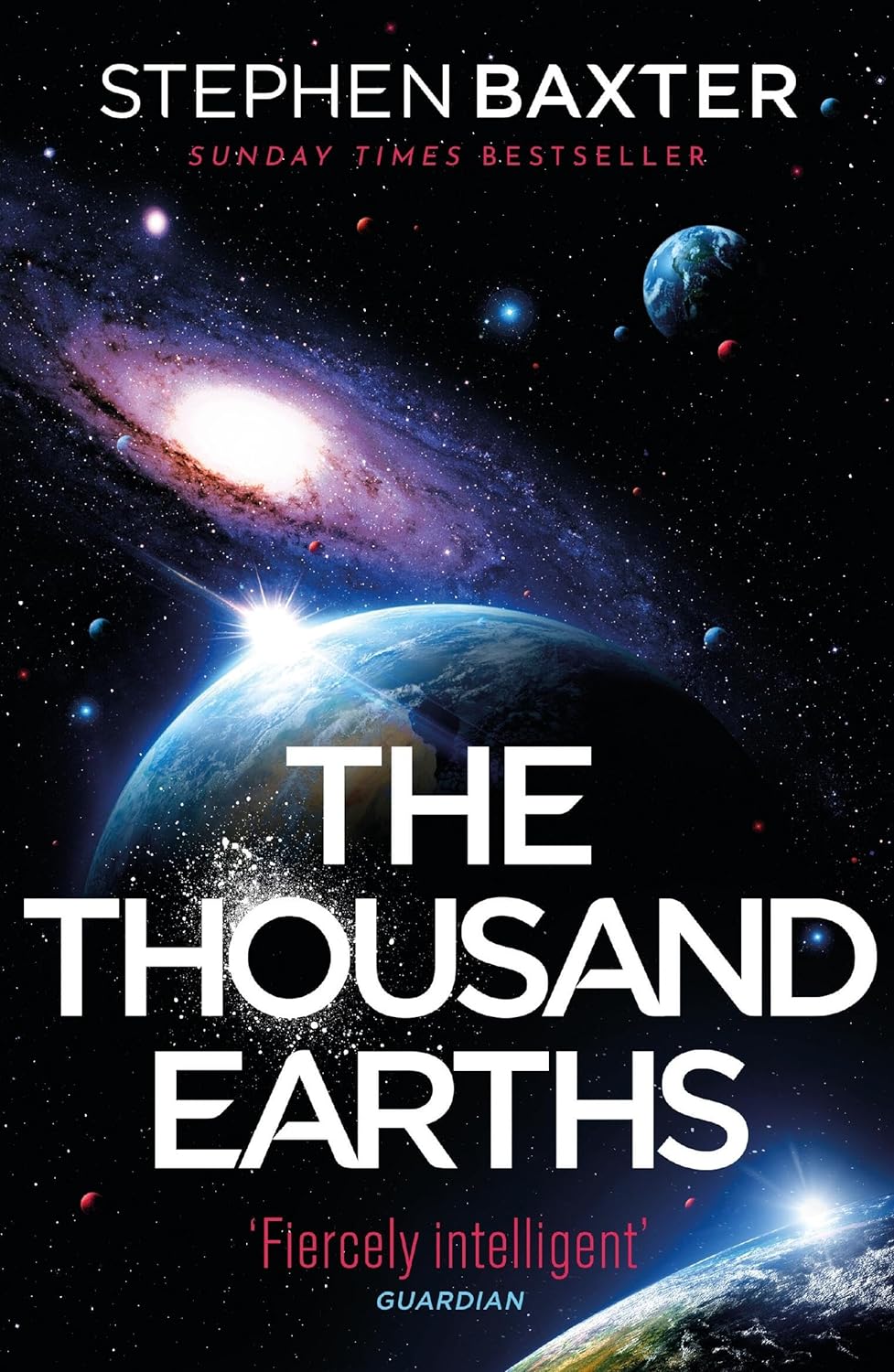
I thought the slowly disappearing world sequences in The Thousand Earths were really fantastic. Gave me nightmares. The sequences involving the protagonist, however, seemed to me to be a very slow way of getting us to the place where he needed to be. I can forgive it for the other bits though. And I am glad that sex will still be a thing in the far future!
Hugos have been a distraction – I read fewer books this month than in any month since March 2019 and March 2017, the two previous times that I was supervising the close of Hugo nominations as Administrator.
Non-fiction 4 (YTD 15) Why We Get the Wrong Politicians, by Isabel Hardman Ex Marginalia: Essays from the Edges of Speculative Fiction, ed. Chinuo Onwualu A Traveller in Time: The Critical Practice of Maureen Kincaid Speller, edited by Nina Allan Paradise Towers, by John Toon
Non-genre 2 (YTD 11) Confusion, by Elizabeth Jane Howard Those Pricey Thakur Girls, by Anuja Chauhan
SF 4 (YTD 15) Shigidi and the Brass Head of Obalufon, by Wole Talabi Airside, by Christopher Priest Parable of the Sower, by Octavia E. Butler Sleepers of Mars, by John Wyndham
Doctor Who 2 (YTD 4) Doctor Who: The Evil of the Daleks, by Frazer Hines Doctor Who – Paradise Towers, by Stephen Wyatt
Comics 1 (YTD 6) Serve You, by Al Ewing, Rob Williams et al
3,200 pages (YTD 13,700) 6/13 (YTD 22/54) by non-male writers (Hardman, Onwualu, Speller/Allan, Howard, Chauhan, Butler) 3/13 (YTD 6/41) by a non-white writer (Onwualu, Chauhan, Talabi) 1/13 rereads (Doctor Who – Paradise Towers)
321 books currently tagged unread, up 12 from last month (thanks to shortlists and Eastercon purchases), down 74 from March 2023.
Reading now De verdwijning, by Guido Eekhout The Code of the Woosters, by P.G. Wodehouse All These Worlds, by Niall Harrison, by Niall Harrison
Coming soon (perhaps) Doctor Who: Kinda, by Terrance Dicks Kinda, by Frank Collins Return, by Simon Fraser et al Reminiscences of a Bachelor, by Sheridan Le Fanu DOOM 94, by Janis Jonevs Ara Guler’s Istanbul: 40 Years of Photographs The Return of Marco Polo’s World, by Robert Kaplan Moroda, by L.L. McNeil How Democracies Die, by Steven Levitsky and Daniel Ziblatt Foxglove Summer, by Ben Aaronovitch The Pragmatic Programmer, by David Thomas and Andrew Hunt When the Moon Was Ours, by Anna-Marie McLemore When Voiha Wakes, by Joy Chant Small Gods, by Terry Pratchett Doctor Zhivago, by Boris Pasternak Land of the Blind, by Scott Gray Casting Off, by Elizabeth Jane Howard Fevered Star, by Rebecca Roanhorse The Virgin in the Garden, by A.S. Byatt “Seven Views of Olduvai Gorge”, by Mike Resnick The Sol Majestic, by Ferrett Steinmetz L’Affaire Tournesol, by Hergé The Lost Puzzler, by Eyal Kless The Wonderful Visit, by H. G. Wells Steppenwolf, by Hermann Hesse Hard to be a God, by Boris and Arkady Strugatsky
It is ten years ago this month that I first posted what has now become a regular habit – the second paragraph of the third chapter of every book that I read. (which needs a bit of wiggle room for comics, plays and most poetry.) I have found that it often gives a brief (sometimes not so brief) flavour of the book as a whole, and of course it proves that I did read beyond the first two chapters.
The very first book that I gave this treatment to was Ann Leckie’s Ancillary Justice; the second paragraph of its third chapter is:
I unrolled the bundle of clothes I had bought for her— insulated underclothes, quilted shirt and trousers, undercoat and hooded overcoat, gloves— and laid them out. Then I took her chin and turned her head toward me. “Can you hear me?”
I did it for the month of March 2014, then dropped it for two years, then picked it up again in March 2016 with Mother of Eden by Chris Beckett, the second paragraph of whose third chapter is:
I was already sitting there when my cousin Dixon came over to me. About half the Kneefolk had already arrived, and the others were coming in.
I think I must have checked the second paragraph of the third chapter of well over 2,000 books by now. I got the idea from my dear friend H, who had spontaneously adopted it as one of the data points of comparison between Lifeblood, by N.J. Cooper, and Book of Souls, by Glenn Cooper, neither of which I have personally read.
My experience is that it’s rather a variable measure in terms of getting the sense of a book. It’s more likely to work for non-fiction than for fiction, simply because with fiction books there is always the risk that the second paragraph of the third chapter will be a single word of dialogue, for instance with the Doctor Who novel Illegal Alien, by Mike Tucker and Robert Perry:
On the other hand, the longest I can recall, over 500 words in both English translation and the original Spanish, was from Luis Leante’s See How Much I Love You. I won’t copy it here.
Anders Johannsen, captain of the first human starship, tossed and turned in bed trying to find the sleep he so desperately needed, after days of insomnia and stress. Losing the battle as the shouts of his bridge crew reverberated through his mind.
Se ei tunnu sairaalta, ei ollenkaan, vaikka sen turkki pölisee jatkuvasti synkeänä pilvenä Electroluxin letkussa.
He doesn’t seem ill at all, though the shreds of his coat are a dismal sight in the Electrolux [vacuum cleaner].
Sometimes this leads to discoveries: the English translation of Waste Tide, by Chen Qiufan (who I met in Paris in November; he has rebranded as Stanley Chen) turns out to have rearranged the text so that the second paragraph of the third chapter in the Chinese original is some way into the third chapter in English.
If there are footnotes, I like to include them as well, including all seven footnotes to the second paragraph of the third chapter of Brian Griffin’s Cycling in Victorian Ireland:
2 Thom’s Irish Almanac and Official Directory of the United Kingdom of Great Britain and Ireland: for the Year 1869 (Dublin: Alexander Thom, 1869), p.1400; Irish Cyclist, 26 March 1890. 3 Irish Wheelman, 25 September 1894. 4 Irish Cyclist, 7 May 1890. 5 Icycles, December 1880; Irish Cyclist, 21 May 1890, 2 July 1890. William Bindon Blood was the club president; William Persse Blood was its secretary, and Louis Meldon, — a solicitor, and brother of Dr Austin Meldon — was its captain. 6 Irish Cyclist, 11 June 1890. For accounts of the Dublin University Bicycle Club and of cycling at Trinity College Dublin in the nineteenth century see Kenneth Bailey, A History of Trinity College Dublin 1892-1945 (Dublin:The University Press, 1947), pp 130-33, 164; Trevor West, ‘Football, Athletics and Cycling: The Role of Trinity College, Dublin in the Evolution of Irish Sport’ in Sarah Alyn Stacey (ed), Essays on Heroism in Sport in Ireland and France (Lewiston, Queenston and Lampeter: Edwin Mellen Press, 2003), pp 141-142. 7 Bicycling News, 20 September 1878. 8 Morning Mail, 14 September
For comics, I take either the second frame of the first page of the third chapter if it’s a work with chapters, or the second frame of the third page if it’s a more unitary text. I can vary this if necessary as with Tintin au Pays de l’Or Noir where I used both the second and third frames of the third page.
With comics it’s generally a bit more hit and miss than with prose. By the third page, the story is barely getting going. Though sometimes it works; here’s the second frame of the third chapter of Jaren van de Olifant, by Willy Linthout, whose protagonist is coming to terms with his son’ suicide:
The floor was mouse-grey, smooth, chilly concrete. There were no windows, just two narrow shafts Of gilded motes, crossing, from air-holes slit High in each gable. The one door meant no draughts
Plays and scripts are much more difficult, and after some unsatisfactory initial experimentation I’m now just giving the opening of the third scene. I make an honourable exception for Christopher Marlowe, who is usually pithy, for instance in The Jew of Malta:
ABIGAIL: Now have I happily espied a time To search the plank my father did appoint; And here, behold, unseen, where I have found The gold, the pearls, and jewels, which he hid.
At the end of 2021 I did a roundup of the second paragraphs of the third chapters of (most of) the books I had read so far that year. I might do the same again this year (the two years in between got complicated by Clarke submissions, some of which I have yet to post notes on here). I’ll finish this post with my top C3P2 from that selection, a sad little story from A Buzz in the Meadow by Dave Goulson:
From a very young age I kept newts and common toads in tanks in my bedroom, and this went atypically well. The toads in particular made great pets, seemingly taking to captivity and providing great entertainment by hoovering up mealworms with their extending, sticky tongues. When I grew bored of them, or ran out of mealworms from the supply that I bred in a box under my bed, I could simply release the toads back into the garden. However, I longed to have some more exotic amphibians, and eventually I badgered my parents into buying me a pair of North American leopard frogs for Christmas: attractive, bright-green frogs with (as you might guess from the name) a profusion of black spots. I filled one of my glass fish tanks with piles of stones, peat, some plants and a small pond, to make an attractive home for them. It looked great and the frogs settled in well, but after just a few weeks their energetic hopping about caused one of the piles of stones to topple; I came home from school one day to find them both squashed.
As you may be aware, we launched the Hugo ballot earlier today.
Having had a certain amount of foreknowledge, I crunched the numbers for the Goodreads and LibraryThing raters in several categories last weekend, and came up with the following stats. This is of course no more than a reflection of the tastes of the user base on both systems; it may (or may not) be useful to assess how far each of the finalists has penetrated the market.
Best Novel
Goodreads
LibraryThing
Title
raters
rating
owners
rating
The Adventures of Amina al-Sirafi, Shannon Chakraborty
37750
4.3
1077
4.34
Starter Villain, John Scalzi
34356
4.2
772
4.05
Witch King, Martha Wells
14651
3.72
888
3.78
Translation State, Ann Leckie
8360
4.13
444
4.2
Some Desperate Glory, Emily Tesh
6789
4.06
463
4.08
The Saint of Bright Doors, Vajra Chandrasekera
1346
3.72
160
3.48
Unusually, a clear leader on all four metrics.
Best Novella
Goodreads
LibraryThing
Title
raters
rating
owners
rating
Thornhedge, T. Kingfisher
20078
4.05
543
4.14
The Mimicking of Known Successes, Malka Older
4833
3.66
279
3.84
Mammoths at the Gates, Nghi Vo
3704
4.27
148
4.36
Rose/House, Arkady Martine
1548
3.8
97
3.46
(Adventures in Space: New Short stories by Chinese & English Science Fiction Writers)
22
3.41
2
–
The last of these is the anthology in which the missing two finalists were both published, which has not really penetrated the mass market.
Best Graphic Story or Comic
Goodreads
LibraryThing
Title
raters
rating
owners
rating
Saga, Vol. 11
4456
4.26
132
4.02
Bea Wolf
2234
3.46
204
4.15
Shubeik Lubeik / Your Wish Is My Command
2531
4.52
127
4.41
Wonder Woman Historia: The Amazons
858
4.5
64
4.35
The Witches of World War II
158
3.09
17
2.64
三体漫画:第一部 / The Three Body Problem, Part One
–
–
–
–
More people nominated The Witches of World War II for the Hugos than own it on LibraryThing. Which possibly indicates the sad decline of LibraryThing.
Best Related Work
Goodreads
LibraryThing
Title
raters
rating
owners
rating
A City on Mars, Kelly and Zach Weinersmith
2070
4.12
211
4.24
The Culture: The Drawings, Iain M. Banks
54
4
47
3.36
A Traveller in Time, Maureen Kincaid Speller
6
4.5
6
–
All These Worlds, Niall Harrison
4
4
5
–
中国科幻口述史, 第二卷, 第三卷 / Chinese Science Fiction: An Oral History, vols 2 and 3 杨枫 / Yang Feng
–
–
–
–
雨果X访谈 (Discover X), 王雅婷 (Tina Wong)
(video interviews)
The last of these is not going to register on any book logging system, and the second last hasn’t made a mark in the West – so far. Having said that, only one of the Western finalists has achieved much market penetration as yet; again, a lot more people nominated both A Traveller in Time and All These Worlds than own either on either book-logging system.
Lodestar Award for Best YA Book
Goodreads
LibraryThing
Title
raters
rating
owners
rating
The Sinister Booksellers of Bath, Garth Nix
4948
4.06
310
3.91
To Shape A Dragon’s Breath, Moniquill Blackgoose
4866
4.19
251
4.15
Unraveller, Frances Hardinge
2167
4.12
157
4.08
Abeni’s Song, by P. Djèlí Clark
380
3.97
50
4.00
Promises Stronger than Darkness, Charlie Jane Anders
313
4.21
49
3.94
Liberty’s Daughter, Naomi Kritzer
198
4.12
41
4.11
Unusual to have two finalists close at the top in terms of both GR raters and LT owners.
As I said, this number-crunching has proved a good guide to the outcome rather less than half the time in the past; so I take it as I find it.
It was being a thoroughly grown-up evening, and she [Clary] didn’t want him [Archie}to think that she didn’t know about conversation – particularly as Polly wasn’t helping at all: she simply smiles and chose things to eat and ate them. She looked awfully pretty in a pale yellow dress with a lace collar and a little black taffeta bow with streamers.
Third in Elizabeth Jane Howard’s brilliant family saga of the Cazalets, set during the Second World War, with the young and middle-aged women who are the central characters falling in love and having plenty of (off-stage) sex, not always with the right people or the same people. I almost feel that we had 900 pages of set-up in the first two volumes, which then explodes into lots and lots of plot here, which is maybe a little unfair as the first two were hardly without incident. Howard’s own gruesome first marriage (to Peter Scott) is unsparingly mined for material, with two particularly memorable passages involving very small babies.
Along with the turbulent love lives of the various viewpoint figures, there are some gems of observation about women’s roles in the society of 1940s England, and a quietly devastating subplot about the Holocaust and the uncovering of the concentration camps. Howard is tremendous at showing a society on the verge of tremendous change – mostly of course from the viewpoint of the privileged, but you write about what you know. And again there is an unlooked-for twist at the end which has my appetite whetted for the fourth volume.
Easy Bechdel pass – in the first chapter Polly and Clary talk about the afterlife and Polly’s dead mother.
I also listened to the middle part of the excellent BBC radio adaptation, which went out as a series of fifteen-minute episodes in 2013 (ten for each of the five books). The BBC moved around some of the internal narrative – the lesbian subplot is much earlier, and the twist at the end signalled much more in advance – but it’s faithful to the spirit of the original. Everyone is good but I was particularly impressed with Alix Wilton Regan, playing Louise, the character closest to Elizabeth Jane Howard herself. You can get it here.
Second paragraph of third essay (“Oja Oyingbo: Centering the Fringes”, by Ayọ̀délé Ọlọ́fintúádé)
My grandfather was the best of them, a wonderful storyteller who wove tales from Ifa with the contemporary. Not only was he a storyteller, he read widely and had a library full of rare books and literature from the Far East. It was in his library that I read my first works of speculative fiction in Yoruba. They were a series of textbooks titled Aláwìíyé (1-6), written by J.F. Odunjo, and the novels of D.O. Fágúnwà, which he made me read aloud because he was visually impaired. It wasn’t until I turned thirteen and gained access to my brother’s library of erotica that I encountered speculative fiction from the Global North.
Back at the start of this month, I foolishly thought that I might be able to get through all of the BSFA finalists for Best Novel and Best Non-Fiction (Long) before voting closes on Saturday. Well, I forgot just how much time the Hugos absorb at close of nominations – and this year was special for several reasons – so I didn’t get very far down either list. However I had a strong start with this collection of essays about SF seen from the perspective of the formerly colonised.
The 21 essays here are all very short, but I learned a lot from them. About half of them are about Nigeria, which is fair enough considering its regional and linguistic dominance. But the standout for me was “Writing Outside the Frame: A Homeland Called Palestine”, by Ibtisam Azem, which briefly but very eloquently puts the case for a society under threat of literal erasure. Much to think about. You can get it here.
Current De verdwijning, by Guido Eekhout Sleepers of Mars, by John Wyndham The Code of the Woosters, by P.G. Wodehouse All These Worlds, by Niall Harrison
Last books finished Parable of the Sower, by Octavia E. Butler A Traveller in Time: The Critical Practice of Maureen Kincaid Speller, edited by Nina Allan Doctor Who – Paradise Towers, by Stephen Wyatt
Next books Doctor Who: Paradise Towers, by Stephen Wyatt Reminiscences of a Bachelor, by Sheridan Le Fanu How Democracies Die, by Steven Levitsky and Daniel Ziblatt
Once upon a time, your constituency was just the seat whose name you bore when you spoke in the Chamber. MPs could get away with barely visiting the seat they represented in Westminster. Duncan Sandys, MP for Streatham and Norwood on and off between 1935 and 1974, boasted of his annual trips over the river to visit it. Winston Churchill rarely visited his constituencies either.
An interesting and gloomy reflection on the deficiencies of the British political system by a close observer.
I knew a fair amount of this, having hung around with politicians for most of my career, but there were some things I had not really thought of before – the sheer economic cost of running for parliament, putting your life on hold for a desperate contest that you may not win, and the toll that serving as an MP puts on your family life and mental and physical health, are really extreme. The path to Westnminster is a grim and terrible winnowing process which rules out many people who are not young-to-middle-aged men with a particular set of personality neuroses.
The interlinkage of executive and legislature then works to actively discourage good policy-making. Opposition MPs have no power at all, obviously; but most government MPs are struggling to get on the greasy pole of preferment, and therefore have no incentive to criticise, even constructively. There are a few exceptions – well known mavericks, and the chairs of Select Committees – but essentially, to make your mark in the House of Commons you need to abandon your political ambitions.
Hardman has some modest thoughts on how to improve things. She (rightly) discounts electoral reform, which was lost for at least a generation by the botched 2011 referendum. But reduction of the government payroll, and enhancement of the scrutiny powers of the Commons, could both serve to rebalance the system in a healthier way. She also discounts the complete division of the legislature and the executive, pointing at the deficiencies of the U.S. system of government; but the American way is not the only way, and Belgium, for instance, makes ministers leave parliament while remaining accountable to it.
None of this is going to happen, of course. The surgery that is needed requires either a fresh mandate from an energised reforming new government, or a carefully developed cross-party consensus that Something Must Be Done. The incoming Labour government will have many other fish to fry than constitutional tinkering; and MPs and peers at present can’t even agree on the basics of how to fix the crumbling physical infrastructure of the Palace of Westminster, let alone how to improve the way it makes laws. But if you want to get better informed, you can get this book here.
This was my top unread book acquired in 2018; next on that pile is The Return of Marco Polo’s World: War, Strategy, and American Interests in the Twenty-first Century, by Robert D. Kaplan. I should add that although I bought the 2016 edition in 2018, my Kindle edition automagically updated with the author’s comments on the May and Johnson administrations, which gave her much extra material to illustrate her arguments.
Lisa: “It’s just my life… a story of how I changed. And… the hardest thing is to start. Where do I even begin?”
First in a series of volumes about the loving and kinky relationship between Alison and Lisa, and Alison’s friend Alan who builds her equipment. Not especially explicit, but very sexy. You can get it here.
In 2016, the combined ages of the two front-runners in the American presidential election, at 139, was the highest ever – Donald Trump turned 70 a few months before the election, and Hillary Clinton a few months after. That was ten years more than the previous record, Reagan (73) and Mondale (56) in 1984 (total 129).
In 2020, the combined ages of the two candidates was 151 – the election was a few months after Donald Trump’s 74th birthday, and very soon before Joe Biden’s 78th. And this year, with the same two candidates, we can add another four years to each, for a total of 159, twenty more than in 2016 and thirty more than in any previous year.
Only twice before had both main candidates been over 60 – the obscure elections of 1848, when Zachary Taylor (63) beat Lewis Cass (64), and 1828 when Andrew Jackson beat John Quincy Adams (both 61). Only three times prior to 2016 had even one candidate been over 70 – in 1984, 1996 and 2008 (all Republicans). To have both over 69 was really unprecedented back in 2016; on election day in 2024, one will be two years short of his 80th birthday and the other almost two years into his ninth decade.
In the list below, I’ve put the 18 elections since 1952 (starting with 1956) in red; the 16 elections before 1852 (ending with 1848) in blue; and the 26 elections from 1852 to 1952 inclusive in green. This year sees the 60th of the quadrennial elections, so I have grouped them in tens.
It’s clear that the middle period saw younger candidates, with those 26 elections supplying 22 of the bottom half of the table, and 4 of the top half – in fact, none of the middle 26 are in the top 30% of the table, and the high-water mark is the comparatively youthful matchup between Rutherford Hayes and Samuel Tilden in 1876. Of the seven elections where the top candidates’ combined ages totalled less than a century, the most recent was in 1960 and the second most recent in 1908.
The earlier period was also elderly, with only two elections (one of which was not really competitive) of the first 16 in the lower half. And all six elections since 2000, and all but two of the twelve elections starting with 1980 (in darker red), including 2024, are in the oldest third of the table.
Note on methodology: I’ve taken candidates’ ages in whole calendar years on election day. (Which for Warren Harding was his 55th birthday, for all the good it did him.) In 1800 I count Adams (65) not Burr (44) as runner-up since that’s who voters thought they were choosing between in November. For 1872 I’ve counted Greeley (61) as losing candidate even though he died shortly after the election; most of his electoral votes went to Thomas Hendricks (53) who went on to be Tilden’s running mate in 1876 (they lost) and Cleveland’s in 1884 (they won, but Hendricks died a few months after taking office). I have not counted third or lower placed candidates at all (thus excluding incumbent President Taft in 1912, when he was 55, a year older than Theodore Roosevelt and ten months younger than Woodrow Wilson).
Incidentally the older candidate has won 34 times, and the younger 25 times. But those 34 include three elections which were really acclamations (1788, 1792 and 1820) so the fact that the Adamses were younger than Washington or Monroe doesn’t really matter (indeed, there are good grounds for excluding those elections from my list entirely). The most recent period shows a shift of fortune toward (relative) youth; of the 18 most recent elections, the younger candidate has won nine and the older also nine; the younger candidate has won the popular vote in seven of the last eight elections (but lost twice in the electoral college).
Henry Gassaway Davis was the Democratic Party’s candidate for Vice-President in 1904; election day was shortly before his 81st birthday. He and his presidential candidate, Alton B. Parker, lost the popular vote to Theodore Roosevelt and Charles Fairbanks by a margin of 19% in the popular vote and by 336 to 140 in the electoral college. Until this year, he was the only octogenarian candidate to have been in either top spot. (He lived another eleven and a half years.)
Quick post after running three of the Nebula final ballot categories through Goodreads and Librarything.
Best Novel
Goodreads
LibraryThing
Title
raters
rating
owners
rating
Witch King, Martha Wells
14651
3.72
888
3.78
Translation State, Ann Leckie
8360
4.13
444
4.20
The Terraformers, Annalee Newitz
4664
3.39
389
3.43
The Water Outlaws, S.L. Huang
1827
3.84
198
3.91
The Saint of Bright Doors, Vajra Chandrasekera
1346
3.72
160
3.48
Shigidi and the Brass Head of Obalufon, Wole Talabi
454
3.74
66
3.56
Oddly enough the only one of these that I have read so far is the last, which is also up for the BSFA.
Best Novella
Goodreads
LibraryThing
Title
raters
rating
owners
rating
Thornhedge, T. Kingfisher
20078
4.05
543
4.14
Untethered Sky, Fonda Lee
7310
3.90
242
3.95
The Mimicking of Known Successes, Malka Older
4833
3.66
279
3.84
The Crane Husband, Kelly Barnhill
5792
3.89
223
4.08
Mammoths at the Gates, Nghi Vo
3704
4.27
148
4.36
Linghun, Ai Jiang
1301
4.04
49
4.40
The only one of these I own is the last, which I picked up at the Lovecraft bookshop in Providence.
Andre Norton Nebula Award for Middle Grade and Young Adult Fiction
Goodreads
LibraryThing
Title
raters
rating
owners
rating
To Shape a Dragon’s Breath, Moniquill Blackgoose
4866
4.19
251
4.15
Liberty’s Daughter, Naomi Kritzer
198
4.12
41
4.11
The Ghost Job, Greg Van Eekhout
57
3.84
8
4.00
The Inn at the Amethyst Lantern, J. Dianne Dotson
17
4.59
1
–
I’m a bit baffled by this – usually if a book scores low on Librarything users, I begin to suspect that the author may not exist, but in fact I had a very pleasant meal with J. Dianne Dotson in Los Angeles last month, so am well aware that she is perfectly real! Her Goodreads fans are enthusiastic.
Crouched on the other side of the bars, and still holding my hands, Nicholas Sabine gave a wry grin. ‘I know it’s not usual, Lucy, but there’s no law against it.’
I got this last autumn under the incorrect impression that it was set in Chengdu; in fact only the opening and the climax are set in China, and it’s near the fictional town of Chengfu, not the real city of Chengdu. (There is also a real Chengfu in Anhui Province, but it doesn’t fit the meagre description given.) So I put it aside, yet it bubbled to the top of my reading pile anyway. Destiny, or something.
It’s a romantic adventure story about young Lucy, abandoned in an orphanage in China, who finds herself sucked into a bizarre English feud between two neighbouring families over lost Chinese treasure. There are some vey effective fish-out-of-water moments for Lucy when she first arrives in England. The plot twists are pretty absurd, as hidden relatives turn up everywhere and Lucy returns to China to skip through the Boxer Rebellion, and yet I kept on being sucked back into it to find out what would happen next. I’m sure that the Chinese details are as wobbly as I know the English historical details are; but I admit that I was entertained anyway. You can get it here.
The author, “Madeleine Brent”, is a pseudonym for Peter O’Donnell, best known as the author of the Modesty Blaise series. I don’t think I have ever read any of them, but I might give them a try now.
Passes the Bechdel test easily in the first chapter, where Lucy is looking after the girls in the orphanage.
At the turn of the year this was my top unread non-genre book. Since then it has been way overtaken by Herman Hesse’s Steppenwolf.
It is undeniable that it became convulsed with the most violent emotions directly the Young Lady in Grey appeared. It began an absolutely unprecedented Wabble—unprecedented so far as Hoopdriver’s experience went. It “showed off”—the most decadent sinuosity. It left a track like one of Beardsley’s feathers. He suddenly realised, too, that his cap was loose on his head and his breath a mere remnant.
This is one of H.G. Wells’ earliest novels, published in 1896 between The Island of Dr Moreau and The War of the Worlds, and I think his first non-genre novel. I thought it was a little gem. The protagonist, Mr Hoopdriver, working unhappily in a draper’s shop, goes on a cycling holiday across southern England, and finds himself acting as saviour to a teenage girl who has run away from home with a much older man. Often I find Wells’ portrayal of the lower middles classes annoying and patronising, but here I felt there was enough characterisation in the portrayal of Hoopdriver and self-deprecation in Wells’ own tone that the brief story hung together perfectly well. It’s not quite up to the level of Love and Mr Lewisham, the next non-genre novel that Wells wrote, but I enjoyed it all the same. You can get it here.
It would make a lovely short film or teleplay, and I’m surprised to find that it has been adapted for the screen only once, a silent film made in 1922.
Bechdel fail. It’s told from the point of view of Mr Hoopdriver, and when the girl finally is reconciled with her stepmother, there are always men present or being talked about.
Next on my Wells list is another early one, The Wonderful Visit.