This is the latest post in a series I started in late 2019, anticipating the twentieth anniversary of my bookblogging at the end of October 2023. Every six-ish days, I’ve been revisiting a month from my recent past, noting work and family developments as well as the books I read in that month. I’ve found it a pleasantly cathartic process, especially in recent circumstances. If you want to look back at previous entries, they are all tagged under bookblog nostalgia.
Another month when I did not leave Belgium, though I started going to the office regularly again. F, U and I had a particularly interesting excursion to just the other side of the Dijle valley where there are not one but two eleventh-century churches.
This was also the month that my involvement with the 2021 Worldcon came to an abrupt end, after weeks in which the internal difficulties became ever more apparent. I resigned along with my entire team on 22 June; the Chair of the convention resigned in turn three days later.
I read 25 books that month.
Non-fiction 6 (YTD 22) China’s Civilian Army: The Making of Wolf Warrior Diplomacy, by Peter Martin A Handful of Earth, A Handful of Sky: The World of Octavia E. Butler, by Lynell George Don’t Be Evil: The Case Against Big Tech, by Rana Foroohar Carrying the Fire, by Michael Collins Boys in Zinc, by Svetlana Alexievich The Johnstown Flood, by David McCullagh
Non-genre 3 (YTD 13) Bridget Jones’s Diary, by Helen Fielding All Among the Barley, by Melissa Harrison The English Patient, by Michael Ondaatje
Poetry 3 Blind Harry’s Wallace, translated by William Hamilton of Gilbertfield Beowulf: A New Translation, by Maria Dahvana Headley Beowulf: A New Translation, by Seamus Heaney
SF 9 (YTD 63) Upright Women Wanted, by Sarah Gailey Comic Inferno, by Brian W. Aldiss The Mammoth Book of SF Stories by Women, ed. Alex Dally MacFarlane Roger Zelazny’s The Dawn of Amber: Book 1, by John Gregory Betancourt “Stories For Men”, by John Kessel Come Tumbling Down, by Seanan McGuire Cemetery Boys, by Aiden Thomas The Monster’s Wife, by Kate Horsley Light, by M. John Harrison
Comics 4 (YTD 18) Monstress, vol. 5: Warchild, by Marjorie Liu and Sana Takeda Once & Future vol. 1: The King Is Undead, by Kieron Gillen, Dan Mora, Tamra Bonvillain, and Ed Dukeshire Wonder Woman: The Golden Age, Vol. 2 by William Moulton Marston Parable of the Sower, written by Octavia Butler, adapted by Damian Duffy and John Jennings
Michael Collins’ Carrying the Fire was tremendously enjoyable and ended up being my book of the year; you can get it here. Also good were David McCullough on the Johnstown Flood, which you can get here, and Heaney’s Beowulf, which you can get here. I tried Light by M. John Harrison again, and bounced off it again; you can get it here.
This is the latest post in a series I started in late 2019, anticipating the twentieth anniversary of my bookblogging at the end of October 2023. Every six-ish days, I’ve been revisiting a month from my recent past, noting work and family developments as well as the books I read in that month. I’ve found it a pleasantly cathartic process, especially in recent circumstances. If you want to look back at previous entries, they are all tagged under bookblog nostalgia.
The most important news of the month was getting my first COVID injection. Weird to think that the pandemic had been going on for fourteen months at this stage. I also seemt o have started going back to the office at this stage, and we were holding office parties in the nearby parks.
With the public holidays, I had two excursions southwards: to Mons on my own, and with two colleagues to see Merovingian metalwork at Mariemont near Mons.
Non-fiction 2 (YTD 16) Doctor Who: The Pandorica Opens: Exploring the Worlds of the Eleventh Doctor, by Frank Collins Statement and Correspondence Consequent on the Ill-Treatment of Lady de la Beche by Colonel Henry Wyndham, edited by Ann Auriol
Non-genre 3 (YTD 10) Schindler’s List, by Thomas Keneally The Complete Short Stories of Guy de Maupassant Forrest Gump, by Winston Groom
SF 7 (YTD 54) The Evidence, by Christopher Priest In the Days of the Comet, by H. G. Wells Cloud on Silver by John Christopher All the Fabulous Beasts, by Priya Sharma Jurassic Park, by Michael Crichton Finna, by Nino Cipri City of Blades, by Robert Jackson Bennett
Comics 4 (YTD 14) DIE, Volume 2: Split the Party, by Kieron Gillen, Stephanie Hans and Clayton Cowles The Loneliness of the Long-Distance Cartoonist, by Adrian Tomine Ghost-Spider vol. 1: Dog Days Are Over, by Seanan McGuire, Takeshi Miyazawa and Rosie Kämpe Invisible Kingdom, vol 2: Edge of Everything, by G. Willow Wilson and Christian Ward
4,600 pages (YTD 25,900) 6/16 (YTD 39/98) by non-male writers (de la Beche/Auriol, Sharma, Cipri, Hans, McGuire/Kämpe, Wilson) 3/16 (YTD 18/98) by PoC (Sharma, Tomine, Miyazawa)
All the Fabulous Beasts, by Priya Sharma, is really fantastic. You can get it here.
This is the latest post in a series I started in late 2019, anticipating the twentieth anniversary of my bookblogging at the end of October 2023. Every six-ish days, I’ve been revisiting a month from my recent past, noting work and family developments as well as the books I read in that month. I’ve found it a pleasantly cathartic process, especially in recent circumstances. If you want to look back at previous entries, they are all tagged under bookblog nostalgia.
Another month when I mainly stayed at home, apart from a birthday excursion to the east of Belgium for more megaliths.
Worldcon continued to provide drama, with the publication of the final ballot arousing much controversy, and the entire convention being postponed until December (giving rise to further arguments about the rules). More positively, it was announced that I would be a Guest of Honour at the next year’s Eastercon.
Non-fiction 1 (YTD 14) Kathedralen uit de steentijd, by Herman Clerinx
Non-genre 2 (YTD 7) The Silence of the Lambs, by Thomas Harris Foucault’s Pendulum, by Umberto Eco
SF 12 (YTD 47) Worlds Apart, by Richard Cowper Network Effect, by Martha Wells Kaleidoscope: diverse YA science fiction and fantasy stories, eds Alisa Krasnostein and Julia Rios Riot Baby, by Tochi Onyebuchi The Empress of Salt and Fortune, by Nghi Vo The Gameshouse, by Claire North Legendborn, by Tracy Deonn (did not finish) The Relentless Moon, by Mary Robinette Kowal The Serpent Sea, by Martha Wells The Orphans of Raspay, by Lois McMaster Bujold Two Truths and a Lie, by Sarah Pinsker The Consuming Fire, by John Scalzi Doctor Who 1 (YTD 2, 4 inc comics) Adventures in Lockdown, ed. Steve Cole Comics 5 (YTD 10) Muse vol 1: Celia, by Terry Dodson & Denis-Pierre Filippi Muse vol 2: Coraline, by Terry Dodson & Denis-Pierre Filippi Le dernier Atlas, tome 1, by Fabien Vehlmann, Gwen De Bonneval and Fred Blanchard Feeders & Eaters & other stories, by Neil Gaiman, art by Mark Buckingham Sculpture Stories, by Neil Gaiman with Lisa Snellings
4,800 pages (YTD 21,300) 9/21 (YTD 33/82) by women (Wells x2, Krasnostein/Rios, Vo, North, Deonn, Kowal, Bujold, Pinsker) 3/21 (YTD 15/82) by PoC (Onyebuchi, Vo, Deonn)
There were a couple of these that I did not like, but you know what, let’s celebrate half a dozen that I liked very much.
Kathedralen uit de steentijd: hunebedden, dolmens en menhirs in de Lage Landen, by Herman Clerinx (get it here) The Silence of the Lambs, by Thomas Harris (get it here) Kaleidoscope: diverse YA science fiction and fantasy stories, eds Alisa Krasnostein and Julia Rios (get it here) Riot Baby, by Tochi Onyebuchi (get it here) The Empress of Salt and Fortune, by Nghi Vo (get it here) Two Truths and a Lie, by Sarah Pinsker (get it here)
This is the latest post in a series I started in late 2019, anticipating the twentieth anniversary of my bookblogging at the end of October 2023. Every six-ish days, I’ve been revisiting a month from my recent past, noting work and family developments as well as the books I read in that month. I’ve found it a pleasantly cathartic process, especially in recent circumstances. If you want to look back at previous entries, they are all tagged under bookblog nostalgia.
Another month when due to COVID restrictions I did not leave Belgium, and indeed I appear to have gone to the office only twice. It was a year since the first lockdown. Apart from diplomatic walks in Brussels parks, my two excursions were to the Dolmen of Duisburg and the video games museum at Tours et Taxis.
I also researched the parenthood of the baby in the park, but came to the wrong conclusion.
Hugo Award nominations closed, and it became clear that we had some potentially controversial finalists, including a blog post whose title gave a very direct instruction to a well-known author. From the technical point of view it was relatively smooth; we had one nominated editor decline nomination, one artist inform us that they were not eligible and one TV series that we disqualified from the Long Form category because it also had two episodes in Short Form. (Some felt that we should have disqualified others too, but we did not.)
I read 20 books that month.
Non-fiction 5 (YTD 13) The Unstable Realities of Christopher Priest, by Paul Kincaid Inside Out: A Personal History of Pink Floyd, by Nick Mason It’s the End of the World: But What Are We Really Afraid Of?, by Adam Roberts Romeinse sporen: het relaas van de Romeinen in de Benelux met 309 vindplaatsen om te bezoeken, by Herman Clerinx Scottish independence: EU membership and the Anglo–Scottish border, by Akash Paun, Jess Sargeant, James Kane, Maddy Thimont Jack and Kelly Shuttleworth
Non-genre 1 (YTD 5) Dances With Wolves, by Michael Blake
Scripts 2 Driving Miss Daisy, by Alfred Uhry Mostly Void, Partially Stars, by Joseph Fink and Jeffrey Cranor
SF 12 (YTD 35) The Ministry for the Future, by Kim Stanley Robinson Comet Weather, by Liz Williams “Sandkings”, by George R.R. Martin Chasm City, by Alastair Reynolds Enemy Mine, by Barry B. Longyear The Doors of Eden, Adrian Tchaikovsky Threading the Labyrinth, by Tiffani Angus The Fountains of Paradise, by Arthur C. Clarke Titus Alone, by Mervyn Peake Light of Impossible Stars, by Gareth Powell Water Must Fall, by Nick Wood The Sunken Land Begins To Rise Again, by M. John Harrison
5,600 pages (YTD 16,500) 3/20 (YTD 24/61) by women (Williams, Angus, Sargeant/Thimont Jack/Shuttleworth) 1/20 (YTD 12/61) by PoC (Paun)
A lot of these were very good, and I’m going to recommend three by friends which were also shortlisted for the BSFA Award:
This is the latest post in a series I started in late 2019, anticipating the twentieth anniversary of my bookblogging at the end of October 2023. Every six-ish days, I’ve been revisiting a month from my recent past, noting work and family developments as well as the books I read in that month. I’ve found it a pleasantly cathartic process, especially in recent circumstances. If you want to look back at previous entries, they are all tagged under bookblog nostalgia.
Still under lockdown, my biggest expedition that month was to visit a bunch of Belgian megaliths with the hardy J.
That month’s Worldcon crisis was the unprecedented revocation of Guest of Honour status for a publisher whose website hosted far right discussions, in the context of the 6 January coup attempt in the USA. More Worldcon drama was to come in future months (this was by far the most dramatic of the seven Worldcons I have been involved with).
Stuck at home, I read 22 books that month.
Non-fiction 4 (YTD 8) The Last Manchu: The Autobiography of Henry Pu Yi, Last Emperor of China A Buzz in the Meadow, by Dave Goulson Ties That Bind: Love in Science Fiction and Fantasy, ed. Francesca T. Barbini Goodbye To All That, by Robert Graves
Non-genre 2 (YTD 4) Sugar and other stories, by A.S. Byatt Three Daves, by Nicki Elson
SF 13 (YTD 23) The Kappa Child, by Hiromi Goto Koko Takes a Holiday, by Kieran Shea Ring Shout, by P. Djèlí Clark The Autumn Land, by Clifford D. Simak The City We Became, by N.K. Jemisin Bold As Love, by Gwyneth Jones Who Censored Roger Rabbit?, by Gary Wolf Pūrākau: Māori Myths Retold by Māori Writers, edited by Witi Ihimaera and Whiti Hereaka A Wizard’s Guide to Defensive Baking, by T. Kingfisher Who Framed Roger Rabbit, by Martin Noble, based on the screenplay by Jeffrey Price & Peter Seaman Club Ded, by Nikhil Singh – did not finish Ivory’s Story, by Eugen M. Bacon Science Fiction: The Great Years, eds. Carol and Frederik Pohl
Comics and photo books 3 (YTD 5) My Father’s Things, by Wendy Aldiss Doctor Who: The Thirteenth Doctor – Old Friends, by Jody Houser A.I. Revolution vol. 1, by Yuu Asami
5,400 pages (YTD 10,900) 13/22 (YTD 21/41) by women (Aldiss, Barbini, Byatt, Elson, Goto, Jemisin, Jones, Hereaka, “Kingfisher”, Bacon, C Pohl, Houser, Asami) 8/22 (YTD 11/41) by PoC (Puyi, Goto, Clark, Jemisin, Ihimaera/Hereaka, Singh, Bacon, Asami)
Of these, I particularly loves Wendy Aldiss’ elegiac My Father’s Things, commemorating the possessions of Brian Aldiss after his death. You can get it here. I also really liked Graves’ Goodbye to All That, which you can get here, and N.K. Jemisin’s The City We Became, which you can get here. On the other hand, I totally bounced off Club Ded, by Nikhil Singh, which you can get here.
This is the latest post in a series I started in late 2019, anticipating the twentieth anniversary of my bookblogging at the end of October 2023. Every six-ish days, I’ve been revisiting a month from my recent past, noting work and family developments as well as the books I read in that month. I’ve found it a pleasantly cathartic process, especially in recent circumstances. If you want to look back at previous entries, they are all tagged under bookblog nostalgia.
The rest of the world will remember January 2021 for the attempted coup by supporters of Donald Trump against the democratic system, a terrible moment of political deterioration.
Over here, we were still under tough COVID restrictions, and I continued my ten-day posts, four of them on the 1st, 11th, 21st and 31st:
The farthest I travelled was with B, to visit a necropolis in Tienen and a new park in Landen.
But the most significant and unexpected development was that in one of several bizarre twists in the story of the 2021 World Science Fiction Convention, the entire Hugo Award administration team resigned, as did one of the co-chairs. I offered to pick up the work of the WSFS Division, as it’s new Division Head, and my offer was accepted. I rapidly put a new team in place, and we managed to get Hugo nominations open before the end of the month (the departing team had left things in good shape).
Tired of lockdown and busy with Worldcon, I read 19 books that month.
Non-fiction 4 Out of Africa, by Karen Blixen Endgames: Political Cartoons and Other Stuff, 2015-2020, by Martyn Turner Watling Street, by John Higgs T.K. Whitaker, by Anne Chambers
This is the latest post in a series I started in late 2019, anticipating the twentieth anniversary of my bookblogging at the end of October 2023. Every six-ish days, I’ve been revisiting a month from my recent past, noting work and family developments as well as the books I read in that month. I’ve found it a pleasantly cathartic process, especially in recent circumstances. If you want to look back at previous entries, they are all tagged under bookblog nostalgia.
Lockdown having hit again, I did not go very far this month except to nip across the border to France for a haircut. However I did have the satisfaction of comiling a video about science fiction predicitons for the year 2021 – probably a little too long, but I did love the Moon Zero Two opening titles.
And on Christmas Day I managed to get a rare picture of the family all looking in the same direction and all looking happy.
I read 27 books that month.
Non-fiction: 4 (2020 total 50) Our War: Ireland and the Great War, ed. John Horne Utopia For Realists, by Rutger Bregman House of Music, by Kadiatu Kanneh-Mason Explaining Humans, by Camilla Pang
Fiction (non-sf): 3 (2020 total 38) Terms of Endearment, by Larry McMurtry Tono-Bungay, by H.G. Wells The Prisoner of Brenda, by [Colin] Bateman
Scripts: 2 (2020 total 2) Amadeus, by Peter Shaffer A Belgian Christmas Eve, by Alfred Noyes
sf (non-Who): 15 (2020 total 114) After Me Comes the Flood, by Sarah Perry Ash: A Secret History, by Mary Gentle “The Persistence of Vision”, by John Varley The Children of Men, by P.D. James Dreamsnake, by Vonda McIntyre The Company Articles of Edward Teach, by Thoraiya Dyer/Angælien Apocalypse, by Matthew Chrulew 2010: Odyssey Two, by Arthur C. Clarke Above, by Stephanie Campisi/Below, by Ben Peek Perdido Street Station, by China Miéville Planetfall, by Emma Newman Macrolife, by George Zebrowski The Anything Box, by Zenna Henderson Ormeshadow, by Priya Sharma Palimpsest, by Charles Stross Piranesi, by Susanna Clarke
Doctor Who: 2 (2020 total 18) All Flesh is Grass, by Una McCormack Tales of Terror, no editor given
Comics: 1 (2020 total 45) Doctor Who: The Thirteenth Doctor Volume 1: A New Beginning, by Jody Houser, Rachael Stott, Giorgia Sposito, Enrica Eren Angiolini
8,200 pages (2020 total 70,400) 14/27 (2020 total 77/266) not by men (Henderson, Kanneh-Mason, Perry, Gentle, James, McIntyre, Dyer, Campisi, Newman, Henderson, Sharma, Clarke, McCormack, Houser et al) 3/27 (2020 total 25/266) by PoC (Kanneh-Mason, Pang, Sharma)
Several really good books this month, and I’m going to single out the RTE history Our War, which you can get here, and Priya Sharma’s short Ormeshadow, which you can get here. On the other hand I completely bounced off Sarah Perry’s After Me Comes the Flood, which you can get here.
2020 books roundup
I read 266 books in 2020, the ninth highest of the nineteen years that I have been keeping track, and 70,400 pages, eleventh highest of nineteen, so pretty much in the middle.
Books by non-male writers in 2020: 77/266, 29% – fifth highest absolute number, eighth highest percentage of the last nineteen years.
Books by PoC in 2020: – 25/266, 9% – fifth highest in both absolute numbers and percentages, higher than any year before 2018.
Most-read author of 2020: Kieron Gillen, as I read all nine volumes of The Wicked + The Divine.
1) Science Fiction and Fantasy (excluding Doctor Who)
2020/
2019/
2018/
2017/
2016/
2015/
2014/
2013/
2012/
2011/
2010/
2009/
2008/
2007/
2006/
2005/
2004/
114
77
108
68
80
130
124
65
62
78
73
78
54
75
68
79
76
43%
33%
41%
29%
38%
45%
43%
27%
24%
26%
26%
23%
15%
32%
33%
55%
51%
114 (43%), fifth highest total and percentage of nineteen years.
Top SF book of the year:
The first book I read in 2020 was Ted Chiang’s collection Exhalation, which included some old favouites and a couple of brilliant new stories, both of which got on the Hugo final ballot. You can get it here.
Honourable mentions to:
Tade Thompson’s The Rosewater Insurrection, a BSFA finalist, in which near-future Nigeria (like other parts of the world) has been subject to an alien intrusion; this plays out on the ground in micropolitics, including sexual politics, for an interesting and intelligent exploration of what it actually means to be human in an unforgiving and rapidly changing world. You can get it here.
Naomi Kritzer’s Catfishing on CatNet, a Lodestar finalist, a cracking good read, with conscious AI, dysfunctional family, a courageous road trip across the northeastern USA, and a hilarious robot sex education scene. You can get it here.
The worst book I read all year, with some stiff competition, was A Woman in Space, by Sara Cavanaugh (probably a pseudonym). Our heroine is twenty-six, and already a spaceflight veteran. The entire plot lacks any credibility even in its own terms. The sexual politics is awful, and the sex is pretty badly written as well. It’s so bad you have to finish it once you’ve started. (It’s only 192 pages.) You can get it here.
2) Non-fiction
50 (19%), bang in the middle of the historical range.
The other is a finalist for the Hugo for Best Related Work, Mallory O’Meara’s biography of Milicent Patrick, a Hollywood designer who rose and fell much more quickly than Helen Waddell; after the triumph of creating the Creature from the Black Lagoon, she was basically fired for not being invisible enough. You can get it here.
45 (17%), highest ever percentage, total number only exceeded in 2021, due to Hugos and Retro Hugos, and because of more Doctor Who comics coming through the system.
Top comics of the year:
Two of the Hugo finalists which were standalones, LaGuardia, written by Nnedi Okorafor, art by Tana Ford, colours by James Devlin, which you can get here, and Mooncakes, by Wendy Xu and Suzanne Walker, letters by Joamette Gil, which you can get here.
Rick Lundeen’s glorious adaptation of The Daleks’ Master Plan, not on sale anywhere but you can find it in the darker corners of the internet.
The ones to avoid:
The ending of Marc Legendre’s Amoras, an adult reworking of classic Belgian kids’ comic heroes Suske en Wiske, fell pretty flat for me. You can get the last two volumes here and here.
4) Non-genre fiction
40 (15%). In the middle of the historical range, though higher than 2021 or 2022.
Top non-genre fiction of the year:
The triumphant conclusion to Hilary Mantel’s Cromwell trilogy, The Mirror and the Light. We’ve always known where this wasa going to end up, but the journey is a tremendous achievement. You can get it here.
Bruges-la-Morte by George Rodenbach. Very silly and over-written. Ends with the protagonist strangling his lover with a lock of his dead wife’s hair. There, I’ve saved you the bother, but if you still want to, you can get it here.
5) Doctor Who
Novels, collections of shorter fiction, etc excluding comics: 18 (7%), lowest since 2005.
All Who books including comics and non-fiction: 25 (9%), also lowest since 2005.
I took a bit of a sabbatical from Who reading in 2020.
Top Doctor Who books of the year:
Una McCormack’s novel All Flesh Is Grass, featuring the Eighth, Ninth and Tenth Doctors, which you can get here, and Jody Houser’s graphic novel Defender of the Daleks with the Tenth and Thirteenth (marketed for some reason with a very similar cover to Una McCormack’s novel, showing Eight, Nine and Ten, rather than Ten and Thirteen), which you can get here.
No hesitation at all in naming my Top Book of 2020 as From A Clear Blue Sky: Surviving the Mountbatten Bomb, by Timothy Knatchbull, the account of a life punctuated by the 1979 bomb which killed his 14-year-old twin brother, along with their grandfather Lord Mountbatten, their other grandmother and another boy. As one might expect, Knatchbull’s relationship with Ireland is very complex. It was a magical place of childhood holiday memories, which turned to horror in an instant. He has found a way of making sense of the terrible thing that was done to his family, and it is a truly compelling read. I’d had it on the shelves for years but only now got around to it, and I should not have waited. You can get it here.
All Books of the Year:
2003 (2 months): The Separation, by Christopher Priest (review; get it here) 2004: (reread) The Lord of the Rings, by J.R.R. Tolkien (review; get it here) – Best new read: Samuel Pepys: The Unequalled Self, by Claire Tomalin (review; get it here) 2005: The Island at the Centre of the World, by Russell Shorto (review; get it here) 2006: Lost Lives: The stories of the men, women and children who died as a result of the Northern Ireland troubles, by David McKittrick, Seamus Kelters, Brian Feeney, Chris Thornton and David McVea (review; get it here) 2007: Fun Home: A Family Tragicomic, by Alison Bechdel (review; get it here) 2008: (reread) The Diary of a Young Girl: The Definitive Edition, by Anne Frank (review; get it here) – Best new read: Vanity Fair: A Novel without a Hero, by William Makepeace Thackeray (review; get it here) 2009: (had seen it on stage previously) Hamlet, by William Shakespeare (review; get it here) – Best new read: Persepolis 2: the Story of a Return, by Marjane Satrapi (first volume just pipped by Samuel Pepys in 2004) (review; get it here) 2010: The Bloody Sunday Report, by Lord Savile et al. (review of vol I; get it here) 2011: The Decline and Fall of the Roman Empire, by Edward Gibbon (started in 2009!) (review; get it here) 2012: The Tenant of Wildfell Hall, by Anne Brontë (review; get it here) 2013: A Room of One’s Own, by Virginia Woolf (review; get it here) 2014: Homage to Catalonia, by George Orwell (review; get it here) 2015: collectively, the Arthur C. Clarke Award shortlist, in particular the winner, Station Eleven, by Emily St John Mandel (get it here). However I did not actually blog about these, being one of the judges at the time. – Best book I actually blogged about: The Life and Death of Mary Wollstonecraft, by Claire Tomalin (review; get it here) 2016: Alice in Sunderland, by Bryan Talbot (review; get it here) 2017: Common People: The History of an English Family, by Alison Light (review; get it here) 2018: Factfulness, by Hans Rosling (review; get it here) 2019: Girl, Woman, Other, by Bernardine Evaristo (review; get it here) 2020: From A Clear Blue Sky: Surviving the Mountbatten Bomb, by Timothy Knatchbull (review; get it here) 2021: Carrying the Fire, by Michael Collins (review; get it here) 2022: The Sun is Open, by Gail McConnell (review; get it here)
This is the latest post in a series I started in late 2019, anticipating the twentieth anniversary of my bookblogging at the end of October 2023. Every six-ish days, I’ve been revisiting a month from my recent past, noting work and family developments as well as the books I read in that month. I’ve found it a pleasantly cathartic process, especially in recent circumstances. If you want to look back at previous entries, they are all tagged under bookblog nostalgia.
Very little travel in November 2020, thanks to the newly reimposed COVID restrictions, but on the first day of the month I took B to the nearby park at Helecine.
I discovered that the American artists Howard Gardiner Cushing and his daughter Lily Emmet Cushing were distant cousins of mine; and better yet, that Lily was married to the grandfather of one of my best friends in the USA.
I managed to read 25 books that month, but several were very short and I failed to keep a record of what I thought of them.
Non-fiction: 2 (YTD 46) Selected Prose, by Charles Lamb (did not finish) Mahatma Gandhi: His Life and Times, by Louis Fischer
Fiction (non-sf): 1 (YTD 35) The Inside of the Cup, by the other Winston Churchill
sf (non-Who): 7 (YTD 99) Do Androids Dream of Electric Sheep?, by Philip K. Dick Borderline, by Mishell Baker SS-GB, by Len Deighton Painless, by Rich Larson The Time Invariance of Snow, by E. Lily Yu Blood is Another Word for Hunger, by Rivers Solomon More Real Than Him, by Silvia Park
Doctor Who: 5 (YTD 16) The Nth Doctor, by Jean-Marc & Randy Lofficier The Official Doctor Who Annual 2021, by Paul Lang Doctor Who: Mission to the Unknown, by John Peel Doctor Who: The Mutation of Time, by John Peel The Astraea Conspiracy, by Lizbeth Myles
Comics: 5 (YTD 44) Neil Dreams, by Neil Gaiman An Honest Answer & Other Stories, by Neil Gaiman The Daleks’ Master Plan, adapted by Rick Lundeen The Empire Strikes Back, written by Archie Goodwin, art by Al Williamson and Carlos Garzon Return of the Jedi, written by Archie Goodwin, art by Al Williamson and Carlos Garzon
4,000 pages (YTD 62,800) 6/20 (YTD 75/239) not by men (Baker, Yu, Solomon, Park, Lofficier, Myles) 3/20 (YTD 22/239) by PoC (Yu, Solomon, Park)
The best new read was Rick Lundeen’s graphic story adaptation of The Daleks’ Master Plan, which unfortunately is not commercially available anywhere. It was also good to return to Do Androids Dream of Electric Sheep?, which you can get here. Several less good books this month, but I will draw a veil over them.
This is the latest post in a series I started in late 2019, anticipating the twentieth anniversary of my bookblogging at the end of October 2023. Every six-ish days, I’ve been revisiting a month from my recent past, noting work and family developments as well as the books I read in that month. I’ve found it a pleasantly cathartic process, especially in recent circumstances. If you want to look back at previous entries, they are all tagged under bookblog nostalgia.
Alas, after several months of relaxation, COVID restrictions were re-imposed in the middle of the month and working from home started again. This meant that I also re-started my ten-day updates on the COVID situation, which continued until early 2022.
I don’t seem to have written it up elsewhere, but little U and I got to the newly opened permanent exhibition at the Royal Library in Brussels just before the museums closed.
Art commentary on Jean Mayné and his daughter Berthe Flaminé Mayné:
Non-fiction: 3 (YTD 44) Darwin’s Island: The Galapagos in the Garden of England, by Steve Jones Complexity: The Emerging Science at the Edge of Order and Chaos, by M. Mitchell Waldrop Helen Waddell, by Felicitas Corrigan
Fiction (non-sf): 9 (YTD 34) Kramer vs. Kramer, by Avery Corman Secret Army, by John Brason Secret Army Dossier, by John Brason Ordinary People, by Judith Guest Secret Army: The End of the Line, by John Brason This Must be the Place, by Maggie O’Farrell Kessler, by John Brason Titus Groan, by Mervyn Peake Zen and the Art of Motorcycle Maintenance: An Inquiry into Values, by Robert M. Pirsig
sf (non-Who): 6 (YTD 92) Palestine 100: Stories from a century after the Nakba, ed. Mazen Maarouf Gateway, by Frederik Pohl Carmilla, by J. Sheridan Le Fanu To Be Taught, if Fortunate, by Becky Chambers The Tropic of Serpents, by Marie Brennan Wild Life, by Molly Gloss
Doctor Who: 1 (YTD 11) The Knight, the Fool and the Dead, by Steve Cole
Comics: 6 (YTD 39) Defender of the Daleks, #1, by Jody Houser and Roberta Ingranata Survivants, Tome 3, by Leo Defender of the Daleks, #2, by Jody Houser and Roberta Ingranata Survivants, Tome 4, by Leo Survivants, Tome 5, by Leo For the Love of God, Marie!, by Jade Sarson
5,900 pages (YTD 58,800) 9/25 (YTD 69/219) by women (Corrigan, Guest, O’Farrell, Chambers, Brennan, Gloss, Hoser/Ingranata x2, Sarson) 1/25 (YTD 19/219) by PoC (Maarouf)
This is the latest post in a series I started in late 2019, anticipating the twentieth anniversary of my bookblogging at the end of October 2023. Every six-ish days, I’ve been revisiting a month from my recent past, noting work and family developments as well as the books I read in that month. I’ve found it a pleasantly cathartic process, especially in recent circumstances. If you want to look back at previous entries, they are all tagged under bookblog nostalgia.
The highlight of the month was a trip to western Belgium with Anne, staying at my old friend Lex’s R&Breakfast in Roeselaere. This gave rise to several blog posts:
Only later did I realise that part of my attraction to the portrait of the Jonet family may be that I have almost exactly the same age difference with my own daughters.
We also had an appropriately socially distanced work party in a park near the office; I was going in three days a week at this point.
I read only 17 books that month, but some were very long.
This is the latest post in a series I started in late 2019, anticipating the twentieth anniversary of my bookblogging at the end of October 2023. Every six-ish days, I’ve been revisiting a month from my recent past, noting work and family developments as well as the books I read in that month. I’ve found it a pleasantly cathartic process, especially in recent circumstances. If you want to look back at previous entries, they are all tagged under bookblog nostalgia.
The month began grimly, with the notorious 2020 Hugo Awards ceremony unfolding in the early hours of 1 August (in my time zone). I think we have to be clear that it went very badly wrong. Having put many hours of my own time into working on the awards that year, I felt personally that my efforts had been thrown back in my face. The fact that the first actual Hugo winner was not announced until more than an hour into the ceremony demonstrated a fundamental lack of respect for the people who should have been at the heart of the occasion. (Not to mention the rest of us.)
There was some emotional high points of the grim evening, however, and the one that will linger with me was Neil Gaiman’s acceptance speech for Good Omens.
This was another month when, due to the pandemic, I did not leave Belgium, but I plucked up my courage to go to Train World with U for a Paul Delvaux exhibition.
This is the latest post in a series I started in late 2019, anticipating the twentieth anniversary of my bookblogging at the end of October 2023. Every six-ish days, I’ve been revisiting a month from my recent past, noting work and family developments as well as the books I read in that month. I’ve found it a pleasantly cathartic process, especially in recent circumstances. If you want to look back at previous entries, they are all tagged under bookblog nostalgia.
The high point of the month was getting out of Belgium for the first time since lockdown, a three-country trip to my cousin in Luxembourg, my sister in France and work/tourism in Geneva. While we were there we watched the Disney Hamilton and saw Comet NEOWISE.
We enjoyed watching Picard and Staged, and I delved into the etymology of the Ardennes. More seriously, the Spanish Comisión de Arbitraje, Quejas y Deontología del Periodismo found completely in my favour in a complaint I had raised against a journalist who published a false story about me.
I also paused my ten-day COVID updates, but restarted my Doctor Who anniversary posts, which I had first done in 2010-11. I am still doing them, but on Facebook only.
The Hugo Awards gave us a lot of grief. The preparation of the online voting system on the final ballot was so badly delayed that we were within hours of just using Surveymonkey, before the local software solution finally came through at the last moment. Online commentators were rightly scornful of the fact that we opened voting so late, but they didn’t know the half of it. The final ballot results came through as we were driving home from Geneva, and to my astonishment it turned out that there was a tie for the Retro Hugo for Best Dramatic Presentation (Short Form). I checked and rechecked the votes, but there was no error.
The CoNZealand Retro Hugo ceremony passed off OK on 30 July, though my connection was poor and some of the actual winners were a bit embarrassing. At midnight on July 31st, I was at my computer waiting anxiously for the 2020 Hugo ceremony itself. We had heard worrying hints about the presentation, but as administrators we had little to do with it (indeed, the pronunciations we had painstakingly gathered earlier in the year somehow were not communicated to the ceremony team [edit: turns out they were communicated, just not used]); surely the convention leadership would take action to protect their own reputation?
…well, I’ll write more about that when I get to August 2020.
Anyway, in July 2020 I read 21 books:
Non-fiction: 5 (YTD 37) EU Lobbying Handbook, by Andreas Geiger The Complete Secret Army: An Unofficial and Unauthorised Guide to the Classic TV Drama Series by Andy Priestner George Eliot, by Tim Dolin Yugoslavia’s Implosion: The Fatal Attraction of Serbian Nationalism, by Sonja Biserko Too Much and Never Enough: How My Family Created the World’s Most Dangerous Man, by Mary Trump
Fiction (non-sf): 3 (YTD 18) The Overstory, by Richard Powers Guban, by Abdi Latif Ega Listen to the Moon by Michael Morpurgo
sf (non-Who): 5 (YTD 76) City of Lies, by Sam Hawke Tooth & Claw, by Jo Walton TOR: Assassin Hunter, by Billy Bob Buttons (did not finish) “Houston, Houston, do you read?” by James Tiptree Jr The Ruin of Kings, by Jenn Lyons “The Bicentennial Man” by Isaac Asimov
Comics: 6 (YTD 27) The Wicked + The Divine vol 6: Imperial Phase Part 2, by Kieron Gillen etc The Wicked + The Divine vol 7: Mothering Invention, by Kieron Gillen etc Gaze of the Medusa, by Gordon Rennie, Emma Beeby and Brian Williamson The Wicked + The Divine vol 8: Old is the New New, by Kieron Gillen etc The Wicked + The Divine vol 9: “Okay”, by Kieron Gillen etc The 1945 Retro Hugo finalists for Best Graphic Story or Comic
Doctor Who 2 (YTD 8) Doctor Who Annual 2020 Doctor Who and the Cybermen, by Gerry Davis
5,700 pages (YTD 44,200) 7/21 (YTD 54/165) by women (Biserko, Trump, Hawke, Walton, Tiptree, Lyons, Beeby) 1/21 (YTD 18/165) by PoC (Ega)
As so often, two non-fiction books stood out for me this month, Andy Priestner’s delightful Complete Secret Army, which you can get here, and Sonja Biserko’s horrifying Yugoslavia’s Implosion, which you can get here. I also enjoyed rereading James Tiptree Jr’s “Houston, Houston, do you read?”, which you can get here.
Some awful books too. The 2020 Doctor Who Annual was a poor effort; you can get it here. Guban, by Abdi Latif Ega, is very badly edited; you can get it here. TOR: Assassin Hunter, by Billy Bob Buttons, is rubbish; you can get it here. And Asimov’s “The Bicentennial Man” has not aged well, but you can get it here.
This is the latest post in a series I started in late 2019, anticipating the twentieth anniversary of my bookblogging at the end of October 2023. Every six-ish days, I’ve been revisiting a month from my recent past, noting work and family developments as well as the books I read in that month. I’ve found it a pleasantly cathartic process, especially in recent circumstances. If you want to look back at previous entries, they are all tagged under bookblog nostalgia.
Things began to improve this month. with restrictions gradually easing; I went for a triumphant lunch with a colleague the day that the restaurants opened again.
We were allowed to see B again for the first time in more than three months, on her 23rd birthday.
More locally, I went to church, and made a final local video about an ancient enclave of imperial territory just across the river from us.
I read 20 books that month.
Non-fiction: 6 (YTD 32) The Beiderbecke Affair, by William Gallagher The Queen’s Agent: Sir Francis Walsingham and the Rise of Espionage in Elizabethan England, by John Cooper The Ode Less Travelled: Unlocking the Poet Within, by Stephen Fry Modern China: A Very Short Introduction, by Rana Mitter From A Clear Blue Sky, by Timothy Knatchbull The Room Where It Happened: A White House Memoir, by John Bolton
Fiction (non-sf): 3 (YTD 15) Local Hero, by David Benedictus The Ghost of Lily Painter by Caitlin Davies Laatste schooldag, by Jan Siebelink (did not finish)
sf (non-Who): 5 (YTD 70) The Sleeper Awakes, by H.G. Wells Heaven’s War by David S. Goyer and Michael Cassutt (did not finish) Dreaming In Smoke, by Tricia Sullivan The Master and Margarita, by Mikhail Bulgakov The Extremes, by Christopher Priest
Comics: 6 (YTD 21) The Wicked + The Divine vol 2: Fandemonium, by Kieron Gillen etc The Wicked + The Divine vol 3: Commercial Suicide, by Kieron Gillen etc The Wicked + The Divine vol 4: Rising Action, by Kieron Gillen etc De dag waarop de bus zonder haar vertrok, by BeKa, Marko and Maëla Cosson The Wicked + The Divine vol 5: Imperial Phase Part 1, by Kieron Gillen etc De dag waarop ze haar vlucht nam, by BeKa, Marko, and Maëla Cosson
5,000 pages (YTD 38,500) 4/20 (YTD 47/144) by women (Davie, Sullivan, 2x Ka of BeKa and Cosson) 1/20 (YTD 17/144) by PoC (Mitter)
The best book of this month, indeed of 2020, was Timothy Knatchbull’s From a Clear Blue Sky, his account of the Mountbatten bomb in 1979 and its aftermath; you can get it here. I also had a car-crash fascination with John Bolton’s The Room Where It Happened; you can get it here. Rana Mitter’s Modern China: A Very Short Introduction is not as exciting than either of the above but also very good; you can get it here.
I read some pretty bad books too. I gave up on Goyer and Cassutt’s Heaven’s War after a few pages; you can get it here. The short story collection Laatste Schooldag by Jan Siebelink fell flat for me; you can get it here. So did the second of the bandes dessinées by BeKa, De Dag Waarop Ze Haar Vlucht Nam; you can get it here.
This is the latest post in a series I started in late 2019, anticipating the twentieth anniversary of my bookblogging at the end of October 2023. Every six-ish days, I’ve been revisiting a month from my recent past, noting work and family developments as well as the books I read in that month. I’ve found it a pleasantly cathartic process, especially in recent circumstances. If you want to look back at previous entries, they are all tagged under bookblog nostalgia.
We continued to labour under COVID restrictions in May 2020, but our office had reopened for one day a week by the middle of the month and I certainly took advantage of being able to (cautiously) share physical space with colleagues.
I also indulged in some nostalgia, digging out photographs from my 21st birthday party in 1988. The lady in the red jacket later married the guy who is visible over my shoulder, who was one of my co-hosts. The lady in green married another of the co-hosts. The fourth co-host was the much missed Liz.
We finished the month with a visit to the park at Tervuren on a blisteringly hot day.
Non-fiction: 5 (YTD 26) The Hunt for Vulcan: …And How Albert Einstein Destroyed a Planet, Discovered Relativity, and Deciphered the Universe, by Thomas Levenson Joanna Russ, by Gwyneth Jones A Sacred Cause: The Inter-Congolese Dialogue 2000-2003, by P. E. Winter Roger of Hereford’s Judicial Astrology: England’s First Astrology Book?, by Chris Mitchell A border too far: the Ilemi triangle yesterday and today, by Philip Winter
Fiction (non-sf): 2 (YTD 12) The Godfather, by Mario Puzo The Accident, by Ismail Kadarë
sf (non-Who): 9 (YTD 65) Riverland, by Fran Wilde In an Absent Dream, by Seanan McGuire The Forever War, by Joe Haldeman Black Wine, by Candas Jane Dorsey Arthur C. Clarke’s Venus Prime 1: Breaking Strain, by Paul Preuss Slaughterhouse 5, by Kurt Vonnegut The Nightmare Stacks, by Charles Stross The Tiger’s Wife, by Tea Obreht Make Room! Make Room!, by Harry Harrison
Comics: 2 (YTD 15) Peanuts: A Tribute to Charles M. Schulz, ed. Shannon Watters The Wicked + The Divine vol 1: The Faust Act, by Kieron Gillen etc
The best of these was my former colleague Philip Winter’s account of peacemaking in DR Congo, A Sacred Cause, which you can get here. I also enjoyed rereading The Godfather, which you can get here, and reading for the first time Make Room! Make Room!, which you can get here. Nothing too awful this month.
This is the latest post in a series I started in late 2019, anticipating the twentieth anniversary of my bookblogging at the end of October 2023. Every six-ish days, I’ve been revisiting a month from my recent past, noting work and family developments as well as the books I read in that month. I’ve found it a pleasantly cathartic process, especially in recent circumstances. If you want to look back at previous entries, they are all tagged under bookblog nostalgia.
Not surprisingly, I went no further than Brussels in April 2020, and that was only once to deliver essential supplies to two colleagues who had joined just as lockdown hit. We met in the open air by the monument to the brave carrier pigeons of the first world war.
The last Sunday of the month was my birthday, and I had a virtual party on Zoom to which dozens of friends and relatives came. It was very affirming.
I read 28 books that month.
Non-fiction: 4 (YTD 21) The Lady from the Black Lagoon: Hollywood Monsters and the Lost Legacy of Milicent Patrick, by Mallory O’Meara The European Parliament, by Francis Jacobs, Richard Corbett and Michael Shackleton Becoming Superman: My Journey From Poverty to Hollywood, by J. Michael Straczynski The French Connection, by Robin Moore
Fiction (non-sf): 3 (YTD 10) A Prayer for Owen Meany, by John Irving Muddy Lane, by Andrew Cheffings The Long Song, by Andrea Levy
sf (non-Who): 14 (YTD 56) The Wind on the Moon, by Eric Linklater Minor Mage, by T. Kingfisher Prophet of Bones, by Ted Kosmatka The Wicked King, by Holly Black The Moomins and the Great Flood, by Tove Jansson A Clockwork Orange, by Anthony Burgess Gideon the Ninth, by Tamsin Muir A Woman in Space, by Sara Cavanagh Catfishing on Catnet, by Naomi Kritzer The Deep, by Rivers Solomon, with Daveed Diggs, William Hutson & Jonathan Snipes Oathbringer, by Brandon Sanderson – did not finish Dragon Pearl, by Yoon Ha Lee The First Men in the Moon, by H. G. Wells The Giver, by Lois Lowry
Comics: 7 (YTD 13) Mooncakes, by Wendy Xu and Suzanne Walker Wiske, by Willy Vandersteen Monstress, Volume 4: The Chosen, by Marjorie Liu and Sana Takeda Barabas, by Willy Vandersteen LaGuardia, written by Nnedi Okorafor, art by Tana Ford, colours by James Devlin Torchwood: World Without End, by John Barrowman, Carole Barrowman, Antonio Fuso and Pasquale Qualano The Heralds of Destruction, by Paul Cornell and Christopher Jones
This is the latest post in a series I started in late 2019, anticipating the twentieth anniversary of my bookblogging at the end of October 2023. Every six-ish days, I’ve been revisiting a month from my recent past, noting work and family developments as well as the books I read in that month. I’ve found it a pleasantly cathartic process, especially in recent circumstances. If you want to look back at previous entries, they are all tagged under bookblog nostalgia.
This, as you may remember, was the month that the world ended. When I woke up in Cambridge on the morning of 1 March, I had no idea that it would be my last time outside Belgium until July. I visited B a week later, on Sunday 8 March, which was just as well because we were told on Friday 13 that we could not see the girls again until the pandemic situation allowed. As it became clear how things were going, though not how log it would last, we had a gloomy socially distanced farewell lunch in the office with the last few colleagues before lockdown hit. (Colleagues in the picture are from Cyprus, the USA, Israel, Austria, the Netherlands, France and Italy.)
And that was that; we were all working from home, and not allowed to see anyone outside our own households. It also coincided with the close of Hugo nominations, the only time of the five times that I have been involved that we did not use the Kansa system first developed by Eemeli Aro in 2017; it was a complete nightmare, on top of everything else.
I marked the passage of time with two videos about our village:
and with the first of what would become a long series of ten-day updates about life in plague times.
Despite the interruption to my commute, I read 26 books that month.
Non-fiction: 5 (YTD 17) The Almost Nearly Perfect People: Behind the Myth of Scandinavia’s Utopia, by Michael Booth 1493, by Charles C. Mann Strategic Europe, ed. Jan Techau Red Notice, by Bill Browder An Inquiry into the Nature and Causes of the Wealth of Nations, by Adam Smith – did not finish
Fiction (non-sf): 2 (YTD 7) Small Island, by Andrea Levy Midnight Cowboy, by James Leo Herlihy
sf (non-Who): 17 (YTD 42) The Golden Fleece, by Robert Graves Deeplight, by Frances Hardinge The Light Brigade, by Kameron Hurley (did not finish) The Green Man’s Foe, by Juliet E. McKenna Fleet of Knives, by Gareth A. Powell Babayaga, by Toby Barlow Atlas Alone, by Emma Newman Ragged Alice, by Gareth A. Powell The Survival of Molly Southbourne, by Tade Thompson Middlegame, by Seanan McGuire The Winged Man, by E. Mayne Hull Excession, by Iain M. Banks A Memory Called Empire, by Arkady Martine Blake’s 7 Annual 1979 Blake’s 7 Annual 1980 The Haunting of Tram Car 015, by P. Djélì Clark Blake’s 7 Annual 1981
Doctor Who: 1 (YTD 6) Doctor Who: The Macra Terror, by Ian Stuart Black
Comics: 1 (YTD 6) Die, vol 1: Fantasy Heartbreaker, by Kieron Gillen, Stephanie Hans and Clayton Cowles
7,400 pages (YTD 20,700) 9/26 (YTD 23/78) by women (Levy, Hardinge, Hurley, McKenna, Newman, McGuire, Hull, Martine, Hans) 3/26 (YTD 8/78) by PoC (Levy, Thompson, Clark)
This is the latest post in a series I started in late 2019, anticipating the twentieth anniversary of my bookblogging at the end of October 2023. Every six-ish days, I’ve been revisiting a month from my recent past, noting work and family developments as well as the books I read in that month. I’ve found it a pleasantly cathartic process, especially in recent circumstances. If you want to look back at previous entries, they are all tagged under bookblog nostalgia.
I started the month with a Bulgarian TV interview about Brexit, which had just happened:
With no idea of what was to come, I did a lot of travelling in February 2020; a work trip to the FAO headquarters in Rome, right beside the Circus Maximus;
with a statue sculpted by Gina Lollobrigida, who died last month:
And went to another convention the next weekend in Brussels, where I slightly crossed the streams by going as a Ghostbuster but getting Doctor Who photos with Paul McGann, Alex Kingston and the Paternoster Gang:
And finally a trip to England at the end of the month, finishing at a friend’s birthday party. Little did I realise, as I fell asleep in Cambridge on 29 February, that it would be almost five months until I next left Belgium.
This is the latest post in a series I started in late 2019, anticipating the twentieth anniversary of my bookblogging at the end of October 2023. Every six-ish days, I’ve been revisiting a month from my recent past, noting work and family developments as well as the books I read in that month. I’ve found it a pleasantly cathartic process, especially in recent circumstances. If you want to look back at previous entries, they are all tagged under bookblog nostalgia.
We had no idea what was coming in that fateful month of January 2020. I went to London for work in the first week; went to the first Glasgow 2024 planning weekend in the middle of the month…
Non-fiction: 6 Under Another Sky: Journeys in Roman Britain, by Charlotte Higgins Roots and Wings: Ten Lessons of Motherhood that Helped Me Create and Run a Company, by Margery Kraus Backstop Land, by Glenn Patterson About Writing, by Gareth L. Powell The Lost Worlds of 2001, by Arthur C. Clarke (in fact this is mostly SF but the non-fiction framing is key) In Praise of Disobedience: The Soul of Man Under Socialism and Other Writings, by Oscar Wilde (mostly non-fiction but includes several fantasy stories)
sf (non-Who): 17 Exhalation, by Ted Chiang Seraphina, by Rachel Hartman Land of Terror, by Edgar Rice Burroughs Demon in Leuven, by Guido Eekhaut “Home is the Hangman”, by Roger Zelazny The Last Days of New Paris, by China Mieville Miss Shumway Waves a Wand, by James Hadley Chase Distaff: A Science Fiction Anthology by Female Authors, eds. Rosie Oliver & Sam Primeau Sirius, by Olaf Stapledon The Raven Tower, by Ann Leckie Once Upon a Parsec: The Book of Alien Fairy Tales, ed. David Gullen The Testaments, by Margaret Atwood This Is How You Lose The Time War, by Amal El-Mohtar and Max Gladstone 2001: A Space Odyssey, by Arthur C. Clarke The True Queen, by Zen Cho To Be Taught, If Fortunate, by Becky Chambers The Ten Thousand Doors of January, by Alix E. Harrow
Doctor Who: 2 Doctor Who and the Giant Robot, by Terrance Dicks Doctor Who and the Ark in Space, by Ian Marter
This is the latest post in a series I started in late 2019, anticipating the twentieth anniversary of my bookblogging at the end of October 2023. Every six-ish days, I’ve been revisiting a month from my recent past, noting work and family developments as well as the books I read in that month. I’ve found it a pleasantly cathartic process, especially in recent circumstances. If you want to look back at previous entries, they are all tagged under bookblog nostalgia.
Ach, the innocent days of late 2019! We had no idea what was around the corner. At the start of the month I took B to explore a deserted church in Wallonia, little knowing that the opportunities for such excursions were shortly to become very scarce.
That was followed by an epic trip which started in Rome, went on to London, then Belfast for general election coverage and finally giving an after-dinner speech in Oxford where I sat beside Congresswoman Linda Sánchez for the evening. An old friend captured her household’s fascination with the election coverage.
H came for Christmas, and helped us get the traditional family photo.
H and I also went to the superhero exhibition at the Brussels Jewish museum:
And we had a further expedition to Laeken Cemetery:
Non-fiction: 4 (2019 total 49) Western Sahara: War, Nationalism and Conflict Irresolution, by Stephen Zunes and Jacob Mundy The Story of the Trapp Family Singers, by Maria Augusta Trapp The Rule of the Land: Walking Ireland’s Border, by Garrett Carr I Love the Bones of You: My Father And The Making Of Me by Christopher Eccleston
Fiction (non-sf): 5 (2019 total 46) Girl, Woman, Other, by Bernardine Evaristo The Three Musketeers, by Alexandre Dumas Hild, by Nicola Griffith She Was Good-She Was Funny, by David Marusek The Widows of Malabar Hill, by Sujata Massey
sf (non-Who): 4 (2019 total 77) My Morning Glory and other flashes of absurd science fiction, by David Marusek Being Human: Bad Blood, by James Goss Being Human: Chasers, by Mark Michalowski Dragonworld, by Byron Preiss (did not finish)
Doctor Who, etc: 4 (2018 total 32) Revelation of the Daleks, by Eric Saward Revelation of the Daleks, by Jon Preddle Wildthyme Beyond!, by Paul Magrs Doctor Who: The Target Storybook, ed. Steve Cole
~4,600 pages (2019 total ~64,600) 4/16 (2019 total 88/234) by non-male writers (Trapp, Evaristo, Griffith, Massey) 3/16 (2019 total 34/234) by PoC (Dumas, Evaristo, Massey)
Several very good books here. I loved Girl, Woman, Other, by Bernardine Evaristo, which you can get here, and also really liked:
I read 234 books in 2019, the fourth lowest of nineteen years that I have been keeping count. Being Hugo Administrator ate into my reading time.
Page count for the year: 64,600 – sixth lowest of the nineteen years I have been keeping count.
Books by non-male writers in 2019: 88/234, 38% – fourth highest ever (exceeded both in 2021 and 2022).
Books by PoC in 2017: 34/234, 15% – highest percentage ever, though I have exceeded the raw number both in 2021 and 2022.
Most books by a single author: Brian K. Vaughan with 7.
Science Fiction and Fantasy (excluding Doctor Who)
77 (33%), lowest of the last few years.
My top three sf books of 2019:
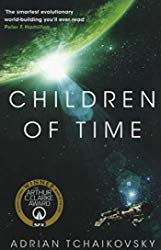
3) Children of Time, by Adrian Tchaikovsky – Great combination of loads of different SF themes – the degenerate generation starship, a very non-human civilisation; AIs pushed beyond their limits – and an intricate and well thought out plot with a satisfying ending. Won the Clarke Award in 2016. You can get it here. 2) Tess of the Road, by Rachel Hartman – A great YA novel combining elements of Tess of the d’Urbevilles, with a story of redemption from trauma and travel across a richly imagined landscape. A Lodestar finalist so I didn’t review it at the time. You can get it here. 1) Time Was, by Ian McDonald – Fantastic queer romance timeslip war story, tying in lots of lovely detail (both historical and narrative) and building to a conclusion that I didn’t quite see coming. Won the BSFA Short Fiction award. You can get it here.
The one you haven’t heard of: Cat Country, by Lao She – A very very direct satire on China of the 1930s, portrayed as a country on the planet Mars inhabited by cat people. You can get it here.
The one you can skip:Heartspell, by Blaine Anderson – A pretty rubbish example of the Celtic misht subgenre, where manly men fight battles and women do womanly druidic magic. In the very first chapter our hero is attacked by a cougar (there are no cougars in Ireland). There are tame wolves (wolves basically cannot be tamed). Ireland’s eastern coast is much more rugged than the west (it isn’t). Misspellings of Irish names abound. If you want, you can get it here.
The one you haven’t heard of: Cycling in Victorian Ireland by Brian Griffin – A short but comprehensive book about the evolution of cycling from upper-middle-class fad to a mechanism to erode patriarchal and class oppression in late nineteenth-century Ireland. You can get it here.
3) A Little Life, by Hanya Yanagihara – It’s a tough read but a very good one, about four friends, one of whom is deeply damaged. The whole scenario is delicately and sympathetically observed. You can get it here. 2) The Paying Guests, by Sarah Waters – It’s 1922. Frances and her mother take in Lilian and Leonard as lodgers; there is a restrained clash of cultures – and then romance, and then murder. Frances as the viewpoint character is tremendously sympathetic even when she does things that are fundamentally not very nice. You can get it here. 1) Girl, Woman, Other, by Bernardine Evaristo – A huge range of characters across contemporary London (with some flashbacks to earlier times and other places), almost all women, almost all black, all telling their stories from their own perspective, but often those stories intersect and overlap, and we see the same relationships from different angles. Great ending. You can get it here.
The one you haven’t heard of: In Another Light by Andrew Greig – Great novel cutting back and forth between 2004 Britain (mostly Orkney with bits of London and elsewhere) and 1930s Malaya, both of them vividly portrayed. You can get it here.
31 (12%) – then an all-time high, since exceeded in 2020 and 2021.
My top three comics of 2019:
3) The Berlin Trilogy, by Jason Lutes – A tremendously well-done story of Berlin from 1928 to 1933, seen by just a few people caught up in the wider politics of the times. You can get volume 1 here, volume 2 here, volume 3 here, and (my recommendation) the whole lot here. 2) Paper Girls, by Brian K. Vaughan and Cliff Chiang – An everyday story of four 12-year-olds delivering newspapers in 1988 in Cleveland, Ohio, all from different ethnic backgrounds, who get swept up into a mysterious time war which takes them to the future and past, both near and far. You can get the six volumes here, here, here, here, here and here. 1) Saga, vol. 9, by Brian K. Vaughan (again) and Fiona Staples. I’ve been following this story of angel-girl and devil-boy In Space for years, and the latest novel brings us to a spectacular climax, at least for now. I understand that the authors are pausing before the next one, which is frustrating but understandable. You can get it here.
32 (14%) – same number and slightly higher % than the previous year, pretty low because I had now read almost all of the Doctor Who books that there are to read.
The one you haven’t heard of:In Time, ed. Xanna Eve Chown, the last to date of the Bernice Summerfield spinoff books from Big Finish, this one an anthology with some very good stories (which, alas, will be mostly lost on those not familiar with Benny’s continuity). You can get it here.
This is the latest post in a series I started in late 2019, anticipating the twentieth anniversary of my bookblogging at the end of October 2023. Every six-ish days, I’ve been revisiting a month from my recent past, noting work and family developments as well as the books I read in that month. I’ve found it a pleasantly cathartic process, especially in recent circumstances. If you want to look back at previous entries, they are all tagged under bookblog nostalgia.
November 2019 was the month that I started doing these posts rounding up monthly reading, beginning with November 2003 when I started bookblogging.
This was also the month of my infamous Ghostbusters cosplay at a work event in France.
The month had started with a trip to Washington, New York and Boston, where I caught up with an old college friend, the musician Nicholas White. (Yes, I know, confusing.)
This is the latest post in a series I started in late 2019, anticipating the twentieth anniversary of my bookblogging at the end of October 2023. Every six-ish days, I’ve been revisiting a month from my recent past, noting work and family developments as well as the books I read in that month. I’ve found it a pleasantly cathartic process, especially in recent circumstances. If you want to look back at previous entries, they are all tagged under bookblog nostalgia.
We started the month with a wedding anniversary trip to Dordrecht in the Netherlands, reported in two blog posts:
I also went to a conference in the mountains in Slovakia, where there were lovely views:
And linguistic education:
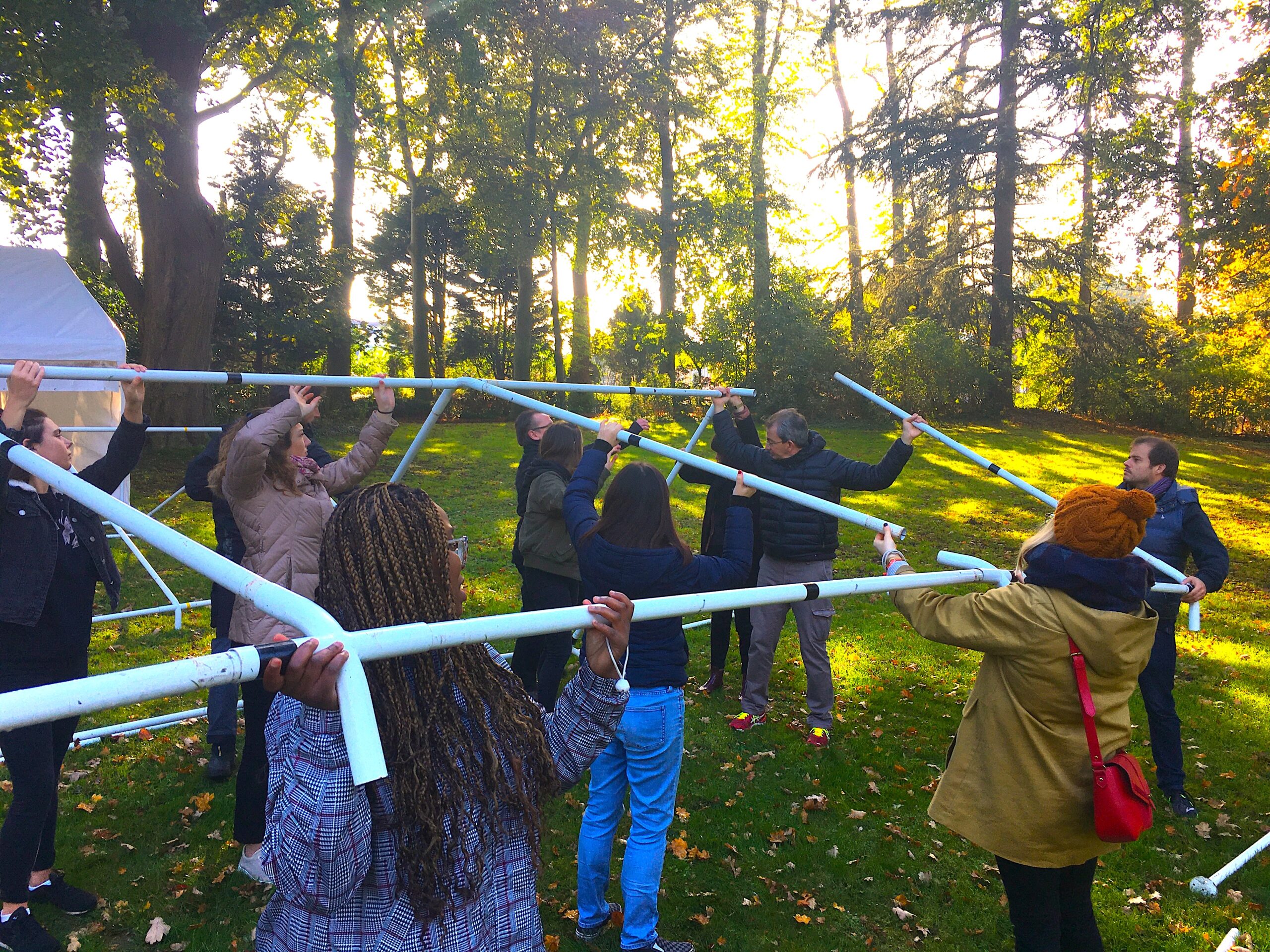
I seem to have had a day in London too, but I can’t remember why. At the end of the month, colleagues from work had a volunteering day assembling tents for the Halloween party at the institution where B and U live.
In the real world, the agony of Brexit reached a temporary pause as Boris Johnson agreed the bones of a Withdrawal Agreement with the EU; I reflected on why I had not seen it coming.
5,400 pages (YTD 54,400) 7/17 (YTD 79/197) by non-male writers (Illingworth, Shafak, Gilman, Russell, Colgan, Greiner/de Vincenzi x 2)) 0/17 (YTD 29/197) by PoC (I don’t think Peter Davison counts himself in this category)
This is the latest post in a series I started in late 2019, anticipating the twentieth anniversary of my bookblogging at the end of October 2023. Every six-ish days, I’ve been revisiting a month from my recent past, noting work and family developments as well as the books I read in that month. I’ve found it a pleasantly cathartic process, especially in recent circumstances. If you want to look back at previous entries, they are all tagged under bookblog nostalgia.
The month started with the sad news of the passing of Terrance Dicks. We then had the usual dorpfeest in the first weekend of the month, with local festive dancing.
Other artistic explorations are reported here, in a post made the following month:
In real life the Brexit situation got crazier and crazier. I was in London briefly at the end of the month but haven’t recorded much about that trip. The month ended with a positive experience:
De Bourgondiërs / The Burgundians by Bart Van Loo, brilliant exploration of this part of Europe’s heritage. You can get it here in Dutch and here in English.
How To Be Both, by Ali Smith – nicely constructed two-part novel set in different times with surprises. You can get it here.
Cycling in Victorian Ireland, by Brian Griffin; does exactly what it says on the tin. You can get it here.
This is the latest post in a series I started in late 2019, anticipating the twentieth anniversary of my bookblogging at the end of October 2023. Every six-ish days, I’ve been revisiting a month from my recent past, noting work and family developments as well as the books I read in that month. I’ve found it a pleasantly cathartic process, especially in recent circumstances. If you want to look back at previous entries, they are all tagged under bookblog nostalgia.
August 2019 for me personally was dominated by my usual family trip to Northern Ireland, which itself was punctuated by the Dublin Worldcon and the Hugo Awards, which I wrote up here and here.
Back in Belgium, I visited the enigmatic Vlooibergtoren with the family.
5,600 pages (YTD 44,000) 5/20 (YTD 65/157) by non-male writers (Withers, Tamm, Le Guin, Chown, Rienties/Ouwerwek/Geelen) 1/20 (YTD 23/157) by PoC (Lao She)
It was great to return to The Dispossessed, which you can get here, and the first Berlin volume, which you can get here. The third and final Berlin volume did not disappoint; you can get it here. On the other hand, Alina, by Jason Johnson, was simply an unpleasant book. You can get it here if you want.
This is the latest post in a series I started in late 2019, anticipating the twentieth anniversary of my bookblogging at the end of October 2023. Every six-ish days, I’ve been revisiting a month from my recent past, noting work and family developments as well as the books I read in that month. I’ve found it a pleasantly cathartic process, especially in recent circumstances. If you want to look back at previous entries, they are all tagged under bookblog nostalgia.
July 2019 started with a personal milestone on the first day of the month, as I reached Level 40 of Pokemon Go. I have not played it since. I visited London briefly with F, my only trip abroad that month.
On the hottest day ever recorded in Belgium, I caught up with an old friend from Ireland who I had not seen in thirty years. (Bright sun in my eyes, I think.)
On the night of the 31st, as the Hugo nominations closed, I went and threw axes with my colleagues from work.
In the real world, Ursula von der Leyen was chosen as President of the European Commission, and Boris Johnson was elected Prime Minister of the UK.
For the Love of a Mother: The Black Children of Ulster, by Annie Yellowe Palma – grim stuff, poorly edited, but you can get it here.
The Secret Lives of a Secret Agent: The Mysterious Life and Times of Alexander Wilson, by Tim Crook – historical account of the story behind the TV mini-series Mrs Wilson, but again very poorly edited; you can get it here.
This is the latest post in a series I started in late 2019, anticipating the twentieth anniversary of my bookblogging at the end of October 2023. Every six-ish days, I’ve been revisiting a month from my recent past, noting work and family developments as well as the books I read in that month. I’ve found it a pleasantly cathartic process, especially in recent circumstances. If you want to look back at previous entries, they are all tagged under bookblog nostalgia.
I started the month with a historic walk around Leuven, including a visit to the replica Kangxi-Verbiest celestial sphere.
In the last weekend of the month we visited my cousins in Luxembourg again – left to right, L, my son F, little N, big N (me), S and my first cousin J. Our spouses were also present!
With so much European travel, I managed to read 35 books that month. Some of them were short.
A lot of good books this month; along with several welcome re-reads, the two best new ones were The Tea Master and the Detective, by Aliette de Bodard, which you can get here, and The Paying Guests, by Sarah Waters, which you can get here. I know that (different) people love them, but I bounced hard off both Artificial Condition, by Martha Wells, which you can get here, and The Weapon Makers, by A.E. van Vogt, which you can get here.
This is the latest post in a series I started in late 2019, anticipating the twentieth anniversary of my bookblogging at the end of October 2023. Every six-ish days, I’ve been revisiting a month from my recent past, noting work and family developments as well as the books I read in that month. I’ve found it a pleasantly cathartic process, especially in recent circumstances. If you want to look back at previous entries, they are all tagged under bookblog nostalgia.
I started the month with a visit to Ireland for the Northern Irish local council elections…
…visiting my 102-year-old great-aunt…
…and more planning for the Dublin Worldcon.
To England again for our old friend K’s wedding to another K:
I voted in the European and national elections:
And then it was back to Northern Ireland for coverage of the European election count in Magherafelt. (Here with partner in crime Mark Devenport and former Justice Minister and Alliance leader David Ford, who kindly brought us both tea.)
I was very pleased with this picture of the three newly elected MEPs. I had already taken one with them all looking in different directions, but then Martina Anderson (in the middle) called out my name and Diane Dodds (left) and Naomi Long (right) both turned to look at me – funny thing really as I do not know Martina as well as I know the other two.
This is the latest post in a series I started in late 2019, anticipating the twentieth anniversary of my bookblogging at the end of October 2023. Every six-ish days, I’ve been revisiting a month from my recent past, noting work and family developments as well as the books I read in that month. I’ve found it a pleasantly cathartic process, especially in recent circumstances. If you want to look back at previous entries, they are all tagged under bookblog nostalgia.
The following weekend, I struggled into Brussels for a tour of the city as Charlotte and Emily Bronte would have known it. Totally fascinating.
And it being Easter, we had Eastercon at Heathrow which once again I thoroughly enjoyed, counting the BSFA votes among other things. I finished the month ready to fly to Ireland once again; but more of that anon.
6,700 pages (YTD 17,700) 11/22 (YTD 23/58) by non-male writers (McIlwaine, Yanagihara, “Eliot”, Williams, Wells, Novik, Ireland, Rayner et al, Walden, Doran, de Jongh) 3/22 (YTD 7/58) by PoC (Yanagihara, Ireland, Koomson)
A lot of really good books this month. I think I will single out Daniel Deronda, by George Eliot, which you can get here; Time Was, by Ian McDonald, which you can get here; and Alarums and Excursions, by Luuk van Middelaar, which you can get here. On the other hand I completely bounced off The Land of Somewhere Safe, by Hal Duncan; you can get it here.
This is the latest post in a series I started in late 2019, anticipating the twentieth anniversary of my bookblogging at the end of October 2023. Every six-ish days, I’ve been revisiting a month from my recent past, noting work and family developments as well as the books I read in that month. I’ve found it a pleasantly cathartic process, especially in recent circumstances. If you want to look back at previous entries, they are all tagged under bookblog nostalgia.
I started the month with Brussels Comic Con, and got photographs with both Billie Piper and Michelle Gomez.
The following weekend I went to Kosovo for a conference (dubbed into Albanian from 38:00 here) and caught up with my former intern – now the same age as I was when she worked for me, fifteen years before.
But my big trip that month was to Nashville, Tennessee, to give a lecture on Brexit, which I linked with a couple of days in Washington where I admired the portrait of Alice Roosevelt Longworth in the Willard Hotel.
In Nashville, the goddess Athena inside the replica of the Parthenon is very disturbing.
I took B and F for a walk in the park, and frites.
I ended a month of much travel in Dublin, filming the Hugo announcement video. Our last filmed segment was on Howth Head with the legendary artist Jim Fitzpatrick.
The grimmest news of the month was the murder of Northern Irish journalist Lyra McKee. I did not know her, but we had a lot of mutual friends.
It being the month when Hugo nominations closed, and when the Brexit drama was occupying much of my thinking time, I read only five books.
1,500 pages (YTD 11,000) 1/5 (YTD 12/36) by non-male writers (Newman) 2/5 (YTD 4/36) by PoC (Lee, Thompson)
With only five books I won’t go into great detail about what was bad and what was good, but Rosewater by Tade Thompson was good, and you can get it here.
This is the latest post in a series I started in late 2019, anticipating the twentieth anniversary of my bookblogging at the end of October 2023. Every six-ish days, I’ve been revisiting a month from my recent past, noting work and family developments as well as the books I read in that month. I’ve found it a pleasantly cathartic process, especially in recent circumstances. If you want to look back at previous entries, they are all tagged under bookblog nostalgia.
sf (non-Who): 4 (YTD 12) The Fire Sermon (sample), by Francesca Haig Tess of the Road, by Rachel Hartman Bitter Angels, by C. L. Anderson The Glass Bead Game, by Hermann Hesse
Several really good books this month; I’m going to single out Tess of the Road, by Rachel Hartman, which you can get here, and Astounding, by Alec Nevala-Lee, which you can get here, both of them on the Hugo ballot. I’ll draw a veil over the less worthy.
This is the latest post in a series I started in late 2019, anticipating the twentieth anniversary of my bookblogging at the end of October 2023. Every six-ish days, I’ve been revisiting a month from my recent past, noting work and family developments as well as the books I read in that month. I’ve found it a pleasantly cathartic process, especially in recent circumstances. If you want to look back at previous entries, they are all tagged under bookblog nostalgia.
I started the year by taking B for a walk to a castle near where she lives.
We went to Mechelen to see the mysterious Enclosed Gardens, which I must write up some time.


 Doctor Who 1 (YTD 2, 4 inc comics)
 Comics 5 (YTD 10)